2027 What Is an Education Specialist (EdS) Degree? Definition & Job Outlook Explained

Co-Founder and Chief Data Scientist
Choosing an Education Specialist degree is usually not about “getting another credential.” It is about deciding whether a post-master’s, practice-focused program can help you move into school leadership, curriculum work, student support, instructional technology, or another specialized education role without committing to a full doctorate. The decision matters because EdS programs require meaningful time, money, fieldwork, and often state-specific licensure planning.
The National Center for Education Statistics (NCES) reports that from 2020 to the present, more than 14,800 doctoral degrees and 151,700 master’s degrees in education have been awarded, representing a 47% increase from one decade earlier. That growth reflects how many educators are pursuing advanced credentials to qualify for leadership roles, strengthen specialized expertise, or improve their salary placement.
This guide explains what an Education Specialist degree is, how EdS programs work, what they cost, how online and campus formats compare, which specializations are available, and how to decide whether this credential fits your career goals. You will also find a 2027 program list, salary and job market details, common mistakes to avoid, and practical questions to ask before enrolling.
Quick Answer: Is an Education Specialist Degree Worth It?
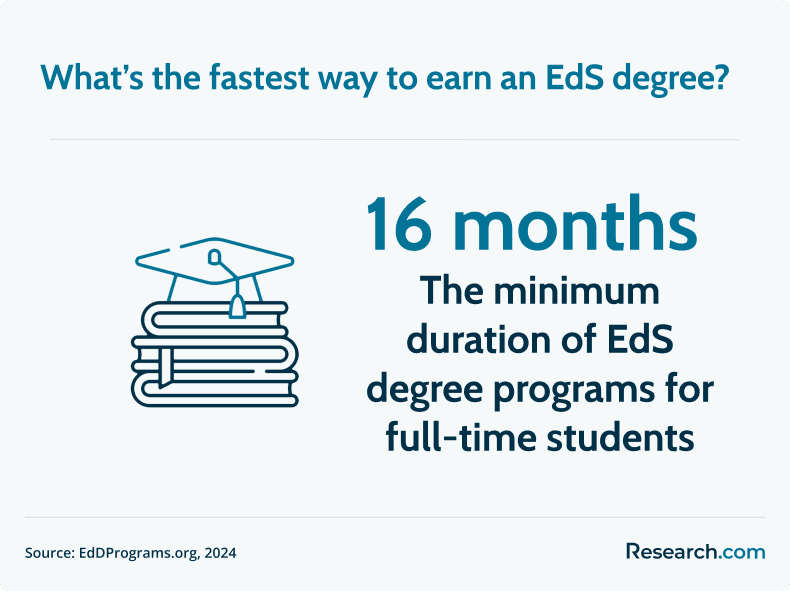
An Education Specialist degree can be worth it for licensed or experienced educators who already hold a master’s degree and want a practical, career-focused credential for leadership, curriculum, counseling, school psychology, instructional technology, or specialized K–12 roles. It is usually less research-intensive than a doctorate and commonly requires 30 to 36 credit hours, with many programs completed in 16 months to 2 years.
The degree is most useful when it aligns with a specific role, certification requirement, district pay scale, or state licensure pathway. It is less useful if you need a research doctorate, want to change fields entirely, or choose a program without verifying accreditation, certification eligibility, and total cost.
What are the benefits of getting an Education Specialist Degree?
- An Education Specialist degree can help qualified educators prepare for advanced positions such as principal, instructional coach, curriculum leader, school psychologist, or district administrator.
- According to ZipRecruiter, education professionals with an EdS degree earn an average annual salary of $92,340 in 2027.
- The credential allows educators to build focused expertise in areas such as educational leadership, curriculum design, instructional technology, special education, counseling, or school psychology.
What can I expect from an Education Specialist Degree?
An Education Specialist degree, often shortened to EdS, is a post-master’s credential designed for educators who want advanced professional preparation without the dissertation-heavy structure of many doctoral programs. Most EdS programs require 30 to 36 credit hours and can often be completed in 18 to 24 months, though timelines vary by institution, enrollment pace, specialization, and fieldwork requirements.
The EdS sits between a master’s degree and a doctorate. It is usually applied rather than theoretical: students learn to solve problems in schools, districts, higher education offices, counseling settings, instructional design teams, or education agencies. Many programs are built for working professionals and may be offered online, hybrid, or in cohort formats.
| Program Component | What It Usually Involves | Why It Matters |
| Core coursework | Advanced study of educational theory, leadership, learning, assessment, and school systems. | Builds the foundation for decision-making beyond the classroom level. |
| Specialization courses | Focused study in areas such as curriculum, administration, school psychology, special education, technology, or counseling. | Connects the degree to a specific career outcome or credential requirement. |
| Research and evaluation | Training in applied research, data analysis, program evaluation, or evidence-based school improvement. | Helps graduates use data to improve instruction, services, and policy implementation. |
| Field experience | Internships, practicums, clinical leadership experiences, or supervised work in schools and districts. | May be required for licensure, certification, or leadership preparation. |
| Capstone project | A final applied project addressing a real educational challenge. | Demonstrates the ability to turn coursework into practical improvement. |
Common program elements include advanced courses, specialization electives, applied research methods, field-based learning, and a final capstone. In some programs, students complete internships or practicums in their current school or district. Capstone projects may ask students to analyze a local instructional problem, design a student support intervention, evaluate a curriculum, or create a leadership improvement plan.
Where can I work with an Education Specialist Degree?
EdS graduates often work in settings where advanced education expertise is needed but a doctorate is not always required. The best work setting depends on the specialization, state credential rules, and the graduate’s prior experience.
- K–12 schools and districts: Public and private schools employ EdS-prepared educators in instructional leadership, curriculum planning, administration, counseling, school psychology, special education, and student services roles.
- Colleges and universities: Higher education institutions may hire EdS graduates for academic affairs, advising, student success, educator preparation, instructional support, or administrative functions.
- Government education agencies: Local, state, and federal agencies may need professionals who can support policy implementation, compliance, professional development, and program evaluation.
- Nonprofits and NGOs: Education-focused organizations may use EdS-level expertise for training programs, community learning initiatives, literacy work, and evaluation projects.
- Corporate and private-sector learning teams: Organizations with training, learning and development, or instructional design departments may value EdS graduates with technology, curriculum, or adult learning expertise.
For most educators, the EdS is strongest when it is connected to a clear destination: a principalship track, a curriculum leadership role, a school psychology pathway, a special education leadership position, or an instructional technology career.
How much can I make with an Education Specialist Degree?
Pay for EdS graduates varies by role, state, district salary schedule, years of experience, licensure, and work setting. The credential may improve salary placement in some K–12 systems, but salary increases are not automatic. Before enrolling, educators should check their district’s pay scale or employer policy to confirm how an EdS is recognized.
In The Condition of Education 2023, NCES reported that full-time public school teachers with an EdS degree had an average base salary of $70,500. By comparison, teachers with only a master's degree averaged $67,000, while those with only a bachelor's degree averaged $52,500. NCES also reported differences by school locale: teachers with an EdS degree in suburban areas earned an average of $55,100, while those in rural areas earned $50,200 annually.
ZipRecruiter reported that as of April 2025, an Education Specialist earns an average annual salary of $92,340, equal to about $44.39 per hour.
Specialized Roles
Some EdS graduates move into roles outside traditional classroom teaching. These positions may require additional certification, licensure, supervised experience, or role-specific expertise. Bureau of Labor Statistics wage data include the following examples:
- Health Education Specialists: Median annual wage of $63,000 as of May 2024.
- Training and Development Specialists: Median annual wage of $65,850 as of May 2024.
An EdS can support higher earning potential when it qualifies you for a better-paid role, a leadership position, or an advanced pay lane. It should not be treated as a guaranteed salary increase. The financial value depends on the employer, location, credential recognition, and the specific job you pursue.
- List of Education Specialist Degree Programs for 2027
- How long does it take to complete an Education Specialist degree program?
- How does an online Education Specialist degree program compare to an on-campus program?
- What is the average cost of an Education Specialist degree program?
- What are the financial aid options for students enrolling in an Education Specialist degree program?
- What are the prerequisites for enrolling in an Education Specialist degree program?
- What courses are typically in an Education Specialist degree program?
- What types of specializations are available in Education Specialist degree programs?
- Can an Education Specialist Degree Lead to Doctoral Studies?
- How to choose the best Education Specialist degree program?
- What career paths are available for graduates of Education Specialist degree programs?
- What is the job market for graduates with an Education Specialist degree?
- What are the emerging trends in Education Specialist programs?
- What are the potential challenges of pursuing an Education Specialist degree?
- How does an EdS degree compare to other advanced education credentials?
- Is it feasible to complete an accelerated Education Specialist degree program?
List of Education Specialist Degree Programs for 2027
How do we rank schools?
An EdS program is a major professional investment, so rankings should be used as a starting point rather than a final decision. The best program for one educator may not be the best choice for another if licensure requirements, specialization options, fieldwork expectations, cost, or delivery format do not match the student’s goals.
Our methodology reviews factors that matter to EdS applicants, including tuition, graduation rates, student-to-faculty ratios, curriculum design, accessibility, and program structure. Data are drawn from sources such as the Integrated Postsecondary Education Data System (IPEDS), the Peterson's database and Distance Learning Licensed Data Set, the U.S. Department of Education’s College Scorecard, and the National Center for Education Statistics (NCES).
| School | Format | Credits | Best Fit |
| University of Louisville | Hybrid | 30 credit hours | Educators seeking Kentucky principalship, Supervisor of Instruction certification, and Rank I pay status. |
| University of Michigan-Flint | Fully online with monthly synchronous Saturday session | 30 credit hours | Working educators pursuing leadership roles and the Michigan School Administrator Certificate with a Central Office Endorsement. |
| Arkansas State University | Fully online | 30 to 33 credit hours | Educators seeking flexible, accelerated leadership concentrations. |
| Mercer University | Fully online | 31 credit hours | Georgia educators seeking eligibility for a Level 6 certification upgrade by the Georgia Professional Standards Commission. |
| University of Missouri-Columbia | Fully online | 30 to 35 credit hours | Educators choosing from several specialized online EdS pathways. |
1. University of Louisville
The University of Louisville offers a cohort-based EdS in Educational Administration for educators preparing for school leadership. The 30-credit hour program uses a hybrid format and a Clinical Leadership model that combines coursework with field-based practice focused on current K–12 challenges. Graduates may earn certification in Principalship and Supervisor of Instruction, and the program qualifies graduates for Rank I pay status in Kentucky.
- Program Length: Typically completed in less than 2 years
- Tracks/Concentrations: Educational Administration, leading to Principal and Supervisor of Instruction certification
- Cost per Credit: $500 (includes textbooks and materials)
- Required Credits to Graduate: 30 credit hours
- Accreditation: Southern Association of Colleges and Schools Commission on Colleges (SACSCOC)
2. University of Michigan-Flint
University of Michigan-Flint provides a fully online EdS for working educators interested in leadership in K–12 or postsecondary education. Students move through a cohort model that combines asynchronous coursework with one synchronous Saturday session each month. Field-based practicums are aligned with each student’s leadership interests, and the program prepares graduates for the Michigan School Administrator Certificate with a Central Office Endorsement. Students also benefit from the academic and research resources connected to the University of Michigan system.
- Program Length: Approximately 20 months (part-time)
- Tracks/Concentrations: Educational Leadership, Curriculum and Instruction
- Cost per Credit: $1,156 per credit hour for part-time study
- Required Credits to Graduate: 30 credit hours
- Accreditation: Higher Learning Commission (HLC)
3. Arkansas State University
Arkansas State University offers fully online EdS options with concentrations for educators pursuing roles such as principal, superintendent, curriculum director, special education director, or gifted and talented director. Coursework is designed for working professionals, and practical internships may be completed within a student’s current education setting. The program’s online structure, tuition model, and accelerated options make it accessible to educators in multiple locations.
- Program Length: 12 to 24 months, depending on concentration
- Tracks/Concentrations: Principalship, Superintendency, Curriculum Director, Special Education Director, Gifted and Talented Director
- Cost per Credit: $340 (includes all fees)
- Required Credits to Graduate: 30 to 33 credit hours, based on concentration
- Accreditation: Regionally accredited by the HLC, while educator preparation programs are accredited by the Council for the Accreditation of Educator Preparation (CAEP)
4. Mercer University
Mercer University offers an online EdS called “The Accomplished Teacher.” The program emphasizes curriculum development, diversity, pedagogy, theory, and research across several education concentrations. Graduates may become eligible for a Level 6 certification upgrade through the Georgia Professional Standards Commission (GaPSC), which can improve professional standing for educators working in Georgia.
- Program Length: Approximately 16 months
- Tracks/Concentrations: Elementary Education, Middle Grades Education, Secondary Education, P–12 Education
- Cost per Credit: $665 or approximately $22,200 for the entire program
- Required Credits to Graduate: 31 credit hours
- Accreditation: SACSCOC
5. University of Missouri-Columbia
The University of Missouri-Columbia delivers several online EdS programs through Missouri Online. The options are designed for educators and professionals who want advanced preparation in a targeted area of education. Depending on the concentration, students may focus on online education, school mental health practices, PK–12 leadership, technology, or mathematics education.
- Program Length: Approximately 2 years (full-time)
- Tracks/Concentrations: Online Education, Mental Health Practices in Schools, PK–12 Educational Leadership and Administration, Technology, Mathematics Education
- Cost per Credit: Varies per concentration from $16,854 to $19,663 in total tuition costs
- Required Credits to Graduate: 30 to 35 credit hours, based on concentration
- Accreditation: HLC
6. American College of Education
The American College of Education offers fully online EdS programs for professionals who want applied doctoral-level preparation without a dissertation requirement. The programs emphasize practical implementation, allowing students to connect coursework to current education or professional settings. The institution’s EdS options are designed for working educators who need flexibility and a specialized credential.
- Program Length: Approximately 16–18 months
- Tracks/Concentrations: Curriculum and Instruction, Early Childhood Education, Instructional Technology, Leadership, Second Language Instruction, Special Education, Public Health Education, Nursing Education
- Cost per Credit: $306 or approximately $12,184, in total with tuition and other fees
- Required Credits to Graduate: 34 credit hours
- Accreditation: HLC
7. Liberty University
Liberty University offers online EdS programs with 8-week courses and several start dates during the year. The structure is intended for working professionals who need scheduling flexibility. Students can choose from multiple education and counseling-related areas while completing coursework in a fully online format.
- Program Length: Approximately 16–18 months
- Tracks/Concentrations: Curriculum and Instruction (with specializations in Educational Psychology, Elementary Education, Middle Grades Education, Online Teaching and Learning, Secondary Education, Special Education), Educational Leadership, Community Care and Counseling
- Cost per Credit: $275
- Required Credits to Graduate: 30 credit hours
- Accreditation: SACSCOC
8. Grand Canyon University
Grand Canyon University offers online EdS programs for educators who want to deepen expertise and prepare for leadership-oriented education roles. The programs use 8-week courses and require 30 credit hours. Coursework emphasizes ethical leadership and practical application within a Christian worldview, with preparation relevant to roles such as principal, curriculum director, or educational consultant.
- Program Length: Approximately 20 months (varies by student pace)
- Tracks/Concentrations: Teaching and Learning, K–12 Leadership
- Cost per Credit: $615
- Required Credits to Graduate: 30 credit hours
- Accreditation: HLC
9. Georgia Southwestern State University
Georgia Southwestern State University offers hybrid online EdS programs for certified educators. Some pathways may be completed in as little as 13 months and combine online coursework with limited in-person requirements. The Elementary and Middle Grades Education tracks do not require additional Georgia Assessments for the Certification of Educators (GACE) assessments, which can simplify advancement for Georgia educators.
- Program Length: Approximately 13 months
- Tracks/Concentrations: Elementary Education, Middle Grades Education, Teacher Leadership
- Cost per Credit: $257 (online graduate tuition only)
- Required Credits to Graduate: 30
- Accreditation: SACSCOC and GaPSC
10. University of Florida
The University of Florida offers EdS programs that combine education theory with applied professional preparation. Students can choose online or campus-based options, depending on specialization. The programs are designed for educators who already hold a master’s degree and want deeper preparation in fields such as leadership, technology, school psychology, or social studies education.
- Program Length: Varies by specialization; up to 3 years
- Tracks/Concentrations: Educational Leadership (with or without Florida Level 1 certification), Educational Technology, School Psychology, Social Studies Education
- Cost per Credit: Varies by program; for example, the Online Dyslexia Graduate Certificate program costs $462.05 per credit hour.
- Required Credits to Graduate: Varies by program; for example, School Psychology requires 72 graduate credit hours
- Accreditation: SACSCOC
How long does it take to complete an Education Specialist degree program?
Many educators start by asking, “What is an EdS degree?” The next question is usually how long it takes. Most EdS programs require 30 to 36 credit hours beyond a master’s degree, but the calendar time depends on the school’s format and the student’s course load.
Some programs are built for relatively fast completion. The University of Louisville offers a 30-hour EdS program in Curriculum and Instruction, while the University of Michigan-Flint offers a part-time pathway that can be completed in as little as 20 months. Arkansas State University states that students can finish some online EdS programs in as few as 18 months because of accelerated courses and multiple annual start dates. Mercer University’s online EdS is designed for completion in 16 months.
Other schools allow a longer window for students balancing graduate study with full-time employment. South College permits up to 3 years for completion, and the University of Missouri allows up to 8 years.
| Timeline | Who It Fits Best | Trade-Off |
| 16 to 18 months | Experienced educators with strong time management and a clear specialization goal. | Faster completion may mean heavier course loads and less schedule flexibility. |
| 18 to 24 months | Working educators who want a realistic pace while continuing full-time employment. | Requires consistent study time across multiple terms. |
| Up to 3 years | Students with demanding jobs, family obligations, or fieldwork constraints. | Longer time in school can extend costs and delay career benefits. |
| Up to 8 years | Students needing maximum flexibility or intermittent enrollment. | Professional goals, licensing rules, and program requirements may change over time. |
If you are also exploring shorter credential paths outside education, compare timelines carefully. For example, students considering healthcare support roles may want to review a cheap pharmacy tech program as a very different type of credential.
How does an online Education Specialist degree program compare to an on-campus program?
Online and campus-based EdS programs can both be academically rigorous, but they serve different types of students. Online programs are often best for working educators who cannot relocate or attend classes at fixed times every week. Campus programs may be better for students who want more face-to-face interaction, local networking, or in-person access to faculty and school partners.
| Factor | Online EdS Program | On-Campus EdS Program |
| Schedule | Often asynchronous, sometimes with required live sessions. | Usually follows scheduled class meetings. |
| Best for | Working educators, rural students, out-of-state students, and those needing flexibility. | Students who prefer in-person discussion, campus resources, and local field placements. |
| Fieldwork | May be completed in the student’s current school or local district. | Often arranged through nearby school or district partners. |
| Networking | Can include virtual cohorts, online discussions, and remote faculty meetings. | May offer stronger local professional connections. |
| Key risk | Students must confirm state licensure alignment before enrolling. | Students may have less schedule flexibility if they work full time. |
Many online EdS programs combine asynchronous assignments with some synchronous sessions, allowing students to complete coursework on their own schedule while still interacting with faculty and peers. This format can be especially useful for teachers, counselors, and administrators who want to keep working while advancing their credentials.
Program quality depends less on the delivery format and more on accreditation, faculty expertise, licensure alignment, fieldwork support, student services, and outcomes. Students considering online graduate education in another field can also compare admission flexibility through guides such as online masters SLP no GRE requirements.
What is the average cost of an Education Specialist degree program?
EdS tuition varies by public or private institution, residency status, delivery format, credit requirements, and fee structure. Online EdS programs average around $17,000, and some options cost under $12,000. Because the EdS is often pursued by working educators, the best cost comparison should include tuition, fees, books, technology charges, certification expenses, and any travel required for fieldwork.
Examples show the range. Georgia Southwestern State University offers several EdS programs at approximately $8,900. The University of Arkansas lists its online EdS in Educational Leadership at $14,883. Mercer University estimates total tuition of $22,200 for its EdS program.
Tuition is only part of the total price. Students should also budget for non-tuition expenses, which experts estimate may range from $1,000 to $3,500 per year. Possible expenses include:
- Textbooks and course materials: $500–$1,200
- Technology fees and online learning platforms: $200–$600
- Graduation fees and transcript requests: $100–$300
- Practicum-related travel or licensure prep materials, if required: $200–$1,500
| Cost Question | Why You Should Ask It |
| Is tuition charged per credit or as a full-program rate? | Per-credit pricing can change the total if you need extra courses. |
| Are books, materials, and fees included? | Some programs include materials, while others charge separately. |
| Will I need to travel for campus sessions or fieldwork? | Hybrid and practicum requirements can create additional costs. |
| Does my employer recognize the EdS for salary advancement? | The return on investment depends partly on district or employer policy. |
| Does the program meet my state’s certification rules? | A low-cost program may not be cost-effective if it fails to meet licensure needs. |
What are the financial aid options for students enrolling in an Education Specialist degree program?
Graduate students in EdS programs may be eligible for federal aid, employer assistance, scholarships, grants, and loan forgiveness options. Eligibility depends on enrollment status, school participation in federal aid programs, financial need, credit requirements, and the student’s employment situation.
- Federal Student Loans: Graduate students may use Direct Unsubsidized Loans, which allow up to $20,500 per academic year. Direct PLUS Loans may also help cover costs not met by other aid, but they typically require a credit check.
- TEACH Grant: The Teacher Education Assistance for College and Higher Education (TEACH) Grant provides up to $4,000 annually for students who agree to teach in high-need fields at low-income schools for at least four years.
- Loan Forgiveness Programs: Educators employed by qualifying organizations may be eligible for options such as Public Service Loan Forgiveness (PSLF), which forgives remaining eligible federal student loan balances after 120 qualifying payments while working full time for a qualifying employer.
- Work-Study Programs: Federal Work-Study may provide part-time employment for graduate students with financial need, helping them earn money for education expenses.
- Employer tuition assistance: Some districts, schools, universities, and education organizations offer tuition reimbursement or professional development funding for approved graduate programs.
Students seeking federal aid must complete the Free Application for Federal Student Aid (FAFSA) each year. The FAFSA is used to determine eligibility for federal loans, grants, and work-study programs.
The graph below shows how many full-time students were awarded financial aid for the first time in the last decade.
What are the prerequisites for enrolling in an Education Specialist degree program?
Most EdS programs are designed for professionals who already have graduate education and experience. Requirements vary, but applicants should expect schools to evaluate academic background, professional readiness, licensure status, and fit with the chosen specialization.
- Master’s Degree: Applicants usually need a master’s degree in education, educational leadership, counseling, or a related field. The degree should be from an appropriately accredited institution, such as one recognized by the Higher Learning Commission (HLC), Council for the Accreditation of Educator Preparation (CAEP), Southern Association of Colleges and Schools Commission on Colleges (SACSCOC), or another regional accreditor. Official transcripts are typically required.
- Professional Experience: Many programs expect two to three years of full-time experience in education or a closely related area, such as teaching, counseling, administration, or student services.
- Licensure or Certification: Specializations such as educational leadership, school counseling, school psychology, or administration may require an active state-issued teaching, counseling, or administrative license.
- Prerequisite Coursework: Some schools require prior coursework in curriculum design, research, assessment, school leadership, or a related foundation area before students begin advanced EdS classes.
Additional application materials may include:
- A current résumé or curriculum vitae
- Letters of recommendation from supervisors, administrators, or academic mentors
- A statement of purpose explaining professional goals
- A minimum GPA, often 3.0 or higher on a 4.0 scale
- Standardized test scores such as GRE scores, if required
Some EdS programs no longer require GRE scores, especially for experienced educators. Applicants should verify current admissions requirements directly with the school before applying.
The chart below shows the number of people with master’s degrees in the education sector in the last 10 years.
What courses are typically in an Education Specialist degree program?
EdS coursework is advanced, practical, and tied closely to specialization. While a curriculum leadership student may focus on instructional design and assessment, an educational administration student may study school finance, law, supervision, and policy. A school psychology student may need more extensive clinical and assessment preparation.
Core Courses
Core courses usually strengthen advanced understanding of learning, organizations, leadership, and problem solving in education settings.
- Advanced Learning Theory and Research: Examines current learning theories and how they apply to classrooms, schools, and education systems.
- Organizational Analysis and Problem Solving: Studies how schools and education organizations function and how leaders diagnose and address institutional challenges.
- Conflict Resolution: Develops strategies for managing disputes among students, families, faculty, staff, and administrators.
Research and Evaluation Courses
Research courses in EdS programs are usually applied rather than dissertation-focused. Students learn to use evidence to evaluate programs, improve instruction, and support school decisions.
- Survey of Educational Research: Introduces methods for reading, interpreting, and conducting education research.
- Advanced Research and Writing: Builds graduate-level research design, analysis, and professional writing skills.
Specialization Courses
Specialization courses connect the degree to career preparation. Common examples include:
- Curriculum Design and Evaluation: Covers how to create, assess, and improve curricula for diverse learners and standards-based instruction.
- Instructional Techniques: Focuses on advanced teaching and learning strategies for different student populations and educational environments.
- Educational Leadership and Policy: Often relevant to school administrator certification requirements, this type of course examines leadership theory, policy development, supervision, and school improvement.
Many programs also require a capstone, practicum, internship, or field project. For example, William Woods University requires a final curriculum project and 40 hours of fieldwork.
What types of specializations are available in Education Specialist degree programs?
Specialization is one of the most important EdS decisions because it determines what the degree prepares you to do. Applicants should choose a concentration based on the role they want, not simply the title that sounds most interesting.
| Specialization | Common Career Direction | Best For |
| Educational Leadership and Administration | Principal, assistant principal, superintendent, district administrator. | Educators pursuing formal school or district leadership roles. |
| Curriculum and Instruction | Instructional coordinator, curriculum developer, instructional coach. | Teachers who want to improve teaching systems, curriculum design, and assessment. |
| School Psychology | School psychologist or student support specialist, depending on state rules. | Professionals focused on assessment, intervention, and student mental health support. |
| Special Education | Special education leader, coordinator, director, or advanced teacher role. | Educators supporting students with disabilities and diverse learning needs. |
| Counseling and Counselor Education | School counseling or student support roles, subject to credential rules. | Professionals focused on student development, academic planning, and well-being. |
| Educational Technology | Instructional technology specialist, online learning designer, digital learning leader. | Educators who want to lead technology integration and online learning initiatives. |
| Reading and Literacy | Reading specialist, literacy coach, intervention coordinator. | Educators focused on improving reading outcomes and literacy development. |
| Teacher Leadership | Mentor teacher, department leader, instructional improvement specialist. | Teachers who want leadership influence without immediately leaving classroom practice. |
Before selecting a concentration, confirm whether it leads to the credential you need in your state. A special education teaching certification pathway, school psychology pathway, or administrative leadership pathway may have specific fieldwork and testing requirements.
Educators considering student support careers may also want to compare EdS options with speech-language pathology pathways, including online masters SLP no GRE requirements.
Can an Education Specialist Degree Lead to Doctoral Studies?
An EdS can be a useful bridge to doctoral study, especially for educators who want to test advanced graduate work before committing to a doctorate. Because EdS programs include leadership training, applied research, field experience, and capstone work, they may strengthen preparation for an EdD or other doctoral pathway.
However, credits do not always transfer automatically into doctoral programs. Students who may pursue a doctorate later should ask whether EdS credits can apply to an EdD, whether the school offers a formal EdS-to-EdD bridge, and whether the curriculum includes enough research preparation for the doctoral programs they are considering. Educators comparing time-to-completion options can review the fastest EdD online program pathways as part of long-term planning.
How to choose the best Education Specialist degree program?
The best EdS program is the one that fits your career target, state credential rules, budget, schedule, and professional background. A highly ranked program is not the right choice if it does not lead to the certification, pay scale, or specialization you need.
- Start with your end goal: Decide whether you want to become a principal, district administrator, school psychologist, curriculum leader, instructional technology specialist, counselor, literacy specialist, or teacher leader.
- Verify accreditation: Confirm institutional accreditation and, when relevant, education-specific accreditation.
- Check licensure alignment: If the program leads to certification, confirm that it meets requirements in the state where you plan to work.
- Compare total cost: Look beyond tuition. Include fees, books, materials, travel, testing, and practicum expenses.
- Review fieldwork expectations: Ask whether internships or practicums can be completed in your current school or district.
- Evaluate flexibility: Compare online, hybrid, campus, cohort, asynchronous, and synchronous formats.
- Ask about outcomes: Review graduation rates, certification pass rates where applicable, career support, alumni networks, and employer partnerships.
Regional accreditation is a key quality marker. Recognized institutional accrediting bodies include:
- Higher Learning Commission (HLC)
- Middle States Commission on Higher Education (MSCHE)
- New England Commission of Higher Education (NECHE)
- Southern Association of Colleges and Schools Commission on Colleges (SACSCOC)
- Northwest Commission on Colleges and Universities (NWCCU)
- WASC Senior College and University Commission (WSCUC)
For educator preparation, also look for Council for the Accreditation of Educator Preparation (CAEP) accreditation when it applies to the program. You can verify accreditation through the U.S. Department of Education's Database of Accredited Postsecondary Institutions and Programs.
Questions to ask before enrolling
- Does this EdS program lead to the exact license, endorsement, rank change, or certification I need?
- Will my district or employer recognize the degree for salary advancement?
- Can I complete fieldwork where I currently work?
- Are live sessions required, and if so, when?
- What is the full cost after fees, books, travel, and testing?
- What happens if I move to another state during or after the program?
- Can EdS credits transfer into a doctoral program later?
What career paths are available for graduates of Education Specialist degree programs?
The education specialist degree career path is usually tied to advanced practice in schools, districts, colleges, education agencies, or learning organizations. Graduates often use the credential to move into roles that influence curriculum, instruction, student support, administration, policy, or educator development.
- School Principal or Assistant Principal: Oversees school operations, supports teachers, manages school improvement efforts, and works with families and district leaders.
- District Administrator or Superintendent: Coordinates district-wide strategy, budgets, staff support, compliance, and educational goals.
- Instructional Coordinator: Designs, evaluates, and improves curriculum and instructional practice.
- Special Education Director: Manages special education programming and helps ensure compliance with federal and state requirements.
- School Counselor: With a school counselor degree online, professionals may provide academic, emotional, social, and career guidance to students.
- School Psychologist: Supports students through assessment, behavioral intervention, consultation, and mental health-related services.
- Curriculum Developer: Creates instructional materials, learning sequences, and assessment tools for different learners.
- Educational Technology Specialist: Helps schools and organizations select, implement, and evaluate digital learning tools.
- Reading or Literacy Specialist: Supports literacy intervention, reading instruction, and teacher coaching.
- Teacher Leader or Mentor: Guides other educators, leads professional learning, and supports instructional improvement without necessarily moving into administration.
If you are comparing education careers with other practical career-change routes, you may also want to review options such as medical billing and coding courses from home or business-focused paths such as What can you do with an MBA HR.
What is the job market for graduates with an Education Specialist degree?
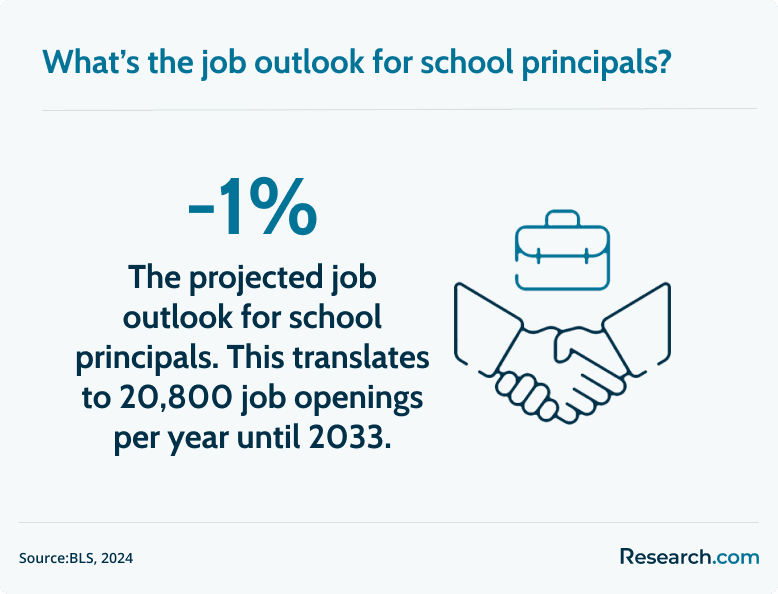
The job market for EdS graduates depends on specialization. Some roles are tied to public school budgets and district hiring cycles, while others connect to counseling, school psychology, instructional design, higher education, or training and development. The Bureau of Labor Statistics projects overall employment in educational instruction and library occupations to grow slower than the average for all occupations from 2023 to 2033, but it still estimates about 868,000 openings each year.
Growth differs by occupation. Training and Development Specialists are projected to grow 12% in the next decade, with about 42,200 openings annually. School and Career Counselors and Advisors are projected to grow 4%, with 29,100 new openings annually (BLS, 2024).
The EdS can help graduates compete for specialized or leadership roles, but local demand matters. Applicants should check hiring trends in their state, certification requirements, district budgets, and whether their target roles prefer or require an EdS.
The table below shows the highest paid careers in Educational Instruction and Library Occupations as of 2024.
Top Salaries in Educational Instruction and Library Occupations
| Occupation | 2024 Median Annual Pay |
| Postsecondary Teachers | $83,980 |
| Instructional Coordinators | $74,720 |
| High School Teachers | $64,580 |
| Librarians and Library Media Specialists | $64,320 |
| Special Education Teachers | $64,270 |
| Middle School Teachers | $62,970 |
| Career and Technical Education Teachers | $62,910 |
| Kindergarten and Elementary School Teachers | $62,310 |
| Adult Basic and Secondary Education and ESL Teachers | $59,950 |
| Preschool Teachers | $37,120 |
Source: BLS, 2024
What are the emerging trends in Education Specialist programs?
EdS programs are evolving as schools rely more heavily on data, digital tools, evidence-based interventions, and flexible graduate learning formats. Current programs increasingly emphasize instructional technology, school improvement analytics, online learning design, mental health practices in schools, equity-centered leadership, and applied research that helps educators make decisions quickly.
Online and hybrid delivery has also become more common because EdS students are often full-time educators. Asynchronous courses, monthly live sessions, cohort models, and fieldwork completed in a student’s current workplace can make the degree more practical for teachers and administrators.
Interdisciplinary preparation may also matter for educators working in curriculum or leadership. For example, educators interested in humanities curriculum, school leadership, or instructional design may compare broader graduate options such as an affordable online master degree in history when deciding whether an EdS or another credential fits their goals.
What are the potential challenges of pursuing an Education Specialist degree?
An EdS can be valuable, but it is not a low-effort credential. Students should expect graduate-level reading, applied research, field assignments, group projects, leadership tasks, and capstone work while often managing a full-time job.
- Workload pressure: Teachers and administrators may need to balance coursework with grading, school events, supervision duties, family responsibilities, and fieldwork.
- Licensure complexity: Certification rules can vary by state, and an online program may not automatically meet requirements where you plan to work.
- Uneven return on investment: Some districts reward an EdS through pay scales, while others may not provide a meaningful salary increase.
- Program fit problems: A leadership-focused EdS may not help someone who really needs a counseling, psychology, doctoral, or research-focused pathway.
- Fieldwork logistics: Practicums, internships, or clinical leadership experiences may require approvals from schools, districts, supervisors, or state agencies.
Students comparing advanced education credentials should also look at alternatives in related fields. For example, understanding masters in library science cost can help educators evaluate whether library science, curriculum leadership, administration, or another route offers the best professional fit.
How does an EdS degree compare to other advanced education credentials?
The EdS is not the same as a master’s degree, doctoral degree, certificate, or endorsement. Its strongest advantage is advanced practice preparation. Its main limitation is that it may not carry the research depth or academic status of a doctorate.
| Credential | Main Purpose | Best For | When It May Not Fit |
| Master’s in Education | Graduate foundation for teaching, leadership, curriculum, counseling, or specialization. | Educators who need their first graduate credential. | Those who already hold a master’s and need post-master’s leadership preparation. |
| Education Specialist Degree | Post-master’s, practice-focused preparation for advanced education roles. | Educators seeking specialized leadership or applied expertise without a full doctorate. | Students who need a research doctorate or a credential outside education. |
| Doctor of Education | Advanced professional doctorate focused on leadership, applied research, and systems change. | Educators pursuing executive leadership, doctoral credentials, or advanced research-based practice. | Students who want a shorter credential with fewer research demands. |
| Graduate Certificate or Endorsement | Narrow credential for a specific skill, license, or endorsement area. | Educators needing targeted preparation without a full degree. | Those who need a broader post-master’s credential. |
| Master’s in Library Science | Preparation for library, information science, archives, or media specialist roles. | Professionals interested in library and information careers. | Educators focused on school administration, curriculum leadership, or EdS-specific pathways. |
For a different advanced education-related route, compare outcomes for jobs for MLIS degrees before choosing between library science, school media, curriculum leadership, or administration.
Is it feasible to complete an accelerated Education Specialist degree program?
Yes, an accelerated EdS program can be feasible for experienced educators who have a clear goal, reliable weekly study time, and support from their workplace or family. Accelerated options often use compressed courses, multiple start dates, online delivery, and tightly sequenced curricula.
The main advantage is speed. The main risk is overload. A faster program may leave less time for reflection, fieldwork coordination, networking, and applied project development. Before choosing an accelerated pathway, confirm that the program is accredited, meets any licensure requirements, offers adequate faculty support, and provides enough time for practicum or capstone work.
If you are comparing accelerated educator preparation more broadly, this guide on is it possible to get a teaching degree in 2 years can help you understand how compressed education pathways work.
Common mistakes to avoid when choosing an EdS program
| Mistake | Why It Can Hurt You | Better Approach |
| Choosing a program before checking accreditation. | Accreditation can affect aid eligibility, transferability, employer recognition, and licensure. | Verify the institution and program through official accreditation databases. |
| Focusing only on tuition. | Fees, books, travel, testing, and fieldwork costs can change the real price. | Ask for a full cost-of-attendance estimate. |
| Assuming every online program meets your state’s license rules. | State requirements may differ, especially for administration, counseling, and school psychology. | Get written confirmation from the program and your state agency. |
| Selecting a specialization without a job target. | The wrong concentration may not help you qualify for your intended role. | Start with the job title, then match the specialization to that role. |
| Assuming an EdS guarantees a raise. | Salary advancement depends on district or employer policy. | Review your pay scale or ask HR before enrolling. |
| Relying only on rankings. | A ranked program may still be the wrong fit for your state, schedule, or goals. | Use rankings as one factor among accreditation, cost, format, outcomes, and licensure alignment. |
What graduates often value about the EdS experience
Students who benefit most from EdS programs often describe the value in practical terms: they can apply coursework immediately, study while remaining employed, and build leadership skills without leaving their schools or districts. Online students often value live discussions, faculty access, collaborative projects, and the ability to connect theory to real workplace problems.
The strongest EdS experiences usually include clear faculty support, a well-organized cohort, relevant fieldwork, and assignments that connect directly to current professional responsibilities.
References
- Accreditation: Postsecondary education institutions. (2025). U.S. Department of Education. https://www.ed.gov/laws-and-policy/higher-education-laws-and-policy/college-accreditation/accreditation-postsecondary-education-institutions
- Cheapest online Ed.S. Degrees for 2025 - EdDPrograms.org. (2025, January 15). EdDPrograms.org. https://www.eddprograms.org/eds-degrees/affordable-online-eds-degrees/
- COE - Graduate Degree Fields. (2024). https://nces.ed.gov.qipservices.com/programs/coe/indicator/ctb
- Educational instruction and library occupations. (2025, April 18). Bureau of Labor Statistics. https://www.bls.gov/ooh/education-training-and-library/
- Educational specialist < Saint Peter's University. https://catalogs.saintpeters.edu/graduate/graduateeducation/educationspecialist/
- Online Education Specialist (EdS) in Curriculum Leadership Degree. William Woods University. https://www.williamwoods.edu/academics/online/graduate/education_specialist_degree_in_curriculum_leadership.html
- PLUS Loans | Federal Student Aid. (2025). https://studentaid.gov/understand-aid/types/loans/plus
- Preprimary, Elementary, and Secondary Education. April 2023. NCES. https://nces.ed.gov/programs/coe/pdf/2023/clr_508.pdf
- Public Service Loan Forgiveness | Federal Student Aid. (2025). https://studentaid.gov/manage-loans/forgiveness-cancellation/public-service
- Richmann, K. (2023, November 29). The 15 cheapest education specialist degree online Programs. GetEducated | Review, Rate, Rank & Compare Online Colleges & Degrees. https://www.geteducated.com/online-college-ratings-and-rankings/education-specialist-degree-online-prek-12/
- Subsidized and Unsubsidized Loans | Federal Student Aid. (2025). https://studentaid.gov/understand-aid/types/loans/subsidized-unsubsidized
- South College. (2025, April 15). Educational Specialist - South College. https://www.south.edu/program/educational-specialist/
- Teaching Degrees. (2023, January 13). Educational specialist degree programs. Teaching Degrees. https://www.teachingdegrees.com/programs/educational-specialist
- What does an Education Specialist do? Career Overview, Roles, Jobs | ISEEN. Independent Schools Experiential Education Network. https://jobs.iseeninfo.com/career/education-specialist-3
Key Insights
- An EdS is best understood as a post-master’s, practice-focused credential for educators who want advanced leadership or specialization without completing a doctorate.
- Most EdS programs require 30 to 36 credit hours and commonly take 16 months to 2 years, although some schools allow longer completion windows.
- Cost varies widely. Online EdS programs average around $17,000, with examples ranging from approximately $8,900 to $22,200, plus possible non-tuition costs of $1,000 to $3,500 per year.
- Salary value depends on role and employer policy. NCES reported an average base salary of $70,500 for full-time public school teachers with an EdS degree, compared with $67,000 for those with only a master's degree and $52,500 for those with only a bachelor's degree.
- The most important selection factor is fit: your program should match your intended role, state licensure requirements, accreditation expectations, fieldwork needs, budget, and schedule.
- Online EdS programs can be rigorous and practical for working educators, but students must verify state certification alignment before enrolling.
- Do not choose an EdS based only on rankings or tuition. Ask whether the degree will help you qualify for the role, license, endorsement, pay lane, or doctoral pathway you actually want.
Other Things You Should Know About Education Specialist Degree Programs
Many EdS programs do not require a traditional dissertation, but some require a capstone, field project, or applied research paper. A few universities still expect a dissertation-like study. Program handbooks and accreditation rules set the exact graduation requirement, so students should verify the final project before enrolling.
Admission to an EdS program in 2027 typically requires a master's degree in education or a related field, along with a valid teaching license. Some programs may also require a minimum of two years of relevant professional experience in education or administration.
In 2027, EdS programs typically offer formats such as full-time, part-time, online, and hybrid options. These formats accommodate working educators' schedules and vary in duration, spanning from one to three years. The flexibility allows educators to balance their professional responsibilities while advancing their education.