
2027 Best Online Doctorate in Education Administration Programs

Co-Founder and Chief Data Scientist
Choosing an online Doctorate in Education Administration is a high-stakes decision: the degree can support advancement into senior leadership, but it also requires years of coursework, research, and careful financial planning. This guide is for educators, administrators, training leaders, and higher education professionals who want a flexible doctoral path without stepping away from work. You will learn what an online Ed.D. in education administration includes, how programs differ, what careers it can support, how much graduates may earn, what to check before enrolling, and how to compare programs beyond rankings alone.
Quick answer: Is an online doctorate in education administration worth considering?
An online Doctorate in Education Administration can be a strong option for experienced education professionals who want to move into executive, policy, superintendent, higher education, curriculum, consulting, or organizational leadership roles. It is most useful when the program is accredited, aligned with your target role, affordable relative to your expected career benefits, and flexible enough to fit your work schedule. It is not the right choice for every educator; if your goal is classroom advancement only, a lower-cost master’s degree, endorsement, or certificate may offer a faster return.
What are the benefits of getting an online doctorate in education administration?
- Access to senior leadership paths. Graduates may pursue leadership opportunities in K-12 systems, higher education, healthcare training, nonprofit education, corporate learning, and policy organizations. Possible roles include Chief Executive Officer, Training and Development Manager, College President, Health Care Clinic Director, school administrator, superintendent, curriculum director, and education consultant.
- Potential for higher earnings in advanced roles. The average annual salary of a School Administrator in the U.S. is $119,514. A college president in the United States receives an average wage of $331,218 yearly. Actual pay depends on institution type, location, experience, responsibility level, and whether the role is in K-12, higher education, government, nonprofit, or private industry.
- Work-compatible doctoral study. Online Ed.D. programs are commonly designed for working professionals. Many allow students to complete coursework remotely, attend asynchronous classes, and continue applying doctoral concepts directly in their current schools or organizations.
- Practical leadership training. Unlike research-heavy doctoral pathways that primarily prepare graduates for academic research careers, many Ed.D. programs focus on applied problem-solving, organizational improvement, policy implementation, and evidence-based leadership.
What can I expect from an online doctorate in education administration?
An online Doctorate in Education Administration is an applied doctoral program for professionals who want to lead schools, districts, colleges, universities, education agencies, training departments, or mission-driven organizations. Most programs combine leadership theory, applied research, finance, policy, law, organizational change, and a dissertation or capstone project connected to real education problems.
Students are typically expected to strengthen the following capabilities:
- Strategic planning for schools, districts, colleges, or education organizations
- Decision-making using research, assessment data, and organizational evidence
- Policy analysis and implementation
- Resource management, budgeting, and staffing strategy
- Leadership during institutional change, reform, or crisis
- Ethical communication with students, faculty, families, boards, agencies, and communities
Common curriculum areas include:
- Educational policy
- Resource management
- Organizational leadership
- Analytical, critical, and innovative thinking skills
Where can I work with an online doctorate in education?
Graduates with an online doctorate in education administration may work in traditional school settings, higher education, workforce learning, public agencies, or private-sector education roles. The degree is most valuable when paired with relevant experience, a leadership record, and any license or certification required for the intended position.
- K-12 schools
- Higher education institutions
- Healthcare organizations
- Nonprofit entities
- Educational consulting firms
- Research organizations
- Government agencies
- Human resources departments
- Corporate training divisions
- Professional development organizations
How much can I make with an online doctorate in education?
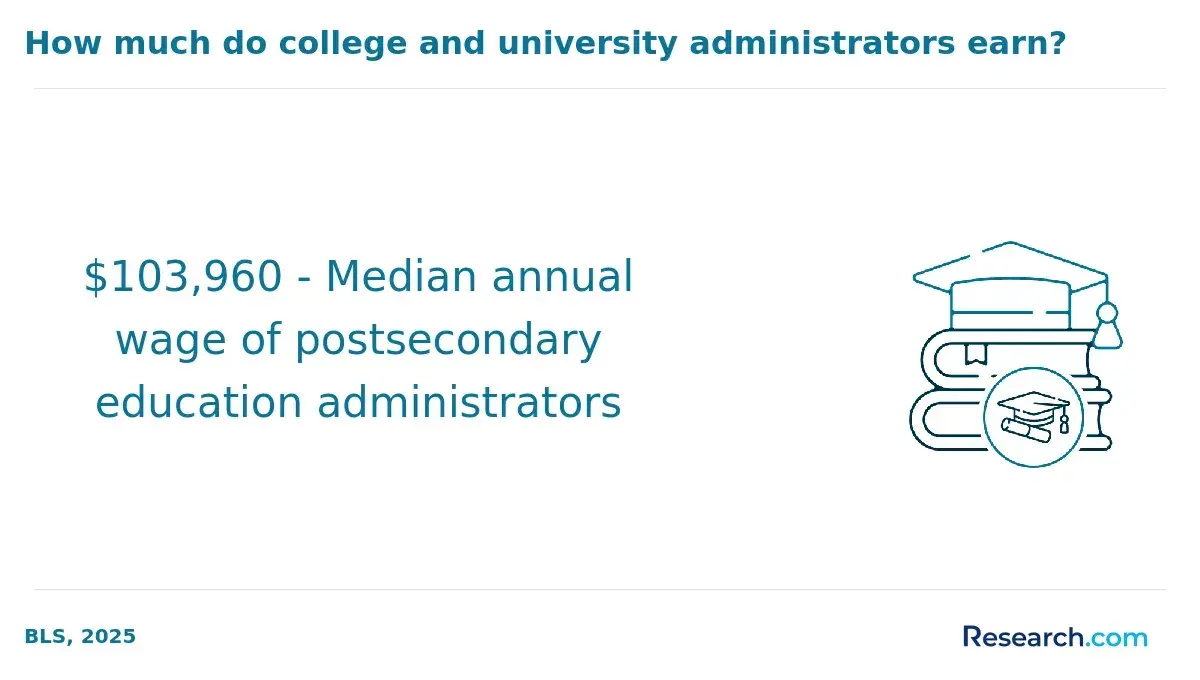
Salary outcomes for graduates vary widely. A doctorate may strengthen a candidate’s qualifications for leadership, research, teaching, policy, or executive roles, but it does not guarantee a promotion or a specific salary. Pay is affected by location, employer type, prior experience, bargaining agreements, leadership scope, and institutional budget.
For example, postsecondary teachers, a common career path for a doctorate in education, have a median annual salary of $83,980. It also has a job growth projected to increase by 7% from 2024 to 2034.
Examples of career paths and salary figures include:
- School administrator: $119,514
- College president: $331,218
- School principals: $118,410
- Curriculum directors: $152,018
- Training and development managers: $137,782
- Research directors: $198,836
- 2027 list of leading online Doctorate in Education Administration programs
- How long does an online doctorate in education administration take?
- Online Ed.D. vs. on-campus Ed.D.: how do they compare?
- What does an online doctorate in education administration cost?
- Financial aid options for online Ed.D. students
- Admission requirements for an online doctorate in education administration
- Common courses in education administration doctoral programs
- Specializations available in online education administration doctorates
- Cost, ROI, and financial return considerations
- How to choose the best online doctorate in education administration program
- Accreditation for online doctorate programs in education administration
- Career paths for online education administration doctoral graduates
- Return on investment of an online doctorate in education administration
- Job market outlook for education administration doctoral graduates
- Digital technologies used in online education administration doctoral programs
- Related education pathways that can complement an Ed.D.
- How an online doctorate develops leadership capacity
- Challenges to consider before enrolling
- Accelerated Ed.D. programs for faster doctoral completion
2027 List of the Best Online Doctorate in Education Administration Program
How do we rank schools?
A doctorate is a major commitment of time, money, and professional energy, so students need clear information before narrowing their options. Research.com’s experts reviewed online doctorate in education administration programs for 2027 using government and education data sources, along with program-level factors that matter to prospective doctoral students.
Ranking inputs include data from:
- The Integrated Postsecondary Education Data System (IPEDS) database
- Peterson’s database, including their Distance Learning Licensed Data Set
- College Scorecard database
- National Center for Education Statistics
Our experts also weigh factors such as graduation rate, student-faculty ratio, and program focus. More details about the ranking process are available on our methodology page.
1. Concordia University Chicago
Concordia University Chicago offers an online leadership Ed.D. with education leadership specializations, faculty-led doctoral coursework, a comprehensive exam, and a dissertation requirement. The program emphasizes ethical instructional leadership, practical decision-making, effective communication, and understanding diverse student populations.
- Program Length: Varies
- Tracks/Concentration: N/A
- Cost Per Credit: $753
- Required Credits to Graduate: 61-67
- Accreditation: Council for the Accreditation of Counseling and Related Educational Programs
2. Texas Tech University
Texas Tech University provides a hybrid online doctorate in educational administration for students connected to higher education work. Most coursework is completed online, but students must attend campus-based orientation and professional development sessions. Applicants are expected to have full-time professional experience and a clear relationship to higher education.
- Program Length: Three years
- Tracks/Concentration: Community College Administration or Higher Education College/University Administration
- Cost Per Credit: $9,390 (estimated total tuition for 30 hours)
- Required Credits to Graduate: 60
- Accreditation: Southern Association of Colleges and Schools Commission on Colleges
3. University of West Georgia
The University of West Georgia offers an online doctor of education in higher education administration for students throughout the U.S. Its asynchronous course delivery can help working professionals manage doctoral study around employment, while the curriculum focuses on leadership, problem-solving, and major issues affecting education.
- Program Length: Three to five years
- Tracks/Concentration: N/A
- Cost Per Credit: $852 (Etuition)
- Required Credits to Graduate: 60
- Accreditation: Southern Association of Colleges and Schools Commission on Colleges
4. Indiana University Bloomington
Indiana University Bloomington offers an online Ed.D. in Instructional Systems Technology. The program is designed for professionals interested in improving instructional products, educational training, learning systems, and evaluation through research-based practice.
- Program Length: Varies
- Tracks/Concentration: N/A
- Cost Per Credit: $539.17 (Indiana resident), $638.51 (Non-resident)
- Required Credits to Graduate: 60
- Accreditation: Council for the Accreditation of Educator Preparation
5. University of Arkansas
The University of Arkansas offers a Doctor of Education in Educational Leadership intended for aspiring principals and administrators. The program includes three in-person weekend intensives, giving online students structured opportunities for peer connection and applied leadership development.
- Program Length: Three years
- Tracks/Concentration: N/A
- Cost Per Credit: $437.54
- Required Credits to Graduate: 42
- Accreditation: Higher Learning Commission
6. Andrews University
Andrews University offers a 60-credit doctorate in educational administration with a globalization emphasis. The program includes required study abroad experiences and a 480-hour internship, preparing graduates for university administration, research, teaching, and policy leadership in national and international settings.
- Program Length: Five to seven years
- Tracks/Concentration: N/A
- Cost Per Credit: $27,936 (in-state), $27,936 (out-of-state)
- Required Credits to Graduate: 60
- Accreditation: Higher Learning Commission
7. Arkansas State University
Arkansas State University offers an online doctorate in educational administration for working education professionals who need a structured remote format. The curriculum includes nine pre-doctoral credits, 24 leadership credits, and 27 credits for leadership and dissertation work. Topics include advanced organizational theory and inquiry, education policy and law, politics of education, and schooling in a pluralistic society. Dissertation work begins in the fifth semester and ends with an online defense.
- Program Length: 40 months
- Tracks/Concentration: N/A
- Cost Per Credit: $27,360 (total tuition)
- Required Credits to Graduate: 60
- Accreditation: Council for the Accreditation of Educator Preparation
8. Belhaven University
Belhaven University offers a doctorate in educational administration for education leaders focused on elementary and secondary school settings. The 60-credit curriculum includes a 12-credit dissertation. Coursework is fully online, but students attend three residencies at the main campus in Jackson, Mississippi.
- Program Length: Varies
- Tracks/Concentration: N/A
- Cost Per Credit: $625
- Required Credits to Graduate: 60
- Accreditation: Southern Association of Colleges and Schools Commission on Colleges
9. Central Michigan University
Central Michigan University offers a Doctor of Education in Educational Leadership for professionals who want to guide institutional improvement. Students examine current challenges in PK-12 or higher education and connect leadership theory with applied practice.
- Program Length: Four to six years
- Tracks/Concentration: N/A
- Cost Per Credit: $625
- Required Credits to Graduate: 63-66
- Accreditation: Higher Learning Commission
10. City University of Seattle
City University offers an online doctorate in educational administration with concentrations in higher education and organizational leadership, plus an option to design a specialized study track. The 90-credit program develops culturally responsive leadership, ethical decision-making, strategic thinking, and qualitative and quantitative research skills.
- Program Length: Varies
- Tracks/Concentration: Higher education, organizational leadership
- Cost Per Credit: $795
- Required Credits to Graduate: 90
- Accreditation: Northwest Commission on Colleges and Universities
What graduates say about earning an online doctorate in education administration
-
: "
"Completing my doctorate online let me stay in the classroom while building the leadership skills I needed for advancement. I could study after work, connect assignments to real school issues, and immediately test ideas in my professional setting. The workload was demanding, but the experience helped me lead with more confidence and purpose." - James
"
-
: "
"The online Ed.D. format exposed me to educators from different regions and systems. The discussions challenged my assumptions about policy, equity, and institutional change, while the flexibility made it possible to continue working full time." - Maria
"
-
: "
"I had doubts about whether an online doctorate would feel rigorous, but the faculty interaction and peer collaboration were stronger than I expected. The structure helped me manage family, work, and research while developing the skills to address complex education problems." - Thomas
"
Key Findings
- An online doctorate in education administration can support leadership opportunities in K-12 schools, higher education, healthcare, nonprofit organizations, policy, consulting, and corporate learning. Salary examples include School Administrators at $119,514 and College Presidents at $331,218 annually.
- Core doctoral study areas commonly include leadership, policy governance, research methods, finance, organizational change, and implementation of practical solutions.
- Specialization options may include Adult Education, Organizational Leadership, Diversity and Multiculturalism, Healthcare Professions, and Community College Leadership.
- Many full-time Ed.D. programs are structured for about three (3) years, while part-time paths may take up to seven (7) years. Listed program costs per credit range from approximately $437 to $795, depending on the institution and program design.
- Accreditation from recognized bodies such as the Council for the Accreditation of Educator Preparation and the Higher Learning Commission helps confirm that programs meet established academic standards.
How long does it take to complete an online doctorate in education administration program?
Completion time depends on the program structure, enrollment pace, dissertation timeline, transfer credit policy, and whether the student enters with a master’s degree. Before applying, confirm not only the advertised program length but also how long students typically take to finish the dissertation or capstone.
Most full-time Ed.D. programs are designed for completion in about three years. A common structure includes about two years of coursework followed by about one year focused on dissertation research and writing. Some accelerated programs may allow completion in 24 to 32 months by starting research earlier and requiring year-round coursework.
Part-time students often need four to seven years, depending on course load and dissertation progress. Programs that admit students without a master’s degree may require more than four years because additional graduate coursework or a bridge sequence may be necessary.
| Enrollment format | Typical fit | Important trade-off |
| Full-time online Ed.D. | Students who can handle a heavier academic load while maintaining professional responsibilities | Faster completion, but less flexibility during demanding work seasons |
| Part-time online Ed.D. | Working educators, administrators, and family caregivers who need a slower pace | More manageable schedule, but a longer time to degree |
| Accelerated online Ed.D. | Highly organized students ready for intensive year-round study | Shorter timeline, but limited room for delays in research or life obligations |
How does an online doctorate in education administration program compare to an on-campus program?
Online and on-campus Ed.D. programs can lead to similar academic credentials, but the learning experience differs. The better option depends on your schedule, learning style, location, networking needs, and whether your target role values local face-to-face relationships.
Online programs are often best for students who need to keep working while earning the degree. They may offer asynchronous coursework, remote discussions, digital library access, virtual advising, and limited campus visits. This format can be especially useful for professionals who cannot relocate or attend classes at fixed times every week.
On-campus programs may appeal to students who want in-person faculty access, local networking, cohort immersion, campus-based research resources, or direct participation in university communities. The drawback is that fixed class schedules, commuting, relocation, and campus attendance can be harder to manage alongside work and family responsibilities.
| Factor | Online doctorate | On-campus doctorate |
| Schedule | Often more flexible, especially with asynchronous courses | Usually requires attendance at scheduled class times |
| Networking | Depends on cohort design, residencies, and virtual engagement | Often easier to build local and face-to-face relationships |
| Cost considerations | May reduce commuting, relocation, and housing-related expenses | May involve campus fees, transportation, and housing costs |
| Best for | Working professionals who need location flexibility | Students who value in-person learning and campus immersion |
What is the average cost of an online doctorate in education administration program?
The cost of an online Doctorate in Education Administration varies by institution, credit requirement, tuition model, residency requirement, technology fees, dissertation fees, and whether tuition differs by residency status. A low per-credit price does not always mean the lowest total cost; compare the full number of required credits, fees, travel requirements, and expected time to completion.
Online degrees such as an Ed.D., criminal justice program, or online master’s degree in Christian counseling may reduce expenses tied to relocation, commuting, parking, and campus housing. However, online students may still pay technology fees, residency travel costs, books, software, and dissertation-related expenses.
Some universities offer institutional scholarships, payment plans, employer partnerships, tuition discounts, or graduate aid. Before enrolling, request a total program cost estimate in writing and ask whether tuition can change after you begin.
The table below compares common cost categories for online and in-person study.
| Online Instruction | In-Person Instruction |
| Rental – $1,504/month | Housing – $1,513/month |
| Food/Groceries – $345/month | Campus Meal Plan – $562/month |
| Internet – $50/month | Campus Computer Lab – Free |
| Electricity and Heat – $175/month | Parking Permit – $269/semester |
| Online Learning Fee – $25-$100/semester | Health Services Plan – $2,000/year |
| Books – $1,295/year | Transportation Costs – $1,425/year |
| Books and supplies – $1,295/year | |
| Room Furniture – $970 | |
| Used car – $7,000-$11,000 |
What are the financial aid options for students enrolling in an online doctorate in education administration program?
Online doctoral students should evaluate aid early because graduate funding can differ from undergraduate aid. Start by asking each program for a complete aid estimate, scholarship deadlines, assistantship availability, employer billing options, and whether online students qualify for the same institutional aid as campus students.
- Scholarships and fellowships. Universities may offer doctoral awards based on academic strength, financial need, leadership background, research interest, or service area. Some awards are competitive and require separate applications.
- Loans. Eligible students may use federal student loans, including Direct Unsubsidized Loans and Direct PLUS Loans, to help pay tuition, fees, and living expenses. Compare federal and private loan terms carefully before borrowing.
- Graduate assistantships. Some doctoral students work in teaching, research, assessment, advising, or administrative roles in exchange for a stipend and possible tuition support. Availability may be more limited for fully online students.
- Employer tuition assistance. School districts, colleges, hospitals, nonprofits, and companies may reimburse part of an employee’s tuition. Confirm annual limits, grade requirements, repayment rules, and whether doctoral programs qualify.
- Federal Work-Study program. Students with financial need may qualify for part-time employment support. This option may be relevant for graduate students in an Ed.D. program as well as students comparing other paths, such as the most affordable online human services degrees.
What are the prerequisites for enrolling in an online doctorate in education administration program?
Admission requirements vary, but most online doctorate programs in education administration expect applicants to show graduate-level academic readiness, leadership potential, and meaningful professional experience in education or a related field. Always verify requirements directly with the program because licensure-focused tracks may have additional rules.
Common admission requirements
- Master’s degree. Many programs require a master’s degree in education, leadership, administration, or a related field, such as one of the most affordable online master’s degrees in educational leadership. Some programs may admit bachelor’s-prepared applicants but require bridge coursework or additional credits.
- Professional experience. Applicants are often expected to have several years of relevant work in teaching, school leadership, student services, higher education, policy, training, or administration.
- Official transcripts. Schools typically require transcripts from all colleges attended, including bachelor’s-level work and any graduate coursework. Applicants with associate teaching degree credentials should include those records if requested.
- Interview. Some programs use interviews to evaluate leadership goals, writing readiness, research interests, and fit with the doctoral cohort.
Students still exploring their education specialty may also compare related options, including the most affordable online master’s in special education programs.
Skills that help students succeed
- Advanced communication. Doctoral students must write clearly, defend ideas, lead discussions, and communicate research findings to academic and professional audiences.
- Analytical thinking. Coursework and dissertation work require evaluating evidence, questioning assumptions, interpreting data, and connecting theory to practice.
- Collaboration. Online learning still involves group discussions, peer review, cohort work, and professional networking, so respectful communication and reliability matter.
- Research and data analysis. Students conduct literature reviews, design studies, interpret findings, and use research methods. Those who want deeper preparation in analytics can explore the most affordable online master’s in data analytics programs.
What courses are typically in an online doctorate in education administration program?
Course names differ by university, but most education administration doctorates are built around leadership practice, applied research, policy, finance, governance, and organizational improvement. Students should review syllabi, dissertation expectations, and field experience requirements before choosing a program.
- Leadership in education administration. Students examine leadership theories, organizational behavior, change management, strategic planning, decision-making, and the responsibilities of leaders in schools and education organizations.
- Policy governance. This course focuses on education law, governance structures, institutional accountability, policymaking, ethics, and how policy choices affect learning environments.
- Educational research methods. Students study qualitative and quantitative research design, data collection, analysis, interpretation, and applied inquiry for education problems.
- Curriculum development and assessment. Coursework explores curriculum design, instructional improvement, assessment systems, program evaluation, and evidence-based learning outcomes.
- Finance and budgeting in education. Students learn about budget planning, funding sources, financial accountability, resource allocation, and fiscal decision-making in education settings.
What types of specializations are available in an online doctorate in education administration program?
Specializations help align the doctorate with a specific leadership environment. Choose a concentration based on the problems you want to solve, the population you want to serve, and the credentials expected in your target role.
- Adult education. This focus prepares professionals to design and lead learning for adult students, continuing education, workforce development, and lifelong learning programs.
- Diversity and multiculturalism. Students study leadership strategies for equity, inclusion, multicultural education, access, tolerance-building, and support for diverse learning communities.
- Organizational leadership. This concentration develops leadership skills for managing teams, systems, change, and strategy inside and outside traditional academic institutions.
- Healthcare professions. This path supports professionals who want to lead healthcare education, train nurses and medical personnel, or design learning programs for healthcare organizations.
- Community college leadership. Students prepare for administrative roles in two-year colleges through coursework in adult learning, research, organizational strategy, student success, and resource management.
If you are comparing education specialties before committing to a doctorate, you can also review online colleges for early childhood education.
Comparing Costs and Financial Returns of an Online Education Doctorate
The financial value of an online education doctorate depends on more than tuition. Students should compare total cost, opportunity cost, borrowing, employer support, time to completion, and the likelihood that the degree will help them qualify for the roles they want.
A practical ROI review should include the following questions:
- Does the program lead to the license, endorsement, or administrative credential required in your state or sector?
- Will your employer recognize the degree for salary advancement, promotion, or tuition reimbursement?
- Can you complete the dissertation within the advertised timeline?
- Are residencies, travel, books, fees, and technology included in the cost estimate?
- Would a master’s degree, certificate, or superintendent endorsement meet your goal at lower cost?
Online programs may reduce commuting, housing, and campus expenses, but they still require disciplined budgeting. Students comparing broader education options can research ways to earn an education degree online while managing total cost.
How to Choose the Best Online Doctorate in Education Administration Program
The best online doctorate is not automatically the highest-ranked or fastest program. It is the program that matches your career goal, meets accreditation expectations, fits your schedule, supports your research interests, and has a cost you can justify.
- Accreditation first. Confirm institutional accreditation through a recognized accreditor. If the program prepares students for educator licensure or administrative certification, verify state approval and requirements before enrolling.
- Curriculum fit. Look for coursework in leadership, research methods, policy, law, finance, organizational change, and the education sector you plan to serve.
- Specialization alignment. Choose a concentration that matches your target role, such as K-12 leadership, higher education administration, community college leadership, or organizational leadership.
- Dissertation or capstone support. Ask how students select topics, choose chairs, access research resources, and stay on schedule during the final project stage.
- Learning platform quality. A strong online program should provide reliable technology, digital library access, interactive discussions, research databases, faculty feedback, and collaboration tools.
- Reputation and outcomes. Rankings can be useful, but they should not be the only factor. Review graduation rates, student support, alumni roles, faculty expertise, and how well the program serves working professionals.
- Total cost. Compare tuition, fees, required credits, residency travel, payment plans, employer reimbursement, and financial aid before committing.
| Question to ask | Why it matters |
| Is the institution accredited by a recognized accreditor? | Accreditation affects degree recognition, aid eligibility, and sometimes licensure pathways. |
| Does the program meet my state’s administrator licensure rules? | Online programs may not automatically satisfy every state’s requirements. |
| How many students finish the dissertation on time? | The dissertation stage often determines the real time and cost of completion. |
| Are online students eligible for the same support services as campus students? | Advising, library access, writing support, and research help can affect persistence. |
| What is the total estimated program cost? | Per-credit tuition alone can hide fees, residencies, and extra expenses. |
Are Online Doctorate in Education Administration Programs Accredited?
Accreditation is one of the most important checks before enrolling in an online doctorate in education administration. An accredited institution has been reviewed for academic quality, faculty qualifications, student support, and institutional stability. Accreditation can also affect access to federal financial aid, employer reimbursement, transferability of credits, and professional credibility.
Students should verify accreditation through recognized sources and confirm whether programmatic accreditation or state approval is required for their intended role. Some education programs may reference the Council for the Accreditation of Educator Preparation (CAEP), while institutions may hold accreditation from organizations such as the Higher Learning Commission or regional accreditors. If you are also building subject-area expertise, a related program such as a master’s in elementary math education may provide additional academic grounding.
What career paths are available for graduates of an online doctorate in education administration program?
An online Doctorate in Education Administration can support advancement into leadership, teaching, policy, consulting, and organizational roles. The right path depends on your prior experience and whether the position requires licensure, faculty credentials, administrative certification, or sector-specific expertise.
- University administrator
- School superintendent
- Chief academic officer
- Educational consultant
- Policy maker
- Higher education instructor or professor
| Career direction | Typical focus | Best fit for |
| K-12 administration | School operations, district leadership, instructional improvement, compliance | Experienced teachers, principals, and district leaders |
| Higher education administration | Student success, academic affairs, enrollment, institutional strategy | College staff, faculty, and higher education professionals |
| Curriculum and instruction leadership | Program design, assessment, instructional quality, learning outcomes | Curriculum specialists and instructional leaders |
| Corporate or nonprofit learning | Training systems, leadership development, workforce education | Learning and development professionals |
| Policy and consulting | Education reform, research, evaluation, strategic advising | Professionals with strong research and systems-thinking skills |
What is the return on investment of an online doctorate in education administration?
The ROI of an online doctorate in education administration should be measured through career mobility, salary potential, leadership access, professional credibility, and personal goals. The degree may help graduates compete for senior roles, but outcomes are not automatic. A candidate’s experience, network, certifications, leadership record, and local job market remain important.
For some students, ROI comes from qualifying for executive or administrative positions. For others, it comes from research expertise, consulting opportunities, higher education teaching, or a stronger voice in institutional change. Students comparing earnings opportunities in education may also review high-paying jobs with a master’s in education to determine whether a doctorate is necessary for their target path.
What is the job market for graduates with an online doctorate in education administration program?
The job market for Ed.D. graduates is strongest when candidates combine doctoral training with relevant leadership experience. High-level roles such as provost, academic dean, superintendent, and college president are competitive because institutions typically have limited numbers of these positions. The doctorate can strengthen a candidate’s profile, but it should be paired with measurable leadership accomplishments.
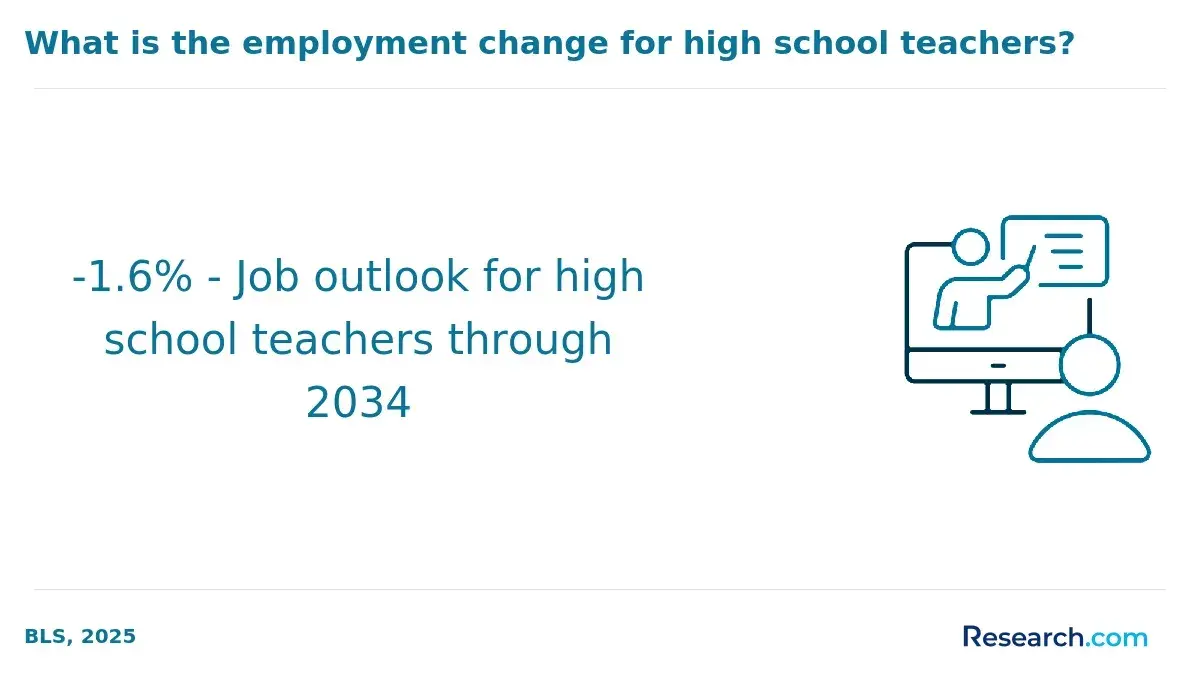
The job market for postsecondary teachers is projected to grow by 8% by 2032. Demand may vary by discipline, institution type, budget conditions, location, and whether roles are full time, adjunct, administrative, or hybrid faculty-administrator positions. Specializations such as medical teaching may also see rising demand.
The table below shows the largest employers for postsecondary teachers:
| Employers | Percentage |
| Colleges, universities, and professional schools; private | 41% |
| Colleges, universities, and professional schools; state | 39% |
| Junior colleges; local | 10% |
| Junior colleges; state | 6% |
An online Ed.D. can be valuable for professionals seeking research exposure, mentorship, leadership frameworks, and practical tools for institutional improvement. However, students should evaluate local hiring conditions and role requirements before assuming the degree alone will lead to advancement.
How are emerging digital technologies integrated into online doctorate programs in education administration?
Online doctorate programs increasingly use digital tools to support collaboration, research, advising, and applied leadership practice. Students may work through virtual classrooms, discussion boards, video conferences, digital libraries, analytics platforms, shared research workspaces, and simulation-based assignments. These tools can help candidates practice data-informed decision-making and collaborate with peers across geographic regions.
Technology also changes what education leaders need to know. Administrators are increasingly expected to understand online learning quality, digital equity, student data privacy, AI-supported workflows, analytics dashboards, and technology adoption in schools or colleges. Students interested in information management and academic research environments may also explore library science degree career paths.
What Other Educational Paths Can Complement an Online Doctorate in Education Administration?
An Ed.D. is only one part of a professional learning plan. Some students benefit from pairing doctoral leadership study with subject-area expertise, licensure preparation, certificates, or specialized graduate degrees. For example, professionals focused on middle or high school leadership may want deeper preparation through an online secondary education degree. Others may benefit from early childhood, special education, instructional technology, data analytics, or curriculum-focused training.
The best complementary path depends on your leadership goal. A superintendent candidate may prioritize licensure and district finance. A higher education administrator may need enrollment management or student affairs expertise. A learning and development leader may need organizational leadership, analytics, or adult learning specialization.
How does an online doctorate in education administration prepare you for effective leadership?
An online Doctorate in Education Administration develops leadership by connecting research, practice, ethics, and organizational strategy. Students learn to diagnose institutional problems, use evidence responsibly, manage people and resources, and communicate with stakeholders who may have competing priorities.
- Strategic leadership development. Students learn how to set long-term goals, align resources, evaluate progress, and make decisions that support sustainable improvement in K-12 schools, colleges, universities, nonprofits, or education agencies.
- Transformational change in education. Coursework often examines how leaders guide curriculum reform, technology adoption, culture change, and system redesign while maintaining trust and accountability.
- Data-driven decision-making. Doctoral students learn to interpret student achievement data, survey results, financial reports, assessment findings, and research evidence to inform policy and practice.
- Managing diverse educational environments. Programs may address diversity, equity, inclusion, access, and culturally responsive leadership so graduates can serve varied student, faculty, staff, and community populations.
- Team and partnership building. Education leaders must work across departments, boards, agencies, families, community organizations, and institutional partners. Online Ed.D. programs often require collaboration that mirrors these real leadership demands.
- Ethical and legal leadership. Students examine issues such as student rights, employee policies, institutional governance, accountability, contracts, and decision-making under legal and ethical constraints.
Graduates may use these skills in roles such as school superintendent, college president, academic dean, education policy advisor, or organizational learning leader. Students who want to influence early learning systems may also consider an affordable early childhood education degree online as a complementary route.
What potential challenges should be considered when pursuing an online doctorate in education administration?
Online doctoral study is flexible, but it is not easy. Students must manage long-term motivation, heavy reading and writing, research deadlines, and professional responsibilities without the daily structure of a campus environment. Before enrolling, be honest about your schedule, support system, writing readiness, and tolerance for independent work.
- Isolation in asynchronous courses. Online learning can feel disconnected if the program lacks active faculty engagement, cohort interaction, or structured peer support.
- Limited face-to-face networking. Students pursuing local leadership roles may need to build additional professional connections outside the program.
- Dissertation delays. Many students move through coursework smoothly but struggle with topic approval, research design, data collection, or writing momentum.
- Technology demands. Reliable internet, comfort with digital platforms, and access to research tools are essential.
- Work-life pressure. Full-time employment, family responsibilities, and doctoral deadlines can collide during budget seasons, school-year transitions, or dissertation milestones.
Students who want a shorter timeline may compare accelerated EdD programs, but speed should not come at the expense of accreditation, support, or dissertation quality.
Technology can help reduce some barriers through virtual collaboration, research databases, analytics platforms, and structured dissertation milestones. Students comparing accelerated education pathways may also review options to fast track teaching degree education and teaching.
Common mistakes to avoid when choosing an online Ed.D. in education administration
- Choosing based only on speed. A shorter program is useful only if you can handle the workload and still complete a rigorous dissertation or capstone.
- Ignoring accreditation and licensure requirements. Accreditation and state approval can affect financial aid, job recognition, and eligibility for administrative credentials.
- Comparing only tuition per credit. Total cost also includes required credits, fees, books, travel, residencies, and time spent in dissertation continuation.
- Assuming online means easier. Online doctoral programs require independent time management, strong writing skills, and consistent participation.
- Overlooking faculty fit. Dissertation progress is easier when faculty expertise aligns with your research topic and professional goals.
- Expecting salary guarantees. A doctorate can improve qualifications, but promotions and pay increases depend on the labor market, employer policies, and your experience.
Accelerated Ed.D. Programs: Fast-Track Your Path to Leadership
Accelerated Ed.D. programs are designed for professionals who want to complete doctoral requirements in a shorter period. These programs may use intensive course schedules, year-round enrollment, earlier dissertation planning, and tightly structured cohorts. They can be appealing for experienced educators who already have a clear research interest and strong time-management skills.
How to choose the right accelerated Ed.D. program
- Confirm accreditation. Look for institutional accreditation and, when relevant, program recognition from organizations such as the Council for the Accreditation of Educator Preparation (CAEP).
- Match the specialization to your target role. A fast program still needs to prepare you for your intended area, such as K-12 leadership, higher education administration, organizational leadership, or community college leadership.
- Evaluate support services. Prioritize programs with strong advising, library access, research support, writing help, and dissertation coaching.
- Ask about realistic completion rates. An advertised timeline is less useful than knowing how many students actually finish on that schedule.
If you are comparing accelerated degree formats across fields, Research.com’s guide to fast online business degree programs offers additional perspective on evaluating speed, flexibility, and quality.
Key Insights
- An online Doctorate in Education Administration is best for experienced professionals who want leadership, policy, higher education, superintendent, consulting, or organizational learning roles.
- The strongest programs combine accreditation, relevant specialization, applied research, dissertation support, and flexible delivery for working adults.
- Program length can vary substantially: many full-time options target about three years, while part-time study may extend to seven years.
- Cost comparisons should include total credits, fees, residencies, travel, books, technology, dissertation costs, and the likelihood of employer support.
- Salary potential can be strong in senior roles, but a doctorate does not guarantee advancement. Prior experience, licensure, leadership record, and local job demand remain critical.
- Before enrolling, verify accreditation, state licensure requirements, faculty research fit, online student support, and realistic dissertation timelines.
References:
- Bureau of Labor Statistics, U.S. Department of Labor, Occupational Outlook Handbook, Postsecondary Teachers, at https://www.bls.gov/ooh/education-training-and-library/postsecondary-teachers.htm
- Salary.com. (2024). *Research Director Salary*. Retrieved May 15, 2024, from https://www.salary.com/research/salary/recruiting/research-director-salary
- Salary.com. (2024). *School Administrator Salary*. Retrieved May 15, 2024, from https://www.salary.com/research/salary/recruiting/school-administrator-salary
- Salary.com. (2024). College President Salary. Retrieved May 15, 2024, from https://www.salary.com/research/salary/benchmark/college-president-salary
- Salary.com. (2024). Curriculum Director Salary. Retrieved May 15, 2024, from https://www.salary.com/research/salary/benchmark/curriculum-director-salary
- Salary.com. (2024). School Principal Salary. Retrieved May 15, 2024, from https://www.salary.com/research/salary/benchmark/school-principal-salary
- Salary.com. (2024). Training & Development Manager Salary. Retrieved May 15, 2024, from https://www.salary.com/research/salary/alternate/training-and-development-manager-salary
Other Things You Should Know About Online Doctorate in Education Administration Programs
Yes. Most online EdD or PhD programs in education administration require a dissertation or a dissertation-in-practice for graduation. Many programs set a minimum of 12 to 18 dissertation credits, and students usually defend the final project before a faculty committee.
Most top online doctorate programs in education administration in 2027 require the GRE for admission. However, some programs may waive this requirement if you have a master's degree with a high GPA or extensive professional experience in education administration.


