2027 Cybersecurity vs. Computer Science Degree Programs: Explaining the Difference

Co-Founder and Chief Data Scientist
Choosing between cybersecurity and computer science is really a choice between two different ways of working with technology. Computer science is the broader computing degree: it teaches you how software, algorithms, systems, data, and emerging technologies are built. Cybersecurity is more specialized: it teaches you how to protect systems, investigate threats, reduce risk, and respond when attacks happen.
The decision matters because both fields are tied to strong technology demand, but they lead to different coursework, projects, certifications, internships, and early-career job titles. Korn Ferry research points to a possible 85 million unfilled jobs by 2030 because of a skills gap, making it important for students to choose a path that matches both employer needs and their own strengths.
This guide compares cybersecurity vs. computer science degrees by curriculum, career paths, salaries, program cost, online learning options, accreditation, specializations, job outlook, and return on investment. It is designed for students deciding on a major, working adults considering a career change, and technology professionals weighing whether to specialize in security or build a broader computing foundation.
Quick answer: cybersecurity vs. computer science degree
A computer science degree is usually the better choice if you want the most flexible technology degree and are interested in programming, software engineering, artificial intelligence, data structures, algorithms, databases, or systems design. A cybersecurity degree is usually the better choice if you want to focus on digital defense, network security, ethical hacking, incident response, risk management, and compliance.
Neither degree is automatically “better.” Computer science offers broader career flexibility, while cybersecurity offers a more targeted path into security roles. Students who like building software, solving abstract problems, and learning computing theory often fit computer science. Students who like investigating threats, defending systems, working under pressure, and thinking like an attacker often fit cybersecurity.
What are the main benefits of a cybersecurity vs. computer science degree?
- Computer science is broader. It can prepare students for software development, artificial intelligence, data science, cloud computing, systems architecture, and cybersecurity roles because it builds a deep foundation in programming, algorithms, and computing theory.
- Cybersecurity is more specialized. It can lead to focused roles such as penetration tester, forensic analyst, security consultant, incident responder, and security analyst for students who want to actively defend digital systems.
- Both degrees can lead to strong technology careers. Computer science graduates are hired across technology, finance, healthcare, gaming, research, and startups, while cybersecurity graduates are needed by government agencies, financial institutions, healthcare systems, corporations, and managed security service providers.
- The skill emphasis is different. Computer science students spend more time on coding, algorithms, software projects, and systems design, while cybersecurity students spend more time on networks, operating systems, firewalls, threat analysis, security tools, incident response, and ethical decision-making.
What can I expect from a cybersecurity vs. computer science degree?
Students in both majors study computing, but the learning experience is not the same. A computer science degree usually starts with programming and mathematics, then moves into data structures, algorithms, databases, operating systems, computer architecture, software engineering, and often electives in artificial intelligence, machine learning, graphics, data science, or distributed systems.
A cybersecurity degree usually begins with computing fundamentals, networking, operating systems, and scripting before moving into network defense, ethical hacking, cryptography, digital forensics, risk management, security governance, and incident response. Many programs also prepare students for industry certifications or hands-on labs using security tools.
| Decision point | Computer science degree | Cybersecurity degree |
| Primary focus | Building, improving, and understanding software and computing systems | Protecting systems, data, users, networks, and infrastructure from threats |
| Best fit for students who enjoy | Coding, algorithms, software design, AI, data structures, and problem-solving | Threat detection, ethical hacking, investigation, risk analysis, and defense strategy |
| Typical coursework | Programming, algorithms, databases, computer architecture, operating systems, software engineering | Network security, cryptography, penetration testing, digital forensics, governance, incident response |
| Career flexibility | Very broad across many technology functions | More focused on security, risk, compliance, and cyber operations |
| Common early roles | Software developer, web developer, data analyst, systems analyst, junior developer | Security analyst, SOC analyst, penetration testing associate, incident response analyst |
Where can I work with a cybersecurity vs. computer science degree?
Cybersecurity graduates typically work wherever organizations need to protect sensitive data, critical systems, customer records, financial transactions, or regulated infrastructure. Common employers include government agencies, defense contractors, banks, insurance companies, hospitals, technology vendors, cybersecurity firms, consulting companies, and managed security service providers.
Computer science graduates have a wider range of employer options because nearly every industry needs software, data systems, automation, cloud infrastructure, and digital products. They may work for technology companies, financial services firms, healthcare organizations, research institutions, retailers, manufacturing companies, gaming studios, startups, and public-sector organizations.
| Industry or employer type | Cybersecurity roles are common when... | Computer science roles are common when... |
| Government and defense | Agencies need secure networks, threat intelligence, compliance, and incident response | Agencies need software systems, data platforms, automation, and infrastructure modernization |
| Financial services | Organizations need fraud prevention, network security, identity management, and risk controls | Organizations need trading platforms, banking apps, analytics systems, and cloud applications |
| Healthcare | Hospitals and vendors need to protect patient data and clinical systems | Organizations need health software, data tools, informatics systems, and operational platforms |
| Technology companies | Products, platforms, and cloud environments need security engineering and testing | Companies need developers, AI engineers, platform engineers, and systems architects |
| Consulting and services | Clients need audits, penetration tests, security strategy, and compliance support | Clients need custom applications, system integrations, analytics, and software modernization |
How much can I make with a cybersecurity vs. computer science degree?
Both fields can lead to competitive salaries, but pay depends on experience, location, employer, specialization, credentials, and the strength of a graduate’s project portfolio or internship background. Salary outcomes are never guaranteed by a degree alone.
According to the U.S. Bureau of Labor Statistics (BLS), the median annual salary for information security analysts was $112,000 in 2023, with top professionals earning over $160,000. Cybersecurity professionals in government agencies, financial institutions, and major technology companies may see higher compensation when their work involves high-risk systems, compliance obligations, or advanced threat response.
Computer science graduates also enter high-paying roles. Software developers earned a median annual wage of $127,000. Graduates who specialize in artificial intelligence, cloud computing, or data science can make well over $150,000, especially in high-demand locations like Silicon Valley, Seattle, and New York.
The practical takeaway is simple: cybersecurity may offer a faster route into a defined security niche, while computer science may provide more long-term flexibility across software, data, AI, systems, and security roles.
- Top Cybersecurity vs. Computer Science Degrees for 2027
- How long does it take to complete a cybersecurity vs. computer science degree program?
- How does an online cybersecurity vs. computer science degree compare to an on-campus program?
- What is the return on investment for cybersecurity vs. computer science degree programs?
- What is the average cost of cybersecurity vs. computer science degree program?
- What are the financial aid options for students enrolling in cybersecurity vs. computer science degree program?
- What are the prerequisites for enrolling in cybersecurity vs. computer science degree program?
- What courses are typically in cybersecurity vs. computer science degree program?
- What types of specializations are available in cybersecurity vs. computer science degree programs?
- How do these programs support interdisciplinary innovation?
- Can interdisciplinary expertise expand your career opportunities?
- How do accreditation and industry partnerships impact program quality?
- What future trends are reshaping cybersecurity and computer science degrees?
- How does one choose the best cybersecurity vs. computer science degree program?
- What career paths are available for graduates of cybersecurity vs. computer science degree programs?
- What is the job market for graduates with cybersecurity vs. computer science degree?
- How does management expertise complement cybersecurity and computer science degrees?
- How do practical experiences and internships shape outcomes in cybersecurity and computer science programs?
Top Cybersecurity vs. Computer Science Degrees for 2027
How do we rank schools?
Choosing a cybersecurity or computer science program involves more than comparing tuition. Students should also consider accreditation, curriculum depth, hands-on learning, transfer policies, student support, internship access, and how well a program aligns with their target role.
Research.com ranks programs using a transparent methodology based on data from sources such as the Integrated Postsecondary Education Data System (IPEDS), Peterson's databases including the Distance Learning Licensed Data Set, and the College Scorecard from the National Center for Education Statistics. These sources help students compare schools using measurable factors rather than relying only on reputation or marketing claims.
How to use this list
The programs below include both cybersecurity and computer science options. Treat the list as a starting point, not a final decision. Before enrolling, verify current tuition, fees, delivery format, transfer credit rules, accreditation, graduation requirements, and whether the curriculum supports your intended career path.
Top Cybersecurity Programs
1. Illinois Institute of Technology
The Illinois Institute of Technology offers a Bachelor of Science in Applied Cybersecurity and Information Technology. The program combines technical cybersecurity, information technology, management, compliance, and legal concepts, making it a fit for students who want both hands-on security skills and an understanding of organizational risk.
- Program Length: Typically 4 years for full-time students.
- Tracks/Concentrations: Applied Cybersecurity and Information Technology
- Cost per Credit: $790
- Required Credits to Graduate: 129 credit hours
- Accreditation: Higher Learning Commission.
2. George Mason University
George Mason University offers a Bachelor of Applied Science in Cyber Security for students building on an Associate of Applied Science (AAS) in Cyber Security. It is designed for transfer students from community colleges such as Northern Virginia Community College (NOVA), Lord Fairfax Community College (LFCC), or Tidewater Community College (TCC), making it especially relevant for students planning a degree-completion route.
- Program Length: Designed as a degree completion program
- Tracks/Concentrations: Cybersecurity
- Cost per Credit: $546.50 - $1,523.50
- Required Credits to Graduate: 120–126 credit hours
- Accreditation: Southern Association of Colleges and Schools Commission on Colleges (SACSCOC).
3. Trevecca Nazarene University
Trevecca Nazarene University offers a Bachelor of Science in Cybersecurity and Digital Forensics. The program emphasizes authentication, forensics, encryption, and cryptography, which can suit students interested in investigative work, security operations, or digital evidence.
- Program Length: 4 years
- Tracks/Concentrations: Cybersecurity and Digital Forensics
- Cost per Credit: $1,150 per credit
- Required Credits to Graduate: 120 credit hours
- Accreditation: Southern Association of Colleges and Schools Commission on Colleges (SACSCOC).
4. Capitol Technology University
Capitol Technology University offers a Bachelor of Science in Cybersecurity with hands-on learning through security challenges and risk assessment activities. The program may appeal to students who want applied technical practice and a cybersecurity-focused academic environment.
- Program Length: 4 years
- Tracks/Concentrations: Cybersecurity
- Cost per Credit: $360 - $455
- Required Credits to Graduate: 120 credit hours
- Accreditation: Accreditation Board for Engineering and Technology (ABET) and designated as a National Center of Academic Excellence in Cyber Defense Education (CAE-CDE) by the NSA.
5. Rider University
Rider University offers a Bachelor of Science in Cybersecurity with Technical Track and Policy Track options. This structure can help students choose between deeper technical preparation and a more governance-oriented security path.
- Program Length: 4 years
- Tracks/Concentrations: Cybersecurity Technical Track and Policy Track
- Cost per Credit: $1,050
- Required Credits to Graduate: 120 credit hours
- Accreditation: Middle States Commission on Higher Education (MSCHE).
Top Computer Science Programs
6. Auburn University
Auburn University offers an online Bachelor of Computer Science for students seeking a flexible undergraduate computing degree. The online format can be useful for working adults, transfer students, or learners who need to study outside a traditional campus schedule.
- Program Length: 4 years
- Tracks/Concentrations: Computer Science
- Cost per Credit: $446 - $1,338
- Required Credits to Graduate: 120 credit hours
- Accreditation: Southern Association of Colleges and Schools Commission on Colleges (SACSCOC).
7. Western Governors University (WGU)
Western Governors University offers an online Bachelor of Science in Computer Science using a competency-based model. The curriculum includes artificial intelligence, machine learning, data structures, and computer theory, and it incorporates industry-recognized certifications such as Linux Essentials and ITIL Foundation without additional cost.
- Program Length: Varies, WGU offers a competency-based model allowing students to progress at their own pace.
- Tracks/Concentrations: Artificial Intelligence (AI), Machine Learning, Data Structures, and Computer Theory.
- Cost per Credit: $4,085 flat-rate tuition per six-month term
- Required Credits to Graduate: 37 courses
- Accreditation: Northwest Commission on Colleges and Universities (NWCCU).
8. Regent University
Regent University offers a Bachelor of Science in Computer Science online and on campus. The program focuses on computational problem-solving while addressing ethical and social issues in technology from a Christian perspective.
- Program Length: 4 years
- Tracks/Concentrations: Computer Science
- Cost per Credit: $665
- Required Credits to Graduate: 120 credit hours.
- Accreditation: Southern Association of Colleges and Schools Commission on Colleges (SACSCOC).
9. National University
National University offers a Bachelor of Science in Computer Science that emphasizes core computing principles and practical preparation for software development, systems analysis, and related technology careers.
- Program Length: 4 years
- Tracks/Concentrations: Computer Science
- Cost per Credit: $370
- Required Credits to Graduate: 120 credit hours.
- Accreditation: WASC Senior College and University Commission (WSCUC).
10. Baker College
Baker College offers a Bachelor of Science in Computer Science focused on technical computing skills for technology-sector roles. Students can use the program to build foundations in programming, data, and software-oriented work.
- Program Length: 4 years
- Tracks/Concentrations: Computer Programming and Data Analytics.
- Cost per Credit: $450
- Required Credits to Graduate: 120 credit hours.
- Accreditation: Higher Learning Commission (HLC)
How long does it take to complete a cybersecurity vs. computer science degree program?
Most bachelor’s degrees in cybersecurity and computer science take about four years for full-time students, but actual completion time depends on transfer credits, course load, program format, prerequisites, and whether the school uses a traditional semester model, accelerated calendar, or competency-based structure.
| Program path | Typical timeline | Best for |
| Traditional bachelor’s degree | Usually four years of full-time study, often around 120–126 credit hours | First-time college students who want a structured academic experience |
| Accelerated program | Some programs can be completed in 2.5 to 3 years | Motivated students who can handle heavier course loads or year-round study |
| Degree-completion program | Varies based on accepted transfer credits | Students with an associate degree or prior college coursework |
| Competency-based or self-paced program | Varies by student progress; some may finish more quickly | Working adults with prior knowledge, discipline, and strong time-management skills |
| Part-time study | Longer than four years | Students balancing work, caregiving, military service, or other commitments |
Cybersecurity degree timeline
- Traditional bachelor’s degree: Typically takes four years of full-time study and commonly requires 120–126 credit hours.
- Accelerated programs: Some schools offer fast-track options that can be completed in 2.5 to 3 years.
- Competency-based and online programs: Schools such as Western Governors University (WGU) allow students to move at their own pace, with some finishing in as little as 18–24 months.
How does an online cybersecurity vs. computer science degree compare to an on-campus program?
Online cybersecurity and computer science degrees can offer the same academic direction as campus programs, but the learning experience is different. Online programs are often better for students who need schedule flexibility, live far from campus, work full time, or want to move through coursework at a controlled pace.
Many online programs now use virtual labs, cloud environments, simulations, remote coding platforms, and collaborative tools to support hands-on learning. This matters in both fields: cybersecurity students need practice with networks, tools, and simulated incidents, while computer science students need repeated coding, testing, debugging, and project development.
Campus programs may offer easier access to in-person faculty support, research labs, student clubs, hackathons, cybersecurity competitions, and local employer connections. They also provide more structured learning, which can help students who need face-to-face accountability.
The trade-off is cost and flexibility. Campus students may pay for housing, commuting, parking, and other local expenses, while online students must be more self-directed. Students exploring cybersecurity careers with no experience may prefer online programs if they want to combine coursework with certification preparation, home labs, or entry-level IT work.
| Format | Advantages | Limitations | Choose this if... |
| Online | Flexible schedule, remote access, often better for working adults, may include virtual labs | Requires self-discipline; networking may take more effort | You need flexibility and can manage independent study |
| On campus | In-person support, campus labs, clubs, research access, easier peer networking | Less schedule flexibility; may add housing or commuting costs | You learn best with structure and want campus-based opportunities |
| Hybrid | Combines remote convenience with some face-to-face engagement | Still requires travel or scheduled attendance | You want flexibility but value periodic in-person contact |
What is the return on investment for cybersecurity vs. computer science degree programs?
Return on investment depends on total program cost, time to completion, debt, transfer credits, internship access, career placement support, and the types of roles you can realistically pursue after graduation. A lower-cost program with strong career support and accepted transfer credits may produce a better ROI than a more expensive program with little hands-on preparation.
For computer science, ROI often comes from broad employability across software engineering, AI, data, web development, systems, and cloud roles. For cybersecurity, ROI often comes from a more direct route into security analyst, penetration testing, digital forensics, or risk management roles, especially when the program includes labs, certifications, and employer partnerships.
Students should be cautious about adding unrelated credentials only because they sound marketable. Interdisciplinary study can help when it supports a clear goal. For example, someone moving toward computational life sciences may compare complementary options such as an affordable biotechnology masters online, but cybersecurity and computer science students should first confirm that additional education improves their specific career plan.
How to evaluate ROI before enrolling
- Calculate total cost, not just tuition. Include fees, technology expenses, books, certification exam costs, commuting, housing, and lost work time.
- Compare degree length. A program that accepts more transfer credits may reduce both cost and time out of the workforce.
- Review outcomes carefully. Ask about graduation rates, job placement support, internship access, and common first jobs for recent graduates.
- Check employer relevance. Look for capstones, labs, coding projects, security competitions, and partnerships with organizations that hire graduates.
- Avoid assuming a salary is guaranteed. Median salaries describe the labor market, not a promise for every graduate.
What is the average cost of cybersecurity vs. computer science degree program?
Costs vary by school type, residency status, online or campus format, transfer credit policy, and whether the institution is public or private. Program fees, lab fees, technology fees, and certification costs can also change the total price.
| Institution or program type | Cybersecurity Degree cost/credit | Computer Science Degree cost/credit |
| Public In-State University | $300 - $600 | $250 - $600 |
| Public Out-of-State University | $500 - $1,200 | $500 - $1,200 |
| Private University | $1,000 - $2,000 | $1,000 - $2,500 |
| Online Programs | $350 - $1,000 | $300 - $1,000 |
| Total Estimated Cost | $30,000 - $90,000 | $30,000 - $100,000 |
Cybersecurity vs. computer science cost: what changes the final price?
Cybersecurity programs may be slightly less expensive in some cases when they are newer, shorter, online, or competency-based. Computer science programs may cost more at some institutions because they can include broader coursework, advanced electives, research opportunities, and high-demand specializations.
Both degrees are part of the larger computer and information technology education category. In 2023, 108,503 bachelor’s degrees were conferred in computer and information technology. Students comparing technology majors may also want to review the difference between data science and computer science degrees, since costs can also differ by specialization, program structure, and institutional reputation.
Questions to ask about cost before enrolling
- How many of my transfer credits will apply directly to the degree?
- Are lab fees, software subscriptions, certification exams, or proctoring fees included?
- Does tuition change for out-of-state online students?
- Can I complete internships or capstones without relocating?
- What happens financially if I need to slow down to part-time study?
What are the financial aid options for students enrolling in cybersecurity vs. computer science degree program?
Cybersecurity and computer science students may qualify for federal aid, grants, scholarships, work-study, employer tuition assistance, military benefits, apprenticeships, and paid internships. Because both fields can lead to roles among the highest paying jobs in computer science field, students should still borrow carefully and compare realistic early-career earnings against total debt.
Federal financial aid for both fields
- FAFSA (Free Application for Federal Student Aid): The main application used to determine eligibility for federal grants, loans, and work-study.
- Federal Pell Grant: Need-based aid for low-income students, up to $7,395 per year for 2024-2025.
- Federal Work-Study: Part-time employment for students who demonstrate financial need.
Scholarships and grants for cybersecurity students
- CyberCorps Scholarship for Service (SFS): Covers tuition, provides a stipend of $25,000+ per year, and includes job placement in government cybersecurity roles.
- Center for Cyber Safety and Education Scholarships: Offers awards up to $5,000 for cybersecurity students.
- (ISC) Undergraduate Cybersecurity Scholarship: Awards up to $5,000 for students pursuing cybersecurity degrees.
- NSA and Department of Defense Scholarships: Available through NSA-designated CAE schools.
Scholarships and grants for computer science students
- Microsoft Tuition Scholarships: Merit-based awards for students in computer science and related fields.
- Google’s Generation Google Scholarship: Awards up to $10,000 for underrepresented groups in computer science.
- National Science Foundation (NSF) S-STEM Scholarships: Supports STEM students with financial need.
- Women in Tech Scholarships: Organizations such as AnitaB.org and Women Who Code provide scholarship opportunities for women in computer science.
Employer tuition reimbursement
Some employers support degrees that build skills relevant to their business needs. Companies such as Amazon, Google, and IBM offer tuition assistance for technology-related education, but eligibility rules vary. Students should ask whether reimbursement requires staying with the employer for a certain period after completing courses.
Military and veteran benefits
- GI Bill® & Yellow Ribbon Program: Can help cover tuition and fees for veterans and active-duty military personnel.
- DoD Cybersecurity Scholarships: May provide tuition assistance in exchange for government service after graduation.
Work-study, internships, and apprenticeships
- Cybersecurity Apprenticeships: Programs such as the Apprenticeship.gov Cybersecurity Initiative offer paid applied experience.
- Tech Internship and Fellowship Programs: Companies such as Facebook, Microsoft, and IBM offer paid internships for computer science students.
What are the prerequisites for enrolling in cybersecurity vs. computer science degree program?
Admissions requirements vary by school, but both majors reward students who are comfortable with logic, problem-solving, technology, and sustained practice. Computer science tends to be more math-intensive, while cybersecurity tends to require comfort with systems, networks, and ethical responsibility.
Computer science degree prerequisites
- Mathematics readiness: Calculus, algebra, and discrete mathematics support the analytical work used in algorithms, systems, and theory.
- Programming exposure: Prior coding experience is not always required, but it can make the first year easier.
- Logical reasoning: Students need to break complex problems into steps, test assumptions, and debug mistakes.
- Strong academic preparation: A solid high school record in math and science is usually helpful, even for the fastest computer science degree options.
Cybersecurity degree prerequisites
- Computer and network basics: Students benefit from understanding how computers, servers, networks, and operating systems work.
- Analytical thinking: Cybersecurity work requires identifying vulnerabilities, patterns, and suspicious behavior.
- Introductory programming or scripting: Cybersecurity students do not always need the same depth of programming as computer science majors, but scripting and automation are valuable.
- Ethical judgment: Security work involves sensitive systems and data, so students must understand legal boundaries and professional responsibility.
What courses are typically in cybersecurity vs. computer science degree program?
Both degrees can create a foundation for a career in tech. Projections from the U.S. Bureau of Labor Statistics indicate that over the next decade, the tech workforce will expand at twice the rate of the overall U.S. job market. Between 2024 and 2034, tech occupations will require an average annual replacement rate of around 6%.
The course mix is one of the clearest ways to decide between the two majors. If the computer science list sounds exciting, you may prefer building technology. If the cybersecurity list sounds more motivating, you may prefer defending and investigating technology.
| Course area | Computer science emphasis | Cybersecurity emphasis |
| Programming | Multiple languages, software design, debugging, and development practices | Scripting, automation, secure coding concepts, and tool use |
| Math and theory | Algorithms, discrete math, computation, data structures | Applied risk analysis, cryptography concepts, and security models |
| Systems | Operating systems, architecture, databases, distributed systems | Operating systems, network defense, endpoint security, and access control |
| Applied projects | Software applications, web systems, databases, AI or data projects | Penetration tests, incident simulations, forensics labs, security assessments |
| Policy and ethics | Professional ethics and social impact of computing | Security governance, compliance, privacy, law, and ethical hacking boundaries |
Core computer science courses
- Programming Fundamentals: Usually includes languages such as Python, Java, or C++ and introduces the logic of software development.
- Data Structures and Algorithms: Teaches efficient ways to organize, search, process, and manipulate information.
- Computer Architecture: Explains how hardware and software interact inside computing systems.
- Operating Systems: Covers how systems manage memory, files, processes, and computing resources.
- Database Management: Introduces database design, queries, storage, and administration.
- Software Engineering: Focuses on planning, building, testing, and maintaining software systems.
Core cybersecurity courses
- Network Security: Covers methods for protecting networks from unauthorized access, misuse, and attacks.
- Cryptography: Introduces techniques for securing information through encoding and decoding.
- Ethical Hacking and Penetration Testing: Teaches students to identify weaknesses by simulating attacks within legal and ethical limits.
- Information Security Risk Management: Covers how organizations identify, prioritize, and reduce security risks.
- Digital Forensics: Focuses on investigating cyber incidents and recovering digital evidence.
- Security Governance and Compliance: Explains legal, regulatory, and policy issues in cybersecurity.
What types of specializations are available in cybersecurity vs. computer science degree programs?
Specializations help students turn a broad degree into a clearer career direction. In 2024, 47% of the cybersecurity workforce were employed in financial services sector where network security is a priority. That example shows why specialization matters: certain industries strongly value particular security or computing skills.
Computer science specializations
- Software Engineering: Focuses on designing, developing, testing, and maintaining software systems.
- Artificial Intelligence (AI) and Machine Learning (ML): Prepares students to build systems that learn from data and make predictions or decisions.
- Data Science and Big Data: Focuses on analyzing large datasets for decision-making. Students comparing cybersecurity vs data science should consider whether they prefer protecting systems or extracting insights from data.
- Computer Graphics and Visualization: Supports work in visual computing, simulations, gaming, and data visualization.
- Networking and Distributed Systems: Focuses on connected systems, networked applications, and distributed computing infrastructure.
- Database Management: Covers database creation, administration, performance, and reliability.
- Human-Computer Interaction (HCI): Focuses on designing technology that people can use effectively.
Cybersecurity specializations
- Network Security: Centers on protecting networks, traffic, devices, and infrastructure.
- Information Security Risk Management: Prepares students to assess and reduce organizational security risks.
- Ethical Hacking and Penetration Testing: Focuses on authorized testing to find vulnerabilities before attackers do.
- Digital Forensics: Trains students to investigate incidents and preserve digital evidence.
- Cryptography: Explores methods for securing communications and data.
- Security Governance and Compliance: Focuses on policies, laws, audits, and regulatory requirements.
- Cloud Security: Addresses the protection of cloud systems, applications, and data.
Which specialization should you choose?
| If you want to... | Consider this computer science specialization | Consider this cybersecurity specialization |
| Build applications | Software Engineering | Secure coding or application security |
| Work with data | Data Science and Big Data | Security analytics or threat intelligence |
| Use AI tools | Artificial Intelligence and Machine Learning | AI security or automated threat detection |
| Investigate incidents | Systems or database coursework can help | Digital Forensics or Incident Response |
| Advise organizations | Systems Architecture or HCI can help | Governance, Risk, and Compliance |
How do these programs support interdisciplinary innovation?
Cybersecurity and computer science increasingly overlap with business, healthcare, public policy, life sciences, finance, and design. Modern technology problems rarely belong to one department. A hospital cybersecurity incident, for example, can involve patient privacy, clinical operations, legal reporting, software systems, and executive decision-making.
Students who combine technical skills with domain knowledge may be better prepared for roles in specialized industries. For example, graduates interested in healthcare technology can explore health informatics careers, where computing, data, clinical systems, and privacy concerns often intersect.
Can interdisciplinary expertise expand your career opportunities?
Interdisciplinary expertise can help when it supports a clear role. A computer science graduate with healthcare data knowledge may qualify for health technology roles. A cybersecurity graduate with finance experience may be more competitive for risk, fraud, or compliance positions in banking. The key is to connect the additional field to a real employer need.
Some professionals use graduate study to build that bridge. For instance, a bioinformatics master's program may help a computing professional apply algorithms, data analysis, and programming to biological data. The same logic applies to security: domain knowledge can make technical work more valuable when systems are regulated, sensitive, or mission-critical.
How do accreditation and industry partnerships impact program quality?
Accreditation is one of the first quality checks students should complete. It helps confirm that a school or program meets recognized academic standards. In computer science, students may look for ABET accreditation where relevant. In cybersecurity, NSA/DHS CAE designation can be a useful signal for cyber defense programs. Institutional accreditation also matters for federal financial aid, credit transfer, and graduate school eligibility.
Industry partnerships can also improve program value when they lead to internships, capstones, guest lectures, apprenticeships, security labs, coding projects, or employer-reviewed curricula. A school does not need a famous brand to be valuable, but it should show evidence that students practice current tools and graduate with demonstrable skills.
Students interested in combining computing with life science applications may also compare related fields such as bioinformatics masters online, but the same accreditation rule applies: verify the institution, curriculum, and outcomes before enrolling.
What future trends are reshaping cybersecurity and computer science degrees?
Artificial intelligence, cloud computing, quantum computing, blockchain, and IoT are changing what students need to learn in both degree paths. Computer science programs are expanding coursework in machine learning, data-intensive computing, cloud systems, and software reliability. Cybersecurity programs are placing more emphasis on cloud security, identity management, secure software, automation, threat intelligence, and incident response.
AI is especially important for both fields. Computer science students may learn how to design, train, evaluate, and deploy AI-enabled systems. Cybersecurity students may need to understand how attackers use automation, how defenders use AI-assisted monitoring, and how to secure AI-driven applications. Students interested in interactive software and technical creativity may also compare adjacent options such as the best game developer degree online.
How does one choose the best cybersecurity vs. computer science degree program?
Start with the work you want to do, then choose the degree that builds the right skills. If you want to create software, design systems, work in AI, build applications, or keep many tech options open, computer science is usually the stronger fit. If you want to protect networks, investigate cyber incidents, test systems for vulnerabilities, or work in risk and compliance, cybersecurity is likely more direct.
Students who are still unsure may benefit from computer science because it is broader and can later support cybersecurity roles. Students who are already committed to security may save time by choosing a focused cybersecurity program with labs, certifications, and cyber defense coursework.
Key factors to compare before choosing a program
- Accreditation: Check institutional accreditation first, then look for relevant program signals such as ABET for computer science or NSA/DHS CAE for cybersecurity.
- Curriculum: Review actual courses, not just program titles. Cybersecurity should include networks, cryptography, ethical hacking, and incident response. Computer science should include programming, algorithms, data structures, systems, and software engineering.
- Career goal alignment: Cybersecurity commonly leads to roles such as penetration tester and security analyst. Computer science commonly leads to roles such as software engineer and AI developer.
- Learning format: Choose online, campus, or hybrid based on your schedule, learning style, location, and need for in-person labs or networking.
- Salary and demand: Both fields can lead to strong careers, but students researching cyber security jobs salary should compare pay by state, role, and experience level rather than relying on national figures alone.
- Internships and certifications: Cybersecurity students may benefit from certifications such as CompTIA Security+, CISSP, and CEH, while computer science students should prioritize coding projects, internships, boot camps when appropriate, and AI-related credentials if aligned with career goals.
Common mistakes to avoid
- Choosing based only on salary. High earnings usually require experience, strong skills, and the right location or employer.
- Ignoring accreditation. Lack of recognized accreditation can affect financial aid, transfer credits, graduate school, and employer confidence.
- Assuming all online programs are equal. Look for labs, faculty access, career services, and project-based learning.
- Choosing cybersecurity without liking networks and systems. Security work often requires deep technical troubleshooting.
- Choosing computer science without expecting math and theory. Many CS programs require sustained work in algorithms, discrete math, and systems concepts.
- Relying only on rankings. A top-ranked program may not be the best fit if it is too expensive, too theoretical, or poorly aligned with your goals.
What career paths are available for graduates of cybersecurity vs. computer science degree programs?
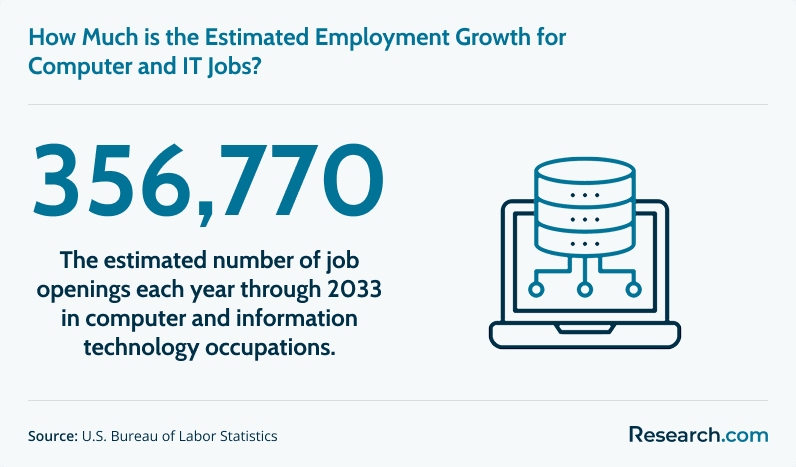
On average, approximately 356,770 job openings are expected each year in computer and information technology occupations, driven by both employment growth and the need to replace workers who permanently leave the field.
Graduates from a degree in cyber security typically pursue roles centered on defense, monitoring, testing, compliance, and response. Computer science graduates usually pursue roles in software, data, AI, systems, and digital product development, although they can also move into cybersecurity with the right electives, projects, or certifications.
Typical job titles for computer science graduates
- Software Developer/Engineer: Designs, builds, tests, and improves applications or systems.
- Web Developer: Creates and maintains websites, web applications, and user-facing digital tools.
- Data Scientist: Uses data analysis to uncover patterns and support decisions.
- Systems Architect: Designs complex computing systems and technical infrastructure.
- Database Administrator: Manages database performance, security, reliability, and access.
- AI/Machine Learning Engineer: Builds artificial intelligence and machine learning models.
Typical job titles for cybersecurity graduates
- Security Analyst: Monitors systems, reviews alerts, and analyzes threats or vulnerabilities.
- Penetration Tester/Ethical Hacker: Tests systems for weaknesses using authorized attack methods.
- Security Engineer: Designs, implements, and improves technical security controls.
- Incident Responder: Investigates and contains cybersecurity incidents.
- Information Security Manager: Oversees security policies, programs, teams, and risk management. An online masters in computer science may strengthen preparation for some advanced technical leadership roles.
- Cybersecurity Consultant: Advises organizations on security strategy, controls, risk, and compliance.
What is the job market for graduates with cybersecurity vs. computer science degree?
The job market is strong for both degrees, but the demand drivers are different. Cybersecurity demand is tied to increasing cyber threats, regulatory pressure, cloud adoption, and the need to protect data and infrastructure. Computer science demand is tied to software development, AI, cloud computing, data systems, automation, and the continued digitization of business operations.
Cybersecurity jobs outlook
- Demand for cybersecurity professionals remains high because organizations need skilled workers to protect systems, data, networks, and users from increasingly sophisticated attacks.
- Cybersecurity roles exist across organizations of many sizes, including government, finance, healthcare, education, technology, and consulting. This demand helps explain why some students compare cybersecurity with the highest paying engineering fields when evaluating job security and earning potential.
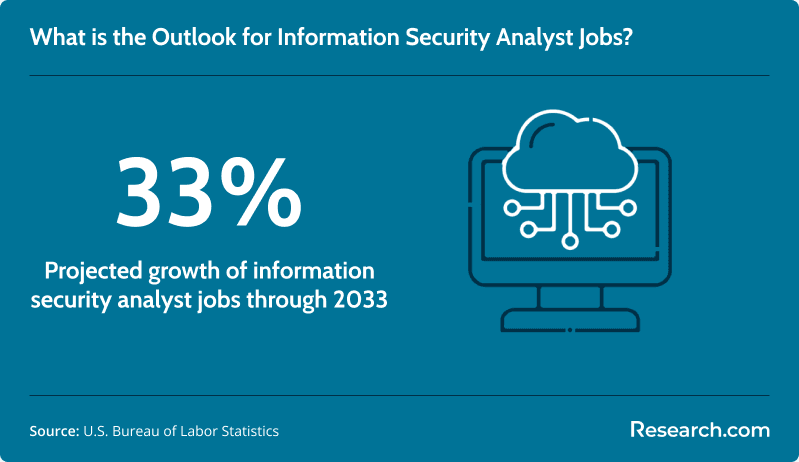
- According to the U.S. Bureau of Labor Statistics (BLS), information security analyst roles are projected to grow 33% through 2033.
Computer science jobs outlook
- Computer science graduates continue to benefit from demand for software developers, data professionals, AI specialists, systems designers, and cloud-related talent.
- The degree offers broad labor-market flexibility because computing skills apply across many industries and technical functions.
- Advances in artificial intelligence, cloud computing, automation, and data infrastructure continue to create new opportunities for computer science graduates.
Which degree is more future-proof?
Computer science may be more adaptable because it teaches broad computing principles that can be applied to many technologies over time. Cybersecurity may be more resilient because organizations must keep defending systems regardless of economic shifts or technology changes. The strongest long-term position may come from combining both: a computer science foundation with cybersecurity specialization, or a cybersecurity degree strengthened by programming and systems knowledge.
Here’s what graduates have to say about their computer science and cybersecurity degree programs
-
: "
My computer science program gave me the technical foundation to move into software engineering and artificial intelligence. The most valuable part was learning how to break complex problems into smaller pieces and build working solutions through code. Alex
"
-
: "
Cybersecurity appealed to me because the work has a clear purpose. I wanted a career where I could help organizations prevent attacks, respond to threats, and protect people’s information. The field changes constantly, which keeps the work challenging. Priya
"
-
: "
Starting with computer science helped me transition into cybersecurity because I already understood programming and systems. As a penetration tester, I use that background to understand how applications are built and where weaknesses might appear. James
"
How does management expertise complement cybersecurity and computer science degrees?
Technical skills can get graduates into the field, but management skills often become more important as responsibilities grow. Cybersecurity and computer science professionals who understand budgeting, project planning, communication, risk, and leadership can move into roles that connect technical teams with business goals.
This combination is especially useful for security managers, engineering leads, product managers, systems architects, and technology consultants. Professionals who want to add leadership training to their technical background may consider an accelerated engineering management masters online program if it fits their career stage and employer expectations.
How do practical experiences and internships shape outcomes in cybersecurity and computer science programs?
Hands-on experience is one of the strongest differentiators for graduates in both fields. Employers often want evidence that students can apply classroom concepts to real problems. For computer science students, that evidence may include software projects, GitHub portfolios, mobile apps, web applications, AI models, or database systems. For cybersecurity students, it may include lab reports, capture-the-flag competitions, home labs, incident simulations, penetration testing projects, or digital forensics exercises.
Internships, co-ops, apprenticeships, and capstones also help students build professional networks. A strong internship can clarify whether a student prefers software development, security operations, risk management, AI, data, or cloud work. Graduates who later want more specialized technical preparation may compare options such as the cheapest masters in artificial intelligence, but practical experience should remain a priority alongside advanced study.
How to build experience before graduation
- Complete at least one internship or co-op if possible. Real workplace experience can make your resume stronger than coursework alone.
- Create a portfolio. Computer science students should show code and projects; cybersecurity students should document labs, reports, and legal practice environments.
- Join competitions or student groups. Hackathons, cybersecurity clubs, and capture-the-flag events build skill and credibility.
- Use capstones strategically. Choose a final project that matches the job you want after graduation.
- Network early. Faculty, classmates, alumni, and internship supervisors can become referral sources.
Key Insights
- Choose computer science for flexibility. It is the broader degree and can support careers in software engineering, AI, data science, cloud computing, systems architecture, and cybersecurity.
- Choose cybersecurity for a focused security path. It is better aligned with digital defense, penetration testing, incident response, forensics, governance, and risk management.
- Both fields sit within a strong technology labor market. Computer and information technology occupations are expected to generate approximately 356,770 job openings each year, and 108,503 bachelor’s degrees in computer and information technology were conferred in 2023.
- Cybersecurity has especially strong projected growth. BLS projects information security analyst roles to grow 33% through 2033.
- Salary potential is strong but not automatic. Information security analysts had a median annual salary of $112,000 in 2023, while software developers earned a median annual wage of $127,000; actual outcomes depend on skills, experience, location, and employer.
- Accreditation, hands-on learning, and internships matter. A lower-cost accredited program with strong labs, projects, and employer connections may be a better investment than a more expensive program with limited practical experience.
- The strongest option may combine both fields. Computer science students can add cybersecurity electives or certifications, while cybersecurity students can strengthen programming and systems skills to become more versatile.
References:
- Boston Consulting Group. (2024). 2024 cybersecurity workforce report.
- Bureau of Labor Statistics. (2024). Computer and information technology occupations.
- Bureau of Labor Statistics. (2024). Computer and information research scientists.
- CompTIA. (n.d.). State of the tech workforce.
- National Association of Colleges and Employers. (2025). Class of 2025 salary projections mixed.
- National Center for Education Statistics. (2024). Table 325.35. Degrees in computer and information sciences conferred by postsecondary institutions, by level of degree and sex of student: Selected years, 1970-71 through 2021-22.1
- O*NET OnLine. (2024). Computer and mathematical occupations.
Other Things You Should Know About Cybersecurity vs. Computer Science Degree Programs
In 2027, the demand for cybersecurity professionals is expected to be high due to increasing cyber threats, while computer scientists will remain in demand across diverse industries for their general programming and development skills.
In 2027, cybersecurity degree programs primarily focus on threat detection, security protocols, and network defense, while computer science programs emphasize algorithms, programming, and software development. Both fields require critical thinking, but their applications and technical depth can vary significantly.