2027 Fastest Online CyberOps Training Bootcamps

Co-Founder and Chief Data Scientist
Choosing a fast online CyberOps bootcamp is usually a career-timing decision: you want cybersecurity operations skills quickly, but you also need training that employers will take seriously. The right program can help you build practical experience with logs, alerts, networks, incident response, and security tools without spending years in a degree program. The wrong program can leave you with debt, shallow projects, and no clear path to a first security role.
This guide is for career changers, IT support workers, recent graduates, veterans, and working adults comparing accelerated online CyberOps training options. You will learn what these bootcamps teach, how long they take, what they cost, which roles they may lead to, how online programs compare with campus-based options, and how to evaluate whether a bootcamp fits your schedule, budget, and career goals.
Quick answer: Are fast online CyberOps bootcamps worth considering?
Fast online CyberOps bootcamps can be a practical option if you want hands-on cybersecurity operations training in a compressed format and are prepared to study consistently. Most programs focus on Security Operations Center skills, threat monitoring, SIEM tools, incident response, basic forensics, and certification preparation. They are not a guaranteed job pathway, but they can help you build a portfolio, prepare for entry-level roles, and transition into cybersecurity faster than a traditional degree route.
What are the main benefits of the fastest online CyberOps training bootcamps?
- They target roles employers actually hire for: CyberOps training usually maps to positions such as SOC Analyst, Incident Response Technician, Cybersecurity Analyst, and junior security operations roles.
- They can support strong early-career earning potential: The median salary for entry-level cybersecurity operations professionals is around $65,000–$85,000 per year, with higher pay possible as workers gain experience, certifications, and specialized skills.
- They are built for learners who need flexibility: Online bootcamps allow students to study remotely, often through live virtual classes, self-paced modules, labs, or a hybrid of these formats.
What can I expect from the fastest online CyberOps training bootcamp?
A fast online CyberOps bootcamp is an intensive cybersecurity operations program designed to help learners understand how organizations detect, investigate, and respond to digital threats. Instead of spending most of the time on theory, these programs usually emphasize lab work, simulated incidents, security tools, and applied workflows used in Security Operations Centers.
Expect to study network fundamentals, operating systems, security monitoring, log analysis, threat detection, vulnerability concepts, incident response, and reporting. Many programs also include preparation for credentials such as CompTIA Security+ or Cisco CyberOps Associate. The strongest bootcamps require students to practice with tools such as SIEM platforms, packet analyzers, Linux command-line utilities, and security dashboards.
Online delivery can make training easier to fit around work or family responsibilities, but it also requires discipline. A short bootcamp can move quickly. Before enrolling, confirm the weekly time commitment, whether labs are graded, how much instructor access you receive, and whether the program includes career coaching, mock interviews, resume support, and a project portfolio.
Where can I work with the fastest online CyberOps training bootcamp?
CyberOps bootcamp graduates typically pursue roles in organizations that need continuous monitoring, alert triage, and incident response support. Many entry-level opportunities are tied to Security Operations Centers, managed security service providers, corporate IT security teams, government contractors, and regulated industries where data protection is essential.
Common employment settings include:
- Banks and credit unions that need to protect account data and financial systems
- Healthcare providers responsible for safeguarding patient information
- E-commerce and retail companies with large customer databases and payment platforms
- Cloud providers, software companies, and technology service firms
- Defense contractors and organizations supporting national security work
- Utilities, transportation providers, and other critical infrastructure employers
How much can I make with the fastest online CyberOps training bootcamp?
CyberOps bootcamp graduates entering security operations roles may see starting salaries in the $65,000 to $85,000 range, depending on location, employer, prior IT experience, certifications, and demonstrated technical skill. Candidates with help desk, networking, systems administration, military cyber, or cloud experience may be more competitive for higher starting offers.
Credentials can also affect employability and pay. Relevant certifications such as CompTIA Security+ or Cisco CyberOps Associate may help candidates validate foundational knowledge, especially when they do not have a cybersecurity degree or previous security job title. In some metropolitan areas or government-related roles, entry-level compensation can exceed $90,000.
Longer-term salary growth depends on experience and specialization. With two to three years of experience, professionals often move toward Incident Response Analyst or Threat Intelligence Analyst roles, where median salaries range from $90,000 to $110,000 annually. Bootcamps can help start the transition, but continued learning, certifications, and real-world experience are usually necessary for advancement.
- Fastest Online CyberOps Training Bootcamps for 2027
- How long does a CyberOps training bootcamp take?
- Online vs. on-campus CyberOps bootcamps: which format is better?
- How much does a CyberOps training bootcamp cost?
- What financial aid options can help pay for a CyberOps bootcamp?
- What prerequisites do CyberOps bootcamps usually require?
- What do CyberOps bootcamps teach?
- Which CyberOps specializations are available?
- Which supplemental education paths can strengthen a CyberOps career?
- Which academic pathways can complement bootcamp training?
- What challenges should online CyberOps bootcamp students expect?
- How should you choose the best fast CyberOps bootcamp?
- What jobs can CyberOps bootcamp graduates pursue?
- What is the job market like for CyberOps bootcamp graduates?
- Key Insights
Fastest Online CyberOps Training Bootcamps for 2027
How do we rank schools?
Choosing a CyberOps bootcamp involves more than finding the shortest program. Students should compare curriculum depth, hands-on training, cost, certification alignment, institutional credibility, and career support before committing tuition dollars.
Research.com rankings are developed using a transparent methodology and data from sources such as the Integrated Postsecondary Education Data System (IPEDS), Peterson's databases, including the Distance Learning Licensed Data Set, and the College Scorecard database from the National Center for Education Statistics.
Use the ranking below as a starting point, not a final answer. The best bootcamp for you depends on your weekly availability, current technical background, preferred learning format, financing options, and target job role.
| Bootcamp | Fastest listed option | Cost | Best fit |
| University of Maryland Global Campus Cybersecurity Bootcamp | 6 months | $12,495 | Learners seeking structured online training with extensive labs and CompTIA Security+ preparation |
| Stony Brook University Cybersecurity Bootcamp | 10 weeks full-time | $12,000 full-time | Students who can commit to an intensive schedule and want a faster completion option |
| Virginia Tech Cyber Bootcamp | 12 weeks full-time | $10,995 full-time | Learners who want live online instruction and both offensive and defensive security exposure |
| University of South Florida Cybersecurity Bootcamp | Typically 6 months | $13,450 | Beginners who want a part-time program with certification-oriented cybersecurity foundations |
| University of Houston Cybersecurity Boot Camp | 6 months | $4,375 | Cost-conscious students who prefer self-paced training with coaching support |
| Arizona State University Cybersecurity Boot Camp | 3 months full-time | $14,495 | Students who can study full-time and want a broad technical curriculum including Python and forensics |
| University of Pennsylvania Cybersecurity Boot Camp | 24 weeks | $13,995 | Learners seeking a part-time program covering IT, networking, and security tools |
| Colorado State University Professional Education Cyber Bootcamp | 12 weeks full-time | $13,995 full-time | Students who want live online training aligned with Security+ concepts and the NIST Cybersecurity Framework |
1. University of Maryland Global Campus (UMGC) Cybersecurity Bootcamp
The University of Maryland Global Campus (UMGC) Cybersecurity Bootcamp is a fully online program designed to help beginners and career changers prepare for cybersecurity analyst work in 6 months. The curriculum includes expert-developed instruction, 55 labs, 30 mini-projects, a mentor-led capstone, and preparation for CompTIA Security+. Students typically spend 10-15 hours per week and complete coursework remotely on a flexible schedule.
- Program Length: 6 months.
- Tracks/Concentrations: General cybersecurity analyst skills, prepares for CompTIA Security+.
- Bootcamp Cost: $12,495 (with potential discounts for upfront payment).
- Accreditation: Middle States Commission on Higher Education (MSCHE)
2. Stony Brook University Cybersecurity Bootcamp
Stony Brook University offers a cybersecurity bootcamp for students pursuing entry-level cybersecurity work, including self-taught learners and applicants with some technical knowledge. The program includes lectures, mentoring, discussions, labs, and hands-on projects in an online format. Its listed pacing options include an 18 weeks part-time path and a 10 weeks full-time path.
- Program Length: 18 weeks (part-time) or 10 weeks (full-time)
- Tracks/Concentrations: Cybersecurity Essentials, System and Network Security, Linux Essentials, Security Operations and Architecture, Cyber Security Analyst Essentials. Prepares for CompTIA Security+.
- Bootcamp Cost: $8,900 (part-time) or $12,000 (full-time).
- Accreditation: Middle States Commission on Higher Education (MSCHE).
3. Virginia Tech Cyber Bootcamp
The Virginia Tech Cyber Bootcamp provides online full-time and part-time options for beginners and learners expanding existing technical skills. The program uses project-based instruction, live online classes taught by industry-experienced professionals, group projects, independent assignments, and a capstone project.
- Program Length: 12 weeks (full-time) or 26 weeks (part-time).
- Tracks/Concentrations: Includes Cybersecurity Fundamentals, Asset and Inventory Management, Network Systems, Programming with Python, System Administration, Red Team (Offense), and Blue Team (Defense). Prepares for industry certifications like CompTIA Security+.
- Bootcamp Cost: $10,995 (full-time) or $9,995 (part-time) with current discounts.
- Accreditation: Southern Association of Colleges and Schools Commission on Colleges (SACSCOC).
4. University of South Florida Cybersecurity Bootcamp
The University of South Florida Cybersecurity Bootcamp is an online beginner-focused program that introduces foundational security concepts and prepares students for entry-level cybersecurity roles. The program is typically completed within 6 months and requires 15-25 hours per week. Students complete hands-on activities and projects and use the InfoSec Skills platform while preparing for the CompTIA Security+ exam.
- Program Length: Typically 6 months (part-time, 15-25 hours/week).
- Tracks/Concentrations: Covers fundamental cybersecurity principles. Prepares for certifications like CompTIA Security+, CySA+, PenTest+, and potentially Cisco Certified CyberOps Associate.
- Bootcamp Cost: $13,450
- Accreditation: Southern Association of Colleges and Schools Commission on Colleges (SACSCOC)
5. University of Houston Cybersecurity Boot Camp
The University of Houston Cybersecurity Boot Camp is a six-month online program that supports learners preparing for the cybersecurity workforce and the CompTIA Security+ certification exam. It is designed for students with little to no prior experience and includes self-paced learning, interactive video lessons, practical labs, and one-on-one coaching with industry experts.
- Program Length: 6 months (self-paced, requiring 15-25 hours per week commitment).
- Tracks/Concentrations: Foundations of cybersecurity, identifying security threats and vulnerabilities, managing and preventing attacks, and essential security operation principles. Prepares for the CompTIA Security+ certification exam.
- Bootcamp Cost: $4,375
- Accreditation: Southern Association of Colleges and Schools Commission on Colleges (SACSCOC)
6. Arizona State University Cybersecurity Boot Camp
Arizona State University offers an online cybersecurity bootcamp with full-time and part-time schedules. The program can be completed in 3 to 6 months, depending on whether students choose the full-time option or the part-time option. Learners study methods for detecting and reducing cyber threats while building practical familiarity with Python, Linux, and cybersecurity tools.
- Program Length: 3 months (full-time, 40 hours/week) or 6 months (part-time, 10-20 hours/week).
- Tracks/Concentrations: Covers programming fundamentals in Python, systems, tools, hashing and ciphers, databases, networks, and forensics.
- Bootcamp Cost: $14,495
- Accreditation: Higher Learning Commission (HLC).
7. University of Pennsylvania Cybersecurity Boot Camp
The University of Pennsylvania Cybersecurity Boot Camp, powered by Trilogy Education Services, is generally a 24-week part-time program for learners entering or advancing in cybersecurity. It covers IT, networking, and modern information security while giving students practice with tools such as Wireshark and Metasploit in a virtual learning environment.
- Program Length: 24 weeks (part-time, approximately 5.5 months).
- Tracks/Concentrations: Provides comprehensive training in IT, networking, and modern information security. Prepares for certifications such as CompTIA Security+, CompTIA Network+, and CEH.
- Bootcamp Cost: $13,995
- Accreditation: Middle States Commission on Higher Education (MSCHE)
8. Colorado State University Professional Education Cyber Bootcamp
The Colorado State University Professional Education Cyber Bootcamp, often offered with Fullstack Academy, includes full-time and part-time online schedules. The program is open to learners from different backgrounds and does not require prior technical experience. Students develop offensive and defensive security skills through live online instruction, group work, independent study, and preparation for CompTIA Security+ concepts aligned with the NIST Cybersecurity Framework.
- Program Length: 12 weeks (full-time) or 26 weeks (part-time).
- Tracks/Concentrations: Focuses on CompTIA Security+, Linux, Networking, Penetration Testing, and Python.
- Bootcamp Cost: $13,995 (full-time) or $12,995 (part-time).
- Accreditation: Higher Learning Commission (HLC)
How long does it take to complete a CyberOps training bootcamp?
CyberOps bootcamps are usually built for speed, but the actual timeline depends on whether the program is full-time, part-time, or self-paced. A shorter timeline is not always better. The fastest program may require more weekly hours, stronger technical preparation, and less time for review.
| Format | Typical timeline | Weekly commitment | Best for |
| Full-time bootcamp | 8 to 16 weeks | Several hours per day, often Monday through Friday | Learners who can pause or reduce work obligations |
| Part-time bootcamp | 3 to 6 months | Evenings, weekends, or scheduled weekly sessions | Working adults who need structure without leaving a job |
| Self-paced bootcamp | 3 months to a year | Varies by student | Independent learners who need maximum scheduling flexibility |
Full-time CyberOps bootcamps
Full-time programs often run 8 to 16 weeks and move quickly through networking, security monitoring, incident response, and hands-on labs. This route can be efficient, but it works best for students who can dedicate substantial time each week.
Part-time CyberOps bootcamps
Part-time programs commonly last 3 to 6 months. They are usually better for students balancing work, parenting, military obligations, or other commitments. The trade-off is a longer calendar timeline but a more realistic weekly workload.
Self-paced CyberOps bootcamps
Self-paced programs can take 3 months to a year. They offer flexibility, but students must hold themselves accountable. Before choosing this format, ask whether the program includes deadlines, instructor help, lab access, and career coaching.
If you want a slower academic pathway instead of an intensive bootcamp, compare bootcamps with the easiest cybersecurity programs to decide whether a degree structure may be a better fit.
How does an online CyberOps training bootcamp compare to an on-campus program?
Online and on-campus CyberOps bootcamps can cover similar technical content, but the learning experience is different. Online programs usually win on flexibility and commute-free access. Campus-based programs may provide more direct in-person support, local networking, and a fixed classroom routine. Both can prepare students for entry-level cybersecurity work when the curriculum includes serious labs, instructor feedback, and career support.
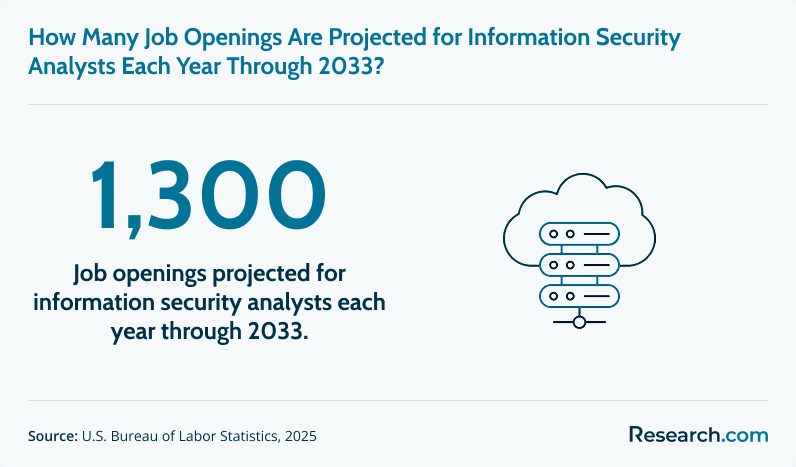
The labor market context also matters. The original cited projection notes 1,300 job openings projected for information security analysts each year through 2033. Students who want to strengthen networking fundamentals before security specialization may also compare CyberOps programs with fast-track CCNA online training.
| Factor | Online CyberOps bootcamp | On-campus CyberOps bootcamp |
| Flexibility | Best for students who need remote access, evening classes, or self-paced modules | Best for students who want fixed class times and a physical learning environment |
| Hands-on practice | Uses virtual labs, simulations, cloud tools, and remote collaboration | May include in-person labs, instructor demonstrations, and campus resources |
| Cost factors | May reduce commuting, relocation, parking, and campus-related expenses | May include facility costs and location-based expenses |
| Networking | Often relies on Slack groups, webinars, online office hours, and virtual employer events | Can make local peer and instructor networking easier |
| Student fit | Works well for self-directed learners who communicate well online | Works well for students who need face-to-face accountability |
Cybersecurity professionals who plan to work in healthcare environments may eventually combine technical credentials with leadership-oriented study, such as one of the fastest online MBA in healthcare management programs, especially if they aim to manage teams protecting sensitive medical data.
What is the average cost of a CyberOps training bootcamp?
The average cost of a CyberOps training bootcamp typically ranges from $7,000 to $15,000 in the U.S. Costs vary by provider, schedule, career services, lab access, included exam preparation, and whether the program is associated with a university or private training company.
| Program type | Common cost range | What to check before enrolling |
| Online bootcamps | $5,000–$10,000 | Whether the price includes labs, instructor access, career coaching, and exam vouchers |
| On-campus bootcamps | $10,000–$15,000 | Whether campus fees, commuting, parking, or materials add to the total cost |
| Short intensive programs | $4,000–$6,000 | Whether the curriculum assumes prior experience or skips important fundamentals |
Students comparing lower-cost technical training may also review the cheapest online CCNA training bootcamps, especially if they need networking knowledge before moving into CyberOps.
Beyond tuition, budget for the following:
- Certification exam fees, usually $300–$500 per exam
- Lab platforms, software subscriptions, or cloud usage fees
- A reliable computer and, in some cases, home lab equipment
- Time away from paid work if you choose a full-time schedule
What are the financial aid options for students enrolling in a CyberOps training bootcamp?
Bootcamp financing can affect the real return on investment. The median annual wage for information security analysts in the information sector reached $136,390 in 2024, but that figure should not be treated as a guaranteed outcome for new bootcamp graduates. Before borrowing, compare total cost, repayment terms, job support, and realistic entry-level opportunities in your region.
If you want to add lower-cost cloud knowledge to your cybersecurity plan, compare bootcamp financing with affordable online CompTIA cloud training.
| Funding option | How it works | What to watch for |
| Payment plans | Tuition is divided into monthly installments, sometimes without interest | Late fees, required deposits, and whether payments continue after completion |
| Income Share Agreements | Students pay little or nothing upfront and repay a percentage of salary after meeting an income threshold | Total repayment cap, salary threshold, job definitions, and repayment length |
| Private loans | Bootcamp lenders such as Climb Credit, Skills Fund, and Sallie Mae may offer financing | Interest rate, repayment term, origination fees, and whether payments start during training |
| Employer tuition reimbursement | An employer pays for part or all of approved professional development | Grade requirements, reimbursement timing, and service obligations |
| Scholarships and grants | Bootcamps, nonprofits, or workforce groups may reduce tuition for eligible students | Eligibility rules, deadlines, and whether awards are guaranteed |
| GI Bill® and VET TEC | Eligible veterans may use approved benefits at participating programs | Whether the bootcamp is VA-approved and whether benefits cover all expenses |
| Workforce development grants | State or local workforce boards may fund training for unemployed or underemployed learners | Program eligibility, documentation requirements, and approved provider lists |
This chart shows median annual wages for Information Security Analysts across the top industries employing them and can help students compare earning potential by sector.
What are the prerequisites for enrolling in a CyberOps training bootcamp?
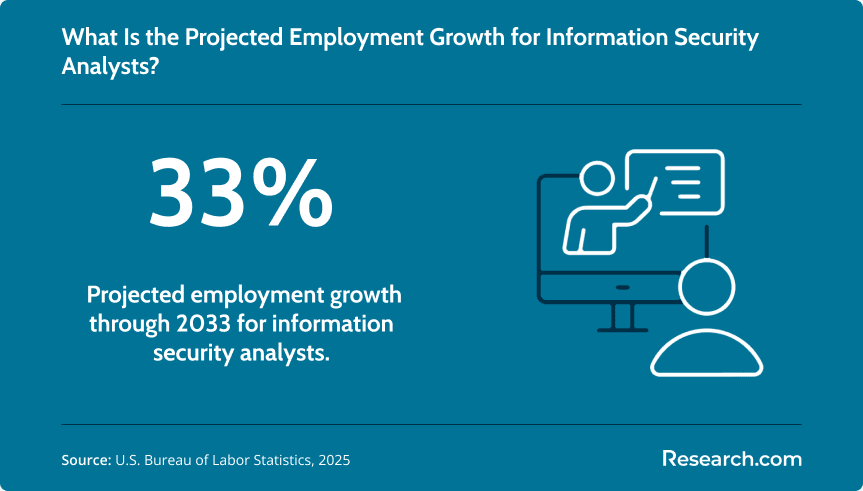
With 33% projected employment growth for information security analysts through 2033, CyberOps bootcamps attract many beginners. Still, “beginner-friendly” does not mean effortless. Students who understand basic computers, networks, and troubleshooting usually adapt faster once labs become more technical.
Before enrolling, you can strengthen your application and confidence through cyber security certifications online or introductory courses in networking, Linux, and security fundamentals.
Typical education requirements
Most CyberOps bootcamps do not require a college degree. A high school diploma or GED is commonly enough. Some advanced programs may prefer applicants with college coursework, IT experience, or prior certifications, but many are designed for career changers.
Technical skills that help
- Basic comfort with Windows and Linux environments
- Ability to install software and troubleshoot simple computer problems
- Introductory knowledge of IP addresses, routers, ports, and protocols
- Willingness to use command-line tools and read technical documentation
Work experience
Prior cybersecurity experience is not usually required. However, 1–2 years in help desk support, IT operations, networking, systems administration, or military technical roles can make the transition smoother.
Admissions assessments
Some bootcamps use a logic test, technical assessment, or interview to confirm that applicants understand the workload. Treat this as a fit check. If the assessment feels overwhelming, ask whether the provider offers pre-work before the first class.
What courses are typically in a CyberOps training bootcamp?
A strong CyberOps bootcamp should teach the technical foundation of security operations and give students repeated practice investigating alerts, interpreting logs, and documenting incidents. If you need broader IT preparation first, compare these programs with best value online IT training bootcamps.
Networking fundamentals
- TCP/IP, subnets, ports, and routing basics
- Common protocols such as HTTP, DNS, and SMTP
- Network devices, architectures, and traffic flow
Operating systems and command-line work
- Windows and Linux fundamentals
- Command-line investigation techniques
- File systems, permissions, users, and processes
Security concepts
- Confidentiality, integrity, and availability
- Threat actors, attack vectors, and common vulnerabilities
- Malware categories and indicators of compromise
Security monitoring and analysis
- How Security Operations Centers function
- Log collection, alert review, and escalation workflows
- SIEM platforms such as Splunk or Elastic
- Packet capture and analysis with Wireshark
Incident response
- Incident detection, triage, and prioritization
- Containment, eradication, and recovery steps
- Incident documentation and reporting
Threat intelligence
- Threat feeds, indicators of compromise, and open-source intelligence
- Attack frameworks such as MITRE ATT&CK
- Mapping adversary tactics, techniques, and procedures
Digital forensics basics
- Evidence collection from endpoints and systems
- Chain of custody concepts
- Introductory forensic analysis methods
Compliance and risk management
- Introductory frameworks such as NIST and ISO
- Security policies, controls, and documentation
- Data privacy and regulatory awareness
What types of specializations are available in CyberOps training bootcamps?
Many bootcamps begin with common SOC skills and then introduce electives, capstone options, or deeper modules tied to specific cybersecurity roles. Students interested in governance, risk, and compliance may also consider fast-track ISC2 CGRC training online as a complement to CyberOps training.
| Specialization | What it emphasizes | Best for students who want to... |
| SOC Analyst | Monitoring alerts, triaging events, escalating suspicious activity, and using SIEM tools | Start in a common entry-level security operations role |
| Incident Response and Forensics | Investigating breaches, collecting evidence, preserving systems, and supporting recovery | Work on post-incident investigation and containment |
| Threat Intelligence | Studying attackers, tools, tactics, indicators of compromise, and threat feeds | Analyze patterns and help teams prepare for attacks |
| Network Defense | Firewalls, intrusion detection systems, vulnerability management, and traffic monitoring | Focus on securing and monitoring infrastructure |
| Cloud Security Operations | Cloud access controls, cloud-native monitoring, compliance, and environments such as AWS, Azure, and Google Cloud | Move toward cloud security analyst work |
| Penetration Testing Basics | Scanning, enumeration, exploitation concepts, and attacker behavior | Understand offense well enough to improve defense |
If your long-term goal is cybersecurity leadership, pairing technical training with accelerated CISM online training may help you build management, governance, and strategy knowledge after you gain practical experience.
Which supplemental education paths can further advance your CyberOps career?
A CyberOps bootcamp can help you enter the field, but cybersecurity careers usually require continuous learning. After completing a bootcamp, consider credentials in cloud security, digital forensics, secure programming, risk management, or advanced networking. The right next step depends on whether you want to stay in SOC operations, move into incident response, specialize in cloud defense, or grow into management.
Some learners also explore adjacent technical fields to broaden their problem-solving skills. For example, a best online game developer degree may be relevant only for students specifically interested in secure software, interactive systems, simulation environments, or specialized technical development—not as a direct substitute for CyberOps training.
What additional academic pathways can complement CyberOps bootcamp training?
Bootcamps are useful for applied skills, while academic programs may provide more depth in theory, research, systems design, mathematics, and long-term career mobility. A cybersecurity degree can be especially useful for students targeting employers that prefer formal education or roles requiring broader technical and analytical preparation.
Specialized academic fields can also support niche cybersecurity work. An affordable online masters degree in bioinformatics, for instance, may be relevant for professionals working at the intersection of healthcare data, computational analysis, and security risk, but it should be chosen only when it matches a clear career plan.
What are the potential challenges of online CyberOps training bootcamps?
Online CyberOps bootcamps can be effective, but they are not the easiest route for every learner. The pace can be demanding, technical topics build quickly, and remote students must stay engaged without the structure of a physical classroom.
| Common challenge | Why it matters | Better approach |
| Underestimating the workload | Fast programs may require many hours of labs, reading, and troubleshooting each week | Ask for the weekly time estimate and sample assignments before enrolling |
| Choosing based only on speed | The shortest program may skip fundamentals or assume prior experience | Compare curriculum depth, lab quality, and outcomes, not just program length |
| Limited in-person networking | Remote learners may need to work harder to build professional connections | Use office hours, alumni groups, LinkedIn, cybersecurity meetups, and virtual events |
| Shallow hands-on practice | Employers want candidates who can demonstrate real skills, not just attendance | Prioritize programs with graded labs, capstones, and portfolio-ready projects |
| Outdated curriculum | Cyber threats, tools, and employer expectations change quickly | Ask when the curriculum was last updated and which tools students use |
If you are comparing online education formats across fields, geology degrees online can provide a useful contrast in how remote programs handle labs, pacing, and structured academic learning, although they serve a different career goal.
How do you choose the best among the fastest CyberOps training bootcamp?
The best fast CyberOps bootcamp is the one that matches your career target, technical readiness, available study time, and budget. Industry alignment matters as well. Computer systems design and related services employs the highest number of information security analysts as of 2024, with 40,290 professionals working to secure networks and data. That makes skills such as SIEM use, cloud security, incident response, and threat analysis especially important to compare across programs.
If you want a broader and more formal pathway, consider whether a degree in cyber security may serve your goals better than a short bootcamp.
Step 1: Define the job you want first
Do not start by asking which bootcamp is fastest. Start by identifying your target role: SOC Analyst, junior cybersecurity analyst, incident response technician, cloud security analyst, or compliance-focused analyst. Then choose a curriculum that maps to that role.
Step 2: Review the curriculum line by line
Look for networking, Linux, Windows security, log analysis, SIEM tools, incident response, forensics basics, reporting, and certification preparation. If the syllabus is vague, request a detailed course outline before paying a deposit.
Step 3: Match the format to your real schedule
A full-time 12-week program may sound attractive, but it can be unrealistic if you work full time. Part-time or self-paced training may lead to better completion if your schedule is limited.
Step 4: Check instructor and mentor experience
Instructors should have practical cybersecurity experience, not only teaching experience. Look for backgrounds in SOC operations, incident response, penetration testing, security engineering, or risk management. Students preparing for advanced credentials may also compare instructor quality with providers of the shortest CISSP online training programs.
Step 5: Ask for career outcomes, not marketing claims
Ask how many graduates complete the program, how many receive job offers, what roles they get, what support is included, and how outcomes are verified. Be cautious of any program that implies employment is guaranteed.
Step 6: Compare total cost and included services
CyberOps bootcamps can cost anywhere from $5,000 to $15,000. Compare tuition against what is included: labs, exam vouchers, coaching, resume reviews, interview preparation, employer events, alumni access, and retake policies. If cloud security is part of your long-term plan, you may later add accelerated CCSP online training.
Step 7: Speak with alumni
Independent reviews are helpful, but alumni conversations are better. Ask former students how many hours they studied, whether instructors were responsive, what the labs were like, and whether the career services helped after graduation.
Step 8: Verify institutional credibility
Many bootcamps are not accredited in the same way as degree programs. If a bootcamp is university-affiliated, confirm the relationship. If it advertises employer partnerships or certification alignment, ask for details.
Common mistakes to avoid
- Choosing the shortest program without checking whether it teaches enough fundamentals
- Focusing only on tuition and ignoring exam fees, software costs, and lost work time
- Assuming an online bootcamp automatically leads to a cybersecurity job
- Enrolling without asking whether labs are realistic and portfolio-ready
- Ignoring prerequisites and then falling behind in networking or Linux modules
- Relying only on rankings instead of matching the program to your target role
- Signing financing agreements without understanding interest, repayment caps, or income thresholds
The following chart highlights industries with the highest concentration of Information Security Analysts and can help students identify where cybersecurity operations skills are most commonly used.
What career paths are available for graduates of CyberOps training bootcamps?
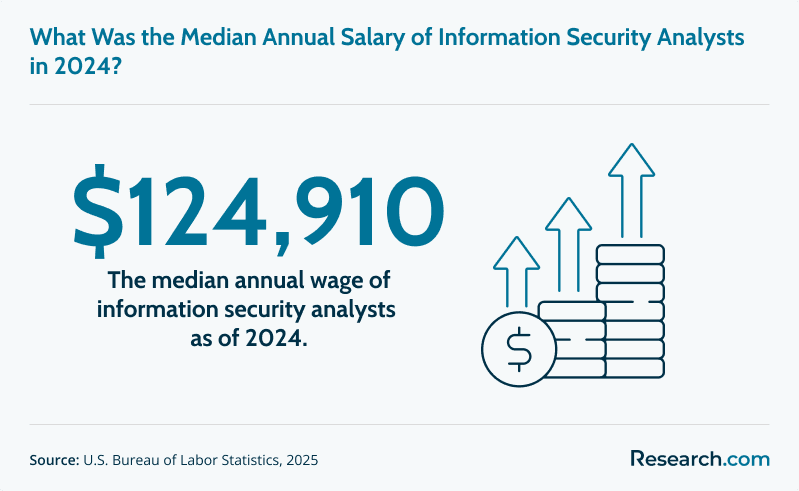
The median annual wage of information security analysts is $124,910 as of 2024. That figure reflects experienced professionals across the field and should be interpreted carefully by entry-level candidates. A bootcamp may help you compete for junior roles, but higher-paying positions usually require experience, stronger specialization, and additional credentials. The field’s strong demand can create opportunity for candidates who demonstrate practical skill.
| Career path | Typical responsibilities | How a bootcamp helps |
| SOC Analyst | Monitor alerts, review logs, investigate suspicious events, and escalate incidents | Builds core monitoring, SIEM, and triage skills |
| Incident Response Analyst | Help detect, contain, and recover from security incidents | Introduces response workflows, evidence handling, and incident reporting |
| Cybersecurity Analyst | Assess threats, manage tools, support policies, and help reduce risk | Provides broad security operations and analysis foundations |
| Threat Intelligence Analyst | Analyze threat actors, attack methods, indicators of compromise, and vulnerability trends | Teaches frameworks, threat feeds, and investigative thinking |
| Network Security Specialist | Configure defensive tools, monitor network traffic, and support intrusion detection | Strengthens network defense and monitoring knowledge |
| Security Administrator | Maintain access controls, security systems, and organizational security policies | Develops system security and operational awareness |
| Cloud Security Analyst | Monitor and secure cloud environments such as AWS or Azure | Supports cloud security fundamentals when included in the curriculum |
| Compliance or Risk Analyst | Support audits, policies, controls, and cybersecurity risk processes | Introduces frameworks, documentation, and governance basics |
Students who want to move toward cloud-focused cybersecurity roles can compare CyberOps training with fast-track online CompTIA Cloud+ certification programs to build knowledge of secure cloud infrastructure.
What is the job market like for graduates of CyberOps training bootcamps?
The cybersecurity labor market remains favorable for skilled candidates, but entry-level hiring is still competitive. Bootcamp graduates improve their chances when they finish real labs, build a portfolio, earn relevant certifications, and can explain their troubleshooting process in interviews.
- Demand remains strong: The Bureau of Labor Statistics projected 32% growth for information security analysts from 2022 to 2032, while other cited projections in this guide reference 33% growth through 2033.
- Entry-level roles exist, but proof of skill matters: SOC Analyst, Cybersecurity Analyst, and Incident Response Technician roles are common targets, but employers often screen for practical ability with logs, alerts, networks, and tools.
- Certifications can strengthen a bootcamp background: Programs aligned with CompTIA Security+ or Cisco CyberOps Associate may help students prepare for credentials employers recognize. Some learners also validate basic IT knowledge through the shortest online CompTIA A certification programs.
- Competition is real: Even when demand is high, applicants without experience must show hands-on projects, clear communication, and continued learning.
- Remote and hybrid work can expand options: Many cybersecurity operations teams use distributed tools and workflows, but new analysts may still need close supervision, especially early in their careers.
Questions to ask before enrolling in a fast online CyberOps bootcamp
- How many hours per week do successful students actually spend on coursework?
- Which tools will I use in labs, and will I keep access after graduation?
- Does the program prepare students for CompTIA Security+, Cisco CyberOps Associate, or another specific certification?
- Are exam vouchers included in tuition?
- What projects will I be able to show employers?
- Who teaches the program, and what cybersecurity experience do they have?
- What career services are included after the bootcamp ends?
- Are job outcome statistics independently verified?
- What happens if I fall behind or need to pause?
- Is financing available, and what is the total repayment cost?
Key Insights
- Fast online CyberOps bootcamps are best for learners who want applied security operations training, not a broad academic cybersecurity education.
- The shortest program is not automatically the strongest choice. Compare labs, instructor access, certification alignment, career support, and prerequisites before committing.
- CyberOps bootcamps commonly prepare students for roles such as SOC Analyst, Cybersecurity Analyst, Incident Response Technician, Threat Intelligence Analyst, and Cloud Security Analyst.
- The median annual wage of Information Security Analysts is $124,910 as of 2024, but new bootcamp graduates should expect outcomes to vary by experience, region, certifications, and portfolio quality.
- Computer systems design and related services employs the highest number of Information Security Analysts as of 2024, with 40,290 professionals working to secure networks and data.
- Employment for Information Security Analysts is projected to grow by 33% through 2033, which supports long-term demand for cybersecurity talent.
- The median annual wage for Information Security Analysts working in the information sector is $136,390 in 2024, making it one of the stronger-paying sectors cited in this guide.
- There are 1,300 job openings projected for Information Security Analysts each year through 2033, according to the cited figures used in this article.
- Before enrolling, confirm total cost, financing terms, included certification support, lab quality, and whether the program matches your target role.
References:
- Bureau of Labor Statistics. (2023). Occupational employment and wages, May 2023: Information security analysts. U.S. Department of Labor.
- Bureau of Labor Statistics. (n.d.). Information security analysts. U.S. Department of Labor.
- CompTIA. (2025). State of cybersecurity 2025.
- LEC By Optimizely. (n.d.). Cybersecurity workforce trends and projections.
- World Economic Forum. (2025). Cybersecurity jobs on the rise as U.S. industries navigate economic uncertainty.
Other Things You Should Know About The Fastest Online CyberOps Training Bootcamps
In 2027, the cost of enrolling in an online CyberOps bootcamp typically ranges from $3,000 to $15,000, depending on the program's duration, reputation, and included resources such as mentoring or job placement services.
In 2027, the fastest online CyberOps training bootcamps typically offer completion times ranging from 12 to 16 weeks. These intensive programs focus on core cybersecurity skills, preparing you quickly for entry-level roles. Factors affecting completion time include course intensity, student learning pace, and flexible scheduling options.
Most CyberOps bootcamps aren’t formally accredited like traditional colleges, but many are endorsed by recognized cybersecurity organizations or align their training with industry standards. Some programs partner with CompTIA, Cisco, or (ISC)² to prepare you for respected certifications. It’s smart to check if a bootcamp has official partnerships or is listed as an approved training provider by these groups.
CyberOps bootcamps in 2027 often provide robust support for career advancement, including personalized career coaching, job placement services, networking opportunities with industry professionals, and access to exclusive job boards. Some programs may also offer mentorship from cybersecurity experts to help students navigate their career paths.