
2027 Best Online CompTIA CySA+ Training Bootcamps

Co-Founder and Chief Data Scientist
The tech industry is a powerful engine in our economy, accounting for 8.6% of its direct value. For professionals within it, the key isn't just to keep up, but to strategically move into roles with the most demand and influence. The CompTIA CySA+ certification represents one of the most important pivots you can make right now.
This isn't just about learning the next tool. It's a fundamental shift in your professional identity from a security guard, who builds and maintains defenses, to a security detective, who investigates threats. This guide is designed by career planning experts to show you exactly how the best online CompTIA CySA+ training bootcamps can help you make that transformation.
What are the benefits of attending an online CompTIA CySA+ training bootcamp?
- You will unlock access to higher-paying, specialized jobs like Cybersecurity Analyst.
- You gain the in-demand threat analysis and response skills that employers are actively seeking.
- The online format provides the flexibility to advance your career without having to pause it.
What can I expect from an online CompTIA CySA+ training bootcamp?
It’s important to have the right expectations. Think of this less like a traditional college course and more like a professional training program designed to accelerate your career. The entire focus is on getting you job-ready.
You can expect a fast-paced environment where the emphasis is on practical, hands-on skills. You won't just be reading theory; you'll be working in simulated environments and using the same tools that security analysts use every day. The goal of the best online CompTIA CySA+ training bootcamps is to ensure you can actually perform the job duties on day one.
This level of intensive training requires a real commitment of your time and energy. Whether you choose a full-time or part-time program, you'll need to be prepared to dedicate serious effort to the coursework, labs, and exam preparation. It's a challenging experience, but it’s designed to deliver a powerful career transformation in a short amount of time.
Where can I work with an online CompTIA CySA+ training bootcamp?
This certification prepares you for analyst roles in three primary settings: corporate Security Operations Centers (SOCs), Managed Security Service providers (MSSPs), and government or defense contracting.
Many companies are building their own internal security teams, which creates a steady stream of new openings in the private sector. However, the CySA+ holds a unique power in the public sector. It's a required certification for many roles under the Department of Defense Directive 8570/8140, making it a key that unlocks access to thousands of stable government and contractor jobs.
This isn't just an idea; the data shows that 91% of CompTIA certificate holders gain access to more career choices. It truly broadens your map of potential employers.
How much can I make with an online CompTIA CySA+ training bootcamp?
The certification unlocks access to jobs typically in the $85,000 to $120,000 range, with potential for more based on your background.
The data is very encouraging. There is a 93% positive salary gain expectation for professionals who earn a CompTIA certification. With a median wage of around $112,667 for tech occupations in 2024, this certification puts you in a strong position.
However, it's crucial to be realistic. Your prior experience is the biggest factor determining where you land in that salary band. The certification is what gets you the interview; your experience is what gives you leverage in the negotiation.
- List of the Best Online CompTIA CySA+ Training Bootcamps for 2027 List of Bootcamps
- How long does it take to complete an online CompTIA CySA+ training bootcamp? Completion Time
- How does an online CompTIA CySA+ training bootcamp compare to an on-campus training bootcamp? How does an online CompTIA CySA+ training bootcamp compare to an on-campus training bootcamp?
- What is the average cost of an online CompTIA CySA+ training bootcamp? Bootcamp Cost
- What are the financial aid options for students enrolling in an online CompTIA CySA+ training bootcamp? Financial Aid
- What are the prerequisites for enrolling in an online CompTIA CySA+ training bootcamp? What are the prerequisites for enrolling in an online CompTIA CySA+ training bootcamp?
- What courses are typically in an online CompTIA CySA+ training bootcamp? What courses are typically in an online CompTIA CySA+ training bootcamp?
- What types of specializations are available in an online CompTIA CySA+ training bootcamp? What types of specializations are available in an online CompTIA CySA+ training bootcamp?
- How to Choose the Best Online CompTIA CySA+ Training Bootcamps How to Choose the Best Online CompTIA CySA+ Training Bootcamps
- What career paths are available for graduates of an online CompTIA CySA+ training bootcamp? Career Paths
- What is the job market for graduates with an online CompTIA CySA+ training bootcamp? Job Market
- How Do Online CompTIA CySA+ Bootcamps Stay Up-to-Date With Evolving Cybersecurity Trends? How Do Online CompTIA CySA+ Bootcamps Stay Up-to-Date With Evolving Cybersecurity Trends?
- What is the Return on Investment for an Online CompTIA CySA+ Bootcamp? What is the Return on Investment for an Online CompTIA CySA+ Bootcamp?
Best Online CompTIA CySA+ Training Bootcamps for 2027
If you already work in IT, networking, systems administration, or entry-level cybersecurity, CompTIA CySA+ can help you move toward analyst-focused roles that require threat detection, vulnerability management, log analysis, and incident response skills. A CySA+ bootcamp is not a general beginner technology program. It is a short, exam-focused training option for people who want structured preparation for an intermediate cybersecurity credential.
This guide compares online CompTIA CySA+ bootcamps, explains what they cost, how long they take, who should enroll, and how to judge whether a program is worth the investment. It also shows how CySA+ differs from broader education routes, including unrelated long-form graduate options such as online master's programs in educational counseling, which serve very different career goals.
Quick answer: Which online CompTIA CySA+ bootcamp should you choose?
The best online CompTIA CySA+ bootcamp is the one that matches your current experience level, schedule, budget, and need for live instruction or self-paced support. Most programs in this list are intensive 5-day trainings priced between $2,270.00 and $3,099, with curricula centered on CompTIA CySA+ exam objectives, threat detection tools, vulnerability analysis, and incident response workflows.
Choose a university-backed or community college option if institutional accreditation matters to you. Choose a specialized cybersecurity training provider if you want focused exam preparation, instructor access, and hands-on labs without enrolling in a college program.
How we rank CompTIA CySA+ training options
Because cybersecurity bootcamps can require a meaningful upfront payment, rankings should be based on transparent criteria rather than marketing claims. Research.com reviews publicly available information and draws from established education data sources such as the IPEDS database, Peterson's database, the College Scorecard database, and The National Center for Education Statistics.
These sources help provide context for institutional quality, accreditation, and education-related data where applicable. Since many certification bootcamps are non-degree programs, readers should also verify current tuition, schedules, refund policies, exam voucher details, and career support directly with the provider. You can learn more about Research.com’s evaluation process on the Research.com methodology page.
Best online CompTIA CySA+ bootcamps compared
| Rank | Provider | Program length | Total tuition | Accreditation noted | Best fit |
| 1 | Infosec - CompTIA Cybersecurity Analyst (CySA+) Certification Training Boot Camp | 5 days | $2,999 | Not listed | Professionals who want intensive cybersecurity exam preparation from a specialized security training provider |
| 2 | University of Texas at Arlington - CySA+ Boot Camp | 5 days | $3,099 | Southern Association of Colleges and Schools Commission on Colleges (SACSCOC) | Learners who prefer a university-affiliated training option |
| 3 | ONLC - CompTIA CySA+ Certified Training Classes | 5 days | $2,495.00 | Not listed | IT professionals looking for vendor-neutral, instructor-led certification training |
| 4 | Illinois Valley Community College - CompTIA CySA+ Training Boot Camp | 5 days | $2,999.00 | Higher Learning Commission (HLC) | Students who want a community college continuing education format |
| 5 | Cyberkraft Training - CompTIA CySA+ Bootcamp | 5 days | $2,270.00 | Not listed | Learners seeking a 40-hour live-instruction bootcamp at the lowest listed tuition in this guide |
| 6 | Oklahoma State University - CompTIA CySA+ Training Boot Camp | 5 days | $2,999.00 | Higher Learning Commission (HLC) | Professionals who value university continuing education and structured exam preparation |
| 7 | University of New Orleans PACE CompTIA CySA+ Training Boot Camp | 5 days | $2,999.00 | Southern Association of Colleges and Schools Commission on Colleges (SACSCOC) | Learners who want a university-affiliated professional and continuing education option |
1. Infosec - CompTIA Cybersecurity Analyst (CySA+) Certification Training Boot Camp
Infosec offers an intensive CySA+ boot camp built around practical security analysis tasks. The program focuses on threat detection tools, data interpretation, vulnerability discovery, and the applied skills analysts use to protect applications, networks, and organizational systems.
- Program Length: 5 days
- Total Tuition: $2,999
2. University of Texas at Arlington - CySA+ Boot Camp
The University of Texas at Arlington provides a CySA+ boot camp designed for professionals who want to use behavioral analytics to identify, investigate, and respond to cyber threats. The course is suited to learners pursuing the intermediate-level CompTIA Cybersecurity Analyst certification and wanting a university-affiliated training experience.
- Program Length: 5 days
- Total Tuition: $3,099
- Accreditation: Southern Association of Colleges and Schools Commission on Colleges (SACSCOC)
3. ONLC - CompTIA CySA+ Certified Training Classes
ONLC delivers CySA+ training that emphasizes behavioral analytics and modern security monitoring beyond traditional perimeter defenses. Its vendor-neutral approach helps IT professionals learn how to recognize suspicious activity, work with security data, and respond to a range of cybersecurity risks.
- Program Length: 5 days
- Total Tuition: $2,495.00
4. Illinois Valley Community College - CompTIA CySA+ Training Boot Camp
Illinois Valley Community College offers a 5-day CySA+ training boot camp through continuing and professional education. Students work with threat detection concepts, data analysis methods, vulnerability identification, and practical security tasks connected to protecting organizational systems and applications.
- Program Length: 5 days
- Total Tuition: $2,999.00
- Accreditation: Higher Learning Commission (HLC)
5. Cyberkraft Training - CompTIA CySA+ Bootcamp
Cyberkraft Training runs a 40-hour immersive CySA+ bootcamp with live instruction from CompTIA-certified instructors. The course is structured for candidates who want concentrated exam preparation and guided practice before sitting for the CompTIA CySA+ certification exam.
- Program Length: 5 days
- Total Tuition: $2,270.00
6. Oklahoma State University - CompTIA CySA+ Training Boot Camp
Oklahoma State University offers a 5-day boot camp focused on using current threat detection tools, analyzing security data, identifying vulnerabilities, and exposing cyber threats. The program is intended for professionals preparing to protect applications and systems in business or public-sector environments.
- Program Length: 5 days
- Total Tuition: $2,999.00
- Accreditation: Higher Learning Commission (HLC)
7. University of New Orleans PACE CompTIA CySA+ Training Boot Camp
The University of New Orleans PACE program offers a 5-day CySA+ boot camp for learners who want concentrated training in threat detection, vulnerability analysis, and security data interpretation. The curriculum prepares participants to support the protection of organizational applications, systems, and security operations.
- Program Length: 5 days
- Total Tuition: $2,999.00
- Accreditation: Southern Association of Colleges and Schools Commission on Colleges (SACSCOC)
How long does it take to complete an online CompTIA CySA+ training bootcamp?
Many CySA+ certification bootcamps are built as short, high-intensity programs. The bootcamps listed in this guide are 5 days long, and some intensive trainings in the market last between 3 and 5 days. Broader full-time cybersecurity bootcamps may take between one and three months, while part-time programs designed around work schedules can run three to six months.
The right timeline depends less on speed and more on readiness. A 5-day course can work well if you already understand networking, security fundamentals, logs, alerts, and basic incident response. If you are new to cybersecurity, a short CySA+ bootcamp may move too quickly, and you may need prerequisite training first.
| Training pace | Typical duration stated | Best for | Main caution |
| Intensive CySA+ exam bootcamp | 3 and 5 days | Experienced IT or security professionals who need concentrated review | Too compressed for learners without the fundamentals |
| Full-time cybersecurity bootcamp | One to three months | Learners who need broader skill-building before certification | Requires a larger time commitment |
| Part-time bootcamp | Three to six months | Working adults balancing training with a job | Progress can slow if study time is inconsistent |
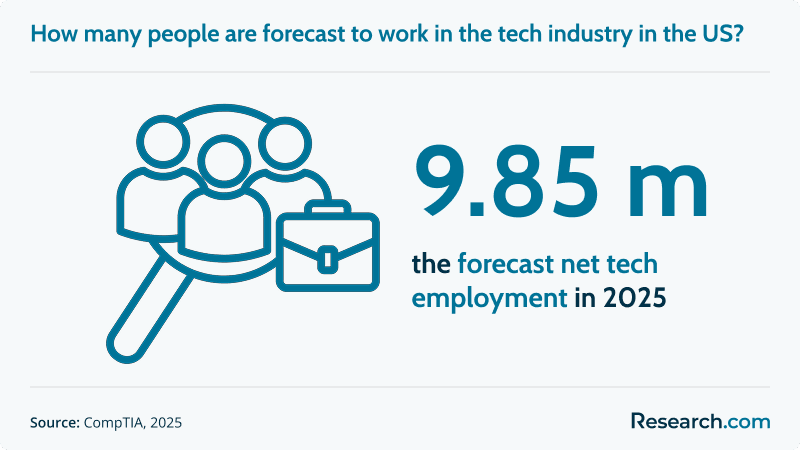
Time spent preparing for CySA+ should be viewed as part of a larger career plan. The tech job market is projected to include nearly 9.85 million jobs in 2025, but cybersecurity roles still require evidence of applied skill, not just course completion.
The following graphic gives additional context on the size of the technology workforce and the opportunity available to qualified professionals.
Online vs. on-campus CompTIA CySA+ bootcamps: Which format is better?
Online and on-campus CySA+ bootcamps can both be effective. The better choice depends on how you learn, how much schedule flexibility you need, and whether in-person networking is important to you.
Online programs usually work best for employed professionals who need to study around work, family, or military commitments. On-campus programs may be better if you prefer a classroom schedule, direct face-to-face interaction, and a fixed learning environment.
| Factor | Online CySA+ bootcamp | On-campus CySA+ bootcamp |
| Schedule flexibility | Usually stronger, especially for remote learners and working adults | More limited because attendance depends on location and set class times |
| Hands-on labs | Can be strong if the provider offers realistic virtual lab environments | Can be strong if the classroom includes guided lab access and instructor support |
| Networking | Often depends on live sessions, discussion boards, alumni groups, or virtual events | More natural for learners who value in-person interaction |
| Cost considerations | May reduce travel, lodging, and commuting costs | May involve added transportation or housing expenses |
| Best fit | Self-directed learners who can stay disciplined remotely | Learners who benefit from classroom structure and immediate in-person feedback |
Do not assume an online bootcamp is lower quality simply because it is remote. The deciding factors are the curriculum, instructor expertise, lab quality, student support, and alignment with CompTIA CySA+ exam objectives. This mirrors a larger shift in higher education, where well-designed online technical programs, including online master's programs in intelligence studies, can offer serious academic and professional preparation when built with strong faculty support and applied learning.
What is the average cost of an online CompTIA CySA+ training bootcamp?
Online CompTIA CySA+ bootcamps commonly cost around $3,000 or higher, although the programs in this guide range from $2,270.00 to $3,099. Price differences may reflect live instruction, lab access, exam preparation resources, institutional affiliation, instructor credentials, or included support services.
A higher tuition price does not automatically mean a stronger program. Before paying, compare what is included: live teaching hours, lab access length, practice exams, exam voucher availability, retake policies, recordings, study materials, and career services. A low-cost program that does not include enough hands-on practice may be a poor value; an expensive program without clear support may also be hard to justify.
| Cost factor | Why it matters | Question to ask before enrolling |
| Tuition | Determines the upfront investment | Is the listed price the full cost? |
| Exam voucher | Can affect total certification cost | Is the CompTIA CySA+ exam voucher included? |
| Lab access | Hands-on practice is essential for analyst skills | How long can I access labs after the bootcamp ends? |
| Instructor access | Complex topics may require expert feedback | Can I ask questions after class sessions? |
| Career support | May help with job search preparation | Are resume reviews, interview practice, or employer connections included? |
For working professionals, the tuition decision should be evaluated against likely career use. General Assembly reported that 91% of HR leaders say qualified applicants are demanding higher salaries, and two-thirds of companies are willing to pay them. That does not guarantee a salary increase after CySA+, but it does show why verified skills can matter in hiring and promotion conversations. The same cost-benefit thinking applies to longer credential paths, such as accredited online MHA programs, where students weigh tuition against career mobility.
What financial aid options are available for online CompTIA CySA+ bootcamps?
CompTIA CySA+ bootcamps are often non-degree, non-credit training programs, so they may not qualify for the same federal student aid available for traditional college degrees. However, several funding options may still reduce the upfront burden.
| Funding option | How it works | Best for | What to verify |
| Installment plans | The provider lets you divide tuition into multiple payments | Learners who can pay over time but not all at once | Fees, payment deadlines, and refund rules |
| Private loans | A bank or lending partner finances the training cost | Students who need upfront financing | Interest rate, repayment term, and total repayment cost |
| Employer sponsorship | Your company pays for the bootcamp or reimburses you after completion | Employees whose new skills benefit the organization | Eligibility, grade or completion requirements, and repayment obligations |
| Scholarships | The provider or a third party reduces tuition for eligible learners | Students from targeted groups or high-need backgrounds | Deadlines, eligibility rules, and whether awards are competitive |
| Military benefits | Approved programs may be eligible for veteran or military education benefits | Veterans, service members, and eligible dependents | Whether the specific provider and program are approved |
- Ask about payment plans. Many bootcamps allow students to spread tuition across several payments instead of paying the full amount upfront.
- Compare private financing carefully. Loans can make enrollment possible, but the final repayment amount may be much higher than the advertised tuition.
- Build an employer reimbursement case. If your organization needs stronger security monitoring, incident response, or vulnerability management, explain how CySA+ training supports business risk reduction. The University of Wisconsin offers useful guidance on how to discuss tuition reimbursement with an employer.
- Search for scholarships before you apply. Some providers and cybersecurity organizations support learners entering or advancing in security roles.
- Confirm military benefit eligibility in writing. GI Bill® coverage and other benefits depend on program approval and individual eligibility.
What prerequisites do you need before enrolling in an online CompTIA CySA+ bootcamp?
Most CySA+ bootcamps do not strictly require formal prerequisites, but that does not mean they are beginner-friendly. CySA+ is designed for learners who already understand IT systems, networking, and core security concepts. If you lack that foundation, a short bootcamp may feel like memorizing answers instead of learning analyst skills.
Readiness factor 1: Networking and security fundamentals
You should be comfortable with TCP/IP basics, common ports and protocols, authentication, endpoint security, access control, risk concepts, and basic security tooling. Many learners first complete Security+ preparation before CySA+, and some use online CompTIA Security+ bootcamps to strengthen the foundation needed for more advanced analysis.
Readiness factor 2: Practical IT or security experience
CySA+ preparation is easier when you have handled tickets, reviewed logs, supported endpoints, worked in networking, managed systems, or participated in security operations. One to three years of hands-on experience in an IT or security role can make the bootcamp content much more useful because you can connect concepts to real incidents and systems.
Readiness factor 3: An investigative mindset
Security analysts do more than follow checklists. They ask why an alert fired, whether activity is normal or suspicious, what evidence supports a conclusion, and what action reduces risk. Strong CySA+ candidates are curious, detail-oriented, and comfortable working through incomplete information.
| If this describes you | CySA+ bootcamp readiness | Better next step |
| You have no IT background | Low | Start with basic networking and cybersecurity fundamentals |
| You hold Security+ or equivalent knowledge but limited analyst experience | Moderate | Choose a bootcamp with strong labs and extra study time |
| You work in IT, systems, networking, or security operations | Strong | Use the bootcamp for focused CySA+ exam preparation |
| You already investigate alerts or incidents at work | Very strong | Use CySA+ to validate and organize existing skills |
What do online CompTIA CySA+ bootcamps teach?
A quality CySA+ bootcamp should prepare students to analyze security information, identify vulnerabilities, investigate suspicious behavior, and respond to incidents using analyst workflows. The curriculum should align with CompTIA CySA+ exam objectives and include hands-on work rather than lecture-only review.
Common topics include threat intelligence, vulnerability management, security operations, incident response, log analysis, behavioral analytics, and use of security tools such as Security Information and Event Management platforms. The practical goal is to turn raw data from alerts, endpoints, network traffic, and logs into decisions that help protect an organization.
| Curriculum area | What you learn | Why it matters in analyst roles |
| Threat intelligence and detection | How to recognize indicators, patterns, and suspicious activity | Analysts must distinguish real threats from noise |
| Vulnerability management | How to identify, prioritize, and communicate weaknesses | Organizations need risk-based remediation, not just long scan reports |
| Security monitoring | How to interpret logs, alerts, and tool outputs | Most security operations work depends on evidence from systems and networks |
| Incident response | How to investigate, contain, and document security events | Response speed and accuracy affect business impact |
| Hands-on tools | How to work with analyst platforms and lab scenarios | Employers value practical ability, not only exam terminology |
Why CySA+ is closely connected to data analysis
Cybersecurity analysis is a specialized form of applied data interpretation. Analysts look for meaningful signals in logs, alerts, behavior patterns, and network activity. Professionals who want deeper quantitative or analytics training sometimes add credentials such as a fast-track online graduate certificate in data analytics, especially if they plan to work in threat intelligence, detection engineering, or security analytics.
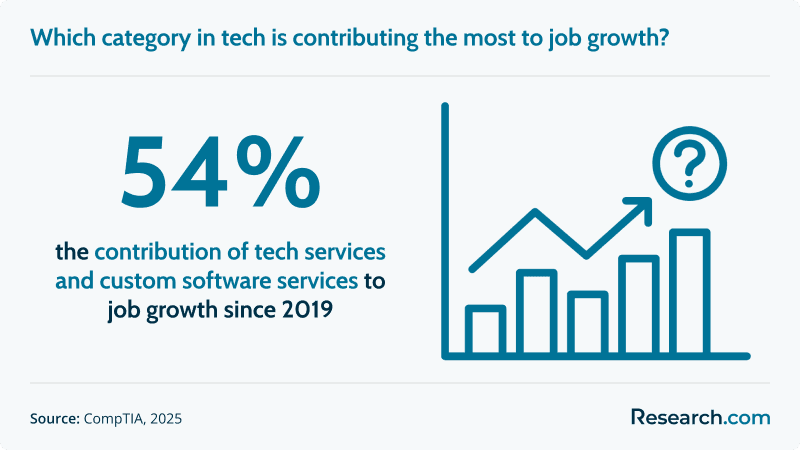
CompTIA data also shows that tech services and custom software development have been the single largest contributor to job growth in the tech sector since 2019, reinforcing the value of analytical technical skills across the market.
Are there specializations within online CompTIA CySA+ bootcamps?
Most CySA+ bootcamps do not offer separate specialization tracks. The certification itself is already a specialization within cybersecurity because it focuses on analysis, threat detection, vulnerability management, and incident response rather than general IT support or broad security awareness.
Your specialization usually comes after CySA+. Once you have the analyst foundation, you can build toward a more specific career direction.
Common specialization paths after CySA+
| Post-CySA+ path | What it emphasizes | Who should consider it |
| Penetration testing or purple teaming | Offensive testing plus defensive detection | Analysts who want to understand attacker behavior and improve defenses |
| Cloud security | Security controls, monitoring, and incident response in AWS or Azure environments | Professionals working with cloud infrastructure or cloud migration projects |
| Security architecture | Designing security systems, controls, and enterprise-level protections | Experienced professionals planning for senior technical leadership |
| Threat intelligence | Adversary behavior, indicators, reporting, and intelligence-driven defense | Analysts who enjoy investigation, research, and writing |
| Industry specialization | Applying security skills in finance, healthcare, education, government, gaming, or other sectors | Professionals who want to combine cybersecurity with domain expertise |
CySA+ skills are transferable because security monitoring, incident response, and risk reduction matter across industries. Some professionals combine technical training with niche business education, including programs such as accelerated online esports business management programs, when they want to apply cybersecurity or technology skills in specialized markets.
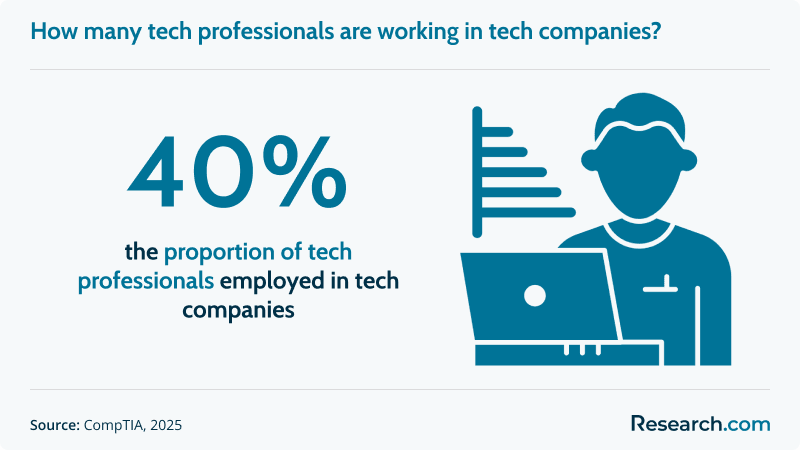
The data below illustrates that technology talent is spread across the broader economy, not limited to traditional technology companies.
How to choose the best online CompTIA CySA+ training bootcamp
Choosing a CySA+ bootcamp should be a due diligence process. Do not rely only on rankings, brand names, or promises about passing the exam. The right program should match your current skill level, give you meaningful lab practice, and clearly disclose what your tuition includes.
Step-by-step checklist for comparing CySA+ bootcamps
- Match the syllabus to CompTIA CySA+ exam objectives. A reputable provider should clearly explain which domains and skills the course covers.
- Inspect the lab environment. Ask whether labs are browser-based, cloud-based, tool-specific, scenario-driven, and available after the live training ends.
- Review instructor qualifications. Look for instructors with current cybersecurity experience, relevant certifications, and practical analyst or engineering backgrounds.
- Clarify what tuition includes. Confirm whether you receive an exam voucher, books, practice tests, recordings, lab access, or retake support.
- Ask about student support. Determine whether help is available outside class hours, especially if the bootcamp is only 5 days long.
- Evaluate career services honestly. Resume help and interview coaching can be useful, but job placement claims should be supported by recent, verifiable outcomes.
- Check refund and cancellation policies. Short bootcamps often move quickly, so understand your options before paying.
Common mistakes to avoid
| Mistake | Why it can hurt you | Better approach |
| Choosing only by lowest tuition | A cheaper course may lack labs, support, or exam preparation depth | Compare total value, not just price |
| Assuming all online bootcamps are equal | Online quality varies widely by instructor, labs, and student support | Ask for syllabus details and lab demonstrations |
| Skipping prerequisite review | CySA+ content can be difficult without networking and Security+ level knowledge | Assess your readiness before enrolling |
| Expecting the certification to guarantee a job | Employers also evaluate experience, projects, communication, and interview performance | Pair certification with hands-on practice and a targeted job search |
| Ignoring accreditation context | Some bootcamps are professional training programs, not accredited degree programs | Verify whether institutional accreditation matters for your goal |
| Relying only on rankings | A ranked program may not fit your schedule, budget, or learning needs | Use rankings as a starting point, then compare fit |
Students considering broader technology education can also compare bootcamps with degree routes such as accelerated online computer science degrees. A degree may be more appropriate for learners who need a complete academic foundation, while a CySA+ bootcamp is better for professionals who already have technical experience and want certification-focused preparation.
What careers can you pursue after an online CompTIA CySA+ bootcamp?
Completing a CySA+ bootcamp and earning the certification can support movement into cybersecurity analyst roles, especially for professionals who already have IT, networking, systems, or help desk experience. The certification is most relevant to jobs involving security monitoring, vulnerability analysis, incident investigation, and defensive operations.
| Role | Typical focus | How CySA+ helps |
| Cybersecurity Analyst | Monitoring systems, analyzing threats, and supporting security operations | Validates analyst-level knowledge in detection, response, and vulnerability management |
| SOC Analyst | Reviewing alerts, escalating incidents, and documenting investigations | Builds familiarity with security data, logs, and response procedures |
| Incident Responder | Investigating, containing, and reporting security incidents | Supports structured thinking around incident handling and evidence |
| Senior Security Analyst | Leading investigations, mentoring junior analysts, and improving detection processes | Can strengthen promotion cases when paired with experience |
| Threat Intelligence Specialist | Researching adversaries, indicators, and risk trends | Provides a foundation in analysis and threat-focused security work |
| Security Architect | Designing security controls and long-term defense strategies | Can serve as one step in a longer certification and experience pathway |
Government and defense contracting can also be relevant paths for cybersecurity analysts, particularly for professionals interested in structured security environments. Learners exploring that world may find it useful to understand adjacent fields, including what you can do with a military science degree, though CySA+ itself remains a technical cybersecurity credential.
Long-term career durability
CySA+ should be treated as a career accelerator, not a final credential. Cybersecurity changes constantly, and advancement often requires continuous practice, additional certifications, stronger scripting or cloud skills, and a track record of solving real security problems. CompTIA has reported that 89% of CompTIA certificate holders are still working in the tech field five years after getting certified, which suggests that certification can support long-term participation in the technology workforce.
The following graphic provides additional context on technology workforce growth and career stability over time.
What is the job market for online CompTIA CySA+ bootcamp graduates?
The market for cybersecurity analysts remains strong because organizations need professionals who can monitor systems, investigate alerts, prioritize vulnerabilities, and respond to incidents. This demand is not limited to technology companies; finance, healthcare, education, government, retail, gaming, manufacturing, and critical infrastructure all need defensive security talent.
The broader technology sector has also attracted significant investment. The industry drew over $77.8 billion in equity investment in a single year, which helps explain the continued demand for skilled technical workers. However, investment and hiring can vary by region and specialization. California, for example, saw a net loss in tech employment last year, so job seekers should research local and remote hiring conditions rather than assuming every market is equally strong.
CySA+ is especially relevant because it targets intermediate analytical skills. Many entry-level applicants can describe basic cybersecurity concepts, but employers often need people who can interpret data, triage alerts, and communicate risk. Even adjacent technology education routes, such as the best online game development degree programs, increasingly benefit from security awareness because software, platforms, and user data must be protected.
How AI and automation affect CySA+ careers
AI-enabled tools can help analysts summarize alerts, correlate large data sets, and speed up repetitive investigation steps. They do not remove the need for human judgment. Security teams still need professionals who can validate findings, understand business context, detect false positives, document incidents, and decide what action is appropriate.
For CySA+ candidates, this means practical analysis skills are more important than memorization. Learners should become comfortable asking better questions, testing evidence, and using tools responsibly rather than expecting automation to replace analyst thinking.
Where cybersecurity analyst growth is concentrated
The outlook for online CompTIA CySA+ bootcamp graduates is strongest when candidates combine certification with demonstrable hands-on ability. The broader technology sector continues to grow, but cybersecurity analyst demand is particularly tied to risk management, regulatory pressure, cloud adoption, remote work, and the increasing volume of security data organizations must interpret.
What graduates say about online CompTIA CySA+ training bootcamps
-
: "I was managing a team and raising two children, so commuting to a campus was not realistic. The online bootcamp let me study after bedtime and complete labs on weekends. It gave me a focused path to move forward professionally without stepping away from my responsibilities.
— Nina"
-
: "I already had senior IT responsibilities, but I wanted my role to shift formally into security. The bootcamp helped me organize what I knew, prepare for the credential, and make a stronger case for a security-focused promotion inside my company.
— Anders"
-
: "My systems administrator job had included security incident work for years, but my title and pay had not caught up. Earning CySA+ gave me a recognized credential that supported my move into a Senior Security Analyst role.
— Trevor"
Key Findings
How do online CompTIA CySA+ bootcamps keep pace with cybersecurity changes?
Strong CySA+ bootcamps update their content by tracking current threat intelligence, CompTIA exam objectives, changes in security tools, and the practical realities of modern security operations. The best programs use realistic labs, live demonstrations, simulations, and incident-based exercises so students practice analysis rather than only reading definitions.
Learners should ask providers how often the curriculum is reviewed, who updates it, whether instructors currently work in cybersecurity, and how labs reflect real-world security workflows. Programs that combine security analysis with broader technical thinking can be especially valuable, much as accelerated computer science degrees can strengthen foundational problem-solving for technical careers.
What is the return on investment for an online CompTIA CySA+ bootcamp?
The ROI of a CySA+ bootcamp depends on your starting point. If you already work in IT or security and need a recognized credential to support a promotion, job change, or move into a SOC role, a short bootcamp may offer a practical return. If you are brand new to technology, the ROI may be weaker because you may need additional training before CySA+ can help you compete for analyst roles.
To evaluate ROI, compare tuition, time away from work, exam costs, lab access, and career support against your realistic next career step. Do not assume certification alone guarantees higher pay. Instead, ask whether the bootcamp helps you build evidence of skill that employers can verify through projects, interviews, and work experience. This same decision logic applies to specialized education investments in other fields, such as an online space studies degree, where value depends on career fit and long-term goals.
| ROI question | Why it matters |
| Will this credential help me qualify for a specific role? | A targeted career goal makes the investment easier to evaluate |
| Do I already have enough experience for CySA+ to matter? | The certification is most useful when paired with practical background |
| What does the bootcamp include beyond lectures? | Labs, practice exams, and instructor access can improve exam readiness |
| Can my employer pay or reimburse the cost? | Employer support can significantly improve ROI |
| What opportunity cost will I face? | Even a 5-day program requires time, focus, and preparation |
References:
- CompTIA. (2024). Assessing outcomes, efficacy, and value. Retrieved July 29, 2025, from https://partners.comptia.org/docs/default-source/resources/comptia-assessing-outcomes-efficacy-and-value.pdf
- CompTIA. (2025). State of the Tech Workforce 2025. Retrieved July 29, 2025, from https://lecbyo.files.cmp.optimizely.com/download/808ea63053b111f08b6ca695fc160b1a
- CompTIA. (2025, July). Tech Jobs Report July 2025. Retrieved July 29, 2025, from https://lecbyo.files.cmp.optimizely.com/download/6b6fc8e4ff4a11efbebeaeb5c39a94d9?sfvrsn=725f3c8d_0
- General Assembly. (2024, April 16). The state of tech talent acquisition 2024. General Assembly Blog. Retrieved July 29, 2025, from https://generalassemb.ly/blog/the-state-of-tech-talent-acquisition-in-2024-insights-strategies-revealed/
- McKinsey. (2025). McKinsey Technology Trends Outlook 2025. Retrieved July 29, 2025, from https://www.mckinsey.com/capabilities/mckinsey-digital/our-insights/the-top-trends-in-tech
What post-bootcamp support helps CySA+ graduates succeed?
Post-bootcamp support matters because certification preparation and career movement are not the same thing. Helpful services include resume reviews, interview coaching, alumni mentoring, lab access after graduation, practice exam support, and guidance on translating IT experience into cybersecurity analyst language.
Before enrolling, ask whether support ends when the bootcamp ends or continues for a defined period. Also ask whether the provider helps students build a portfolio of security analysis work, such as sample incident reports, vulnerability summaries, or lab-based investigation notes. Professionals who want to broaden their technical profile may later explore adjacent advanced programs, including an online space studies degree, but for CySA+ learners the immediate priority should be proving job-ready analyst skills.
Key Insights
- CySA+ bootcamps are best for experienced learners. They work well for IT, networking, systems, and security professionals, but they are usually too advanced for complete beginners.
- The listed programs are short and intensive. Every ranked bootcamp in this guide has a 5-day format, with tuition ranging from $2,270.00 to $3,099.
- Price is not the same as quality. Compare labs, instructor experience, exam support, included materials, and post-course access before choosing.
- Online can be just as practical as campus-based training. The key is whether the provider offers realistic hands-on labs, live support, and clear alignment with CySA+ exam objectives.
- CySA+ supports analyst-focused roles. Common career targets include Cybersecurity Analyst, SOC Analyst, Incident Responder, Senior Security Analyst, Threat Intelligence Specialist, and Security Architect over the long term.
- ROI depends on your starting point. The credential is most valuable when it validates existing technical experience and helps you move into a defined cybersecurity role or promotion path.
Other Things You Should Know About the Best Online CompTIA CySA+ Training Bootcamps
When selecting an online CompTIA CySA+ training bootcamp for 2027, consider the course content, instructor expertise, flexibility of the schedule, cost, and reviews. Ensure the program aligns with updated CySA+ exam objectives and offers adequate practice materials and support.
The average duration of 2027 Best Online CompTIA CySA+ Training Bootcamps typically ranges from 4 to 12 weeks. This can vary based on the program's intensity and specific curriculum, allowing flexibility for learners with different schedules and commitments.
Some 2027 online CompTIA CySA+ bootcamps include a CompTIA CySA+ exam voucher, while retake support is less common and usually offered as a separate add-on. Check whether the program covers exam CS0-003, voucher expiration dates, and any limits on retake reimbursement before enrolling.


