2027 Fastest Online CompTIA Security+ Training Bootcamps

Co-Founder and Chief Data Scientist
CompTIA Security+ is often the first serious cybersecurity credential people consider when they want to move from general IT support, networking, systems administration, or help desk work into security-focused roles. The decision is not just whether to study for the exam. It is whether an online Security+ bootcamp is the right way to prepare, how much it may cost, what kind of support you need, and whether the credential fits your career goals.
The stakes are meaningful. Cybersecurity remains one of the stronger areas in technology employment, and information security analysts in the United States had a median annual wage of $124,910 in May 2024 [US Bureau of Labor Statistics (BLS), 2025]. Still, a bootcamp is a short training program, not a guaranteed job offer. The best choice depends on your current IT background, schedule, budget, learning style, and whether you need structured exam preparation or a broader academic path.
This guide explains what online CompTIA Security+ training bootcamps cover, how they compare with campus programs and cybersecurity degrees, what costs and financial aid options to expect, which programs are available from the featured providers, and how to choose a program that supports your next career step.
Quick answer: Is an online CompTIA Security+ bootcamp worth it?
An online CompTIA Security+ bootcamp can be worthwhile if you already have basic IT knowledge and want a short, structured path to Security+ exam preparation. These programs are especially useful for learners who benefit from instructor guidance, practice exams, labs, and a fixed study schedule. They are less ideal for complete beginners who need more time with networking, operating systems, and hardware fundamentals before tackling security concepts.
The credential can support entry-level and early-career roles in cybersecurity and IT, including information security analyst, computer systems analyst, and future IT management pathways. In May 2024, information security analysts in the U.S. earned a median hourly wage of $60.05 (US BLS, 2025). However, salary outcomes depend on experience, location, employer, security clearance requirements, technical depth, and whether you can demonstrate hands-on skills beyond passing the exam.
What are the main benefits of completing an online CompTIA Security+ training bootcamp?
- Focused certification preparation: A bootcamp organizes Security+ topics into a short, exam-oriented sequence so learners do not have to build a study plan from scratch.
- Flexible access: Online delivery lets students prepare while balancing work, family, or other responsibilities, provided they can commit to the program’s schedule and study requirements.
- Career relevance: Security+ training can help prepare learners for security-related responsibilities in roles such as information security analyst, computer systems analyst, and computer and information systems manager.
- Structured practice: Many programs include labs, review sessions, practice questions, and instructor support that can make the exam objectives easier to understand.
- Foundation for further growth: Security+ is commonly used as a starting credential before learners move into cloud security, network defense, incident response, governance, risk, or advanced cybersecurity study.
What can I expect from an online CompTIA Security+ training bootcamp?
An online CompTIA Security+ training bootcamp is a short, intensive program built around the Security+ exam objectives. Most programs combine live online instruction or recorded lessons with hands-on labs, practice questions, exam strategy, and review of common security scenarios. The goal is to help learners understand the concepts tested on the exam and apply those concepts to practical IT and cybersecurity situations.
Typical topics include general security concepts, attacks and vulnerabilities, network defense, identity and access management, security architecture, cryptography, operations, incident response, risk management, and governance. Depending on the provider, you may also work through simulated security tasks such as reviewing logs, identifying misconfigurations, applying access controls, and responding to threats.
| Bootcamp feature | What it usually means for the learner | What to check before enrolling |
| Live instruction | You attend scheduled online classes with an instructor and can ask questions in real time. | Confirm time zone, attendance expectations, class size, and whether recordings are available. |
| Self-paced lessons | You study through recorded modules and digital materials on your own schedule. | Ask how long you keep access and whether instructor support is included. |
| Hands-on labs | You practice security tasks instead of only reading definitions and memorizing terms. | Verify whether labs are browser-based, realistic, graded, or simply optional exercises. |
| Practice exams | You test readiness and learn how questions may be structured. | Ask whether practice exams are updated for the exam version covered by the program. |
| Exam voucher | The cost of the certification exam may be included in tuition. | Confirm whether the voucher is included, when it expires, and whether retakes are covered. |
| Career support | Some programs provide resume guidance, interview tips, or employer connections. | Look for concrete services rather than vague promises about job placement. |
Where can I work with online CompTIA Security+ training?
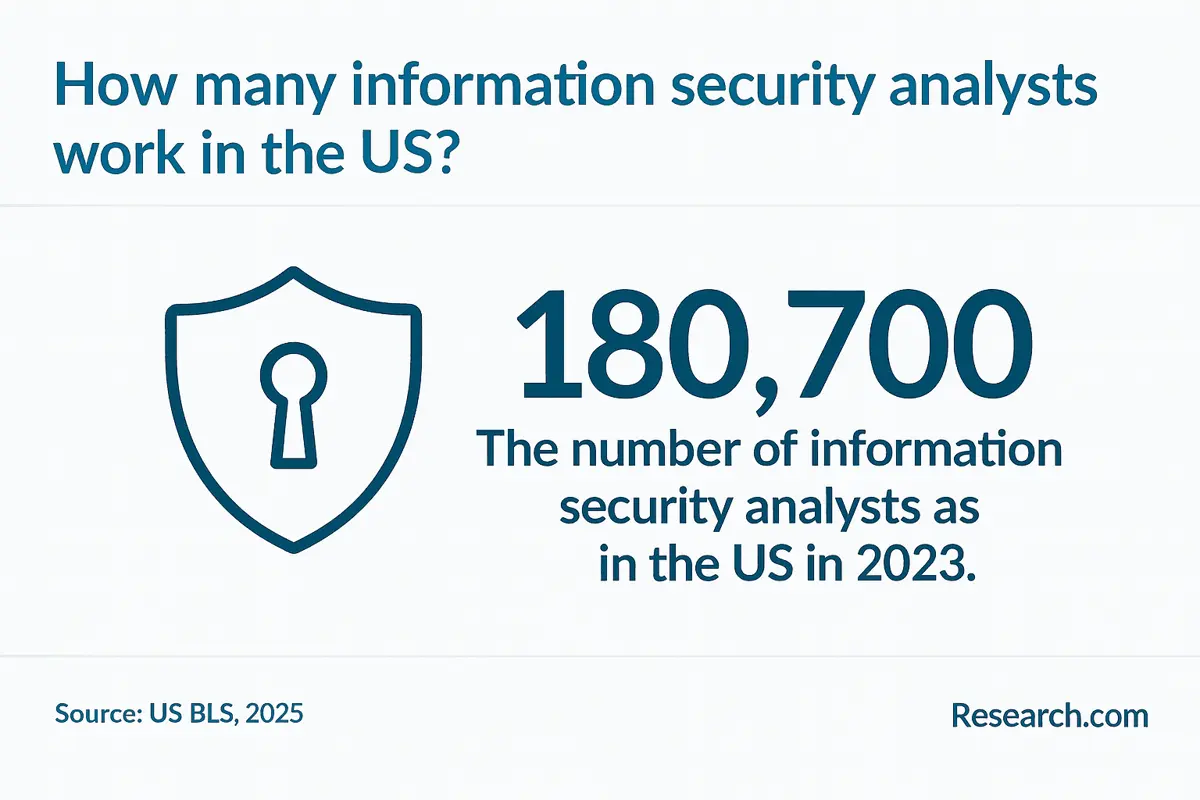
CompTIA Security+ training can be useful across many industries because most organizations need to protect systems, networks, customer data, and internal operations. In 2023, approximately 180,700 information security analysts were employed across the U.S. (US BLS, 2025).
The strongest fit is usually with employers that need entry-level or early-career professionals who understand core security principles and can support security operations, compliance, systems hardening, and threat monitoring. The top sectors hiring information security professionals include:
- Computer Systems Design and Related Services (22%): IT consulting firms, managed service providers, and technology service companies may need professionals who can help configure security tools, review vulnerabilities, support firewall rules, and assist with secure network design.
- Finance and Insurance (15%): Banks, insurers, and financial technology organizations rely on cybersecurity staff to help protect customer information, support fraud prevention, monitor access controls, and maintain compliance programs.
- Information (10%): Telecommunications providers, media organizations, and data services companies may hire security staff to protect communication systems, digital assets, proprietary information, and privacy controls.
- Management of Companies and Enterprises (8%): Large organizations with internal IT and security departments may need analysts who can help enforce policies, escalate incidents, maintain secure systems, and support enterprise cybersecurity programs.
- Management, Scientific, and Technical Consulting Services (6%): Consulting organizations may use security-trained professionals to help with assessments, audits, risk reviews, compliance preparation, and technical recommendations.
Security+ can help demonstrate baseline cybersecurity knowledge, but employers often look for more than the credential. Projects, labs, internships, IT experience, troubleshooting ability, documentation skills, and familiarity with security tools can all affect competitiveness.
How much can I make with online CompTIA Security+ training?
Security+ training may support access to higher-paying technology pathways, but compensation varies by role, experience, region, employer, and technical responsibility. The credential alone does not determine salary. It is best understood as one part of a larger career profile that may include IT experience, networking knowledge, cloud skills, security tools, communication ability, and leadership potential.
Median annual salaries in the U.S. for selected technology roles were as follows in May 2024 (US BLS, 2025):
| Role | Median annual salary | How Security+ may fit |
| Information security analysts | $124,910 | Security+ aligns directly with foundational security monitoring, risk, threat, and incident response knowledge. |
| Computer systems analysts | $103,790 | Security+ can help systems analysts understand security requirements when evaluating or improving IT systems. |
| Computer and information systems managers | $171,200 | Security+ can be an early credential on a longer path toward IT leadership, especially when paired with experience and management skills. |
For context, the national median wage for all occupations in the same period was $49,500. These figures show why cybersecurity and related technology roles attract career changers, but learners should avoid assuming that a short bootcamp will immediately lead to median-level pay. Many candidates begin in help desk, network support, SOC analyst, junior security analyst, or systems support roles before advancing.
- Online CompTIA Security+ Training Bootcamps for 2027
- How long does a fast-track online CompTIA Security+ bootcamp take?
- Online vs. on-campus CompTIA Security+ training: which is better?
- How much does an online CompTIA Security+ bootcamp cost?
- Financial aid and payment options for Security+ bootcamp students
- Prerequisites for online CompTIA Security+ training
- Security+ bootcamp vs. cybersecurity degree
- Cybersecurity specializations after Security+ training
- Further education after a Security+ bootcamp
- How to choose the best online CompTIA Security+ bootcamp
- Career paths after online CompTIA Security+ training
- Job market outlook for Security+ bootcamp graduates
- Challenges to consider before enrolling
- How alumni networks and industry connections can help
List of Online CompTIA Security+ Training Bootcamps for 2027
The programs below are offered by academic institutions or recognized training providers and focus on preparing learners for CompTIA Security+ certification. Use this list as a starting point, then verify current tuition, exam version, voucher details, refund rules, and support services directly with each provider before enrolling.
This list was developed using the Research.com methodology. Data sources reviewed include the IPEDS database, Peterson's database, the College Scorecard database, and the National Center for Education Statistics.
| Provider | Program length | Cost | Accreditation or provider status | Best for |
| Park University | 5 days | $2,799 | Higher Learning Commission (HLC) | Learners who want a short live online boot camp through an accredited university partner. |
| University of Texas at Arlington | 5 days | $2,899 | Southern Association of Colleges and Schools Commission on Colleges (SACSCOC) | Students who prefer a university-affiliated continuing education option with intensive pacing. |
| Morgan State University | 5 days | Contact the university for program cost details. | Middle States Commission on Higher Education (MSCHE) | Learners seeking a no-prerequisite option who may already have IT or networking exposure. |
| University of Houston | 5 days | Contact the university for program cost details. | SACSCOC | IT professionals in areas such as security administration, helpdesk management, or cloud engineering. |
| Cyberkraft Training | 40 hours | $2,170 | CompTIA Authorized Training Partner | Learners who want Security+ SY0-701 preparation through Zoom-based instruction. |
1. Park University
Park University offers an online CompTIA Security+ Training Boot Camp built around 5 days of live instruction. The program covers security principles and exam-relevant topics such as attacks, threats, vulnerabilities, architecture and design, operations, and incident response. It is designed for learners who want concentrated preparation rather than a semester-length course.
- Program Length: 5 days
- Cost: $2,799
- Accreditation: Higher Learning Commission (HLC)
2. University of Texas at Arlington
The University of Texas at Arlington provides an online CompTIA Security+ Training Boot Camp with a similar 5-day intensive structure. Its curriculum includes general security concepts, threats, vulnerabilities, mitigations, security program management, and oversight. The program is a fit for learners who want a university continuing education option with live, accelerated exam preparation.
- Program Length: 5 days
- Cost: $2,899
- Accreditation: Southern Association of Colleges and Schools Commission on Colleges (SACSCOC)
3. Morgan State University
Morgan State University offers its online CompTIA Security+ Bootcamp through the Center for Continuing and Professional Studies. Like the Park University and University of Texas at Arlington options, the program is powered by Infosec. The provider states that enrollment does not require formal prerequisites, though applicants may benefit from at least 1 year of experience in information systems and networking before pursuing Security+ certification.
- Program Length: 5 days
- Cost: Contact the university for program cost details.
- Accreditation: Middle States Commission on Higher Education (MSCHE)
4. University of Houston
The University of Houston offers an online CompTIA Security+ Bootcamp for IT professionals from backgrounds such as security administration, helpdesk management, and cloud engineering. The program description states that completers are prepared for the CompTIA Security+ SY0-601 examination, so prospective students should confirm the current exam version, course materials, and voucher details before enrolling.
- Program Length: 5 days
- Cost: Contact the university for program cost details.
- Accreditation: SACSCOC
5. Cyberkraft Training
Cyberkraft Training is a CompTIA Authorized Training Partner offering an online CompTIA Security+ SY0-701 Bootcamp. The course covers all five domains identified by CompTIA, including general security concepts, security architecture, and security operations. Training is delivered through Zoom, and the provider states that students do not need to download software for the activities.
- Program Length: 40 hours
- Cost: $2,170
- Accreditation: CompTIA Authorized Training Partner
How long does it take to complete a fast-track online CompTIA Security+ training bootcamp?
Fast-track online CompTIA Security+ bootcamps are usually designed for rapid completion. The featured intensive programs commonly run 5 to 10 days, often requiring full-day participation. This format works best for learners who can temporarily clear their schedule and absorb a large amount of material quickly.
Some learners compare this model with other accelerated technical programs, such as the fastest online data science bootcamps, because both emphasize concentrated skills training. The difference is that Security+ bootcamps are usually certification-focused, while broader bootcamps may be project- or portfolio-oriented.
Part-time and self-paced Security+ options may take several weeks or months. These can be better for working adults, parents, or learners who need more review time. Many flexible formats require 30 to 60 total hours of study, though actual preparation time can be higher if you are new to networking, operating systems, or security terminology.
If your background is closer to cloud infrastructure than cybersecurity, it may also be useful to compare related training options such as the most affordable online cloud engineering bootcamps before choosing a path.
| Format | Typical pace | Best fit | Main trade-off |
| Full-time live bootcamp | 5 to 10 days | Learners who want structure and can study intensively | Fast pace can be overwhelming without prior IT knowledge |
| Part-time online course | Several weeks | Working professionals who need scheduled support | Progress is slower than a full-time bootcamp |
| Self-paced training | Several weeks or months | Independent learners with changing schedules | Requires discipline and may offer less direct accountability |
How does an online CompTIA Security+ training bootcamp compare to an on-campus program?
The better choice depends on how you learn, how much structure you need, and whether you can attend in person. Online Security+ bootcamps are usually more convenient for working professionals, while campus-based programs may offer stronger face-to-face interaction and a more controlled learning environment.
| Factor | Online Security+ bootcamp | On-campus Security+ program | Decision tip |
| Schedule | Often easier to access from home, with live or self-paced options | Usually requires attendance at fixed times and locations | Choose online if commute time or work hours are a major barrier. |
| Instructor access | May include chat, video sessions, office hours, or discussion boards | Can provide direct in-person conversation and immediate clarification | Ask online providers how quickly instructors respond to questions. |
| Labs and tools | Uses virtual labs, simulations, and digital platforms | May include physical labs or in-person technical support | Online is sufficient for many learners if the virtual labs are realistic. |
| Peer interaction | Depends on cohort design and online discussion quality | Often easier to build relationships through in-person sessions | If networking matters to you, ask about cohorts, alumni groups, and events. |
| Learning discipline | Requires strong self-management, especially in self-paced formats | Classroom attendance can create external accountability | Choose the format that matches your study habits, not just your calendar. |
Many learners also compare online Security+ preparation with broader online cybersecurity courses with certificates. A Security+ bootcamp is usually narrower and more exam-driven, while certificate courses may cover wider topics or require more projects.
The flexibility of online training is similar to other remote academic formats, including the fastest online master's in special education programs, where students often choose online study because they need access without relocating or pausing work.
What is the average cost of an online CompTIA Security+ training bootcamp?
Based on the featured programs with published tuition, online CompTIA Security+ bootcamp costs range from $2,170 to $2,899. Some providers do not publish tuition and require prospective students to contact the university for current pricing. Because bootcamp costs can change, always confirm the total amount before enrolling.
The listed price may not tell the full story. Ask whether tuition includes the exam voucher, labs, practice exams, digital textbooks, retake support, and post-course access. A cheaper course can become less valuable if it excludes essential preparation tools, while a more expensive course may be reasonable if it includes strong instructor support and updated materials.
- Instruction format: Live instructor-led programs often cost more than self-paced courses because they include scheduled teaching and direct support.
- Learning resources: Labs, review guides, practice tests, and simulations can improve preparation but may raise the price.
- Exam voucher: If a voucher is included, it can increase the upfront cost but reduce separate out-of-pocket expenses later.
- Provider reputation and support: University affiliation, CompTIA partner status, instructor access, and career support may affect overall value.
Students comparing security and cloud pathways may also review the most affordable online CompTIA Cloud training bootcamps to see whether a cloud credential better matches their current job goals.
The chart below visualizes the current cost information available from the featured online CompTIA Security+ training bootcamps.
What are the financial aid options for students enrolling in an online CompTIA Security+ training bootcamp?
Financial aid for non-credit certification bootcamps is often more limited than aid for degree programs. Many Security+ bootcamps do not qualify for traditional federal student aid, so students should ask the provider directly about eligible funding options before committing.
Common ways to reduce upfront cost include employer reimbursement, workforce development funding, payment plans, military or veteran education benefits when applicable, and provider-specific promotions. Employer support can be especially relevant if your current role involves IT, networking, help desk support, cloud operations, compliance, or security responsibilities.
Organizations sometimes sponsor training to upskill existing employees, including Security+ preparation or related pathways such as the fastest online CompTIA Network+ training bootcamps. Some employers reimburse costs after course completion or after the employee earns certification, so it is important to understand the timing and documentation requirements.
| Funding option | How it may work | Questions to ask |
| Employer sponsorship | Your employer pays part or all of the training cost in advance. | Does the company require approval before enrollment? |
| Tuition reimbursement | You pay first and are reimbursed after completion or certification. | What proof is required, and is passing the exam mandatory? |
| Payment plan | The provider lets you split tuition into installments. | Are there fees, interest, or penalties for missed payments? |
| Workforce funding | Local or state programs may support job training for eligible learners. | Is this bootcamp approved by the funding agency? |
| Military or veteran benefits | Some learners may qualify for education or training benefits. | Does the provider accept the benefit you plan to use? |
What are the prerequisites for enrolling in an online CompTIA Security+ training bootcamp?
Formal prerequisites vary by provider, and some bootcamps allow open enrollment. That does not mean every learner is equally prepared. Security+ assumes that you understand core IT concepts well enough to study security controls, network threats, access management, system hardening, and incident response without starting from zero.
- Basic IT knowledge: You should be comfortable with operating systems, hardware, networking concepts, IP addressing, common ports, and troubleshooting basics.
- Recommended experience: Although not always required, 1 to 2 years of IT experience with some security exposure can make the material easier to understand and apply.
- CompTIA A+ and Network+ familiarity: Completing these certifications is not always mandatory, but equivalent knowledge is helpful because Security+ builds on support and networking fundamentals.
- Study readiness: Fast bootcamps move quickly, so learners should plan for review time before, during, and after the course.
If your networking foundation is weak, an affordable online CompTIA Network training course may be a better first step. Learners considering a longer academic route can also compare certification training with the fastest online bachelor's in computer science programs to decide whether they need a degree, a credential, or both.
How do online CompTIA Security+ bootcamps compare to traditional cybersecurity degree programs?
A Security+ bootcamp and a cybersecurity degree serve different purposes. A bootcamp is short, targeted, and designed around certification readiness. A degree is longer, broader, and usually includes more theory, general education, programming, systems design, policy, math, research, and advanced electives. Neither option is automatically better; the right choice depends on your timeline and career target.
| Option | Primary goal | Time commitment | Best for | Limitations |
| Online CompTIA Security+ bootcamp | Prepare for Security+ certification and build baseline cybersecurity knowledge | Often days to weeks, depending on format | IT professionals, career changers with technical foundations, and learners seeking quick exam preparation | May not provide deep theory, internships, research, or broad academic credentials |
| Traditional cybersecurity degree | Develop broad technical, analytical, and professional knowledge | Usually much longer than a bootcamp | Students seeking a comprehensive academic credential and wider long-term preparation | Requires more time, tuition planning, and commitment |
| Combined path | Use Security+ for early validation while pursuing broader education | Varies by learner | Students who want both an industry credential and a degree pathway | Requires careful sequencing to avoid paying for overlapping content |
If you want a broader technology education rather than a certification-first pathway, compare cybersecurity degree options with adjacent technical programs such as a game development bachelor's degree online. The best program is the one that matches the work you actually want to do, not simply the one that sounds most technical.
What types of specializations are available to graduates of online CompTIA Security+ training bootcamps?
Security+ is a foundation, not an endpoint. After completing a bootcamp and earning the credential, many professionals build deeper expertise in a specific area of cybersecurity. The right specialization should reflect your strengths: some people prefer technical defense and systems work, while others prefer investigation, compliance, governance, or risk.
Learners who want to move faster into more advanced cybersecurity study may compare a Security+ bootcamp with an accelerated online cybersecurity training program.
- Network Security: This path focuses on protecting wired and wireless networks, configuring firewalls, securing data in transit, managing VPNs, and reducing unauthorized access.
- Incident Response and Threat Management: This area prepares professionals to detect, investigate, contain, and report security incidents, often in Security Operations Center environments.
- Compliance and Risk Management: This specialization emphasizes security policies, controls, audits, documentation, and regulatory requirements such as the Health Insurance Portability and Accountability Act (HIPAA) or General Data Protection Regulation (GDPR). Learners interested in the legal side of security may also explore the fastest online master’s in legal studies program.
- Cloud Security: Professionals in this area focus on securing cloud infrastructure, identity permissions, workloads, storage, and cloud-based applications.
- Security Operations: This path emphasizes monitoring, alert triage, log review, escalation, and use of security information and event management tools.
Should I pursue further education after completing an online CompTIA Security+ bootcamp?
Further education can be valuable, but it should solve a specific career problem. If your goal is to enter a junior security or IT role, you may benefit more from hands-on labs, projects, a home lab, networking fundamentals, cloud practice, or entry-level experience than from immediately starting another credential. If your goal is leadership, architecture, management, policy, or advanced engineering, a degree or graduate program may make more sense.
Consider more education after Security+ if you want to qualify for roles that require a degree, move into management, teach, conduct research, work in regulated environments, or build deeper technical specialization. Professionals aiming for leadership or cross-functional technology roles may review options such as the fastest online engineering management master's degree programs.
| Your goal after Security+ | Possible next step | Why it may help |
| Get an entry-level security role | Build labs, apply for SOC or junior analyst roles, and practice tools | Employers often want proof that you can perform practical tasks. |
| Strengthen technical foundations | Study networking, Linux, cloud, or scripting | Security work depends heavily on understanding systems and networks. |
| Move toward leadership | Consider management-focused education or graduate study | Senior roles require budgeting, communication, strategy, and team leadership. |
| Work in compliance or governance | Study risk, audit, privacy, and regulatory frameworks | Policy-heavy roles require documentation and control knowledge. |
How do you choose the best fast-track online CompTIA Security+ training bootcamp?
The best bootcamp is not always the cheapest, fastest, or most heavily advertised. It is the program that matches your current skill level, exam timeline, support needs, and budget. Before enrolling, compare providers using concrete details rather than marketing claims.
If you are still deciding among technology career paths, compare Security+ training with adjacent options such as fast-track online data analytics bootcamps. You can also review information technology vs computer science to clarify whether your interests align more with systems support, security operations, software, data, or computing theory.
| Selection factor | What to look for | Warning sign |
| Exam alignment | Materials mapped to the correct CompTIA Security+ exam version | The provider lists an older exam without explaining updates. |
| Instructor quality | Experienced instructors with cybersecurity and certification knowledge | No instructor bios, credentials, or access details are provided. |
| Hands-on practice | Labs, scenarios, and technical exercises that reinforce concepts | The course relies almost entirely on slides and lectures. |
| Included costs | Clear statement on vouchers, books, labs, practice exams, and retakes | Tuition is advertised, but required extras are unclear. |
| Student support | Office hours, discussion channels, technical help, and study guidance | You cannot tell how questions are answered after class. |
| Career services | Resume support, interview preparation, employer events, or alumni access | The provider guarantees employment without transparent evidence. |
| Refund and cancellation policy | Written policy that explains deadlines and conditions | Policies are hard to find or vague. |
- Ask for a syllabus: Confirm which Security+ domains are covered and how much time is spent on each.
- Check exam support: Find out whether the bootcamp includes practice exams, a voucher, review sessions, and post-course access.
- Match the pace to your readiness: A 5-day bootcamp can be effective for prepared learners but frustrating for beginners.
- Verify provider credibility: Look for accreditation, CompTIA partner status, instructor qualifications, and transparent policies.
- Compare total value: Evaluate tuition alongside support, labs, materials, scheduling, and outcomes information.
What career paths are available to graduates of online CompTIA Security+ training bootcamps?
Security+ can support several cybersecurity and IT career directions, especially when combined with practical experience. The credential is most useful for roles that require baseline knowledge of threats, controls, secure systems, network defense, identity, risk, and incident response.
| Career path | Typical responsibilities | How Security+ helps |
| Information Security Analyst | Monitor systems, investigate alerts, recommend controls, document incidents, and help protect networks. | Security+ covers many foundational concepts used in analyst work. |
| Computer Systems Analyst | Evaluate IT systems, recommend improvements, and align technology with organizational needs. | Security+ helps analysts include risk and protection requirements in system decisions. |
| Computer and Information Systems Manager | Oversee technology teams, budgets, systems, policies, and security initiatives. | Security+ can be an early credential on a longer path toward IT or security leadership. |
| SOC Analyst | Review alerts, escalate incidents, monitor dashboards, and document suspicious activity. | Security+ introduces the threat, vulnerability, and response concepts used in SOC environments. |
| Network or Systems Support Specialist with security duties | Maintain systems, troubleshoot issues, apply patches, manage access, and support secure configurations. | Security+ helps IT staff understand security implications in everyday operations. |
For learners interested in leadership, this guide on how to become an information security manager explains how certifications, experience, and management preparation can fit together over time.
Some students exploring technology bootcamps also compare security with design-focused training such as the fastest online UX design bootcamps. This comparison can be useful if you are deciding whether you prefer protecting systems, designing user experiences, or combining both interests in secure product development.
The chart below shows median annual wages for roles related to information security in May 2024, based on 2025 data from the US BLS.
What is the job market like for graduates of online CompTIA Security+ training bootcamps?
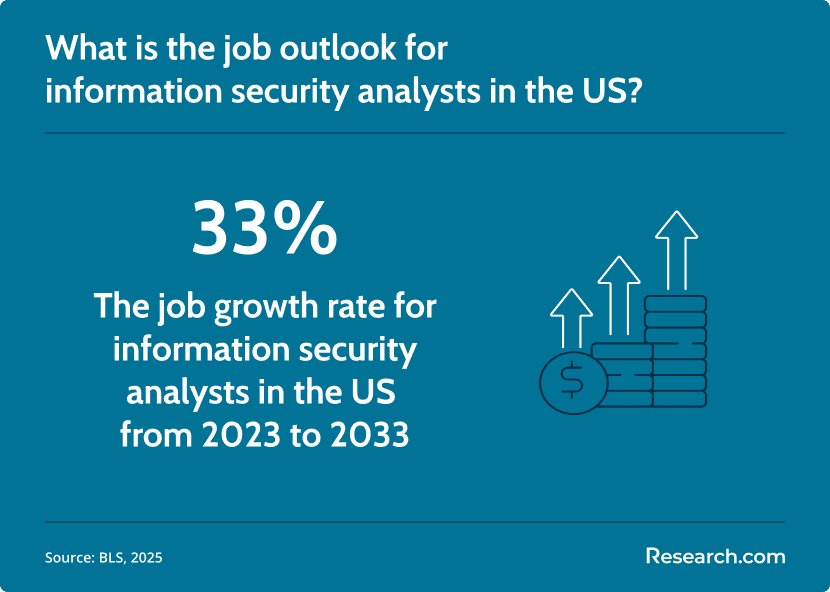
The job market for cybersecurity talent remains strong, but competitive. Between 2023 and 2033, employment for information security analysts across the US is projected to grow by 33%, which is much faster than the average for all occupations. The BLS also reports an average of around 17,300 openings each year over the decade (US BLS, 2025).
Demand is tied to the need for stronger protection of networks, systems, data, and business operations. Organizations continue to face cyber incidents and public breach risks. Recent cyberattacks around the world have affected companies across multiple industries, including the Washington Post, Hawaiian Airlines, and Cartier.
For job seekers, the key lesson is that opportunity exists, but preparation matters. Employers may value Security+ as a baseline credential, yet they also evaluate troubleshooting ability, communication, judgment, documentation, familiarity with tools, and the ability to learn quickly. Candidates who pair certification with labs, projects, internships, IT experience, or cloud and networking skills are often better positioned than candidates who rely on the credential alone.
What challenges should you consider before enrolling in an online CompTIA Security+ training bootcamp?
Online Security+ bootcamps are convenient, but they are not the right fit for every learner. The biggest risk is enrolling in a fast program before you have enough IT foundation to keep up. Another common issue is focusing only on the bootcamp’s length or price without checking exam alignment, support quality, refund policies, or what is included in tuition.
| Common mistake | Why it can hurt you | Better approach |
| Choosing the fastest option without checking readiness | You may fall behind if networking and systems concepts are unfamiliar. | Review prerequisites and complete foundational study before an intensive bootcamp. |
| Looking only at tuition | Lower tuition may exclude vouchers, labs, books, or practice exams. | Compare total cost and included resources. |
| Assuming online means easy | Remote learning requires discipline, reliable internet, and consistent review. | Create a study schedule before the course begins. |
| Ignoring the exam version | Outdated materials may not fully match the exam you plan to take. | Ask which Security+ exam version the course supports. |
| Expecting a job guarantee | A bootcamp can help with preparation, but hiring depends on multiple factors. | Build experience through labs, projects, networking, and targeted applications. |
| Skipping provider research | Poor support or unclear policies can reduce the value of the program. | Read policies, ask about instructors, and verify support before paying. |
When comparing return on investment across technical and scientific education paths, some learners also review unrelated but cost-focused resources such as the most affordable online master's degrees in biotechnology. The broader lesson is the same: cost matters, but fit, credibility, and career relevance matter more.
How do alumni networks and industry connections enhance your cybersecurity career?
Alumni networks and employer connections can make a bootcamp more valuable, especially for learners entering cybersecurity for the first time. A strong network may help students find mentors, hear about entry-level openings, prepare for interviews, and learn what employers expect from junior security candidates.
Before enrolling, ask whether the program offers alumni groups, employer events, job boards, mentorship, resume reviews, interview preparation, or continuing education discounts. Be cautious with vague claims about “industry connections” unless the provider can explain what students actually receive.
Cybersecurity also overlaps with emerging fields such as automation, machine learning, and AI-enabled security tools. Learners who want to expand into those areas may eventually compare Security+ training with advanced options such as the most affordable online artificial intelligence degree programs.
Current trends affecting CompTIA Security+ training in 2026
Several changes are shaping how learners should think about Security+ preparation. Employers increasingly want proof of practical ability, not only exam knowledge. That means labs, projects, tool familiarity, and clear communication can matter as much as memorizing definitions.
AI is also changing cybersecurity work. Security teams may use AI-supported tools for alert triage, pattern recognition, documentation, and threat analysis, while attackers may use automation to scale phishing and reconnaissance. Security+ learners do not need to become AI engineers, but they should understand that security roles increasingly require adaptability and continuous learning.
Credential-based hiring remains important in IT, but stacking credentials without experience can be a weak strategy. A better plan is to choose credentials that match the next role you want, then build practical evidence through labs, volunteer work, internships, work projects, or a portfolio of documented exercises.
Questions to ask before enrolling in an online CompTIA Security+ bootcamp
- Which CompTIA Security+ exam version does the bootcamp prepare students for?
- Is the exam voucher included in tuition, and does it have an expiration date?
- Are practice exams, labs, textbooks, and recordings included?
- Who teaches the course, and what cybersecurity or certification experience do they have?
- How many hours of study should I complete before the first class?
- What happens if I miss a live session?
- How long will I have access to materials after the bootcamp ends?
- Is technical support available if labs or online platforms fail?
- What refund, cancellation, or rescheduling policies apply?
- Does the program provide career support, and what does that support specifically include?
References:
- US Bureau of Labor Statistics. (2025, April 18). Computer and Information Systems Managers. Occupational Outlook Handbook. https://www.bls.gov/ooh/management/computer-and-information-systems-managers.htm
- US Bureau of Labor Statistics. (2025, April 18). Computer Systems Analysts. Occupational Outlook Handbook. https://www.bls.gov/ooh/computer-and-information-technology/computer-systems-analysts.htm
- US Bureau of Labor Statistics. (2025). Industry: Cross-industry, Private, Federal, State, and Local Government, Period: May 2024. Occupational Employment and Wage Statistics Query System. https://data.bls.gov/oes/#/industry/000000
- US Bureau of Labor Statistics. (2025, April 18). Information Security Analysts. Occupational Outlook Handbook. https://www.bls.gov/ooh/computer-and-information-technology/information-security-analysts.htm
Key Insights
- Online CompTIA Security+ bootcamps are best for learners who already understand basic IT concepts and want structured, short-term exam preparation.
- The featured published bootcamp costs range from $2,170 to $2,899, but students should confirm whether vouchers, labs, practice exams, and materials are included.
- Security+ can support roles in cybersecurity and IT, but it should be paired with hands-on practice, projects, networking knowledge, and real experience whenever possible.
- Fast-track programs can be completed in 5 to 10 days, but part-time or self-paced formats may be better for learners who need more review time.
- A bootcamp is not a substitute for a cybersecurity degree. Choose a bootcamp for certification readiness and a degree for broader academic and long-term preparation.
- Before enrolling, verify the exam version, instructor access, refund policy, technical support, and total cost. These details often matter more than the advertised program length.
Other Things You Need to Know about Online CompTIA Security+ Training Bootcamps
In 2027, the fastest online CompTIA Security+ training bootcamps include CyberVista, Boot Camp Digital, and Infosec Institute. These programs emphasize accelerated learning with comprehensive curriculums. While some bootcamps provide recertification, it’s crucial to verify each program’s offerings to ensure they meet recertification needs.
Several top fast online CompTIA Security+ training bootcamps for 2027 include CyberVista, Infosec, and CompTIA itself. These bootcamps offer condensed, intensive learning formats with expert instructors, interactive labs, and flexible scheduling options. Their unique approaches combine real-world scenarios and exam-focused content, ensuring a comprehensive preparation experience.