
2027 Fastest Online CISSP Training Bootcamps

Co-Founder and Chief Data Scientist
Choosing a CISSP bootcamp is not just a question of speed. The real decision is whether an accelerated online program can prepare you for a demanding cybersecurity certification without wasting time, money, or study effort. The Certified Information Systems Security Professional credential is built for experienced security professionals who want to move into senior technical, governance, risk, architecture, or leadership roles.
Online CISSP bootcamps can be useful when you already have the required background and need a structured, instructor-led review of the exam domains. They are less useful if you are brand new to IT security or are expecting a bootcamp alone to replace the professional experience required for full CISSP certification.
This guide explains the fastest online CISSP training bootcamps for 2027, what they include, how long they take, what they cost, who should enroll, and how to compare providers. It also covers CISSP eligibility, exam topics, career paths, salary expectations, financial aid options, common mistakes, and practical steps for selecting the right program.
Quick answer: Are online CISSP bootcamps worth it?
Online CISSP bootcamps can be worth it for cybersecurity professionals who already understand core IT, networking, security operations, risk management, and governance concepts and want a focused exam-prep schedule. The fastest programs usually run 5 to 6 days, while part-time formats may extend over several weeks. A bootcamp can help you organize your study plan, review all eight CISSP domains, practice exam-style questions, and learn from certified instructors.
A bootcamp does not automatically make you CISSP-certified. You still need to pass the CISSP exam and meet ISC² experience requirements. If you do not yet have the required experience, you may still pass the exam and become an Associate of ISC² while you continue building professional experience.
What are the main benefits of online CISSP training bootcamps?
- Structured preparation: A bootcamp gives you a clear daily study plan instead of leaving you to assemble books, videos, practice questions, and exam strategies on your own.
- Remote access: Online formats let working professionals attend from home or work without relocating, commuting, or taking extended time away from other responsibilities.
- Faster review cycle: Accelerated programs compress CISSP domain review into days or weeks, which can be helpful if you already have experience and need disciplined exam preparation.
- Instructor support: Many programs are taught by CISSP-certified practitioners who can explain how concepts apply in enterprise security, compliance, operations, and risk management.
- Exam-readiness tools: Practice exams, flashcards, labs, domain reviews, and recorded sessions can help you identify weak areas before scheduling the certification exam.
- Career positioning: CISSP can strengthen your profile for senior security, management, consulting, architecture, and governance roles, although salary and hiring outcomes still depend on experience, location, industry, and employer needs.
What can I expect from an online CISSP training bootcamp?
An online CISSP bootcamp is an intensive certification-preparation program built around the eight CISSP Common Body of Knowledge domains. Most programs are not beginner cybersecurity courses. They assume you can already follow technical and managerial security discussions and are ready for a concentrated review of exam concepts.
Depending on the provider, you can expect some combination of live classes, recorded lectures, official or provider-created course materials, practice questions, labs, instructor Q&A, exam strategy sessions, and post-course access to study resources.
| Bootcamp feature | What it means for you | What to verify before enrolling |
| Live online instruction | You attend scheduled sessions with an instructor and classmates. | Confirm time zone, class length, attendance rules, and whether recordings are included. |
| Self-paced or recorded access | You can review lectures and materials after class or study around work obligations. | Check how long access lasts and whether materials match the current CISSP exam outline. |
| Practice exams and quizzes | You test your understanding of CISSP-style questions and domain weaknesses. | Ask whether practice questions include explanations and whether attempts are limited. |
| Labs or applied scenarios | You connect CISSP concepts to workplace decisions, incident response, risk, and governance. | Clarify whether labs are hands-on technical exercises or discussion-based case studies. |
| Exam voucher or guarantee | Some providers bundle the exam voucher or offer a course retake if you do not pass. | Read the fine print on eligibility, deadlines, retake limits, and required practice scores. |
| Career resources | Some programs offer resume review, mentorship, interview practice, or networking access. | Do not assume job placement is included unless the provider states it clearly. |
Where can I work after completing an online CISSP training bootcamp?
Completing a CISSP bootcamp can support advancement in organizations where security governance, data protection, risk management, compliance, and incident response are business priorities. The bootcamp itself is preparation; the credential and your work history are what employers evaluate most closely.
CISSP-aligned roles appear across many settings, including large enterprises, government agencies, defense organizations, financial institutions, healthcare systems, technology companies, managed security service providers, consulting firms, and training organizations.
- Large corporations and enterprises: Security managers, security architects, IT risk analysts, and governance specialists help protect business systems, networks, applications, and sensitive data.
- Government and defense agencies: Cybersecurity analysts, compliance officers, and security program staff support regulated environments and mission-critical systems.
- Finance and healthcare organizations: Security professionals work with sensitive records, privacy requirements, risk controls, and audit obligations.
- Technology and cybersecurity firms: Consultants, incident response leaders, penetration testers, and architects support clients or internal product environments.
- Managed security service providers: Security teams deliver monitoring, response, compliance, and advisory services to multiple clients.
- Consulting and audit firms: Professionals advise on frameworks such as ISO/IEC 27001, NIST, GDPR, and other governance or compliance requirements.
- Education and training providers: Experienced practitioners may teach cybersecurity, create training programs, or mentor certification candidates.
How much can I make after completing an online CISSP training bootcamp?
Salary outcomes vary by job title, experience, location, clearance requirements, industry, employer size, and whether you hold the full CISSP credential or Associate of ISC² status. A bootcamp can help you prepare, but it does not guarantee a raise, promotion, or job offer.
In the article’s cited salary context, CISSP-certified professionals earn between $95,000 and $130,000 per year on average, while senior positions such as Security Architect, IT Director, or Chief Information Security Officer may exceed $150,000 annually. The Key Insights section also includes cited market and salary findings from the listed references, including an average of $131,030 globally for CISSP-certified professionals and U.S.-based earnings commonly between $120,000 and $160,000+ annually, with senior roles possibly exceeding $200,000.
Use these figures as benchmarks, not promises. Before paying for a bootcamp, compare job postings in your region, check whether CISSP is required or preferred, and estimate whether the credential is likely to help you qualify for roles above your current level.
- Fastest online CISSP training bootcamps for 2027
- What is a CISSP training bootcamp?
- What are the prerequisites for enrolling in an online CISSP training bootcamp?
- How long does it typically take to complete an online CISSP bootcamp?
- What is the average cost of an online CISSP bootcamp?
- What are the financial aid options for online CISSP bootcamps?
- What topics are typically covered in an online CISSP bootcamp?
- Do online CISSP bootcamps offer career support and job placement services?
- Will online CISSP bootcamps remain a valuable investment in a rapidly changing cybersecurity landscape?
- How can I choose the best and fastest online CISSP bootcamp?
- What are the benefits of obtaining CISSP certification?
- What career paths are available after completing an online CISSP bootcamp?
- Can CISSP bootcamps complement advanced management education?
- What emerging technologies are shaping the future of online CISSP bootcamps?
List of the Fastest Online CISSP Training Bootcamps for 2027
The bootcamps below were selected for professionals who want accelerated, online CISSP preparation. Because bootcamp offerings can change, verify schedule availability, included materials, voucher policies, refund rules, pass guarantees, and current exam alignment directly with each provider before enrolling.
Research.com rankings and education comparisons use transparent data practices. For broader institutional and education-program context, sources may include IPEDS, Peterson’s, College Scorecard, and the National Center for Education Statistics. You can review Research.com’s ranking process on the methodology page.
| Provider | Fastest listed format | Program length | Best fit | Notable inclusions |
| ISC² Official Online CISSP Bootcamp | Live online | 5 days | Candidates who want official ISC² materials and instructor-led preparation | Official content, exam voucher, guarantee, 180-day material access |
| Firebrand Accelerated CISSP Bootcamp | Online | 5 days | Learners who prefer a highly compressed training schedule with labs and review | Labs, exam voucher, guarantee, official ISC² partnership |
| InfoSec Institute CISSP Boot Camp | Live online | 6 days | Professionals who want extended resource access and repeated practice | Core domain coverage, exam voucher, unlimited practice exam attempts, retake offer, 90-day material access |
| Sprintzeal CISSP Bootcamp | Live online | 40 hours total | Learners who need weekday or weekend scheduling flexibility | Includes over 1,000 practice questions, live Q&A, regularly updated official materials |
1. ISC² Official Online CISSP Bootcamp
The ISC² online instructor-led CISSP bootcamp is a 5-day intensive program, with a part-time 8-week option also available. It uses official ISC² courseware and includes live instruction, recorded sessions, digital textbooks, flashcards, and an exam voucher. The program also includes an exam pass guarantee that allows a free retake of the training within a year if you do not pass on the first attempt.
The course reviews the 8 CISSP Common Body of Knowledge domains, including security and risk management, asset security, and security engineering. It is designed for experienced security practitioners, managers, and executives who want to validate information security expertise.
To earn the full CISSP certification, candidates need at least five years of paid, full-time work experience in two or more of the eight CISSP domains. A four-year college degree or an approved ISC2 credential can substitute for one year of required experience. Candidates who do not yet meet the experience requirement may still take the course and exam and become an Associate of ISC2 while they continue gaining qualifying experience.
- Format: Live online
- Program length: 5 days
- Cost: $4,395
- Highlights: Official content, exam voucher, guarantee, 180-day material access
2. Firebrand Accelerated CISSP Bootcamp
Firebrand provides an ISC²-certified CISSP bootcamp delivered in 5-6 days. The program uses a “Lecture | Lab | Review” model and includes the certification exam. As an official ISC² Premier Training Partner, Firebrand provides official course materials, labs, practice exams, and a certification guarantee with free retakes within 12 months.
The course covers the eight domains of the CISSP CBK using current curriculum and revision materials. Although the schedule is accelerated, the program is positioned as a comprehensive exam-prep course rather than a simple last-minute cram session.
- Format: Online
- Program length: 5 days
- Highlights: Labs, exam voucher, guarantee, official ISC² partnership
3. InfoSec Institute CISSP Boot Camp
InfoSec offers a 6-day CISSP Boot Camp that can be completed online or in person. The program reviews all eight CISSP domains and includes updated course content, course materials, practice exams, and an exam pass guarantee.
The bootcamp is aimed at professionals such as chief information security officers, security systems administrators, information assurance analysts, IT security engineers, senior IT security consultants, senior information security risk officers, and anyone responsible for managing or overseeing security strategy.
Participants receive 90-day extended access to bootcamp components, including class recordings. The program also includes a free 90-day Infosec Skills subscription for additional courses and labs, plus free access to on-demand CISSP concentration training in ISSAP, ISSEP, and ISSMP. The Exam Pass Guarantee means that if you do not pass the exam on your first attempt, your second attempt is covered by the provider.
- Format: Live online
- Program length: 6 days
- Highlights: Core domain coverage, exam voucher, unlimited practice exam attempts, retake offer, 90-day material access
4. Sprintzeal CISSP Bootcamp
Sprintzeal offers a CISSP Exam Prep Course with 40 hours of instructor-led online training. Weekday and weekend schedules are available, which can help professionals choose a faster or more flexible completion path depending on class availability.
The program focuses on helping learners build the knowledge needed to design and execute enterprise-wide information security strategies while preparing for the CISSP exam.
- Format: Live online
- Program length: 40 hours total
- Highlights: Includes over 1,000 practice questions, live Q&A, regularly updated official materials
What is a CISSP training bootcamp?
A CISSP training bootcamp is a short, intensive course that helps experienced IT and cybersecurity professionals prepare for the Certified Information Systems Security Professional exam. Instead of studying independently over several months, learners follow a condensed schedule that reviews the eight CISSP domains, exam structure, core terminology, and common question patterns.
These programs can be part of a broader certification strategy alongside other online cybersecurity certificate options, but CISSP is best understood as an advanced credential rather than an entry-level course. Most bootcamps are taught by certified instructors or cybersecurity practitioners who connect exam content to workplace scenarios.
Online CISSP bootcamps may include live virtual instruction, recorded lessons, downloadable resources, flashcards, labs, group discussion, and practice exams. The strongest programs help you understand not only what the CISSP domains cover, but also how to think like a security leader when answering management-oriented questions.
What is the CISSP exam?
The Certified Information Systems Security Professional exam is administered by ISC². It evaluates whether experienced cybersecurity professionals understand how to design, implement, and manage a mature information security program.
The exam is organized around eight CISSP Common Body of Knowledge domains:
- Security and Risk Management
- Asset Security
- Security Engineering
- Communications and Network Security
- Identity and Access Management
- Security Assessment and Testing
- Security Operations
- Software Development Security
CISSP is commonly associated with roles such as security analyst, IT manager, security architect, and chief information security officer. It is especially useful for professionals who need to connect technical controls with business risk, compliance, governance, and executive decision-making. If you want cloud skills to support your cybersecurity profile, short online cloud engineering bootcamps may help you build complementary infrastructure knowledge.
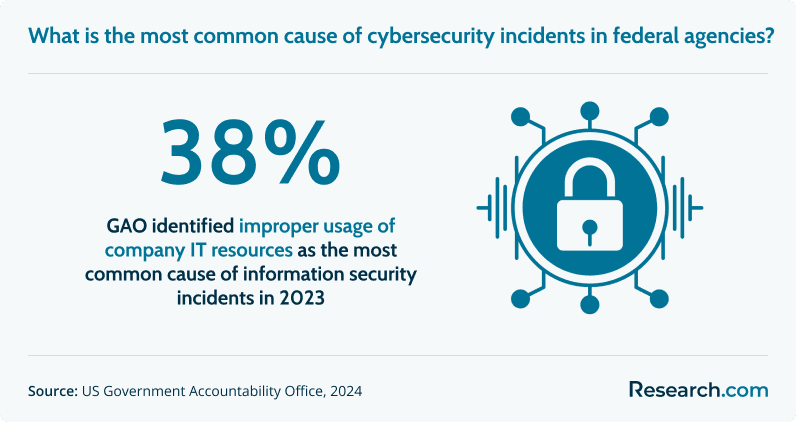
The image below highlights improper use of company IT resources as a common cause of cybersecurity incidents in federal agencies. Training matters because policy, awareness, access control, monitoring, and enforcement all depend on people understanding secure behavior and organizational risk.
What are the prerequisites for enrolling in an online CISSP training bootcamp?
Most CISSP bootcamps do not require a formal application process like a degree program, but they are designed for learners who already have relevant experience. Before you enroll, compare the provider’s recommended background with the official CISSP certification requirements.
If you need a stronger IT foundation before attempting CISSP-level content, accelerated online CompTIA A+ certification training can help build core hardware, software, troubleshooting, and support skills.
- Professional experience: ISC² requires a minimum of 5 years of cumulative, paid, full-time work experience in at least two of the eight CISSP domains. Candidates who pass the exam without meeting the experience requirement can become an Associate of ISC² while they complete the required experience.
- Cybersecurity and IT knowledge: Bootcamps move quickly, so you should already understand networking, systems, access control, basic security principles, and risk concepts. Common learner backgrounds include IT administrator, network engineer, system analyst, security specialist, or similar roles.
- Education: A degree is not always required for a bootcamp, but a cybersecurity degree or related background in computer science or information technology can make the material easier to absorb.
- Technical readiness: You should be comfortable discussing system architecture, authentication, authorization, encryption, vulnerability management, incident response, and business continuity.
Some providers offer pre-course assessments or preparatory modules. Use them seriously. A 5-day bootcamp is not enough time to learn years of cybersecurity experience from scratch.
| Your current background | Should you enroll in a CISSP bootcamp now? | Better next step if not ready |
| Five or more years across at least two CISSP domains | Yes, if you need structured exam review. | Choose a bootcamp with strong practice exams and instructor access. |
| Three to five years in IT or cybersecurity | Maybe, especially if you are comfortable becoming an Associate of ISC² first. | Review domain gaps and confirm how Associate status affects your goals. |
| Entry-level IT support or help desk experience | Usually not yet. | Build networking, security operations, cloud, and risk fundamentals first. |
| No IT or cybersecurity experience | No, CISSP is likely too advanced. | Start with foundational IT and cybersecurity training before considering CISSP. |
The chart below illustrates why cybersecurity expertise matters across industries and how demand for security professionals can influence compensation and career mobility.
How long does it typically take to complete an online CISSP bootcamp?
The fastest online CISSP bootcamps usually take 5 to 6 days of full-time instruction. These programs work best for candidates who already know the subject matter and need a concentrated exam-prep environment.
Some providers also offer part-time or self-paced schedules, often extending the same content over 4 to 8 weeks. These options may be better if you cannot take a full week away from work or if you need more time to absorb each domain.
If cloud infrastructure knowledge is one of your weak areas, fast-track online CompTIA Cloud+ certification programs can help you strengthen cloud concepts before or alongside CISSP preparation.
| Format | Typical completion time | Best for | Main risk |
| Full-time accelerated bootcamp | 5 to 6 days | Experienced professionals who can study intensively | Too much content too quickly if your foundation is weak |
| Part-time live online bootcamp | 4 to 8 weeks | Working professionals who need evening or weekend pacing | Momentum can fade without disciplined self-study |
| Self-paced online preparation | Varies by learner | Independent learners with strong time management | Less accountability and fewer real-time instructor explanations |
What is the average cost of an online CISSP bootcamp?
Most online CISSP bootcamps cost between $2,500 and $5,000. Higher-priced options that include official ISC² materials, live instruction, exam vouchers, practice tools, and exam pass guarantees can cost $6,000 or more.
When comparing prices, do not focus only on the advertised tuition. A lower-cost program may become less attractive if it excludes the exam voucher, official materials, instructor support, practice exams, or post-course access. A higher-cost bootcamp may be more reasonable if it includes resources you would otherwise purchase separately.
If cost is your biggest barrier, compare CISSP bootcamps with broader affordable online IT training bootcamps and determine whether you need CISSP now or should first pursue lower-cost prerequisite training.
| Cost item | Why it matters | Question to ask |
| Tuition | This is the base price for instruction. | Is the listed price final, or are materials billed separately? |
| Exam voucher | Some bootcamps include it; others do not. | Is the CISSP exam voucher included in the package? |
| Official courseware | Official materials may improve alignment with the exam outline. | Are materials from ISC², the provider, or a third party? |
| Practice tools | Question banks and mocks help identify readiness gaps. | Are practice exams unlimited, timed, and explained? |
| Guarantee or retake policy | Retake support can reduce financial risk. | What conditions must I meet to qualify? |
| Access period | You may need materials after the live class ends. | How many days of post-course access are included? |
What are the financial aid options for online CISSP bootcamps?
CISSP bootcamps are usually professional training programs rather than accredited academic degrees, so they typically do not qualify for federal student aid. However, several funding routes may reduce your out-of-pocket cost.
- Employer sponsorship or reimbursement: Ask your manager, HR team, or learning and development department whether certification training, exam fees, or continuing education budgets can cover the cost.
- Military and veteran benefits: Some providers accept GI Bill® benefits or provide discounts for active-duty service members, veterans, and eligible family members.
- Payment plans and financing: Bootcamp providers may offer monthly payments or third-party financing, but review interest, fees, cancellation rules, and total repayment cost.
- Scholarships, discounts, and promotions: Some providers offer limited discounts for early enrollment, career changers, military learners, or underrepresented groups in cybersecurity.
If your role involves governance, risk, and compliance, pairing CISSP preparation with accelerated CISM online training may be useful, especially if your employer supports multiple certifications under one professional development plan.
Before paying, document the total cost, expected certification timeline, reimbursement requirements, and whether you must stay with your employer for a certain period after receiving funding.
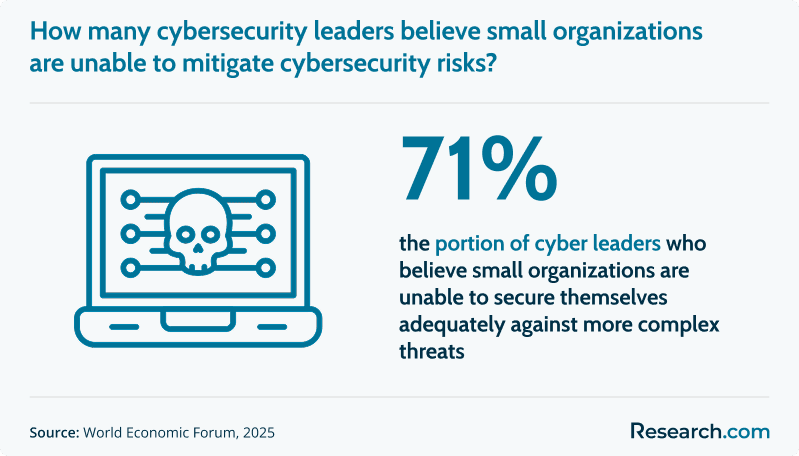
The graphic below reflects concerns about the ability of smaller organizations to defend against cybersecurity threats. For employers, funding targeted certification training can be part of a broader strategy to improve risk management, security operations, and incident readiness.
What topics are typically covered in an online CISSP bootcamp?
Online CISSP bootcamps are organized around the eight domains of the ISC² Common Body of Knowledge. The goal is to prepare you for exam questions that test both technical understanding and managerial judgment.
If you need stronger defensive security experience before CISSP, fast online CompTIA CySA+ training bootcamps may help you develop skills in threat detection, vulnerability analysis, and response.
- Security and Risk Management: Governance, compliance, ethics, business continuity, risk assessment, policy, and security program management.
- Asset Security: Data classification, ownership, retention, privacy, handling requirements, and controls for protecting sensitive information.
- Security Architecture and Engineering: Secure design principles, cryptography, security models, hardware and software vulnerabilities, and system resilience.
- Communication and Network Security: Network architecture, secure protocols, segmentation, remote access, and data protection in transit.
- Identity and Access Management: Authentication, authorization, identity lifecycle, federation, privileged access, and access review.
- Security Assessment and Testing: Audits, vulnerability assessments, penetration testing, control validation, and security metrics.
- Security Operations: Logging, monitoring, incident response, disaster recovery, investigations, change management, and operational security procedures.
- Software Development Security: Secure coding, application security, development lifecycle controls, testing, and software risk management.
Many programs also include mock exams, timed quizzes, review drills, scenario-based discussions, and exam strategy sessions. Networking professionals who want a stronger infrastructure foundation may also consider the fastest online CCNA training bootcamps before moving deeper into security architecture and management.
Do online CISSP bootcamps offer career support and job placement services?
Some online CISSP bootcamps include career support, but the level of help varies widely. You may find resume reviews, LinkedIn profile guidance, interview preparation, mentorship, alumni communities, or access to job boards. Other providers focus almost entirely on exam preparation.
Be careful with job-placement language. CISSP bootcamps rarely function like full career-change bootcamps with employer pipelines, and no reputable provider should guarantee a cybersecurity leadership job simply because you completed training. Ask what services are included, who delivers them, how long access lasts, and whether support is tailored to experienced cybersecurity professionals.
A common mistake is comparing CISSP career support with unrelated education markets. For example, a career-service model used by online game development degree programs may not reflect how senior cybersecurity hiring works. CISSP hiring is usually driven more by experience, clearance, leadership history, compliance knowledge, and technical credibility than by a bootcamp placement team.
Will online CISSP bootcamps remain a valuable investment in a rapidly changing cybersecurity landscape?
CISSP bootcamps can remain valuable if they stay aligned with current exam objectives and connect core security principles to changing threats, cloud environments, regulatory expectations, software risk, identity systems, and enterprise governance. The strongest programs teach durable decision-making frameworks, not just memorized terminology.
Cybersecurity changes quickly, but risk management, access control, secure architecture, incident response, governance, and software security remain central to security leadership. That is why CISSP can still be relevant even as tools evolve.
Evaluate CISSP alongside your broader career plan. Do not compare it directly with unrelated graduate investments such as an affordable online master's in biotechnology unless you are analyzing general tuition strategy. A CISSP bootcamp is a targeted certification-prep purchase; a degree is a longer academic credential with different costs, admissions standards, and career outcomes.
How can I choose the best and fastest online CISSP bootcamp?
The best CISSP bootcamp is not always the shortest one. It is the program that matches your experience level, schedule, budget, exam timeline, and need for instructor support. Before enrolling, compare programs using evidence rather than marketing claims.
If your work focuses on governance, authorization, compliance, and risk frameworks, fast-track ISC2 CGRC training online can complement CISSP preparation and strengthen your profile for governance, risk, and compliance roles.
| Selection factor | Why it matters | Best choice when... |
| Official ISC² alignment | Official or authorized materials reduce the risk of outdated exam coverage. | You want the closest alignment to ISC² content. |
| Speed | Fast programs help experienced candidates prepare quickly. | You can commit full days to intensive study. |
| Schedule flexibility | Evening, weekend, or self-paced options reduce work conflicts. | You cannot step away from work for a full week. |
| Instructor quality | Experienced instructors can clarify complex domains and exam logic. | You learn better through discussion and examples. |
| Practice exams | Question practice is essential for readiness. | You need measurable feedback before scheduling the exam. |
| Included voucher | Bundled vouchers affect total cost. | You want one package instead of separate payments. |
| Retake or guarantee terms | Guarantees can be helpful but often have conditions. | You understand and can meet the requirements. |
| Post-course access | You may need time after class to review weak areas. | Your exam date is not immediately after the bootcamp. |
Questions to ask before enrolling
- Is the program taught live, recorded, self-paced, or blended?
- Are official ISC² materials included?
- Does the price include the exam voucher?
- How long can I access recordings, slides, question banks, and labs?
- What happens if I do not pass the exam?
- Are instructors CISSP-certified and currently active in cybersecurity?
- Does the provider publish clear refund and cancellation policies?
- Does the course include a readiness assessment before the exam?
- Is career support included, or is the program strictly exam preparation?
- Does the schedule fit my work and study capacity?
If you are still exploring broader academic options, you can also review accessible cybersecurity degree programs, but remember that a degree and a CISSP bootcamp serve different purposes.
The chart below shows states with high employment for information security analysts. In competitive labor markets, CISSP can help experienced professionals signal advanced knowledge, but it should be paired with demonstrable security experience.
What are the benefits of obtaining CISSP certification?
CISSP certification can be valuable because it signals advanced security knowledge across technical, operational, governance, and managerial domains. For experienced professionals, it can support progression into roles that require broader responsibility than hands-on technical execution alone.
- International recognition: CISSP is widely recognized by employers across cybersecurity, IT governance, risk, consulting, defense, finance, healthcare, and technology environments.
- Stronger salary positioning: Professionals evaluating their cybersecurity salary by state may find that CISSP appears in many higher-level job descriptions, although compensation still depends on experience, role, employer, and location.
- More senior role eligibility: CISSP is often listed as required or preferred for security analyst, security manager, security architect, IT director, and CISO-track positions.
- Broader security judgment: Preparing for CISSP forces you to connect policy, risk, architecture, operations, compliance, identity, software security, and incident response.
- Professional credibility: The credential demonstrates commitment to ethical security practice and ongoing professional development.
If you need more hands-on defensive practice before pursuing CISSP, the fastest online CyberOps training bootcamps can support skills related to threat detection, incident response, and network defense.
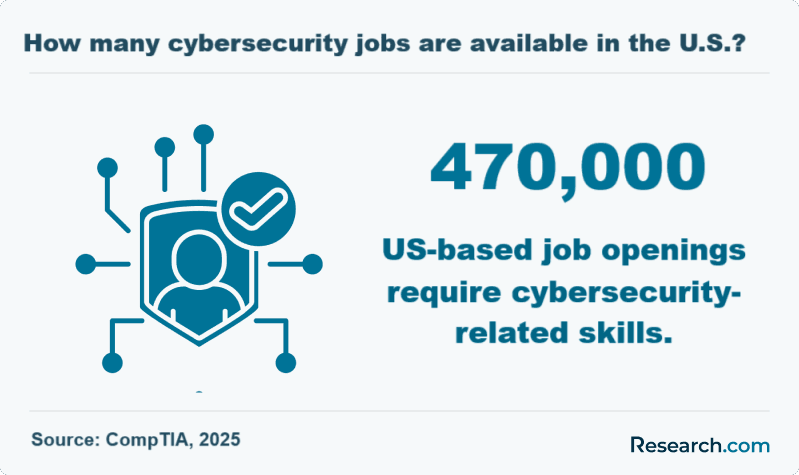
The image below shows how cybersecurity-related skills appear in job vacancies, reinforcing the importance of both credentialing and practical skill development.
What career paths are available after completing an online CISSP bootcamp?
After completing a CISSP bootcamp and earning or progressing toward certification, experienced professionals may pursue technical leadership, security management, architecture, consulting, compliance, and governance roles. The right path depends on whether your background is more operational, technical, managerial, or advisory.
| Career path | Typical focus | Why CISSP helps |
| Information Security Analyst | Monitoring, detection, response, control implementation, and security reporting | Shows understanding of risk, operations, and security controls |
| Security Architect | Designing secure systems, networks, applications, and enterprise security patterns | Supports architecture decisions across multiple security domains |
| Chief Information Security Officer | Leading cybersecurity strategy, budgets, teams, compliance, and executive risk communication | Signals management-level security knowledge and governance awareness |
| Security Consultant | Assessing client environments, identifying gaps, and recommending improvements | Provides a recognized credential for advisory credibility |
| IT Director or Security Manager | Managing IT or security operations, policies, staff, vendors, and risk controls | Connects technical security decisions to business priorities |
| Penetration Tester or Ethical Hacker | Testing systems for exploitable weaknesses and reporting remediation priorities | Useful for broader risk context, though additional technical certifications may be needed |
| Compliance and Risk Analyst | Managing audits, frameworks, regulatory requirements, and security risk programs | Aligns well with governance, risk, and compliance domains |
| Cybersecurity Instructor or Trainer | Teaching certification, awareness, or corporate cybersecurity programs | Provides credibility for advanced security education |
If your goal is security leadership, Research.com’s guide on how to become an information security manager can help you understand the broader career path. CISSP-certified professionals may work in government, finance, healthcare, defense, technology, consulting, and Fortune 500 organizations.
Can CISSP bootcamps complement advanced management education?
Yes. CISSP can complement advanced management education when your career target combines cybersecurity expertise with budget ownership, team leadership, risk strategy, vendor management, or executive communication. A bootcamp can help validate your security knowledge, while a management-focused graduate program can strengthen leadership, finance, operations, and organizational decision-making.
For example, an accelerated master's in engineering management online may be relevant for security professionals who lead technical teams, oversee complex systems, or want broader management training beyond cybersecurity certification.
What emerging technologies are shaping the future of online CISSP bootcamps?
Online CISSP bootcamps are increasingly shaped by cloud security, identity-first security models, AI-enabled threat detection, automated incident response, software supply chain risk, data privacy expectations, and continuous compliance. These trends do not replace the CISSP domains; they change the examples, scenarios, and tools instructors use to teach them.
Artificial intelligence and machine learning are especially relevant because security teams are using automation for threat detection, alert triage, anomaly detection, phishing analysis, and risk prioritization. Professionals who want deeper AI knowledge may compare cybersecurity training with options such as the most affordable online artificial intelligence degree programs, depending on whether their goal is certification, technical specialization, or graduate-level study.
Common mistakes to avoid when choosing an online CISSP bootcamp
- Choosing only by speed: A 5-day bootcamp is efficient only if you already have the background to keep up.
- Ignoring CISSP experience rules: Passing the exam is not the same as meeting the full certification requirements.
- Looking only at tuition: Compare total cost, including exam vouchers, books, practice tools, retake policies, and financing charges.
- Assuming all guarantees are equal: Pass guarantees often require attendance, practice scores, deadlines, or proof of exam attempt.
- Skipping provider verification: Confirm whether the provider is an official partner, uses current materials, and has qualified instructors.
- Expecting job placement: Many CISSP bootcamps are exam-prep programs, not hiring pipelines.
- Underestimating self-study: Even after a strong bootcamp, most candidates need additional review before testing.
- Using irrelevant comparisons: Compare CISSP bootcamps with other cybersecurity certifications, not unrelated programs with different goals, timelines, or admissions standards.
Practical steps before you enroll
- Map your experience to CISSP domains: Identify which of the eight domains you know well and which need serious review.
- Confirm certification eligibility: Decide whether you are pursuing full CISSP certification now or Associate of ISC² status first.
- Set an exam timeline: Choose a bootcamp date that leaves enough time for review, practice exams, and scheduling.
- Compare total cost: Include tuition, voucher, materials, financing, travel if applicable, and retake expenses.
- Ask your employer for support: Prepare a business case showing how CISSP knowledge supports security, compliance, risk, or leadership goals.
- Check current course alignment: Make sure the curriculum reflects the current CISSP exam outline.
- Review refund and retake terms: Read policies before paying, especially for guarantees or bundled vouchers.
- Plan study time after the bootcamp: Treat the bootcamp as a launchpad for final preparation, not the entire study process.
Key Insights
- The fastest CISSP bootcamps are short but demanding: Many accelerated online programs run 5 to 6 days, which works best for experienced cybersecurity professionals rather than beginners.
- CISSP certification has strict experience requirements: Candidates need 5 years of cumulative, paid, full-time experience in at least two CISSP domains, although eligible education or approved credentials may substitute for one year, and candidates can pursue Associate of ISC² status if they pass before meeting the experience requirement.
- Cost should be evaluated as a package: Online CISSP bootcamps commonly range from $2,500 to $5,000, while programs with official materials, live instruction, exam vouchers, and guarantees can cost $6,000 or more.
- Salary potential is strong but not guaranteed: Cited figures in this guide include $95,000 to $130,000 per year on average, senior roles exceeding $150,000 annually, and an average of $131,030 globally for CISSP-certified professionals, but actual pay depends on role, experience, location, and employer.
- The cybersecurity market remains large and competitive: The global cybersecurity market was valued at $202.72 billion in 2022 and is projected to grow to $500.70 billion by 2030, with a CAGR of 12.3%.
- Cybersecurity employment demand is a major driver: Employment for Information Security Analysts is projected to grow 32% from 2022 to 2032, and the cybersecurity workforce shortage topped 4 million globally in 2023.
- Data breach risk keeps security training relevant: The average global cost of a data breach hit $4.45 million in 2023, reinforcing why organizations invest in risk reduction and certified security talent.
- The best bootcamp is the one that fits your readiness: Choose based on exam alignment, instructor quality, practice tools, schedule, total cost, support, and your current experience—not marketing claims alone.
References:
- Fortune Business Insights. (2023). Cyber security market size, share & COVID-19 impact analysis. fortunebusinessinsights.com.
- IBM. (2025). Cost of a data breach report 2024. ibm.com.
- (ISC)². (2023, June 28). Cybersecurity workforce study finds CISSPs earn highest salaries. isc2.org.
- (ISC)². (2023, October 26). ISC2 2023 cybersecurity workforce study: Global shortage reaches over 4 million. isc2.org.
- U.S. Bureau of Labor Statistics. (2024, April 3). Occupational Employment and Wage Statistics: 15-1212 Information Security Analysts. BLS.
- U.S. Bureau of Labor Statistics. (2025, April 18). Occupational Outlook Handbook: Information Security Analysts. BLS.
Other Things You Should Know About Online CISSP Training Bootcamps
A 2027 CISSP bootcamp covers all eight CISSP domains in the (ISC)² exam outline. Those domains include security and risk management, asset security, and software development security. Bootcamps often map lessons directly to the exam domains to condense review into a short schedule.
2027 online CISSP bootcamps typically range from 4 to 6 weeks in duration and use an intensive, accelerated format with live lectures and interactive modules. They cover key topics including Security and Risk Management and Security Architecture and Engineering.
Before enrolling in a 2027 online CISSP bootcamp, you should have at least five years of professional experience in two or more of the eight CISSP domains. Additionally, a strong foundation in IT security concepts and skills is recommended to succeed in the fast-paced training environment.


