2027 Online BA in Psychology - General Psychology for Direct Support Professionals: Choosing a Program Without Leaving Your Job
Audited and Verified:
Our Editorial and Data Verification Process
Research.com uses government datasets, official education statistics and primary institutional information to support its career and degree guides. Our review process checks factual accuracy, occupational definitions, source dates and the requirements associated with the credentials discussed.
How This Article Was Fact-Checked
Our editorial team verifies salary estimates, employment projections, education requirements and program information against original data providers and official organizations. Salary figures are checked against the relevant occupational definitions and reporting periods. Information about licensure, accreditation and required in-person training is reviewed separately.
Fact-checked and verified on:

Co-Founder and Chief Data Scientist
Direct support professionals already use observation, communication, and person-centered support skills at work. An online BA in general psychology may deepen those skills and open some nonclinical opportunities, but an advertised "flexible" program can still require live classes, daytime fieldwork, or a course load that conflicts with shifts.
This guide helps you compare programs against your work schedule, existing credits, budget, and career goal, so you can decide whether to enroll, choose a different credential, or build on your experience without another degree.
Key Things You Should Know
- Choose a program by its actual weekly deadlines, live sessions, and placement requirements—not by the word "online."
- A psychology BA commonly requires about 120 semester credits in total; your remaining time and cost depend on which prior credits satisfy specific degree requirements.
- The degree can support nonclinical advancement, but it does not itself qualify you to diagnose, provide therapy, or practice as a licensed psychologist.
What Is an Online BA in General Psychology for Direct Support Professionals?
An online BA in general psychology is a broad undergraduate degree covering behavior, development, research, and the social and biological foundations of psychology. "Online" describes how coursework is delivered; it does not necessarily mean that every class is asynchronous or that all experiential requirements can be completed remotely.
For a direct support professional (DSP), the value is not simply learning how to work with people. You already have relevant experience. The stronger reason to enroll is a specific next step: meeting a bachelor's-degree requirement for a coordinator position, developing research and writing skills, or preparing for further study. Compare undergraduate psychology degree program choices against that goal rather than assuming the broadest degree is automatically the best fit.
If you mainly need to improve one workplace skill, employer training or a targeted course may be faster and less expensive. A human services or social work program may fit better if its required preparation aligns more closely with a particular job you want.
Is an Online Psychology Bachelor's Degree Accredited and Career-Ready?
Check the institution's accreditation status through the accreditor and the U.S. Department of Education's recognized-accreditor information, then confirm that the status applies to the institution awarding the degree. The American Psychological Association does not accredit general psychology bachelor's programs. Institutional accreditation matters for academic quality oversight and can affect credit transfer and financial-aid eligibility, but it does not prove that a particular course schedule or career service meets your needs.
Career readiness is a separate question. Ask for the current degree plan, required course rotation, advising access for employed students, and examples of approved nonclinical projects or internships. If you are considering a specialized alternative, choosing an accredited addiction psychology bachelor's still requires checking the exact degree and any state-specific requirements for your intended role.
Request outcomes that distinguish graduates who were already employed from those seeking their first job. A placement claim without its cohort, time period, and response rate is weak evidence that the program will help you advance.
What Careers Can You Pursue With a General Psychology Bachelor's Degree?
Your DSP experience plus a BA may strengthen an application for nonclinical roles such as service coordinator, community support specialist, program assistant, intake coordinator, or human services supervisor. Duties can include arranging services, documenting contacts, supporting referrals, training staff, or reviewing program information. Employers may also require particular experience, driving credentials, background checks, or knowledge of local service systems; the degree alone does not secure a promotion.
Compare the job descriptions you want with your current duties. If postings emphasize staff scheduling and compliance, seek opportunities to document those skills at work. If they emphasize reporting or evaluation, use coursework to demonstrate spreadsheet, research, and clear-writing abilities. Do not use identifiable client records for a class project without employer authorization and any required institutional review.
A move into forensic-related work is a different career decision, not an automatic next step from direct support. Listings of exploring better-paid roles related to forensic psychology can help identify occupations to investigate, but their education and experience requirements must be checked role by role.
The most important scheduling distinction is between accessing lessons at a convenient time and completing obligations at a convenient time. A recorded lecture may coexist with fixed weekly deadlines, live group meetings, timed exams, or an internship during your usual shift. Psychology degrees with condensed course schedules may reduce calendar time while increasing the work due each week.
The following format comparison highlights obligations to verify before enrolling; individual programs can combine these features:
| Format feature | Potential fit for a working DSP | Constraint to check |
| Asynchronous classes | Lectures may fit around changing shifts | Fixed deadlines, proctored exams, and group work |
| Live online classes | Regular contact with instructors | Attendance times and missed-session policies |
| Short course terms | Fewer subjects at once | More intensive weekly reading and assignments |
| Internship or applied project | Possible connection to support work | Site approval, supervision, and hours outside your job |
Before accepting an offer, ask an advisor for sample syllabi from required upper-level courses and a term-by-term plan at the pace you can sustain. Check leave and course-withdrawal policies too: shift changes and staffing emergencies are more manageable when you know the deadlines and financial consequences in advance.
Expect a mix of general education, psychology foundations, statistics, research methods, upper-level psychology, and electives. Common subjects include lifespan development, learning, social psychology, biological psychology, and the academic study of psychological disorders. Exact requirements and course availability differ by institution.
For DSP work, developmental and learning courses may help you interpret evidence about support approaches; statistics and methods can help you question whether a program's reported results support its claims. Neither classroom study nor an elective authorizes clinical assessment or treatment. If recovery services are your intended direction, use an addiction recovery employment guide to identify the duties and credentials of the particular job before selecting electives.
Ask whether required statistics and research methods courses are offered in terms you can attend. Also check whether an applied assignment can use an approved, nonconfidential workplace question rather than client information.
Requirements depend on whether you apply as a first-year or transfer student. Schools commonly request prior transcripts and an application; some have separate rules for entering the psychology major. Admission, transfer credit acceptance, and satisfaction of a psychology requirement are three different decisions.
If you have college coursework, ask for a written degree audit showing where each accepted course applies: general education, major, elective, or neither. In particular, confirm whether prior statistics and research methods courses satisfy the program's requirements and how many credits must be earned at the degree-granting institution. Guidance on moving existing credits into psychology study can help you prepare questions, but only the receiving school can approve your equivalencies.
Work experience may strengthen an application or inform career advising; do not assume DSP training earns academic credit. Ask the school whether it evaluates prior learning and what documentation or fees that process requires.
A bachelor's degree commonly totals about 120 semester credits, but that is not a promise that every student starts at zero or can finish on a fixed schedule. Your completion date depends on applicable transfer credits, how many courses you can take while working, prerequisite order, and how often required classes are offered.
Have an advisor map every remaining requirement by term, including courses offered only at particular times. A plan that looks short on paper may lengthen if statistics must precede research methods or a capstone is unavailable when you need it. Accelerated graduate programs are not shortcuts to finishing a BA: even when evaluating faster-paced forensic psychology master's degrees, first establish when you would complete the required bachelor's degree and whether the graduate program serves your goal.
Calculate cost from the credits you still need, not the school's advertised per-credit price alone. Include mandatory fees, books or software, any proctoring or travel expenses, and the possibility of repeating a course that transfers only as an elective. Compare a full degree audit and itemized estimate from each school using the same expected course load.
Ask your employer whether education assistance covers psychology coursework, what grades or continued employment it requires, and whether reimbursement arrives after you pay tuition. Check financial-aid eligibility and satisfactory academic progress rules with each institution; taking fewer courses can affect aid and extend the time you pay ongoing expenses.
If your target is specifically substance use support, planning affordable bachelor's-level substance abuse counseling study may surface alternatives, but compare their actual credential relevance and remaining cost—not their advertised price alone.
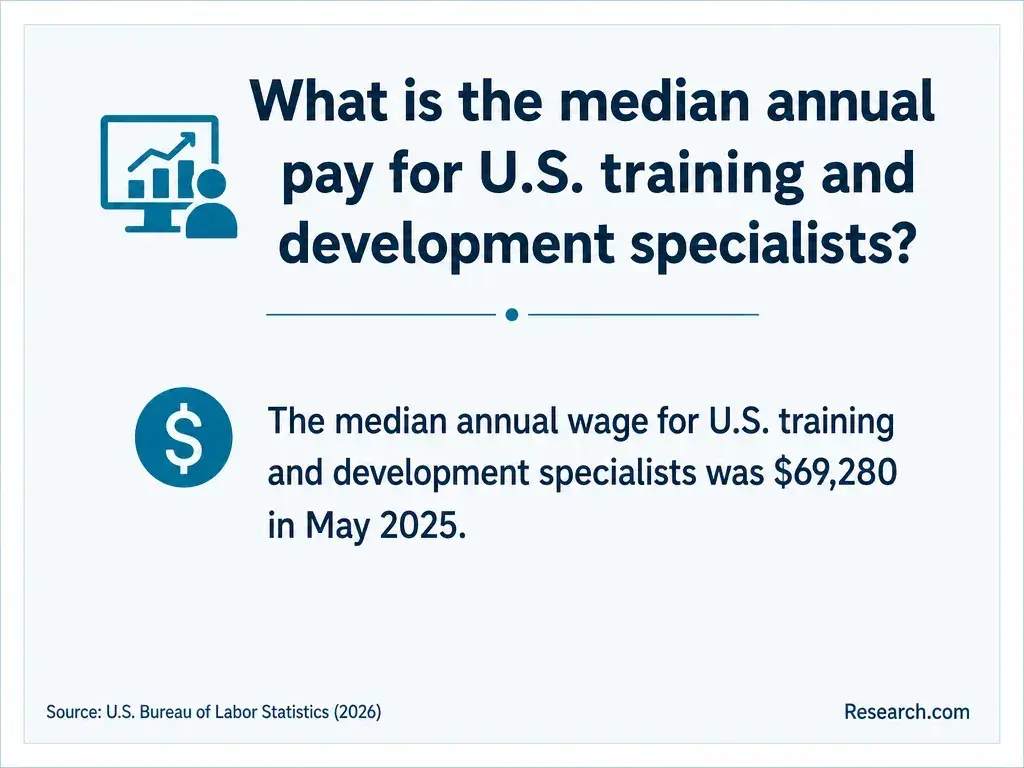
There is no reliable single salary for a "psychology BA graduate" working in direct support. Pay depends on the job's duties, employer, location, shifts, and supervisory responsibility. The U.S. Bureau of Labor Statistics reports wages by occupation rather than undergraduate major; its social and human service assistants category can provide context for some support roles, but it is not a DSP-specific salary or a forecast of your earnings after graduation.
For a useful return-on-investment comparison, collect local postings for the role you have and the role you want. Compare stated pay ranges with degree requirements, your experience, and the net cost of finishing the BA. Higher paid roles associated with graduate study often involve different duties and qualifications; one-year graduate forensic psychology program planning, for example, should not be treated as a predictable salary upgrade from DSP work.
Does a Psychology Bachelor's Degree Lead to Licensure or Certification?
A general psychology BA does not itself license you to practice psychology, diagnose conditions, or provide psychotherapy. DSP training and other support-role credentials are separate: requirements may come from a state, employer, payer, or certifying organization and vary with the actual duties. Check the authority governing the specific position rather than relying on a degree title or course description.
If your goal is licensed counseling, plan for a qualifying graduate pathway and jurisdiction-specific requirements for supervised experience and examination. Comparing mental health counseling graduate costs and career outcomes may clarify the additional commitment, but verify eligibility directly with the relevant program and licensing board. If your goal is to lead support teams or coordinate services instead, a BA may be useful without being a clinical credential.
Other Things You Should Know About Psychology
Possibly, if your instructor and employer approve the topic and data access. A workplace connection does not give you permission to use client records, contact service recipients for research, or publish internal information.
Use accurate examples of communication, documentation, teamwork, and person-centered support. Describe your responsibilities without disclosing identifying client details or presenting supervised support as independent clinical practice.
Ask about leave, reentry, course-repeat, and financial-aid policies before enrolling. Confirm whether a pause would delay access to required courses in the next term.
Yes. Contact the school's disability services office to discuss its process and available accommodations. Check how approved arrangements apply to timed exams, live sessions, and any required experiential work.
- Direct Support Professionals (DSPs) | dol.gov https://www.dol.gov/agencies/odep/program-areas/individuals/DSP
- Bachelor of Arts in Psychology - Texas State's online programs https://online.txst.edu/degrees/undergraduate/ba-psychology/
- Psychology - Bachelor - Empire | SUNY Online https://explore.suny.edu/programs/empire-state-college-psychology-bachelor-1571852596383
- Internship, Capstone, Thesis and Dissertation Information | ucdenver.edu https://publicaffairs.ucdenver.edu/current-students/internship-capstone-and-dissertation-information
- Credit for What You Know | Online https://cps.unh.edu/online/apply-register/transfer-credit-evaluation/credit-what-you-know
- Credit for Prior Learning - Academic Catalog https://catalog.columbusstate.edu/academic-regulations/prior-learning/
- How Do Asynchronous Classes Work? | Hopkins EP Online https://ep.jhu.edu/news/how-do-asynchronous-classes-work/