2027 Choosing an Online MS in Psychology - Forensic Psychology Around A Term-Length Preference Based on Employer Billing
Audited and Verified:
Our Editorial and Data Verification Process
Research.com uses government datasets, official education statistics and primary institutional information to support its career and degree guides. Our review process checks factual accuracy, occupational definitions, source dates and the requirements associated with the credentials discussed.
How This Article Was Fact-Checked
Our editorial team verifies salary estimates, employment projections, education requirements and program information against original data providers and official organizations. Salary figures are checked against the relevant occupational definitions and reporting periods. Information about licensure, accreditation and required in-person training is reviewed separately.
Fact-checked and verified on:

Co-Founder and Chief Data Scientist
If your employer pays for graduate school, the length of an academic term can determine when you receive a bill, submit a reimbursement claim, and pay the balance yourself. That makes term length more than a scheduling preference when choosing an online MS in psychology with a forensic psychology concentration.
This guide is for working applicants comparing programs around an employer's education-benefit rules. It explains how to test billing calendars against those rules without losing sight of coursework, career goals, total cost, or the degree's limits.
Key Things You Should Know
- Choose a term length only after confirming whether your employer applies its benefit by course, term, calendar year, or date of payment.
- Compare invoice and grade-release dates with reimbursement deadlines; a shorter term may speed a claim but increase how often tuition comes due.
- A forensic psychology MS is generally a nonclinical degree: favorable billing does not make it a qualification for psychologist licensure or independent forensic assessment.
What Is an Online MS in Psychology With a Forensic Psychology Concentration?
It is a graduate psychology degree that combines psychology coursework with study of behavior in legal or justice settings. Depending on the institution, forensic psychology may be an officially designated concentration, a separate degree, or simply a set of electives. The transcript and catalog - not promotional wording - establish which credential you would earn.
For an employed applicant, the distinction matters financially as well as academically. Required forensic courses might run only in certain terms, while electives may be easier to schedule around a reimbursement window. Compare the actual degree map with broader online psychology programs and academic pathways if you are not yet sure that forensic specialization serves your job goal.
Is an Online Forensic Psychology Master's Degree Accredited?
Check the institution's recognized institutional accreditation and confirm that it covers the university awarding the online degree. Then check the program's exact name and any claims of program-specific recognition. Institutional accreditation is important for academic credibility and may matter for aid and employer approval, but it does not establish that a nonclinical MS meets professional licensing requirements.
Do not assume American Psychological Association accreditation applies to a general or forensic psychology master's program. If your employer reimburses only approved institutions or programs, obtain its determination before enrolling. Use forensic psychology degree accreditation comparisons to identify questions, then confirm each answer with the institution and your employer.
What Careers Can You Pursue With a Forensic Psychology Master's Degree?
Potential nonclinical directions include victim-services coordination, corrections program support, justice-system research assistance, and evaluation or administrative work for public agencies and nonprofits. Hiring depends on the duties, prior experience, background checks, and employer requirements - not the concentration name alone. Public-sector employees should also check whether an advanced degree affects their specific job classification or pay schedule.
If your goal is direct recovery support rather than justice-system work, compare the job requirements and training routes described in addiction recovery workforce opportunities. A targeted credential or supervised experience may be more useful than a forensic MS. Neither route independently authorizes psychotherapy, diagnosis, or forensic evaluations.
Curricula vary, but relevant study may include research methods, statistics, psychology and law, ethical issues, violence or victimization research, and a thesis or applied capstone. A course about assessment teaches concepts; it does not by itself qualify a student to administer restricted tests or provide expert opinions. Request the current degree map, elective rotation, and capstone requirements rather than relying on a sample course list.
Check whether each required course is offered in terms that match your employer's billing rules. A convenient short-term calendar has little value if a required methods course appears infrequently and delays completion. If your intended work is therapy, compare the curriculum with online clinical counseling graduate completion options instead of treating overlapping psychology topics as equivalent professional preparation.
Schools set their own requirements. They may consider an accredited bachelor's degree, transcripts, academic performance, a statement of purpose, recommendations, and preparation in psychology, statistics, or research methods. An applicant with a criminal justice or other non-psychology degree should ask which courses are mandatory prerequisites and which are merely recommended; relevant employment does not automatically waive either.
Ask admissions when prerequisite work must be finished and when a newly admitted student can begin the first required course. A delayed start can push tuition into a different employer benefit period. If you are also considering a licensure-oriented route, review admission and placement expectations for accelerated accredited clinical mental health counseling programs separately; admission to a forensic psychology MS does not establish eligibility for those programs.
Completion time depends on required credits, course availability, enrollment pace, and any thesis or capstone - not simply the number of weeks in a term. Shorter terms can permit an earlier grade and reimbursement claim, but they may also compress readings, research assignments, and group work into fewer weeks. Longer terms may suit a working student who needs a steadier weekly workload.
The billing pattern deserves a separate comparison. These are possible arrangements, not promises about a particular school.
| Term and billing pattern | Potential benefit | Issue to verify |
| Short terms with separate course invoices | A completed course may become claimable sooner | Whether more frequent charges strain cash flow or cross a benefit-year boundary |
| Longer terms billed at the start | Fewer invoices may simplify administration | Whether reimbursement must wait for all term grades |
| Courses billed individually within a longer term | Charges may align with per-course employer limits | Whether invoice, payment, and completion dates satisfy the employer's rules |
Ask the registrar for the course sequence and the bursar for a sample billing calendar. Compare both with the employer's claim deadline before choosing intensive online graduate psychology study for its advertised speed.
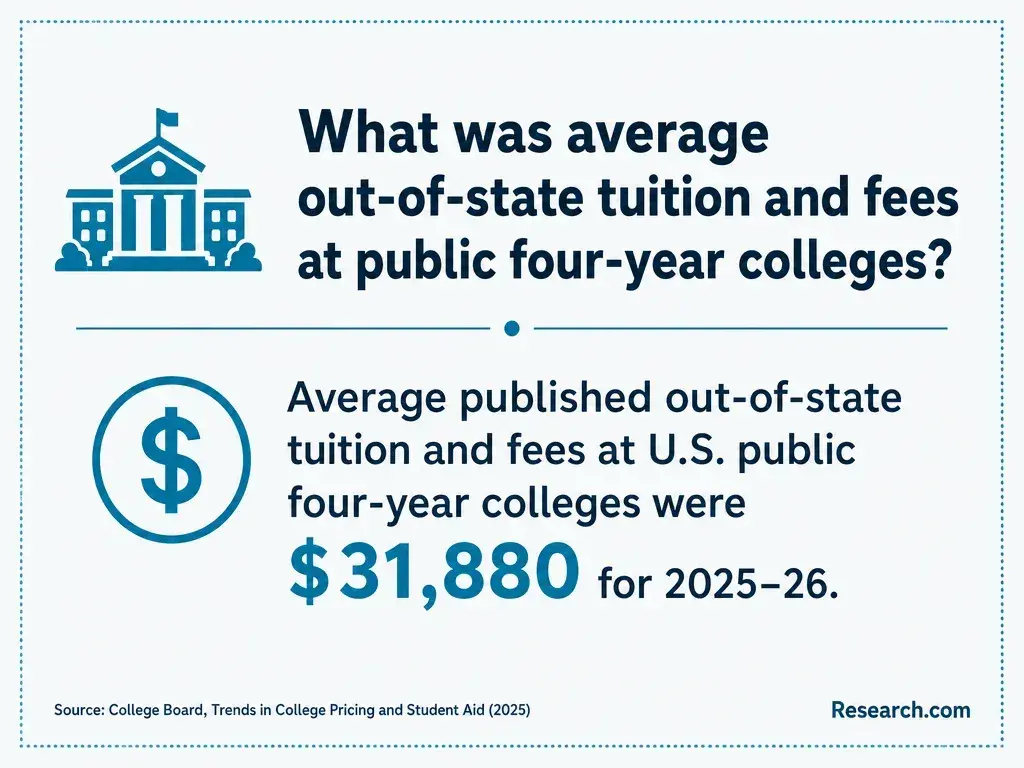
Without a specific school and entry term, there is no defensible single price. Request a written estimate covering required credits, tuition, mandatory fees, any online or continuation charges, books or software, and possible travel for in-person obligations. A per-term charge and a per-credit charge can produce different totals when you change pace; confirm how each school bills part-time enrollment.
Calculate both total degree cost and maximum amount you must pay before reimbursement. Employer assistance may have annual limits, minimum-grade rules, exclusions, or a repayment obligation if you leave your job. Ask whether the employer uses the course start date, payment date, or completion date to assign a claim to a benefit year. Do not subtract anticipated reimbursement from your budget until the employer confirms eligibility in writing.
If you do not already hold the undergraduate qualification needed for admission, compare that prerequisite expense separately; guidance on reducing undergraduate substance abuse counseling tuition through aid addresses a different degree level and should not be mistaken for funding for this MS.
Do not assume so. A nonclinical MS with a forensic concentration generally does not, by itself, meet the requirements to become a licensed psychologist or perform independent forensic assessments. Licensure rules depend on the profession and state and can require a qualifying professional degree, supervised experience, and examinations. The state licensing board - not a course title or an employer tuition approval - determines whether education satisfies its rules.
If your goal is counseling, investigate a program specifically designed around the relevant state's counselor requirements and compare the full financial commitment, including supervised training. Mental health counseling fees and financial support are useful comparison points, but a lower tuition quote alone cannot establish licensing eligibility.
There is no reliable salary that applies to everyone holding this degree. Pay varies with the occupation, location, employer, experience, and whether the person holds a separate professional credential. For a realistic comparison, find a local posting for the job you want, confirm its required qualifications and pay range, and compare those terms with your current position and likely unreimbursed education cost.
U.S. Bureau of Labor Statistics wages describe occupations, not outcomes for graduates of a particular forensic psychology program. Psychologist wage figures are especially misleading as an MS return-on-investment estimate because that occupation commonly involves additional professional preparation and licensure. When exploring better-paid roles related to forensic psychology, check which roles actually accept this degree and which require other credentials or substantial experience.
How Should You Choose an Online Forensic Psychology Master's Program?
Start with the job or advancement decision you want the degree to support. Then ask your employer for its current written benefit policy and compare programs using actual academic and billing documents. The following sequence keeps term-length preference tied to affordability and degree fit:
- Confirm the exact degree, official concentration, institutional accreditation, and relevance to your target role.
- Request a course-by-course plan showing term dates, required-course availability, live sessions, and any on-site obligations.
- Request the charge schedule, invoice dates, payment deadlines, grade-release dates, and a complete cost estimate.
- Ask your employer which expenses qualify, which date controls the benefit period, what proof it requires, and when claims must be filed.
- Compare the likely upfront payment, unreimbursed cost, weekly workload, and completion date under a realistic enrollment pace.
If a shorter route appears attractive, apply the same checks to forensic psychology one-year program value considerations. Prefer the fastest term structure your finances, employer rules, and learning commitments can actually support - not the shortest advertised calendar.
Other Things You Should Know About Psychology
Ask for the written reason and appeal procedure. Keep the course approval, itemized invoice, payment record, grade, and policy that applied when you enrolled. Approval to study and approval of a specific charge may be separate decisions.
Possibly, but check both policies. Your employer may require active employment when a claim is paid, while the university may impose reentry, course-availability, or maximum-completion rules.
Not automatically. If the program allows workplace projects, obtain faculty and employer approval for the scope, supervision, and use of workplace information before beginning.
Read any service commitment or repayment agreement first. Compare the possible repayment with the benefit you expect to receive, and ask human resources how a departure affects pending claims.
- Frequently Asked Questions - California Board of Psychology https://www.psychology.ca.gov/licensees/faq.shtml
- Frequently asked questions about educational assistance programs | Internal Revenue Service https://www.irs.gov/newsroom/frequently-asked-questions-about-educational-assistance-programs
- Academic Years, Academic Calendars, Payment Periods, and Disbursements | 2025-2026 Federal Student Aid Handbook https://fsapartners.ed.gov/knowledge-center/fsa-handbook/2025-2026/vol3/ch1-academic-years-academic-calendars-payment-periods-and-disbursements
- Understanding Graduate School Tuition | The University of Memphis https://www.memphis.edu/graduateschool/news-events/understanding_graduate_school_tuition.php
- Deferred Payment Plan | Student Billing & Cashiering Services https://studentbilling.ucmerced.edu/billing-payments/deferred-payment-plan
- Master's in Forensic Psychology Degree Online & On Campus | University of North Dakota https://und.edu/programs/forensic-psychology-ma-ms/index.html
- Online Forensic Psychology Master's Degree | ASU Online https://asuonline.asu.edu/online-degree-programs/graduate/master-science-forensic-psychology/
- Undergraduate and Graduate Tuition and Fees | Purdue Global https://www.purdueglobal.edu/tuition-financial-aid/undergraduate-graduate-tuition-and-fees/
- Employer Tuition Reimbursement: How It Works and How to Pay for College | Winston-Salem State University https://ramsonline.wssu.edu/blog/employer-education-benefits/
- Glossary - UTK Catalog - University of Tennessee, Knoxville https://catalog.utk.edu/content.php