2027 Are Online Nutrition Degrees Respected by Employers?

Co-Founder and Chief Data Scientist
Choosing an online nutrition degree is not just a question of convenience. The bigger question is whether employers, licensing boards, graduate schools, and health organizations will respect the credential when you use it to apply for jobs, internships, certifications, or promotions.
Employer acceptance has improved substantially, especially when the degree comes from an accredited institution. Recent studies indicate that over 70% of employers now view online credentials as equally credible to traditional degrees when earned from accredited institutions. Still, nutrition is a regulated and practice-oriented field, so the details matter. Accreditation, supervised experience, university reputation, certification eligibility, and demonstrated skills often carry more weight than whether classes were completed online or on campus.
This guide explains how employers evaluate online nutrition degrees today, what makes a program legitimate, when an online credential may face skepticism, and how students can strengthen the career value of their degree before graduation.
Key Benefits of Online Nutrition Degrees Respected by Employers
- Employers increasingly recognize online nutrition degrees, with 78% reporting positive perceptions of graduates from accredited online programs in recent industry surveys.
- Graduates acquire practical skills such as dietary assessment, client counseling, and research analysis that align with current workplace demands, boosting their job readiness.
- Completing a respected online nutrition degree correlates with a 15% higher employment rate within six months post-graduation compared to non-degree holders in nutrition-related roles.
Which Accrediting Bodies Make an Online Nutrition Degree Legitimate?
Accreditation is the first thing students should verify before enrolling in an online nutrition degree. It signals that a school or program has been reviewed against recognized academic standards. In nutrition, accreditation can also affect credit transfer, graduate school admission, financial aid eligibility, licensure pathways, and whether a graduate can pursue professional credentials.
The most important distinction is between institutional accreditation, which evaluates the school, and programmatic accreditation, which evaluates a specific nutrition or dietetics program.
- Regional Accreditation: Regional accreditation is granted by agencies recognized by the U.S. Department of Education, such as the Higher Learning Commission (HLC) and Middle States Commission on Higher Education. For most students, this is the baseline standard. Employers, graduate schools, and licensing boards commonly expect degrees from regionally accredited institutions. It can also make it easier to transfer credits or continue into a graduate program.
- National Accreditation: National accreditation may be offered by agencies such as the Distance Education Accrediting Commission (DEAC), often for schools with distance-learning, vocational, or career-focused missions. These schools can be legitimate, but students should be cautious. Credits from nationally accredited institutions may not transfer smoothly to regionally accredited schools, and some health-related employers or credentialing pathways may prefer regional accreditation.
- Programmatic Accreditation: For students who want to become a Registered Dietitian Nutritionist (RDN), programmatic accreditation is critical. The Accreditation Council for Education in Nutrition and Dietetics (ACEND) reviews nutrition and dietetics programs for curriculum quality, faculty qualifications, supervised practice, and professional preparation. Programs accredited by ACEND are required for eligibility to become a Registered Dietitian Nutritionist (RDN), the gold standard credential in the field. Over 600 programs are ACEND-accredited, with 56 offering 100% online master's pathways as of 2025.
Students should not rely on a school’s marketing language alone. Before applying, confirm the institution’s accreditation status and, if your goal is dietetics licensure or RDN eligibility, verify ACEND accreditation directly. A non-ACEND nutrition degree may still support careers in wellness, food service, health education, or coaching, but it may not qualify you for regulated dietitian roles.
Because nutrition is one of the most employable college majors, accreditation can strongly influence how much value an online degree delivers after graduation.
Does University Reputation Affect Employer Views of Online Nutrition Degrees?
Yes. University reputation can influence how employers interpret an online nutrition degree, especially when a hiring manager is comparing several candidates with similar credentials. A degree from a recognized, accredited institution often creates immediate confidence that the program had academic oversight, qualified faculty, and credible student assessment.
Reputation matters most when employers do not know much about the specific program. In those cases, they may use the university’s name, accreditation status, alumni outcomes, and industry relationships as signals of quality. A well-known university does not automatically make a graduate more qualified, but it can reduce doubts about the online format.
What strengthens employer confidence?
- Clear institutional accreditation: Employers are more likely to trust degrees from regionally accredited schools and programs with recognized credentials, such as ACEND accreditation.
- Relevant nutrition curriculum: Courses should align with the role you want, whether that is clinical nutrition, community health, sports nutrition, food service, or wellness programming.
- Strong graduate outcomes: Data shows that a strong record of graduates achieving positive employment outcomes enhances confidence in the degree itself. Recent statistics indicate that 96% of students from online programs report favorable returns on investment.
- Industry partnerships: Universities that work with healthcare providers, public health agencies, food organizations, or wellness employers can offer stronger practical learning opportunities.
- Alumni visibility: Employers often trust programs more when graduates are already working successfully in relevant nutrition roles.
Employer attitudes toward online education are also changing. Over 70% of organizations have hired applicants with online degrees recently, and 61% of HR leaders now see online education as equal or superior to traditional methods. Even so, applicants should expect to prove readiness through experience, certification progress, communication skills, and evidence-based nutrition knowledge.
Students comparing programs should avoid choosing solely based on convenience or perceived ease. If you are researching what's the easiest degree to get, remember that in nutrition, employers are more likely to value program credibility, accreditation, and hands-on preparation than a fast or simple path to completion.
Do Employers Treat Online and On-campus Nutrition Degrees Equally?
Many employers now treat accredited online and on-campus nutrition degrees similarly, but equality is not automatic. In hiring, the delivery format usually matters less than accreditation, supervised experience, credential eligibility, and the applicant’s ability to apply nutrition science in real settings.
In nutrition, employers tend to be more cautious than in some less regulated fields because the work may involve patient care, public health decisions, food safety, chronic disease management, or behavior-change counseling. A fully online program that includes strong academic standards and verified practical training will be viewed more favorably than an online program with limited faculty interaction, weak assessment, or no field experience.
Where online graduates are most competitive
- Accredited programs: Employers are more comfortable when the institution is properly accredited and, for dietetics pathways, when the program meets ACEND standards.
- Local supervised practice: Online students who complete internships, practicums, clinical rotations, or community placements can show that their training was not purely theoretical.
- Strong interview evidence: Employers want examples of counseling, dietary assessment, program planning, research interpretation, and collaboration.
- Recognized credentials: Certifications and licensure eligibility can reduce concerns about whether an online degree prepared the graduate adequately.
Online graduates may still need to address assumptions in interviews. The best approach is not to defend the online format, but to explain the program’s accreditation, fieldwork requirements, assessment methods, and practical projects. Employers are most persuaded by concrete evidence of competence.
Employers do not usually hire based on whether a program used AI-powered classrooms. They hire based on whether the degree is accredited, whether the curriculum is rigorous, whether assessments are credible, and whether the graduate can perform in a professional nutrition setting. AI tools can strengthen online learning, but they do not replace accreditation, supervised practice, or human faculty oversight.
AI-powered virtual classrooms may include adaptive learning systems, virtual simulations, AI tutors, automated feedback, and digital practice scenarios. Used well, these tools can help students review difficult nutrition concepts, practice dietary assessment, receive faster feedback, and prepare for client-facing work. They may also help programs personalize instruction for students who need more support in biochemistry, counseling methods, research interpretation, or medical nutrition therapy.
However, employers may remain skeptical if AI is used as a marketing feature rather than as part of a well-designed academic program. Common concerns include assessment integrity, whether students are doing their own work, and whether virtual practice develops the interpersonal skills needed for counseling, education, and team-based care.
Surveys indicate that over 70% of employers now regard reputable online degrees as comparable to traditional degrees during hiring decisions, given the institution's accreditation and strong curriculum. For AI-enhanced nutrition programs, that “given” is important. The technology can improve learning quality, but employer trust still depends on recognized accreditation, transparent faculty involvement, verified competencies, and meaningful practical experience.
Employers value online nutrition graduates who can combine scientific knowledge with practical judgment, clear communication, and professional reliability. The degree itself may open the door, but skills determine whether a candidate is competitive.
Because online students often manage coursework independently, they can develop habits that employers appreciate: self-direction, digital communication, time management, and comfort with remote collaboration. Those strengths are most valuable when paired with field-specific nutrition competencies.
- Evidence-based nutrition knowledge: Employers want graduates who can interpret nutrition research, understand dietary guidelines, and avoid unsupported claims. This is especially important in wellness, clinical, community, and public health roles.
- Communication skills: Graduates must be able to explain complex nutrition topics clearly to clients, patients, families, coworkers, and community groups. Strong writing also matters for reports, care notes, educational materials, and program proposals.
- Counseling and behavior-change support: Nutrition work often requires more than giving information. Employers value graduates who can listen, ask effective questions, adapt recommendations, and support realistic behavior change.
- Critical thinking and problem-solving: Nutrition professionals must evaluate conflicting information, account for medical, cultural, financial, and lifestyle factors, and make recommendations that fit the situation.
- Teamwork and collaboration: Many nutrition roles involve working with clinicians, public health teams, food service managers, educators, or corporate wellness staff. Online group projects can help students practice collaboration across digital platforms.
- Professional and business skills: Employers increasingly value graduates who understand program management, client engagement, marketing ethics, budgeting, and service delivery, especially in wellness, consulting, and private-practice-adjacent roles.
- Self-directed learning: Nutrition science changes over time. Graduates who can continue learning, complete continuing education, and adapt to new evidence are more valuable over the long term.
Students comparing nutrition with other fields may also want to review the most profitable majors, but salary potential should be weighed alongside accreditation requirements, credential pathways, and the type of nutrition work you want to do.
Yes. Professional certifications can make an online nutrition degree more credible because they provide an external measure of competence. For employers, a certification can show that a graduate’s knowledge has been tested against professional standards beyond the university’s own coursework.
Certifications are especially important in nutrition because job titles, legal requirements, and scope of practice vary by state and employer. Some roles require specific credentials, while others use certifications as a preferred qualification. Students should always verify whether a certification is recognized for the job setting they want.
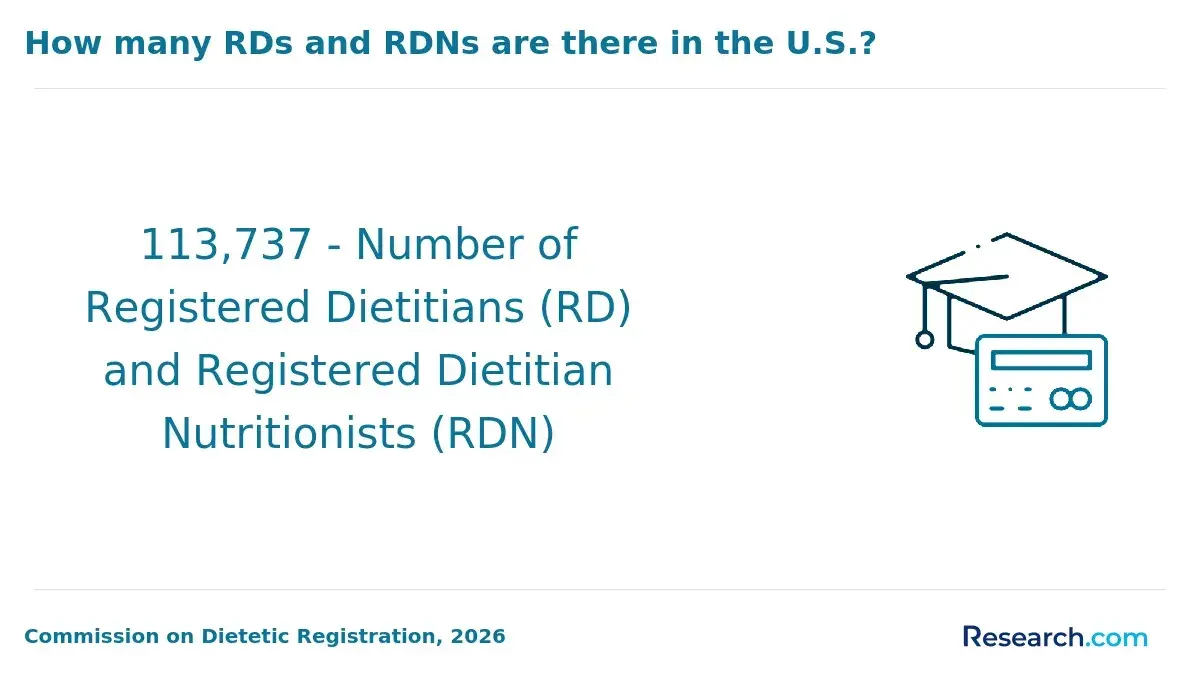
- Registered Dietitian (RD) Certification: This credential, governed by the Commission on Dietetic Registration, is widely recognized and often required for many nutritionist and dietitian roles. Graduates from ACEND-accredited online programs who earn RD certification show that their education meets rigorous national standards for competency and ethics.
- Clinical Nutrition Certification Board (CNCB): The CNCB offers postgraduate certification in clinical nutrition. This can help validate advanced knowledge in therapeutic dietary planning and clinical nutrition practice beyond a general degree.
- Continuing Education Certificates from the Academy of Nutrition and Dietetics: These certificates can demonstrate current knowledge in specialized topics and support continuing education requirements. They are useful for showing employers that a graduate is committed to staying current.
- Integrative and Public Health Nutrition Certificates: Specialized certificates can help graduates signal focused preparation for work in hospitals, government agencies, community organizations, wellness programs, or population health initiatives.
One online nutrition graduate described certification as the step that helped employers understand the value of his degree. He had been unsure whether the degree alone would be enough for clinical and community nutrition opportunities, so he pursued the Registered Dietitian certification while working and studying. “It was overwhelming at times, but having that certification completely changed how employers viewed my qualifications,” he said. He added that the RD credential helped him speak with more confidence in interviews and made his online education easier for employers to evaluate.
The lesson is straightforward: an online degree can provide the academic foundation, but recognized certification can make that preparation more visible and more trusted in the hiring process.
Online nutrition graduates can earn salaries comparable to on-campus graduates when they complete accredited programs, meet credentialing requirements, and gain relevant experience. Employers usually base pay on role, credential status, degree level, specialization, location, and experience rather than the classroom format alone.
The online format can affect salary indirectly if a program lacks required accreditation, supervised practice, or employer recognition. A convenient degree that does not support the student’s intended credential or career path may limit earnings. By contrast, an accredited online program with strong practical training can lead to similar compensation opportunities as a campus-based route.
- Program accreditation and credentialing: Graduates from ACEND-accredited online programs can pursue the Registered Dietitian Nutritionist (RDN) credential, which is a major factor for many higher-paying nutrition and dietetics roles.
- Field experience and internships: Supervised practice, internships, and local placements help graduates qualify for roles that require applied experience. These experiences also give candidates stronger interview examples.
- Employer perception and school reputation: Employers increasingly recognize accredited online nutrition degrees, but lesser-known or unaccredited institutions may create barriers.
- Specialization and certifications: Obtaining specialty certifications, such as in sports nutrition or public health, can increase annual salary by $4,000 to $12,000.
- Geographic location and job setting: Pay varies by region, cost of living, employer type, and demand for nutrition services. Hospitals, public health agencies, corporate wellness programs, schools, and private organizations may have different pay structures.
- Level of degree: Advanced degrees, including master's level nutrition programs, can improve access to specialized, leadership, or higher-responsibility roles for both online and on-campus graduates.
Students who need a cost-conscious route should compare tuition, accreditation, financial aid eligibility, and credential outcomes together. Exploring colleges that accept fafsa can help identify options that may be more financially manageable without giving up legitimacy.
An online nutrition degree can support career growth, but it does not guarantee a promotion on its own. Its value depends on how well the program aligns with the graduate’s current role, future goals, credential requirements, and the employer’s advancement criteria.
For working adults, the online format can be especially useful because it allows them to keep building professional experience while earning the degree. That combination can be powerful: students may apply new knowledge immediately at work, build a stronger portfolio, and show employers that they can manage demanding responsibilities.
- Flexible skill development: Online study can allow professionals to continue working while adding nutrition knowledge, research skills, counseling strategies, and program-planning experience.
- Credentialing for advancement: Accredited online programs may prepare students for credentials such as Registered Dietitian (RD) or Registered Dietitian Nutritionist (RDN), which are often important for clinical advancement and leadership roles.
- Broader career mobility: Graduates may move into healthcare, food service management, government programs, public health, corporate wellness, consulting, or education.
- Leadership preparation: Advanced coursework can help graduates qualify for roles involving supervision, program design, training, quality improvement, or cross-functional collaboration.
- Remote and hybrid opportunities: Telehealth, digital coaching, and online wellness services have expanded the settings where nutrition professionals can work.
- Professional networking: Online programs can connect students with peers, faculty, alumni, and field-placement supervisors outside their local market.
A graduate who completed an online nutrition program while working full time described the degree as a turning point. The flexibility allowed her to study around work and family responsibilities, while the applied assignments helped her bring new ideas directly into her job. After graduation, she moved into a management role and credited the program with improving both her technical knowledge and confidence. “The hands-on experiences incorporated into the curriculum helped me translate theory into practice quickly, and my supervisors noticed the immediate improvement,” she said.
For promotion-focused students, the smartest approach is to identify the role you want first, then choose a program that builds the credentials, supervised experience, and leadership skills that role requires.
Employers in several sectors hire graduates from accredited online nutrition programs. Many job postings do not distinguish between online and on-campus degrees; they focus instead on accreditation, required credentials, experience, technical knowledge, and communication skills.
Rather than looking only for employers that advertise “online degree accepted,” students should look for roles where their degree, certification pathway, and supervised experience match the job requirements. The strongest opportunities are usually in organizations that already value nutrition expertise and evidence-based health programming.
- Healthcare systems and hospitals: These employers hire for clinical dietitian roles, outpatient counseling, chronic disease management, care coordination, and patient education. For regulated roles, proper credentialing and supervised practice are essential.
- Corporate wellness and employee health programs: Employers with wellness initiatives may hire nutrition graduates to develop health campaigns, coach employees, support screenings, or manage education programs.
- Nutrition technology and telehealth platforms: Digital health companies may hire nutrition consultants, health coaches, content specialists, or remote counseling staff. Online graduates who are comfortable with virtual communication tools may be well positioned for these roles.
- Government and public health agencies: Public health departments and related agencies may employ nutrition professionals for community education, program management, policy support, and population health initiatives.
- Supplement and wellness product companies: These organizations may need graduates for research support, quality assurance, consumer education, product training, or science communication.
- Education and online learning platforms: Schools, training providers, and e-learning companies may hire nutrition graduates as instructors, curriculum contributors, academic coaches, or content developers.
Students entering the field should compare the required qualifications for target jobs before choosing a degree. An affordable program can be a smart choice, but only if it supports the credential and career path you need. Reviewing the most affordable bachelor's degree online options can help students balance cost with career readiness.
The credibility of online nutrition degrees will continue to depend on the same core issues: accreditation, verified learning, practical training, and employer trust. What is changing is how programs prove those qualities in a digital environment.
- AI-driven learning validation: Advanced AI tools can help monitor student engagement, personalize feedback, and support assessment security. If used responsibly, these tools may make online learning more transparent and measurable.
- Global accreditation collaboration: More online nutrition programs are likely to seek recognized accreditation such as ACEND. Shared standards and international partnerships can make online qualifications easier for employers and institutions to interpret.
- Increased employer partnerships: Universities are collaborating more directly with healthcare, public health, food, and wellness organizations. Internships, practicums, employer-sponsored projects, and applied casework can help close the gap between virtual coursework and workplace expectations.
- Skill-based and competency-based hiring: Employers are increasingly focused on what graduates can demonstrate. Portfolios, practical assessments, supervised experience, and certifications may matter more than whether the degree was earned online or in person.
- Personalized and experiential learning: Virtual simulations, telehealth practicums, case-based learning, and flexible specialization tracks can help online students build job-relevant skills in a more realistic way.
The future is likely to favor online nutrition programs that are transparent about outcomes, rigorous in assessment, and serious about applied practice. Programs that rely only on flexibility or technology without strong accreditation and field experience may struggle to earn the same employer confidence.
Here's What Graduates of Respected Online Nutrition Programs Have to Say About Their Degree
- : "Completing my online nutrition degree helped me move forward without leaving my full-time job. The flexibility mattered, but what employers appreciated most was that I could combine coursework with real-world experience. Since graduating, I secured a role as a clinical nutritionist at a leading healthcare facility, where I continue to build my skills and contribute to patient care. — Victor"
- : "My online nutrition program deepened my commitment to community health education. The degree helped me qualify for leadership opportunities in local wellness initiatives, and the schedule made it possible to study while managing family responsibilities. The experience prepared me for the pace and variety of public health work, especially in communities that need practical nutrition support. — Minnie"
- : "Earning an online nutrition degree accelerated my growth in corporate wellness. The curriculum pushed me to think critically, solve problems, and communicate clearly with different audiences. Studying remotely also strengthened my discipline and time management, which now carry over into my leadership responsibilities at work. — Arjun"
Other Things You Should Know About Respectable Online Nutrition Degree Programs
Employer respect for online nutrition degrees in 2027 largely depends on the program's accreditation, industry recognition, and alignment with licensure requirements. Degrees from programs recognized by bodies like the Accreditation Council for Education in Nutrition and Dietetics (ACEND) tend to be more respected.
Accreditation plays a crucial role in 2027 for the respectability of online nutrition degrees. Employers often look for degrees from programs accredited by reputable bodies like the Accreditation Council for Education in Nutrition and Dietetics (ACEND). Accreditation assures employers of program quality and compliance with industry standards.
In 2027, industries like healthcare, wellness, and food services highly value online nutrition degrees. Employers in these sectors often consider candidates with accredited degrees and relevant skills on par with those holding traditional degrees, due to increasing emphasis on flexible and updated educational pathways.
- Commission on Dietetic Registration. (2026, January 26). Registry Statistics. Retrieved January 2026, from https://www.cdrnet.org/registry-statistics
- Nutrition & Dietetics (BS) https://online.arizona.edu/programs/undergraduate/online-bachelor-science-nutrition-dietetics-bs
- Online Nutrition Courses: Fad or Emerging Trend? - Innovations Report https://www.innovations-report.com/health-life/health-and-medicine/online-nutrition-courses-fad-growing-trend-171434/
- Impact and evaluation of an online culinary nutrition course for health, education and industry professionals to promote vegetable knowledge and consumption - PubMed https://pubmed.ncbi.nlm.nih.gov/36321462/
- Remote Nutrition Jobs Online - Work From Home | Remote.co https://remote.co/remote-jobs/nutrition
- Is Getting a Master's in Nutrition Online Worth It? | University of Bridgeport https://www.bridgeport.edu/news/is-getting-a-masters-in-nutrition-online-worth-it/
- An exploratory study of industry perspectives to inform undergraduate nutrition employability initiatives https://pmc.ncbi.nlm.nih.gov/articles/PMC9541145/
- Insights from the Job Demands–Resources Model: AI's dual impact on employees’ work and life well-being - ScienceDirect https://www.sciencedirect.com/science/article/pii/S0268401225000192
- 2-Year vs 4-Year Nutrition Degree Online: What Is the Right Path for You? https://becomeanutritionist.org/blog/2-year-vs-4-year-nutrition-degree-online-what-is-the-right-path-for-you/
- ACEND Accredited Programs | Find RD Schools by State 2025 https://www.nutritioned.org/registered-dietitian-schools/