2027 Online MS in Psychology - Forensic Psychology: Choosing a Justice Research Degree Without a Psychology Bachelor's
Audited and Verified:
Our Editorial and Data Verification Process
Research.com uses government datasets, official education statistics and primary institutional information to support its career and degree guides. Our review process checks factual accuracy, occupational definitions, source dates and the requirements associated with the credentials discussed.
How This Article Was Fact-Checked
Our editorial team verifies salary estimates, employment projections, education requirements and program information against original data providers and official organizations. Salary figures are checked against the relevant occupational definitions and reporting periods. Information about licensure, accreditation and required in-person training is reviewed separately.
Fact-checked and verified on:

Co-Founder and Chief Data Scientist
A criminal justice, sociology, education, or other non-psychology bachelor's can be a useful starting point for justice research, but it may leave gaps in psychology and statistics. If you are considering an online MS in forensic psychology, the important decision is not simply whether a program will admit you.
It is whether its prerequisites, methods training, research access, and career outcomes fit your goal. This guide helps you evaluate that fit, distinguish nonclinical justice work from licensed forensic practice, and identify what to verify before committing time and tuition.
Key Things You Should Know
- A psychology bachelor's is not universally required for an online forensic psychology MS; each program decides which prior courses, skills, or bridging work it accepts.
- For a justice research goal, prioritize statistics, research methods, a supervised project, and access to appropriate data over a forensic-sounding degree title.
- A nonclinical forensic psychology MS does not by itself qualify you for psychologist licensure, independent forensic assessment, or expert testimony.
What Is an Online MS in Forensic Psychology?
An online MS in forensic psychology applies psychological science to legal and justice settings. Depending on the program, students may study decision-making, trauma, offending and victimization, correctional systems, research design, and the limits of psychological evidence.
An MS is a graduate degree; "forensic" describes its subject matter, not a professional license or investigative authority.
Programs differ substantially. One may emphasize literature reviews and justice-policy analysis; another may require statistical analysis, a thesis, or an applied capstone. If your goal is to evaluate diversion programs or study service access for justice-involved people, examine the actual methods courses and project requirements, not just the concentration name.
A bachelor's specialization is a different, earlier-stage choice. For example, undergraduate psychology programs with an addictions focus may build foundations for substance-use research, but neither that focus nor a forensic MS automatically prepares someone for clinical practice.
Can You Earn a Forensic Psychology Master's Without a Psychology Bachelor's?
A criminal justice graduate may know court and corrections systems but need stronger preparation in psychological research. A sociology or public health graduate may bring statistics and program-evaluation experience but need introductory psychology.
An educator or humanities graduate may bring interviewing, writing, and institutional knowledge while needing both methods and disciplinary foundations.
The deciding issue is the program's published prerequisite policy. Distinguish courses required before application from courses permitted after admission, recommended preparation, and exceptions granted individually.
Relevant subjects may include introductory psychology, statistics, research methods, developmental psychology, or psychopathology; no single list applies to every school.
If you have substantial gaps, taking specific prerequisites may be faster and less expensive than earning another bachelor's. If you need broad undergraduate preparation instead, compare accelerating a forensic psychology bachelor's degree with taking only the courses your target MS requires. Ask admissions to assess your transcript in writing before enrolling in either route.
Does an Online Forensic Psychology Master's Lead to Licensure?
Learning about competency evaluations, risk assessment, or testimony does not authorize you to conduct evaluations or present yourself as a licensed forensic psychologist. Psychologist licensure generally involves a qualifying doctoral pathway and jurisdiction-specific supervised experience and examinations; the applicable licensing board determines the rules.
Work backward from the role you want. If you want to study justice outcomes or coordinate victim services, a nonclinical MS may be relevant. If you want to provide psychotherapy, investigate a licensure-qualifying counseling or social work program rather than assuming forensic coursework counts.
Readers comparing time commitments can review short-duration clinical counseling graduate program options, then confirm the specific program's state eligibility and supervised-training requirements. A shorter advertised duration does not shorten licensing requirements.
First, verify that the institution holds recognized institutional accreditation. Check the accreditor's listing, the school's exact name, and the status that applies to your enrollment. This matters for academic credibility and may affect aid or later credit recognition, though it does not guarantee another institution will accept credits.
Next, separate institutional accreditation from accreditation tied to a particular profession. The American Psychological Association does not accredit general nonclinical psychology master's programs merely because they teach forensic topics.
If a school advertises a credential pathway, ask which specific program is covered and obtain written confirmation from the relevant state board or credentialing authority that the curriculum meets its rules.
The same distinction applies at the undergraduate level. When selecting an online psychology bachelor's program, institutional standing matters, but a school's accreditation does not turn a psychology major or concentration into a practice credential.
Expect some combination of psychological theory, psychology and law, ethics, research methods, statistics, and specialized electives. For a justice research degree, the most valuable distinction is between studying findings and learning to produce and evaluate them. Look for instruction in study design, measurement, sampling, bias, data analysis, and writing for agency audiences.
A strong applied project might ask whether a publicly documented program measures outcomes consistently, not claim that the program caused an improvement. Work with court, corrections, or victim-service records requires the appropriate agency permissions, confidentiality protections, and any institutional review. Publicly accessible information and restricted client records are not interchangeable.
Courses on substance use or trauma can inform justice research without qualifying you to counsel clients. If treatment is your intended work, compare the curriculum and credential rules with more directly oriented routes, including substance abuse counseling bachelor's fees and career prospects; state requirements, not an overlapping course title, determine counseling eligibility.
Requirements are school-specific. Programs commonly review an accredited bachelor's degree, transcripts, an academic statement, and recommendations; some specify a GPA, prerequisite courses, work experience, or a writing sample. Verify test policies and deadlines directly rather than assuming the GRE is required or waived.
For an applicant without a psychology bachelor's, the most useful application evidence connects prior study to the proposed research work. A statistics project, agency evaluation, research-methods paper, or carefully described professional role can demonstrate readiness. Experience does not replace a formal prerequisite unless the program approves an alternative or waiver.
A practical sequence is to request a transcript-level prerequisite review, identify missing courses, confirm whether they must be complete before applying, and then ask how research supervision is assigned. Compare the answer with the fastest psychology master's formats only after checking whether their pace leaves room to acquire the methods skills you need.
Completion time depends on required credits, course availability, enrollment pace, prerequisite work, and whether a thesis or capstone has a fixed sequence. An advertised accelerated schedule may assume continuous enrollment and an already-qualified applicant. Request a term-by-term plan for your starting transcript and intended course load.
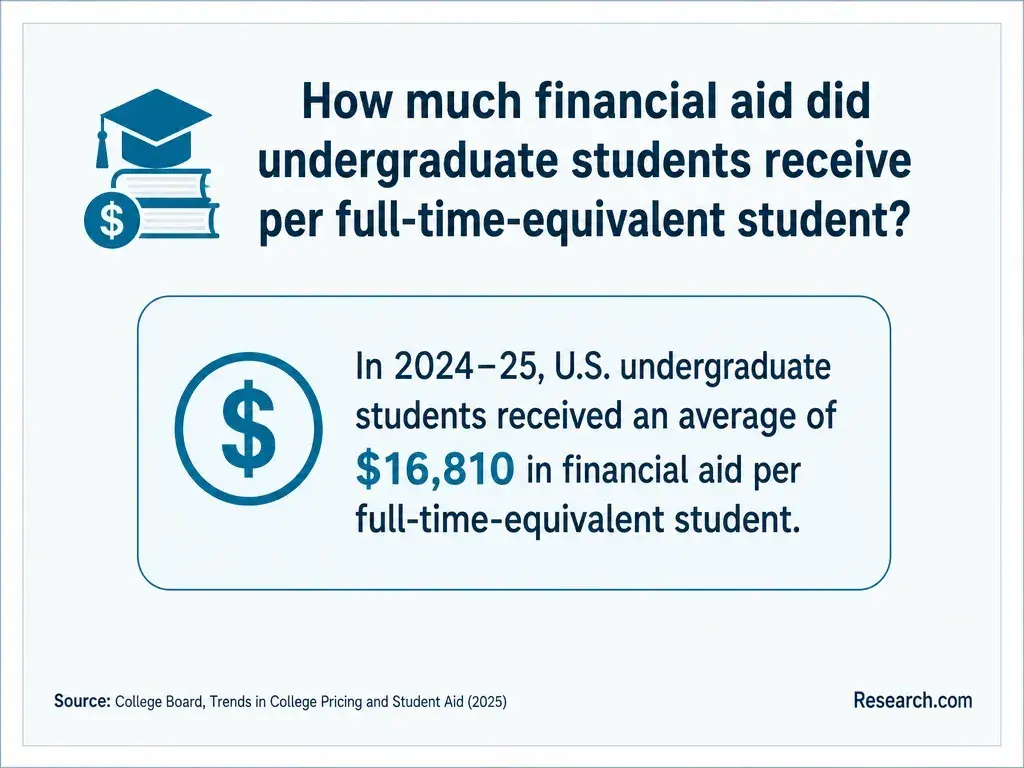
To compare costs, obtain each school's current per-credit tuition, mandatory fees, required credits, and charges for any additional terms. Include books or software, possible travel, and time away from paid work. Ask whether aid is available at your intended enrollment intensity and whether employer education assistance covers this degree. Published tuition is not necessarily the total cost.
Use tuition-focused psychology master's program choices to build a shortlist, then request an individualized cost estimate. A cheaper program is not the better research investment if it lacks accessible methods courses or project supervision.
Neither format is inherently better for justice research. Online study can let an agency employee continue working while applying coursework to appropriate professional questions. Campus study may make it easier to attend research meetings or develop faculty relationships. In either format, access to mentorship, data, and feedback matters more than the delivery label.
Ask whether classes are asynchronous, when live meetings occur, how group projects are scheduled, whether campus visits are required, and who supervises the final project. If you hope to use your workplace as a project site, obtain separate confirmation of academic approval, employer permission, and data access; employment alone establishes none of these.
For working applicants considering faster forensic psychology master's study, compare the actual weekly research and meeting obligations with your work schedule. Speed is useful only if you can complete a credible project without bypassing necessary approvals or analysis.
Potential nonclinical directions include justice-program research support, policy or program analysis, victim-services coordination, corrections program support, and research administration.
Titles and degree expectations vary by agency. A current justice employee may be able to use the MS for a defined internal research function; a career changer may first need relevant agency experience, data skills, or an entry-level support role.
Match job descriptions to demonstrable work: preparing an evidence review, cleaning an authorized dataset, explaining measurement limits, documenting referrals, or writing an evaluation brief.
For direct-service positions, learn the employer's training, background-check, safeguarding, and supervision requirements. An MS does not confer police powers, legal authority, or permission to diagnose or assess clients independently.
If your goal is support work rather than research, compare job requirements before buying another degree. Exploring career choices across recovery service settings may reveal roles where targeted training and supervised experience are more direct than a forensic psychology MS.
What Salary and Job Outlook Can Forensic Psychology Graduates Expect?
There is no single reliable salary or employment projection for "forensic psychology MS graduates." Federal labor data classifies occupations, not graduates by concentration, and justice research, victim services, and licensed psychology have different entry requirements and pay structures.
For a limited point of comparison, the U.S. Bureau of Labor Statistics reported a $45,120 median annual wage in May 2024 for social and human service assistants. That occupation includes many support roles and typically does not require a forensic psychology MS.
Its median is neither a starting offer nor a predicted return on this degree. Research analyst and public-sector roles need their own occupation and local pay-scale comparisons.
Before enrolling, identify several jobs you would actually seek, check their required credentials and posted pay, and compare that evidence with your total education cost. Applicants considering clinical work should evaluate its distinct training pathway and compensation separately; clinical counseling master's duration and earning potential is not a salary estimate for forensic psychology graduates.
Other Things You Should Know About Psychology Programs
Possibly. The academic program must approve the project, and your employer must authorize the work and any data use. Your normal access to records does not automatically permit their use in coursework.
Do not assume so. Public availability does not settle questions about research review, platform terms, privacy, or responsible reporting. Describe your proposed source and methods to your faculty supervisor first.
It may help if it provides substantial methods training, a supervised research project, and strong recommendations. PhD programs set their own prerequisites, and many do not require a master's degree.
Do not choose a program on that expectation. Review its actual course descriptions and project opportunities. Research training in behavior and legal settings is more broadly applicable than a promise of profiling work.
- Cost of Attendance (Budget) | 2025-2026 Federal Student Aid Handbook https://fsapartners.ed.gov/knowledge-center/fsa-handbook/2025-2026/vol3/ch2-cost-attendance-budget
- Accreditation in the U.S. | ed.gov http://www.ed.gov/laws-and-policy/higher-education-laws-and-policy/college-accreditation/accreditation-in-the-us
- Top Careers in Forensic Psychology | marymount.edu https://marymount.edu/blog/top-careers-in-forensic-psychology/
- The Graduate Field Program and Capstone Evaluation Project | Applied Learning in Social Work Education Journal https://alswe.simmons.edu/article/the-graduate-field-program-and-capstone-evaluation-project/
- How to Become a Forensic Psychologist in California (2026) | Touro University Worldwide https://www.tuw.edu/psychology/how-to-become-a-forensic-psychologist-in-california/
- A Career in Forensic and Public Service Psychology | apa.org https://www.apa.org/education-career/guide/subfields/forensic/education-training
- Master's in Forensic Psychology Degree Online & On Campus | University of North Dakota https://und.edu/programs/forensic-psychology-ma-ms/index.html
- Practicum and Thesis/Capstone | Rollins School of Public Health at Emory University https://mch.emory.edu/current-students/practicum-and-thesis-capstone/
- Online Forensic Psychology Master's Degree | ASU Online https://asuonline.asu.edu/online-degree-programs/graduate/master-science-forensic-psychology/