2027 Online BA in Psychology - Addictions Admissions with a Portfolio of Workplace Learning: What to Ask Before Applying
Audited and Verified:
Our Editorial and Data Verification Process
Research.com uses government datasets, official education statistics and primary institutional information to support its career and degree guides. Our review process checks factual accuracy, occupational definitions, source dates and the requirements associated with the credentials discussed.
How This Article Was Fact-Checked
Our editorial team verifies salary estimates, employment projections, education requirements and program information against original data providers and official organizations. Salary figures are checked against the relevant occupational definitions and reporting periods. Information about licensure, accreditation and required in-person training is reviewed separately.
Fact-checked and verified on:

Co-Founder and Chief Data Scientist
If you work in recovery services, community outreach, or another support role, an online psychology BA may let you build on what you already know. But a workplace learning portfolio can affect admission, degree credit, and graduation requirements in different ways.
This guide shows you which documents to gather, which decisions require formal approval, and which questions to ask before paying an application or portfolio-assessment fee. It also helps you judge whether the degree advances your intended role - or whether a more direct credential would serve you better.
Key Things You Should Know
- A strong workplace portfolio documents specific college-level learning; employment history alone does not establish admission eligibility or earn degree credit.
- Ask for a written degree audit showing where any awarded credit applies. Credit accepted as an elective may not replace psychology, statistics, or addictions requirements.
- An addictions-focused BA can support nonclinical work, but counseling credentials and permitted duties depend on the state and the role - not the concentration's name.
What Is an Online Psychology Bachelor's Degree in Addictions?
It is a bachelor's program that combines psychology coursework with study of substance use, prevention, recovery, or related service systems. The credential might be a BA in psychology with a formal addictions concentration, a general psychology BA with relevant electives, or a differently named degree. Those distinctions matter: an elective cluster is not necessarily a concentration recorded on a transcript.
For someone already working in a recovery organization, the program's value may lie in strengthening research literacy, communication, and understanding of behavior - not repeating introductory job training. Compare the exact degree and concentration requirements when reviewing psychology major options at online colleges. Ask whether workplace learning could replace requirements you still need for your next job or graduate application.
Is an Online Addictions Psychology Degree Accredited?
Check the institution's accreditation status and whether it covers the institution awarding the online degree. Then check the program's published degree requirements and any claims about professional credentials separately. Institutional accreditation supports recognition of the institution; it does not guarantee that portfolio credit will be awarded or that graduates qualify for an addiction counseling license.
Do not expect APA accreditation for a general undergraduate psychology BA: APA's professional accreditation has a different scope. If a school advertises an addictions-related approval or credential pathway, ask which organization grants it, which program it covers, and whether it satisfies the rules in the state where you intend to work. Use comparisons of accredited addiction psychology undergraduate education as a starting point, then confirm each claim with the institution and relevant regulator.
What Careers Can You Pursue With an Addictions Psychology Bachelor's Degree?
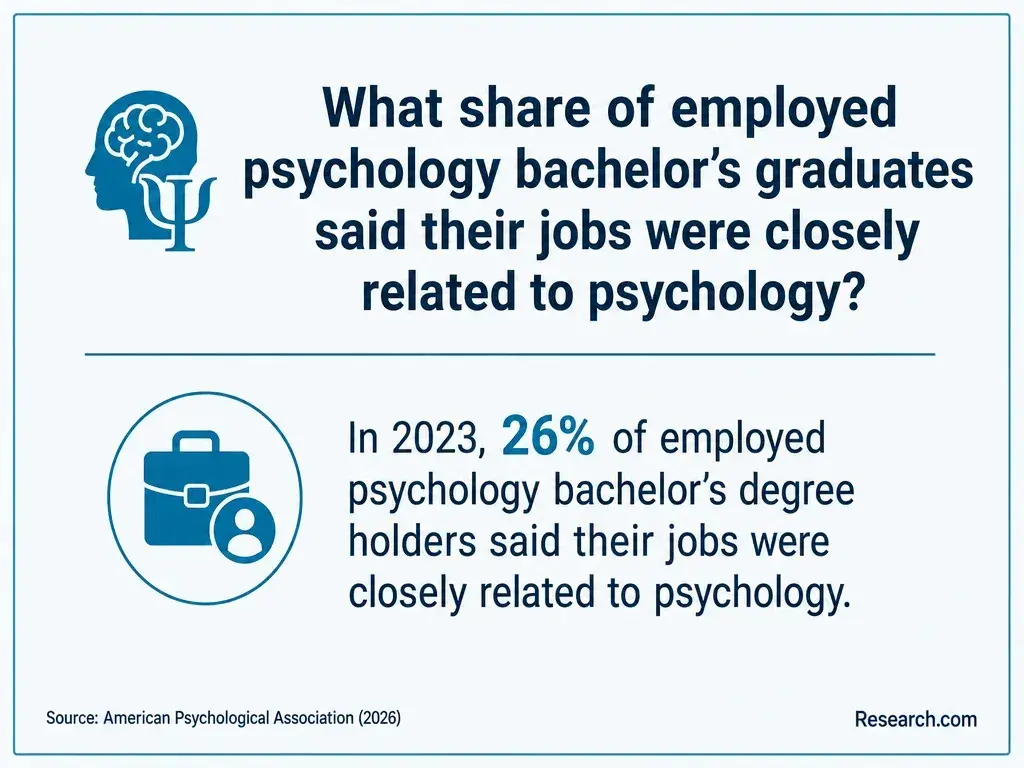
Depending on the employer and your experience, the BA may support applications for nonclinical roles in recovery outreach, service coordination, prevention programs, intake support, or community program administration. Your existing workplace record may be as important as the degree: employers can look for documentation skills, respectful client communication, referral knowledge, and experience working under supervision.
Match a job posting's duties to its qualifications before choosing a concentration. A support worker who connects people with services is not performing the same function as a licensed counselor who assesses and treats a substance use disorder. If your goal is instead justice-system research or victim services, forensic psychology admissions and education planning addresses a different set of coursework and employer expectations; an addictions label alone should not determine your choice.
Admission and portfolio credit are separate decisions. The admissions office determines whether you meet entry requirements; an academic department or prior-learning-assessment office decides whether documented learning merits credit. A registrar or degree-audit office then determines how awarded or transferred credit applies to graduation. Ask which decisions can be made before you commit to enrolling.
Requirements vary, but returning applicants should be ready to supply prior college transcripts, any required secondary-school records, and the school's standard application materials. For a portfolio review, ask for the current rubric, eligible courses, assessment fee, submission deadline, and appeal policy. Useful evidence may include training records, work products you are permitted to share, supervisor verification of responsibilities, and a written explanation connecting those materials to specific course learning outcomes. A résumé alone rarely makes that connection.
If you are comparing concentrations, do not assume that one department's portfolio decision carries over to another. Even information on faster online forensic psychology degree completion cannot establish how an addictions program will assess your work; request the policy for the exact BA and entry term.
Possibly. Some institutions assess portfolios against designated courses or award credit through other approved prior-learning routes. The central question is not simply how much credit you receive, but which remaining requirements it satisfies. Credit recorded as a general elective may leave the psychology major, statistics sequence, or final institutional coursework untouched.
Before submitting a portfolio, request answers to the decisions that most affect your degree plan:
- Which course outcomes can my documented learning be assessed against, and which requirements cannot be met through a portfolio?
- Will approved credit count toward general education, the major, electives, or only the overall credit total?
- What are the limits on prior-learning and transfer credit, and what coursework must I complete at this institution?
- Who approves the evaluation, when will it appear on a written degree audit, and how can I appeal a decision?
Keep transcripts and portfolio awards distinct. A course accepted from another college may still require a separate equivalency review. Likewise, undergraduate portfolio credit does not automatically shorten a later master's degree; assess shorter completion routes for psychology master's students against each graduate program's own admissions and credit policies.
Expect to compare programs on both psychology foundations and addictions-specific study. Depending on the catalog, foundational work may cover research methods, statistics, development, social behavior, biological bases of behavior, and psychological disorders. Addictions coursework may address substance use, prevention, recovery systems, and ethics. Reading about assessment or treatment does not authorize a student to perform clinical assessment or therapy.
For a portfolio applicant, course sequencing is especially important. Ask whether statistics must precede research methods, whether specialized courses run every term, and whether a required capstone or placement can be completed through your current employer with advance approval. If future graduate study is your aim, compare the actual prerequisites of that program rather than assuming the concentration supplies them. This matters even when considering a different specialty, such as choosing a one-year forensic psychology master's pathway: a short advertised timeline does not establish that your BA coursework meets its entry requirements.
Your completion time depends on the written degree audit, required course order, term availability, and the number of classes you can realistically take while working. Do not calculate a graduation date by subtracting all prior credits from the degree total: some credits may be electives, while required courses may be offered less often or have prerequisites.
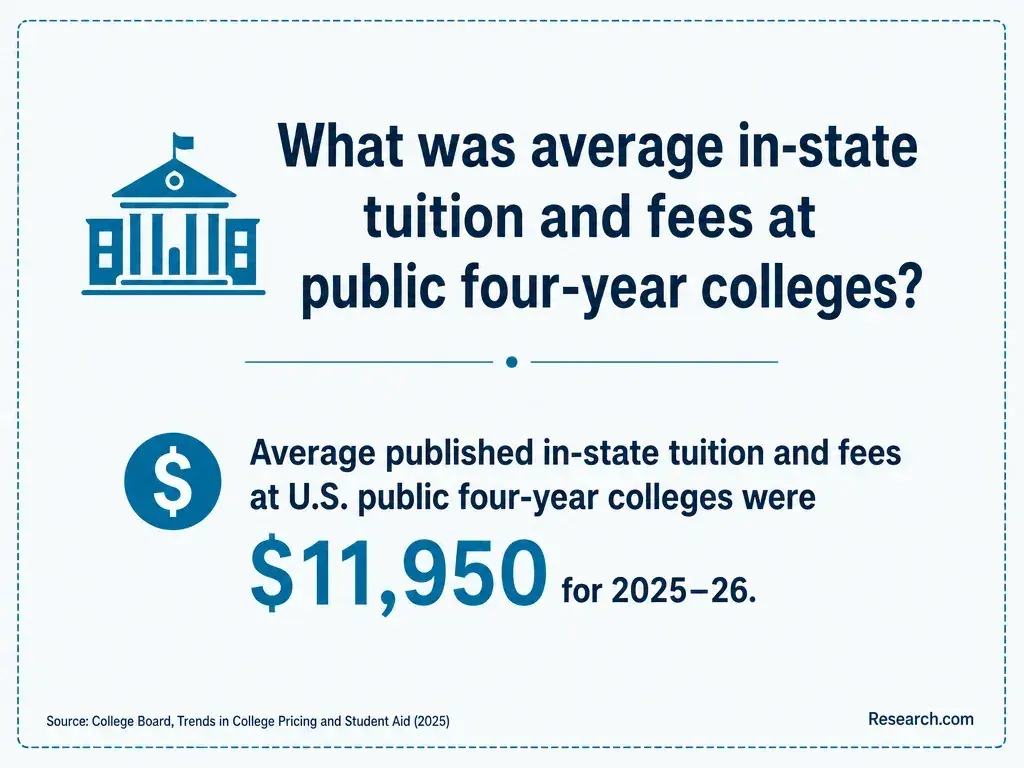
For a useful cost comparison, request a personalized estimate that separates tuition for remaining courses from mandatory fees, portfolio-assessment charges, books, technology, and any placement-related travel or lost work time. Compare that estimate with affordable online psychology degree programs, but use your own audit rather than an advertised per-credit rate as the basis for a decision. Ask the financial-aid office how your planned enrollment and any awarded prior-learning credit affect aid eligibility; credit awarded for learning already completed is not the same as enrolling in a course.
Online study can eliminate a routine campus commute, but it does not necessarily remove fixed-time classes, group meetings, proctored assessments, or in-person placements. For an employed applicant, the best format is the one whose actual schedule accommodates work and any caregiving responsibilities. Ask for sample course schedules and the written rules for placements, campus visits, breaks in enrollment, and changing pace.
Campus programs may offer easier access to on-site research teams or local faculty activities; online programs may make it easier to keep a current job. Neither format guarantees that your workplace will be approved for academic credit. If you are comparing formats partly on price, review financial aid for substance abuse counseling bachelor's degrees alongside the aid terms of the actual psychology BA you plan to enter. The two degree types may have different requirements.
No addiction counseling license follows automatically from a psychology BA or a workplace portfolio. State rules may specify an approved education pathway, supervised experience, examinations, and limits on what a credential holder may do. Peer-support credentials can have different eligibility and training rules. Identify the exact job title and state first, then ask the responsible licensing board or certifying organization whether this degree meets any part of its requirements.
If your intended work is psychotherapy rather than recovery support or service coordination, investigate a qualifying professional degree instead of relying on an undergraduate concentration. When comparing choosing an accredited accelerated clinical counseling pathway, verify the program's eligibility claims for your state and its supervised training obligations. Speed and online delivery do not replace those requirements.
What Salaries and Job Outlook Apply to Addictions Psychology Graduates?
There is no single salary or job-growth figure for graduates of an addictions-focused psychology BA. Compensation depends on the occupation, location, employer, experience, and any required credential. The US Bureau of Labor Statistics publishes occupation-wide wage and outlook information for categories such as substance abuse, behavioral disorder, and mental health counselors, but that category includes workers with qualifications beyond a BA. Its median should not be presented as a new graduate's expected pay.
For a realistic return-on-investment check, compare local postings for the role you can qualify for now with postings for your target role after graduation. Record their stated education, credential, experience, and pay requirements, then weigh the difference against your remaining degree cost. If the better-paid work requires counselor licensure, fast-track online clinical counseling master's options may be relevant - but they represent an additional professional pathway, not an automatic outcome of the BA.
Other Things You Should Know About Psychology
Do not submit identifiable client information without explicit authorization and a permitted submission process. Ask the portfolio assessor whether a redacted, simulated, or supervisor-verified example can demonstrate the same learning.
Not necessarily, but a school may request verification of duties or training. Check its evidence rules and your employer's policies before requesting a letter or sharing workplace materials.
Not automatically. Ask whether the school imposes recency rules for the courses you hope to satisfy, and use your portfolio to show what you learned and retained rather than relying on job dates alone.
Follow the institution's academic-integrity policy. Your account of learning must be accurate and your own, with evidence you are authorized to use; an AI-generated description cannot substitute for demonstrated knowledge.
- Workplace Supported Recovery from Substance Use Disorders | nih.gov https://pmc.ncbi.nlm.nih.gov/articles/PMC10193449/
- Education credits - AOTC and LLC | Internal Revenue Service https://www.irs.gov/credits-deductions/individuals/education-credits-aotc-and-llc
- Certified Addiction Counselor (CAC) clinical training program | colorado.gov https://bha.colorado.gov/for-service-providers/learning-and-development/certified-addiction-counselor-cac-clinical-training
- Chemical Dependency Treatment Facilities | texas.gov https://www.hhs.texas.gov/providers/health-care-facilities-regulation/chemical-dependency-treatment-facilities
- Admissions Information | ccp.edu https://www.ccp.edu/college-catalog/admissions-information
- Workplace Learning | University of Maryland Global Campus https://www.umgc.edu/current-students/degree-requirements/workplace-learning
- Assessment Plan for Majors Using Program Portfolios | ucla.edu https://learningoutcomes.ucla.edu/process-guidelines/assessment-plan-for-majors-using-program-portfolios/
- Using Student Learning Portfolios for Departmental Outcomes Assessment | The University of Iowa https://assessment.uiowa.edu/using-student-learning-portfolios-departmental-outcomes-assessment
- Using Portfolios in Program Assessment | Assessment and Curriculum Support Center https://manoa.hawaii.edu/assessment/resources/using-portfolios-in-program-assessment/
- College Credit for Work and Life Experience | Purdue Global https://www.purdueglobal.edu/transfer-students/work-life-experience/