2027 Online BA in Psychology - General Psychology: Degree Options for a Future in Public Opinion Research
Audited and Verified:
Our Editorial and Data Verification Process
Research.com uses government datasets, official education statistics and primary institutional information to support its career and degree guides. Our review process checks factual accuracy, occupational definitions, source dates and the requirements associated with the credentials discussed.
How This Article Was Fact-Checked
Our editorial team verifies salary estimates, employment projections, education requirements and program information against original data providers and official organizations. Salary figures are checked against the relevant occupational definitions and reporting periods. Information about licensure, accreditation and required in-person training is reviewed separately.
Fact-checked and verified on:

Co-Founder and Chief Data Scientist
Public opinion research depends on more than asking people questions: researchers must design sound surveys, understand behavior, analyze data, and explain what a sample can—and cannot—represent. An online BA in general psychology can build part of that foundation, but its value depends on the methods courses and experience you can actually obtain.
This guide is for prospective and returning students considering polling, survey research, or related analyst work. It explains how to evaluate a program, fill its technical gaps, and decide whether a psychology degree is the most direct route.
Key Things You Should Know
- A general psychology BA can support public opinion research, but survey design, statistics, sampling, and applied research experience matter more than the degree title alone.
- A bachelor's degree commonly requires about 120 semester credits; transferred credits reduce the time and cost only if the school applies them to your remaining requirements.
- For polling and survey jobs, compare psychology with statistics, sociology, political science, or a targeted methods course before committing to another degree.
What Is an Online BA in General Psychology?
An online Bachelor of Arts in general psychology studies behavior and mental processes through courses in psychological science, research methods, and general education. "General" usually means broad coverage rather than a formally named specialty. A BA may offer more room for electives than a particular BS, but requirements vary by school; compare the course catalog, not the letters on the diploma.
For a future in public opinion research, the attraction is psychology's attention to attitudes, social influence, question interpretation, and human decision-making. Its limitation is equally important: a broad major may offer little training in probability sampling, survey weighting, programming, or policy analysis. Use electives or a minor to address those gaps.
A named concentration is worth choosing only if its courses serve your goal. For example, addiction psychology bachelor's degree planning is more relevant to research on substance-use attitudes than to general election polling; it does not replace survey-methods training.
Is an Online Psychology Bachelor's Degree Accredited?
An online psychology BA can be offered by an accredited institution, but accreditation must be checked for the school you intend to attend. Confirm the institution and its recognized accreditor in the U.S. Department of Education database or the Council for Higher Education Accreditation directory. Then confirm that the online BA is an authorized offering of that institution and ask how its credits appear on the transcript.
Do not look for American Psychological Association accreditation of a general psychology BA: APA accreditation applies to specified professional psychology doctoral programs and related training, not ordinary undergraduate psychology majors. Institutional accreditation is important for educational quality review and often for federal aid eligibility, but it does not certify that a BA teaches polling or leads to a professional license.
That distinction changes if your goal shifts from research to licensed counseling. In that case, investigate the applicable graduate program and state rules rather than treating accredited counseling study with accelerated schedules as interchangeable with an undergraduate psychology degree.
Can a Psychology BA Lead to Public Opinion Research?
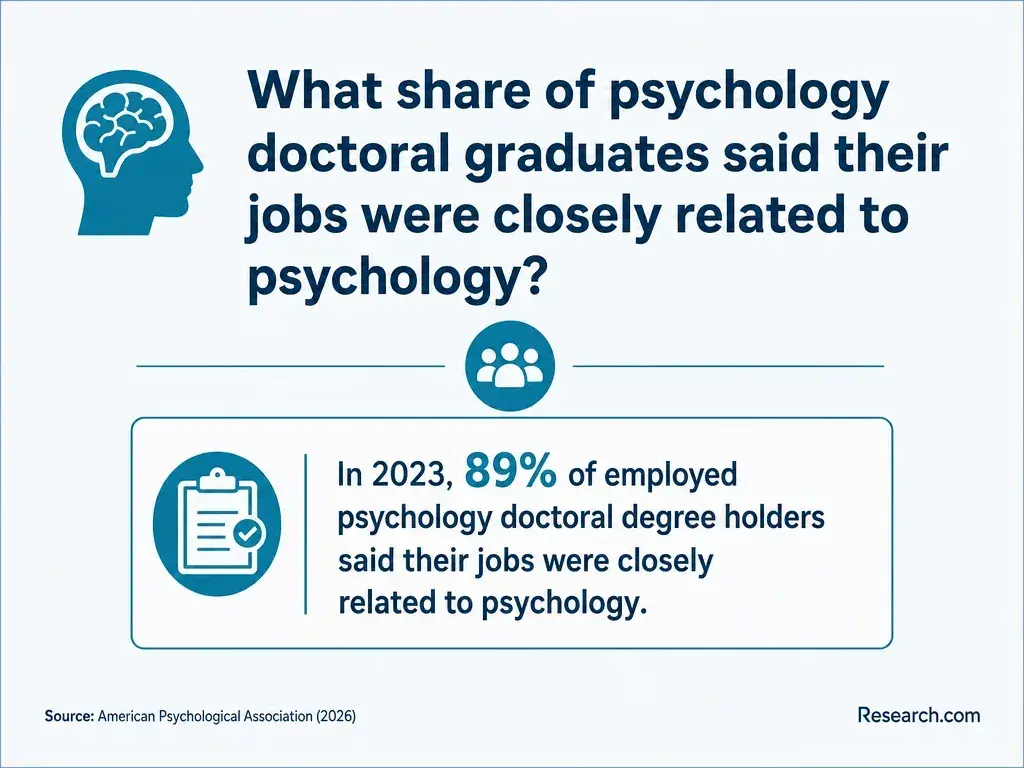
Yes, but it is a foundation, not a job qualification by itself. Public opinion teams study what a defined population thinks about issues, products, institutions, or candidates. Work may include writing neutral questions, checking questionnaire accessibility, monitoring data collection, analyzing responses, and reporting uncertainty to a client or the public.
Psychology is especially useful when investigating attitudes and how wording or social context shapes answers. Polling also requires an understanding of who was sampled: even a carefully worded survey cannot describe all U.S. adults if its recruitment process systematically misses some groups. Likewise, an association between an attitude and a demographic characteristic does not establish cause.
A strong undergraduate pathway pairs statistics and research methods with survey-specific learning and a supervised project. A student might help prepare a questionnaire, document sampling limitations, analyze an appropriately authorized dataset, and produce a short research brief. Confirm approval, consent, privacy, and any institutional review requirements before collecting responses; do not assume a class project is exempt.
A specialized graduate degree is not automatically the next step. If your interest is attitudes toward courts or policing, examine the actual research training and likely return before fully upholding forensic psychology master's degree career return considerations; a methods-focused course or entry-level survey role may be more direct.
Programs commonly combine introductory psychology, statistics, research methods, social and developmental psychology, writing, and general education. Course names alone tell you little about readiness for polling. Compare assignments, prerequisites, software access, and whether students complete an original or supervised analysis.
The following comparison separates useful foundations from skills you may need to obtain through electives or experience:
| Learning area | Value for public opinion research | What to check |
| Social and cognitive psychology | Explains attitudes, judgment, memory, and response behavior. | Whether assignments evaluate evidence rather than only summarize theory. |
| Statistics and research methods | Supports interpretation of estimates, uncertainty, bias, and study design. | Whether students analyze data and explain limitations. |
| Survey or measurement electives | Develops question-writing and measurement-quality skills. | Whether sampling, questionnaire testing, and nonresponse are covered. |
| Writing, computing, and policy electives | Helps turn findings into reproducible analyses and usable briefs. | Whether the school permits relevant electives across departments. |
If survey coursework is unavailable, an elective in sociology, political science, statistics, or data science may be more useful than an unrelated psychology specialty. The same test applies when comparing forensic psychology curricula and career fit: research on legal attitudes calls for sound survey methods, not simply a forensic label.
The better format is the one in which you can complete rigorous method work and obtain useful feedback. Online courses can reduce commuting, while campus programs may make it easier to meet research teams or find local collaborators. Neither format guarantees access to survey projects, faculty mentorship, or internships.
Ask how online students join research, receive statistical help, use required software, and present work. Check whether classes are asynchronous or require live meetings, whether group projects have fixed schedules, and whether a capstone, exam, or internship requires travel. These details matter, especially if you work or provide care at home.
Do not assume that the shortest online program is the most flexible: compressed terms can increase weekly workload. That caution also matters when reviewing a clinical mental health counseling master's pacing guide, although counseling preparation serves a different, regulated career goal than public opinion research.
First-year applicants generally provide evidence of secondary-school completion and any materials the institution requires. Transfer applicants typically submit transcripts from every prior college. A school may admit you to the institution before separately confirming entry into the psychology major; prerequisites and GPA rules vary.
If you have prior credits, request a written degree audit. Check separately which courses transfer, which satisfy general education or major requirements, and which remain to be taken at the institution. A transferred statistics course, for example, may count as elective credit without satisfying the psychology department's methods sequence. Ask about course substitutions and appeals before enrolling.
Public opinion research does not require admission to a clinical training pathway. If your intended job is instead licensed counseling, compare that profession's graduate admissions and education requirements, along with tuition-conscious mental health counseling degree choices, rather than assuming any psychology BA is sufficient.
A bachelor's degree commonly totals about 120 semester credits. Four academic years is a conventional full-time planning benchmark, not a completion promise. Transfer credit, enrollment intensity, prerequisite sequencing, and the frequency of required course offerings determine your actual timeline.
Request a term-by-term plan showing when statistics, research methods, and any capstone are available. If methods are offered only after statistics, an otherwise short list of remaining credits may still take several terms. Part-time study can make work and family obligations manageable but may extend tuition-related expenses and delay entry into research roles.
Speed should not displace the experience employers want. Even a forensic psychology master's study with faster pacing would not, by itself, supply the sampling and data-analysis evidence needed for a polling job.
There is no reliable universal price for an online psychology BA. Schools may charge by credit or term, and the advertised tuition may omit mandatory fees, books, software, equipment, travel, or an unpaid applied experience. Compare the cost of remaining requirements, not just the published per-credit rate.
Ask each school for a degree audit and an itemized estimate using the same planned credit load. Include likely aid, employer assistance if available, and the cost of taking longer to finish; verify all eligibility and renewal conditions directly. A lower-priced program can cost more overall if fewer transfer courses satisfy its major or its required classes are offered infrequently.
Use psychology degree tuition and affordability comparisons to identify schools worth investigating, then obtain a school-specific estimate before making a financial commitment.
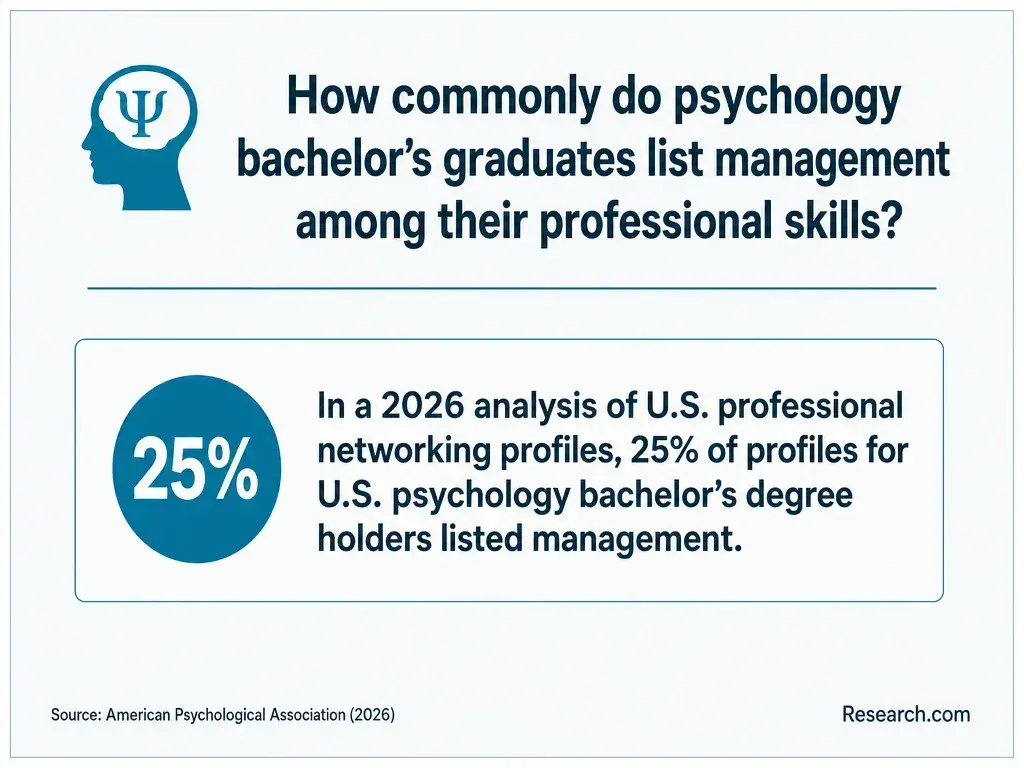
For this goal, search by tasks as well as titles. Potential starting points include survey research assistant, polling project assistant, research coordinator assistant, and junior market or social research analyst. Employers may seek experience with questionnaires, spreadsheets or statistical software, quality checks, clear writing, and handling respondent information responsibly. Requirements vary, and some analyst positions expect stronger quantitative preparation or prior work.
A credible application pairs the BA with evidence: a methods project, an authorized analysis of public-use data, or supervised work documenting a survey's design and limitations. Do not publish identifiable responses or imply a questionnaire was validated merely because it was used in class.
If your interests instead center on providing therapy, these research roles are not a clinical pathway. A psychology BA does not authorize diagnosis or psychotherapy; evaluate qualifying graduate education and state requirements separately. Claims about assessing shorter clinical mental health master's program outcomes should not be used as evidence of what polling employers will pay.
What Salary and Job Outlook Can Psychology Graduates Expect?
There is no single salary or growth rate for "psychology BA graduates" in public opinion research. The U.S. Bureau of Labor Statistics Occupational Outlook Handbook category "market research analyst" is useful for some survey and consumer-opinion jobs, but it also includes work outside public polling. Survey research assistants and nonprofit or government research staff may have different duties and pay.
When comparing offers or deciding on further education, check the latest BLS wage and projection figures for the occupation that matches your target duties, then compare them with local job postings. Treat an occupation-wide median as context—not an entry-level offer, a graduate outcome, or a forecast of your earnings. Consider whether a prospective employer values a completed bachelor's degree, specific software skills, or demonstrated survey work more than another credential.
A master's may be worthwhile for a particular advanced research position, but it is not a universal requirement for entering polling. If job postings consistently call for graduate study, weigh that requirement against tuition, time away from work, and psychology graduate study on a budget; also compare methods-focused graduate options rather than assuming general psychology is the best fit.
Other Things You Should Know About Psychology
It can be, if the assignment permits it and participants are treated respectfully. Political views can be sensitive; check instructor approval, consent, privacy safeguards, and whether institutional review is required before recruiting anyone.
Usually, you can describe your own methods and share material you have permission to disclose. Remove respondent-level information, explain sampling limitations, and obtain any required instructor or partner approval.
No single package is required across polling employers. Learn to clean data, document decisions, analyze responses, and explain uncertainty; then check job postings for the tools used by your target teams.
It may be if your main gaps are survey design and analysis. Compare a certificate or individual courses with job requirements, and seek a project that demonstrates the new skills before pursuing a second bachelor's degree.
- Online Psychology Bachelor's Degree | University of West Florida https://uwf.edu/programs/online/psychology-ba/
- Harvard Public Opinion Project (HPOP) - Institute of Politics https://iop.harvard.edu/programs/harvard-public-opinion-project-hpop
- Skills of a Psychology Major | Evelyn L. Spiro School of Nursing https://wagner.edu/psychology/skills/
- Online Bachelor of Arts in Psychology (BA) - apu.apus.edu https://www.apu.apus.edu/online-bachelor-degrees/bachelor-of-arts-in-psychology/
- Survey Research Intern | csuchico.edu https://careercenter.csuchico.edu/jobs/cato-institute-survey-research-intern/
- Research careers with a bachelor's degree in psychology | apa.org https://www.apa.org/ed/precollege/psn/2017/01/research-careers
- National Opinion Research Center (NORC) Summer Internship Program | Undergraduate Research Opportunities | Illinois https://researchops.web.illinois.edu/opportunity/national-opinion-research-center-norc-summer-internship-program
- Bachelor of Arts in Psychology - Texas State's online programs https://online.txst.edu/degrees/undergraduate/ba-psychology/
- Tuition & Expenses | Student Financial Services https://financialaid.wsu.edu/tuition-and-expenses/
- Survey Research Intern - Center for Career Readiness https://career.arizona.edu/jobs/cato-institute-survey-research-intern-2/