2027 Online BA in Psychology - Mental Health: Program Options for Mental Health Volunteer Coordination
Audited and Verified:
Our Editorial and Data Verification Process
Research.com uses government datasets, official education statistics and primary institutional information to support its career and degree guides. Our review process checks factual accuracy, occupational definitions, source dates and the requirements associated with the credentials discussed.
How This Article Was Fact-Checked
Our editorial team verifies salary estimates, employment projections, education requirements and program information against original data providers and official organizations. Salary figures are checked against the relevant occupational definitions and reporting periods. Information about licensure, accreditation and required in-person training is reviewed separately.
Fact-checked and verified on:

Co-Founder and Chief Data Scientist
If you coordinate volunteers for a mental health nonprofit - or hope to - an online psychology BA may strengthen your understanding of behavior, service systems, and ethical boundaries. But the degree alone will not teach every operational skill the job requires, and it is not a clinical qualification.
This guide shows how to evaluate mental-health-focused programs against the work of recruiting, training, supporting, and retaining volunteers. It also explains when supervised experience, targeted training, or a different degree may be a more direct investment.
Key Things You Should Know
- An online psychology BA can support mental health volunteer coordination, but employer requirements and demonstrated experience matter more than a concentration title alone.
- Look for research methods, mental health and community-services coursework, plus an approved opportunity to practice volunteer training or program evaluation.
- Compare the full cost and schedule of each option; a psychology BA does not authorize diagnosis or therapy, and published occupational wages are not degree-specific earnings.
What Is an Online BA in Psychology-Mental Health?
It is a bachelor of arts degree in psychology with coursework focused on mental health, such as psychopathology, health psychology, or community services. Schools may call that focus a concentration, emphasis, track, or set of electives. Those labels are not interchangeable: check the catalog and transcript policy to learn whether the focus is formally awarded.
For a future volunteer coordinator, the useful distinction is not BA versus BS by itself. It is whether the degree pairs psychological science and research literacy with opportunities to learn how people access support. A program centered on substance use may be valuable at a recovery organization; compare its actual requirements with broader distance learning bachelor's degrees in addiction psychology rather than assuming the programs prepare students for the same work.
Can an Online Psychology BA Prepare You for Mental Health Volunteer Coordination?
Yes, as academic preparation - not as a substitute for coordination experience. Coordinators commonly recruit and orient volunteers, match people to appropriate tasks, maintain schedules and records, support retention, and direct concerns to qualified staff. Someone already working in a nonprofit may have strong operational skills and need psychology coursework mainly to improve communication, evidence appraisal, and understanding of service users' needs.
The strongest preparation connects coursework to supervised, nonclinical work. Ask whether an approved internship, capstone, or current workplace project could involve designing an orientation plan, reviewing volunteer feedback, or mapping referral procedures. Secure school and site approval before treating an existing job as an academic placement. Keep client information out of coursework unless the organization explicitly authorizes its use under applicable privacy rules.
Volunteer coordination can overlap with recovery programs, but assigning volunteers is different from providing recovery support yourself. Exploring career options in recovery services can help you identify which duties call for additional training or a state-recognized credential.
What Careers Can You Pursue With a Mental Health Psychology Bachelor's Degree?
Possible nonclinical directions include volunteer coordinator, community outreach assistant, intake or referral coordinator, program assistant, and behavioral-health support worker. Hiring depends on the employer, population served, and evidence of relevant experience. A bachelor's degree may help an applicant qualify for some positions, but it does not establish eligibility for every job bearing a mental health title.
Compare postings by duties and required credentials, not title alone. A role organizing volunteer shifts may primarily require scheduling and supervision skills; one involving crisis response, services for minors, or substance-use support may require specific training, screening, or oversight. Justice-system interests lead to different roles and qualifications; forensic psychology graduate occupations and salary considerations should not be read as outcomes of a mental health BA or a volunteer-coordination role.
Requirements vary, but the most relevant curriculum combines introductory psychology, statistics, research methods, developmental and social psychology, and study of psychological disorders. For coordination work, electives in community psychology, health behavior, cultural psychology, or program evaluation may be more useful than clinically themed course titles that do not teach operational skills.
Read course descriptions for assignments you could apply at work: interpreting a study, creating accessible training materials, or evaluating a service process without exposing confidential records. Ask whether electives run regularly and whether a capstone can address a nonclinical community problem. If graduate study is a possibility, preserve the statistics and methods sequence; graduate psychology degrees with accelerated schedules may still have prerequisites that a loosely structured undergraduate elective plan does not meet.
Check whether the institution holds recognized accreditation and whether that status applies to the school awarding the online degree. Verify the accreditor and current status through the institution and the accreditor, then confirm the program's exact degree name in the catalog. Do not assume that online delivery changes the institution's accreditation status.
APA accreditation should not be used as a test for an ordinary psychology BA: its professional accreditation has a different scope. If your long-term goal is licensed counseling, investigate the requirements of that separate pathway, including any applicable program recognition and state rules. Information on clinical mental health counseling course pace and accreditation concerns professional graduate programs, not accreditation of an undergraduate psychology major.
First-year applicants generally need to meet the university's undergraduate admission rules; transfer applicants must also submit prior college records. A school may have separate rules for entering the psychology major or declaring a mental health concentration. Request the requirements for your intended entry term rather than assuming that admission to the university automatically settles both questions.
If you have previous credits, obtain a written degree audit showing which courses satisfy general education, psychology prerequisites, major requirements, and remaining residency credits. Accepted credit is not necessarily credit that shortens the path to graduation. Guidance on moving existing credits into psychology study can help you frame questions, but the receiving institution makes the binding evaluation.
Completion time depends on accepted credits, course sequencing, enrollment pace, and whether required electives are offered when you need them. An accelerated calendar can shorten gaps between terms without reducing the work in each course. Compare accelerated undergraduate psychology program choices against your actual work schedule and any placement obligations - not the advertised fastest finish alone.
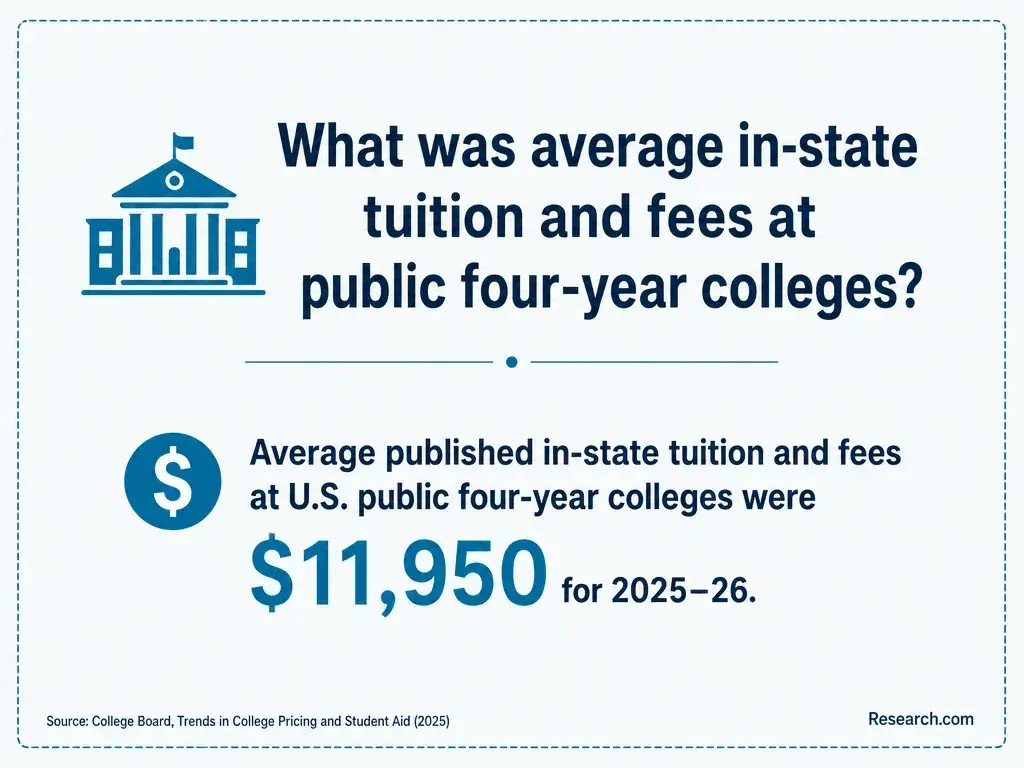
For cost, ask each school for a term-by-term estimate based on your degree audit and planned pace. Include tuition, mandatory fees, books or software, and any travel or unpaid time required for applied learning. Financial aid eligibility and employer reimbursement may depend on enrollment and other conditions. Without a school-specific credit evaluation and current price schedule, a reliable total cost or completion date cannot be calculated.
Yes. Nonclinical jobs in outreach, volunteer administration, referrals, and program operations may not require a graduate degree or clinical license. Employers can still require a bachelor's degree, background checks, population-specific training, or prior experience. Confirm the requirements in the actual posting and with the organization.
Set a clear boundary for volunteers as well as paid staff: training someone to listen, share approved resources, and escalate concerns is not training them to diagnose or provide psychotherapy. If your aim changes from coordinating services to delivering counseling, examine a qualifying professional graduate route and jurisdiction-specific licensing rules. Clinical counseling master's completion time and employment outlook address a substantially different investment and role.
There is no single reliable salary or growth rate for "psychology graduates" or "mental health volunteer coordinators." The latter title appears across nonprofits and service settings with different duties; a broad occupational figure can conceal those differences. For a useful benchmark, identify how a prospective employer classifies the job, then compare its posted pay with the corresponding occupation in the U.S. Bureau of Labor Statistics Occupational Outlook Handbook. Check the wage reference year, projection period, geography, and typical entry education before relying on a figure.
Do not compare a coordinator offer with the wage of a licensed clinician or treat graduate study as an automatic pay increase. If you are considering later study for advancement, compare the actual positions it would qualify you to seek with tuition and time away from work. Even comparing shorter online forensic psychology master's pathways would answer a different career question, not establish a salary outlook for mental health volunteer coordination.
How Should You Choose an Online Psychology Program for Mental Health Careers?
Start with the job you want and the skills you already use. A current volunteer manager may benefit more from research methods and a well-supervised evaluation project than from another introductory service course. A newcomer may need direct experience recruiting, training, and supporting volunteers before paying for a degree.
Use the same questions with each school so the answers are comparable:
- Which required courses and regularly available electives address community mental health, research, and program evaluation?
- Can a student arrange an approved nonclinical project or placement locally, and who supervises and assesses it?
- Are classes asynchronous, and what live meetings, campus visits, or placement hours are required?
- After a written credit audit, what are the remaining requirements, estimated charges, and likely course sequence?
Choose the BA if its learning and applied opportunities address a genuine gap and the full commitment is manageable. If you already hold a bachelor's degree, targeted training or supervised nonprofit work may be more direct; compare budget-friendly online psychology graduate degrees only if a specific advanced goal calls for that level of study. For a licensed clinical goal, verify a qualifying professional pathway instead.
Other Things You Should Know About Psychology
Possibly, but only under the school's applicable credit or placement policy. Ask what approval, documentation, supervision, and assessed work are required before relying on those hours.
Ask the organization and instructor first. Permission to work with volunteers does not automatically permit sharing their responses, contact details, or service-related information in coursework.
They need to know their organization's escalation procedures. Additional training depends on their assigned duties; it should not be mistaken for authorization to provide clinical crisis care.
Not universally. Some employers prioritize coordination experience, communication, and reliable administration. Check local postings before deciding that another degree is necessary.
- Types of Financial Aid: Grants, Work-Study, and Loans | studentaid.gov https://studentaid.gov/understand-aid/types
- Behavioral Health Practicum, Internship, and Field Experience Opportunities | NC DAC https://www.dac.nc.gov/divisions-and-sections/health-services/behavioral-health-practicum-internship-and-field-experience-opportunities
- Post-Secondary Employment Outcomes Tool Shows What You Might Earn Depending on the College You Attend | Census.gov https://www.census.gov/library/stories/2022/06/job-and-earnings-prospects-by-college-and-degree.html
- Frequently Asked Questions (FAQs) - Transfer Credit Ohio https://transfercredit.ohio.gov/help-center/faqs/faqs
- The Availability of Supervision in Routine Mental Health Care | nih.gov https://pmc.ncbi.nlm.nih.gov/articles/PMC6426317/
- Field Experience Hub - UCCS College of Education https://coe.uccs.edu/academics/counseling-human-services/site-professor-training
- BA in Psychology - College of Liberal Arts https://cla.umn.edu/psychology/undergraduate/majors-minors/ba-psychology
- Graduate Employment Outcomes Dashboard | Johns Hopkins https://publichealth.jhu.edu/offices-and-services/office-of-student-affairs/career-services/graduate-employment-outcomes-dashboard
- Online Bachelor of Community Psychology and Health Promotion | Southwest Minnesota State University https://online.smsu.edu/programs/ba-community-psychology-health-promotion/
- Transfer credit policies - Office of Admissions https://admit.washington.edu/apply/transfer/policies/