2027 Paying for an Online BA in Psychology - Mental Health: The Cost of Credits That Do Not Apply to Your Major
Audited and Verified:
Our Editorial and Data Verification Process
Research.com uses government datasets, official education statistics and primary institutional information to support its career and degree guides. Our review process checks factual accuracy, occupational definitions, source dates and the requirements associated with the credentials discussed.
How This Article Was Fact-Checked
Our editorial team verifies salary estimates, employment projections, education requirements and program information against original data providers and official organizations. Salary figures are checked against the relevant occupational definitions and reporting periods. Information about licensure, accreditation and required in-person training is reviewed separately.
Fact-checked and verified on:

Co-Founder and Chief Data Scientist
A college can accept your psychology courses without applying them to an online BA's psychology major. For a transfer or returning student, that difference can mean paying for replacement courses, delaying graduation, or using financial aid on credits that do not move the degree forward.
A mental-health focus adds another question: do prior courses satisfy its requirements, or merely appear on the transcript? This guide shows you how to price the remaining degree - not just advertised tuition - and get the written decisions needed before you enroll.
Key Things You Should Know
- Accepted transfer credit is not the same as credit toward the psychology major or mental-health focus; obtain a requirement-by-requirement degree audit before estimating savings.
- Price unused credits by their consequences: replacement-course tuition and fees, extra enrollment terms, and any effect on aid - not simply by what you paid for the original courses.
- Compare programs using the credits you must still complete at each school, including prerequisites and residency requirements; a lower per-credit rate may not produce a lower total cost.
What Does an Online BA in Psychology With a Mental Health Focus Cost?
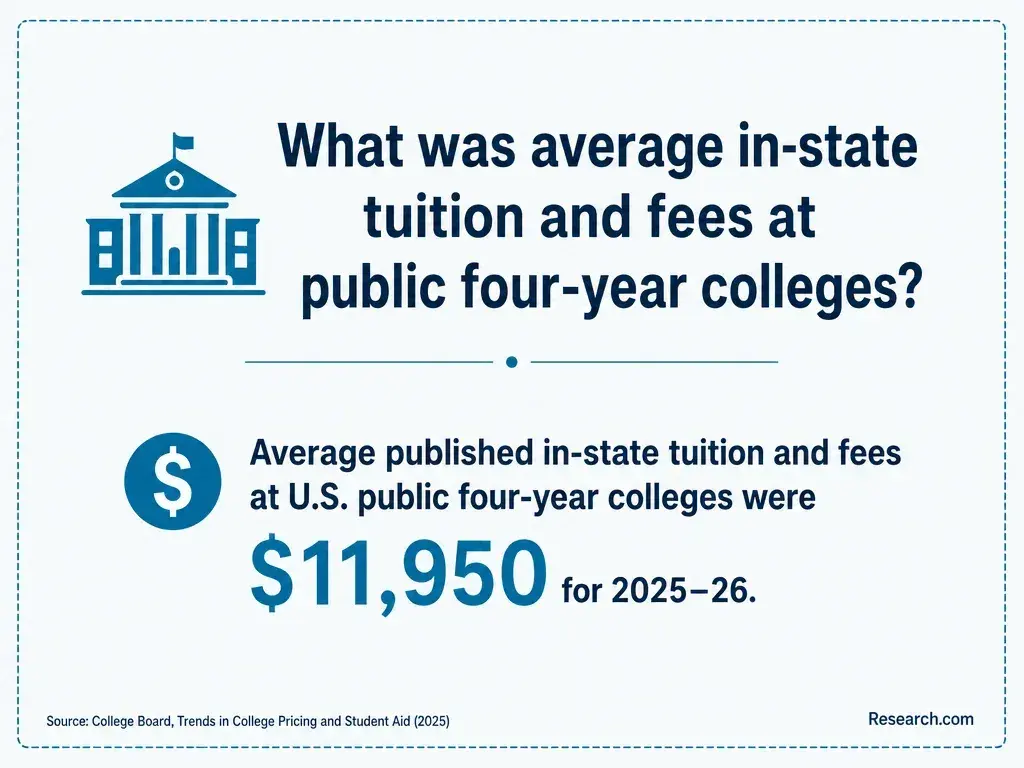
The useful price is the cost to finish your particular degree. Add tuition for remaining required credits, mandatory fees, books and technology, and any approved in-person experience or travel. Then account for costs that a tuition quote misses: another term of enrollment, reduced work hours, or an unpaid placement if the program requires one. Ask whether the school charges by credit, course, or term, and whether its quoted rate applies to your residency status and enrollment schedule.
Confirm what "mental health focus" means in the catalog. It may be an official concentration with specified courses, a set of electives, or simply a description of the major. Those structures can produce different bills for the same transfer student. If your intended work is specifically in substance-use services, compare the required credential and remaining coursework before assuming a psychology focus is the least costly route; lower-tuition bachelor's pathways in substance use counseling offer a separate starting point for that comparison. Neither degree title alone establishes eligibility for a state-regulated counseling role.
How Much Do Psychology Credits That Do Not Apply to Your Major Cost?
There is no universal charge for an "unused" credit. The financial loss depends on where the course lands in your degree audit. A credit can be accepted by the university yet fail to satisfy a psychology requirement; it might still fill a general-education or free-elective slot. A course that fills no open slot is less likely to reduce the work left to graduate.
The table separates those outcomes so you can identify the additional expense rather than counting the original tuition twice.
| Audit outcome | Likely cost consequence |
| Applies to the psychology major or required focus | May replace coursework you would otherwise purchase, subject to remaining residency and prerequisite rules. |
| Accepted as general education or an open elective only | May reduce total credits remaining, but you still need the unsatisfied major course. |
| Accepted but exceeds available elective space | Appears on the record without necessarily shortening the degree or reducing tuition ahead. |
| Not accepted, or cannot meet a required equivalency | Does not satisfy that requirement; a replacement course may be needed. |
For a practical estimate, multiply the replacement credits required at the new school by its applicable tuition rate, then add course-specific fees and any extra term charges. Count the tuition already paid as a historical cost, not a second future bill. Check whether a statistics or research-methods sequence postpones later courses; a small credit mismatch can cost more if it extends enrollment. A guide to selecting an online psychology bachelor's program can help you identify candidates, but only each candidate's approved audit can establish your remaining cost.
How Can Transfer Credits Reduce the Cost of an Online Psychology Degree?
Transfer saves money when accepted coursework satisfies requirements you would otherwise pay to complete. Start with official transcripts and syllabi for potentially equivalent psychology, statistics, and research-methods courses. Ask the receiving institution's transfer-credit office to evaluate acceptance and the psychology department or designated advisor to approve major equivalencies and substitutions. Request the resulting degree audit in writing.
These are the decisions most worth resolving before making a deposit:
- Identify each course that satisfies general education, the psychology major, the mental-health focus, or a free elective.
- Ask about quarter-to-semester conversion, minimum grades, course recency, repeat rules, and whether statistics or methods courses meet the program's specific standards.
- Confirm how many credits must be taken at the institution and whether any remaining requirements are offered in the terms you expect to attend.
- If a course is denied major credit, submit its syllabus and assignments through the school's formal substitution or transfer-appeal process.
An associate degree may fulfill a block of general-education requirements without satisfying every psychology prerequisite. Guidance on applying associate-level credits to psychology study can help you prepare questions, but the receiving school has final authority over its audit. Military learning, competency-based study, and other nontraditional credits also require institution-specific evaluation.
Check that the institution holds recognized institutional accreditation and that the accreditation covers the school awarding your degree. Confirm its status in the accreditor's directory and ask the school how accreditation and transfer policy apply to your entry term. Accreditation is important for educational quality oversight and may matter for federal aid, but it does not guarantee that another university or a graduate program will accept particular courses.
Do not reject an otherwise suitable BA because it lacks American Psychological Association program accreditation: APA accreditation does not generally apply to undergraduate psychology majors. Likewise, institutional accreditation does not make a mental-health focus a clinical qualification. When comparing differently named specializations, an online forensic psychology degree selection guide illustrates why the actual institution and degree structure matter more than a specialty label; verify the accreditation and catalog details of any school you consider directly.
Requirements vary, but a psychology BA commonly combines general education with psychology foundations, statistics, research methods, and upper-level work. A formal mental-health focus may add courses on psychological disorders, development, health, addiction, or service systems. Check prerequisites and which courses are required rather than assuming a similarly titled transfer course is equivalent. A course about counseling or assessment teaches subject matter; it does not authorize a student to provide therapy, diagnosis, or independent testing.
Course planning should follow the goal behind the degree. If you may later apply to a counseling program, check that program's admissions prerequisites rather than paying for extra undergraduate electives on the assumption that they will replace graduate clinical training. A student's full pathway can extend well beyond the BA; even comparing forensic psychology master's programs by study length concerns a separate degree, not a shortcut around undergraduate requirements or a route to counseling licensure.
Completion time depends on the approved credits remaining, the order of required courses, when those courses run, and how many credits you can manage each term. Online delivery alone does not mean every required course is available on demand. Ask whether classes have live meetings, fixed deadlines, group work, campus visits, or an approved placement; these obligations matter particularly if you work or care for family members.
Build a term-by-term plan from your audited requirements, not from an advertised "fast" completion time. Check whether a required methods course must precede upper-level work and whether taking fewer courses changes tuition, aid, or graduation timing. Online psychology programs with faster pacing may be worth comparing, but speed is valuable only if required courses, transfer decisions, and your weekly schedule support it.
At an eligible institution, qualifying students may use federal grants or loans, along with available state, institutional, or employer support. Eligibility and amounts depend on the student, program, enrollment, and current aid rules; submit the Free Application for Federal Student Aid and review the school's actual offer. Ask the financial-aid office how your transfer credits, enrollment level, repeated courses, and satisfactory academic progress affect eligibility. Do not assume aid will cover every elective that fails to advance your degree.
Compare net remaining cost after confirmed aid, not a school's largest advertised award. If licensed counseling is your eventual goal, include the cost of the later qualifying degree in your household plan. Resources on psychology graduate study on a budget can inform longer-term planning, but a general psychology master's is not interchangeable with a licensure-qualifying counseling program.
A psychology BA can support applications for nonclinical work such as behavioral-health program support, intake coordination, community outreach, victim advocacy, or research assistance. Hiring depends on the employer's required skills and experience, not just the degree name. Statistics and methods coursework can help with research support; documented client-service experience can matter more for an intake role. Some support positions also require specific training, background checks, or state credentials.
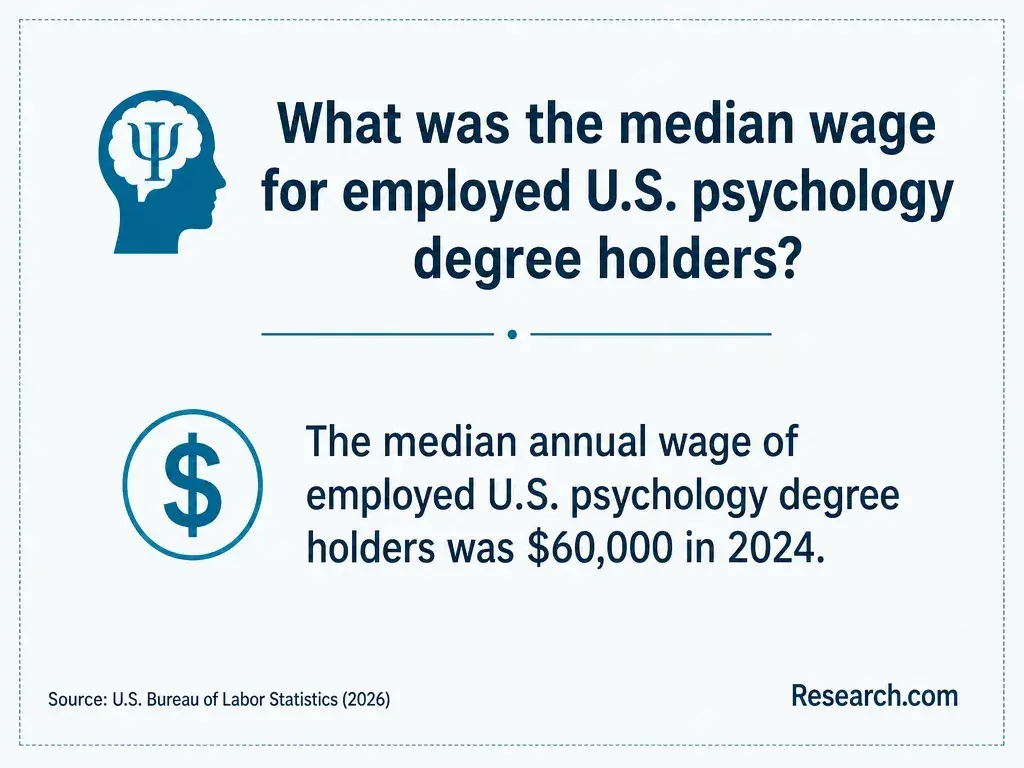
Judge likely earnings using the posted pay and requirements for the specific job in your location, not an occupation-wide wage presented as the expected salary of psychology graduates. Specialized fields can involve different graduate credentials and duties; graduate-level forensic psychology career research should not be read as an earnings forecast for an undergraduate mental-health focus. If you already have relevant service or administrative experience, ask employers whether targeted training would serve your goal without another full degree.
Not on the strength of the BA alone. Licensed mental health counseling generally requires a qualifying graduate education pathway and additional state-specific supervised experience and examinations. The exact degree, coursework, accreditation expectations, and title rules depend on the licensing jurisdiction. An undergraduate mental-health focus can provide useful academic preparation, but its courses and any nonclinical internship are not substitutes for required graduate clinical training.
Before paying for undergraduate courses solely to reach this career, identify the state where you intend to practice and check its licensing board's rules and the entry requirements of prospective graduate programs. If time is a major constraint, choosing an accredited accelerated clinical counseling pathway still requires scrutiny of supervised training, scheduling, and state eligibility; "online" and "accelerated" do not remove those obligations.
How Should You Compare Online Psychology BA Programs and Total Costs?
Request the same information from each finalist: a written transfer evaluation, a major-and-focus degree audit, an applicable tuition and fee schedule, and a feasible course plan. Price every remaining required course at that school's rate, then account for fees, expected terms, placement expenses if applicable, and confirmed aid. Keep uncertain substitutions out of your savings estimate until approved.
Favor the offer that advances your goal at a manageable remaining cost, not automatically the school accepting the most credits or advertising the lowest tuition rate. A school can accept many electives yet leave you with more major courses; another may accept fewer total credits but apply the right courses to requirements. If counseling is the destination, compare that BA decision with subsequent mental health counseling tuition and funding options. Ask an advisor to confirm the final plan before you commit, and keep copies of every approved exception.
Other Things You Should Know About Psychology
Possibly. Schools have different policies for transfer grades, institutional GPA, and major GPA. Ask the registrar which GPA calculations include the course.
It may, if the minor has an open requirement and permits that course. Ask for an updated audit before adding a minor; extra requirements can outweigh any benefit.
Sometimes. Obtain written preapproval for the exact course and its intended requirement, and check residency, concurrent-enrollment, and aid policies before registering.
Ask which catalog requirements govern your degree and whether a transition plan applies. Get any approved substitutions documented in your audit rather than relying on an informal assurance.
- School-Determined Requirements - FSA Partner Connect https://fsapartners.ed.gov/knowledge-center/fsa-handbook/2025-2026/vol1/ch1-school-determined-requirements
- Colleges and College Coursework | New York State Education Department https://www.nysed.gov/teaching-initiatives/colleges-and-college-coursework
- Eligibility Requirements | Federal Student Aid https://studentaid.gov/understand-aid/eligibility/requirements
- FAQs - Transfer Students | University of Cincinnati Admissions https://www.admissions.uc.edu/information/transfer/ts-faq.html
- Transfer Credits | CUNY BA https://cunyba.cuny.edu/transfer-credits/
- Psychology Program FAQs | University of La Verne https://health.laverne.edu/psychology/faq/
- Policies and Forms | Department of Psychological Sciences | UC Template 2014 https://psychology.uconn.edu/undergraduate/policies-and-forms/
- POL 02.05.09 - Transfer Credit Evaluation Policy | UNC Pembroke https://www.uncp.edu/about/administration/policies-procedures-reports/pol-02-05-09-transfer-credit-evaluation-policy.html
- Transfer Credit Guidelines | Undergraduate Admissions https://admissions.uconn.edu/apply/transfer/transfer-credit-guidelines/
- Transfer Credit Policy and Options | Concordia University Wisconsin Academic Catalog https://catalog.cuw.edu/undergraduate/university/non-traditional-approaches-to-earning-credit/