2027 Online BA in Psychology - Mental Health for Faith-Based Outreach Staff: What to Check Before Changing Careers
Audited and Verified:
Our Editorial and Data Verification Process
Research.com uses government datasets, official education statistics and primary institutional information to support its career and degree guides. Our review process checks factual accuracy, occupational definitions, source dates and the requirements associated with the credentials discussed.
How This Article Was Fact-Checked
Our editorial team verifies salary estimates, employment projections, education requirements and program information against original data providers and official organizations. Salary figures are checked against the relevant occupational definitions and reporting periods. Information about licensure, accreditation and required in-person training is reviewed separately.
Fact-checked and verified on:

Co-Founder and Chief Data Scientist
Faith-based outreach staff often already know how to build trust, listen without judgment, and connect people with community help. Moving into paid mental health work, however, may require different skills or credentials - and an online psychology BA is not always the shortest route.
This guide is for staff and volunteers weighing a career change. It explains which outreach roles a psychology degree can support, where clinical licensing changes the plan, and what to verify about an online program before committing time or money.
Key Things You Should Know
- An online psychology BA can strengthen preparation for nonclinical outreach, referrals, and program work; it does not authorize therapy, diagnosis, or independent assessment.
- Compare the degree with the target job first. Some support roles value supervised experience or a specific credential more than a psychology major.
- Many bachelor's programs are designed around roughly 120 semester credits, but transfer decisions, course scheduling, and placement rules determine your actual time and cost.
What Is an Online BA in Psychology for Faith-Based Mental Health Outreach?
It is a bachelor of arts degree studying behavior and psychological science through online coursework. A school may offer a general psychology major, a formal mental-health concentration, or simply relevant electives. Those are different academic offerings; none is a clinical credential.
For an outreach worker, the useful question is whether the degree fills a gap in the work they want to do. Developmental and social psychology can inform communication across ages and communities. Research methods can help staff assess whether a referral initiative is reaching people. Neither substitutes for training in crisis protocols, local services, or the organization's safeguarding procedures. Compare the curriculum with addiction psychology degree options for undergraduate students only if substance-use outreach is part of your intended role.
Is an Online Psychology Bachelor's Degree Accredited and Reputable?
Check that the institution holds recognized institutional accreditation and that it applies to the school awarding the online degree. Then examine the psychology curriculum, faculty access, course availability, student support, and published graduation requirements. Institutional accreditation does not prove that a particular concentration has strong placements or leads to a professional license.
The American Psychological Association does not accredit general psychology bachelor's programs. If a school advertises a path toward addiction counseling, check the relevant state credential rules separately; online colleges offering addiction counseling study may teach related subjects without conferring identical professional eligibility. Ask the school for its current catalog and written answers about any advertised concentration or field experience.
Can a Psychology Bachelor's Degree Lead to Licensed Mental Health Practice?
Not by itself. A psychology BA may help someone prepare for further study, but it does not authorize psychotherapy, diagnosis, or independent psychological assessment. Licensed counseling, clinical social work, and psychology follow distinct graduate-education, supervised-experience, examination, and state-board pathways.
If your goal is to provide therapy rather than coordinate outreach, identify the exact license and state before selecting an undergraduate major. Ask prospective graduate programs which bachelor's courses they require and ask the state board which professional-program standards apply. Speed is not a substitute for eligibility: accelerated counseling study and accreditation requirements deserve scrutiny alongside placements and supervision. A general psychology master's degree is not automatically a counseling license pathway either.
Existing outreach experience may translate into nonclinical work faster than the degree alone. The distinctions below help separate a familiar duty from a new employer's hiring requirements.
| Potential role | Relevant work | What to verify |
| Outreach or community health worker | Education, navigation, and connections to services | Employer training, language needs, and local certification rules |
| Intake or service coordinator | Scheduling, documenting needs, and arranging referrals | Required degree, privacy training, and supervision |
| Recovery-support worker | Nonclinical encouragement and connection to recovery resources | State peer or addiction-related credential requirements |
| Nonprofit program assistant | Volunteer coordination, reporting, and service evaluation | Data skills and grant-related responsibilities |
A psychology BA can supply evidence literacy and a broader knowledge of behavior, but employers may prioritize documented service experience, bilingual communication, or a role-specific credential. For substance-use services, review addiction recovery occupations and education before assuming that recovery support and addiction counseling have the same entry requirements.
Typical majors include introductory psychology, statistics, research methods, and courses in development, social behavior, biological processes, and psychological disorders. For outreach work, look for opportunities to study cultural context, health behavior, addiction, and ethical research - not just courses with "mental health" in the title. Statistics and methods are particularly useful when an organization needs to interpret a needs assessment or report program activity without overstating results.
Check whether relevant classes are required, optional, or part of a formally awarded concentration. A student drawn to victim services might also consider accelerating a forensic psychology bachelor's degree, but forensic coursework is not a substitute for the referral, safeguarding, and community-partnership skills central to mental health outreach.
Online study may let outreach staff remain employed, but "online" does not necessarily mean self-paced. Compare required live meetings, group projects, examination arrangements, faculty office hours, and any internship or campus visits. A campus program may make local research and agency contacts easier; an online program may be more workable if its support and scheduling match your shifts.
Ask whether your current organization could host an approved nonclinical project or placement. Employer willingness alone is insufficient: the school must approve the site, tasks, and supervision, and client information cannot become course material without appropriate permission. If graduate study is a later possibility, the scheduling cautions that apply to fast-paced master's study in psychology are a reminder to judge workload by actual deadlines, not the online label.
Schools set their own rules for first-year and transfer applicants, commonly requesting prior-school transcripts and evidence that institutional admission standards are met. A prior major outside psychology does not automatically prevent entry. Returning students should ask for a degree audit that shows not merely which credits are accepted, but which satisfy general education, psychology, statistics, and residency requirements.
Send transcripts before relying on an advertised completion estimate. If you have prior college work, compare policies on transferring college credits into a psychology degree, then obtain the admitting school's own evaluation. Ask whether a previous statistics course meets the major requirement and whether remaining required courses are offered often enough to support your schedule.
Time to completion depends on accepted credits, how those credits apply to the degree, enrollment pace, and course sequencing. A full-time student starting without college credit faces a different timetable from a returning outreach worker with applicable coursework. Accelerated psychology study for returning students is worth comparing only after a school shows how many requirements remain.
Request a written estimate covering tuition, mandatory fees, books or software, and any placement-related travel. Multiply the school's applicable per-credit charge by remaining credits, then add fees; do not treat an advertised per-credit rate as a total degree price. Also account for reduced work hours and ask whether employer education assistance applies. A shorter program is not cheaper if it accepts fewer useful credits or requires an unsustainable course load.
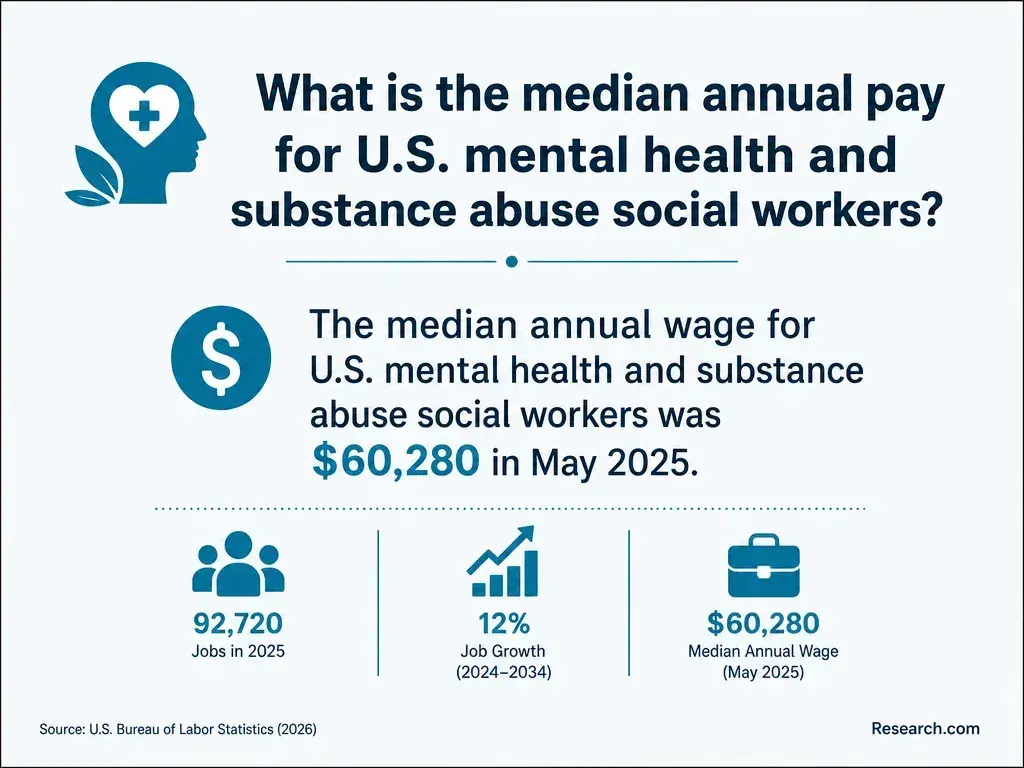
There is no single salary or employment-growth figure for "psychology BA graduates." The U.S. Bureau of Labor Statistics Occupational Outlook Handbook reports occupation-specific wages and projections, including for community health workers and social and human service assistants. Those figures describe people working in each occupation across varied educational backgrounds - not the starting pay or job prospects of graduates from a particular program.
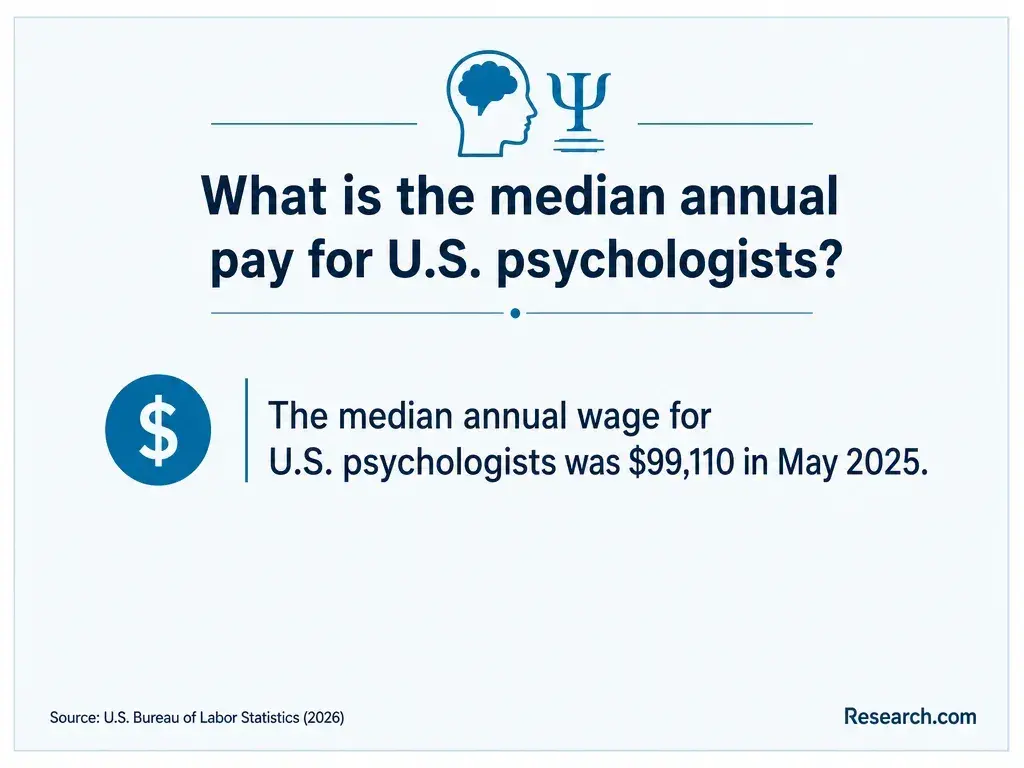
For a useful comparison, choose a job title from local postings, check its duties and required credentials, then compare the latest BLS occupation-wide median with local advertised pay. Do not use compensation associated with licensed clinicians - or a different specialization such as planning a forensic psychology master's in less than two years - to justify the cost of an outreach-focused BA. Ask your employer whether the degree would change your position or pay grade; advancement is not automatic.
How Can You Choose the Right Online Psychology Program for Faith-Based Outreach?
Start with the position you want, not a concentration's name. Collect several relevant job postings and separate their required degree, experience, and credentials from preferred qualifications. Then ask each school for a degree audit, current course schedule, complete cost estimate, and written placement policy.
A BA is a stronger choice if you need a bachelor's degree for your target jobs and want broad psychology and research preparation. If you already hold a suitable degree, supervised outreach experience or targeted training may address the missing skill more directly. If your destination is licensed counseling, compare the full qualifying graduate pathway and paying for an online mental health counseling degree before taking on undergraduate costs that may not be necessary.
Finally, discuss boundaries with a potential supervisor: who handles emergencies, who makes clinical referrals, how consent and confidentiality work, and how services remain accessible to people with different beliefs. A program that helps you answer those operational questions is more useful for a career change than one that relies chiefly on its mental-health branding.
Other Things You Should Know About Psychology
It may count with an employer, but document your duties, dates, supervision, and results. A school or credentialing body decides separately whether it meets any formal requirement.
Often, yes, when assignments allow relevant cultural or community context. Follow the course's evidence standards and distinguish personal beliefs from research findings.
Ask your organization which approved training and response protocol fit your role. Training can improve recognition and referral, but it does not confer clinical authority.
Potentially. The school and organization must agree on the project, supervision, and data permissions before work begins; access to outreach records should never be assumed.
- Frequently Asked Questions for Mental Health Counselors | nysed.gov https://www.op.nysed.gov/professions/mental-health-counselors/faqs-education-requirements
- Requirements Related to the Practice of Counseling - NCBI https://www.ncbi.nlm.nih.gov/books/NBK259170/
- Cost of Attendance (Budget) | 2025-2026 Federal Student Aid Handbook https://fsapartners.ed.gov/knowledge-center/fsa-handbook/2025-2026/vol3/ch2-cost-attendance-budget
- Types of Financial Aid: Grants, Work-Study, and Loans | studentaid.gov https://studentaid.gov/understand-aid/types
- DAPIP | Homepage - Office of Postsecondary Education (OPE) https://ope.ed.gov/dapip/
- Social Work Practicum Placements | Springfield College https://springfield.edu/graduate-programs/social-work/social-work-fieldwork
- Choosing a Program - APA Accreditation https://accreditation.apa.org/choosing-a-program
- Blog: 4 Careers that Blend Christianity and Social Work | baylor.edu https://socialwork.web.baylor.edu/blog-4-careers-blend-christianity-and-social-work
- The Importance of Ethics in Clinical Mental Health Counseling - Concordia University Irvine https://www.cui.edu/the-importance-of-ethics-in-clinical-mental-health-counseling/
- Can I Become a Counselor With a Bachelor's Degree? | George Fox University https://www.georgefox.edu/counseling-programs/articles/without-bachelors.html