2027 Online BA in Psychology - Mental Health for Community Needs Assessment: Which Courses Should You Look For?
Audited and Verified:
Our Editorial and Data Verification Process
Research.com uses government datasets, official education statistics and primary institutional information to support its career and degree guides. Our review process checks factual accuracy, occupational definitions, source dates and the requirements associated with the credentials discussed.
How This Article Was Fact-Checked
Our editorial team verifies salary estimates, employment projections, education requirements and program information against original data providers and official organizations. Salary figures are checked against the relevant occupational definitions and reporting periods. Information about licensure, accreditation and required in-person training is reviewed separately.
Fact-checked and verified on:

Co-Founder and Chief Data Scientist
A community mental health needs assessment can guide where a nonprofit, agency, or coalition directs limited resources - but only if the evidence reflects residents' priorities and the services already available. If you are considering an online BA in psychology for this work, the most useful courses may not be the ones with "mental health" in their names.
This guide shows how to evaluate methods, statistics, community-focused electives, and applied learning so you can choose a program that prepares you to investigate needs responsibly, not merely study disorders.
Key Things You Should Know
- Prioritize a sequence in research methods, statistics, and measurement, then add community psychology, public health, and qualitative methods where available.
- A typical bachelor's pathway takes four academic years of full-time study; transfer credit and course availability can change the timeline for completing the methods sequence.
- Look for a supervised, nonclinical project using authorized data and community input. A psychology BA does not qualify its holder to diagnose residents or provide therapy.
What Is an Online Bachelor's Degree in Psychology for Community Mental Health?
Usually, it is a psychology BA whose courses and projects can be directed toward community mental health, not a separate professional qualification. A community needs assessment identifies concerns residents consider important, barriers to getting help, existing supports, and gaps that an organization could address. Its unit of analysis is generally a population or service area - not an individual patient's diagnosis.
This distinction matters when comparing programs. A BA may offer a formal concentration, a few relevant electives, or no mental-health designation at all. For needs-assessment work, the strength of its research training and access to community-based projects can matter more than the concentration label. If your intended focus is substance-use services, compare the actual methods and prevention coursework behind addiction psychology BA and BS degree options rather than assuming either degree title provides counseling credentials.
Which Courses Should an Online Psychology Program Include?
Start with courses that let you define a community question, evaluate imperfect evidence, and explain findings without overstating them. The table separates the essential methods foundation from electives that make a needs assessment more useful to a local partner; course titles and availability vary by school.
| Course area | Contribution to a community needs assessment | Limitation to recognize |
| Research methods and ethics | Study design, sampling, consent, and the distinction between research and program evaluation | Completing a course does not itself authorize data collection |
| Statistics | Rates, group comparisons, uncertainty, and responsible interpretation of service-use data | Observed differences do not, by themselves, establish causes |
| Measurement or survey methods | Question wording, reliability, accessibility, and the fit between a measure and the question asked | A survey response or screening score is not a diagnosis |
| Community, social, and developmental psychology | Social context, stigma, lifespan differences, and the possibility that priorities vary across groups | Psychological theory cannot substitute for residents' accounts |
| Qualitative methods or program evaluation | Interviews, service mapping, and synthesis of findings for organizational decisions | Convenience samples and agency records may miss people who never seek services |
Abnormal psychology can provide vocabulary for discussing mental health, while public health, sociology, or policy electives can clarify access barriers and service systems. Neither should displace the methods foundation. Coursework connected to addiction recovery career paths may be useful if a partner serves people affected by substance use, but recovery support and clinical treatment are different responsibilities.
A strong sequence moves from introductory psychology and statistics into research methods, then measurement or qualitative inquiry, and finally an approved capstone or placement. Ask whether the advanced courses run often enough to fit your graduation plan. For an applied project, a useful final product might be a service map and an evidence brief that states whose perspectives were included, whose were missing, and what the organization still needs to learn.
Is an Online Psychology Bachelor's Degree Accredited?
Accreditation is not automatic because a program is online or calls itself a psychology degree. Check the institution's current accreditation with its recognized institutional accreditor, then confirm that the online BA is offered by that institution. The American Psychological Association does not accredit general psychology bachelor's programs; do not treat an "APA-accredited BA" claim as a substitute for checking the actual credential.
Accreditation also does not establish that a school offers survey methods, community partnerships, or an accessible capstone. When reviewing affordable online psychology degree programs, request the current catalog and ask who approves community projects, who supervises them, and whether students can work with an organization near home. Verify the policies for your intended entry term.
Online study can make lectures and readings easier to fit around agency work or caregiving. Campus study may make informal faculty meetings and local research-team participation easier. Neither format guarantees access to a community partner: an online student may still need scheduled interviews, live team meetings, or on-site supervision, while a campus student may need to arrange an external placement independently.
Ask for the actual timetable, not just an "asynchronous" label. Check whether methods courses have live group projects, whether a capstone can use publicly available data, and whether the school approves a project at your current workplace. If you are comparing an undergraduate route with an accelerated online graduate option, such as under-two-year forensic psychology graduate program options, keep the goals separate: a faster, specialized graduate program does not replace the undergraduate methods preparation needed to assess community service gaps.
Requirements differ for first-year and transfer applicants. Schools commonly request prior transcripts and proof of secondary-school completion or eligible prior college study; some admit students to the institution before they can declare the psychology major. A returning student should ask for a degree audit showing whether previous statistics and research courses satisfy major requirements, not merely whether their credits transfer.
Admission and funding are separate decisions. Completing an application does not establish financial-aid eligibility. Students considering an addiction-related undergraduate route can consult information on FAFSA and grants for substance abuse counseling students, then confirm eligibility, deadlines, and eligible enrollment with the prospective school's aid office. Before accepting an offer, obtain written answers about transfer equivalencies and the first term in which you can take the methods sequence.
A full-time bachelor's plan commonly spans four academic years, but an online format does not shorten required coursework. Transfer credit, part-time enrollment, prerequisites, and how often advanced methods and capstone courses run can change the finish date. A student who can take community psychology now but must wait for statistics before research methods should plan around the sequence, not the number of electives available.
Request a term-by-term degree plan showing when statistics, research methods, relevant electives, and an applied project are offered. If you are also considering a more occupation-specific undergraduate route, compare its course load and scheduling with substance abuse counseling bachelor's affordability and duration. The shorter advertised path is not necessarily the better fit for a research-oriented needs assessment.
Compare the cost to complete your remaining requirements, not just the advertised tuition rate. Include mandatory online fees, books or software, credits that do not apply to the degree, and any travel or reduced work hours associated with a project. Ask whether a community-based capstone has costs that a classroom-only course would not.
If your eventual goal is licensed counseling, budget for the qualifying graduate pathway rather than assuming the BA is the final expense. Guidance on evaluating the net cost of counseling education can help frame that later comparison. If your goal is solely to improve assessments at a current organization, an employer-funded methods course or evaluation certificate may be a less costly choice than another full degree.
For this goal, consider roles involving program support, outreach, intake coordination, research assistance, or evaluation support at a nonprofit or public agency. Actual eligibility depends on the employer and your experience. A graduate might help compile public indicators, document referral pathways, organize authorized interviews, or prepare a plain-language brief; they should not infer diagnoses from those activities.
Choose experience that demonstrates the work you want to do: careful documentation, respectful community engagement, data cleaning, and communication of limitations. If you are considering a later specialty, forensic psychology master's degree career return considerations illustrate why a specialized degree should be evaluated against specific job duties, not an appealing title. It is a different decision from preparing to assess community mental health needs.
There is no single salary or job-growth figure for "psychology BA graduates." A research assistant, a social and human service assistant, and a program coordinator have different duties and may fall under different occupational classifications. The US Bureau of Labor Statistics Occupational Outlook Handbook reports wages and projections by occupation, not by undergraduate major; its figures should not be presented as a new graduate's expected pay.
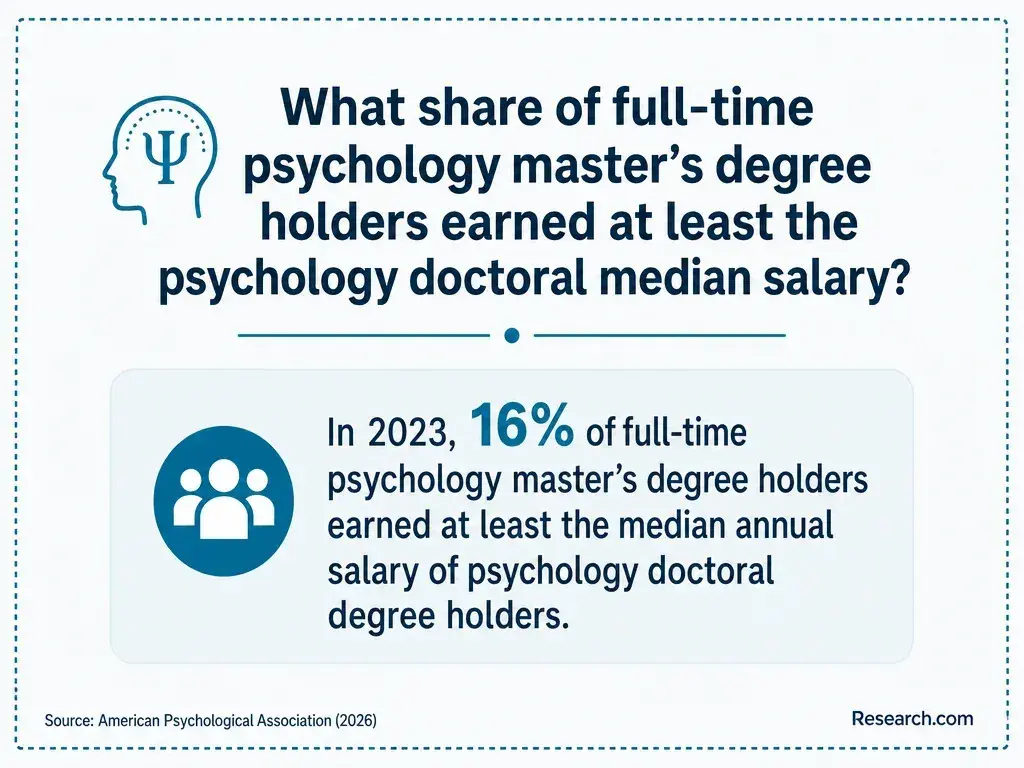
For a realistic comparison, collect local postings for the job you want, note the required degree and experience, and compare the pay with your remaining education costs. A cost-conscious option for a psychology master's is worth exploring only if the target positions value that additional training; a master's does not automatically raise pay or provide clinical authority.
Does a Psychology Bachelor's Degree Lead to Mental Health Licensure?
No. A psychology BA, including one with mental-health or addictions electives, does not by itself qualify someone to diagnose conditions, provide psychotherapy, or practice independently as a psychologist. State rules and the target occupation determine any required professional degree, supervised experience, examination, and license or certification. Needs-assessment coursework prepares students to study community conditions, not to conduct clinical assessment.
If your intended work is treatment rather than service planning, compare qualifying professional programs and the rules of the state where you hope to practice. Even short-duration counseling master's return on investment should be judged against verified licensure-related education and fieldwork requirements, not speed alone. For a nonclinical community role, supervised experience and targeted evaluation training may be more directly useful.
Other Things You Should Know About Psychology
It can be a useful starting point, especially when a student lacks access to agency records. Public figures may not reveal why residents avoid services, however, so state what they cannot answer and seek approved community input if the project allows it.
No. Depending on the question and available permissions, a service map, review of existing reports, interviews, or a combination may be more appropriate. A survey is useful only when its questions, recruitment, and accessibility fit the intended population.
Work with an approved partner to identify whose views are missing, explain how input will be used, and offer accessible ways to participate. Do not imply that a small or self-selected group speaks for the whole community.
Only within the school's and partner's permissions. A public-facing brief or carefully redacted portfolio sample can show your methods and reasoning without exposing identifiable information, confidential records, or unpublished organizational findings.
- Qualitative and Quantitative Assessment Methods | samhsa.gov https://www.samhsa.gov/substance-use/drug-free-workplace/employer-resources/toolkit/assessment-methods
- Human Research Protection Training | hhs.gov https://www.hhs.gov/ohrp/education-and-outreach/human-research-protection-training/index.html
- Social Determinants of Health | Public Health Infrastructure Center | CDC https://www.cdc.gov/infrastructure/public-health-systems-emerging-practices/social-determinants-of-health.html
- The social determinants of mental health and disorder - PMC https://pmc.ncbi.nlm.nih.gov/articles/PMC10786006/
- ICJIA | A Guide to Conducting Focus Groups https://icjia.illinois.gov/researchhub/articles/a-guide-to-conducting-focus-groups/
- Requirements Related to the Practice of Counseling - NCBI https://www.ncbi.nlm.nih.gov/books/NBK259170/
- Social Determinants of Health - Healthy People 2030 https://odphp.health.gov/healthypeople/priority-areas/social-determinants-health
- Research Ethics and Informed Consent | Educational Research Basics by Del Siegle https://researchbasics.education.uconn.edu/ethics-and-informed-consent/
- Guidance on Conducting Research Involving Mental Health Topics | Committee on the Use of Humans as Experimental Subjects https://couhes.mit.edu/guidelines/guidance-conducting-research-involving-mental-health-topics
- Content Analysis Method and Examples | Columbia University Mailman School of Public Health https://www.publichealth.columbia.edu/research/population-health-methods/content-analysis