
2027 Online BA in Psychology - General Psychology After an AA in Social Sciences: Compare Transfer Credit and Remaining Coursework
Audited and Verified:
Our Editorial and Data Verification Process
Research.com uses government datasets, official education statistics and primary institutional information to support its career and degree guides. Our review process checks factual accuracy, occupational definitions, source dates and the requirements associated with the credentials discussed.
How This Article Was Fact-Checked
Our editorial team verifies salary estimates, employment projections, education requirements and program information against original data providers and official organizations. Salary figures are checked against the relevant occupational definitions and reporting periods. Information about licensure, accreditation and required in-person training is reviewed separately.
Fact-checked and verified on:

Co-Founder and Chief Data Scientist
An AA in Social Sciences can provide a strong start toward an online BA in General Psychology, but transferring credits and finishing sooner are not the same thing. A college may accept a course without applying it to the psychology major, leaving you with unexpected prerequisites or upper-level requirements.
This guide shows returning and transfer students how to compare degree audits, identify remaining coursework, estimate time and cost, and decide whether the BA supports their next academic or career goal.
Key Things You Should Know
- Use a planning example of a 120-credit BA and 60 accepted AA credits: 60 credits would remain only if all 60 count toward the degree and no other requirement adds coursework.
- Compare where each course applies, not just the transfer total. Statistics, research methods, upper-level psychology, and credits that must be earned at the university can determine your actual finish line.
- Request a written, program-specific degree audit before committing. The receiving university decides course equivalencies, substitutions, remaining requirements, and graduation eligibility.
What Is an Online BA in Psychology After an AA in Social Sciences?
This pathway combines prior associate-level study, often general education and courses such as sociology, political science, or introductory psychology, with the remaining requirements for a bachelor of arts in psychology.
"General psychology" usually means a broad major rather than a clinical credential or a guaranteed formal concentration. The university awards the BA after you meet its entire degree plan, including requirements your AA did not cover.
The fit depends on your goal. General psychology can leave room for research, human-services, or graduate-school preparation. If you specifically need coursework for an addiction counseling credential, compare the BA against your state's rules and an addiction counseling program selection guide; a broad psychology major may not contain the required training or supervised hours.
How Many Social Sciences Associate Credits Transfer to an Online Psychology BA?
There is no universal AA-to-BA credit award. The receiving university evaluates the issuing college, individual courses, grades, credit system, and any transfer agreement. An AA designed for transfer may align well with general education, but its title alone does not establish psychology-major equivalencies.
The distinctions below explain why the largest advertised transfer allowance is not necessarily the shortest route to graduation.
| Audit result | What it means for the BA |
| Credit accepted | The course adds to your university credit total but may count only as a free elective. |
| Requirement satisfied | The course fills a named general education, prerequisite, or psychology-major requirement. |
| Credit not accepted | The course adds no degree credit; ask whether documentation or an appeal could change the decision. |
| Credit accepted but limited | A transfer cap, duplicate-credit rule, upper-level requirement, or university residency rule may restrict its value toward graduation. |
For a concrete comparison, suppose a BA requires 120 credits and a university accepts 60 from your AA. Subtraction suggests 60 remaining, but that is only a planning example: required courses and where those credits apply control the real total.
If you are comparing a general BA with a specialized option, examine the separate major maps for addiction psychology BA and BS degree options rather than assuming the same AA courses fulfill both.
Send official transcripts and, for disputed courses, syllabi showing topics, assignments, and credit hours. Ask the transfer-credit office to evaluate equivalencies and a psychology advisor to confirm their application to the major. Obtain the resulting degree audit in writing.
What Coursework Remains After Transferring an AA in Social Sciences?
Many AA graduates have already covered substantial general education, while psychology-specific and upper-level work remains. A receiving school's audit should separate unmet requirements from credits that transfer only as electives.
This matters most for statistics and research methods: a general math course may not replace statistics, and a sociology methods course may require individual review before it can replace psychology research methods.
The remaining plan commonly falls into several categories, though the exact courses and credit levels vary by university:
- Psychology foundations: introductory psychology if not already satisfied, plus required breadth courses such as developmental, social, biological, or cognitive psychology.
- Methods sequence: statistics and research methods, sometimes with minimum grades or a required order.
- Advanced major work: upper-level psychology electives and, where required, a seminar, research project, or capstone.
- Other degree requirements: unfinished general education, a language requirement if applicable, minimum upper-level credits, and credits that must be completed at the awarding university.
Request an audit that identifies each unmet requirement and the term in which its next course is offered. A popular elective that uses your remaining credit space is less valuable than a required prerequisite that unlocks several later courses.
Specialized majors can also change that sequence; articles on forensic psychology undergraduate graduation timelines illustrate why a concentration's course map should be checked separately from a general psychology plan.
Completion time depends on the audited requirements, how many courses you can take per term, and whether prerequisites and upper-level courses are offered when you need them. In the 120-credit, 60-applicable-credit planning example, 60 credits remain; that does not establish a graduation date. A statistics-to-methods-to-capstone sequence, limited course offerings, or a lower course load can extend the schedule.
Ask the department for a term-by-term plan showing required courses, prerequisites, and likely availability. If you work or provide care, check whether "online" courses are asynchronous, whether exams or group meetings occur at set times, and whether a project or internship has scheduled obligations.
An accelerated psychology curriculum planning comparison can be useful, but a shorter academic calendar helps only if your transfer credits fit the sequence and the pace is sustainable.
Universities typically ask transfer applicants for an application and official college transcripts; some specify a minimum transferable-credit total or GPA. Admission to the university does not necessarily mean admission to the psychology major, approval of particular equivalencies, or eligibility to graduate on a proposed schedule. Requirements can differ by school and entry term.
Before applying, confirm whether the program accepts your AA institution's credits, requires a separate major application, imposes minimum grades for psychology or statistics, and offers the BA fully online to students in your state. Ask when you will receive an official transfer evaluation rather than relying on an informal estimate.
When comparing online psychology study and degree choices, request the same admissions and audit information from each school so the offers are comparable.
A general psychology BA usually combines disciplinary breadth with training in how psychological claims are tested. Depending on the catalog, courses may address development, learning, cognition, social behavior, personality, biological foundations, and psychopathology as an academic subject. Statistics and research methods teach students to evaluate evidence; they do not authorize clinical assessment or diagnosis.
Use elective space deliberately. For research-oriented graduate study, prioritize methods, statistics, substantial writing, and access to a supervised research project if available. For nonclinical community work, courses on development, social behavior, and ethical interaction may be useful alongside actual service experience.
If graduate study is your goal, compare the BA's preparation with the prerequisites of specific programs rather than assuming that fast-track graduate psychology programs accept identical undergraduate courses.
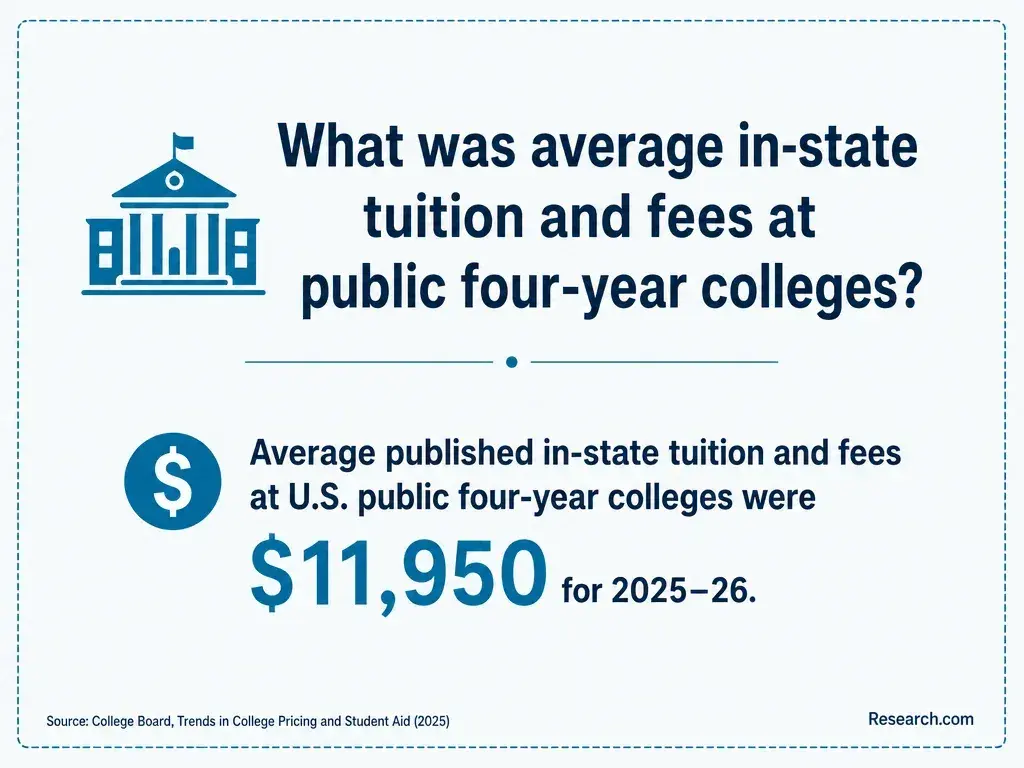
Your cost depends chiefly on the credits you must still take at the university, its published tuition and mandatory fees, and your enrollment pattern.
An accepted AA credit saves money only if it replaces coursework you otherwise would have paid to complete. Extra terms, repeated prerequisites, textbooks, technology charges, and any approved placement travel can change the comparison.
Build estimates from each school's written audit and current charges. The following components belong in the comparison rather than a single advertised tuition figure:
- Tuition for required remaining credits, using the rate that applies to your residency and online enrollment status.
- Mandatory course or term fees, materials, and any travel or placement expenses the program requires.
- Potential aid, employer assistance, and the effect of your planned course load on aid eligibility.
Ask the financial aid office to explain eligibility under your actual schedule; do not treat an aid estimate as guaranteed funding. A guide to financial aid planning for a substance use counseling bachelor's can offer questions to consider, but verify the rules and awards for your own psychology BA.
Check the university's current institutional accreditation and confirm that it covers the institution awarding the online degree. Do not look for APA accreditation as a general BA requirement: APA accreditation applies to specified professional psychology training programs, not ordinary undergraduate psychology majors.
An online BA in psychology does not, by itself, qualify someone to practice as a licensed psychologist, diagnose conditions, or provide psychotherapy. It may provide academic preparation for later applications, but the qualifying graduate program, supervised training, examinations, and other requirements depend on the profession and state.
If counseling is your intended destination, compare the BA with the admissions prerequisites and credential pathway of actual counseling programs, including shorter accredited clinical mental health counseling study plans. Verify any proposed pathway with the relevant state board before enrolling.
A psychology BA can support applications for nonclinical positions such as human-services assistant, program coordinator, intake or referral support worker, research support staff member, or roles involving training and community outreach. Hiring depends on the employer's stated qualifications and your experience, not the degree title alone.
AA coursework in sociology or related fields may already provide useful context for community-facing work; a BA can add research literacy and advanced study.
Check job postings for the duties you want to perform, then use electives, employment, or an approved internship to address specific gaps such as data handling, documentation, or service coordination. In recovery services, for example, support and referral duties differ from licensed or certified counseling.
Understanding career progression in addiction recovery can help distinguish those roles, while your state's credential rules and employers determine actual eligibility.
How Much Can You Earn With a Bachelor's Degree in Psychology?
There is no single salary for psychology BA graduates. Pay depends on the occupation, location, employer, experience, and whether a role requires additional credentials. For an evidence-based estimate, identify jobs you could realistically enter, then compare current local postings with the U.S. Bureau of Labor Statistics wage data for each specific occupation. An occupation-wide median is not a starting-salary offer or a measured outcome of an online BA.
Evaluate earnings against the written cost and time estimates for completing your degree. If your target job requires a counseling master's and licensure, include that subsequent education and supervised training in the decision; do not count a counselor's pay as the immediate return on a BA.
Even faster-paced online mental health counseling master's study is a separate investment with its own admission and professional requirements. If the roles you want accept your existing AA plus experience, targeted training may be the less costly next step.
Other Things You Should Know About Psychology Programs
Possibly. Get written approval before enrolling so you know whether the course will transfer, satisfy the intended requirement, and comply with any residency rule. Ask the financial aid office how taking courses at two schools affects aid.
Usually, the BA diploma identifies the bachelor's degree awarded by the university, not your prior associate degree. The AA remains a separate credential on your academic record; confirm diploma wording with the university.
That depends on whether the university offers both degrees and their different requirements. Request a new audit first: a BS may require additional science, math, or laboratory coursework that your AA did not cover.
Some universities accept approved exams for specified general education or elective requirements. Ask for the current exam-equivalency policy and confirm whether exam credit can satisfy the particular remaining requirement; it may not replace upper-level psychology coursework.
- School-Determined Requirements - FSA Partner Connect https://fsapartners.ed.gov/knowledge-center/fsa-handbook/2025-2026/vol1/ch1-school-determined-requirements
- How Many Credits Do You Need to Graduate College? | snhu.edu https://www.snhu.edu/about-us/newsroom/education/how-many-credits-to-graduate-college
- Major Requirements: Undergraduate Program | rochester.edu https://www.sas.rochester.edu/psy/undergraduate/major.html
- General Education and Course Requirements | Valencia College https://catalog.valenciacollege.edu/degrees/associateinarts/courserequirements/
- NC Community College Transfer Students - UNC System https://www.northcarolina.edu/students/transfer/ncccs/
- Transfer JCC-to-Fredonia: Psychology (Social Sciences), A.A. to Psychology, B.A. Sample Degree Map | Fredonia.edu https://www.fredonia.edu/transfer-path/jcc-fredonia-psychology-ba
- Undergraduate Degree Requirements - UNC Catalog https://catalog.unc.edu/undergraduate/degree-requirements/
- Psychology Requirements | Rutgers University https://psych.rutgers.edu/academics/undergraduate/major


