2027 Online MS in Psychology - Forensic Psychology for Academic Advising Assistants: What to Check Before Changing Careers
Audited and Verified:
Our Editorial and Data Verification Process
Research.com uses government datasets, official education statistics and primary institutional information to support its career and degree guides. Our review process checks factual accuracy, occupational definitions, source dates and the requirements associated with the credentials discussed.
How This Article Was Fact-Checked
Our editorial team verifies salary estimates, employment projections, education requirements and program information against original data providers and official organizations. Salary figures are checked against the relevant occupational definitions and reporting periods. Information about licensure, accreditation and required in-person training is reviewed separately.
Fact-checked and verified on:

Co-Founder and Chief Data Scientist
Academic advising assistants already know how to explain requirements, protect student information, and help people navigate stressful decisions. An online MS in forensic psychology may build on those skills - but it is not a direct route from advising to clinical or investigative authority. Before changing careers, you need to know which justice-related jobs interest you, whether employers value this particular degree, and what study would cost alongside your current work. This guide helps you test those questions against program requirements, realistic job duties, and less expensive routes to your goal.
Key Things You Should Know
- An online forensic psychology MS is generally a nonclinical degree; it does not, by itself, qualify you to practice as a licensed forensic psychologist.
- Your advising experience may transfer to case coordination, student or community support, and program administration, but justice-system roles may also require agency experience, screening, or a different credential.
- Compare the full cost and required fieldwork with actual job postings before enrolling; the degree title alone cannot establish a salary gain or career-switching timeline.
What Is an Online MS in Forensic Psychology?
An online MS in forensic psychology is graduate study of psychological science as it relates to law and legal systems. Depending on the school, it may emphasize research, behavior in justice settings, victim services, corrections, or policy. Forensic describes the subject matter, not a professional license or permission to conduct criminal investigations.
For an academic advising assistant, the useful question is whether the program develops skills that a target employer needs beyond your existing strengths in communication, documentation, referrals, and policy interpretation. Compare the exact curriculum and award - not just the concentration label. A broader online psychology degree selection guide can help frame the difference between a psychology degree and a specialized track.
Does an Online Forensic Psychology Master's Degree Lead to Licensure?
Usually, a nonclinical forensic psychology MS does not independently lead to psychologist licensure. Licensed forensic psychologists typically complete qualifying doctoral training and jurisdiction-specific supervised experience and examinations.
A course on assessment, psychopathology, or expert testimony does not authorize its graduate to diagnose, conduct independent forensic evaluations, provide psychotherapy, or use a protected professional title.
If your goal is therapy with justice-involved clients, investigate a degree specifically designed for the applicable counseling or social-work license and check your state board's educational rules before applying.
Lower-cost accredited counseling degree pathways are a more relevant comparison for that goal than a nonclinical MS with forensic electives. If your goal is licensed psychological evaluation, ask prospective doctoral programs whether any master's coursework would count; do not assume it will.
What Careers Can You Pursue With a Forensic Psychology Master's?
A plausible transition depends on the job's duties, not whether its title sounds forensic. Your advising background may be valuable where the work involves explaining processes, coordinating referrals, maintaining records, or helping people access services. Employers may still require direct service experience, background checks, agency-specific training, or a particular credential.
The distinctions below can keep a career search focused on attainable responsibilities rather than a degree label.
| Target work | Transferable advising skill | Gap to check |
| Victim-services or court-program support | Resource navigation and sensitive communication | Trauma-informed practice, local procedures, and supervised service experience |
| Justice-agency case coordination | Documentation and follow-up | Agency eligibility rules, safety procedures, and client-service experience |
| Research or program evaluation | Policy interpretation and reporting | Statistics, research methods, and evidence of data-handling skill |
| Licensed forensic evaluation | Limited direct overlap | Qualifying professional education, licensure, and specialized supervised training |
If your interest is supporting people affected by substance use, compare the duties and credentials described in career choices across recovery service settings. A recovery-support role and an independent clinical role have different entry requirements.
Online delivery may let you remain employed in advising, but it does not necessarily mean self-paced study. Live classes, group research, scheduled supervision, campus visits, and approved placements can conflict with advising's enrollment-season workload.
Campus programs may offer easier access to local faculty projects and agency relationships, while online programs may offer a wider geographic choice; neither advantage is guaranteed.
Ask each program for a sample term schedule and its placement rules. Check whether it will approve an experience near you, who finds the site, and whether your current job could satisfy any requirement with advance approval.
If you still need a bachelor's degree, compare faster forensic psychology undergraduate options separately: an accelerated bachelor's pathway does not establish the pace or eligibility rules of a master's program.
Coursework varies, but programs may combine psychological research methods and statistics with psychology-and-law topics, ethics, victimology, corrections, or behavior in legal settings. Some require a thesis, capstone, or supervised applied project.
Read the course descriptions and requirements: a program heavy on legal-context theory may not give you the data-analysis practice needed for evaluation jobs, while a research-intensive program may offer little direct service preparation.
Look for assignments that produce evidence of job-relevant skill, such as a literature review, an appropriately authorized program-evaluation plan, or a clearly written policy brief. Do not presume access to identifiable student or client records for coursework. If substance-use services are your actual destination, online study options for addiction counseling may align more closely with that work, subject to your state's credential rules.
Programs commonly evaluate an accredited bachelor's degree, academic record, application statement, and recommendations, but psychology-course prerequisites, statistics preparation, tests, and experience requirements vary.
An education or another non-psychology major does not automatically exclude an advising assistant. Your statement should connect documented advising responsibilities to a specific nonclinical goal while acknowledging the new skills you need.
Before paying an application fee, request the program's current prerequisite list and ask whether previously completed statistics or psychology courses qualify. If you have not finished a bachelor's degree, accelerated undergraduate psychology program choices may be worth comparing; obtain an official credit evaluation before estimating the remaining time or cost.
There is no dependable universal price or completion time: credit requirements, tuition rates, term schedules, enrollment pace, and project or placement obligations differ by school.
For a working adviser, the important figure is the cost of a schedule you can actually sustain, not the fastest advertised finish. Graduate psychology degrees with accelerated schedules can provide comparison points, but confirm whether their pace leaves room for your job and any required fieldwork.
Build a written estimate using the program's current charges and your planned pace. Include tuition, mandatory fees, books or software, travel, any unpaid placement time, and additional terms if a required course is not offered when you need it.
Ask your employer whether education assistance applies to this degree and whether it carries a service commitment. Compare that total with targeted coursework or supervised experience if the job postings you want do not require a master's.
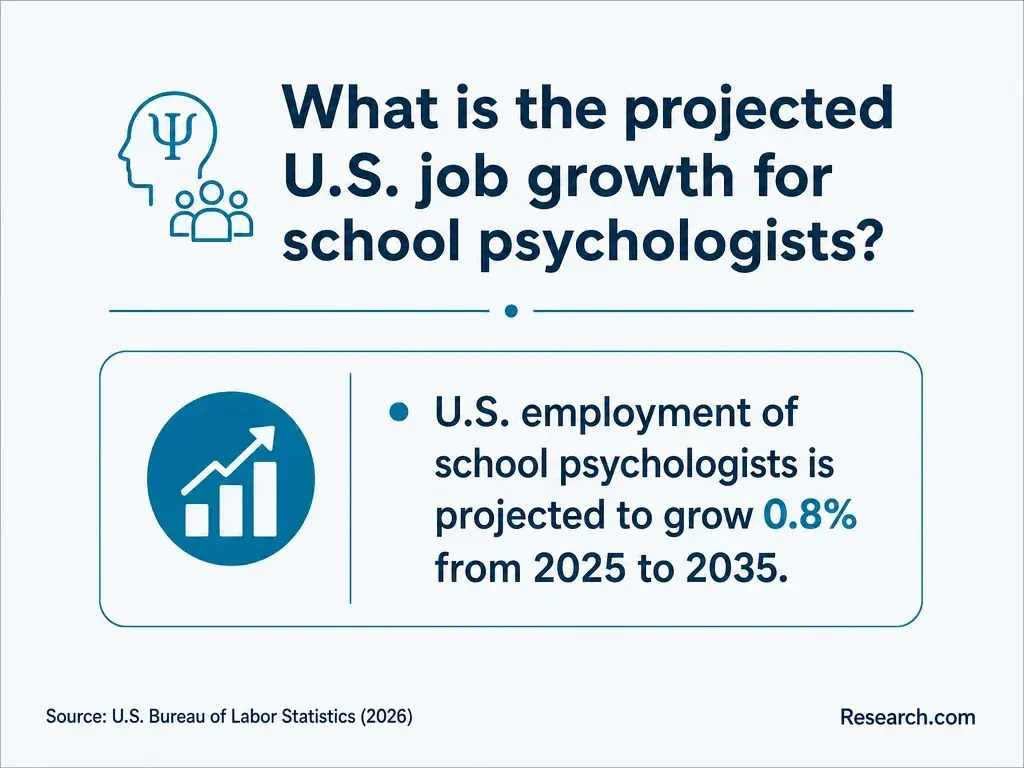
There is no single salary or employment projection for forensic psychology MS graduates. The U.S. Bureau of Labor Statistics reports wages and outlook by occupation, not by master's concentration. Its psychologist figures concern an occupation with substantially different entry and licensure requirements; they should not be used as an earnings forecast for a nonclinical master's graduate.
For a useful comparison, collect local postings for one target role, record their stated pay ranges and required qualifications, and compare them with your present compensation and the degree's full cost.
Public agencies may have fixed pay grades, so additional education may not change starting pay. If clinical counseling is your intended career, clinical counseling master's duration and earning potential is a separate comparison; counselor labor-market figures should not be attributed to forensic psychology graduates.
First, verify the institution's accreditation through the accreditor and the U.S. Department of Education's recognition information. Then check whether any program-specific accreditation matters for your intended credential. The American Psychological Association does not generally accredit standalone, nonclinical forensic psychology master's programs; institutional accreditation does not make such a degree licensure-qualifying.
Accreditation is also distinct from financial-aid eligibility and professional acceptance. Confirm the school's aid status with its financial-aid office and any occupational requirements with the relevant board or employer. The distinctions are similarly important when using online substance use counseling bachelor's aid resources: funding information cannot establish that a program meets a particular state's credential standards.
How Can You Choose a Reputable Online Forensic Psychology Program?
Start with a short list of jobs you would accept, including their actual duties and minimum qualifications. Then ask programs for the current catalog, total required credits, a typical course schedule, placement and project rules, faculty research areas, career services, and any outcomes reported specifically for this degree.
Treat broad claims about "forensic careers" cautiously if they do not identify graduates' jobs or explain how outcomes were collected. Before committing, speak with a hiring manager or practitioner in your target setting about whether the MS would improve your candidacy over advising experience plus targeted training.
If you lack a bachelor's degree and prefer direct support work, comparing the financial value of addiction counseling bachelor's study may be more useful than planning immediately for a forensic master's. If you already hold a bachelor's, compare the MS with relevant agency experience or methods training rather than enrolling solely for its title.
Other Things You Should Know About Psychology
It may strengthen an application, especially for coordination or research tasks. The host site and your program must still approve your duties and supervision; advising experience is not automatically equivalent to a placement.
That is your decision. If you want tuition assistance, a schedule adjustment, or a workplace project, first check the relevant policies and consider what you need to disclose to request support.
Not without the required permissions and privacy protections. A project proposal, public-data analysis, or authorized, appropriately redacted work sample may be safer; follow institutional rules before sharing any material.
Arrange informational interviews and compare several actual postings before selecting a degree. The qualifications for advocacy, agency administration, research, and licensed practice can differ substantially.
- Victim Services Careers | fbijobs.gov https://www.fbijobs.gov/victim-services
- Cost of Attendance (Budget) | 2025-2026 Federal Student Aid Handbook https://fsapartners.ed.gov/knowledge-center/fsa-handbook/2025-2026/vol3/ch2-cost-attendance-budget
- What Is Risk Assessment | PSRAC | Bureau of Justice Assistance https://bja.ojp.gov/program/psrac/basics/what-is-risk-assessment
- Training, practice, and career considerations in forensic... - PMC https://pmc.ncbi.nlm.nih.gov/articles/PMC11638730/
- Frequently Asked Questions - California Board of Psychology https://www.psychology.ca.gov/licensees/faq.shtml
- License by Examination | Florida Board of Psychology https://floridaspsychology.gov/psychologist/
- Practicums, Internships and Projects What's the Difference? | Oregon State University https://health.oregonstate.edu/internships/types-of-experiential-learning
- A Career in Forensic and Public Service Psychology | apa.org https://www.apa.org/education-career/guide/subfields/forensic/education-training
- Cost of Attendance | Cal State LA https://www.calstatela.edu/financialaid/cost-attendance
- Placement Process FAQ | Syracuse University Online Master's Programs https://onlinegrad.syracuse.edu/social-work/admitted/field-faq/