2027 Online MS in Psychology - Forensic Psychology After a BS in Emergency Management: Compare Prerequisites and Admission Options
Audited and Verified:
Our Editorial and Data Verification Process
Research.com uses government datasets, official education statistics and primary institutional information to support its career and degree guides. Our review process checks factual accuracy, occupational definitions, source dates and the requirements associated with the credentials discussed.
How This Article Was Fact-Checked
Our editorial team verifies salary estimates, employment projections, education requirements and program information against original data providers and official organizations. Salary figures are checked against the relevant occupational definitions and reporting periods. Information about licensure, accreditation and required in-person training is reviewed separately.
Fact-checked and verified on:

Co-Founder and Chief Data Scientist
A BS in emergency management can prepare you to work across agencies, assess risk, and coordinate responses - but it may leave gaps in psychological science. If you are considering an online MS in forensic psychology, the immediate decision is whether programs will admit you as you are, require prerequisite courses, or offer a bridge into graduate study. This guide shows you how to compare those options, identify useful preparation, and judge whether the degree fits your intended work in justice settings, victim services, research, or another field.
Key Things You Should Know
- An emergency management bachelor's degree does not automatically bar admission; the graduate program decides which prior degrees and courses it accepts.
- Check three potential preparation gaps first: introductory psychology, statistics, and research methods. They may be requirements, recommended preparation, or courses you can complete before enrollment.
- A forensic psychology MS is generally an academic or nonclinical credential - not a psychologist license. Compare its full cost with the qualifications required for your target job.
What is an online forensic psychology master's degree after a bachelor's in emergency management?
An online forensic psychology master's studies psychological science in legal and justice-related contexts. Depending on the program, it may emphasize research on decision-making and behavior, victimization, corrections, public safety, or how psychological evidence is interpreted. The degree title does not establish a standard curriculum or professional qualification.
Emergency management provides a distinctive starting point: you may already understand interagency operations, crisis communication, planning, and the consequences of high-stakes decisions. Graduate psychology adds a different lens - how to formulate behavioral questions, assess research evidence, and avoid overclaiming what observations or screening tools show. That combination may be especially useful in nonclinical public-sector work, but it does not confer investigative authority or clinical competence.
If you have already completed a bachelor's degree, compare graduate admission and individual prerequisite courses before considering another undergraduate degree. Reviewing online bachelor's program choices in psychology is more relevant if you discover that you want broad undergraduate preparation rather than a narrowly focused master's.
Can you enter an online forensic psychology master's program with an emergency management degree?
Yes, potentially. Some programs accept bachelor's graduates from varied majors; others specify psychology coursework or a closely related academic background. Admission eligibility, a strong application, and readiness for graduate research are separate judgments. Your BS may demonstrate relevant justice-system or public-safety experience without satisfying a required psychology course.
Use the current admissions page for each program to distinguish its policy from your assumptions. Ask admissions staff to review your transcript and identify, in writing, whether you qualify for direct admission, may apply while finishing prerequisites, or must complete specified courses before applying. Also ask who evaluates substitutions: an emergency management course on crisis response, for example, should not be assumed equivalent to abnormal psychology or psychological research methods.
In your application, connect specific work or coursework to a focused goal, such as evaluating victim-service referrals or studying decision-making in emergency response. Explain what you still need to learn rather than presenting operational experience as clinical training. If you are considering a second bachelor's solely because it has a forensic label, compare that investment with direct graduate-entry options first; faster online forensic psychology degree completion addresses a different decision from admission with an existing BS.
What prerequisites are required for an online master's in forensic psychology?
There is no universal prerequisite list. A program may require a bachelor's from an appropriately accredited institution, a minimum GPA, specific courses, or application materials such as recommendations and a statement of purpose. Others describe psychology and quantitative study as preferred rather than mandatory. Verify requirements for your intended entry term, including whether a course must be completed before application or before enrollment.
This comparison separates common admissions questions from preparation that can make the coursework more manageable. It is not a list of requirements imposed by every program.
| Preparation area | Why it matters for an emergency management graduate | What to verify |
| Introductory psychology | Establishes terminology and major approaches to behavior | Required course, recommended background, or graduate bridge? |
| Statistics and research methods | Supports evaluation of evidence, study design, and claims about risk | Required credits, acceptable equivalents, and any course-recency rule? |
| Developmental, social, or abnormal psychology | May support specialized coursework without providing clinical training | Which courses, if any, are formal prerequisites? |
| Professional and academic evidence | Shows writing, ethical judgment, and a coherent reason for the transition | Required essays, references, experience, tests, or interviews? |
A practical sequence is to gather syllabi and transcripts, request a program-specific review, then take only the missing courses the program will accept. Community college or nondegree university study may be an option, but confirm the provider and credit level first. If you already hold associate-level coursework, guidance on applying associate-level credits to psychology study can help you frame questions about equivalency; the master's program still makes the admissions decision.
Delivery format changes access, not the academic standard you should expect. Online study may let you remain employed in emergency management, while campus study may make in-person faculty contact or local agency connections easier. Neither format guarantees research mentorship, a placement, or scheduling flexibility.
The distinctions below are useful when two programs appear similar on curriculum. Confirm the actual schedule and experience requirements rather than relying on an "online" or "campus" label.
| Decision factor | Online program | Campus-based program |
| Class schedule | May be asynchronous, live, or mixed | Typically tied to scheduled meetings |
| Applied experience | May require student-arranged local work or visits | May offer nearby partnerships, without guaranteeing placement |
| Research access | Depends on remote supervision, data access, and faculty availability | May permit more on-site collaboration |
| Additional costs | May include technology, travel, or local placement expenses | May include commuting, relocation, or reduced work hours |
Ask whether live meetings, group projects, a thesis defense, residencies, or fieldwork could conflict with shifts or incident-response duties. If your interests are moving toward addiction-related study instead, distance learning bachelor's degrees in addiction psychology illustrate a different academic starting point; an existing bachelor's holder should first check whether targeted graduate study or prerequisites would be more direct.
Course names vary, but many programs combine psychological theory and research with legal-system applications. Possible subjects include social and developmental psychology, psychopathology as an academic subject, research design, statistics, psychology and law, victimology, and behavior in correctional settings. Some offer a thesis, capstone, internship, or electives instead; check which are required and how they are supervised.
For someone coming from emergency management, methods coursework deserves close attention. A strong program should help you distinguish a measured outcome from a broad claim about "risk," assess study limitations, and communicate findings without treating group-level research as an individual diagnosis. If a project uses agency or client information, you need appropriate institutional permission and privacy safeguards; access through your job is not automatically permission to use records for coursework.
Match electives to the work you actually want to do. For example, planning a degree focused on addiction counseling calls for a separate review of state credential rules; a forensic elective about substance use does not qualify you to provide treatment.
Completion time depends on required credits, course availability, enrollment pace, and any thesis or placement. A working applicant should request a term-by-term plan for both part-time and full-time study, including the longest allowed completion period. A program advertised as flexible may still have fixed course sequences or deadlines that clash with unpredictable emergency-response work.
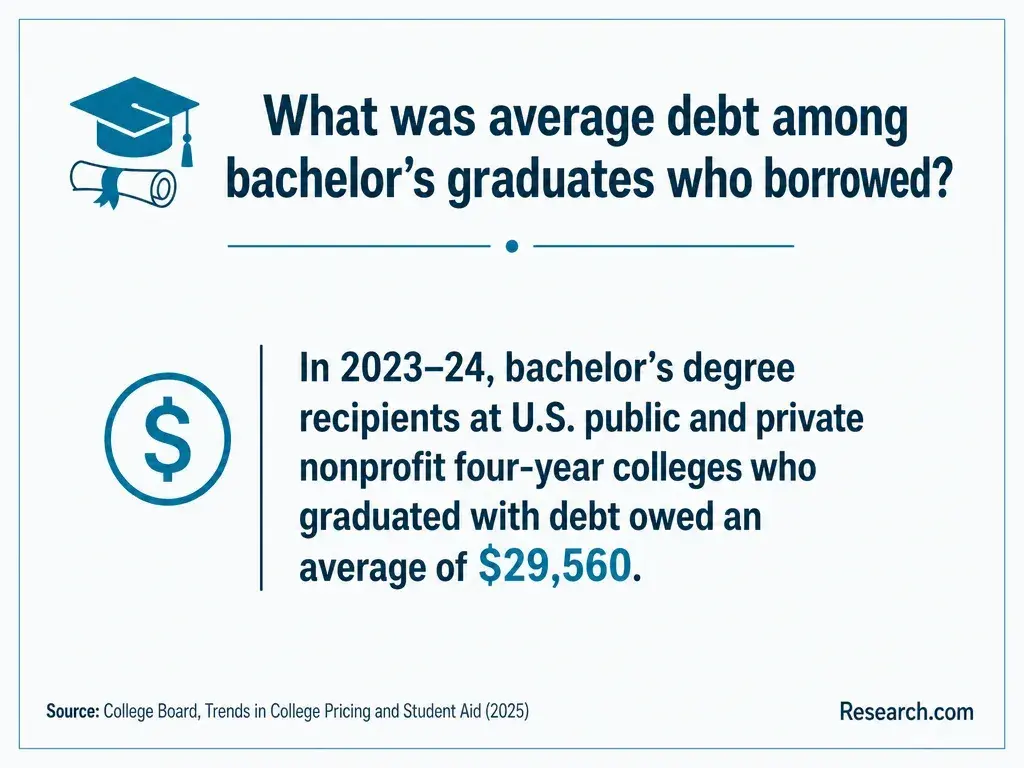
Compare costs using each school's published charges for your entry term. Multiply required credits by the applicable tuition rate, then add mandatory fees and any likely travel, technology, prerequisite, or unpaid-experience costs. Ask whether a thesis continuation or extra term changes the estimate. Do not assume employer assistance, an assistantship, or a particular aid award until eligibility and terms are confirmed.
Published comparisons of psychology master's fees and total study costs can help you identify questions to ask, but the institution's current tuition schedule and your individual study plan control the estimate. If a few prerequisite courses would open direct admission, price those against the cost and delay of another full degree.
Generally, no. An online MS in forensic psychology does not, by its title or subject matter, qualify someone to practice independently as a licensed psychologist. States set their own education, supervised-experience, examination, and title-use rules; psychologist licensure commonly requires doctoral-level professional preparation. Licensed forensic assessment and expert testimony demand qualifications beyond taking forensic coursework.
If your goal is psychotherapy rather than research or justice-system support, examine a degree explicitly designed for the relevant state license, such as qualifying counseling or social work education. Check the state board's rules and the specific program's disclosures before enrolling. Guidance on accelerated counseling study and accreditation requirements concerns a different credential pathway; a quicker forensic MS is not a substitute for it.
The strongest career case builds on both parts of your background. Emergency management experience may be useful in agency coordination, training, program operations, or evaluation, while forensic psychology study may strengthen your ability to interpret behavioral research in justice-related settings. Employers still determine whether a particular job requires a degree, direct service experience, a civil-service qualification, or a license.
The following paths illustrate different levels of fit; they are not jobs automatically awarded to MS graduates.
| Possible direction | Relevant work | Additional qualification to check |
| Victim-services or justice-program coordination | Referrals, documentation, partnerships, and program support | Agency experience, safeguarding training, and local hiring rules |
| Corrections or reentry program support | Service coordination, education, or program monitoring | Employer and government hiring standards |
| Research or program evaluation | Data collection, analysis, and evidence summaries | Methods skills and demonstrable project work |
| Licensed forensic psychology | Professional psychological assessment within a regulated scope | Applicable doctoral training, licensure, and specialized experience |
Before applying, inspect job postings for duties rather than searching only for "forensic psychologist." If your preferred work is substance-use counseling, compare that regulated pathway with substance abuse counseling bachelor's affordability and duration; whether further study is needed depends on the state and the specific role.
There is no single reliable US salary or growth figure for graduates of a forensic psychology MS. The Bureau of Labor Statistics reports occupations, not earnings by master's concentration. Its psychologist figures describe an occupation with licensing requirements and therefore should not be used as an expected salary for someone entering with this MS alone.
For a useful comparison, choose a target job first - such as social and human service assistant, probation officer or correctional treatment specialist, or a particular research role - then consult the latest Bureau of Labor Statistics occupational profile for that job's national median pay, projection period, and typical entry requirements. Compare that information with local government pay bands and actual postings. A broad occupational median will not account for your emergency management experience, location, employer, or eligibility.
Return on investment also depends on whether the degree changes your qualifications for a role you want. If an alternative undergraduate counseling route is under consideration, scholarships for undergraduate substance use counseling address funding for that distinct path - not financial aid you can assume will cover a forensic psychology master's.
How can you choose an accredited online forensic psychology master's program?
Start by verifying the institution's accreditation with its recognized institutional accreditor and confirming that the exact master's program, delivery format, and entry term match what is advertised. Do not look for APA accreditation as a blanket seal for a nonclinical forensic psychology MS: APA accreditation applies to specific professional psychology training categories, not every psychology degree. Institutional accreditation also does not establish licensure eligibility.
Shortlist programs only after you can answer the questions that matter to your transition:
- Will admissions accept my emergency management BS, and which psychology or methods courses must I complete before applying or enrolling?
- Which courses and experiences are required, and what faculty guidance is available for a thesis, capstone, or research project?
- Are there live sessions, campus visits, approved-site requirements, or deadlines that conflict with my work schedule?
- What is my written estimate of tuition, mandatory fees, prerequisites, and likely extra-term costs?
- What do graduates do, how were those outcomes collected, and does the program explicitly disclaim or support any licensure pathway?
Choose the program whose requirements and outcomes fit a named goal, not the one with the most compelling forensic branding. If your actual goal is licensed mental health counseling, compare the qualifying program's requirements and mental health counseling tuition fees and financial aid instead. For nonclinical justice or public-safety work, targeted psychology prerequisites and supervised project experience may sometimes be a better investment than an additional degree.
Other Things You Should Know About Psychology
It is useful if you want thesis supervision or have a specific research interest. Ask admissions whether faculty contact is expected and whether supervision is available to online students; a positive conversation is not an admission offer.
Only if the program formally permits an experience-based waiver or substitution. Submit a résumé and relevant training records, but complete the course if admissions determines it is a required academic prerequisite.
Not necessarily. A well-supervised evaluation or capstone may be more relevant to an applied role, while a thesis can better demonstrate research readiness. Check the program's options and the qualifications in your target job postings.
Possibly, if the program and employer approve the project, supervision, and data use. Employment alone does not authorize access to confidential records for academic work.
- School-Determined Requirements | 2024-2025 Federal Student Aid Handbook https://fsapartners.ed.gov/knowledge-center/fsa-handbook/2024-2025/vol1/ch1-school-determined-requirements
- Do I Need a Degree in Psychology to Apply to Graduate School? | William James College https://www.williamjames.edu/news/do-i-need-a-degree-in-psychology-to-apply.html
- 4.1.21 Instructional Modalities and Distance Education | Illinois State https://policy.illinoisstate.edu/academic/4-1-21
- Class Delivery Formats | ccp.edu https://www.ccp.edu/degrees-programs/all-academic-offerings/class-delivery-formats
- How to Become a Forensic Psychologist in California (2026) | Touro University Worldwide https://www.tuw.edu/psychology/how-to-become-a-forensic-psychologist-in-california/
- M.A. Forensic Mental Health Counseling Licensure Information | Roger Williams University https://www.rwu.edu/graduate/programs/graduate-programs/forensic-mental-health-counseling/licensure
- Admission Policy Procedures | College of Liberal Arts and Social Sciences | Texas A&M University-Victoria https://www.tamuv.edu/liberal-arts-social-sciences/graduate-degrees/forensic-psychology/admission-policy-procedures/
- Admission Policies and Requirements | fresno.edu https://catalog.fresno.edu/content.php