2027 Online BA in Psychology - Addictions for Trauma-Informed Recovery Support: Which Courses Should You Look For?
Audited and Verified:
Our Editorial and Data Verification Process
Research.com uses government datasets, official education statistics and primary institutional information to support its career and degree guides. Our review process checks factual accuracy, occupational definitions, source dates and the requirements associated with the credentials discussed.
How This Article Was Fact-Checked
Our editorial team verifies salary estimates, employment projections, education requirements and program information against original data providers and official organizations. Salary figures are checked against the relevant occupational definitions and reporting periods. Information about licensure, accreditation and required in-person training is reviewed separately.
Fact-checked and verified on:

Co-Founder and Chief Data Scientist
An online psychology BA can teach the science behind substance use and recovery, but an addictions label does not tell you whether its courses prepare you to support people safely. If you hope to work in outreach, recovery services, or case coordination, the curriculum matters as much as the concentration name. This guide identifies the courses and supervised experiences worth looking for, explains where undergraduate preparation ends, and shows how to compare programs against the work you actually want to do.
Key Things You Should Know
- Prioritize addiction science, trauma-informed practice, lifespan development, research methods, ethics, and service coordination - not just a course labeled "counseling."
- Look for supervised, nonclinical experience with referrals, documentation, and professional boundaries; an online BA alone does not authorize therapy or diagnosis.
- Expect a bachelor's degree to require about 120 semester credits in total, but ask for a degree audit and check state credential rules before estimating your remaining time or cost.
What Is an Online Bachelor's Degree in Psychology for Addictions and Trauma-Informed Recovery?
Usually, it is a broad psychology BA with an addictions concentration, a group of electives, or related applied coursework. These are not interchangeable: a formal concentration appears in the school's academic requirements, while an elective may simply count toward the major. Compare the actual degree plan, not the wording on a program page.
Trauma-informed recovery support means approaching service interactions with attention to safety, choice, collaboration, and the possibility that past adversity affects a person's needs. For a bachelor's student, that might inform respectful outreach or referrals. It does not mean treating trauma or diagnosing a substance use disorder.
A broad major can work if it leaves room for relevant electives and local experience. When reviewing psychology degree options for distance learners, check whether the advertised addictions content is required, reliably offered, and available to online students.
What Accreditation Should an Online Psychology and Addictions Program Have?
Start with institutional accreditation recognized by the U.S. Department of Education. Confirm the institution's status and that the online BA is an authorized offering. Accreditation supports academic quality review and matters for issues such as federal aid eligibility, but it does not establish that a graduate meets an addiction-counselor credential's requirements.
Do not reject an undergraduate psychology program because it lacks APA accreditation: APA accreditation does not cover general psychology BAs. If your longer-term plan includes graduate study, inspect that future program separately. Even affordable MA and MS psychology programs online are not necessarily designed for clinical licensure; counseling, social work, and psychology credentials have different educational rules.
Ask the school which entity awards the degree and whether it makes any state-specific credential claim. Then confirm that claim with the relevant state board or certifying body.
Which Courses Prepare Students for Addiction and Trauma-Informed Recovery Support?
The strongest course combination joins psychological science with practical service boundaries. An addictions elective is useful, but it cannot replace methods training, ethical reasoning, or an understanding of how recovery support differs from treatment. Course titles vary; use descriptions, syllabi, and prerequisites to assess depth.
The table connects common course areas to what a student should be able to understand - not clinical procedures a BA graduate is automatically qualified to perform.
| Course area | Why it matters for recovery support | What to examine in the syllabus |
| Substance use and addiction psychology | Explains risk, protective factors, recovery, and co-occurring concerns. | Evidence-based models, prevention, stigma, and limits of screening. |
| Trauma, stress, and lifespan development | Connects adversity and development to differing support needs without assuming every client has the same history. | Safety, choice, developmental differences, and cultural context. |
| Abnormal psychology and biological psychology | Builds literacy about symptoms, behavior, and the effects of substances. | Referral boundaries rather than claims of diagnostic competence. |
| Statistics and research methods | Helps students judge claims about interventions and program outcomes. | Study design, measurement limits, bias, and correlation versus causation. |
| Ethics, community psychology, or human services | Supports confidentiality, accessibility, coordination, and respectful communication. | Role boundaries, safeguarding, documentation, and service systems. |
Build from introductory psychology into development and biological or abnormal psychology, then take addiction-focused work alongside - or after - statistics and methods. Add ethics and a supervised, nonclinical placement where available. Check course rotation: an attractive elective that is rarely offered may not fit your graduation plan.
If your goal is research rather than direct support, give methods and data interpretation more weight. Graduate study can add depth later, but comparing accelerated MS psychology options is not a substitute for checking whether the undergraduate curriculum builds the foundation you need now.
Online study can make lectures easier to fit around work, but trauma-informed support skills still require feedback, discussion, and appropriate practice. An asynchronous course may include scheduled group meetings; a local placement may require weekday hours. Campus study may offer easier access to nearby faculty and agency partnerships, though access is not guaranteed in either format.
Before choosing an accelerated schedule, ask how often addiction electives run, whether live sessions are required, and who secures and approves placements. Planning an intensive online psychology degree makes the most sense when you can protect time for methods coursework and any supervised experience - not merely finish lectures quickly.
First-year applicants generally submit evidence of secondary-school completion; transfer applicants typically provide transcripts from prior colleges. Specific GPA, general education, and major-entry rules belong to the institution. A school may admit you before it determines how each course applies to the psychology BA.
If you have prior study, request a written degree audit showing general education, major, elective, and remaining institutional credits. Statistics or research methods may need a separate equivalency review. Guidance on using previous coursework toward a psychology degree can help you prepare questions, but only the receiving school can approve how your credits count.
A bachelor's degree commonly totals about 120 semester credits; your remaining time depends on accepted credits, course sequencing, enrollment pace, and whether a placement or capstone fits your schedule. An accelerated term does not necessarily reduce the work required.
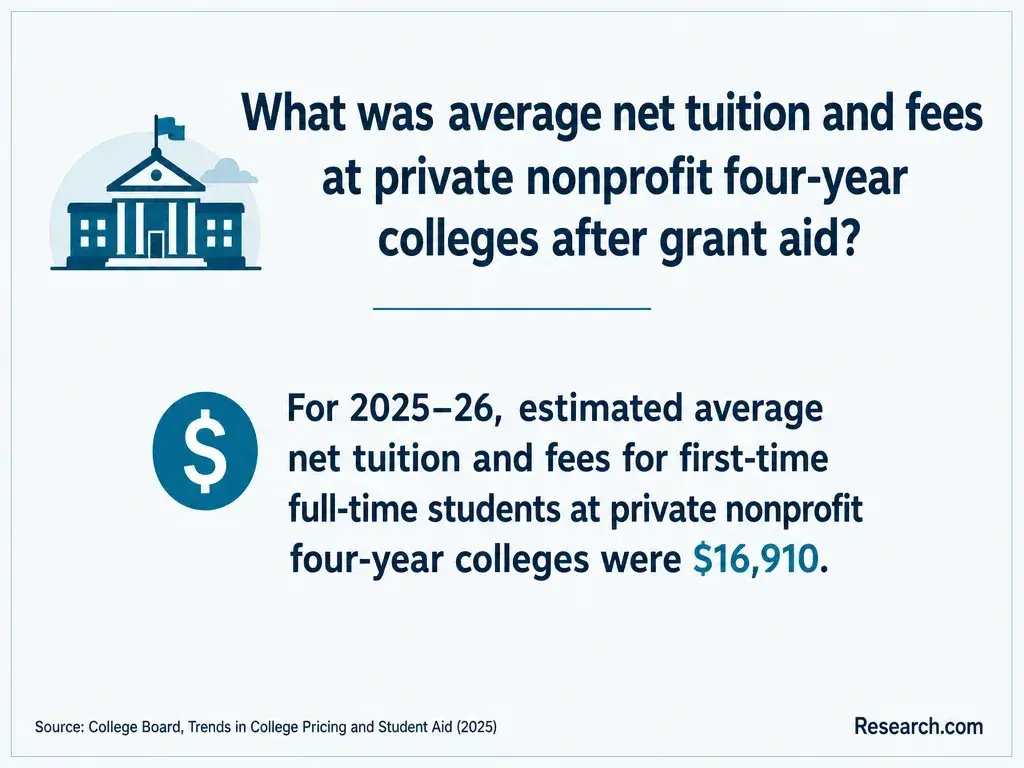
For a useful cost comparison, ask each school for a term-by-term estimate covering tuition, mandatory online fees, books or software, and any placement-related travel or lost work hours. Compare remaining cost to graduation, not a single advertised per-credit rate. Financial aid may change the amount you pay; reducing undergraduate substance abuse counseling tuition through aid is a separate question from whether a program supplies the courses your target role needs.
Potential nonclinical roles include recovery-program assistant, outreach worker, intake coordinator, and case-support worker. Duties may involve explaining services, arranging referrals, maintaining records, or supporting participation under an agency's policies. Employers may also require experience, training, background checks, or a state-recognized credential.
A BA is not a shortcut into independent addiction counseling, psychotherapy, or psychological assessment. If you already work in a community organization, ask whether a supervised project can demonstrate ethical documentation and referral skills; school approval is still necessary if you want it to count academically. Choose further study for the target role: faster routes through forensic psychology graduate coursework, for example, address a different specialization rather than addiction-support qualifications.
There is no defensible single salary for graduates of an addictions-focused psychology BA. Pay differs across outreach, intake, peer support, and credentialed counseling jobs, as well as by location and employer. The U.S. Bureau of Labor Statistics groups substance abuse, behavioral disorder, and mental health counselors in one occupation; its occupation-wide wage figures should not be presented as the expected earnings of a new BA graduate or a recovery-support worker.
For a realistic comparison, collect local postings for the specific job title you want. Note the stated pay, credential, experience, and schedule, then weigh those against your remaining education costs. Resources on cost-conscious substance use counseling undergraduate options can inform the cost side, but advertised earnings cannot establish your likely return.
Requirements follow the role and jurisdiction, not the BA concentration. Some support positions rely on employer training; peer-support certification and addiction-counselor credentials may have distinct education, lived-experience, supervision, examination, and scope rules. A course about counseling does not itself count as supervised clinical practice.
Before enrolling, find the state authority for your intended job title and compare its educational requirements with the program's actual courses. If your aim is licensed psychotherapy, investigate qualifying professional degrees and their full costs instead; mental health counseling tuition fees and financial aid are relevant to that different pathway. Get any eligibility interpretation from the responsible board, not solely an admissions representative.
How Can You Choose a Reputable Online Psychology Program?
Compare programs using evidence you can obtain before committing. The following checks separate an appealing course list from a workable preparation plan:
- Request the current catalog and mark which addiction, trauma, methods, and ethics courses are required, elective, or unavailable online.
- Ask for recent course schedules, live-session expectations, and written placement policies, including site approval and supervision.
- Obtain a degree audit and a personalized estimate of remaining tuition and fees; verify institutional accreditation independently.
- Compare local job postings and state credential rules with the skills and requirements the program actually covers.
Use choosing a cost-conscious psychology degree program as a starting point, not a substitute for those checks. The best fit is the program you can complete that teaches you to evaluate evidence, support people within clear boundaries, and obtain appropriate supervised experience for your intended role.
Other Things You Should Know About Psychology
No. It describes an approach to interacting with people and designing services. Providing trauma treatment requires qualifications appropriate to the clinical role and jurisdiction.
Only if the academic program approves the site, supervision, duties, and learning objectives. Existing volunteer work does not automatically earn placement credit.
Compare the actual requirements. A BA with strong addiction, methods, and ethics coursework may fit better than a BS lacking them; a BS may suit students who want additional science or quantitative study.
Ask your employer and instructor first. Present a permitted, carefully redacted description of your responsibilities and learning; do not share identifiable client information or imply the project proved a treatment effective.
- Childhood trauma and adolescent substance use - PMC - NIH https://pmc.ncbi.nlm.nih.gov/articles/PMC12427455/
- Clinical Issues Across Services - Trauma-Informed Care in Behavioral Health Services - NCBI Bookshelf https://www.ncbi.nlm.nih.gov/books/NBK207185/
- Learn about student intern program | Behavioral Health Services https://bhsd.santaclaracounty.gov/behavioral-health/learn-about-student-intern-program
- About Adverse Childhood Experiences | cdc.gov https://www.cdc.gov/aces/about/index.html
- Trauma-Informed Approaches and Programs | samhsa.gov https://www.samhsa.gov/mental-health/trauma-violence/trauma-informed-approaches-programs
- NCDAC Behavioral Health Services Practicum, Internship & Field Opportunities https://www.dac.nc.gov/html/ncdac-behavioral-health-services-practicum-internship-field-opportunities
- Undergraduate Transfer Credit and Credit for Prior Learning | charlotte.edu https://provost.charlotte.edu/policies-procedures/academic-policies-and-procedures/undergraduate-transfer-credit-credit-for-prior-learning/
- Person-Centered Recovery Planning (PCRP) | Psychiatry | Yale School of Medicine https://medicine.yale.edu/psychiatry/consulting-and-evaluation-services/program-for-recovery-and-community-health/programs-and-initiatives/person-and-family-centered-approaches-and-planning/
- Supervised Field Work Practicum Course | UCLA Extension https://www.uclaextension.edu/health-care-counseling/health-care-counseling-general/course/supervised-field-work-practicum-com
- Understanding Accreditation for Online Degrees | UMass Global https://www.umassglobal.edu/blog-news/online-degrees-accredited-identify-quality-distance-learning-programs