Best Colleges for Single Parents and Students with Children for 2027

Co-Founder and Chief Data Scientist
As a single parent, the financial pressure can feel relentless. The fact is, a college degree is one of the most powerful tools you have to change that. Single mothers with a bachelor’s degree are three times less likely to live in poverty than those with only a high school diploma.
The key isn’t just any college—it’s finding one with a dedicated support system designed for parents. Our career planning experts, with over 10 years of experience, created this guide to show you exactly how to find the best colleges for single parents, turning this investment in your family’s future into a manageable reality.
What are the benefits of getting a degree from the best colleges for single parents?
- You gain access to stable, professional careers that often come with better benefits and more predictable, family-friendly hours.
- You build a powerful defense against financial hardship, as holding a bachelor's degree makes single mothers three times less likely to live in poverty.
- You become a powerful role model for your child, demonstrating the value of education, resilience, and ambition.
What can I expect from the best colleges for single parents?
You should expect an integrated ecosystem of support designed to handle the real-life challenges you face as a parent. These aren’t schools with just one resource, but entire programs built to help you succeed.
Think of it as a network that includes on-campus childcare, dedicated family housing options, and specialized financial aid advisors who are knowledgeable in helping students with children. Data show that over half of student parents face emergencies that disrupt their education, and 25% struggle with accessing childcare. The best colleges for students with children understand this reality.
Most importantly, they offer a built-in community. You’ll find peer support groups and dedicated staff members whose entire job is to help you navigate your path to graduation, ensuring you never have to do it alone.
Where can I work with a degree from the best colleges for single parents?
A degree opens doors to stable, professional careers in sectors known for their family-friendly potential. You can find meaningful opportunities in high-demand fields like healthcare, business, education, and social services.
Consider your degree as the entry ticket to these industries, which often offer better benefits and more predictable work schedules. It’s also important to remember you aren’t locking yourself into one specific job forever. A degree provides career agility, enabling you to adapt and grow as the job market evolves.
With the rise of remote and flexible work, graduating from one of the best colleges for single parents prepares you for a long-term career that can evolve with your life.
How much can I make with a degree from the best colleges for single parents?
While the median annual salary for single mothers is around $40,000, a college degree is your most powerful tool to access career paths with significantly higher earning potential.
The real value goes beyond that starting number. A degree helps you counteract the systemic "motherhood wage penalty," where mothers often earn less than their male counterparts. It allows you to enter professional fields with more equitable pay structures and clear paths for advancement.
The goal is to build a foundation that moves you well beyond that median figure, creating a lifetime of greater economic security for your family.
Popular College Degrees Worth Considering in 2027
1. Business Administration
This versatile degree opens doors in nearly every industry. It teaches you management, budgeting, and strategic planning—skills you use every day. Many top programs are available online, offering the flexibility you need to balance coursework with family life.
2. Psychology
A psychology degree is about understanding people, a critical skill in fields such as human resources, marketing, and nonprofit management. It’s an excellent choice if you’re interested in a “helping” profession that offers a wide variety of career paths beyond traditional therapy.
3. Counseling
If you are passionate about helping others navigate life’s challenges directly, a counseling degree offers a clear and rewarding path. Your life experience as a parent provides a unique foundation of empathy and resilience that is invaluable in this field.
4. Nursing
Nursing is one of the most in-demand fields, offering incredible job security and opportunities for growth. While the training is rigorous and clinical hours can be demanding, it leads to a stable, respected, and well-compensated career.
5. Social Work
This degree prepares you for a career in advocacy, enabling you to help individuals and families access the resources they need to thrive. As a parent, you’ve likely navigated complex systems already, making you a natural fit for this essential work.
- List of the Best Colleges for Single Parents and Students with Children for 2027 Best Colleges
- How long does it take to complete a degree from the best colleges for students with children? Completion Time
- What is the average cost of the best colleges for single parents? College Cost
- What are the financial aid options for students enrolling in the best colleges for single parents? Financial Aid
- What are the prerequisites for enrolling in the best colleges for students with children? What are the prerequisites for enrolling in the best colleges for students with children?
- What courses are typically in the best colleges for single parents? What courses are typically in the best colleges for single parents?
- What types of specializations are available in the best colleges for single parents? Specializations
- How to choose the best colleges for single parents? How to choose the best colleges for single parents?
- What career paths are available for graduates of the best colleges for single parents? Career Paths
- What is the job market for graduates of the best colleges for single parents? Job Market
- How can I balance academics and family responsibilities effectively? How can I balance academics and family responsibilities effectively?
Best Colleges for Single Parents and Students with Children for 2027
Going to college while raising a child is not just an academic decision. It is a scheduling, childcare, housing, transportation, financial aid, and career-planning decision all at once. The right college can reduce those pressures with flexible course formats, parent-focused advising, childcare support, emergency aid, family housing, and staff who understand that student parents cannot always follow a traditional campus schedule.
This guide is designed for single parents, student mothers and fathers, guardians, and working adults with children who want a degree without putting their family stability at risk. You will find a ranked list of colleges with strong parent-support systems, a practical explanation of costs and aid, questions to ask before enrolling, and guidance on choosing a program that fits your home life and career goals.
Quick answer: What makes a college good for single parents?
The best colleges for single parents combine academic flexibility with concrete family support. Look for accredited schools that offer affordable net costs, childcare assistance, parent-specific scholarships, emergency grants, online or hybrid courses, family housing when needed, transfer-friendly policies, and advisors trained to help nontraditional students navigate financial aid and degree planning.
| Decision factor | Why it matters for student parents | What to ask before applying |
| Childcare support | Reliable childcare can determine whether you can attend class, work, study, and complete assignments on time. | Is there on-campus childcare, childcare funding, or a referral network? Is there a waitlist? |
| Flexible scheduling | Evening, online, hybrid, part-time, and accelerated formats can make college possible around work and parenting duties. | Can I complete my major online or partly online? Are required courses offered at parent-friendly times? |
| Net price | The listed tuition does not show what you will actually pay after grants, scholarships, and parent-specific support. | What is my estimated net price after federal, state, and institutional aid? |
| Emergency support | Unexpected expenses such as car repairs, medical bills, or childcare gaps can interrupt enrollment. | Does the school offer emergency grants, food assistance, transportation help, or basic-needs support? |
| Accreditation | Accreditation affects financial aid eligibility, transfer credits, graduate school options, and employer recognition. | Which institutional accreditor recognizes the college? |
How do we rank schools?
Choosing a college as a parent means weighing more than reputation. Our ranking considers whether a school provides meaningful support for students raising children, along with cost information, accreditation, and student-centered resources. We use a data-informed review process built on sources such as the IPEDS database, Peterson's database, the College Scorecard, and the National Center for Education Statistics (NCES).
These sources help us evaluate institutions using comparable information rather than marketing claims alone. To see how Research.com reviews schools and programs, read our full ranking methodology.
1. Texas Woman’s University
Texas Woman’s University stands out for its coordinated support through the CARE Office, which helps student parents connect with financial assistance, food resources, childcare referrals, and community services. The university also supports belonging through student-parent programming, peer connection, and family-inclusive campus events.
- Support System: SUCCESS CCAMPIS Program; The Clubhouse on-campus enrichment program; SNAP and WIC consultations; and the S.P.A.R.K. student-parent organization.
- Cost per Credit: $238 (in-state); $323 (out-of-state)
- Accreditation: Southern Association of Colleges and Schools Commission on Colleges (SACSCOC)
2. Northeastern University Oakland
Northeastern University Oakland may appeal to parents who want a smaller campus environment with family-oriented resources. Its childcare-related options include on-campus schools serving children from preschool through K-5, along with a parenting lounge and food pantry access for students managing basic needs.
- Support System: Three on-campus schools, including a cooperative preschool and K-5 laboratory school; a dedicated Parenting Lounge with a breastfeeding nook; and a campus food pantry.
- Cost per Credit: $2,125
- Accreditation: New England Commission of Higher Education (NECHE)
3. University of Minnesota-Twin Cities
The University of Minnesota-Twin Cities offers one of the more comprehensive student-parent structures through the Student Parent HELP Center. The center connects parents with childcare grants, scholarships, emergency funds, a student-parent lounge, and the Parents as Students Support (PASS) group.
- Support System: Student Parent HELP Center; Post-Secondary Child Care Assistance Grant (PSCCG); University Child Care Assistance Grant (UCCAG); and emergency funding.
- Cost per Credit: $620.50 (in-state); $1,500.70 (out-of-state)
- Accreditation: Higher Learning Commission (HLC)
4. Champlain College
Champlain College has a dedicated Single Parents Program that focuses on advising, case management, peer support, and social connection. Eligible Vermont residents may also benefit from the Single Parents Scholarship, which is designed to help reduce tuition expenses.
- Support System: Dedicated Single Parents Program with a case manager; Single Parents Scholarship; monthly lunch socials; and a Save-the-Day Emergency Fund.
- Cost per Credit: $335 (online undergraduate)
- Accreditation: New England Commission of Higher Education (NECHE)
5. Misericordia University
Misericordia University’s Women with Children Program is one of only eight in the country and is especially notable for offering free, year-round on-campus housing for single mothers and their children. The program combines housing with financial aid guidance, tutoring, career support, and family-centered services.
- Support System: Free on-campus housing; priority placement for work-study; assistance with childcare subsidies; and in-house food pantries.
- Cost per Credit: $715
- Accreditation: Middle States Commission on Higher Education (MSCHE)
6. Endicott College
Endicott College supports parent learners through Single Parent Services, which emphasizes academic progress, coaching, and career development. Its partnerships with outside organizations can also help students access services such as babysitting support.
- Support System: Single Parent Services grants for tuition and textbooks; free academic coaching; career coaching; and partnerships with the Jeremiah Program and Sitters for Scholars.
- Cost per Credit: $1,303
- Accreditation: New England Commission of Higher Education (NECHE)
7. University of Washington-Seattle
The University of Washington-Seattle provides a Childcare Assistance Program that awards quarterly funding to eligible student parents who need help paying for licensed childcare. The program is supported by student fees and prioritizes demonstrated financial need.
- Support System: Childcare Assistance Program providing quarterly grants based on the child’s age and enrollment status.
- Cost per Quarter Credit: $949 (in-state); $2,939 (out-of-state)
- Accreditation: Northwest Commission on Colleges and Universities (NWCCU)
8. St. Catherine University
St. Catherine University’s Access and Success program helps student parents find childcare aid, campus study spaces that accommodate children, lactation rooms, and state or community resources. The program is useful for students who need both academic guidance and practical family support.
- Support System: Access and Success program; Post-Secondary Child Care Grant; on-campus study spaces with adjacent playrooms; and lactation rooms.
- Total Tuition (Banded Rate): $52,320 (College for Women, 2025-2026)
- Accreditation: Higher Learning Commission (HLC)
9. Wilson College
Wilson College’s Single Parent Scholar Program is built for full-time bachelor’s students who need family-friendly housing and childcare support. Students in the program can live in a dedicated residential environment with shared kitchens, play areas, and access to regular campus organizations and activities.
- Support System: Single Parent Scholar Program with year-round on-campus housing, subsidized childcare, and a dedicated residence hall floor with shared kitchens and playrooms.
- Cost per Credit: $865
- Accreditation: Middle States Commission on Higher Education (MSCHE)
10. College of Saint Mary
College of Saint Mary provides targeted assistance through a Director of Single Parent Success, who helps students locate childcare, understand available resources, and connect with state benefits. The college also offers an on-campus child development center and a one-credit course called “The Successful Single Mother.”
- Support System: Director of Single Parent Success; Mothers Living & Learning residential program; on-campus Spellman Child Development Center; and a Student Mother Advisory Board.
- Cost per Credit: $825
- Accreditation: Higher Learning Commission (HLC)
Side-by-side comparison of featured colleges
| College | Parent-focused support | Cost information | Accreditation |
| Texas Woman’s University | CARE Office, SUCCESS CCAMPIS Program, SNAP and WIC consultations, S.P.A.R.K. | $238 (in-state); $323 (out-of-state) | SACSCOC |
| Northeastern University Oakland | On-campus schools, Parenting Lounge, breastfeeding nook, food pantry | $2,125 | NECHE |
| University of Minnesota-Twin Cities | Student Parent HELP Center, childcare grants, emergency funding, PASS group | $620.50 (in-state); $1,500.70 (out-of-state) | HLC |
| Champlain College | Single Parents Program, case manager, scholarship, emergency fund | $335 (online undergraduate) | NECHE |
| Misericordia University | Free housing, work-study priority, childcare subsidy help, food pantries | $715 | MSCHE |
| Endicott College | Tuition and textbook grants, academic coaching, career coaching, partner services | $1,303 | NECHE |
| University of Washington-Seattle | Quarterly licensed-childcare grants | $949 (in-state); $2,939 (out-of-state) per quarter credit | NWCCU |
| St. Catherine University | Access and Success program, childcare grant connection, playroom study spaces, lactation rooms | $52,320 (College for Women, 2025-2026) | HLC |
| Wilson College | Family housing, subsidized childcare, shared kitchens, playrooms | $865 | MSCHE |
| College of Saint Mary | Director of Single Parent Success, residential program, child development center, advisory board | $825 | HLC |
How long does it take to complete a degree from the best colleges for students with children?
A bachelor’s degree is traditionally planned around four years of full-time study, but many parents need a different timeline. Your realistic graduation plan may depend on childcare availability, work hours, transportation, course sequencing, transfer credits, and whether your school allows online, hybrid, evening, or part-time enrollment.
Some students finish faster through transfer credit, summer courses, prior learning credit, or accelerated formats. Others intentionally take a lighter schedule and graduate closer to six years because that pace is more sustainable. For parents, the best timeline is the one you can complete without repeatedly stopping out.
Choosing a pace that protects your family and your progress
Before enrolling, map out a weekly schedule that includes work, school, commuting, childcare, meals, bedtime routines, and study time. If the schedule only works when nothing goes wrong, it is probably too tight. Student parents often benefit from programs that allow fewer courses per term, predictable class times, and the option to pause or adjust without losing momentum.
Credit for prior learning can also shorten the path if the school evaluates work experience, military training, certifications, or earlier college coursework. Some students prefer concentrated formats such as 4 week online college courses, which may allow them to focus on one subject at a time. This model can be helpful for highly organized learners, but it can also feel intense if your childcare schedule is unstable.
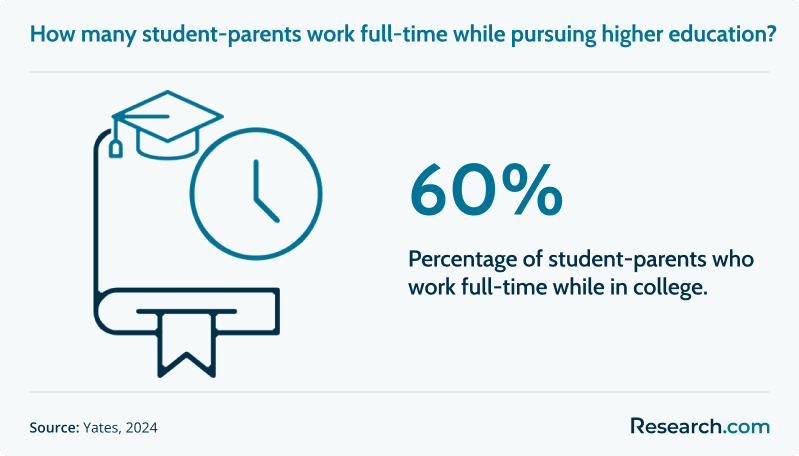
The central goal is completion, not speed. Research cited in this guide notes that 60% of student parents work full-time while pursuing their education, so a flexible and realistic course load is often a strength rather than a setback.
| Enrollment approach | Best for | Trade-offs to consider |
| Full-time study | Parents with stable childcare, predictable work hours, and strong aid coverage | Faster progress, but more pressure each week |
| Part-time study | Parents working full-time or caring for young children without consistent support | Lower weekly academic load, but a longer path to graduation |
| Accelerated courses | Students who can manage intensive weekly deadlines and focused study blocks | Can shorten completion time, but missing a week can be difficult to recover from |
| Online or hybrid study | Parents who need to reduce commuting and study around family routines | Requires self-discipline, reliable technology, and careful planning |
What is the average cost of the best colleges for single parents?
Among the colleges reviewed here, the average undergraduate cost is approximately $1,082 per credit. That figure is useful for comparison, but it should not be the number you use to decide whether a school is affordable. Your real cost is the net price after grants, scholarships, tuition discounts, childcare support, housing benefits, and other aid are applied.
For single parents, the best financial value may come from a school with a higher listed tuition but stronger direct support, such as childcare grants, emergency funds, or free family housing. A lower tuition school can still become expensive if you must pay privately for childcare, reduce work hours, commute long distances, or retake courses because of scheduling conflicts.
Why net price matters more than sticker price
Public or private status, in-state or out-of-state tuition, online fees, program fees, books, childcare, and housing all affect affordability. Online options may reduce transportation or childcare conflicts, and some top-ranked online colleges with weekly start dates may offer more flexible start times for parents who cannot wait for a traditional semester calendar.
Cost should also be weighed against career mobility. The median annual salary for a single mother is around $40,000. A degree can support access to career paths with stronger long-term earning potential, but no program can guarantee a specific salary. Review completion rates, career services, internship access, transfer policies, and the types of jobs graduates pursue before taking on debt.
| Cost item | Why parents should examine it closely | Better question to ask |
| Tuition per credit | It shows the base academic price but not the full cost of attending. | What will I pay after all grants and scholarships are included? |
| Childcare | Childcare costs can determine whether enrollment is possible. | Does the school offer childcare aid, subsidized care, or CCAMPIS-supported services? |
| Housing | Family housing or free housing can change the total value of a program. | Are student parents eligible for family housing, and how competitive is access? |
| Books and supplies | These costs can create short-term financial stress at the beginning of each term. | Are textbook grants, open educational resources, or book vouchers available? |
| Schedule-related costs | Lost wages, commuting, and last-minute babysitting may exceed expected fees. | Can required courses be completed online, in the evening, or on a predictable schedule? |
What are the financial aid options for students enrolling in the best colleges for single parents?
Student parents should build a financial aid plan from multiple sources instead of relying on one award. The strongest packages may include federal grants, state grants, institutional scholarships, childcare assistance, emergency aid, work-study, food assistance, and program-specific support for parents.
The first step is completing the Free Application for Federal Student Aid. Do not assume you will be ineligible. The FAFSA calculates your Student Aid Index (SAI) and helps determine access to programs such as the Pell Grant. Many parent-friendly colleges have financial aid staff who can help you interpret your aid offer and identify additional support.
Federal support: CCAMPIS
A major resource for low-income student parents is the federal CCAMPIS grant, short for Child Care Access Means Parents in School. CCAMPIS provides funds to colleges so they can help eligible student parents pay for campus-based childcare. Availability varies by institution, and funds may be tied to nationally accredited centers, so ask each college how the program works on that campus.
Financial aid checklist for student parents
- File the FAFSA early. Use the official FAFSA website and update your information if your financial situation changes.
- Ask about parent-specific awards. Some colleges offer scholarships, grants, housing support, or emergency funds specifically for single parents or students with children.
- Check state childcare grants. Some states offer postsecondary childcare assistance that can be combined with federal and institutional aid.
- Review work-study carefully. Work-study can help with income, but the schedule must be realistic with parenting responsibilities.
- Compare aid offers by net price. A larger scholarship at a more expensive school may still leave you with a higher bill than a smaller award at a lower-cost school.
What are the prerequisites for enrolling in the best colleges for students with children?
Most undergraduate programs require a high school diploma or GED. However, many colleges that serve student parents review applicants in context and consider work history, life experience, motivation, prior college credits, military training, community involvement, and career goals.
Many institutions are test-optional, which can help adults who have been out of school for several years. If you have an older academic record, an admissions counselor may explain whether placement tests, bridge courses, transfer evaluations, or adult learner pathways are available.
Using your experience as part of your application
Your responsibilities as a parent can demonstrate time management, budgeting, conflict resolution, persistence, and practical problem-solving. Use your application essay or admissions conversation to explain how those experiences have prepared you to succeed in college.
If you have credits from earlier college enrollment, ask for a transcript evaluation before choosing a program. A flexible path such as a general studies degree online may help some returning students combine completed credits into a faster route to graduation.
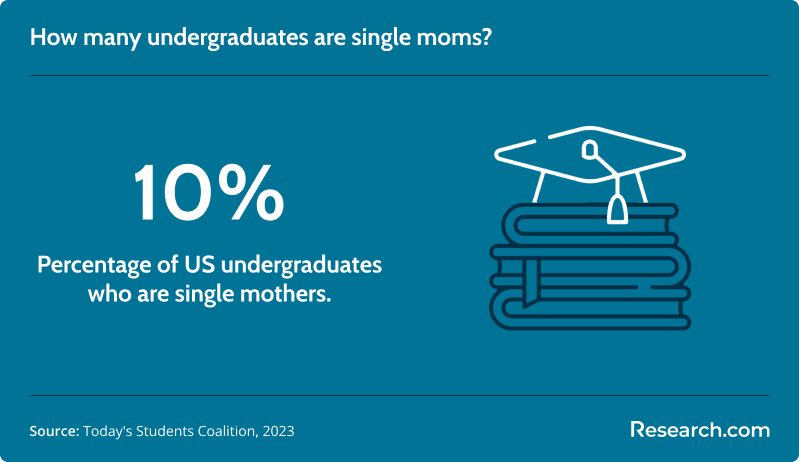
You are also not alone. Single mothers make up 10% of all undergraduates in the U.S., and many colleges now recognize that student parents bring focus, persistence, and clear career motivation to the classroom.
What courses are typically in the best colleges for single parents?
Student parents can major in nearly any field, but most bachelor’s programs share a common structure. Understanding that structure helps you evaluate how each course moves you toward graduation and career readiness.
- General education courses: These classes strengthen writing, communication, quantitative reasoning, critical thinking, and other transferable skills used across careers.
- Major requirements: These courses build the technical and professional knowledge required in your field. For example, students in a legal or business-related program may study what you learn in business law as part of their preparation.
- Electives: Electives allow you to explore related subjects, complete a minor, build digital skills, or tailor your degree to a specific career direction.
When comparing schools, ask whether required courses are available in the format you need. A program may advertise online learning, but some major courses, labs, practicums, or internships may still require fixed times or in-person attendance.
What types of specializations are available in the best colleges for single parents?
A specialization is a focused set of courses inside a major. It can help you connect your degree to a clearer job market by building expertise in a particular area, such as data analytics, digital marketing, public health, early childhood education, accounting, social services, or healthcare administration.
For example, students interested in public health may want to understand the epidemiologist job outlook before choosing a health-related concentration. The right specialization should match your strengths, your schedule, and realistic employment options in your region or remote-work market.
How to choose a specialization as a parent
The best specialization is not always the one that sounds most impressive. It is the one that supports a sustainable career path. Consider whether the field requires evening or weekend work, unpaid internships, licensure exams, relocation, or graduate school. Those factors matter more when you are also responsible for children.
A health sciences student, for instance, might use a concentration to move toward clinical care, community health, administration, research, or wellness roles. If you are comparing career outcomes, reviewing potential nutrition jobs can help you see how one academic area may lead to several different work settings.
| Specialization decision | Good sign | Warning sign |
| Career alignment | The specialization connects to specific jobs you would actually accept. | The track sounds interesting but has unclear employment outcomes. |
| Schedule fit | Courses, labs, or internships work with your childcare and employment schedule. | Required experiences are only available during times you cannot attend. |
| Cost and time | The specialization fits inside your degree plan without adding unnecessary terms. | It delays graduation without a clear career benefit. |
| Next-step requirements | You understand whether licensure, certification, or graduate school is needed. | You assume the bachelor’s degree alone qualifies you for every role in the field. |
How to choose the best colleges for single parents?
The best college for a student parent is the one that fits three realities at the same time: affordability, logistics, and academic fit. A school can be well ranked and still be wrong for you if required courses conflict with childcare, if aid does not cover the true cost, or if the program does not support your intended career.
Use admissions conversations to test whether the school understands student parents or simply says it is “flexible.” Specific answers matter.
- Verify affordability. Ask, “After the FAFSA, what grants, scholarships, childcare aid, or emergency funds are available specifically to single parents or students with children?”
- Confirm childcare and housing logistics. Ask, “Do you offer on-campus childcare, family housing, lactation rooms, child-friendly study spaces, or childcare referrals, and what are the current waitlists?”
- Check course delivery. Ask, “Can I complete all required courses in my major online, hybrid, evening, or part-time formats?”
- Review transfer policies. Ask, “How many of my prior credits will apply to my degree, and will I receive that evaluation before enrolling?”
- Assess student-parent community. Ask, “Can I speak with a current student parent or advisor who works regularly with parents?”
- Confirm career support. Ask, “Does career services help adult learners find internships, remote roles, flexible jobs, or employer-connected opportunities?”
Common mistakes student parents should avoid
| Mistake | Why it can hurt you | Better approach |
| Choosing based only on tuition | Low tuition may not offset high childcare, transportation, or scheduling costs. | Compare total net price and practical costs together. |
| Ignoring accreditation | Accreditation can affect aid, transfer credits, graduate admission, and employer recognition. | Confirm the school’s institutional accreditation before applying. |
| Assuming online means flexible | Some online courses still have fixed meeting times, proctored exams, or in-person requirements. | Ask how every required course is delivered. |
| Taking too many courses too soon | Overloading your first term can lead to burnout or withdrawal. | Start with a manageable schedule and increase only if it is sustainable. |
| Not asking about emergency aid | A small unexpected expense can disrupt enrollment. | Identify emergency grants, food support, and childcare backup options before the term begins. |
| Relying only on rankings | A highly ranked school may not fit your family schedule or support needs. | Use rankings as a starting point, then compare parent-specific services. |
What career paths are available for graduates of the best colleges for single parents?
A college degree can lead to many career directions rather than one fixed occupation. The value of the degree depends on your major, specialization, work experience, internships, professional network, location, and whether the field requires licensure or graduate education.
Some graduates move directly into entry-level professional roles. Others use the bachelor’s degree as a foundation for advancement, certification, or graduate study. For example, healthcare professionals who want higher-level clinical, administrative, or leadership roles may later consider a master’s degree in healthcare.
Fields that may fit working parents
Student parents often look for careers with predictable schedules, benefits, advancement potential, and a path beyond hourly work. Business, education, healthcare, social services, technology, public administration, communications, and psychology-related fields can offer multiple directions, though job conditions vary widely by employer and location.
A psychology graduate, for example, does not have to become a therapist. The degree may also support roles in human resources, research support, case management, student services, nonprofit work, or customer insights. Similarly, some of the most popular health science majors can lead toward clinical, administrative, research, public health, or community-based work.
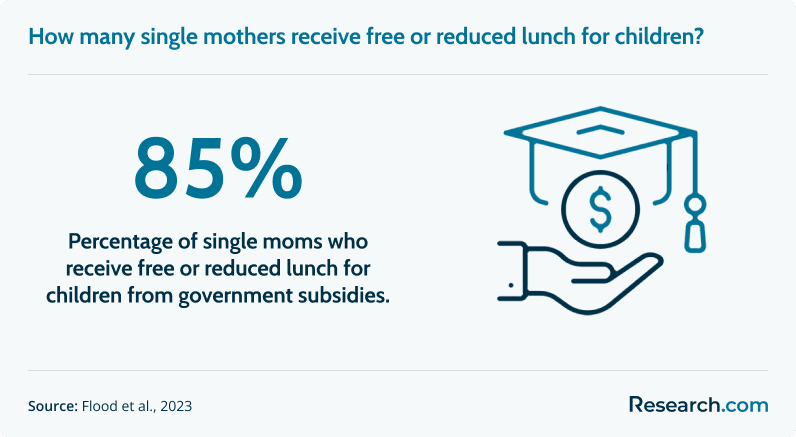
Career planning matters because many student parents are seeking more than a credential; they are trying to build durable family stability. The data cited in this guide notes that 85% of single-mother-led households currently rely on government food assistance, making the move toward stable employment especially important.
What is the job market for graduates of the best colleges for single parents?
College graduates generally have access to a broader set of professional roles than workers without a degree, but outcomes are not automatic. Your job market will depend on your field, region, work history, internships, networking, credentials, and how clearly your skills match employer needs.
The strongest programs for student parents do more than help you complete courses. They help you connect your degree to employment through advising, career services, resume support, internships, employer partnerships, and planning for graduate or licensure pathways when needed. Students interested in behavioral health, for example, should compare the types of mental health professionals and understand the education required for each role.
Current trends affecting student parents
- Flexible learning is now a major selection factor. Online, hybrid, evening, and accelerated courses can help parents stay enrolled, but flexibility varies by program and major.
- Basic-needs support affects persistence. Food assistance, childcare help, emergency funds, and housing support can be just as important as academic tutoring.
- Employers value adaptable skills. Communication, problem-solving, digital fluency, teamwork, and the ability to learn quickly remain useful across changing industries.
- Career services matter earlier. Student parents benefit from career planning before the final semester, especially if they need flexible work, benefits, or a predictable schedule after graduation.
Securing your financial future
A degree should be evaluated as part of a larger career plan. Before borrowing, confirm the jobs your program is designed to support, whether internships are required, whether licensure is needed, and how graduates typically transition into employment.
Financial aid can help you start college, but the long-term goal is sustainable income, stable benefits, and advancement potential. The best colleges for students with children help connect academic progress with that larger goal.
Here’s What Graduates Have to Say About Their College for Single Parents
- Leilani: "I needed a program that understood my evenings belonged to my child first. Being able to complete coursework after bedtime made the difference, but the bigger change came after graduation. I moved into a salaried role with benefits, and our household finally had room to plan instead of only react."
- Stefan: "My daughter watched me study at the kitchen table, and that changed how she talked about school. The degree helped me enter social work, but it also showed her that college was something people in our family could do. That mattered as much as the diploma."
- Sora: "Classes were not my only challenge. Financial aid forms, registration dates, childcare paperwork, and career planning all felt overwhelming at first. The student-parent advisor helped me organize each step, find childcare support, and prepare my resume before graduation."
How can I balance academics and family responsibilities effectively?
Balancing college and parenting requires structure, realistic expectations, and consistent use of support systems. Start by listing fixed commitments such as work shifts, school drop-off and pickup, meals, bedtime, medical appointments, and commuting. Then identify dependable study blocks instead of hoping extra time will appear.
Use a digital calendar or planner to track assignments, exams, childcare coverage, and financial aid deadlines. Build backup plans for sick days, school closures, and transportation problems. If your schedule is unpredictable, programs similar to the best online degree options may offer the flexibility needed to keep coursework aligned with family life.
Practical weekly strategy for student parents
- Plan the week before it starts. Review assignments, work hours, childcare gaps, and deadlines every weekend.
- Protect short study blocks. A consistent 45-minute session can be more realistic than waiting for several uninterrupted hours.
- Communicate early with instructors. Explain documented conflicts before they become missed deadlines.
- Use campus support immediately. Do not wait until you are failing to contact tutoring, advising, counseling, food assistance, or emergency aid offices.
- Choose sustainable course loads. If you are working full-time and parenting, a slower pace may improve your chance of finishing.
- Reassess each term. Childcare, work, finances, and health can change, so your academic plan should be adjustable.
Key Insights
- The best college for a single parent is not automatically the cheapest or highest ranked. The strongest choice is the school that combines manageable net cost, flexible scheduling, reliable childcare support, and a realistic path to graduation.
- Childcare and basic-needs support can determine persistence. Programs such as CCAMPIS, childcare grants, food assistance, emergency funds, and family housing can be decisive for student parents.
- Net price is more important than sticker price. Compare tuition only after considering grants, scholarships, housing support, childcare costs, books, transportation, and lost work hours.
- Accreditation should be nonnegotiable. It affects federal aid eligibility, credit transfer, employer recognition, and future graduate study options.
- Flexible does not always mean easy. Online, hybrid, part-time, and accelerated programs can help parents, but each format requires careful planning and dependable time management.
- Student parents should interview colleges as carefully as colleges review applicants. Ask direct questions about childcare waitlists, parent scholarships, transfer credits, emergency aid, required in-person courses, and career services.
- A degree should connect to a career plan. Before enrolling, understand the jobs your major can lead to, whether licensure or graduate school is required, and how the college helps adult learners move into stable employment.
References:
- Caldwell, B., & Nzau, S. (2024). Basic supports increase retention of student parents. New America. Retrieved October 7, 2025, from New America.
- Davis Jr., K. (2025). Unlocking the full potential of CCAMPIS for student parents. New America. Retrieved October 7, 2025, from New America.
- Flood, S., King, M., Rodgers, R., Ruggles, S., Warren, J. R.,... & Westberry, M. (2023). Integrated Public Use Microdata Series, Current Population Survey: Version 11.0 [Data set]. IPUMS. Retrieved October 7, 2025, from IPUMS.
- Glauber, R. (2018). Trends in the motherhood wage penalty and fatherhood wage premium for low, middle, and high earners. Demography, 55(5), 1663-1680. Retrieved from JSTOR.
- Schreiber, R., Ryberg, R., Warren, J., Taylor, L., & Gittens, S. (2024). The financial well-being of parents pursuing postsecondary education. The Hope Center & Student Parent Action through Research Knowledge (SPARK) Collaborative. Retrieved October 7, 2025, from SPARK Collaborative.
- Today's Students Coalition. (2023). 101: Single moms in higher education. Retrieved October 7, 2025, from Today's Students Coalition.
- U.S. Department of Education. (2024). 2025-2026 Student Aid Index (SAI) and Pell Grant eligibility guide. Retrieved October 7, 2025, from DOE.
- U.S. Department of Education. (2025). Child Care Access Means Parents in School Program. Retrieved October 7, 2025, from DOE.
- Yates, K. (2024). By the numbers: Student parents in higher education. American Council on Education. Retrieved October 7, 2025, from ACE.
Other Things You Should Know About the Best Colleges for Single Parents
Parents should check whether the college has an on-campus child care center, age limits for children, operating hours, and a waiting list. Some campuses give priority to student parents, require proof of enrollment, and charge fees based on income or use subsidized slots through state child care programs.
Colleges in 2027 offer various support services for single parents and students with children, including childcare facilities, family housing options, financial aid tailored for single parents, and flexible scheduling. Some institutions also provide counseling services and parenting support groups to help balance family and academic obligations.
Colleges like Arizona State University and Southern New Hampshire University provide flexible class schedules, including evening and online classes, to accommodate single parents’ needs in 2027, enabling them to balance education, work, and family commitments efficiently.