How to Transfer Grad Schools in 2027

Co-Founder and Chief Data Scientist
Making the decision to transfer grad schools is a significant and often challenging process. Whether driven by a change in academic interests, a need for a better-suited advisor, or a desire for a different program environment, the path to a new institution is filled with complex considerations.
A successful transfer hinges on a clear understanding of your motivations and a proactive approach to addressing potential pitfalls, such as losing completed coursework, burning professional bridges, or having unrealistic expectations about your timeline. This article aims to guide you through these complexities, providing the tools you need for a smooth and effective transition.
Key Benefits of Learning How to Transfer Grad Schools
- Transferring to a new institution can give you access to new academic programs, professors, and research opportunities that were not available at your previous school. This can open doors to new career paths and specializations.
- Graduate degree holders often earn significantly more than those with only a bachelor's degree. A master's degree holder has a median salary of $90,324, which is over $12,000 more than someone with just a bachelor's.
- Many online graduate programs offer the same quality of education as traditional on-campus programs. They provide flexibility and convenience, allowing you to continue working while earning your degree, saving money on housing and commuting, and potentially accelerating your path to a higher-paying job.
What can I expect from grad school transfer?
Deciding to transfer graduate schools is a complex process often driven by a need for a better academic fit, a change in research interests, or a desire for a different program environment. Unlike undergraduate transfers, this move is highly intricate, with implications for everything from credit transfer and funding to the very nature of your dissertation research. The process requires a strategic approach, as you must not only secure admission to a new institution but also navigate the administrative and academic challenges of leaving your current program.
Where can I work with a grad school degree?
Graduates with advanced degrees are highly sought after in numerous sectors that value their specialized knowledge and research abilities. In the private sector, individuals with master's and Ph.D. degrees often find lucrative opportunities in the technology and pharmaceutical industries. Their expertise is also highly valued in the world of consulting, where they provide strategic advice to companies on everything from finance and management to technology and sustainability.
Beyond the private sector, those with advanced degrees are essential to the success of public and non-profit organizations. Graduates with backgrounds in public policy or environmental science often secure positions in government agencies or non-profits, where they work to solve complex societal problems and shape policy. Their skills are also well-suited for roles in grant writing and program management within various non-profit fields.
How much can I make with a grad school degree?
Obtaining a graduate degree significantly boosts earning potential. According to the Bureau of Labor Statistics (BLS), the median weekly earnings for a master's degree holder are around $1,737, which equates to approximately $90,324 annually. This is a considerable increase compared to the $77,636 median annual salary for those with a bachelor's degree.
Over a lifetime, this salary difference can be substantial, as graduates with a master's degree typically earn hundreds of thousands of dollars more than those with only an undergraduate degree. The specific earnings of a graduate degree holder can vary widely depending on their field of study. Highly specialized fields tend to command higher salaries.
Popular College Degrees Worth Considering in 2027
Computer Science
A computer science program focuses on the theoretical foundations of computation and the practical application of software and hardware. Students learn about data structures, algorithms, programming languages, and a variety of subfields like artificial intelligence, cybersecurity, and software engineering. Graduates are equipped with the analytical and problem-solving skills needed to design and build technology systems.
Business Administration
A Business Administration degree provides a broad understanding of how organizations operate. The curriculum typically covers core business functions such as accounting, finance, marketing, and management. This degree is highly versatile, as it provides students with a foundational skillset that can be applied to a wide range of industries and job roles.
Management Information Systems (MIS)
Management Information Systems is an interdisciplinary program that bridges the gap between technology and business. Students learn to use information systems to solve business problems, improve processes, and support decision-making. Unlike a traditional computer science program, MIS places a greater emphasis on the strategic use of technology within an organization.
Social Work
A Social Work program prepares students to help individuals, families, and communities overcome challenges and improve their well-being. The curriculum focuses on human behavior, social justice, and policy, teaching students how to advocate for vulnerable populations. Graduates are trained to work in diverse settings, from schools and hospitals to non-profits and government agencies.
Nursing
A Nursing program is a rigorous, science-based curriculum that prepares students to provide direct patient care. Courses include anatomy, physiology, pharmacology, and clinical practice, with a strong emphasis on health promotion, disease prevention, and patient advocacy. Nurses are at the forefront of the healthcare system, and a degree in nursing provides a clear path to a stable, in-demand career.
- What is the step-by-step process for applying to a new graduate school as a transfer student? How To Transfer
- What are the common application requirements for graduate transfer students? Transfer Requirements
- How many credits can I transfer to a new graduate program? Credits
- What are articulation agreements, and how do they affect my transfer credits? Articulation Agreements
- Can I get financial aid as a graduate transfer student? Financial Aid
- How does transferring affect my current student loans and funding package? How does transferring affect my current student loans and funding package?
- What factors should I consider when choosing a new graduate school to transfer to? Selection Factors
- How does the process of transferring differ for PhD students compared to master's students? PhD vs Master's
- What are the implications of transferring for my dissertation research and progress? What are the implications of transferring for my dissertation research and progress?
- What are some common mistakes to avoid when transferring between graduate schools? What are some common mistakes to avoid when transferring between graduate schools?
- Could an Online Graduate Program be a Viable Alternative to Transferring Schools? Could an Online Graduate Program be a Viable Alternative to Transferring Schools?
How to Transfer Graduate Schools in 2026: Step-by-Step Application Process
Changing graduate schools is not the same as transferring as an undergraduate. At the graduate level, departments often control admissions, faculty fit matters more, funding can be tied to a specific program or advisor, and only some credits may count toward the new degree. A transfer can be the right move if your current program no longer fits your research goals, career plans, location needs, finances, or well-being. It can also cost time and money if you move without confirming credit transfer, funding, accreditation, and degree requirements first.
This guide explains how to apply to a new graduate school as a transfer student, how many credits may transfer, how financial aid and loans are affected, and what changes for master’s and PhD students. It is designed for students who are already enrolled in a graduate program and are deciding whether to move to another institution, switch formats, or restart in a better-fitting program.
Quick answer: Can you transfer graduate schools?
Yes, you can apply to another graduate school after starting a master’s, doctoral, or graduate certificate program. However, graduate transfer admission is not automatic. The new school will review your application like a new applicant, evaluate whether your completed courses match its curriculum, and decide how many credits, if any, can apply to the new degree. Most master’s programs accept only a limited number of transfer credits, often 6 to 12 credits, while doctoral transfers depend heavily on advisor fit, research progress, and funding availability.
| Step | What to do | Why it matters |
| 1. Clarify your reason for transferring | Write down what is not working and what the new program must provide. | Admissions committees expect a clear academic or professional reason, not only dissatisfaction with your current school. |
| 2. Identify realistic programs | Compare curriculum, faculty, accreditation, modality, location, cost, and transfer-credit rules. | A strong program on paper may still be a poor fit if it will not accept your credits or support your goals. |
| 3. Contact admissions and the graduate department | Ask how transfer applicants are reviewed and whether credits are evaluated before or after admission. | Policies can differ by school, college, department, and degree level. |
| 4. Prepare application materials | Gather transcripts, recommendations, a resume or CV, test scores if required, writing samples, and a transfer-focused statement. | Graduate transfer applications must show both readiness for advanced study and a credible reason for changing institutions. |
| 5. Confirm funding and loan implications | Speak with both financial aid offices and your loan servicer before withdrawing. | Your current aid package will not automatically follow you, and your loan status may change during the gap between programs. |
| 6. Exit professionally | Follow withdrawal procedures, preserve relationships, and request needed recommendations early. | Your current faculty may remain important references, collaborators, or professional contacts. |
1. Start by deciding whether transfer is better than staying, pausing, or changing format
Before applying elsewhere, define the problem you are trying to solve. A transfer may make sense if your research interests have changed, your advisor relationship is no longer workable, your program lacks the specialization you need, your funding has changed, or your personal circumstances require a different location or schedule. It may not be the best option if the issue can be resolved by changing advisors, switching concentrations, moving to part-time study, taking a leave of absence, or choosing an online format.
If your goal is to broaden your academic pathway rather than leave your current institution entirely, compare transfer options with alternatives such as dual graduate degree programs, certificates, or a different concentration within your current department.
2. Research transfer-friendly graduate programs carefully
Look beyond rankings and program names. For graduate transfer students, the best school is the one that can accept you into the right academic track, recognize at least some of your prior work, and provide the support you need to complete the degree. Review each program’s graduate catalog and contact the department directly because university-wide transfer policies may not apply equally to every graduate program.
- Transfer-credit policy: Ask the maximum number of credits allowed, whether credits must be recent, whether courses must match exact requirements, and whether credits used toward another degree are eligible.
- Admission standards: Confirm GPA expectations, test requirements, prerequisite courses, writing samples, portfolio requirements, interviews, and department-level review procedures.
- Accreditation and licensure alignment: If your field leads to licensure, certification, or professional practice, verify that the new program meets requirements in the state where you plan to work.
- Faculty and advisor fit: For research-based programs, identify faculty whose work aligns with your interests before you apply.
- Funding availability: Ask whether transfer students are considered for assistantships, fellowships, tuition waivers, and scholarships.
3. Gather documents before deadlines create pressure
Graduate transfer applications usually require materials from both your current graduate institution and any prior colleges or universities you attended. Request official transcripts early because delays can prevent a file from being reviewed on time.
- Official transcripts: Submit transcripts from every postsecondary institution attended, including schools where you took only a few courses.
- Letters of recommendation: Choose recommenders who can explain your graduate-level performance, research potential, professionalism, and readiness for the new program.
- Resume or CV: Include graduate coursework, research, publications, presentations, assistantships, internships, clinical experience, work history, and relevant technical skills.
- Course syllabi: Keep syllabi, reading lists, assignments, and course descriptions from completed graduate classes because the new program may need them for credit evaluation.
- Writing sample or portfolio: Some programs require a scholarly paper, research proposal, design portfolio, teaching materials, or professional work samples.
4. Write a transfer-focused personal statement
Your statement should explain why the move is academically justified and how the new program fits your goals. Avoid blaming your current school or writing a statement that sounds like an escape plan. Instead, show what you learned from your current program, what changed, and why the new department is a better match.
- Be specific about fit: Name the specialization, curriculum, faculty expertise, research facilities, practicum structure, or career preparation that attracts you.
- Address the transfer directly: Briefly explain why you are applying after beginning graduate study elsewhere.
- Show readiness: Connect your completed coursework, projects, research, or professional experience to the new program’s expectations.
- Customize each version: A generic statement is easy to spot, especially in specialized graduate programs.
5. Submit the correct application and track every requirement
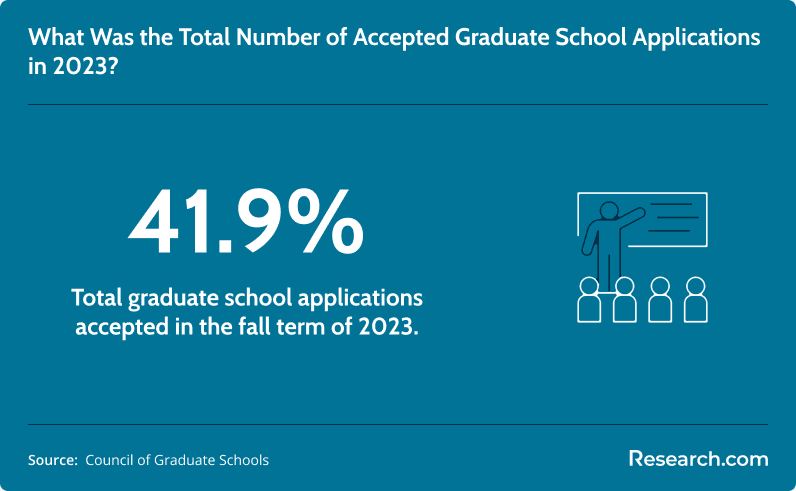
Graduate transfer applicants often use the same application portal as first-time graduate applicants, but some schools have separate forms, supplemental questions, or credit-evaluation documents. In 2023, institutions approved 41.9% of graduate school applications, which shows that admission is possible but still selective. Treat the application as a full admissions process, not a paperwork transfer.
After submission, monitor your portal and email for missing items. If credit transfer is evaluated only after admission, ask when you will receive a formal degree audit. Do not assume an informal email or advisor comment guarantees that credits will count.
6. Prepare for a possible interview
Some graduate departments interview transfer applicants to understand their goals, research fit, professionalism, and reason for leaving a previous program. Be ready to discuss your academic background, what you want to study next, and how you handled challenges in your current program. Keep the tone factual and forward-looking.
Common Graduate Transfer Application Requirements
Graduate transfer requirements vary by institution and department, but most schools ask for the same core documents used in standard graduate admission. The difference is that transfer applicants may also need to provide syllabi, course descriptions, and a clear explanation of previous graduate enrollment.
Core materials most applicants should expect
| Requirement | What it usually includes | Transfer-specific tip |
| Graduate application | University application, department questions, program selection, and term of entry. | Most graduate students apply through the school’s own portal. The Common App transfer resource is more relevant to undergraduate transfer planning, so verify the correct graduate process with each institution. |
| Application fee | A non-refundable fee submitted with the application. | Ask whether fee waivers are available if cost is a barrier. |
| Official transcripts | Records from all colleges and universities previously attended. | Do not omit short-term enrollment or institutions where credits were later transferred elsewhere. |
| Statement of purpose | An essay explaining academic goals, career plans, and fit with the new program. | Explain the transfer calmly and professionally without criticizing your current school. |
| Recommendation letters | Letters from faculty, supervisors, research mentors, or professional references. | A current graduate instructor or advisor can strengthen the application, but choose someone who will be supportive. |
| Resume or CV | Academic, research, professional, leadership, and service experience. | Highlight graduate-level achievements, not only undergraduate accomplishments. |
Additional requirements by field or applicant type
- Standardized test scores: Some programs still require GRE, GMAT, or other exams, while others waive them for applicants with completed graduate coursework.
- Prerequisite documentation: Health, education, engineering, business, counseling, and STEM programs may require specific prior courses.
- Portfolio, audition, or writing sample: Creative, design, humanities, and research-heavy programs may evaluate samples of prior work.
- Professional license or certification records: Some programs ask for proof of current credentials, especially in education, nursing, counseling, and public administration fields.
- International student documents: International transfer students may need credential evaluations, English proficiency scores, passport documents, and visa-transfer support.
If your main goal is to finish quickly after changing direction, compare transfer options with accelerated pathways such as 1 year master’s programs. A short program is not automatically cheaper or easier, but it may be more efficient than transferring into a long curriculum that accepts few prior credits.
How Many Graduate Credits Can Transfer?
The number of graduate credits you can transfer depends on the new institution, department, degree level, accreditation rules, course grades, course age, and curriculum match. There is no universal graduate transfer-credit rule. Always ask for the written policy and, when possible, a course-by-course review before committing.
Typical transfer-credit limits
| Degree level | Common credit-transfer pattern | Important caution |
| Master’s degree | Many programs allow a maximum of 6 to 12 transfer credits. | Even eligible credits may be denied if they do not match required courses in the new curriculum. |
| Programs using percentage limits | Some schools cap transfer credit at a percentage of the degree, such as 20% of total credit hours. | A percentage cap can still be reduced by department rules or accreditation requirements. |
| Doctoral program | Doctoral students may receive more credit for prior graduate study, especially when entering with a completed master’s degree. | Some cases allow a full master’s degree to transfer for a maximum of 30 graduate credit hours, but this is not guaranteed. |
| Graduate certificate | Policies vary widely by school and certificate length. | Because certificates are shorter, even one denied course can affect the completion timeline. |
Common rules used to evaluate graduate transfer credits
- Accreditation: Credits usually must come from a regionally accredited institution.
- Course level: Undergraduate courses normally do not count toward graduate degree requirements.
- Grade minimum: Many programs require a grade of “B” or higher for transfer consideration.
- Curriculum match: The course content must align with the receiving program’s degree requirements.
- Time limits: Some programs reject older credits because knowledge, standards, or professional requirements have changed.
- Prior degree restrictions: Credits already used to complete a previous degree often cannot be reused for another degree.
In 2023, universities offering high research doctoral programs accepted 49.9% of applications. That figure reflects admissions activity, not transfer-credit approval. A student can be admitted to a new graduate program and still lose credits if prior courses do not satisfy the new degree plan.
If you are considering a shorter credential rather than restarting a full degree, review options such as online graduate certificate programs. Certificates can be useful for career pivots, but you should still confirm accreditation, employer recognition, and whether certificate credits can later apply to a degree.
Graduate admissions data from Fall 2023 suggests that entry to graduate study remains competitive but accessible for prepared applicants. For transfer students, the more important question is not only “Will I be admitted?” but also “How much of my prior work will count?”
What Articulation Agreements Mean for Graduate Transfer Credits
An articulation agreement is a formal arrangement between institutions that explains how courses or programs transfer from one school to another. These agreements are more common in undergraduate pathways, but some graduate schools, professional programs, and partner institutions use them to simplify admission or credit review.
For graduate students, an articulation agreement can be helpful, but it should not be treated as a blanket guarantee unless the agreement specifically covers your degree, catalog year, courses, grades, and admission category.
How articulation agreements can help
- Clearer credit mapping: The agreement may list which courses from the sending institution satisfy requirements at the receiving school.
- Reduced uncertainty: Students can plan with fewer surprises if the agreement is current and program-specific.
- Potential time and cost savings: Accepted credits may reduce duplicate coursework.
- Defined admission pathway: Some agreements specify GPA, course, or degree-completion requirements for consideration or admission.
Questions to ask before relying on an articulation agreement
- Does the agreement apply to graduate students or only undergraduate transfer students?
- Is it tied to a specific program, concentration, campus, or online format?
- Does it guarantee credit transfer, admission consideration, or admission itself?
- What minimum grade is required for each course?
- Does the agreement remain valid for your intended start term?
- Will transferred credits count toward core requirements, electives, or only general graduate credit?
Articulation agreements can make transfer planning easier, but they do not replace a formal review from the receiving graduate program. If cost is one of your main reasons for transferring, compare the agreement’s real credit savings with lower-cost alternatives such as affordable online master’s programs.
Can Graduate Transfer Students Get Financial Aid?
Yes. Graduate transfer students can apply for financial aid at the new institution, but aid from the previous school does not automatically transfer. You must update your financial aid records, complete any school-specific aid forms, and confirm whether the new program offers funding to transfer students.
Common funding sources for graduate transfer students
| Funding type | How it works | What transfer students should verify |
| Federal Direct Unsubsidized Loans | Graduate students commonly use these loans, and interest accrues while enrolled. | Confirm remaining eligibility and the new school’s cost of attendance. |
| Federal Grad PLUS Loans | Credit-based federal loans that may cover remaining eligible costs after other aid. | Check credit requirements, borrowing limits, and total repayment cost. |
| Assistantships | Teaching, research, or administrative roles that may include pay, tuition support, or both. | Ask whether transfer students are eligible in their first term. |
| Fellowships and scholarships | Merit-based, need-based, field-specific, or institutional awards. | Deadlines may occur earlier than admission deadlines. |
| Employer tuition benefits | Some employers help pay for approved graduate study. | Confirm whether a school change affects reimbursement rules. |
Experienced professionals who need a program designed around leadership and career advancement may also compare transfer options with an executive master’s degree. These programs may fit working adults, but applicants should evaluate schedule, cost, cohort expectations, and employer value before enrolling.
Funding should be evaluated alongside long-term career plans. If you are deciding between doctoral fields, resources on high-paying PhD pathways can help you compare potential return on investment, although no degree can guarantee a specific salary or job outcome.
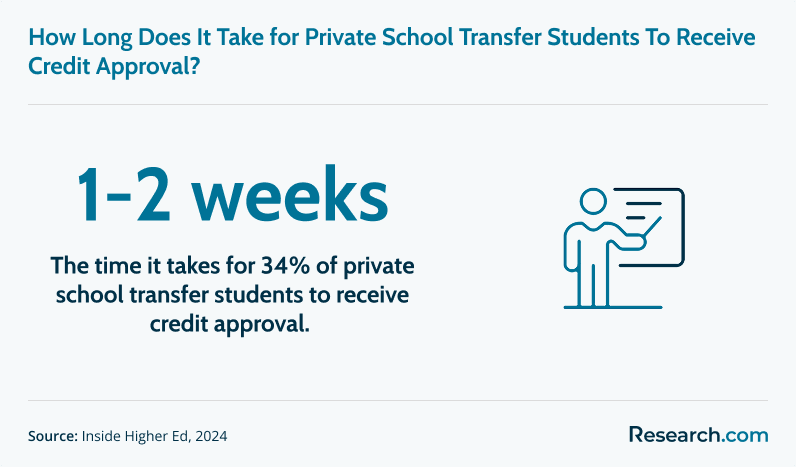
The infographic below summarizes how to approach credit-transfer approval when evaluating a target graduate school.
How Transferring Can Affect Student Loans, Assistantships, and Current Funding
Transferring can affect your student loans and funding package even when you remain enrolled in graduate education. The key issue is timing. When you withdraw from your current school, your enrollment status changes. If there is a gap before the new school reports your enrollment, loan servicers may treat you as no longer in school.
Federal student loans may enter a grace period after you leave a program. If the gap between schools extends beyond that grace period, repayment may begin. Once you start at the new institution, your enrollment can qualify you for in-school deferment if you meet enrollment requirements, but you should not assume the process happens perfectly without checking.
Loan and funding checklist before you transfer
- Contact your current financial aid office: Ask how withdrawal will affect grants, assistantships, tuition waivers, stipends, and institutional aid.
- Speak with your new financial aid office: Confirm aid eligibility, loan processing timelines, cost of attendance, and assistantship availability.
- Check your loan servicer account: Verify whether your loans are listed as in school, in grace, deferred, or in repayment.
- Confirm enrollment reporting: Your new school’s enrollment reporting should reach the National Student Loan Data System, but you should monitor your loan account until the status is correct.
- Ask about interest capitalization: For unsubsidized loans, interest can be added to the principal balance in certain circumstances, increasing total repayment cost.
- Do not withdraw casually: Follow the formal withdrawal process so your academic record and student account are closed correctly.
If your transfer goal is to finish a public service or policy credential faster, compare traditional transfer with accelerated options such as one year online MPA programs. An accelerated program can save time for some students, but it may require a heavier workload and careful financial planning.
How to Choose the Right Graduate School to Transfer To
A better graduate school is not simply a more recognizable name. For a transfer student, the right program must solve the problem that led you to transfer while keeping your timeline, funding, academic progress, and career goals realistic. In fall term of 2023, around 1.2 million graduate students enrolled in public institutions, while only a third of that number enrolled in private colleges and universities. That enrollment pattern shows that many students choose public institutions, but the best choice still depends on program fit, cost, funding, and outcomes.
Key factors to compare before accepting an offer
| Factor | What to compare | Red flag |
| Program fit | Concentrations, required courses, research areas, clinical or practicum structure, and career preparation. | The program sounds prestigious but does not offer your needed specialization. |
| Faculty fit | Advisor availability, research alignment, mentorship style, and faculty workload. | No faculty member is clearly interested in supervising your work. |
| Credit transfer | Maximum credits, course equivalency process, grade rules, and time limits. | You must enroll before learning how many credits will count. |
| Total cost | Tuition, fees, relocation, books, technology, commuting, lost income, and living expenses. | The school discusses tuition but avoids giving a full cost estimate. |
| Funding | Assistantships, scholarships, fellowships, employer support, and loan dependence. | Funding is uncertain or only available after the first year. |
| Student support | Career services, writing support, mental health resources, disability services, advising, and graduate student community. | Current students report poor advising or limited departmental support. |
| Modality | Online, hybrid, campus-based, full-time, part-time, synchronous, and asynchronous options. | The schedule conflicts with work, family, clinical, or research obligations. |
Questions to ask the new program before transferring
- How many transfer students has the program admitted recently?
- When will my transfer credits be reviewed, and who makes the final decision?
- Can I speak with a current graduate student in my intended concentration?
- Are transfer students eligible for assistantships or fellowships in the first semester?
- Will prior coursework reduce my time to completion, or will I still need the full sequence?
- Are there residency requirements that limit how much online or transfer coursework can count?
- What are the program’s expectations for research, internships, practicums, comprehensive exams, or capstone projects?
If relocating is the main barrier, you may want to explore how to earn a doctorate online. Online doctoral study can offer flexibility, but students should still confirm accreditation, residency requirements, dissertation support, faculty access, and licensure relevance where applicable.
Fall 2023 graduate enrollment was concentrated more heavily in public institutions than private universities. The chart below illustrates that public institutions enrolled over twice as many graduate students as their private counterparts.
Master’s Transfer vs. PhD Transfer: What Changes?
The basic application steps are similar for master’s and doctoral students, but the stakes are different. Master’s transfers usually revolve around coursework, credit limits, and program requirements. PhD transfers involve research continuity, advisor relationships, dissertation feasibility, and funding tied to grants or assistantships.
| Issue | Master’s transfer | PhD transfer |
| Main review focus | Coursework completed, grades, prerequisites, and program fit. | Advisor match, research agenda, funding, dissertation stage, and scholarly potential. |
| Credit transfer | Often limited but relatively straightforward to evaluate through syllabi and course descriptions. | May include prior graduate work, but credits are only one part of the decision. |
| Advisor dependence | Usually moderate unless the program includes a thesis or specialized practicum. | High because doctoral work often depends on a specific advisor and committee. |
| Research impact | May affect thesis or capstone plans, but coursework-based programs are easier to restart. | Can require changing research questions, methods, data, committee members, or timeline. |
| Funding risk | Scholarships or assistantships may change, but funding is often less advisor-specific. | Research assistantships may be tied to an advisor’s grants and may not transfer. |
| Best-case reason to transfer | A better specialization, schedule, location, cost, or professional pathway. | Your advisor moves, or a new advisor has a clearly better research fit and funding path. |
Why master’s transfers are usually more manageable
Many master’s degrees are structured around required courses and electives. That makes transfer review more concrete: the new school compares your completed courses with its curriculum and decides what counts. You may lose credits, but you are less likely to lose years of original research unless you are in a thesis-heavy program.
Why PhD transfers are harder
A PhD is not only a list of courses. It is a long research apprenticeship built around an advisor, committee, research question, funding structure, and dissertation plan. A new department may be reluctant to take responsibility for research it did not supervise. Admissions committees may also ask why you are leaving and whether the transfer will create the same problem again.
For educators and higher education professionals who need a doctoral option that can fit around employment, an online PhD in higher education may be worth comparing with a traditional campus transfer. As with any doctoral program, confirm dissertation supervision, research expectations, and institutional credibility before applying.
How Transferring Can Affect Dissertation Research and Doctoral Progress
Transferring during a doctoral program can significantly affect your dissertation timeline, research approval, funding, and committee structure. The later you are in the dissertation process, the harder it becomes to preserve your work. Unless your advisor moves to another university and you transfer with that advisor, a new department may ask you to revise or restart major parts of your research.
From 2017-18 to 2022-23, the number of awarded doctoral degrees reached 3.7%. For a student considering a doctoral transfer, the important takeaway is that completion matters more than admission alone. A transfer that adds years, disrupts funding, or forces a dissertation reset should be weighed very carefully.
Your new university, department, advisor, and committee are not obligated to approve prior dissertation work. They may require new coursework, a new qualifying exam, a revised proposal, fresh institutional review, or a different research design. Students in fields with human subjects research should be especially careful because institutional review board approval and data-use permissions may not transfer cleanly.
If you are in a field where standardized test requirements are a barrier, compare transfer policies with programs that remove that hurdle, such as online master’s in library science programs with no GRE requirement. Admission flexibility can help, but you should still evaluate accreditation, curriculum quality, and career alignment.
Dissertation-stage impact table
| Current stage | Likely transfer impact | What to do before applying |
| Coursework or early exploration | This is usually the least disruptive point to transfer, although you may still lose credits or repeat exams. | Ask whether completed courses count and whether you must retake comprehensive or qualifying exams. |
| Pre-proposal | You may be able to redirect your topic before formal dissertation approval. | Identify a potential advisor at the new school before submitting the application. |
| Post-proposal or data collection | This stage is risky because the new program may not accept the approved proposal, methods, or collected data. | Ask about IRB, data ownership, advisor supervision, and whether your research question can continue. |
| Writing stage | Transferring is usually impractical unless your advisor is moving and the new institution accepts the arrangement. | Consider finishing where you are if at all possible, or negotiate a formal advisor move if available. |
Best-case and worst-case doctoral transfer outcomes
In the best case, your advisor moves to a compatible institution, your funding continues or is replaced, your committee structure is preserved, and your research remains viable. In that situation, the transfer is largely administrative, although it still requires careful coordination.
In the worst case, you leave without a supportive recommendation, your data cannot be used, your new department rejects your previous dissertation work, and you must begin again with a new advisor and research plan. Some students in that situation exit with a master’s degree and later reapply to doctoral programs from the beginning.
Before making a doctoral transfer decision, have direct conversations with your current advisor if possible, potential new advisors, the graduate program director, the financial aid office, and any office responsible for research compliance.
Data cited for 2017-18 to 2022-23 shows growth in graduate degrees and certificates awarded, with graduate certificates showing the strongest growth, followed by master’s and doctoral degrees.
Common Mistakes to Avoid When Transferring Graduate Schools
Many graduate transfer problems happen because students move quickly to get away from a bad fit without fully checking whether the next program will solve the underlying issue. A careful transfer plan should protect your credits, funding, professional relationships, and completion timeline.
| Mistake | Why it creates problems | Better approach |
| Choosing a school before confirming credit transfer | You may be admitted but lose most of your completed coursework. | Request a written credit review or degree audit as early as the school allows. |
| Focusing only on tuition | Lower tuition may not save money if you lose credits, relocate, or lose funding. | Compare total cost, time to completion, living expenses, and aid. |
| Writing negatively about your current program | Admissions committees may question your professionalism or fit. | Explain your goals and the new program’s fit without attacking your current school. |
| Burning bridges with faculty | You may still need recommendations, references, or academic records. | Communicate respectfully and follow formal withdrawal procedures. |
| Assuming online programs meet every requirement | Some online degrees may not satisfy licensure, residency, practicum, or state authorization rules. | Verify accreditation, licensure alignment, and in-person requirements before enrolling. |
| Ignoring funding deadlines | Assistantship and fellowship deadlines may close before admission decisions are released. | Ask departments and financial aid offices about funding timelines before applying. |
| Relying only on rankings | A highly ranked school may still lack your specialization, advisor fit, or transfer flexibility. | Prioritize program match, support, cost, and completion feasibility. |
| Underestimating the emotional and administrative transition | Starting over can affect confidence, community, and momentum. | Build a plan for advising, peer connection, mental health support, and academic onboarding. |
Could an Online Graduate Program Be a Better Alternative to Transferring?
An online graduate program may be a practical alternative if your main concerns are schedule, location, commuting, family obligations, or the need to keep working while studying. Instead of transferring into another campus-based program, you may be able to apply to a flexible online option that better matches your life and career goals.
Online study is not automatically easier, cheaper, or faster. You still need to check accreditation, faculty access, course delivery format, practicum or residency requirements, transfer-credit limits, financial aid eligibility, and employer recognition. If speed is your priority, compare transfer options with resources on the fastest online degree pathways, but make sure the program quality and credential value justify the pace.
| Choose transfer when... | Consider an online program when... |
| You need a different advisor, research lab, specialization, or campus-based resource. | Your current issue is mostly schedule, location, or flexibility. |
| The new school will accept meaningful credits and support your timeline. | You are willing to apply as a new student if few credits transfer. |
| Funding or assistantship opportunities improve at the new institution. | You plan to keep working and need asynchronous or part-time study. |
| Your field requires in-person labs, clinical training, or campus access. | Your field can be completed effectively online and meets any licensure requirements. |
What Graduates Say About Transferring Graduate Schools
- Sarah: "Changing programs felt risky at first, but it ended up giving me access to the research support I needed. My first department did not have the funding or lab resources for my dissertation topic. The new program did, and that made it possible for me to finish and move into a research scientist role."
- Alex: "I reached a point where staying in my original program was affecting my health and my motivation. Transferring was intimidating, but the new department was a much better match. I found an advisor who respected my work, and I learned that protecting my well-being did not mean giving up on my academic goals."
- Michael: "The paperwork was frustrating, and I did lose some credits. Still, the move was worth it because the new program had a structure and academic community that pushed me in a better direction. The network I built there helped me after graduation in ways I did not expect."
Key Insights
- Graduate transfer is possible, but not automatic. You must apply, be admitted, and have credits reviewed under the new program’s rules.
- Credit transfer is often limited. Many master’s programs accept only 6 to 12 credits, and doctoral credit decisions depend on research fit, prior degrees, and department policy.
- PhD transfers carry higher risk. Advisor relationships, dissertation progress, data ownership, funding, and committee approval can make a doctoral transfer much more complicated than a master’s transfer.
- Financial aid must be restarted at the new school. Your current aid package will not simply move with you, and loan status should be monitored during any enrollment gap.
- The best transfer applications are forward-looking. Explain why the new program fits your goals rather than focusing on complaints about your current institution.
- Ask for written answers. Credit approval, funding eligibility, residency requirements, and licensure alignment should be documented before you commit.
- Online programs may solve the real problem. If your issue is flexibility rather than academic fit, an accredited online graduate program may be less disruptive than transferring schools.
References:
- Council of Graduate Schools. (2023). Council of Graduate Schools releases new report on graduate applications and enrollment. Higher Ed Today.
- Jaschik, S. (2024). As undergraduate numbers slide, universities start to fret over graduate enrollment. The Hechinger Report.
- National Association of Colleges and Employers. (2024). First destinations for the Class of 2023.
- National Association of Colleges and Employers. (2024). First-destination outcomes for the college Class of 2023.
- National Association of Colleges and Employers. (2024). First-destination outcomes for the college Class of 2023: Interactive dashboard.
- Rosser, V. (2024). GSES 2024. University of Kansas.
- White, L. J. (2022). COVID-19 and the student pipeline: From high school through graduate school. American Council on Education.
Other Things You Should Know About Transferring Grad Schools
Yes, many graduate programs accept up to 6–12 transfer credits, but only if the courses earned a grade of B or higher and match the receiving program’s curriculum. Final approval usually comes from the department chair or graduate school, not the registrar.
Transferring graduate schools in 2027 might impact your current scholarships as some may not be transferable. It's essential to check with your new institution regarding available scholarship opportunities and eligibility criteria early in the application process to explore options for financial support after your transfer.