2027 Online MS in Psychology - Forensic Psychology for Qualitative Research with Service Providers: Which Courses Should You Look For?
Audited and Verified:
Our Editorial and Data Verification Process
Research.com uses government datasets, official education statistics and primary institutional information to support its career and degree guides. Our review process checks factual accuracy, occupational definitions, source dates and the requirements associated with the credentials discussed.
How This Article Was Fact-Checked
Our editorial team verifies salary estimates, employment projections, education requirements and program information against original data providers and official organizations. Salary figures are checked against the relevant occupational definitions and reporting periods. Information about licensure, accreditation and required in-person training is reviewed separately.
Fact-checked and verified on:

Co-Founder and Chief Data Scientist
An online forensic psychology master's can teach you about legal settings without teaching you how to interview service providers or evaluate their work. That distinction matters if your goal is to study victim advocates, corrections staff, treatment coordinators, or other professionals rather than provide clinical services.
This guide identifies the courses and supervised research experiences worth prioritizing, explains how to judge an online program's practical fit, and clarifies the limits of the degree. You can use it to compare curricula against a specific research question before committing time and tuition.
Key Things You Should Know
- Prioritize qualitative methods, research ethics, forensic service systems, and a supervised thesis or capstone; a forensic course title alone does not establish research readiness.
- Ask whether the program supports provider recruitment, secure interviews, coding, and agency-approved data access - not just an online literature review.
- A nonclinical forensic psychology MS does not itself qualify graduates for psychologist licensure, forensic assessment, or independent clinical practice.
What is forensic psychology qualitative research with service providers?
It is the systematic study of how professionals experience and deliver services connected to legal systems. A student might interview victim advocates about referral barriers, ask reentry coordinators how they collaborate with community agencies, or analyze approved, nonidentifying service documents. The focus is on providers' perspectives and organizational processes, not on diagnosing clients or determining whether an individual is legally competent.
Qualitative research uses sources such as interviews, observations, and documents to investigate meaning, decisions, and context. A provider interview can reveal why a referral procedure is difficult to use; it cannot, by itself, establish that the procedure causes better client outcomes. Providers' accounts also need interpretation in light of their roles, workplace incentives, and who was willing to participate.
This is graduate-level study, not a shortcut into forensic practice. Readers who have not yet completed a bachelor's degree need to resolve that step first; forensic psychology undergraduate graduation timelines concern a separate educational decision.
Which courses should an online forensic psychology master's program include?
The strongest curriculum for this goal connects methods training to a realistic study of provider work. Compare actual course descriptions and assignments, not concentration labels: an elective may be unavailable during your enrollment, and a general research course may teach only quantitative analysis.
The table separates essential preparation from useful supporting coursework. It also shows what evidence to request before treating a course title as a match.
| Course or experience | Why it matters for provider research | Evidence to look for |
| Qualitative research design and analysis | Supports interviewing, sampling, coding, and defensible interpretation. | Assignments involving an interview guide, analytic memo, and documented coding decisions. |
| Research ethics and data governance | Addresses consent, workplace power, confidentiality, and secure handling of recordings and transcripts. | Practice developing an ethics protocol or data-management plan. |
| Forensic psychology and justice-service systems | Provides context for courts, corrections, victim services, and interdisciplinary referrals. | Coverage of actual provider roles and institutional constraints, not only offender assessment. |
| Program evaluation and mixed methods | Connects provider accounts to service questions and, when appropriate, administrative indicators. | Work on evaluation questions, limitations, and interpretation across data sources. |
| Supervised thesis, capstone, or research practicum | Provides feedback on a feasible question, permissions, analysis, and reporting. | Named supervision arrangements and clear rules for external partners and human-participant work. |
Statistics and psychological measurement remain useful: they help you assess published evidence and avoid treating a count of referrals as a complete measure of service quality. Courses on trauma, substance use, or psychopathology may add context, but they do not substitute for methods training. If your aim is to deliver addiction treatment rather than research provider experiences, addiction counseling degree curriculum choices address a different qualification question.
Does an online forensic psychology master's degree lead to licensure?
Usually, a nonclinical MS in forensic psychology should be treated as research or applied academic preparation, not as a psychologist-licensure pathway. Studying assessment, interviewing, or treatment in class does not authorize independent psychological testing, diagnosis, psychotherapy, or use of a protected professional title. Requirements depend on the occupation and state; licensed psychologist roles generally require qualifying doctoral training and additional supervised and examination requirements.
If your goal is counseling or social-work practice, compare programs designed around that profession's state requirements rather than assuming a forensic concentration will count. The time and tuition comparison also changes: comparing counseling master's tuition with completion time is relevant only after confirming that a particular program meets the educational criteria for your intended state and license.
For qualitative provider research, the consequential difference is often access to supervision and a feasible partner site, not whether lectures happen in a classroom. Online students may be able to study a local agency while receiving remote faculty guidance. Campus students may have easier access to research groups or established agency relationships, but those opportunities are not guaranteed by format.
Ask each program how often students meet with research supervisors, whether interviews or field observations can occur locally, and who approves external projects. Confirm live class times, group-work expectations, campus visits, and any placement requirements. Asynchronous lectures do not make agency recruitment, scheduled interviews, or supervisor meetings asynchronous. Working students comparing fast-paced master's study in psychology should check whether the compressed schedule leaves enough time for permissions and analysis.
Start with a bounded question - for example, how reentry coordinators describe referral handoffs between a correctional facility and community services. Purposive sampling could identify coordinators with relevant responsibilities; semi-structured interviews could then explore the handoff process while allowing unexpected issues to emerge. Document analysis or agency-approved observation may add context, but each source needs its own permission and limitations assessment.
Good methods instruction should take a student through the full sequence:
- Define the provider role, setting, research question, and claims the study will - and will not - support.
- Plan recruitment and consent without relying on a supervisor to pressure employees to participate.
- Develop and pilot an interview guide that avoids requesting unnecessary client-identifying information.
- Document transcription, secure storage, coding decisions, reflexive notes, and alternative interpretations.
- Report themes with enough context to be useful while protecting participants and avoiding claims that a small sample represents every agency.
Before contacting providers, check faculty requirements, agency authorization, and whether institutional review board review is required. Deidentifying a transcript does not automatically settle consent, data-use, or confidentiality obligations. An intensive schedule may be attractive, but forensic psychology graduate study in an intensive format deserves particular scrutiny when approvals and recruitment depend on outside organizations.
Expect to document an eligible bachelor's degree and submit the materials specified by each program, which may include transcripts, a statement of purpose, recommendations, or a résumé. Psychology, statistics, and research-methods preparation may be required, recommended, or incorporated into the graduate curriculum; do not assume the same rule applies everywhere. A background in criminal justice, social work, public health, or another field can be relevant, especially when paired with evidence of research and writing ability.
If your prior degree did not include methods coursework, ask admissions whether a specific introductory statistics or research course would satisfy any prerequisite before enrolling in it. Returning students still completing a bachelor's can examine accelerated psychology study for returning students, but should seek a written evaluation of credits and remaining requirements rather than assuming an accelerated label establishes a graduate admission date.
Completion time depends on required credits, course rotation, enrollment pace, and whether a thesis or agency-based project is compulsory. Research involving providers can take longer than coursework when site permission, ethics review, recruitment, or revisions delay the project. Ask for the program's published degree plan and policies on extensions or continuation enrollment rather than relying on its shortest advertised timeline.
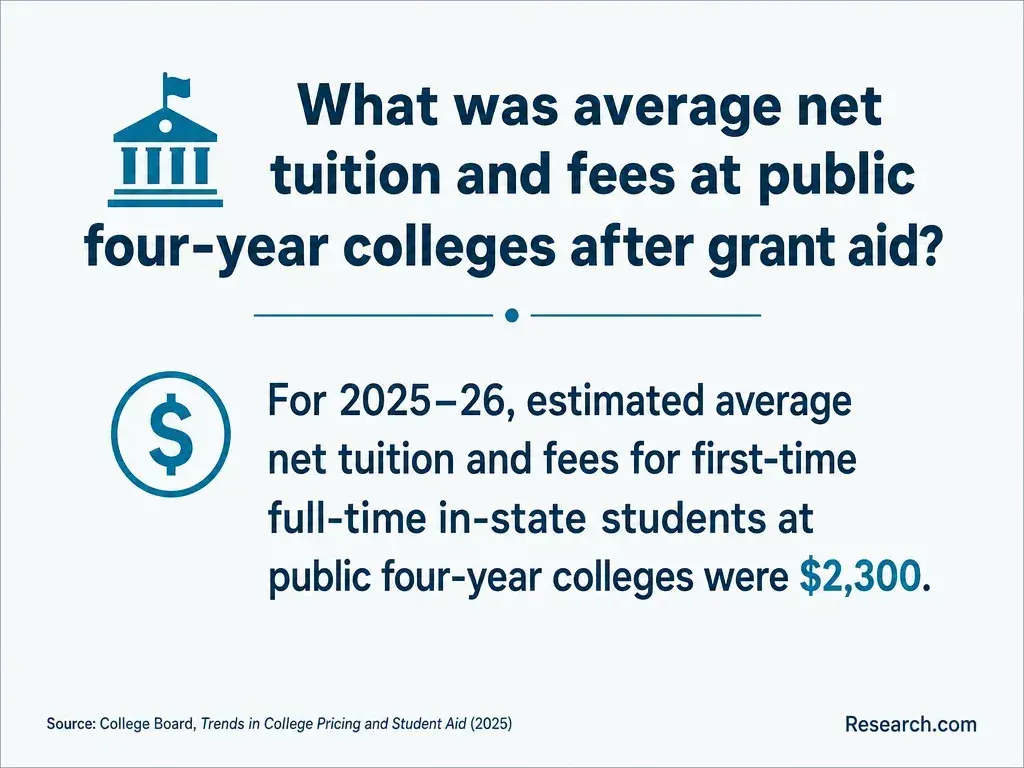
For cost, calculate tuition from the required credits and the school's applicable charges, then add mandatory fees, software, travel or residency costs, and any continuation charges. Ask whether part-time enrollment changes aid eligibility and whether an employer will reimburse this particular degree. Undergraduate aid advice is not interchangeable with graduate funding: financial support for substance abuse counseling majors applies to a different degree-level decision.
Relevant nonclinical work includes research coordination, program evaluation, quality improvement, victim-service program support, and justice or reentry service analysis. Duties may involve organizing interviews, maintaining approved data, summarizing provider feedback, reviewing referral processes, or preparing findings for an agency. Employers may value agency experience, writing samples, data skills, and knowledge of their service system as much as the degree title.
An existing advocate or agency coordinator may use a supervised evaluation project to move into research-related responsibilities. Someone seeking licensed forensic evaluations needs a different training pathway. For comparisons of particular schools' stated outcomes, consult online forensic psychology tuition admissions and outcomes while checking how each school defines and documents employment results.
There is no single reliable salary or growth rate for "forensic psychology MS graduates." Research coordinators, program evaluators, victim-service staff, and licensed psychologists occupy different jobs with different entry requirements. A wage figure for psychologists would be particularly misleading for someone completing a nonclinical master's.
For a useful comparison, identify the job titles you would actually apply for, read local postings for required experience and credentials, and then consult the US Bureau of Labor Statistics Occupational Outlook Handbook for the closest clearly defined occupations. Its occupation-wide wages and projections describe those jobs - not the earnings or hiring prospects of a particular program's graduates. Weigh those findings against total education cost; affordable distance learning in graduate psychology can be worth comparing if a less specialized program offers equally strong qualitative supervision.
How can you choose an accredited online forensic psychology program?
First, verify that the institution holds recognized institutional accreditation and that the advertised degree, delivery format, and concentration are the ones you would enter. Do not assume APA accredits a general or nonclinical forensic psychology MS; institutional accreditation also does not prove that a particular research opportunity or licensure pathway exists.
Then request the current catalog, course rotation, capstone or thesis handbook, and written policies for external agency projects. Ask who supervises qualitative work, whether students can obtain feedback on interview design and coding, what happens if site access falls through, and whether a literature-based alternative meets your goal. Compare total charges and likely project time alongside curriculum. Under-two-year forensic psychology graduate program options merit closer examination when a substantial provider study is your priority: speed is useful only if the research experience remains feasible and supervised.
Other Things You Should Know About Psychology
No. A provider-focused question can be studied through authorized interviews with staff and, where appropriate, approved organizational documents. That choice does not remove the need to protect confidential client information.
Not universally. It can help you frame a realistic question, but programs set their own admission criteria. Research or service experience in another setting may also demonstrate relevant skills.
Choose based on the work you can actually complete and your next goal. A supervised thesis may provide stronger evidence of research preparation; a well-designed evaluation capstone may better fit an agency role. Check both programs' requirements.
Only if the applicable consent, agency permissions, and university rules allow it. A safer portfolio sample is often a redacted protocol, interview guide, codebook template, or report that discloses no protected information.
- General-purpose thematic analysis: a useful qualitative... - PMC https://pmc.ncbi.nlm.nih.gov/articles/PMC8606608/
- Principles for doing trauma-informed research and program evaluation | Australian Institute of Family Studies https://aifs.gov.au/resources/practice-guides/principles-doing-trauma-informed-research-and-program-evaluation
- Frequently Asked Questions - California Board of Psychology https://www.psychology.ca.gov/licensees/faq.shtml
- Collecting and Analyzing Qualitative Data | Field Epi Manual https://www.cdc.gov/field-epi-manual/php/chapters/qualitative-data.html
- MA in Research Methods and Statistics | College of Education https://morgridge.du.edu/academics-advising/programs-gr/ma-research-methods-and-statistics
- A Career in Forensic and Public Service Psychology | apa.org https://www.apa.org/education-career/guide/subfields/forensic/education-training
- Graduate Specialists: Qualitative Methods - Research Guides https://libguides.rutgers.edu/Qualitative_grad/methods
- Qualitative Science and Methods Training Program | Brown University https://psych.med.brown.edu/research/research-core-facilities-and-resources/qualitative-science-and-methods-training-program
- Capstone Research Project versus Thesis | illinois.edu https://blogs.illinois.edu/view/561/543336
- Thesis or Capstone: HSPop MPH | Health Systems and Population Health https://hspop.uw.edu/hspopmph/program-experience/thesis-capstone/