2027 Online BA in Psychology - Mental Health: Comparing Degrees for Behavioral Health Outreach and Wellness Work
Audited and Verified:
Our Editorial and Data Verification Process
Research.com uses government datasets, official education statistics and primary institutional information to support its career and degree guides. Our review process checks factual accuracy, occupational definitions, source dates and the requirements associated with the credentials discussed.
How This Article Was Fact-Checked
Our editorial team verifies salary estimates, employment projections, education requirements and program information against original data providers and official organizations. Salary figures are checked against the relevant occupational definitions and reporting periods. Information about licensure, accreditation and required in-person training is reviewed separately.
Fact-checked and verified on:

Co-Founder and Chief Data Scientist
Behavioral-health outreach jobs call for more than an interest in mental health: workers must communicate respectfully, connect people with services, document their work, and know when to refer a concern to a qualified professional. An online BA in psychology with a mental-health focus can build that foundation, but it is not always the most direct route into community work.
This guide compares degree options, practical experience, costs, and career boundaries so prospective students—and people already working in nonprofits or service agencies—can choose preparation that fits the work they want to do.
Key Things You Should Know
- A mental-health-focused psychology BA can support outreach, wellness education, and service coordination, but it does not qualify graduates to diagnose conditions or provide psychotherapy.
- Compare programs by method training, community-based learning, scheduling, and total cost—not the concentration name alone. A human services, public health, or social work route may fit some outreach goals better.
- The U.S. Bureau of Labor Statistics reports a $59,190 median annual wage in May 2024 for substance abuse, behavioral disorder, and mental health counselors. That occupation generally requires substantially more preparation than a psychology BA, so its wage is not a bachelor's-graduate salary estimate.
What is an online BA in psychology focused on mental health?
It is a bachelor of arts degree in psychology delivered primarily online, with mental health addressed through an official concentration, a set of electives, or both. The distinction matters: a course in abnormal psychology does not necessarily appear as a formal specialization on a transcript. Ask the school what credential will actually be awarded and whether any required experience must occur in person.
For behavioral health outreach, the best fit depends on the work you want to perform. This comparison separates academic preparation from more occupation-specific training:
| Path | Likely strength for outreach work | Important limitation |
| Psychology BA with a mental-health focus | Behavior, development, research literacy, and mental-health systems | May offer limited instruction in service navigation or community program operations |
| Human services or public health bachelor's | Community needs, prevention, resource coordination, or program delivery | Psychology research and theory may receive less emphasis |
| BSW from a qualifying social work program | Social-work practice foundation and a structured field-education model | Has different curricular and placement demands; a BSW alone is not independent clinical licensure |
| Targeted training or employer-supported experience | Faster preparation for a defined outreach task | May not meet jobs' bachelor's-degree requirements |
If your target is substance use recovery services, comparing online substance use counseling degrees can reveal coursework and credential-pathway differences that a general mental-health focus may not address. Check your state's rules before treating any program title as preparation for a regulated counseling role.
Is an online psychology bachelor's degree accredited and respected?
An online BA can be a credible degree when the awarding institution holds recognized institutional accreditation and the program provides rigorous coursework and usable student support. Online delivery itself is not a separate accreditation status. Verify the institution through its accreditor and the U.S. Department of Education's accreditation database, then confirm that the accreditation applies to the institution awarding your degree.
Do not look for American Psychological Association accreditation of a general psychology BA; APA accreditation covers specified professional psychology training, not ordinary undergraduate psychology majors. Program-specific recognition may matter for an alternative path, such as social work, but only if it applies to the exact degree you intend to earn.
Employer respect also depends on evidence you can bring to an interview: clear writing, careful handling of sensitive information, experience with community partners, and an understanding of referral boundaries. When reviewing online forensic psychology programs and graduate outcomes as an adjacent option, use the same test: distinguish verified accreditation and reported outcomes from a program's appealing specialty label.
What careers can you pursue with a mental health psychology bachelor's degree?
With relevant experience, graduates may compete for nonclinical positions in community agencies, health organizations, schools, and government contractors. Titles alone are unreliable: an "outreach coordinator" might organize events at one employer and conduct intensive service navigation at another. Read the duties, degree requirements, supervision arrangements, and any state credential rules in each posting.
The following roles show where a psychology BA may contribute and what employers may still expect:
| Role or function | Typical work | Preparation beyond classes |
| Behavioral health outreach worker | Explain services, build community partnerships, and connect people to appropriate resources | Local resource knowledge, accessible communication, and documented outreach experience |
| Service or intake coordinator | Gather permitted information, schedule services, and follow referral procedures | Training in confidentiality, agency systems, and escalation protocols |
| Wellness program assistant | Support prevention events, materials, and participation tracking | Program logistics, plain-language writing, and basic evaluation skills |
| Research or evaluation assistant | Help organize surveys, records, or reports under supervision | Methods, spreadsheet or data skills, and authorization to access information |
Someone already employed by a nonprofit may gain more immediate value from a supervised outreach project than from an additional concentration label. By contrast, forensic graduate study is a different decision: forensic psychology graduate study in an intensive format does not substitute for community-service experience or confer clinical or investigative authority.
Most psychology majors combine broad disciplinary study with statistics and research methods. For outreach and wellness work, prioritize developmental and social psychology, mental health or psychopathology coursework, cultural and community contexts, and ethical interpretation of evidence. A course about disorders teaches academic concepts; it does not train a student to diagnose a person.
Look for applied assignments that fit nonclinical work: a plain-language resource guide, an evidence review for a prevention program, or an evaluation plan using information an agency is authorized to share. Ask who supervises projects and whether students can work with community organizations. Client records and identifiable survey responses cannot be repurposed for coursework merely because a student works at the agency.
If graduate study is a possibility, preserve room for statistics, methods, and strong writing rather than selecting every elective solely by its mental health title. An overview of choosing a fast-track psychology master's program may help with later planning, but accelerated study is useful only if its curriculum matches your research or career objective.
The academically important difference is usually access, not whether psychology can be taught online. For a working outreach professional, a remote lecture may be manageable while a live group meeting or weekday placement is not. Compare the actual weekly obligations before assuming that "online" means self-paced.
This format comparison highlights the practical constraints most likely to affect degree completion and applied learning:
| Consideration | Online program | On-campus program |
| Course schedule | May offer asynchronous lessons, but deadlines and live sessions can still be fixed | Usually has scheduled classroom meetings |
| Community experience | May require students to locate an approved local site | May have established nearby partnerships; access is not guaranteed |
| Faculty and peers | Interaction depends on course design and availability | In-person access may be easier, subject to faculty schedules |
| Travel | May still involve site visits, residencies, or placements | Regular campus travel is generally expected |
Shorter schedules introduce another trade-off: more concentrated coursework can leave less time for employment or field experience. The same concern applies when planning a shorter undergraduate forensic psychology degree. Compare the remaining requirements and calendar, not an advertised completion time alone.
Requirements vary by institution and by whether you apply as a first-year or transfer student. Schools commonly request prior academic records; some have separate rules for entry to the psychology major. An unrelated previous major does not automatically rule out admission.
For transfer students, the decisive document is a degree audit showing where accepted credits apply. A statistics course may transfer as elective credit without satisfying the major's methods requirement. Ask admissions and the psychology department to clarify prerequisites, course sequencing, residency requirements, and any required in-person work before you commit.
Application planning is separate from aid eligibility. If you are considering a more occupation-specific route, a guide to financial aid for substance abuse counseling bachelor's degrees can help frame questions about federal aid and institutional support; the school's financial aid office must determine your actual eligibility.
Completion time depends on accepted credits, credits that satisfy degree requirements, enrollment pace, and when required courses are offered. A student with substantial transferable general education credit could still face a sequence of psychology prerequisites. Ask for a term-by-term plan based on an official evaluation rather than relying on a general program-duration claim.
Published tuition is not a total-price quote. Compare charges on the same basis across schools, including the credits you must actually take. These are the cost lines to request in writing:
- Tuition for remaining required credits and any difference for online or out-of-state enrollment
- Mandatory technology, course, graduation, and other applicable fees
- Books, software, travel, and possible unpaid placement time
- Potential changes in aid or employer reimbursement if your enrollment pace changes
For a fuller comparison framework, read features about planning a budget for an online psychology degree on education portals. The least expensive advertised rate is not necessarily the lowest cost to finish if fewer credits apply or required courses delay graduation.
Not by itself. A psychology BA, including one with a mental-health concentration, does not authorize independent diagnosis, psychotherapy, or use of the protected title "psychologist." Licensure depends on the occupation and jurisdiction and generally involves a qualifying professional degree plus additional requirements such as supervised experience and examinations.
If your goal is to provide therapy, identify the specific license you want before choosing undergraduate electives or a graduate program. Counseling, social work, and psychology follow distinct educational and regulatory routes. A comparison of clinical mental health master's programs by study pace can help you evaluate a later counseling option, but verify educational eligibility directly with the relevant state board and program.
Some outreach, recovery-support, and addiction-service jobs have separate state or employer credential rules. A bachelor's degree may be useful preparation without replacing the required training, supervision, or certification for a particular position.
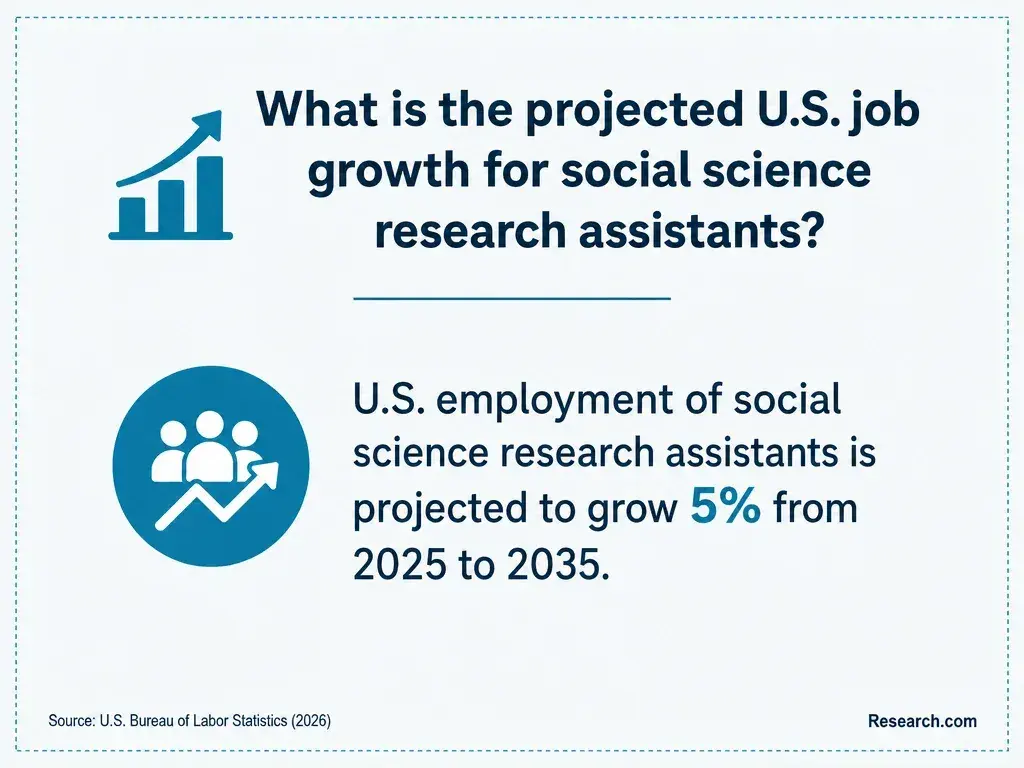
There is no single salary or growth rate for "mental-health psychology BA graduates." Outreach, service coordination, research support, and licensed counseling fall under different occupations with different entry requirements. Use a local job posting's pay range and qualifications to judge a bachelor's-level opportunity.
As a boundary check, the U.S. Bureau of Labor Statistics reports a $59,190 median annual wage in May 2024 for substance abuse, behavioral disorder, and mental health counselors and projects 17% employment growth from 2024 to 2034. Those figures describe an occupation that typically requires more than a psychology bachelor's degree; they should not be used as a return-on-investment estimate for a BA. They do indicate why distinguishing support work from counseling matters when comparing career claims.
For an addiction services goal, a lower-cost addiction counseling bachelor's career preparation may be worth comparing with a general psychology route. Judge either option against the actual credential requirements and entry-level pay in the state where you intend to work.
How do you choose a reputable online psychology degree program?
Start with the target job, then ask each program to show how its requirements build the skills that job uses. For behavioral health outreach, a strong comparison covers both academic quality and a realistic way to gain supervised, nonclinical experience.
Use these checks to turn program descriptions into a decision you can defend:
- Verify institutional accreditation, the exact degree title, and whether the mental-health focus is an official concentration or a choice of electives.
- Compare required statistics, research methods, community-relevant coursework, and opportunities to produce work you can discuss with employers.
- Get written answers about live sessions, campus visits, placement approval, supervision, and whether an existing job can meet any experiential requirement.
- Request a transfer evaluation, a term-by-term completion plan, and a full estimate of remaining tuition and fees.
- Ask career services which employers recruit for nonclinical roles and whether any published outcomes identify the relevant graduating cohort.
If your intended destination is licensed counseling, compare the full graduate pathway rather than choosing a BA on its concentration name alone. A separate accredited mental health counseling program cost guide can inform that financial comparison; confirm each program's current accreditation scope and state eligibility before applying.
Other Things You Should Know About Psychology
Possibly. Your instructor and employer must approve the project's scope and information access. Employment does not automatically grant permission to use client data or count work hours toward an academic requirement.
They can be valuable when an employer serves communities that use those languages. Follow agency rules for interpretation; speaking a language does not automatically qualify someone to interpret sensitive clinical information.
Usually only with appropriate permission and without confidential or identifiable information. A public resource guide or a clearly labeled sample evaluation plan may be safer than client-based materials.
First check the requirements of the role you want next. If it does not require another degree, targeted training, stronger evaluation skills, or supervised responsibility may be a more direct investment.
- Cost of Attendance (Budget) | 2025-2026 Federal Student Aid Handbook https://fsapartners.ed.gov/knowledge-center/fsa-handbook/2025-2026/vol3/ch2-cost-attendance-budget
- Accreditation in the U.S. | ed.gov http://www.ed.gov/laws-and-policy/higher-education-laws-and-policy/college-accreditation/accreditation-in-the-us
- Practicums, Internships and Projects What's the Difference? | Oregon State University https://health.oregonstate.edu/internships/types-of-experiential-learning
- Practicum Education | Columbia MSSW https://onlinemsw.socialwork.columbia.edu/practicum-education/
- 9 Mental Health Careers You Can Pursue with a BA | New England College https://www.nec.edu/news/9-mental-health-careers-you-can-pursue-with-a-ba
- Policies for Online Teaching | Teaching and Learning Resource Center https://teaching.resources.osu.edu/teaching-topics/policies-online-teaching
- What Can You Do with a bachelor's in Psychology? | UMass Global https://www.umassglobal.edu/blog-news/can-you-do-a-bachelors-psychology-top-careers-skills-build-your-future
- Practicum Education Manual - VI. Practicum Education Placement Policies, Procedures, and Processes https://socialwork.wayne.edu/practicum/manual/policies