2027 Online BA in Psychology - General Psychology After Military Behavioral Health Training: Compare Transfer Credit and Remaining Coursework
Audited and Verified:
Our Editorial and Data Verification Process
Research.com uses government datasets, official education statistics and primary institutional information to support its career and degree guides. Our review process checks factual accuracy, occupational definitions, source dates and the requirements associated with the credentials discussed.
How This Article Was Fact-Checked
Our editorial team verifies salary estimates, employment projections, education requirements and program information against original data providers and official organizations. Salary figures are checked against the relevant occupational definitions and reporting periods. Information about licensure, accreditation and required in-person training is reviewed separately.
Fact-checked and verified on:

Co-Founder and Chief Data Scientist
Military behavioral health training may earn college credit without replacing the psychology courses needed for a bachelor's degree. For veterans and service members considering an online general psychology BA, the decision is not simply how many credits a school accepts; it is where those credits fit in the degree audit.
This guide explains how to document training, compare transfer evaluations, estimate remaining coursework, and identify costs and scheduling requirements before enrolling. It also distinguishes a psychology degree from the credentials required for clinical work.
Key Things You Should Know
- Military training credit is not automatic: the receiving college decides whether documented learning counts toward general education, the psychology major, electives, or none of those requirements.
- In an illustrative 120-credit degree, 30 applicable civilian credits plus 18 applicable military credits would leave 72 credits - not necessarily 72 credits of courses available immediately.
- Compare written degree audits, not transfer-credit totals alone; psychology methods, upper-division coursework, prerequisite sequences, and residency rules can determine the actual time to graduation.
How Does Military Behavioral Health Training Transfer to an Online Psychology Degree?
A college evaluates documented military learning against its own degree requirements. A Joint Services Transcript (JST), or an applicable Community College of the Air Force transcript, records training and credit recommendations or completed coursework. An American Council on Education credit recommendation can help an evaluator, but it does not require a college to award credit or treat behavioral health training as a psychology course.
The distinction is accepted credit versus applicable credit. Training in patient support, documentation, or behavioral health procedures might count as an elective or satisfy an approved general education requirement. It may not replace research methods simply because both involve observation or recordkeeping. A general psychology major also differs from an addiction psychology bachelor's curriculum option; subject overlap does not establish course equivalence in either program.
Ask the registrar or transfer-credit office for an initial evaluation and the psychology department for decisions about major-course substitutions. Then obtain an advisor-approved degree audit showing where each credit applies. Keep copies of the catalog and transfer decisions for your entry term.
How Much Coursework Remains After Transferring Behavioral Health Training Credits?
The useful calculation starts with the degree audit, not the number of credits on a military transcript. Subtract applicable, nonduplicative credits from the degree total, then check outstanding general education, major, upper-division, prerequisite, and residency requirements. A school may accept more credits than it can apply to graduation.
The following example illustrates why two transfer totals can produce different completion plans. It is not a prediction for any college.
| Illustrative audit item | Credits | Effect on the plan |
| Degree requirement | 120 | Starting total for this example |
| Applicable civilian coursework | 30 | Fills requirements identified by the college |
| Applicable military learning | 18 | Counts only where the audit assigns it |
| Credits still needed | 72 | Subject to remaining course and residency rules |
Even with 72 credits left in this example, an introductory psychology prerequisite may have to precede statistics, research methods, or advanced courses. Compare the sequence and frequency of required online classes before estimating a graduation date. If speed matters, compare fast-paced psychology degree formats against your actual audit; shorter terms do not remove prerequisite or residency requirements.
What Transfer Credits Can Military Behavioral Health Technicians Receive?
Potential credit depends on documented training, prior college coursework, and the receiving school's equivalency rules - not a technician's job title alone. This comparison shows plausible placements to investigate, not credits a program has promised to award.
| Documented learning | Possible audit placement | Common limitation |
| Behavioral health support training | Human-services elective or another approved elective | Clinical exposure may not match a psychology major course |
| Military leadership or personnel training | General elective or approved leadership requirement | May not satisfy upper-division psychology requirements |
| College-level writing or quantitative coursework | General education, if equivalent | Statistics for a psychology major may require specific content |
| Previously completed college psychology courses | Major or prerequisite requirement, if approved | Grade, content, level, or recency rules may apply |
Submit every official transcript and ask whether a syllabus, training description, or prior course outline could support a review or appeal. Check for duplicate credit when military training and civilian coursework cover the same material. If your goal is specifically substance-use counseling, compare the proposed general BA with undergraduate substance use counseling study on a budget; the relevant state credential may value a different course sequence.
Check the institution's accreditation and confirm that it covers the college awarding the online degree. The U.S. Department of Education's accreditation database and the accreditor's own listing can help verify status and scope. The American Psychological Association does not accredit general psychology bachelor's programs, so a claim that a BA is "APA-accredited" warrants scrutiny.
For this transfer decision, reputation also means usable evidence: a published degree plan, clear military-credit policies, access to psychology advising, a written audit, and reliable availability of required online courses. Ask about veteran services, career support, and how transfer appeals work. These checks apply whether you choose a general major or compare undergraduate forensic psychology programs by completion time; a faster advertised schedule is not proof that your credits will apply.
Requirements vary, but a general psychology BA commonly combines introductory psychology with statistics, research methods, and upper-division study across areas such as development, social behavior, cognition, biological bases of behavior, and psychological disorders. It also includes the institution's general education, elective, and graduation requirements. Some programs require a capstone or offer research and nonclinical applied experiences; verify these features in the current catalog.
Military behavioral health experience can make examples in abnormal psychology or service systems familiar, but familiarity is not the same as training in research design, statistical inference, or the academic study of psychological theory. Protect room in your plan for those courses, particularly if later graduate study is possible. An accelerated psychology master's option for working adults may still set its own admissions prerequisites; a BA elective or military assignment does not automatically meet them.
Admission to the university, admission to its psychology major, and approval of transfer equivalencies can be separate decisions. Schools may request an application, official transcripts from every college attended, military education records, and evidence that published academic standards are met. Minimum grades, GPA rules, deadlines, and any major-entry conditions are institution-specific.
Apply early enough to receive an evaluation before committing to courses. Ask admissions which records are needed for entry, then ask the registrar when the official credit evaluation becomes available and the psychology advisor when substitutions can be approved. If your eventual goal is counseling, do not treat undergraduate admission as a step that establishes eligibility for a licensure-track graduate program: online mental health counseling master's timelines and entry requirements must be checked separately.
Time depends on applicable credits, course sequencing, the number of courses you can take while working, and when required classes are offered. Cost depends on the school's charge per credit or term, mandatory fees, books or technology, and how many courses the approved audit leaves. An accepted elective that does not reduce outstanding requirements may offer little financial benefit.
Request a term-by-term plan and a cost estimate based on your remaining courses, not an advertised maximum transfer allowance. Ask the financial-aid office how your enrollment pace affects aid and whether repeated or nonapplicable courses create problems. A school's VA-certifying official can explain how its approved program and your circumstances interact with any education benefits for which you are eligible; do not assume GI Bill coverage or a Yellow Ribbon contribution without confirmation. If you are weighing a later clinical pathway, mental health counseling program charges beyond tuition belong in that separate long-term budget.
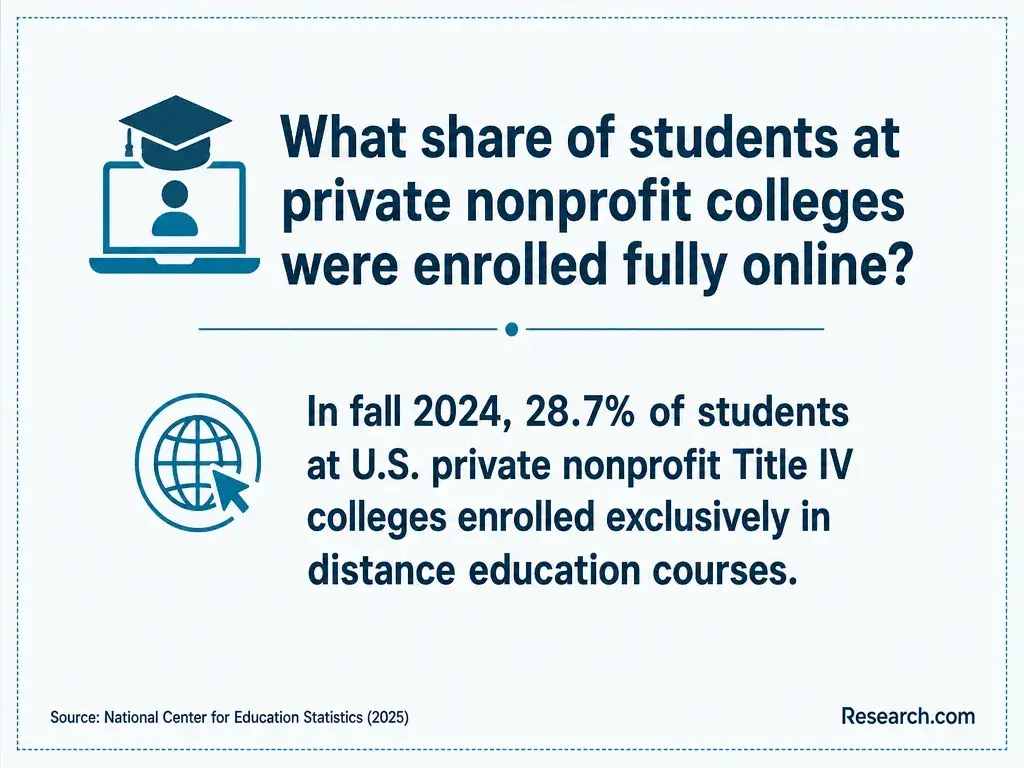
Online study can reduce commuting and make relocation or variable duty schedules easier to manage. It is the better choice only if required courses, advising, research opportunities, and any applied experience fit your location and schedule. "Online" does not necessarily mean asynchronous: classes may include live meetings, group projects, scheduled exams, or approved on-site activities.
Campus study may offer easier access to faculty research groups and local employers, while an online program may better preserve employment and family routines. Ask both formats how often required courses run, whether absences or deployments can interrupt a sequence, and how students obtain recommendations or supervised nonclinical experience. The distinction persists at later degree levels; shorter mental health counseling graduate pathways may have supervised placement obligations that an online general psychology BA does not.
Military behavioral health experience plus a psychology BA may support applications for nonclinical behavioral-health support, intake coordination, victim services, rehabilitation support, research assistance, or human-services administration. Hiring depends on the employer's requirements and the evidence you can provide of documentation, respectful communication, teamwork, data handling, and work within supervision and referral boundaries.
Choose electives or projects around a target job rather than assuming the degree name will secure a position. For example, research methods can help with program-support roles, while relevant supervised experience may matter more for direct-service hiring. If you want recovery-service work, examine professional pathways in recovery organizations alongside your state's peer-support or addiction-credential rules. A targeted credential or employer training may be more direct than another degree for some positions.
What Salary and Licensing Requirements Apply to Psychology Graduates?
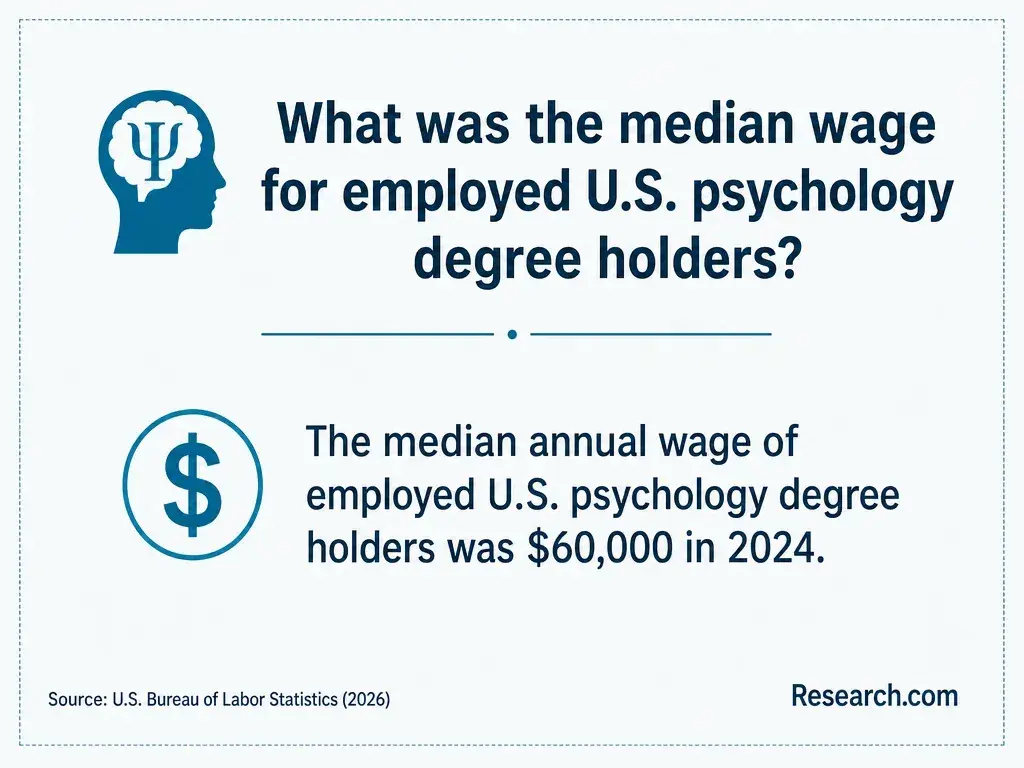
There is no single salary for a general psychology BA graduate. Compare specific job titles, locations, and employer qualifications using the U.S. Bureau of Labor Statistics Occupational Outlook Handbook and current local postings. An occupation-wide median describes workers in that occupation - not the expected pay for someone completing this degree or transferring from military service.
A general psychology BA does not authorize independent diagnosis, psychotherapy, psychological testing, or use of a protected psychologist title. Psychologist licensure generally involves doctoral-level professional preparation and additional state requirements; counselor, social-work, and addiction credentials follow distinct state rules. Even graduate forensic psychology job options and qualifications must be evaluated against actual duties and credential rules rather than degree titles alone. Before enrolling, compare your written BA audit with the requirements for the particular civilian job or later professional program you intend to pursue.
Other Things You Should Know About Psychology
Possibly. Ask about leave, withdrawal, incomplete grades, and reentry before enrolling, and get the applicable policy in writing. A break could affect course sequencing and aid.
Request a correction through the issuing military transcript system. Keep training records and course descriptions while the issue is resolved, and ask the college what it can evaluate provisionally.
Do not use identifiable or restricted records without the required authorization. Ask the instructor for an alternative using public or approved data; changing names alone may not resolve confidentiality obligations.
Eligible students can request accommodations through the college's disability-services process. Contact that office early to discuss documentation and how accommodations work for online classes, exams, or applied activities.
- Frequently Asked Questions - California Board of Psychology https://www.psychology.ca.gov/licensees/faq.shtml
- Military Training Evaluation Program (MTEP) | dantes.mil https://www.dantes.mil/credit4training/
- Undergraduate And Graduate Degrees | Veterans Affairs https://www.va.gov/education/about-gi-bill-benefits/how-to-use-benefits/undergraduate-graduate-programs/
- Frequently Asked Questions for Mental Health Counselors | nysed.gov https://www.op.nysed.gov/professions/mental-health-counselors/faqs-education-requirements
- The Military Guide | acenet.edu https://www.acenet.edu/Programs-Services/Pages/Credit-Transcripts/Military-Guide-Online.aspx
- Transfer Credit | University of North Georgia https://ung.edu/registrar/transfer-information.php
- Degree and Graduation Policies | University of Florida Catalog https://catalog.ufl.edu/UGRD/academic-regulations/degree-graduation-policies/
- Requirements for the Bachelor's Degree | University at Albany https://www.albany.edu/undergraduate-bulletin/requirements-for-bachelors-degree.php
- BA in Psychology - College of Liberal Arts https://cla.umn.edu/psychology/undergraduate/majors-minors/ba-psychology
- Transfer Credit | Registrar's Office | Georgia Tech https://registrar.gatech.edu/transfer-credit