2027 Choosing an Online BA in Psychology - Addictions Around Working on an Offshore Rotation
Audited and Verified:
Our Editorial and Data Verification Process
Research.com uses government datasets, official education statistics and primary institutional information to support its career and degree guides. Our review process checks factual accuracy, occupational definitions, source dates and the requirements associated with the credentials discussed.
How This Article Was Fact-Checked
Our editorial team verifies salary estimates, employment projections, education requirements and program information against original data providers and official organizations. Salary figures are checked against the relevant occupational definitions and reporting periods. Information about licensure, accreditation and required in-person training is reviewed separately.
Fact-checked and verified on:

Co-Founder and Chief Data Scientist
An offshore rotation can make an online degree possible while making its deadlines surprisingly hard to meet. For workers considering a BA in psychology with an addictions focus, the deciding factor is not simply whether lectures are online: it is whether exams, group work, applied learning, and academic support remain workable when connectivity and time off are uncertain.
This guide shows you how to test that fit, compare the degree with more direct credentials, and understand what it can - and cannot - prepare you to do in addiction services.
Key Things You Should Know
- Choose by required activities, not the "online" label: get written answers about live attendance, timed exams, placements, and deadline flexibility during offshore rotations.
- An addictions focus can support nonclinical recovery-service work, but a psychology BA alone does not qualify you to provide addiction counseling; state credential rules control that pathway.
- Compare the full price and remaining degree requirements after a formal credit evaluation. An accepted transfer course does not necessarily satisfy a psychology-major requirement.
What Is an Online BA in Psychology for Offshore Rotation Workers?
It is a bachelor of arts degree covering psychology's core theories and research methods, delivered primarily online, with addiction-related study available through a formal concentration or electives. Those are different offerings: a concentration has defined requirements and may appear on an academic record, while a few electives do not create a separate credential. Compare the actual curriculum when reviewing distance learning bachelor's degrees in addiction psychology.
For an offshore worker, the degree is most useful when the goal is broad behavioral-science preparation, a transition toward nonclinical support or program work, or prerequisites for later study. Your safety training, teamwork, and experience with stressful work schedules may be relevant to future organizational or community roles, but they do not substitute for supervised addiction-service experience.
If your sole goal is a particular state addiction-counselor credential, compare its required education and supervision before committing to a general psychology BA.
Is an Online Psychology Degree Accredited and Recognized?
An online BA can be a recognized degree when the awarding institution holds accreditation recognized by the U.S. Department of Education or the Council for Higher Education Accreditation. Check the institution's current status, the exact BA and concentration shown in its catalog, and whether the school can enroll a student from your home state. Offshore travel may raise additional enrollment questions if you will study outside the United States; ask the school about your specific locations.
Do not look for APA accreditation of a general psychology BA: APA accreditation applies to specified professional psychology training, not ordinary bachelor's majors. Institutional accreditation also does not establish eligibility for an addiction-counselor credential. When choosing an online psychology program, request its accreditation information alongside a current course schedule and written answers about offshore access.
Can You Complete a Psychology Degree While Working Offshore?
Yes, if the program's obligations fit your rotation and the connectivity, equipment, and private study space actually available offshore. Asynchronous lectures help, but a course may still require a live discussion, a group meeting, a timed test, or access to a proctoring service. Unreliable bandwidth is especially consequential for exams and collaborative research assignments.
Before enrolling, ask an advisor and the instructors of required courses how they handle the following situations. Test their answers against a real rotation, including travel days and the period when you return home.
- Deadlines or live sessions that fall during a shift or a connectivity outage.
- Timed or remotely proctored exams when a private room or approved device is unavailable.
- Research-team meetings, group projects, internships, or campus visits that require a fixed location.
- A rotation extension that makes a lighter course load, withdrawal, or leave necessary.
If the answers depend on individual instructor discretion, obtain the applicable policy before relying on it. Speeding up an online psychology degree may be attractive during shore leave, but an accelerated calendar leaves less room for an unexpected shift change.
The relevant comparison is access to required learning, not whether one format is inherently more rigorous. The table highlights where offshore schedules can change the value of each format.
| Decision factor | Online BA | Campus BA |
| Attendance | May permit remote participation, but live sessions can still be required | Typically requires presence at scheduled classes |
| Research experience | May offer remote projects; access to faculty and datasets varies | May make on-site labs easier to join when the student is local |
| Applied experience | May allow an approved local site; remote coursework does not remove site rules | May have established nearby partners, subject to availability |
| Offshore fit | Depends on deadlines, connectivity, and location rules | Usually difficult during an active rotation |
Online delivery is particularly valuable if you want to retain offshore employment. A campus program may be worth considering if you plan to leave that work and need regular access to in-person research or services. Program format matters across specialties, so do not assume that accredited online pathways in forensic psychology, for example, have the same schedules or applied requirements as an addictions-focused BA.
Expect a broad psychology foundation rather than training to deliver treatment. Typical requirements include introductory psychology, statistics, research methods, developmental and social psychology, and courses addressing biological or behavioral processes. Addiction-related options may examine substance use, prevention, recovery, and service systems; offerings and prerequisite sequences vary by school.
For offshore study, inspect how methods courses are taught. A research project may require scheduled collaboration or approved access to participants or data, even when lectures are recorded.
If you are considering graduate study later, prioritize statistics, research design, and substantial writing over the concentration label alone. A later specialized master's is a separate decision: online forensic psychology master's graduation planning, for instance, concerns different coursework and graduation requirements and should not be mistaken for part of an undergraduate addictions track.
Requirements depend on whether you apply as a first-year or transfer student. Schools commonly request prior academic records, and some have separate rules for entry into the psychology major. If you have college credits, ask for a degree audit showing which courses meet general education, psychology, statistics, research-methods, elective, and institutional-residency requirements. Credit acceptance alone does not establish when you can graduate.
Keep admission and funding decisions separate. You can explore FAFSA and grants for substance abuse counseling students while comparing schools, but confirm the chosen institution's eligibility, your enrollment status, and any employer assistance terms before budgeting around aid. If you already hold a bachelor's degree, ask whether selected prerequisites or a qualifying professional program would serve your goal better than a second BA.
Time to completion depends on the school's credit requirements, your approved transfer work, course availability, and the load you can sustain during rotations. A shorter advertised path is meaningful only if the required classes run when you can take them. Ask for a term-by-term plan that places demanding methods courses and any applied requirement around your offshore and shore periods.
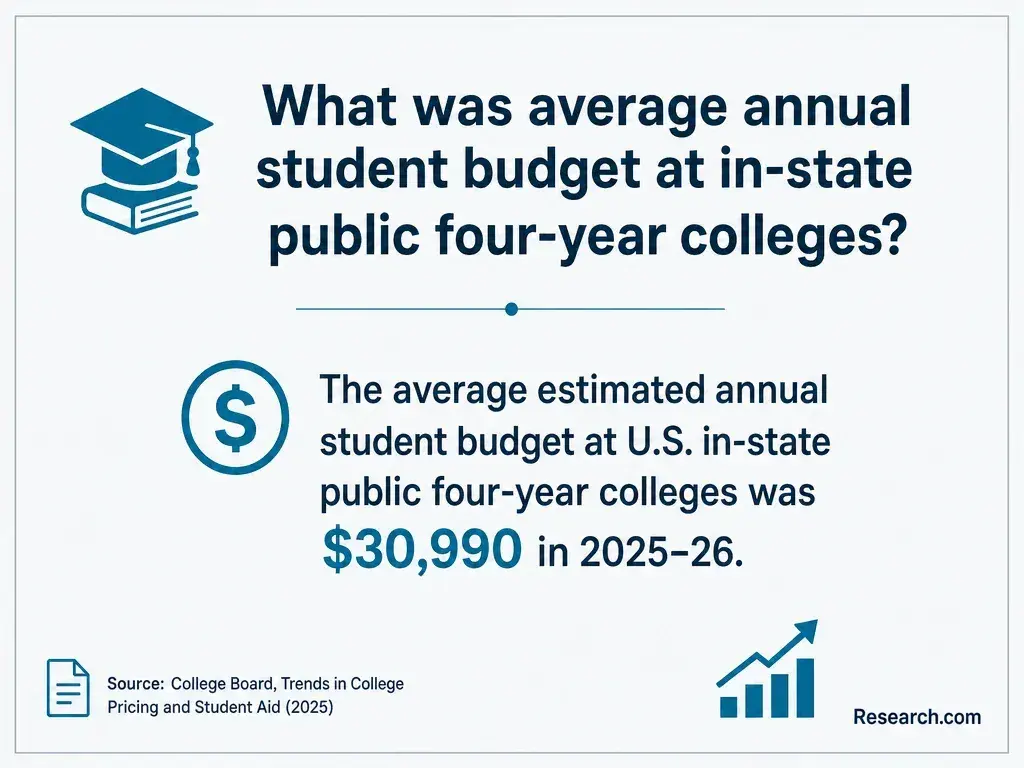
Compare the total remaining cost rather than tuition alone: include required fees, materials, technology, possible travel, and earnings affected by an unpaid placement or reduced work. A written degree audit and itemized price estimate make competing offers comparable.
If you are weighing this BA against future specialization, costs of one-year forensic psychology master's pathways illustrate why the price of a later degree should be evaluated separately; its compressed schedule is not necessarily compatible with offshore work.
A psychology BA may support applications for nonclinical roles such as recovery-program support, intake coordination, community outreach, research assistance, or human-services administration. Employers can require additional experience, training, background checks, or credentials. Your offshore experience may help demonstrate documentation, safety communication, and coordination under pressure; demonstrate addiction-service readiness separately through appropriate supervised work or training.
If the goal is to counsel people with substance use disorders, compare a psychology BA with education explicitly designed around your state's credential rules. The discussion of bachelor's-level substance use counseling tuition and career value is most relevant when you have identified a target job and verified its education and supervised-experience requirements. A program's career examples are not evidence that every graduate qualifies for those jobs.
There is no single salary for an addictions-focused psychology BA. Pay follows the job's duties, location, employer, experience requirements, and credential rules - not the concentration name. For a useful estimate, identify a specific position you could qualify for, compare local postings with the U.S. Bureau of Labor Statistics occupational wage data for that occupation, and check whether the published category includes more experienced or differently credentialed workers.
Do not use the wage for substance abuse counselors as a forecast for a new BA graduate unless the target position and its credential requirements actually match. If a licensed counseling career is the objective, compare the additional education and time away from full earnings; mental health counseling graduate study costs versus earnings addresses a different qualification pathway, not an automatic return on a psychology BA.
Does a Psychology Bachelor's Degree Lead to Counseling Licensure?
No. A psychology BA, including one with addictions coursework, does not by itself authorize psychotherapy, diagnosis, or independent addiction counseling. State rules distinguish addiction-counselor credentials from licenses for professional counselors and other clinicians. Required degrees, supervised hours, examinations, and permitted duties depend on the credential and jurisdiction.
Identify the exact job title and state where you intend to work, then check that regulator's requirements before choosing a degree. If you want licensed mental health counseling, evaluate a graduate program designed for that pathway and whether its placements can fit your work plans.
Even accredited mental health counseling education by program pace requires a separate check of state eligibility and in-person supervised-training obligations. If those obligations conflict with offshore rotations, a nonclinical support role or a later career transition may be the more workable next step.
Other Things You Should Know About Psychology
Check the school's device and exam rules first. A shared computer may not support required software or provide the privacy needed for exams, class discussions, or research materials.
Possibly, if the school assesses that training through an accepted prior-learning process. Request an official evaluation; relevant workplace experience does not automatically replace psychology courses.
Tell the school where you expect to access courses. Enrollment, technology, and assessment restrictions can differ by location, even when your permanent address is in the United States.
Yes. Give the advisor a sample schedule and ask which required courses or assessments cannot be moved. That conversation is more useful than relying on a general promise of flexibility.
- Board of Alcohol and Drug Abuse Counselors | tn.gov https://www.tn.gov/health/licensure/adac.html
- General Requirements for Withdrawals and the Return of Title IV Funds | 2025-2026 Federal Student Aid Handbook https://fsapartners.ed.gov/knowledge-center/fsa-handbook/2025-2026/vol5/ch1-general-requirements-withdrawals-and-return-title-iv-funds
- SEVP Governing Regulations for Students and Schools | ice.gov https://www.ice.gov/sevis/schools/reg
- Cost of Attendance | nyu.edu https://www.nyu.edu/admissions/financial-aid-and-scholarships/cost-of-attendance.html
- Best Practices | Field Study - UC Irvine https://fieldstudy.soceco.uci.edu/pages/best-practices
- How Do Asynchronous Classes Work? | Hopkins EP Online https://ep.jhu.edu/news/how-do-asynchronous-classes-work/
- Find an Internship - Advising & Career Center - UW-Madison https://advising.humanecology.wisc.edu/find-an-internship/
- How to Become an Addiction Counselor: Steps & Outlook | CU Online https://online.campbellsville.edu/social-work/how-to-become-addiction-counselor/
- What's the Difference Between Asynchronous and Synchronous Learning? | Ohio State Online https://online.osu.edu/content-hub/blogs/whats-the-difference-between-asynchronous-and-synchronous-learning/
- Bachelor of Arts in Psychology - Online Program | CSULB CPaCE https://www.cpace.csulb.edu/courses/bachelor-of-arts-in-psychology