2027 Online BA in Psychology - Addictions After College Credits More Than Ten Years Old: Compare Transfer Credit and Remaining Coursework
Audited and Verified:
Our Editorial and Data Verification Process
Research.com uses government datasets, official education statistics and primary institutional information to support its career and degree guides. Our review process checks factual accuracy, occupational definitions, source dates and the requirements associated with the credentials discussed.
How This Article Was Fact-Checked
Our editorial team verifies salary estimates, employment projections, education requirements and program information against original data providers and official organizations. Salary figures are checked against the relevant occupational definitions and reporting periods. Information about licensure, accreditation and required in-person training is reviewed separately.
Fact-checked and verified on:

Co-Founder and Chief Data Scientist
If your college psychology credits are more than ten years old, their age may not prevent you from finishing an online bachelor's degree. The harder question is whether they satisfy today's psychology major, addictions concentration, and graduation requirements.
For returning students, that difference can change both the number of courses left and the cost of finishing. This guide shows you how to compare transfer evaluations, identify likely coursework gaps, and request a degree audit before committing to a program.
Key Things You Should Know
- Credits more than ten years old may be accepted, but the receiving college decides whether each course fulfills a current requirement or counts only as an elective.
- Many bachelor's degrees require about 120 semester credits; compare your remaining required credits, not just the total credits a school says it will accept.
- Request a written degree audit covering psychology methods, addictions courses, prerequisites, and residency credits before estimating your completion date or cost.
What Is an Online BA in Psychology With an Addictions Concentration?
It is a psychology bachelor's degree whose curriculum includes a defined set of courses focused on substance use, addiction, prevention, or recovery. The BA usually retains a broader psychology core - including research methods and statistics - while the concentration adds specialized coursework. Schools may instead offer an addictions track, minor, certificate, or informal group of electives; those labels are not interchangeable.
This distinction matters when transferring. A course accepted as psychology elective credit might not replace a required addictions course. Compare the published degree map with comparing degrees in addiction counseling if your goal is specifically to study counseling rather than complete a broader psychology major. Neither an addictions concentration nor a counseling-related course, by itself, authorizes clinical treatment.
Will Colleges Accept Psychology Credits That Are More Than Ten Years Old?
Possibly. There is no universal ten-year expiration date for undergraduate psychology credit. The receiving institution sets its transfer and degree-applicability policies, and a department may apply a separate recency rule to particular major courses. Older introductory psychology or general education courses may be treated differently from statistics, research methods, or specialized addictions coursework.
Ask for a course-by-course evaluation rather than a verbal assurance that old credits "transfer." Obtain official transcripts and, where available, catalog descriptions or syllabi from the term you took each course. If a methods course is denied equivalency because its content differs from the current requirement, ask the psychology department whether a documented substitution or appeal is possible. The registrar or transfer-credit office generally determines transferable credit; the department and degree-audit office determine how it applies.
Speed-focused options, including those discussed in choosing an accelerated psychology degree route, are worth comparing only after that evaluation. A short course schedule cannot make an unapproved prerequisite disappear.
How Many Credits Will Transfer Into an Online Addictions Psychology Degree?
The number depends on the receiving college's credit limits, your previous institution and courses, and the degree's requirements. An associate degree may satisfy a general education block at one college but receive course-by-course review at another. Applied, military, competency-based, examination, and international learning may require different documentation and may be subject to separate limits.
The table separates three outcomes often combined in a school's advertised transfer total. Only the last column tells you whether a specific graduation requirement has been met.
| Evaluation result | What it means | What to check in the degree audit |
| Credit not accepted | No degree credit is awarded for the prior work. | Reason for denial and any appeal route |
| Credit accepted as an elective | It may count toward the degree's total credits. | Whether it reduces credits still needed without displacing required courses |
| Credit applies to a requirement | It fulfills an identified general education, major, concentration, or prerequisite requirement. | The exact requirement marked complete |
Also check quarter-to-semester conversion, maximum transfer credits, upper-division requirements, and minimum credits that must be earned at the graduating institution. If your prior program was specifically in substance use counseling, cost-conscious substance use counseling undergraduate options may provide a useful comparison - but ask each school to evaluate the same transcripts before comparing completion costs.
Your remaining work is the set of unmet requirements, not simply the degree's total credits minus accepted transfer credits. For a returning psychology student, the consequential gaps are often a current statistics or research-methods requirement, upper-division psychology courses, concentration courses, a capstone, and the institution's residency requirement. A prior abnormal psychology course, for example, does not automatically replace a course specifically required in the addictions concentration.
Use the approved audit and upcoming course schedule to build a completion sequence. The following checks reveal delays that a transfer-credit total alone cannot show:
- Mark each unmet requirement and its prerequisite, including whether statistics must precede research methods or a capstone.
- Confirm which required courses are offered online, how often they run, and whether any have live meetings, approved fieldwork, or campus visits.
- Ask whether an internship or project is required, who approves the site, and whether your current job can qualify; do not assume it will.
- Check whether your planned enrollment satisfies residency and financial-aid requirements, then request an updated graduation plan in writing.
If you are comparing concentrations, use separate audits. Even fast-paced BA and BS forensic psychology pathways can require a different sequence; credits that fit one concentration may become electives in the other.
Verify that the degree-granting institution holds institutional accreditation recognized by the U.S. Department of Education. Check the institution and accreditor directly, including the status applicable to your intended enrollment period. Accreditation supports a baseline institutional review, but it does not guarantee that another school will accept your credits or that a licensing board will recognize a particular curriculum.
Do not reject a bachelor's program because it lacks American Psychological Association program accreditation: APA accreditation does not cover general undergraduate psychology degrees. If you are comparing specializations, the same distinction applies to forensic psychology degree program quality checks. Review the actual institution, curriculum, transfer policy, and relevant professional-credential rules rather than assuming a concentration has separate clinical accreditation.
Requirements vary by institution and by whether you apply as a first-year or transfer student. Returning students commonly need an application and official transcripts from every college attended, even when they do not expect credit from a particular school. A program may also set a minimum academic-standing standard or have separate conditions for entry to the major or concentration.
Ask admissions whether you can enter the psychology major immediately, then ask the transfer office when a preliminary evaluation becomes a final audit. Admission to the university is not approval of old-course equivalencies. If your goal is eventual clinical counseling licensure, investigate the requirements of qualifying graduate programs separately; affordable accredited mental health counseling study options address a different credential pathway from undergraduate psychology admission.
Neither can be estimated reliably from the age or number of your old credits alone. Your timeline depends on required credits left, prerequisites, course availability, enrollment pace, and any field or residency obligations. Your cost depends on tuition charged for those remaining courses plus mandatory fees, materials, and possible placement or travel expenses - not the number of credits the school accepts on paper.
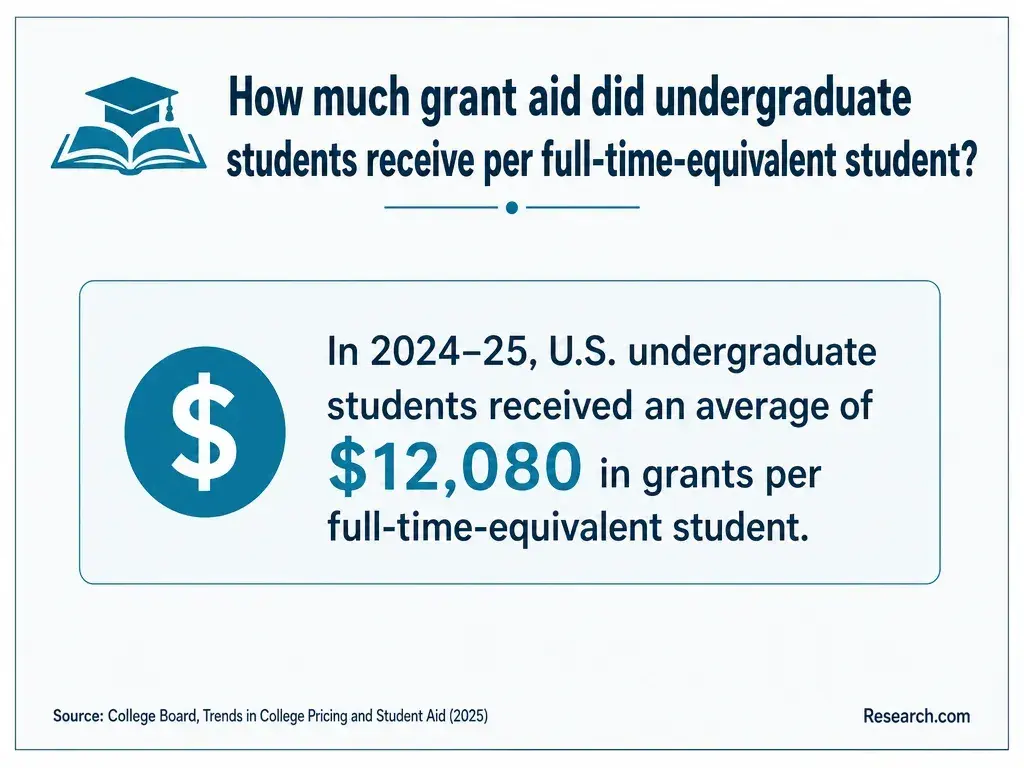
Request a term-by-term plan and an itemized estimate for the same enrollment pace at every school. Online psychology programs ranked by affordability can help identify candidates, but compare the price of your remaining degree plan. A lower per-credit price may not be cheaper if more required courses must be repeated. Confirm aid eligibility and satisfactory academic progress with each financial-aid office before relying on assistance.
Online study may be the better choice if it lets you retain work or caregiving arrangements while taking the exact courses your audit requires. Campus study may be preferable if local research opportunities, advising access, or an approved placement make completion more feasible. Neither format automatically offers faster graduation or stronger professional preparation.
Compare actual weekly obligations: asynchronous coursework, scheduled discussions, group work, exams, and any in-person experience. For students planning a later clinical credential, the delivery questions become more demanding; information about shortening the path through a clinical counseling master's should be evaluated separately from the flexibility of an online BA. A graduate program's supervised training requirements are not removed merely because some classes are online.
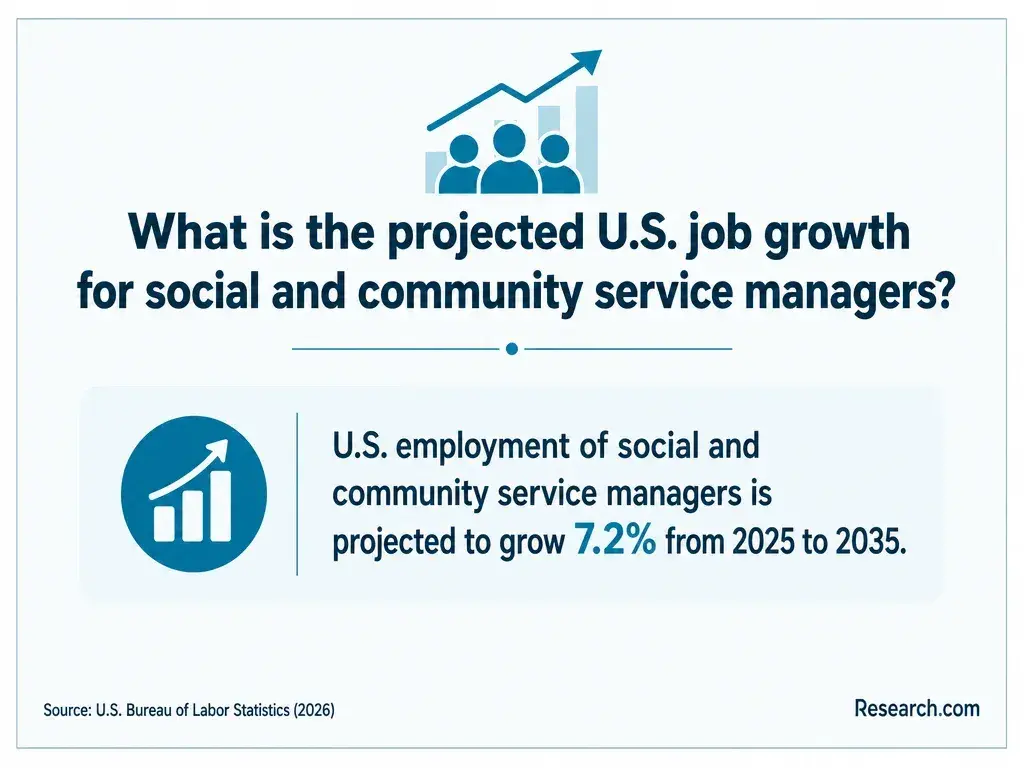
Depending on employer and state requirements, graduates may pursue nonclinical roles in recovery-service coordination, community outreach, program support, intake administration, or referrals. Prior work in human services, health care, or community organizations can be as important as the degree for these jobs. Responsibilities may include documenting services and connecting people with resources, not diagnosing substance use disorders or providing psychotherapy.
For a particular opening, compare its stated education and credential requirements with your experience. Addiction recovery occupations and education can help distinguish support work from regulated counseling. If you already hold a relevant bachelor's degree and only need preparation for a specific nonclinical task, employer training or a targeted credential may be more direct than earning another BA.
What Licenses and Certifications Require More Than a Psychology Bachelor's Degree?
A psychology BA with an addictions concentration does not itself qualify someone as a licensed psychologist, licensed mental health counselor, or clinical social worker. Those paths require their own qualifying education and other jurisdiction-specific steps. Substance use counselor credentials and peer-support certifications also vary by state: some pathways may allow bachelor's-level applicants, but additional approved coursework, supervised experience, examinations, or other conditions may apply.
Before enrolling, identify the exact job title and state where you intend to work. Ask the relevant licensing board or certifying authority whether the proposed degree and its courses meet specific educational requirements; obtain the school's course descriptions if needed. If a qualifying counseling master's is your actual next step, comparing counseling master's tuition with completion time is more useful than treating the addictions concentration as a substitute for professional training.
Other Things You Should Know About Psychology
Often, yes. Check the former college's state higher-education agency for its designated transcript custodian. The receiving school will tell you what official record it requires.
Often, transferred courses award credit without adding their grades to the new institution's GPA, but admission, honors, and major policies can differ. Ask how each GPA is calculated.
Only if the receiving school accepts that exam for the particular requirement. Check its credit-by-exam policy and approval process before registering.
Ask an adviser first. Enrolling in a course that might later be approved as equivalent could mean paying to repeat material; waiting could delay a prerequisite sequence.
- Cost of Attendance (Budget) | 2025-2026 Federal Student Aid Handbook https://fsapartners.ed.gov/knowledge-center/fsa-handbook/2025-2026/vol3/ch2-cost-attendance-budget
- Standards for Academic Associate Degree Programs | texas.gov https://reportcenter.highered.texas.gov/agency-publication/miscellaneous/standards-for-academic-associate-degree-programs/
- .14 Evaluation and Review Process for Transfer of Courses and Credits. | Library of Maryland Regulations https://regs.maryland.gov/us/md/exec/comar/13B.06.02.14
- Transfer credit - UC Admissions - University of California https://admission.universityofcalifornia.edu/admission-requirements/transfer-requirements/preparing-to-transfer/transfer-credit.html
- Cost: Incoming First-Year and Transfer | University of Arizona Office of Scholarships & Financial Aid https://financialaid.arizona.edu/cost/incoming
- What are general transfer credit rules I should know? | Undergraduate Admissions https://admissions.unc.edu/faqs/how-will-my-courses-transfer/
- Transfer Credit Policy on the Evaluation of Previous Training and Education | Truckee Meadows Community College Catalog https://catalog.tmcc.edu/rules-regulations/transfer-credit-policy-evaluation-previous-training-education/
- Undergraduate Transfer Credit | University of Arizona Catalog https://catalog.arizona.edu/policy/courses-credit/credit/undergraduate-transfer
- Transfer Credit Policy for Undergraduates - CCA Portal https://portal.cca.edu/thriving/student-handbook/academic-policies/transfer-credit-policy-undergraduates/
- Academic Policies and Procedures | buffalo.edu https://catalogs.buffalo.edu/content.php