2027 Online MS in Psychology - Forensic Psychology After Graduate Credits Earned on the Quarter System: Compare Prerequisites and Admission Options
Audited and Verified:
Our Editorial and Data Verification Process
Research.com uses government datasets, official education statistics and primary institutional information to support its career and degree guides. Our review process checks factual accuracy, occupational definitions, source dates and the requirements associated with the credentials discussed.
How This Article Was Fact-Checked
Our editorial team verifies salary estimates, employment projections, education requirements and program information against original data providers and official organizations. Salary figures are checked against the relevant occupational definitions and reporting periods. Information about licensure, accreditation and required in-person training is reviewed separately.
Fact-checked and verified on:

Co-Founder and Chief Data Scientist
If you have graduate credits from a quarter-system school, an online forensic psychology master's may let you build on that work, but admission and credit transfer are separate decisions. A course can strengthen your application without reducing the credits needed to graduate.
This guide explains how to compare prerequisites, request a meaningful transfer review, and check whether a program fits your schedule and career goal. It is designed to help you avoid repeating coursework or enrolling in a degree that does not qualify you for the work you want.
Key Things You Should Know
- For an initial comparison, three quarter credits commonly equal two semester credits; the receiving university decides whether the course also satisfies a degree requirement.
- Prior graduate study may support admission even when no credits transfer. Check course level, grade, subject match, age limits, and the program's transfer cap separately.
- An online forensic psychology MS generally supports nonclinical study and justice-related work; it does not, by itself, qualify someone for psychologist licensure or forensic evaluations.
What Is an Online MS in Psychology With a Forensic Psychology Concentration?
It is a psychology master's degree whose concentration applies psychological research and theory to legal and justice settings. Depending on the program, students may examine eyewitness memory, violence research, victimization, corrections, ethics, or the interpretation of behavioral evidence. The concentration may be a defined sequence within an MS rather than a separately awarded degree.
For someone bringing prior graduate coursework, the important distinction is between subject relevance and degree applicability. A previous course on criminal behavior might be relevant to an admissions essay but still fail to replace a required graduate research-methods course. Compare the new program's required courses, not just its concentration name, with what appears on your transcript.
If you have not yet completed a bachelor's degree, graduate transfer policies are not your immediate obstacle. Establish undergraduate eligibility first; accelerated undergraduate forensic psychology study is a separate decision from transferring graduate credits into an MS.
Can Graduate Credits Earned on the Quarter System Transfer Into These Programs?
Quarter credits can be converted for evaluation, but conversion does not guarantee acceptance or a shorter program. A common academic conversion is two semester credits for three quarter credits: an illustrative six-quarter-credit course would be evaluated as four semester credits. The receiving institution determines the official equivalency and whether that amount meets its course requirement.
Schools also distinguish credit granted as an elective from credit that replaces a required course. The latter usually needs a closer review of learning outcomes, assignments, level, and coverage of research methods or forensic topics. This comparison shows where a prior course may help and where it may not.
| Prior graduate coursework | Potential treatment | Main point to verify |
| Statistics or research methods | Possible core-course substitution | Content, methods depth, and any recency rule |
| Psychology course related to legal settings | Possible concentration or elective credit | Whether it matches a specific requirement |
| Relevant course outside psychology | Possible elective credit or admission evidence | Graduate level and fit within the degree plan |
| Course already used toward another degree | May be restricted or ineligible | Policy on reusing credits from an awarded degree |
Before paying an enrollment deposit, request a written, course-by-course evaluation from the graduate admissions or registrar's office and a degree-plan review from the program. Provide official transcripts, catalog descriptions, and syllabi.
Ask for the converted credit value, the program's transfer maximum, the requirement each accepted course fulfills, and the credits still needed in residence. A general policy statement is not the same as an approved plan for your record.
Even a favorable evaluation may leave courses available only in a particular sequence. When comparing online psychology master's completion planning, ask whether the transferred course actually lets you skip a term, not merely whether it reduces the total credit count.
What Are the Admission Requirements for an Online Forensic Psychology Master's?
Requirements vary by institution. A completed bachelor's degree from an acceptable institution is a common starting point, but a psychology major is not universally required.
Programs may set a minimum GPA, request recommendations and a statement of purpose, or expect prior psychology, statistics, or research-methods coursework. A program may accept an applicant while still requiring preparatory courses; another may require those courses before enrollment.
Your quarter-system graduate record can answer two different admissions questions. First, does it demonstrate readiness for graduate-level writing, statistics, and psychological science? Second, will any course count toward the new MS? A strong answer to the first does not establish the second. Compare each school's stated requirements with these possible admissions routes.
| Applicant position | Likely admissions issue | Evidence worth presenting |
| Psychology bachelor's plus prior graduate courses | Fit of earlier study with the new concentration | Syllabi, research work, and explanation of the change in program |
| Non-psychology bachelor's plus relevant graduate courses | Whether formal psychology prerequisites are met | Course descriptions and evidence of statistics or methods preparation |
| Relevant justice-system or human-services experience | Academic preparation versus practical familiarity | Specific responsibilities alongside evidence of readiness for graduate study |
| Missing prerequisite | Whether completion is required before admission or enrollment | Written confirmation of an approved course or conditional-admission option |
Start with the admissions page for your intended entry term, then ask the program which prerequisites are mandatory, which are recommended, and whether a prior graduate course can satisfy one.
If a gap can be filled outside the MS, compare the price of a targeted course with lower-cost online psychology study pathways; confirm in writing that the course will meet the prerequisite before enrolling.
Check that the degree-granting institution holds accreditation recognized by the U.S. Department of Education or the Council for Higher Education Accreditation, and verify that recognition with the accreditor or an official recognition directory.
Institutional accreditation matters for baseline academic oversight and can affect credit evaluation, employment, and financial-aid eligibility. It does not obligate another university to accept transferred credits.
Do not assume a general or nonclinical forensic psychology MS needs American Psychological Association accreditation. APA accreditation applies to specified professional psychology training programs, not to every psychology master's or concentration. Likewise, counseling accreditation is relevant only if you are considering a distinct counseling pathway and the applicable credential rules call for it.
If your goal is licensed counseling rather than nonclinical forensic work, compare qualifying counseling programs under the rules of the state where you intend to practice. That is a different program and financial decision; mental health counseling education costs after aid may be more relevant than the price of a nonclinical psychology MS.
Delivery format affects how you complete the work, not whether prior credits are accepted. Online courses may remove a commute, while campus programs may make it easier to attend research meetings or develop local professional connections. Either format may require live participation, group work, approved field experiences, or scheduled faculty meetings.
For a student balancing employment or caregiving, compare the actual weekly obligations: live-session times, assignment deadlines, group-project expectations, and any travel or on-site requirements.
For a student hoping to enter research, compare access to faculty supervision, a thesis option, and feasible projects, not simply the number of online electives. A quicker calendar in intensive online psychology program formats can be useful, but it may also leave less time for research collaboration or steady part-time work.
Ask each program whether transferred courses affect cohort placement and whether required courses run every term. Those answers can matter more to your completion date than the online-versus-campus label.
Programs commonly combine graduate psychology foundations with statistics or research methods, ethics, and courses examining behavior in legal contexts. Some offer a capstone, thesis, or applied project. Course titles alone reveal little about equivalency: a class called "Forensic Psychology" may emphasize legal decision-making at one school and clinical assessment concepts at another.
When seeking transfer credit, compare learning outcomes and substantial assignments. A prior statistics course may be a better match for a core requirement than a prior course with "forensic" in its title.
Conversely, an undergraduate course on similar material may not meet a graduate-level requirement. If your earlier preparation focused on addiction rather than legal settings, a bachelor's-level addiction psychology program guide can help distinguish foundational subject knowledge from the graduate forensic coursework you still need.
Give extra weight to methods and research-writing requirements if you may later apply to a research-oriented doctoral program. If your interest is agency support work, look for opportunities to study ethical documentation, program evaluation, and collaboration across justice and community services. Neither route makes a course on assessment permission to administer restricted tests independently.
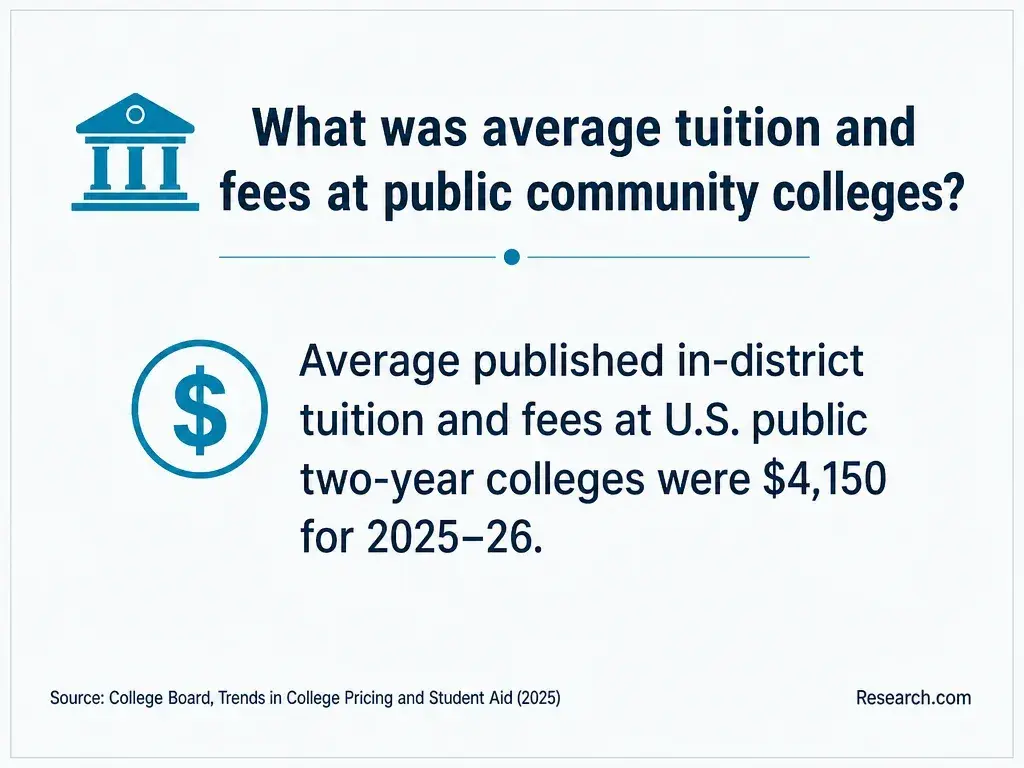
Time and total cost depend on required credits, course availability, pace, tuition policy, fees, and any approved transfer credit.
A shorter advertised program is not necessarily cheaper if its per-credit charges are higher; accepted credits may not save a term if a required course is offered infrequently. Without a program-specific degree audit and published charges, a reliable personal total cannot be calculated.
Request a cost estimate based on the credits you would actually need after evaluation. Include required fees, books or software, possible travel, and any continuation charges for unfinished projects. Then compare that estimate with cost-conscious options for a psychology master's, using the same assumptions about transferred credits and enrollment pace for every school.
Ask the financial-aid office how your planned course load affects aid eligibility and when approved transfer credits will appear in your record. Do not count a prospective credit award as a saving until the school confirms how it applies to your degree.
Potential directions include victim-services support, corrections or reentry program coordination, justice-related research assistance, and program evaluation. Actual hiring depends on the employer, prior experience, location, and the duties of the position. A public agency may have its own examination, clearance, or classification requirements that a degree cannot replace.
Match the program to a job description before treating it as a career step. For advocacy or coordination, look for evidence you can communicate respectfully, document accurately, protect confidential information, and make appropriate referrals.
For research roles, look for demonstrable methods, data-handling, and writing skills. Existing justice-system or community-service experience may be more valuable when paired with a focused project than with another general credential.
If the target is specifically substance-use support rather than forensic work, compare the state's credential rules and more direct preparation, including inexpensive undergraduate substance use counseling degree choices. Forensic coursework does not substitute automatically for an addiction credential.
There is no single reliable salary or growth figure for "forensic psychology master's graduates." That phrase describes an educational background, not one occupation. A victim-services coordinator, research worker, and licensed psychologist can have different duties, entry requirements, and pay structures; the psychologist category should not be used as an expected outcome for a nonclinical MS.
For a usable estimate, identify jobs you would qualify to apply for without another license. Compare current local postings with the U.S. Bureau of Labor Statistics Occupational Outlook Handbook entry for the closest clearly defined occupation, checking its wage reference year, projection period, and typical entry education. The national occupational median is a benchmark for that occupation, not a forecast of your offer or a program's graduate earnings.
Use salary outlook for forensic psychology master's graduates as a starting list of roles to investigate, then exclude any position whose experience, credential, or license requirements you would not meet. This job-by-job approach provides a more meaningful return-on-investment comparison than a single advertised salary.
Does a Forensic Psychology Master's Qualify You for Licensure or Certification?
A nonclinical MS in psychology typically does not qualify a graduate to practice independently as a psychologist, conduct licensed forensic evaluations, diagnose conditions, or provide psychotherapy.
Such work is governed by the relevant state board and generally requires a qualifying professional education pathway plus other requirements. Agency employment and some nonclinical certifications have separate rules.
If your objective is forensic assessment, identify the license and training required in your intended state before choosing a degree. If it is therapy with justice-involved clients, examine programs designed to meet that state's counseling, social-work, or other applicable licensure requirements.
Faster-paced online mental health counseling master's study is worth comparing only after checking whether a particular program meets the educational and supervised-training rules that apply to you.
Request a written explanation of a forensic MS program's intended outcomes, then confirm any claimed credential eligibility with the licensing board or certifying body. This final check should control the decision even if the concentration, transferred credits, and schedule otherwise look ideal.
Other Things You Should Know About Psychology Programs
Often, but application rules vary. Report the course as in progress and ask when the final official transcript must arrive; do not assume an unfinished course will satisfy an admission condition.
Some schools offer preliminary reviews. Ask whether the estimate is nonbinding and what official records are needed for a final decision.
No. It remains part of the issuing school's transcript, although the new program may decline to apply it to its degree.
Tailor it to each program's curriculum and your intended role. Explain how your earlier graduate work prepares you for the proposed course of study without claiming it has already been approved for transfer.
- School-Determined Requirements | 2024-2025 Federal Student Aid Handbook https://fsapartners.ed.gov/knowledge-center/fsa-handbook/2024-2025/vol1/ch1-school-determined-requirements
- Master's Degree - Forensic Psychology - On Campus | Monroe University https://www.monroeu.edu/academics/king-graduate-school/masters-forensic-psychology
- Graduate Credit Transfer Policy | Indiana Wesleyan University Catalog https://catalog.indwes.edu/academicpolicies/academicpolicies/graduatecredittransferpolicy
- Application & Admission - CSU East Bay Catalog https://catalog.csueastbay.edu/content.php
- How Do Transfer Credits Work When You Go Back to School? | Whitworth Online https://online.whitworth.edu/news-articles/how-do-transfer-credits-work-when-you-go-back-to-school/
- Academics: Section 4: Academic Calendar, Admission, and Enrollment: Admission Requirements https://academics.waldenu.edu/handbook/registration-admission-enrollment/admission-requirements
- Online Forensic Psychology Master's Degree | ASU Online https://asuonline.asu.edu/online-degree-programs/graduate/master-science-forensic-psychology/