2027 Online BA in Psychology - General Psychology vs. a BA in Psychology with a Data Analytics Minor: Compare Curriculum, Cost, and Career Fit
Audited and Verified:
Our Editorial and Data Verification Process
Research.com uses government datasets, official education statistics and primary institutional information to support its career and degree guides. Our review process checks factual accuracy, occupational definitions, source dates and the requirements associated with the credentials discussed.
How This Article Was Fact-Checked
Our editorial team verifies salary estimates, employment projections, education requirements and program information against original data providers and official organizations. Salary figures are checked against the relevant occupational definitions and reporting periods. Information about licensure, accreditation and required in-person training is reviewed separately.
Fact-checked and verified on:

Co-Founder and Chief Data Scientist
A general psychology BA offers room to explore the field; adding a data analytics minor commits some of that room to quantitative training. That choice matters if you want to work with research or organizational data, but it may add courses, cost, or time without helping your particular goal.
This comparison is for prospective and transfer students weighing online programs. It explains what each route teaches, which opportunities require experience beyond coursework, and how to check whether a minor will strengthen - or complicate - your degree plan.
Key Things You Should Know
- Choose the general BA when psychology breadth, flexible electives, or specific graduate-school prerequisites matter more than a formal analytics credential.
- Choose the analytics minor when it includes substantial statistics, data management, and applied projects - and a degree audit shows that its credits fit your budget and schedule.
- A conventional bachelor's degree often requires about 120 semester credits; a minor does not necessarily add credits, but prerequisite and course-sequencing rules can extend completion time.
What Is the Difference Between a General Psychology BA and a Data Analytics Minor?
Both routes lead to a psychology bachelor's degree. A general psychology BA emphasizes the discipline's breadth, typically including psychological theory, research methods, statistics, and electives. A data analytics minor is an additional, formally recorded set of courses; it is not a second degree or a psychology concentration. Its content depends on the institution and may come from statistics, computing, business, or another department.
The practical difference is what you can demonstrate afterward. General electives might let you pursue developmental psychology, social psychology, or faculty-supervised research. A well-designed minor can add data cleaning, visualization, statistical programming, and interpretation. Neither label proves proficiency: compare course descriptions and completed projects, not just transcript wording.
If your interest is specifically forensic psychology, a broad BA can leave space for relevant electives and research experience. Do not assume that adding analytics - or choosing a one-year forensic psychology master's pathway later - is necessary for every justice-related support job; start with the requirements of the role you want.
Is an Online Psychology BA Accredited and Worth It?
An online BA can be a sound choice when its institution holds recognized institutional accreditation, its courses meet your learning goals, and its total cost is manageable. Verify the institution and the degree-granting campus or entity through the accreditor and the U.S. Department of Education's accreditation records. Accreditation establishes an institutional quality-review framework; it does not certify that a particular minor has strong analytics instruction or that graduates qualify for a specific job.
The American Psychological Association does not accredit general psychology bachelor's programs. Nor should you apply counseling-program accreditation rules to a BA. If counseling is a future goal, compare the requirements of the graduate programs and states you may pursue; comparing accredited counseling degree completion times concerns a separate professional-training decision.
Judge value against a concrete goal: inspect the analytics syllabus, available software and datasets, opportunities for supervised projects, career support, and what graduates can show employers. A minor with little applied work may be less useful than a general BA paired with an approved research assistantship or a strong portfolio.
What Can You Do With Each Psychology Degree Path?
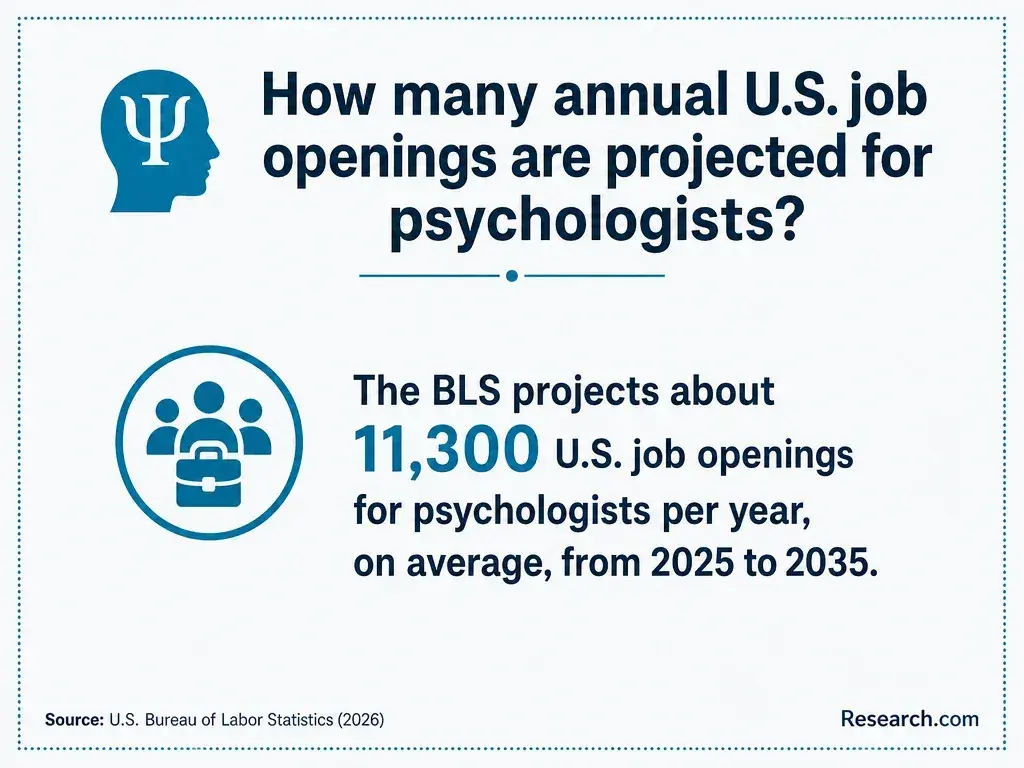
Either route may support applications for nonclinical work such as program assistant, research support staff, community-services coordinator, or human-resources assistant, subject to each employer's requirements. The general BA can be especially useful when experience with people, writing, and psychological research aligns with the job. The analytics minor is more relevant when the work includes survey data, reporting, evaluation, or audience research - but employers may still expect spreadsheet, statistical, or database skills demonstrated through projects.
For example, a student interested in evaluating a community program could pair psychology methods with an authorized, nonclinical project that explains a research question, documents data limitations, and communicates findings. Access to client records, participant recruitment, and public use of results require appropriate organizational permission and, where applicable, research review; coursework alone grants none of these.
Forensic interests also span very different jobs. Victim-services support, justice-system administration, research, and licensed forensic assessment have different qualifications. If you are considering graduate study primarily for higher earnings, comparing forensic psychology master's career earnings is useful only alongside the actual duties and credential requirements of each occupation.
The most useful comparison is not "psychology versus technology," because students in both routes need to interpret behavioral evidence responsibly. The table shows where the plans commonly diverge; an individual university's catalog and degree audit control the actual requirements.
| Curriculum feature | General psychology BA | Psychology BA with analytics minor |
| Psychology foundation | Core theory, research methods, and statistics | Usually the same psychology major core |
| Remaining electives | More room for psychology topics, prerequisites, or research | Some elective room reserved for minor courses |
| Quantitative depth | Depends on psychology electives and projects | Depends on the minor's statistics, computing, and applied requirements |
| Applied evidence | May come from research, an internship, or a capstone if available | May include analytical projects; verify that such work is required |
A minor is strongest when its courses progress beyond introductory software use to data management, appropriate analysis, and clear reporting. Psychology students should also learn why a measure may not represent the construct of interest, why missing responses matter, and why a correlation does not establish causation. A polished chart cannot repair a weak study design.
If a research-oriented master's degree is your next step, check its expected statistics and methods preparation before allocating electives. Faster pathways through graduate psychology coursework do not replace missing undergraduate prerequisites or evidence that you can conduct and interpret research.
There is no reliable single price for either route. Schools may charge by credit or term, and online tuition, mandatory fees, software, books, and any travel obligations can differ. The key comparison is the cost of the credits you still need, not the advertised price of the full bachelor's degree.
Ask each school for a written degree audit and a term-by-term estimate for both options. Check whether minor courses satisfy open electives, require additional credits, have prerequisites that do not overlap with the major, or are offered only at a particular time. Calculate tuition from the remaining billable credits under each plan, then add mandatory fees and likely materials. Compare financial-aid eligibility and employer assistance using the school's current rules; neither is automatic.
If the long-term goal is licensed counseling, the BA is only part of the education budget. Include the subsequent qualifying degree and associated expenses when considering financial planning for accredited counseling degrees. Paying more for an undergraduate analytics minor may not serve that goal unless its courses also advance your interests or preparation.
Completion time depends on accepted transfer work, the courses it actually satisfies, enrollment pace, and when required classes run. A conventional 120-credit degree taken at 15 credits per semester would take eight semesters without prior credit or interruptions. That is an illustration, not a promise about either online route.
The minor may fit inside existing electives, or it may lengthen the plan if introductory statistics or programming must precede advanced courses. Ask whether those prerequisites are offered online every term and whether the final required course can be completed before your intended graduation date. For students balancing work or caregiving, a nominally faster schedule may be unrealistic if classes require fixed live meetings or intensive group work.
Do not confuse BA completion with the timeline for professional training afterward. Fast online clinical mental health counseling master's programs are a separate comparison for students pursuing that profession, and their academic pace does not eliminate applicable supervised-practice or licensing requirements.
Requirements vary by school and by whether you are a first-year or transfer applicant. Common application materials include prior transcripts; some institutions set separate criteria for entry to the psychology major or for declaring a minor. A data analytics minor may also require prerequisite math, statistics, or computing courses even when it has no separate admission process.
Transfer students should request an official evaluation that distinguishes credits accepted from requirements satisfied. In particular, ask how prior statistics and research-methods courses apply, whether a minor limits transfer credits, and what coursework must be completed at the degree-granting institution. A preliminary estimate is not a final degree audit.
When comparing psychology degree transfer pathways, send both proposed plans to an advisor. The best route may change if a previously completed course satisfies a psychology elective but not an analytics prerequisite - or vice versa.
The degree title alone does not tell you how students learn. Online lectures may be asynchronous while statistics labs, research meetings, exams, group projects, or internships require scheduled participation. Campus study can make informal access to faculty and research teams easier; a well-supported online program can still provide meaningful mentoring and applied work.
For this particular choice, ask how remote students obtain datasets and software, receive feedback on code or analyses, meet research supervisors, and complete any required capstone. Also confirm whether either route requires campus visits or an approved local site. These details matter more to career readiness than an "online" label.
If you expect to pursue counseling after the BA, treat delivery format as a fresh decision at the graduate level. Evaluating shorter mental health counseling graduate pathways requires attention to live classes and supervised training, not simply the number of online courses.
Neither BA route has a single salary outcome: pay follows the occupation, location, experience, and skills demonstrated. As one relevant but demanding comparison, the U.S. Bureau of Labor Statistics reports a 2024 median annual wage of $76,950 for market research analysts and projects 7% employment growth from 2024 to 2034. Those are occupation-wide figures, not starting salaries or employment outcomes for psychology graduates with an analytics minor. Analysts commonly need substantial research and data skills, which a minor alone may not establish.
Community-service and research-support jobs have different pay structures and hiring standards. Compare openings by their actual tasks - such as interviewing, data cleaning, reporting, or service coordination - and note whether employers request a bachelor's degree, relevant experience, specific software, or a separate credential. For students interested in substance-use services, substance abuse counseling bachelor's program value comparisons concern a distinct role and should be checked against state credential rules rather than treated as an earnings forecast for either psychology BA.
Does a Psychology BA Qualify You for Licensure or Certification?
Neither a general psychology BA nor the same BA with an analytics minor, by itself, qualifies someone to practice as a licensed psychologist, independently diagnose conditions, or provide psychotherapy. Those activities require the applicable professional education, supervised experience, examinations, and state authorization. An analytics minor is an academic credential, not a professional license or a substitute for clinical training.
Some nonclinical jobs need no psychology license; others, including particular recovery-support or addiction-service positions, may have state or employer certification rules. If that is your target, check the relevant state authority and job postings before selecting electives. Substance use counseling program pathways should be evaluated against the credential you intend to seek, not assumed equivalent to a general psychology BA.
For most students choosing between these two routes, the decisive next step is a paired degree audit: compare remaining credits and cost, inspect the minor's actual projects, and check several target job or graduate-program requirements. Choose the minor when those checks show a useful advantage; otherwise, the general BA plus targeted electives or supervised experience may be the more direct investment.
Other Things You Should Know About Psychology
Usually, an officially completed minor appears on the academic record, but notation practices vary. Confirm when the school certifies and records it.
No. A minor generally provides less technical depth than a data science major. Compare required programming, mathematics, and projects if you want a data-focused role.
Yes. Publicly available or appropriately licensed datasets and clearly labeled simulated data can demonstrate your process. Follow dataset terms and explain what the data cannot establish.
You can ask whether statistics or computing electives fit your BA, then build a documented project. A separate certificate may help, but check its cost and relevance before enrolling.
- Cost of Attendance (Budget) | 2025-2026 Federal Student Aid Handbook https://fsapartners.ed.gov/knowledge-center/fsa-handbook/2025-2026/vol3/ch2-cost-attendance-budget
- What Degree Do I Need to Become a Counselor or Therapist? | Palo Alto University https://paloaltou.edu/resources/blog/what-degree-do-i-need-become-counselor-or-therapist
- Pursuing a Career in Quantitative Psychology | apa.org https://www.apa.org/education-career/guide/subfields/quantitative/education-training
- Data Science Pathways | Columbian College of Arts & Sciences https://datasci.columbian.gwu.edu/data-science-pathways
- Career Paths for Working Professionals With a Psychology Degree | YSU https://online.ysu.edu/degrees/undergraduate/ba-psychology/paths-for-working-professionals/
- What Can I Do With a Degree in Data Science? Career Paths & Skills | Harvard SEAS https://seas.harvard.edu/news/what-can-i-do-degree-data-science-career-paths-skills
- Degree Requirements | Florida Atlantic University https://www.fau.edu/registrar/university-catalog/catalog/degree-req/
- Program: Psychology - (B.A.) - University of Memphis https://catalog.memphis.edu/preview_program.php
- Careers in Psychology | Cal State LA https://www.calstatela.edu/nss/psychology/careers-psychology