2027 No-GRE AI Master's Degree Programs

Co-Founder and Chief Data Scientist
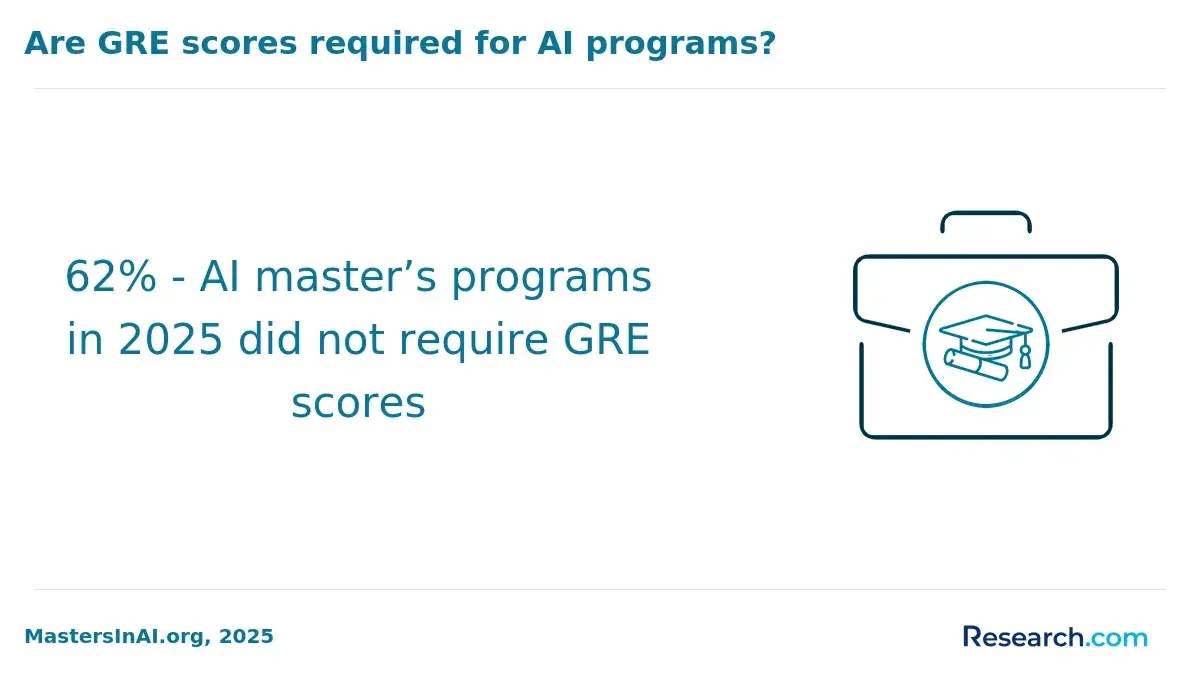
Many prospective graduate students face the obstacle of submitting Graduate Record Examination (GRE) scores for admission to Artificial Intelligence master's programs. This hurdle often delays career transitions or deters applicants with unrelated undergraduate degrees aiming to enter the AI field. Additionally, standardized tests may not accurately reflect skills essential for success in applied AI disciplines. As a result, flexible and accessible options are vital for diverse candidates seeking accredited programs that prioritize practical competencies over traditional testing.
This article explores the most current 2026 no-GRE Artificial Intelligence master's degree programs and offers guidance to help readers navigate admission requirements efficiently.
Key Things You Should Know
- No-GRE master's programs in Artificial Intelligence have grown by over 40% since 2024, making graduate education more accessible for diverse candidates.
- These programs often emphasize practical skills and include partnerships with tech companies, aligning curriculum with job market demands for AI specialists.
- Average tuition for online no-GRE AI master's degrees ranges from $20,000 to $45,000, offering cost-effective alternatives amid rising higher education costs.
Which universities offer accredited master's degrees in artificial intelligence without requiring the GRE?
Several accredited U.S. universities offer master's degrees in artificial intelligence without requiring the GRE for admission. Notable programs at institutions like the University of Southern California, Northeastern University, and Colorado State University adopt a holistic review process that focuses on undergraduate GPA, professional experience, letters of recommendation, and personal statements rather than standardized test scores. This approach is common among top accredited master's programs in artificial intelligence that don't require GRE scores.
The movement toward test-optional policies has grown significantly, with over 1,900 graduate programs nationwide embracing this shift. STEM fields, including artificial intelligence and computer science, prioritize demonstrated skills and relevant experience over exam results. Some universities, such as Johns Hopkins University and Stanford University, waive GRE requirements specifically for applicants with strong technical work experience or previous graduate degrees. This flexibility benefits working professionals seeking advanced degrees.
Prospective students interested in universities offering accredited master's degrees in artificial intelligence without GRE should carefully check each program's admissions criteria, as policies vary by department and evolve over time. Showing relevant projects, internships, or research experience can also strengthen applications. Many of these no-GRE AI master's programs provide flexible learning options, including online or part-time formats, accommodating full-time professionals.
Ensuring program quality involves verifying accreditation status and faculty expertise, often available on university websites or accreditation bodies like ABET. For those exploring career options with an artificial intelligence major, more insights can be found at Research.com.
What are the typical admission requirements for no-GRE AI master's degree programs?
No-GRE AI master's degree programs often prioritize strong academic and professional qualifications over standardized test scores. Typical admission requirements for no-GRE AI master's degree programs include holding a bachelor's degree in fields like computer science, engineering, or mathematics, though some interdisciplinary candidates with relevant technical skills may qualify. Applicants generally need to submit official transcripts, letters of recommendation from professors or supervisors, academic resumes, and a statement of purpose detailing their goals in AI.
Graduate program prerequisites for artificial intelligence without GRE increasingly accept alternative credentials. Roughly 73% of programs now allow work experience, professional certifications like TensorFlow Developer or AWS Certified Machine Learning, and portfolios to substitute for GRE scores. Candidates with significant industry experience in AI or machine learning roles can leverage these alternatives effectively.
Many programs require foundational knowledge in programming languages such as Python or Java, alongside mathematical skills in linear algebra, probability, and statistics. Those lacking these abilities might need to complete prerequisite courses. International students must still demonstrate English proficiency through tests like TOEFL or IELTS. Some collaborative or project-based programs also include video interviews or technical assessments to evaluate communication skills.
Prospective students exploring AI education options can also consider related fields or pathways, such as pursuing an online degree in mechanical engineering for a broader engineering foundation aligned with AI applications.
Applicants mindful of no-GRE master's degree admission criteria for artificial intelligence and the exact graduate program prerequisites for artificial intelligence without GRE improve their chances by tailoring applications accordingly.
- no-GRE master's degree admission criteria for artificial intelligence
- graduate program prerequisites for artificial intelligence without GRE
How do no-GRE AI master's programs compare in cost, duration, and format across top-ranked universities?
No-GRE AI master's degree program cost comparison reveals a wide range in tuition, typically from $30,000 to $120,000 depending on the university's prestige and program format. Online programs generally reduce expenses by about 30% compared to on-campus classes. For instance, a leading public university might charge approximately $40,000 for an online AI master's, while the on-campus option could be closer to $60,000. This cost difference reflects not only tuition but also savings on housing and commuting for online students.
Duration and format of AI master's degrees at top universities vary substantially. Accelerated, full-time on-campus paths may complete degrees in 12 to 18 months, while part-time or online tracks extend over two to three years to accommodate working professionals. Hybrid models, blending asynchronous online learning with occasional in-person sessions, balance flexibility with engagement, although frequency of campus visits differs among programs.
While fully online options reduce living costs and appeal to nationwide students, on-campus programs offer benefits such as networking and access to research labs, which many students find valuable. Prospective students should consider total costs, including fees, living expenses, and opportunity costs of full-time study. Choosing universities offering STEM OPT and employer tuition assistance can improve financial feasibility.
Strong academic and professional backgrounds remain essential despite no-GRE requirements, highlighting the importance of curriculum quality and faculty expertise. For those seeking more affordable options, resources like engineering degree online rankings provide valuable information to guide decisions.
What core coursework and specializations are included in no-GRE artificial intelligence master's programs?
No-gre artificial intelligence master's degree core coursework typically includes machine learning, deep learning, data mining, and natural language processing. According to the ACM Computing Curricula, 94% of accredited AI master's programs now integrate both machine learning and deep learning, emphasizing their critical role. Additional courses often cover algorithms, probability, statistics, and optimization to strengthen quantitative skills.
No-gre ai master's program specializations and electives often focus on areas such as computer vision, robotics, reinforcement learning, and AI ethics. Computer vision courses explore image recognition and video processing, while robotics emphasizes autonomous systems and sensor fusion. Reinforcement learning addresses decision-making in dynamic environments, growing rapidly in fields like gaming and autonomous driving. Electives may include big data analytics, cloud computing, or AI policy, allowing adaptability to industry trends and regulatory landscapes.
Practical projects using real-world datasets or partnerships with tech firms are common, preparing students for immediate professional roles. Applicants should carefully review course catalogs to ensure a balance between theory and hands-on experience. Students with backgrounds in computer science, engineering, or mathematics usually find the coursework manageable; others may need prerequisite classes.
For those also interested in technology fields, exploring cybersecurity masters online can be a complementary path providing additional expertise and career opportunities.
Are no-GRE AI master's degrees from accredited institutions recognized equally by employers and industry?
No-GRE AI master's degrees from accredited institutions carry equal weight with employers compared to those requiring GRE scores. According to LinkedIn Talent Solutions, 78% of hiring managers prioritize accreditation and program reputation over standardized tests, focusing more on skills and relevant experience. This means that graduates from regionally accredited universities offering no-GRE programs often have comparable hiring prospects to those from GRE-mandated paths.
Accreditation from recognized agencies such as the Higher Learning Commission (HLC) or the Accreditation Board for Engineering and Technology (ABET) remains crucial. It assures quality curriculum, faculty expertise, and institutional integrity. Programs that maintain solid industry partnerships or demonstrate successful graduate employment rates further enhance their credibility in the job market.
Employers in tech and AI sectors tend to emphasize demonstrated competencies in machine learning, data analysis, and software development over test scores. Though a few competitive roles may still prefer GRE results, this is less common where practical skills outweigh traditional academic metrics. Prospective students should therefore focus on building portfolios showcasing their applied experience alongside earning an accredited AI master's degree.
Ultimately, no-GRE master's degrees from reputable institutions hold equivalent professional standing when candidates prove their capabilities beyond admissions requirements.
What career roles and job titles do graduates of no-GRE AI master's programs typically pursue?
Graduates of no-GRE AI master's degree programs frequently secure roles such as AI engineer, machine learning engineer, data scientist, and AI research scientist. AI/machine learning engineer positions make up 42% of AI-related job postings, according to the Indeed Hiring Lab, making this role the most common path requiring master's-level expertise. These professionals create and implement machine learning models utilized across sectors like healthcare, finance, and technology. Data scientists constitute the next largest group at 28%, analyzing complex data sets to generate insights that influence business and research decisions.
Other roles for graduates include AI product manager, who combines technical knowledge with strategic oversight, and AI software developer, focusing on embedding AI functionalities into applications. AI research scientists work on pioneering new algorithms and models, often within corporate or academic labs. Specialized positions such as computer vision engineer and natural language processing engineer offer targeted expertise in areas like image recognition and language understanding.
Employers increasingly require proficiency in AI frameworks, programming languages such as Python, and experience with cloud-based AI platforms. Gaining practical exposure through internships or research projects during studies significantly improves job prospects. Additionally, understanding specific industry challenges and regulations enhances graduates' ability to apply AI solutions effectively, boosting competitiveness in the job market.
What is the average salary range for professionals with a master's degree in artificial intelligence?
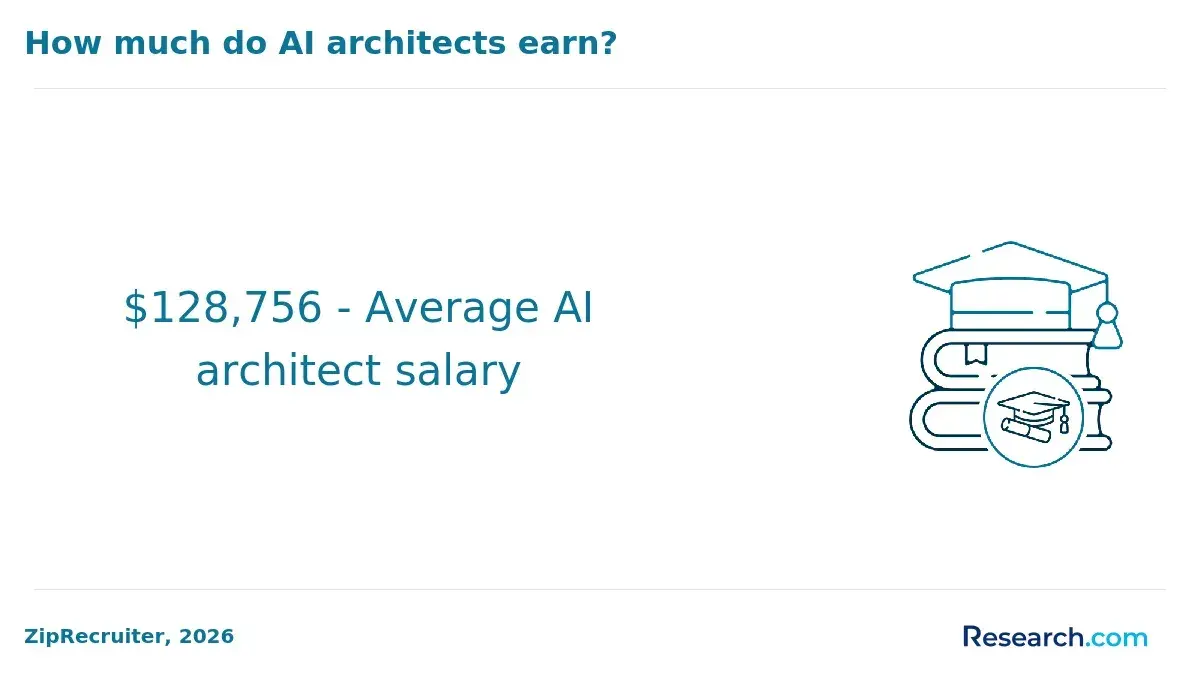
Professionals with a master's degree in artificial intelligence earn an average salary around $145,000 annually, representing a 34% premium compared to bachelor's degree holders in the field, according to Glassdoor Economic Research. Salaries depend on job title, industry, location, and experience. For instance, AI research scientists and machine learning engineers often exceed $160,000 per year, especially in tech hubs like Silicon Valley and New York City.
Mid-career AI professionals with a master's degree typically earn between $120,000 and $170,000, reflecting their advanced skills and experience. Entry-level AI analysts generally start near $100,000, with rapid growth potential as they develop expertise. Industries such as finance, healthcare, and autonomous systems offer especially competitive salaries due to the strategic importance of AI in these sectors.
Understanding this salary advantage helps prospective students evaluate the return on investment for a no-GRE master's program in artificial intelligence. Employers favor candidates with advanced degrees for complex roles involving algorithm design, data modeling, and AI system integration. Compensation also varies by location and company size; startups may offer lower base salaries but higher equity stakes.
The typical salary range for master's degree holders in artificial intelligence spans from $100,000 to over $170,000, making this qualification a valuable asset for career advancement in a competitive market.
What is the job outlook and demand for AI professionals with master's degrees through 2030?
Job prospects for professionals with master's degrees in artificial intelligence are exceptionally strong, with specialist roles expected to grow at 35% annually, far outpacing the 5% average growth projected for all occupations (U.S. Bureau of Labor Statistics, 2024). This rapid growth is driven by AI's expanding integration in industries like healthcare, finance, automotive, and cybersecurity, where employers seek advanced skills to develop algorithms, build machine learning models, and manage large data infrastructures.
Open positions include AI research scientists, machine learning engineers, data scientists, and AI application developers. For instance, machine learning engineers working on natural language processing or computer vision projects are highly sought after in U.S. tech hubs. Healthcare firms also actively recruit AI experts to innovate in diagnostics and personalized treatments.
Demand extends beyond technical roles; many graduates with master's degrees qualify for leadership positions focusing on AI strategy, ethics, and deployment. Programs blending technical training with business and ethical principles add significant value. Those transitioning from software development or data analysis can expect competitive salaries and specialization opportunities.
Students considering no-GRE AI master's degrees should prioritize programs offering hands-on experience with current AI tools and strong industry connections to maximize hiring potential. Staying current with AI trends and continuously enhancing practical skills remains crucial in this fast-evolving field.
How should prospective students evaluate the quality and reputation of no-GRE AI master's programs?
Program accreditation plays a crucial role when evaluating no-GRE AI master's degrees. ABET and CSAB accreditation correlate with a 12-15% increase in graduate employment rates and starting salaries that are $8,000-$12,000 higher than non-accredited programs, according to the ABET Annual Report. This accreditation confirms that the curriculum covers essential theory and practical skills necessary for careers in data science, machine learning, and AI development.
Faculty expertise and active research involvement also distinguish strong programs. Faculty publishing in leading AI journals or engaging in innovative projects demonstrate a program's commitment to advancing the field. Exploring faculty profiles can reveal mentorship and internship opportunities, which are vital for professional growth.
Employment outcomes and alumni networks offer further insights. Prospective students should obtain job placement rates within six months of graduation and starting salary data. Robust alumni connections in tech hubs like Silicon Valley and New York may facilitate valuable industry introductions and job prospects.
Curricula that include machine learning, natural language processing, and AI ethics align well with industry needs. Hands-on labs and partnerships with tech companies strengthen practical experience. Learning format flexibility-whether online, hybrid, or in-person-also benefits students balancing work and studies.
What professional certifications or credentials complement a no-GRE master's degree in artificial intelligence?
Professional certifications play a crucial role in enhancing expertise and employability for graduates with a no-GRE master's degree in artificial intelligence. Leading credentials such as AWS Certified Machine Learning - Specialty, Google Professional Machine Learning Engineer, and the TensorFlow Developer Certificate attest to practical skills in deploying AI on major cloud platforms and working with popular AI frameworks.
Expanding specialization through certifications like Certified Data Scientist (CDS) or Certified Analytics Professional (CAP) also strengthens data management skills, which are essential alongside AI development. According to the Stack Overflow Developer Survey, 68% of AI professionals hold at least one additional industry certification beyond their master's degree, underscoring the value of these credentials in a competitive job market.
For those focused on AI infrastructure and cloud services, AWS and Google Cloud certifications demonstrate expertise in scalable AI solutions. TensorFlow certification is particularly beneficial for proving proficiency in deep learning and neural networks.
Certification choices should align with career goals: professionals interested in natural language processing might complement broader credentials with specialized NLP courses available on platforms like Coursera and edX. AI researchers benefit from certifications emphasizing theoretical foundations and algorithms.
Employers often require or prefer certifications to verify hands-on skills beyond academic degrees. For graduates of no-GRE programs, such endorsements reassure hiring managers about current knowledge and practical capability in the evolving field of Artificial Intelligence.
Other Things You Should Know About Artificial Intelligence
A 2027 No-GRE AI master's degree program typically includes courses in machine learning, data analysis, neural networks, and programming. Students often engage in project-based learning and may complete a capstone project to apply their skills in real-world scenarios.
Yes. Many programs accept applicants from computer science, engineering, mathematics, physics, or other quantitative majors, and some also admit humanities or business graduates if they complete prerequisite courses in programming, calculus, linear algebra, and statistics before enrollment or during the first term.
Many AI master's programs integrate internships, co-op placements, or industry projects to provide real-world experience. These practical components enable students to apply theoretical knowledge, develop professional networks, and improve employment readiness. However, availability varies by institution and program format.
Graduates can pursue roles such as AI engineers, data scientists, machine learning specialists, and AI ethics consultants. Industry-specific positions also exist, such as those in finance. For more information on specialized pathways, check out this financial AI master’s degree.
References
- Online Master's in Data Science Programs No GRE Required (GRE Waiver) https://www.onlineeducation.com/analytics/faqs/data-science-programs-no-gre-required
- 6 High-Paying Jobs With a Master’s in AI | University of Bridgeport https://www.bridgeport.edu/news/high-paying-jobs-with-a-masters-in-ai/
- Artificial Intelligence (AI) Master's Degree Programs That Don't Require the GRE - AI Degrees Online https://aidegreesonline.com/degrees/masters/ai-programs-no-gre/
- What AI really means for graduate jobs - The Choice by ESCP https://escp.eu/thechoice/tomorrow-choices/what-ai-really-means-for-graduate-jobs/
- top universities in US for MS in AI who have exempted gre.? https://mentr-me.com/question/top-universities-in-us-for-ms-in-ai-who-have-exempted-gre
- How AI Is Changing Careers & Why Students Should Study It Abroad https://www.snycosmos.com/how-a-masters-in-artificial-intelligence-can-future-proof-your-career-in-the-next-decade/
- Top No GRE AI Master's Programs for 2026 https://aidegreeprograms.org/rankings/top-ai-masters-programs-with-no-gre/
- Despite AI Cutting Entry-Level Roles, These Graduate Careers Remain in High Demand https://www.investopedia.com/despite-ai-cutting-entry-level-roles-these-graduate-careers-remain-in-high-demand-11913594
- 11 Best AI Certifications in 2025 to Deepen Your Technical Knowledge | DigitalOcean https://www.digitalocean.com/resources/articles/ai-certifications
- No GRE Master's in AI Programs - MastersInAI.org https://www.mastersinai.org/degrees/no-gre-ai-programs/