2027 AI Bachelor's Degrees for Students Interested in HealthTech

Co-Founder and Chief Data Scientist
Students with backgrounds unrelated to health or technology often face challenges when trying to enter the rapidly expanding healthtech sector. Gaining the necessary technical expertise and domain-specific knowledge can be daunting without a clear, accredited path. Employers increasingly demand candidates with both practical skills in artificial intelligence and an understanding of healthcare applications.
This gap creates uncertainty about how to effectively transition into this field. This article explores available AI bachelor's degrees tailored for students aiming to bridge their current experience with healthtech demands, offering guidance on flexible programs designed to facilitate a successful career pivot.
Key Things You Should Know
- AI bachelor's degrees focused on HealthTech integrate computer science, healthcare, and data analytics, preparing nearly 45% of graduates for roles in medical diagnostics and personalized treatment by 2026.
- Programs increasingly emphasize ethical AI use and regulatory compliance, reflecting a 30% growth in legislative frameworks impacting healthcare AI from 2024 to 2025.
- U.S. universities report a 25% enrollment increase in AI-for-health majors since 2024, driven by rising job market demand with salaries averaging $90,000 annually for entry-level positions.
What is an AI bachelor's degree focused on HealthTech applications?
An AI bachelor's degree focused on health technology applications combines core artificial intelligence techniques with specialized knowledge of healthcare systems, medical data, and clinical settings. Students learn to design and deploy AI tools that improve patient outcomes, automate healthcare processes, and enhance diagnostics.
Degrees in AI often include machine learning, data analytics, biomedical informatics, and health data privacy laws, supported by hands-on projects in medical imaging or predictive modeling.
This degree bridges computer science and medicine, providing a unique skill set to drive healthcare innovation. Graduates gain experience working with electronic health records, wearable sensor data, and diagnostic algorithms, enabling contributions to AI-powered diagnostics and personalized treatment development.
Programs in artificial intelligence for healthcare innovation typically cover:
- Biomedical signal processing
- Medical image analysis
- Health informatics and data security
- Clinical decision support systems
Stanford University School of Medicine's 2025 "AI Index: Artificial Intelligence in Medicine" reports 223 FDA-authorized AI/ML-enabled medical devices in 2023 versus 6 in 2015, underscoring growing clinical adoption and workforce demand.
Prospective students should assess programs based on faculty expertise, real-world data access, and partnerships with medical institutions. Those considering applied artificial intelligence jobs in health technology can find that a focused AI bachelor's degree equips them to impact hospitals, biotech firms, and regulatory agencies.
Which accredited schools offer strong AI bachelor's programs for healthcare technology?
Several accredited schools offering AI bachelor's degrees in health technology provide strong programs designed for students aiming to innovate in healthcare. Carnegie Mellon University leads according to U.S. News & World Report's 2025 computer science rankings, offering specialized tracks in biomedical informatics, robotics, and data analysis critical to HealthTech advancements.
Top universities with strong healthcare technology AI programs such as Stanford University and Massachusetts Institute of Technology integrate AI with medical engineering and computational biology. These institutions emphasize interdisciplinary coursework, laboratory experience, and collaboration with medical centers to address challenges like diagnostic imaging and patient data privacy.
The University of California, Berkeley, and University of Washington also feature accredited AI-focused computer science degrees with concentrations in healthcare. Their curricula include machine learning applied to healthcare, electronic health record systems, and wearable health monitoring technologies, equipping students for emerging industry needs.
Choosing programs with robust industry ties and research opportunities enhances career prospects. Schools offering internships with hospitals or biotech firms, and faculty involved in AI-driven medical research, provide hands-on learning.
Graduates benefit from training encompassing AI algorithms and healthcare regulations, including bioethics, health informatics, and FDA compliance.
Students interested in becoming a data scientist degree holder should prioritize programs that integrate health sciences and provide experiential learning to prepare for AI careers transforming medical research and healthcare delivery.
What jobs can you get with an AI bachelor's degree in HealthTech?
An AI bachelor's degree in HealthTech opens doors to specialized, high-demand roles, including AI healthcare analyst roles in HealthTech companies. Graduates often work as data scientists analyzing extensive health datasets to improve patient outcomes and hospital efficiency.
The U.S. Bureau of Labor Statistics projects 35% growth in data scientist jobs from 2022 to 2032, highlighting strong opportunities in healthcare analytics and AI-driven decision-making.
Roles extend to machine learning engineers who develop predictive models for diagnostics and treatment personalization. Clinical informatics specialists integrate AI into electronic health records to enhance clinical workflows. HealthTech startups frequently recruit AI product managers to lead development of AI-enabled remote patient monitoring and automated medical imaging software.
Common job titles include:
- Health data analyst
- Biomedical AI research scientist
- Clinical decision support specialist
- AI software developer focusing on healthcare applications
- Regulatory compliance analyst for AI systems in healthcare
Graduates must collaborate with interdisciplinary teams of clinicians, engineers, and regulatory experts to design, test, and implement AI tools. Key skills include programming in Python, navigating healthcare regulations such as HIPAA, and communicating AI insights to non-technical staff. These competencies support solutions addressing patient privacy and integration challenges.
For those weighing options, exploring a cheap online engineering degree could be a practical step toward entering this evolving field focused on health technology data scientist career opportunities.
What coursework and skills are taught in HealthTech-focused AI bachelor's programs?
HealthTech-focused AI bachelor's programs blend computer science, healthcare knowledge, and data analytics to equip students with skills for innovative medical technology roles. Core coursework emphasizes programming languages like Python, which Lightcast's 2024 skills data highlights as the leading language in AI and data vacancies.
Python is vital for developing machine learning models, automating patient data analysis, and processing medical imaging.
Students gain expertise in foundational AI topics such as machine learning, deep learning, natural language processing, and computer vision, enabling them to create diagnostic algorithms, predictive health monitoring, and clinical decision support systems. Healthcare-specific courses cover medical informatics, biostatistics, and standards like HL7 and FHIR, essential for managing electronic health records and promoting interoperability.
These programs also integrate regulatory and ethical training, including HIPAA compliance and addressing algorithmic bias, preparing graduates for real-world challenges in privacy and AI validation.
Practical skills include:
- Building predictive models for patient outcomes and personalized treatments.
- Programming in Python with TensorFlow and PyTorch frameworks.
- Analyzing large healthcare datasets using SQL and NoSQL databases.
- Using data visualization to clearly communicate insights to clinicians and stakeholders.
- Designing AI tools for tumor and anomaly detection in medical imaging.
HealthTech AI coursework and skill development emphasize interdisciplinary collaboration, often involving projects with healthcare professionals to solve actual problems. Hands-on experience with clinical datasets and software development cycles ensures students can translate AI theory into impactful HealthTech solutions.
Those exploring AI education may also consider affordable related fields, like cybersecurity degrees, to broaden career options.
Should you choose an online or on-campus AI bachelor's program for HealthTech?
Choosing between online and on-campus bachelor's programs in artificial intelligence for HealthTech depends largely on your lifestyle, learning preferences, and career objectives. Online programs offer vital flexibility for working adults or those managing family commitments.
According to the National Center for Education Statistics (NCES), 53% of undergraduate students took at least one distance education course in 2022-23, reflecting the increasing acceptance and effectiveness of online and hybrid formats.
Online learning suits students who benefit from asynchronous study, digital resources, and remote collaboration tools essential in HealthTech fields.
Conversely, on-campus programs provide hands-on experience with HealthTech devices and AI systems through direct access to labs, faculty, and peer networks. These programs are advantageous for students seeking practical skills via clinical simulation centers or AI research laboratories, which can be critical for internships and employer preferences.
Key factors to consider include your internet reliability, desire for in-person mentorship, and geographic flexibility. Some healthcare technology employers prefer graduates with on-site lab experience, while others value the technical fluency online learners demonstrate.
Many universities now offer hybrid models combining the best of both, including online coursework and on-campus labs.
Ensure any program you choose incorporates HealthTech-specific AI tools and facilitates internships or clinical placements to align with your career trajectory in this dynamic field.
What admissions requirements do AI bachelor's programs typically have?
Admissions for bachelor's programs in artificial intelligence with a focus on HealthTech typically require strong academic records in STEM subjects, especially mathematics and science. Coursework in calculus, statistics, biology, and computer science enhances the competitiveness of applications.
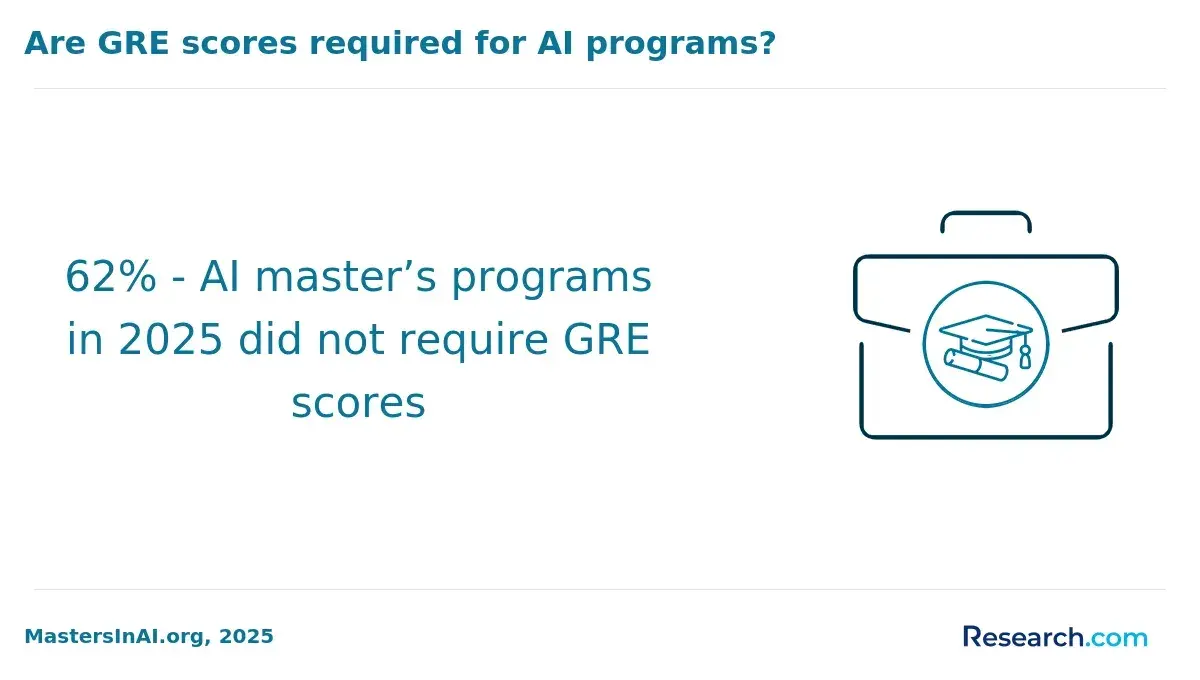
Many colleges follow a test-optional policy, meaning SAT or ACT scores are often not mandatory. Applicants should prepare compelling essays or personal statements that clearly express their motivation for pursuing AI in healthcare and highlight relevant experiences such as projects, internships, or volunteer work.
Letters of recommendation from teachers in math, science, or technology fields carry significant weight. Some programs also use interviews or supplemental questionnaires to assess problem-solving abilities and technical skills.
Extracurriculars like programming clubs, robotics, and biomedical research help candidates stand out in competitive admissions environments. For international students, demonstrating English proficiency through TOEFL or IELTS and a solid foundation in biology or chemistry is often essential, ensuring readiness to apply AI techniques in clinical or biomedical settings.
How long do AI bachelor's programs take, and what do they cost?
Most bachelor's degrees in artificial intelligence with a HealthTech focus require about four years of full-time study. Accelerated programs may reduce this to three years for students with relevant credits, while part-time options can extend completion to five or more years, depending on schedule flexibility.
Choosing the right pace is crucial for balancing work and study.
Tuition costs vary widely by institution and residency. Public four-year colleges charge an average of $11,610 annually for in-state students, totaling around $46,440 over four years before additional expenses. Private colleges often exceed $40,000 per year, potentially reaching over $160,000 for a full program.
Extra fees for textbooks, software, labs, and technology hardware vital to artificial intelligence study should also be budgeted.
Many HealthTech AI programs incorporate practical training in clinical settings, which may bring additional costs like travel and housing. Financial aid, scholarships, and employer tuition reimbursement can help offset expenses.
Prospective students should investigate whether programs have clinical or industry partnerships to ensure relevant hands-on experience without hidden fees.
When comparing degrees, consider reputation, curriculum relevance, and career support services. These elements greatly affect job prospects and return on investment in the competitive HealthTech sector.
- Typical bachelor's degree duration: 3-5 years depending on enrollment status
- Average public in-state tuition: $11,610/year
- Private institution tuition: often > $40,000/year
- Additional costs: books, technology, lab fees, housing for clinical rotations
What internships, labs, and clinical partnerships help HealthTech AI students gain experience?
HealthTech AI students benefit from practical experiences through internships, research labs, and clinical partnerships that connect theory with real-world healthcare applications. Universities collaborate with top medical centers, biotechnology firms, and AI companies to offer immersive internships focused on projects like developing diagnostic tools, enhancing patient data analysis, and creating AI-driven medical devices.
Research labs linked to universities work closely with hospitals and industry leaders, providing students opportunities to engage in AI modeling for genomics, predictive analytics for patient outcomes, and natural language processing for clinical documentation. These labs often promote cross-disciplinary teamwork, blending technical AI challenges with healthcare processes.
Clinical partnerships enable students to test AI applications in hospital settings while learning about regulatory compliance, patient privacy, and usability in healthcare environments. Experience with electronic health records (EHR) and clinical trial data is commonly part of these programs.
The extensive scale of such collaborations is highlighted by NVIDIA's 2025 GTC healthcare programming and partner ecosystem, which involves hundreds of healthcare organizations using its AI stack. This offers students access to cutting-edge technology and diverse datasets that sharpen practical skills.
Notable examples include internships at Mayo Clinic and Johns Hopkins, AI labs at MIT and Stanford collaborating with biotech firms, and programs integrated with health systems like Kaiser Permanente. Prospective students should seek programs with these partnerships and inquire about specific projects to align their experience with career goals.
What certifications can complement a HealthTech AI bachelor's degree?
Certifications enhance employability and expertise for graduates holding a HealthTech AI bachelor's degree. Given healthcare's sensitive data, cybersecurity and data privacy certifications are essential. The (ISC ² Cybersecurity Workforce Study highlights a global shortage of nearly 4 million cybersecurity professionals, emphasizing the value of certifications like Certified Information Systems Security Professional (CISSP) and Certified Information Privacy Professional (CIPP).
These demonstrate skills in protecting healthcare data and maintaining HIPAA compliance.
AI and machine learning certifications further complement HealthTech skills. Credentials such as TensorFlow Developer Certificate and Microsoft Certified: AI Engineer Associate validate designing AI models for medical data. Familiarity with cloud platforms through AWS Certified Machine Learning - Specialty or Google Professional Data Engineer also benefits professionals working with cloud-based health systems.
For those focusing on product development in HealthTech, certifications like Project Management Professional (PMP) and Certified ScrumMaster (CSM) improve teamwork and execution. Regulatory expertise gained through Regulatory Affairs Certification (RAC) is critical for navigating FDA requirements for medical AI devices.
- Cybersecurity and data privacy certifications for healthcare data protection
- AI and machine learning credentials for medical AI model development
- Project management and regulatory certifications for HealthTech product success
Choosing the right certifications tailored to career goals equips professionals to tackle challenges in patient data security, AI reliability, and compliance within the evolving HealthTech landscape.
What are the salary ranges and job outlook for HealthTech AI careers?
HealthTech AI careers offer strong salary potential and promising job growth driven by expanding use of artificial intelligence in healthcare. The U.S. Bureau of Labor Statistics reports a median annual wage of $108,020 for data scientists, a key role in HealthTech AI responsible for healthcare analytics and diagnostics.
Salaries range by experience:
- Entry-level AI health data analysts earn approximately $75,000 to $95,000 annually.
- Mid-career biomedical data scientists typically make between $100,000 and $130,000.
- Senior AI specialists and machine learning engineers can earn $140,000 or more, especially in major metropolitan areas.
BLS projects a 36% growth rate in data science and AI-related healthcare roles through 2032, reflecting high demand as AI transforms patient care, diagnostics, and hospital efficiency. Practical skills with AI algorithms, healthcare datasets, and compliance knowledge are vital.
Expertise in electronic health records (EHR) and medical imaging analytics further enhances career prospects.
Networking within healthcare sectors and internships in HealthTech improve competitiveness. Salary and work conditions vary by location and sector, with pharmaceutical and biotech companies often offering higher pay than hospitals.
Remote work is growing, but employers favor professionals blending AI proficiency with healthcare knowledge.
Other Things You Should Know About Artificial Intelligence
Python and R are essential for students in AI Bachelor's programs focusing on HealthTech in 2027. These languages are favored for their robust libraries and frameworks that specialize in machine learning and data analytics essential for health technology applications.
It should come from a college accredited by a U.S. Department of Education-recognized regional accreditor, with engineering or computing programs preferably holding ABET accreditation. For HealthTech, check whether the curriculum also includes HIPAA, data privacy, and clinical data standards such as HL7 or FHIR.
Advances in AI improve patient care by enabling faster, more accurate diagnoses, personalized treatment plans, and continuous health monitoring through wearable devices. These technologies enhance decision-making for healthcare professionals and improve patient outcomes by making care more timely and precise.
AI graduates focusing on HealthTech can expect career opportunities in telemedicine development, personalized medicine algorithms, and data analytics for wearable health devices. For those interested in broader AI applications, exploring an AI for finance graduate program may expand career prospects further.
References
- Data Science, AI & HealthTech | AI University https://www.pristiniaiuniversity.tn/en/program/2/data-science-ai-healthtech
- Healthcare AI Tech Careers | ahVanguard https://ahvanguard.com/healthcare-ai-tech-careers/
- Biotech, AI, and Medical Robotics: 6 Careers of the Future in MedTech https://www.esilv.fr/en/6-careers-of-the-future-in-medtech/
- These Are the 5 AI Healthcare Jobs to Keep an Eye on for 2025 | Swell https://www.swellcx.com/resources/5-ai-healthcare-jobs
- DELPHI Internship Program | HITLAB https://www.hitlab.org/delphi/
- Cost to Study Artificial Intelligence in 2026 https://checkmateittech.com/cost-to-study-artificial-intelligence-usa/
- Internships » AI4PH https://ai4ph-hrtp.ca/internships/
- Bachelor in Management and Artificial Intelligence https://www.kozminski.edu.pl/en/programs/undergraduate-programs-bachelor/bachelor-management-and-artificial-intelligence
- AI Jobs in Healthcare - Healthcare IT Leaders https://www.healthcareitleaders.com/blog/ai-jobs-in-healthcare/
- How to choose a bachelor's in artificial intelligence | edX https://www.edx.org/resources/how-to-choose-a-bachelors-in-artificial-intelligence