2027 Online BA in Psychology - Addictions Admissions with a Waitlist at Your First-Choice College: What to Ask Before Applying
Audited and Verified:
Our Editorial and Data Verification Process
Research.com uses government datasets, official education statistics and primary institutional information to support its career and degree guides. Our review process checks factual accuracy, occupational definitions, source dates and the requirements associated with the credentials discussed.
How This Article Was Fact-Checked
Our editorial team verifies salary estimates, employment projections, education requirements and program information against original data providers and official organizations. Salary figures are checked against the relevant occupational definitions and reporting periods. Information about licensure, accreditation and required in-person training is reviewed separately.
Fact-checked and verified on:

Co-Founder and Chief Data Scientist
A waitlist at your first-choice college creates two decisions: whether to remain in consideration and whether to apply elsewhere before other deadlines pass. If you want an online psychology BA with an addictions focus, the stakes include more than getting admitted. Credits, course availability, fieldwork, cost, and career fit can differ substantially among schools. This guide helps first-time and transfer applicants ask for the policies that matter, compare a backup offer with a possible waitlist offer, and avoid delaying a degree for a program that may not serve their goal.
Key Things You Should Know
- Ask whether the waitlist is for the college, the psychology major, or the online program; when decisions are made; and whether financial aid and addictions courses remain available to late admits.
- Keep another viable application moving. A waitlist is not an offer, and accepted transfer credits do not necessarily satisfy psychology-major or graduation requirements.
- Compare written degree audits, total remaining cost, scheduling, and career fit - not the concentration name alone. A psychology BA with addictions coursework does not itself qualify you to provide addiction counseling.
What Is an Online Bachelor's Degree in Psychology With an Addictions Focus?
It is a psychology bachelor's degree that combines broad study of behavior and psychological science with coursework related to substance use, prevention, recovery, or service systems. "Addictions focus" might mean a formally named concentration, a minor, or simply a set of electives. Ask what credential appears on the transcript and which courses are guaranteed to be offered online.
The distinction matters if your goal is addiction services. A psychology BA may provide a strong foundation in research and behavior, while an addiction counseling degree comparison resource can help you investigate programs designed more directly around that occupation. Neither a degree title nor a concentration establishes eligibility for a state credential; check the rules for the job and state you have in mind.
What Should You Ask When Your First-Choice College Has a Waitlist?
Start by getting the waitlist policy for your intended entry term in writing. An institution may admit you while the major or online cohort remains full, and a late opening may leave little time to arrange aid or enroll in required courses. Ask the admissions office the following questions, then request answers from the offices that control the relevant decisions:
- Status and timing: Is this an institutional, major, or program waitlist? Must I opt in, is there a response deadline, and when will the list close?
- Selection: Is the list ranked, or are decisions based on available seats and applicant fit? Will updated grades or other materials be considered?
- Enrollment: If offered a place, how long will I have to accept? Will required online courses and the addictions focus be available in my first term?
- Money: Will a late admission affect institutional aid, housing-related charges if any, payment deadlines, or my ability to compare a final aid offer?
- Transfer and backup plans: If I attend another school first, will I be treated as a transfer applicant later? Can I obtain a preliminary degree audit before deciding?
For a transfer applicant, the registrar or transfer-credit office should evaluate prior work, while the psychology department determines whether particular courses satisfy major requirements. Compare that written evaluation with your backup school's audit; guides to comparing psychology transfer credit limits are a starting point, not a substitute for either college's decision. Keep copies of syllabi for statistics, research methods, and addictions courses in case an equivalency needs review.
Decision rule: Set a personal date tied to your backup school's deposit, aid, and registration deadlines. Remain on the waitlist if you wish, but do not let an uncertain opening cost you a confirmed, affordable route to completion.
How Do You Compare Accredited Online Psychology Programs in Addictions?
First, confirm that the institution holds recognized institutional accreditation and that the accreditation applies to the college awarding your degree. Then compare the actual online BA requirements. Institutional accreditation does not prove that a concentration meets addiction-counselor credential rules; APA accreditation should not be assumed for a general undergraduate psychology program.
The following distinctions help separate a genuinely suitable backup from a program that merely has an appealing name.
| Feature | Evidence to compare | Why it matters |
| Addictions focus | Catalog requirements and transcript designation | Electives may offer less depth than a formal concentration. |
| Transfer fit | Individual degree audit and remaining major requirements | Credits accepted as electives may not shorten the degree. |
| Online access | Course rotation and live or in-person obligations | A required class offered infrequently can delay graduation. |
| Applied learning | Placement policy, site approval, and supervision arrangements | Online coursework does not ensure a placement near home. |
| Career fit | Curriculum mapped against the target state's credential rules | Academic preparation and permission to counsel are different. |
Read each catalog as carefully as you would when examining forensic psychology degree formats and academic requirements: specialization labels can conceal important differences in required courses and delivery. Give greater weight to a confirmed degree path than to a broad claim of flexibility.
Requirements depend on whether you apply as a first-year, transfer, or returning student. Colleges commonly review prior transcripts and may have separate rules for entry to the psychology major or addictions concentration. Ask whether prerequisite courses, minimum grades, or a separate major application apply; do not assume that admission to the university guarantees a seat in every course.
If you have college credit, request an evaluation showing where each course applies: general education, psychology major, elective credit, or no credit. Ask about statistics and research-methods equivalencies, minimum grades, residency requirements, and appeal procedures. Your prior institution's course descriptions and syllabi can help the receiving school make a determination.
Also separate admission speed from degree speed. Advertised accelerated pathways - including comparing three-year forensic psychology bachelor's routes - illustrate why you should ask which starting credits and course loads make a faster timeline possible. A waitlisted applicant should seek a personalized plan, not rely on another student's completion estimate.
Expect a psychology foundation that may include introductory psychology, development, biological and social psychology, statistics, research methods, and study of mental disorders. Addictions-related options may examine substance use, prevention, recovery, health behavior, and community services. Exact requirements vary; check whether the courses that attracted you are required, optional, or available only in certain terms.
For a waitlisted applicant, sequencing is as important as the course list. Ask an advisor which classes must precede research methods, capstone work, or an approved placement, and whether your backup school offers them when you need them. Coursework about counseling techniques does not authorize a student to counsel clients. If your long-term goal requires graduate professional training, investigate that program's prerequisites and clinical counseling master's course sequencing separately rather than assuming the BA supplies a complete clinical pathway.
Completion time depends on applicable prior credit, course availability, enrollment pace, and any residency or placement requirement. For the most useful comparison, ask each school for a term-by-term plan showing remaining required courses, not just total credits accepted. A waitlist offer that arrives after registration may change that plan.
Compare the full cost of the remaining degree: tuition, mandatory online fees, books or software, and any travel or unpaid placement time. Ask each financial-aid office for an offer based on your actual enrollment plan and confirm how changing schools or enrollment intensity could affect aid. Lower-cost online psychology study pathways may be worth considering, but the lowest advertised tuition is not necessarily the lowest cost to finish if more courses remain.
Online delivery removes routine commuting, but it does not guarantee self-paced study. Live classes, timed assessments, group projects, research meetings, and approved local placements can create fixed obligations. Ask for sample schedules and whether required courses are asynchronous, synchronous, or offered in both formats.
Campus study may make it easier to attend in-person research or agency activities; online study may fit better around work or caregiving when scheduling is genuinely flexible. If you are considering intensive online psychology program formats, compare the weekly workload and course sequence with what you can sustain. Neither format should be chosen without checking access to faculty, advising, and approved applied experiences.
Depending on employer requirements and experience, graduates may pursue nonclinical roles in recovery support, prevention outreach, intake, case coordination, or community-service programs. These jobs can involve documenting contacts, explaining resources, coordinating referrals, and working within agency supervision. They do not automatically include diagnosing substance use disorders or providing psychotherapy.
Before choosing between a waitlisted BA and a backup, inspect postings for the specific role and location you want. Note whether employers require a state credential, supervised experience, or a different degree. Graduate study is a separate investment: resources on forensic psychology master's course sequencing for faster completion describe another academic specialization, not a shortcut into addiction counseling. If your target position calls for a defined addiction-services credential, a more directly aligned program or approved training route may be preferable.
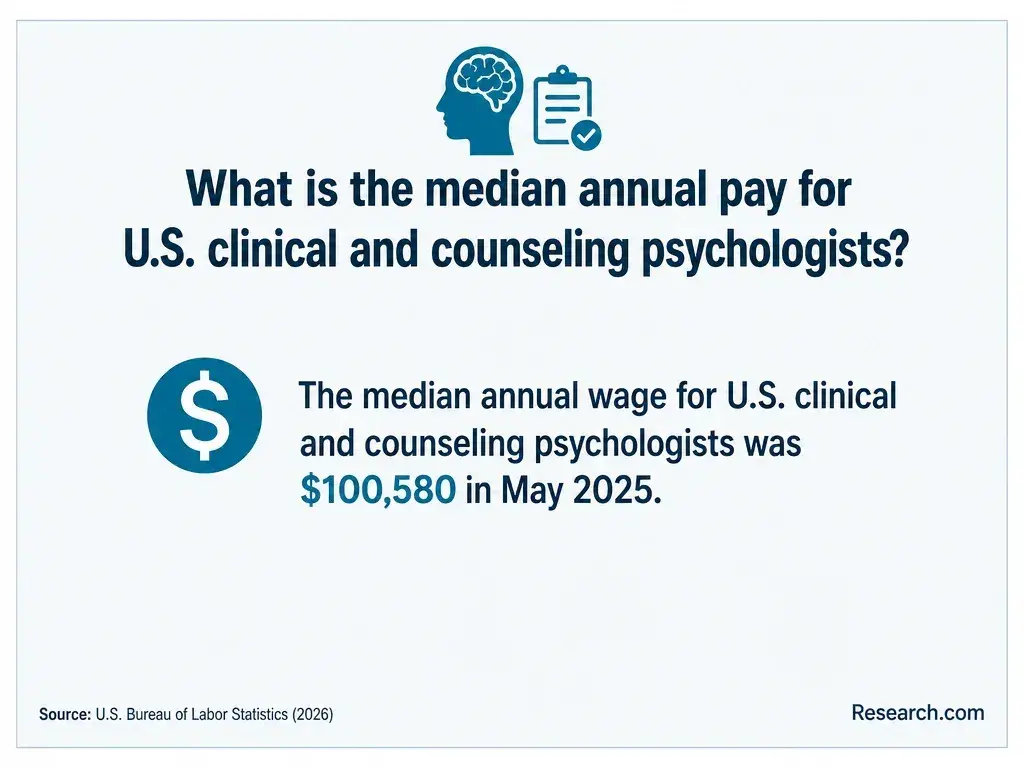
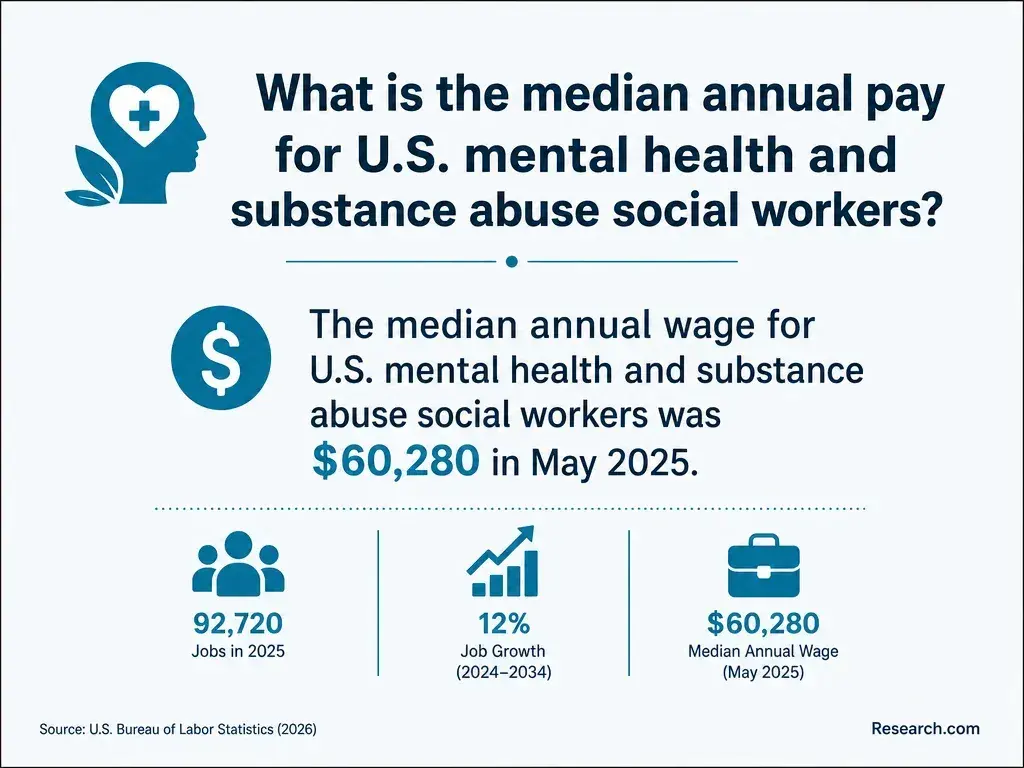
There is no single salary or job-growth figure for graduates of an addictions-focused psychology BA. The U.S. Bureau of Labor Statistics tracks occupations, not this concentration's alumni. Its substance abuse, behavioral disorder, and mental health counselors category can provide labor-market context, but many jobs in that category have education or credential requirements beyond this BA. Its occupation-wide median should not be treated as an entry-level offer or a program outcome.
Use the latest BLS Occupational Outlook Handbook entry for the occupation you actually intend to enter, alongside local job postings showing pay and required credentials. Then compare potential earnings with the cost and time left at each school. If graduate education is part of your plan, include psychology master's fees and total study costs in that longer-term calculation - but verify that the particular master's program advances your intended occupation before budgeting for it.
What Licenses and Certifications Are Required for Addiction Counseling?
Requirements vary by state, job title, and level of responsibility. A state may regulate addiction counseling through specified education, supervised experience, an examination, or other conditions; peer-support credentials and licensed mental-health counseling follow different rules. A psychology BA with addictions courses is academic preparation, not automatic authorization to assess, diagnose, or treat clients.
Before accepting either college's offer, identify the credential named in target job postings and check its requirements with the relevant state board or credentialing authority. Ask the program to show, course by course, whether its curriculum addresses those rules and which requirements would still remain. If a qualifying counseling degree is necessary, financial planning for accredited counseling degrees may be more useful than assuming the lowest-cost psychology BA is the least expensive route to your final goal.
Other Things You Should Know About Psychology
Usually, an offer elsewhere is your decision to manage. Read any acknowledgment or enrollment terms you signed, and answer direct questions accurately. You can ask for a waitlist timeline without disclosing another school's name.
Update the applicant portal and notify admissions through its stated process. Check the email account and portal you used to apply so a time-limited offer does not go unanswered.
It might. Ask the first-choice school whether post-application coursework changes your first-year or transfer classification and whether an updated transcript is required before enrolling elsewhere.
Yes. Contact the college's admissions or accessibility office about the adjustment you need and its request process. An accommodation for applying is distinct from arrangements for enrolled coursework or placements.
- Substance Use Disorder Professional (SUDP) | Washington State Department of Health https://doh.wa.gov/licenses-permits-and-certificates/professions-new-renew-or-update/substance-use-disorder-professional/certification-requirements
- College Accreditation | U.S. Department of Education http://www.ed.gov/laws-and-policy/higher-education-laws-and-policy/college-accreditation
- Recognition of Accrediting Agencies | Texas Higher Education Coordinating Board https://www.highered.texas.gov/recognition-of-accrediting-agencies/
- Cost of Attendance (Budget) | 2025-2026 Federal Student Aid Handbook https://fsapartners.ed.gov/knowledge-center/fsa-handbook/2025-2026/vol3/ch2-cost-attendance-budget
- How Financial Aid Works | studentaid.gov https://studentaid.gov/h/understand-aid/how-aid-works
- Transfer Credit FAQs | Office of the University Registrar https://registrar.umd.edu/transfer-credit/transfer-credit-faqs
- Tuition, Billing, and Financial Aid FAQs - Morehouse Online https://online.morehouse.edu/admissions/tuition-and-financial-aid/faq/
- Online Bachelor's Degree in Psychology in Addictions | Purdue Global https://www.purdueglobal.edu/degree-programs/psychology/bachelor-psychology-addictions/
- Registration FAQ - Office of the University Registrar https://registrar.unc.edu/registration-faq/
- Admissions | Department of Psychology https://psych.uw.edu/undergraduate/prospective-students/admissions