2027 Online MS in Psychology - Forensic Psychology: Comparing Programs for Wrongful Conviction Research
Audited and Verified:
Our Editorial and Data Verification Process
Research.com uses government datasets, official education statistics and primary institutional information to support its career and degree guides. Our review process checks factual accuracy, occupational definitions, source dates and the requirements associated with the credentials discussed.
How This Article Was Fact-Checked
Our editorial team verifies salary estimates, employment projections, education requirements and program information against original data providers and official organizations. Salary figures are checked against the relevant occupational definitions and reporting periods. Information about licensure, accreditation and required in-person training is reviewed separately.
Fact-checked and verified on:

Co-Founder and Chief Data Scientist
A forensic psychology master's can teach you about eyewitness memory and interrogation, but a forensic label does not guarantee the research training needed to study wrongful convictions. This guide is for prospective students - including justice-system professionals and career changers - who want to compare online programs by their methods courses, faculty support, and access to a feasible project. It also explains when legal study, research experience, or a different degree may be a better investment. The aim is to help you choose a program for the work you intend to do, not merely for its title.
Key Things You Should Know
- Prioritize research methods, statistics, relevant faculty mentorship, and an approved thesis or capstone over a program's forensic label.
- Ask whether you can complete a wrongful conviction project with accessible, authorized data; online enrollment alone does not provide case files, participants, or an innocence-organization placement.
- A nonclinical forensic psychology MS does not confer investigator authority or psychologist licensure. For pay comparisons, occupation-wide figures - not graduate earnings - are the appropriate starting point.
What is an online forensic psychology master's degree for wrongful conviction research?
It is a graduate psychology program whose teaching and research opportunities can be applied to errors in the justice system. Relevant questions include how witnesses remember events, how interviews affect statements, and how decision-makers evaluate evidence. Wrongful conviction research studies these processes and the systems around them; it is not the same as investigating an individual case or deciding whether a person is innocent.
The strongest fit depends on your intended output. If you want to evaluate eyewitness-identification procedures, look for experimental design and memory research. If you want to study case review or policy, look for access to justice-system research and appropriate supervision. Applicants still completing a bachelor's may consider accelerated undergraduate forensic psychology study, but should not mistake a faster undergraduate route for graduate-level research preparation.
Which online forensic psychology programs offer training in wrongful conviction research?
Online offerings associated with Arizona State University, the University of North Dakota, and Walden University are reasonable starting points to investigate, not verified endorsements for wrongful conviction research. Program names, formats, electives, and faculty availability can change. Do not infer that any of these programs offers a dedicated wrongful convictions course, case-file access, or a supervised project on that topic without confirmation from the program.
Use the following comparison to separate a promising program description from evidence that you can do the work you want.
| Program to investigate | What to verify in the current catalog and with faculty | Why it matters |
| Arizona State University online forensic psychology master's offering | Exact degree, research-methods requirements, project options, and faculty supervision for online students | A relevant course is less valuable if no suitable project can be supervised. |
| University of North Dakota online forensic psychology master's offering | Current delivery requirements, thesis or independent-study availability, and research access | Online coursework and supervised research may have different participation rules. |
| Walden University online forensic psychology master's offering | Available specializations, methods depth, capstone expectations, and advisor assignment | A specialization name alone does not establish methodological depth. |
Request a current degree plan and sample project descriptions. Ask who can supervise research on eyewitness evidence, interrogations, or case-review systems; whether that person supervises online master's students; and what students may use as data. One-year online forensic psychology master's options may appeal to students seeking speed, but a compressed schedule can leave less room to arrange permissions and revise a research project.
What accreditation should an online forensic psychology master's program have?
First, confirm that the institution holds recognized institutional accreditation and that it covers the school awarding the degree. Check the accreditor's directory and the school's current catalog, rather than relying only on advertising. Institutional accreditation supports basic academic legitimacy; it does not establish that a particular professor, dataset, or research opportunity is available.
Do not require American Psychological Association accreditation for a general, nonclinical forensic psychology MS: APA accreditation applies to specified professional psychology training programs, not every psychology master's. If you are comparing pathways across degree levels, the same distinction matters when reviewing bachelor's study in addiction psychology online. Verify accreditation for the actual institution and credential under consideration, then assess research fit separately.
Online study can let a working student remain employed and examine a question arising from an existing justice-system role. Campus study may make informal faculty contact, research-team participation, and local partnerships easier. Neither format guarantees mentorship or approved access to sensitive records.
Compare the actual research workflow: Are methods courses asynchronous? Are advisor meetings live? Can online students join a lab, present work, and receive iterative feedback? Must they travel for a residency or arrange a local site? A justice-system employee should also ask whether an employer permits academic use of workplace information; access for a job is not permission to use records for a thesis.
If you have not yet earned a bachelor's, shorter undergraduate psychology study pathways address a different scheduling decision. At the master's level, protect enough time for supervision, ethical review when applicable, and project revisions - not just coursework.
A useful curriculum combines cognitive psychology - especially memory and suggestibility - with social psychology, research design, statistics, and careful interpretation of evidence. Courses on psychology and law, interviewing, or legal decision-making add context. For case-level work, legal research and records procedures may be more useful than another broad survey of forensic topics.
Course titles are only a first screen. To judge depth, ask whether students practice these tasks:
- Define a narrow question, such as whether an identification procedure affects witness responses, and distinguish that question from a claim about any individual case.
- Evaluate sampling, comparison groups, measurement quality, missing information, and alternative explanations.
- Document how data were obtained, analyzed, stored, and described so conclusions remain reproducible and appropriately limited.
Publicly described cases can support a literature review, but published accounts may omit evidence and are not a representative sample of convictions. Restricted case files require authorization; interviewing people affected by a case may require consent, safeguarding, and institutional review. Someone primarily interested in service delivery rather than evidence research may find jobs supporting addiction recovery relevant to their career search, but that work requires different preparation and does not substitute for wrongful conviction methods training.
Expect each school to set its own rules for a completed bachelor's degree, transcripts, academic standing, statements, recommendations, and any required psychology or statistics preparation. A criminal justice, law, data, or other non-psychology background need not rule out admission. It may, however, leave gaps in experimental design or psychological measurement that matter once research begins.
Before applying, send admissions staff your transcript and ask which prerequisites are required, which are recommended, and whether they can be completed before or after entry. Then ask a prospective research supervisor whether your methods preparation is sufficient for the kind of project you propose. Professional experience can strengthen an application without replacing a formally required course.
If your intended work is psychotherapy rather than nonclinical research, investigate qualifying counseling programs instead of assuming a forensic MS will serve that purpose. Shorter routes through mental health counseling graduate study should still be checked against the licensing requirements of the state where you intend to practice.
Completion time depends on required credits, enrollment pace, course availability, and whether the program includes a thesis, capstone, or placement. A research project can take longer than its course listing suggests if supervision, data permission, or revision must be arranged. Ask for a term-by-term plan for your intended enrollment pace, including what happens if a project is delayed.
For cost, request a written estimate covering tuition, mandatory fees, software, travel, and any additional terms needed to finish a project. Compare that estimate with the cost of targeted methods courses or supervised research experience if you do not need another degree. Low-cost online psychology degrees can provide a broader price reference, but compare like credentials and include the total cost of completing this particular master's.
The most relevant nonclinical possibilities include research support, program evaluation, justice-policy analysis, victim-services coordination, and corrections or court-program support. Employers may value experience with records, data, community partnerships, or agency procedures as much as - or more than - the concentration name. A graduate might help analyze interview procedures or evaluate a service program, but would not acquire authority to reopen cases or conduct independent forensic assessments merely by earning the degree.
Start with vacancies at the organizations where you hope to work. Compare their required credentials and tasks with what you can demonstrate through a supervised project, writing sample, or existing professional experience. For a broader discussion of forensic psychology graduate career value and qualifications, keep the distinction between master's-accessible support roles and licensed psychologist positions firmly in view.
There is no single reliable salary or employment projection for "wrongful conviction researcher." That phrase describes a subject of work, not a consistently defined occupation. Pay depends on whether the position is research support, policy analysis, advocacy, legal work, or licensed psychological practice - and on employer, location, and experience.
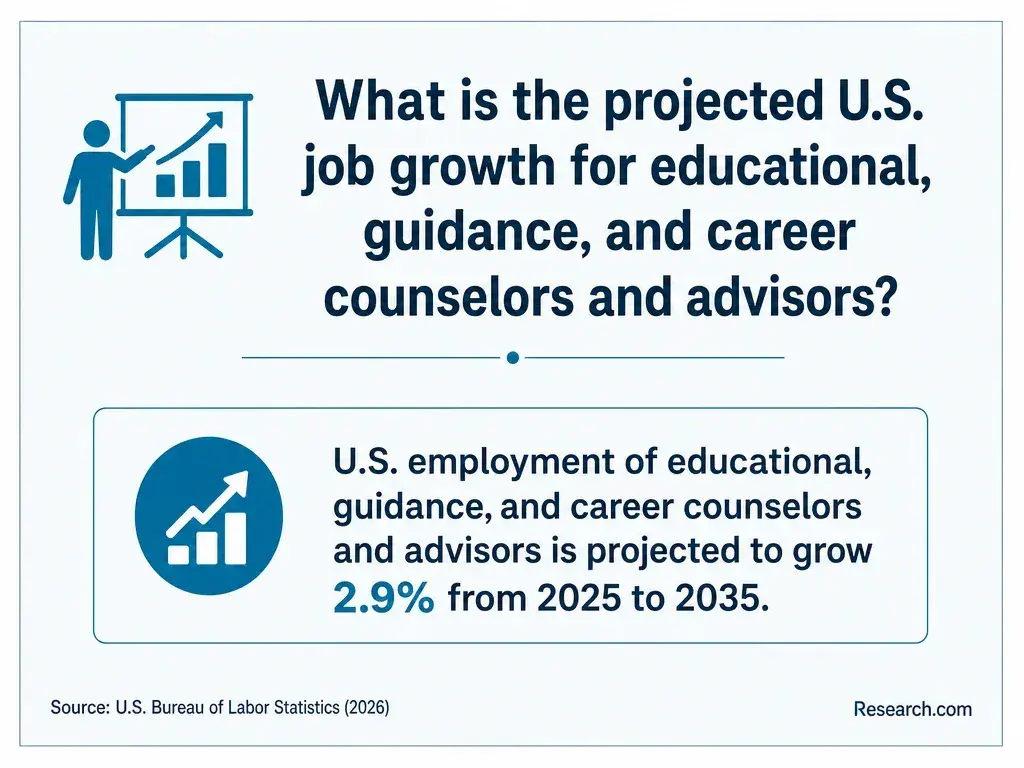
For perspective, the U.S. Bureau of Labor Statistics reported a 2024 median annual wage of $45,120 for social and human service assistants. That occupation can provide context for some support positions, but it is not a salary estimate for wrongful conviction researchers or forensic psychology MS graduates. For an outlook relevant to your decision, match actual job postings to a BLS occupation before using its wage or growth projection. The same caution applies when comparing mental health counseling master's investment and pay outlook: counseling and research lead to different roles and credential requirements.
Does a forensic psychology master's degree lead to licensure or certification?
Not by itself. A nonclinical forensic psychology MS generally does not qualify its holder to practice as a licensed psychologist, independently diagnose or assess someone, provide psychotherapy, or offer forensic expert opinions. Psychologist licensure typically involves a qualifying doctoral pathway and additional jurisdiction-specific requirements. Other licenses have their own educational and supervised-practice rules; a school's institutional accreditation does not settle eligibility.
If a regulated role is your goal, obtain the applicable state board's educational criteria and ask the program to identify - in writing - how its curriculum meets them. Compare the full qualifying pathway, not just advertised tuition or speed. For example, comparing mental health counseling program costs is useful only alongside verification of the relevant counseling credential requirements. If your goal is research or policy work, licensure may be unnecessary; methods training and credible work samples may matter more.
Other Things You Should Know About Psychology
Often, as a carefully sourced literature review or public-record analysis. Check reuse terms, avoid unnecessary personal details, and explain why published cases cannot establish how common an error is across all convictions.
No. A person can be sincere yet mistaken. Research should distinguish memory and identification accuracy from judgments about honesty.
Possibly, if an organization has suitable openings and approves your duties. Volunteering does not automatically provide access to confidential files or satisfy a university's project requirements.
Not for psychological research on memory, interviewing, or decision-making. Legal representation and other regulated legal work require separate qualifications.
- The Impact of False or Misleading Forensic Evidence on Wrongful Convictions | National Institute of Justice https://nij.ojp.gov/topics/articles/impact-false-or-misleading-forensic-evidence-wrongful-convictions
- Department Expectations: Curriculum | New York State Education Department https://www.nysed.gov/college-university-evaluation/department-expectations-curriculum
- Understanding College Costs | studentaid.gov https://studentaid.gov/resources/prepare-for-college/students/choosing-schools/consider-costs
- Master's in Forensic Psychology Degree Online & On Campus | University of North Dakota https://und.edu/programs/forensic-psychology-ma-ms/index.html
- Causes of Wrongful Conviction | Sociology | Western Michigan University https://wmich.edu/sociology/causes-wrongful-conviction
- MS in Forensic Psychology | Online Master's Degree | Capella University https://www.capella.edu/online-psychology-degrees/ms-clinical-psychology-program/masters-forensic-psychology/
- Online Forensic Psychology Master's Degree | ASU Online https://asuonline.asu.edu/online-degree-programs/graduate/master-science-forensic-psychology/
- Innocence Clinic | University of Miami https://www.law.miami.edu/academics/experiential-learning/clinics/innocence/
- What is a Capstone Project in College? | snhu.edu https://www.snhu.edu/about-us/newsroom/education/what-is-a-capstone-project
- P1 - Graduate Curricular Proposal Requirements https://gradschool.psu.edu/graduate-education-policies/gcac/gcac-200/p1-graduate-curricular-proposal-requirements