2027 Cheapest Accredited Online Emergency Management Degree Programs: Tuition, Fees, and Financial Aid

Co-Founder and Chief Data Scientist
Choosing an online emergency management degree is a cost decision as much as an academic one. College Board data for 2024-25 shows published tuition and fees average $11,610 at public four-year in-state colleges, so small differences in per-credit pricing can add up fast. This guide is for students comparing affordable accredited online Emergency Management programs, including tuition, mandatory fees, aid, and net price. You will learn how to identify genuinely low-cost options, verify accreditation, estimate total program cost, and avoid hidden expenses before enrolling.
Key Things You Should Know
- The lowest advertised tuition is usually not the lowest final cost; compare per-credit tuition, mandatory online fees, transfer-credit limits, books, residency requirements, and the net price after grants and scholarships.
- Among widely available accredited online bachelor's options, published undergraduate tuition often starts around $270 to $350 per credit, which creates a tuition-only baseline of about $32,400 to $42,000 for a 120-credit degree before fees and aid.
- Federal aid can materially change affordability: the maximum Pell Grant for 2025-26 is $7,395, but eligibility depends on FAFSA results, enrollment intensity, school participation in Title IV aid, and whether the program is eligible.
What Are the Cheapest Accredited Online Emergency Management Degree Programs?
The cheapest accredited online emergency management degree programs are typically public universities with online tuition rates and private or nonprofit institutions that publish a single national online rate. The most useful comparison is not "tuition only," but a side-by-side view of tuition, required fees, accreditation, transfer flexibility, and financial aid eligibility. Students comparing an affordable online bachelor's degree should use emergency management pricing the same way: as a starting point, not the final bill.
The table below highlights lower-cost accredited online bachelor's-level options in emergency management, disaster preparedness, homeland security, or closely related public safety fields. Published rates can change by term, residency, military status, course level, and fees, so treat the tuition-only estimate as a screening tool and request a written cost sheet from each school.
| School | Online degree or major | Published tuition signal | 120-credit tuition-only baseline | Accreditation and aid notes |
| Columbia Southern University | B.S. Emergency Management | About $270 per undergraduate credit | About $32,400 before fees and aid | Institutionally accredited by DEAC; verify current Title IV eligibility and included course materials |
| Arkansas State University | B.S. Disaster Preparedness and Emergency Management | About $276 per credit for the online program | About $33,120 before fees and aid | Regionally accredited; online program pricing may differ from campus tuition |
| SUNY Canton | B.S. Emergency Management | Low public-university online tuition, with different resident and nonresident pricing | Varies by residency and required fees | Regionally accredited; New York residency can affect the final bill |
| University of Alaska Fairbanks | B.A. Homeland Security and Emergency Management | Public online tuition varies by credit level and student category | Varies by lower-division, upper-division, and fee structure | Regionally accredited; students should confirm eCampus fees and nonresident rules |
| American Public University | B.A. Emergency and Disaster Management | About $350 per undergraduate credit before military or partner discounts | About $42,000 before fees and aid | Regionally accredited; transfer credits and military benefits may significantly reduce cost |
| Waldorf University | B.S. Emergency Management | Published online undergraduate tuition is often in the low-to-mid $300s per credit | Often near the low $40,000 range before fees and aid | Regionally accredited; confirm current tuition, fees, and transfer policy |
A cheap program is most attractive when it is accredited, transfer-friendly, transparent about fees, and eligible for the aid you plan to use. A slightly higher tuition rate can be a better value if the school accepts more transfer credits, includes books, offers renewable grants, or has stronger advising and completion support.
How Were the Cheapest Online Emergency Management Degree Programs Ranked?
For a cost-focused ranking, the first filter should be accreditation and online availability; an unaccredited or aid-ineligible program should not be treated as cheap just because the tuition looks low. After that, programs can be compared by the cost drivers that actually change the student's out-of-pocket price.
This ranking logic prioritizes measurable affordability while still accounting for quality and enrollment risk. The goal is to identify programs that are both low-cost and financially safe to attend.
- Confirm institutional accreditation recognized by the U.S. Department of Education or the Council for Higher Education Accreditation.
- Identify whether the emergency management, disaster management, homeland security, or public safety program can be completed fully online.
- Compare published undergraduate tuition per credit, separating resident, nonresident, online, military, and partner rates.
- Add mandatory fees that apply to online students, including technology, distance learning, course, graduation, transcript, and assessment fees.
- Estimate total degree cost using the credits the student actually needs after transfer evaluation, not automatically 120 credits.
- Check federal aid participation, Pell Grant eligibility, institutional scholarships, employer benefits, and military education benefits.
- Review transfer-credit limits, residency requirements, course availability, completion support, and career relevance before choosing the lowest price.
The most common ranking mistake is comparing one school's tuition-only figure against another school's all-in estimate. To avoid that, ask every admissions office for the same data: total credits required, tuition per credit, required fees, estimated books, transfer credits accepted, and net price after grants and scholarships.
How Can You Verify the Accreditation of an Online Emergency Management Degree Program?
Accreditation matters because it affects transfer credit, federal financial aid, employer recognition, and graduate school eligibility. For emergency management, most students should first confirm institutional accreditation; specialized programmatic accreditation is less common and is not always required for jobs in the field.
Use the steps below before applying or paying an enrollment deposit. This process is especially important when comparing low-cost online programs, because some inexpensive schools use confusing language about approval, membership, licensure, or authorization.
- Search the school in the U.S. Department of Education's Database of Accredited Postsecondary Institutions and Programs.
- Confirm that the accrediting agency is recognized and that the accreditation is current, not probationary, expired, or limited to another campus.
- Check whether the exact online degree program is offered by the accredited institution, not by an unaffiliated third-party training provider.
- Confirm Title IV federal student aid participation if you plan to use FAFSA, Pell Grants, federal loans, or work-study.
- Ask whether credits from the program are commonly accepted by public universities, graduate schools, or employer tuition-benefit programs.
- Review state authorization disclosures to confirm the school can enroll online students in your state.
Students who are still deciding what type of online institution fits them can compare broader accreditation patterns among top online universities. The key is to verify the specific school and program you plan to attend, not just rely on marketing language.
How Much Does an Accredited Online Emergency Management Degree Really Cost?
The real cost of an online emergency management degree is the amount you must pay after tuition, mandatory fees, books, transfer credits, grants, scholarships, employer benefits, and loans are accounted for. That number is usually different from the advertised tuition rate.
The table below explains the cost terms students often confuse. Understanding these differences helps you avoid choosing a program that looks cheap on a tuition page but becomes expensive after fees or lost transfer credits.
| Cost term | What it means | Why it matters |
| Tuition | The price charged per credit, course, term, or program | It is the largest cost, but it may exclude required fees and materials |
| Mandatory fees | Charges that online students must pay, such as technology, distance learning, course, graduation, or assessment fees | They can make two programs with similar tuition differ significantly in total cost |
| Total program cost | Tuition plus required fees and expected learning materials for all credits needed | It shows the baseline price before financial aid |
| Financial aid | Grants, scholarships, loans, work-study, employer benefits, military benefits, or payment assistance | Aid can reduce upfront cost, but loans must be repaid |
| Net price | The amount left after grants and scholarships are subtracted from the cost of attendance | It is often the best affordability measure, especially for Pell-eligible students |
For a 120-credit bachelor's degree, a $50 difference in tuition per credit equals $6,000 in tuition before fees. That is why students should calculate cost using the number of credits they still need, not the full published program length if they already have community college, military, FEMA, or prior college credits.
Cost of attendance can also include living expenses, transportation, childcare, and personal costs even when the program is online. Those figures matter for aid packaging, but they do not always represent what you pay directly to the school.
Which Tuition Models Make Online Emergency Management Degree Programs More Affordable?
Online emergency management programs use different pricing models, and the cheapest model depends on your schedule, transfer credits, and ability to finish courses quickly. A working adult taking one course per term may benefit from a predictable per-credit rate, while a fast-moving student may save with flat-rate or competency-based tuition.
The table below compares common tuition models and the kind of student each one tends to help. Use it to decide which pricing structure fits your enrollment plan before comparing school names.
| Tuition model | How it works | Best fit | Cost risk |
| Per-credit tuition | You pay a set amount for each credit attempted | Part-time students and students with many transfer credits | Repeating or withdrawing from courses increases cost |
| Flat-rate term tuition | You pay one rate for a credit range in a term | Full-time students who can take heavier course loads | Taking too few credits wastes the flat-rate benefit |
| Competency-based tuition | You pay by term and complete as many competencies as possible | Experienced adults with strong self-direction and prior knowledge | Slow progress can erase savings |
| Military or public-service discounted tuition | Eligible students receive a reduced rate | Military, veterans, first responders, and public employees | Eligibility rules can change or may not cover all fees |
| Subscription-style online tuition | You pay a recurring term price for access to courses | Students who can complete courses quickly and consistently | Breaks, life events, or course bottlenecks can raise total cost |
Acceleration can save money only when the academic plan is realistic. Students comparing fast online options in other fields, such as an accelerated finance degree, face the same trade-off: speed lowers cost when course availability, transfer credits, and personal time all line up.
What Fees and Hidden Costs Should Online Emergency Management Degree Students Expect?
Emergency management students should expect some costs beyond tuition, even in fully online programs. These expenses vary by school, but they can affect affordability enough that students should ask for a written fee estimate before enrolling.
The most important hidden-cost check is whether each charge is mandatory, optional, one-time, recurring, or tied to a specific course. Ask schools to identify each item in writing.
- Technology or online learning fees charged per course, credit, or term
- Course-specific fees for simulations, labs, proctoring, emergency operations exercises, or assessment platforms
- Books, digital access codes, FEMA-related materials, software, or required subscriptions
- Application, enrollment, graduation, transcript, portfolio assessment, or transfer evaluation fees
- Proctoring fees for exams that require identity verification or remote monitoring
- Internship, practicum, background check, or placement-related costs if the program includes field experience
- Residency or residency-like requirements, including travel for orientation, capstone presentations, or intensive sessions
- Repeat-course costs, withdrawal penalties, late payment fees, and tuition increases during a part-time plan
A useful rule is to compare schools using a "finish-the-degree" estimate. If one school charges slightly higher tuition but includes books and has no online course fees, it may cost less than a lower-tuition program with recurring technology and assessment charges.
How Does FAFSA and Federal Financial Aid Work for Online Emergency Management Degree Programs?
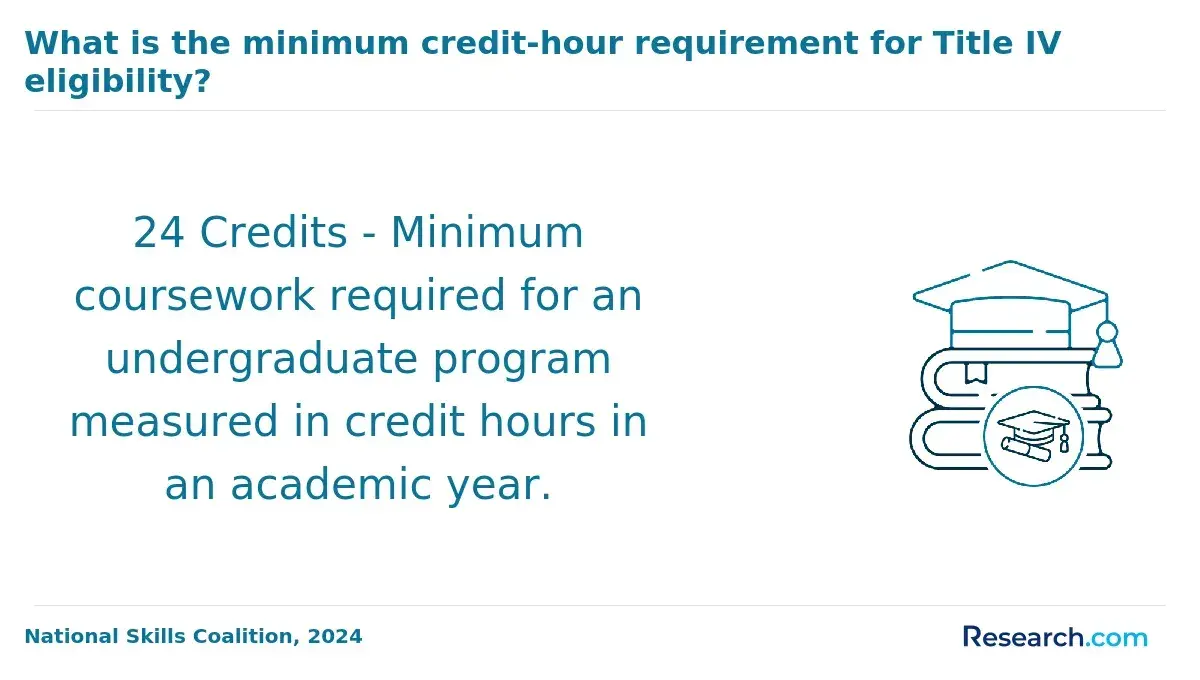
Online students can use federal financial aid when the institution participates in Title IV programs and the specific degree is eligible. Delivery format alone does not disqualify a student; accreditation, program eligibility, citizenship or eligible noncitizen status, satisfactory academic progress, and enrollment level are the main factors.
The FAFSA is the starting point for most federal, state, and institutional aid. For 2025-26, the maximum Pell Grant is $7,395, which means Pell-eligible students can see a major difference between sticker price and net price at lower-tuition programs.
Follow this sequence to avoid aid surprises after admission. Each step helps you confirm whether the program is affordable for your actual circumstances.
- Complete the FAFSA and list every emergency management school you are seriously considering.
- Confirm that the school participates in federal student aid and that the online degree is Title IV eligible.
- Review your financial aid offer and separate grants and scholarships from loans, because loans reduce upfront cost but increase future repayment obligations.
- Ask how aid changes if you enroll half time, three-quarter time, full time, or in accelerated terms.
- Check satisfactory academic progress rules, including minimum GPA, completion rate, and maximum time frame.
- Compare net price across schools after grants and scholarships, not after loans.
FAFSA changes have also made timing more important. Students should submit the form early, respond quickly to verification requests, and avoid assuming that an online program is aid-eligible until the financial aid office confirms it in writing.
Which Scholarships, Grants, and Tuition Benefits Can Help Pay for an Online Emergency Management Degree?
Scholarships and grants are more valuable than loans because they generally do not have to be repaid if you meet the award conditions. Emergency management students may qualify for general undergraduate aid, public-service awards, first-responder benefits, employer tuition assistance, military education benefits, and school-specific scholarships.
The table below summarizes common funding sources and the affordability questions students should ask. The goal is to identify aid that reduces net price, not just aid that postpones payment.
| Funding source | Typical advantage | Question to ask before relying on it |
| Pell Grant | Need-based federal grant that can reduce net price substantially for eligible students | How much will I receive at my planned enrollment level? |
| State grants | May help residents attending eligible in-state or approved online institutions | Does online enrollment or out-of-state school choice affect eligibility? |
| Institutional scholarships | Can be based on need, merit, transfer status, military service, or public safety employment | Is the scholarship renewable, and what GPA or credit load is required? |
| Employer tuition assistance | Can reduce direct cost for public safety, healthcare, government, logistics, or security workers | Does my employer require a grade minimum, repayment agreement, or approved major? |
| Military and veteran benefits | May cover tuition, fees, housing allowance, or books depending on benefit type | How will benefits apply to online enrollment and term length? |
| Professional association awards | May support students focused on disaster response, continuity planning, or public administration | Is the award one-time or renewable, and when is the deadline? |
Students should also ask whether tuition discounts stack with scholarships. Some schools reduce institutional aid when another benefit is applied, so the best offer is the one with the lowest final net price and the least debt, not necessarily the largest advertised scholarship.
Can Transfer Credits, Prior Learning, and Competency-Based Study Lower the Cost of an Online Emergency Management Degree?
Transfer credit is often the fastest way to lower the cost of an online emergency management bachelor's degree. If a school accepts 60 community college credits toward a 120-credit degree, the student may only need to pay university tuition for the remaining half of the program.
The savings depend on transfer policy, residency requirements, course equivalencies, and how many upper-division credits must be completed at the degree-granting institution. Students evaluating affordability in other fields, including online masters history programs, should use the same principle: accepted credits matter more than credits attempted elsewhere.
Before enrolling, use these steps to maximize credit savings without losing academic fit. A written transfer evaluation is much safer than a verbal estimate.
- Send official transcripts from every college, community college, military program, and prior institution before committing to a school.
- Ask how many credits apply to general education, major requirements, electives, and upper-division requirements.
- Confirm the residency rule, which is the minimum number of credits you must complete at the new institution.
- Ask whether FEMA Independent Study, military training, professional certifications, or workplace learning can be evaluated for credit.
- Compare the cost of portfolio assessment or prior learning evaluation against the tuition saved.
- Check whether competency-based courses are available in the major or only in general education and electives.
Transfer-friendly schools can be a better value even when their per-credit tuition is not the lowest. The decisive number is the cost of the credits you still need to graduate.
How Should Students Compare the Net Price, Quality, and Return on Investment of Online Emergency Management Degree Programs?
The best-value online emergency management degree is the accredited program that offers the strongest combination of low net price, realistic completion timeline, relevant curriculum, student support, and career alignment. Emergency management jobs can span disaster response, continuity planning, public safety, healthcare preparedness, logistics, environmental risk, and government operations, so program fit matters.
Labor market data should guide expectations, not create guarantees. The BLS reported a May 2024 median wage in the mid-$80,000 range for emergency management directors, but many entry-level emergency preparedness, public safety, and continuity roles pay less and may require experience, certifications, or government-sector familiarity. Use salary data as one ROI input alongside debt, completion time, and job requirements in your area.
The table below shows common comparison mistakes and better ways to evaluate value. This is where many students can prevent an expensive enrollment decision.
| Common mistake | Why it can cost more | Better comparison method |
| Choosing the lowest advertised tuition | Fees, books, and transfer limits may raise the final bill | Compare net price after grants and scholarships for the credits you still need |
| Ignoring accreditation | Credits may not transfer, and federal aid may be unavailable | Verify institutional accreditation and aid eligibility before applying |
| Assuming all scholarships renew | A one-year award may leave later terms unfunded | Ask for renewal rules, GPA requirements, and maximum award length |
| Overlooking course availability | Delayed required courses can extend enrollment and raise cost | Request a term-by-term degree plan before enrolling |
| Borrowing up to the full aid offer | Loans can make a low-tuition program expensive over time | Borrow only what is needed after grants, scholarships, savings, and employer support |
| Ignoring career alignment | A cheap degree may not match public safety, continuity, or government hiring goals | Review curriculum, internships, FEMA coursework, certifications, and alumni pathways |
Students considering graduate school later should also think beyond the bachelor's degree. If leadership, public administration, or policy roles are part of the plan, compare low-cost graduate pathways such as easy masters degrees only after confirming accreditation, admissions standards, and career relevance.
A practical final checklist is simple: verify accreditation, calculate total program cost, subtract gift aid, estimate debt, confirm transfer credits, compare completion timelines, and review career outcomes. The cheapest program is the right choice only when it is also credible, completable, and aligned with your goals.
Other Things You Should Know About Emergency Management
In 2027, some of the most affordable accredited online emergency management degree programs include Arkansas State University, Eastern Kentucky University, and the University of Central Florida. These programs offer competitive tuition rates and various financial aid options, making them accessible to a broad range of students.
In 2027, financial aid for emergency management students includes federal grants like the Pell Grant, student loans, and scholarships offered by specific programs. Some online universities may also provide tuition discounts or work-study opportunities for eligible students to offset costs.
Most accredited online emergency management degree programs in 2027 require completion of 120 credit hours. This includes courses such as disaster response, risk analysis, and crisis management. Check with individual institutions for specific course offerings and requirements.
An online emergency management degree can lead to various careers like emergency planner, disaster response coordinator, and risk management specialist. Individuals with expertise in emergency management are also eligible for roles in public health, security, nonprofit organizations, and government agencies, ensuring comprehensive preparedness and effective response strategies.
References
- Emergency Management Scholarships & Online Resources https://www.degreesforgood.org/financial-aid/scholarships/emergency-management/
- Online Bachelor's in Emergency and Disaster Management https://www.monroeu.edu/academics/undergraduate-programs/school-criminal-justice/online-bachelors-emergency-and-disaster
- 2025 Most Affordable Online Emergency Management Degrees https://www.onlineu.com/most-affordable-colleges/emergency-management-degrees
- Types of Financial Aid https://www.hhloans.com/types-of-financial-aid/
- Scholarships - Aspiring Emergency Managers Online https://www.aemo.us/scholarships
- 25 Most Affordable Disaster Management MPH Degrees - MPH Online https://www.mphonline.org/best-disaster-management-mph/
- EMAP Accreditation Boosts Accountability in Emergency Preparedness Reporting https://emap.org/general/emap-accreditation-boosts-accountability-in-emergency-preparedness-reporting/
- Emergency Management Degree Online | Training Programs & Information https://www.firescience.org/emergency-management-degree-programs-online/
- Earn Your Emergency Management Degree Online https://waldorf.edu/lp/online-emergency-management-degree/
- Scholarships https://www.coehsem.com/scholarships/