2027 Fastest Accredited Online Emergency Management Programs: Accelerated Degrees and Completion Times

Co-Founder and Chief Data Scientist
Choosing the fastest online emergency management degree is really a question of speed, credibility, and fit. NOAA recorded 27 U. S. weather and climate disasters costing at least $1 billion each in 2024, underscoring the need for trained disaster, continuity, and public safety professionals. This guide is for students comparing accredited online programs, especially adults with transfer credits or public safety experience.
You'll learn what makes a program genuinely accelerated, how transfer credit and course load affect graduation time, and how to compare advertised timelines with the time you can realistically complete.
Key Things You Should Know
- The fastest realistic route is usually a bachelor's completion program: students entering with about 60 to 90 transferable credits may finish an accredited online emergency management bachelor's degree in roughly 12 to 24 months, while students starting from zero credits commonly need 3 to 4 years.
- Accelerated online programs typically use 5-, 7-, 8-, or 10-week courses, year-round starts, generous transfer policies, prior learning assessment, or self-paced competency-based formats; shorter terms mean faster calendar progress, not less coursework.
- Many accredited bachelor's programs require about 120 semester credits, and schools commonly cap transfer credit near 75% of the degree, so the fastest advertised timeline usually applies only if your prior credits, residency credits, prerequisites, and schedule all line up.
Which Colleges Offer the Fastest Accredited Online Emergency Management Programs?
The fastest accredited online emergency management programs are often not "faster" because they teach less. They are faster because they let prepared students apply prior college credits, enroll in shorter terms, begin multiple times per year, or move through courses year-round. Before choosing, confirm that the institution is accredited by an agency recognized by the U.S. Department of Education or CHEA and compare it with broader lists of top online universities if you want additional context on online delivery quality.
The table below highlights accredited online programs that may support faster completion for different student profiles. Use it as a starting point, then verify current catalog rules directly with each school because transfer limits, course sequencing, and tuition can change.
| College | Online emergency management-related program | Accreditation type to verify | Why it may be fast | Best fit |
| American Public University | BA in Emergency and Disaster Management | Institutional accreditation | Frequent online course starts, 8- and 16-week course options, and transfer-credit pathways | Working adults, military-affiliated students, and students with prior credits |
| Arizona State University Online | BS in Public Service and Public Policy, Emergency Management and Homeland Security concentration | Institutional accreditation | 7.5-week online classes and multiple start dates | Students seeking a public service degree with emergency management specialization |
| Purdue Global | BS in Emergency Management | Institutional accreditation | Quarter-term structure, adult-focused transfer evaluation, and credit for prior learning options | Students with public safety, military, or previous college experience |
| Columbia Southern University | BS in Homeland Security with emergency management-related coursework | Institutional accreditation | Flexible online enrollment and transfer-credit policies | Students who want homeland security, emergency response, and preparedness in one pathway |
| Thomas Edison State University | BS in Homeland Security and Emergency Management | Institutional accreditation | Adult degree-completion model, transfer-friendly structure, and prior learning assessment | Students with substantial completed credits or professional training |
| SUNY Canton | BS in Emergency Management | Institutional accreditation | Online delivery and applied emergency management curriculum | Students seeking a public college option with a dedicated emergency management major |
No single program is the fastest for every student. A transfer student with 90 accepted credits may finish much faster at a transfer-friendly school than a first-time student in a program advertised as accelerated. The best short list should include programs that publish credit requirements, transfer maximums, term lengths, tuition, and course rotation clearly.
How Long Does It Take to Complete an Accredited Online Emergency Management Degree?
Completion time depends on degree level, transfer credit, term length, and how many courses you can handle at once. In emergency management, "fastest" usually means the shortest realistic calendar time to finish all required credits at an accredited institution, not simply the shortest course term.
The table below compares common online emergency management degree paths. It shows why a student's starting point matters more than the program label.
| Program type | Typical credits | Fastest realistic completion | More common completion time | What can slow it down |
| Undergraduate certificate | 12 to 18 credits | 1 semester to 6 months | 6 to 12 months | Limited course availability or prerequisites |
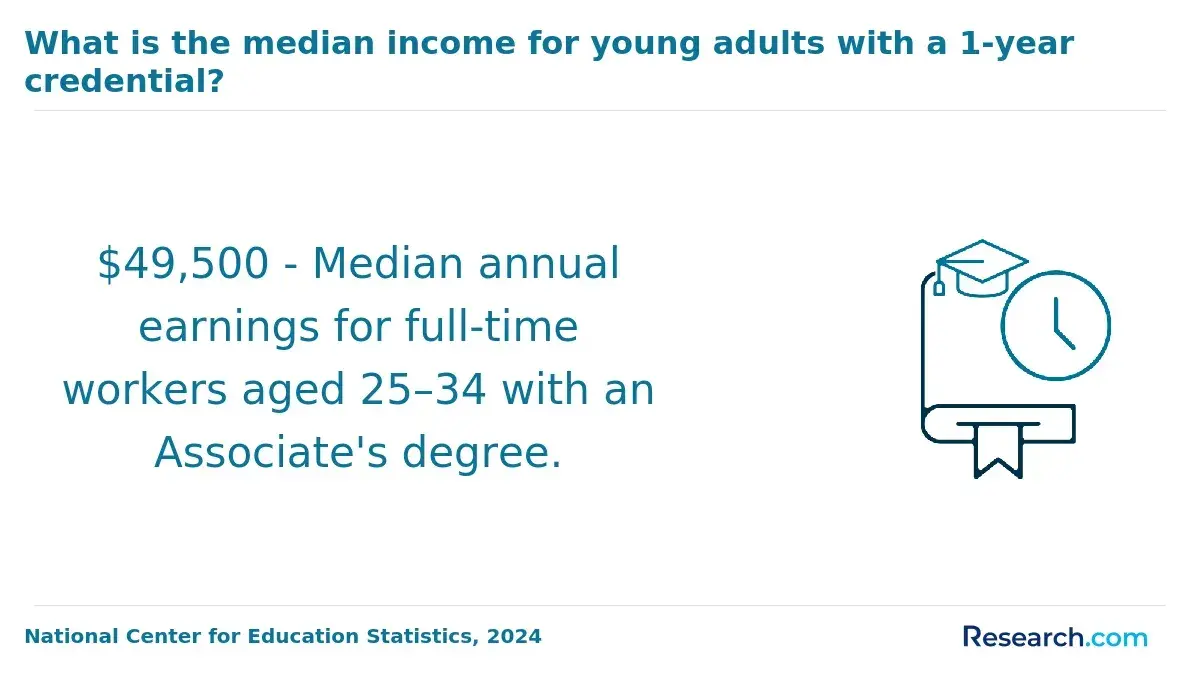
| Associate degree | About 60 credits | 12 to 18 months with heavy enrollment or transfer credit | 2 years | General education sequencing and part-time study |
| Bachelor's completion degree | About 120 total credits, with many already completed | 12 to 24 months with 60 to 90 accepted transfer credits | 2 to 3 years | Residency credit rules, major prerequisites, and transfer limits |
| Full bachelor's degree from zero credits | About 120 credits | 3 years with year-round full-time study | 4 years | Work schedule, course load, financial aid limits, and required electives |
| Master's degree | 30 to 36 credits is common | 12 to 18 months | 18 to 24 months | Capstone timing, practicum requirements, and part-time enrollment |
Graduate students may also compare emergency management with other quick online graduate options, including easy masters degrees, but "easy" and "fast" are not the same. Emergency management programs can be reading- and writing-intensive, and capstone projects may require applied planning, hazard analysis, or continuity exercises.
For students starting from scratch, a 120-credit bachelor's degree is rarely a one-year degree, even online. A more realistic accelerated plan is to take two courses per 8-week session year-round, if the school allows it and if your work and family schedule can support the pace.
How Do Accelerated and Competency-Based Online Emergency Management Programs Work?
Accelerated emergency management programs compress the academic calendar. Instead of taking four or five 16-week courses in a semester, students may take one or two courses every 5 to 8 weeks, which can create more start dates and faster progress without reducing credit requirements.
These formats matter because each one changes the pace, workload, and risk of burnout. Students comparing emergency management with another fast online pathway, such as an accelerated finance degree, should look beyond the term length and ask how many hours per week each course requires.
- Short-term courses: A 7- or 8-week class usually covers the same credit value as a 15- or 16-week class, so weekly reading, discussion, writing, and exams are more concentrated.
- Year-round enrollment: Programs with fall, spring, and summer sessions can reduce idle time between courses, which is often how students trim months from completion.
- Multiple start dates: Monthly or six-term calendars can help students begin sooner instead of waiting for a traditional semester.
- Credit for prior learning: Some schools evaluate military training, emergency services academies, FEMA coursework, workplace training, certifications, or portfolios for possible credit.
- Competency-based learning: Self-paced programs let students move quickly through material they already know, but they require strong discipline and may not be available in every emergency management major.
Competency-based education can be fast for experienced students because progress is tied to demonstrating mastery rather than spending a fixed number of weeks in class. However, students new to incident command, hazard mitigation, risk communication, grant management, and public policy may find a structured term-based program easier to manage.
What Accreditation Should an Online Emergency Management Program Have?
Accreditation is the first filter for any fast online emergency management degree. Institutional accreditation affects federal financial aid eligibility, transfer credit, graduate school admission, and employer confidence. A program that is fast but not properly accredited can create problems later, even if the curriculum looks relevant.
Emergency management is different from fields such as nursing or teaching because there is no single universal programmatic accreditor required for all U.S. emergency management degrees. That makes institutional accreditation especially important.
| Accreditation or recognition | What it means | Why it matters for speed |
| Institutional accreditation | The college or university is accredited by a recognized institutional accreditor | Credits are more likely to transfer, and students may qualify for federal financial aid if other eligibility rules are met |
| Program-level recognition | Some emergency services, fire science, homeland security, or public safety programs may hold specialized recognition | It can signal curriculum alignment, but it usually does not replace institutional accreditation |
| State authorization | The school is authorized to offer online education to students in your state | A lack of authorization can prevent enrollment or delay admission |
| Professional certification alignment | Coursework may support knowledge used in credentials such as emergency management, continuity, safety, or homeland security certifications | Alignment can help career planning, but it does not automatically shorten the degree |
Avoid schools that pressure you to enroll before giving clear accreditation details. Also be cautious if a school describes itself as "licensed," "approved," or "recognized" without naming its accreditor; those terms are not the same as institutional accreditation.
How Can Transfer Credits and Prior Learning Shorten an Online Emergency Management Degree?
Transfer credit is usually the biggest time-saver in an online emergency management bachelor's degree. A student who transfers an associate degree, military coursework, or prior general education credits may be able to enter as a junior instead of starting from the beginning.
The table below shows how different kinds of prior learning can affect completion time. The exact result depends on whether credits apply to general education, electives, major requirements, or only free electives.
| Credit source | How it may help | What to verify |
| Community college coursework | May satisfy general education and lower-division electives | Minimum grade, age of credits, and transfer equivalency |
| Associate degree | May create a clean bachelor's completion pathway | Whether the full degree transfers or courses are evaluated individually |
| Military training | May count toward electives, leadership, public safety, or technical credits | Whether the school uses official military credit recommendations |
| FEMA or emergency services training | May support elective or prior learning credit at some institutions | Whether the school accepts the training directly or requires transcription through another provider |
| Professional certifications | May support portfolio credit or prior learning assessment | Fees, documentation, and maximum credit limits |
| Prior learning portfolio | May convert verified workplace learning into academic credit | Portfolio deadlines, faculty review, and whether credit applies to the major |
Students comparing speed and price should also look at transfer-friendly schools in broader affordability resources, such as guides to an affordable online bachelor's degree. A lower tuition rate helps, but losing transfer credits can make a cheaper program take longer and cost more overall.
Before enrolling, request an official or preliminary transfer evaluation in writing. Ask how many credits apply to the degree, how many major credits remain, how many credits must be completed at the school, and whether any required courses are offered only once per year.
What Are the Admission Requirements and Start Dates for Accelerated Online Emergency Management Programs?
Admission requirements for accelerated online emergency management programs are usually accessible, but the fastest timelines often depend on completing paperwork early. Missing transcripts, delayed transfer evaluations, or late financial aid documents can push your start date into the next term.
Most schools ask for a combination of academic records and enrollment documents. The list below shows items that commonly affect how quickly you can begin and how accurately the school can estimate your graduation date.
- Official high school transcript, GED record, or prior college transcripts, depending on your entry level
- Minimum GPA requirement or conditional admission review for students with weaker prior academic records
- Transfer-credit evaluation, especially for students with community college, military, public safety, or previous university coursework
- Resume, statement of purpose, or professional background summary for some degree-completion or graduate programs
- Proof of state residency or identity documents, which may affect tuition classification and enrollment processing
- Technology readiness, including reliable internet, webcam access if required, and the ability to use the learning management system
Start dates vary widely. Traditional online programs may begin in fall, spring, and summer, while accelerated programs may offer six or more starts per year. The fastest option is not always the next available start; it is the start date that allows you to finish the correct course sequence without waiting for prerequisites later.
How Much Does a Fast Online Emergency Management Degree Cost, and Is Financial Aid Available?
Fast online emergency management degrees can reduce time out of the workforce or help students qualify for promotions sooner, but faster is not automatically cheaper. Cost depends on tuition per credit, accepted transfer credits, fees, books, prior learning assessment charges, and whether you can maintain the course load required for financial aid.
For a national benchmark, the College Board's 2024 pricing data reported average published tuition and fees of $11,610 for in-state students at public four-year institutions for 2024-25. Online emergency management programs may be above or below that benchmark, so students should calculate total remaining credits rather than comparing only annual tuition.
- Tuition per credit: Multiply the per-credit rate by the number of credits you still need after transfer evaluation.
- Online and technology fees: Some programs charge per course or per term, which can add up in accelerated calendars.
- Books and digital materials: Emergency management courses may use textbooks, case studies, planning software, or simulation materials.
- Prior learning assessment fees: Portfolio or training evaluations may cost money but can still save time if they replace multiple credits.
- Residency requirements: If the school requires a set number of credits completed in-house, you may pay for more courses even with many transfer credits.
- Financial aid pacing: Taking too few or too many credits can affect aid eligibility, satisfactory academic progress, or out-of-pocket timing.
Students comparing online tuition across fields can also review resources such as online masters history programs to see how tuition structures, fees, and degree length differ by discipline. The same principle applies here: the lowest sticker price is not always the lowest total cost if the program accepts fewer credits or delays graduation.
Federal financial aid may be available at eligible accredited institutions for students who meet FAFSA and enrollment requirements. Employer tuition assistance, military education benefits, public safety training funds, scholarships, and payment plans may also help, but each has its own deadlines and eligibility rules.
Can You Work Full Time While Completing an Accelerated Online Emergency Management Degree?
Yes, many students work full time while completing an accelerated online emergency management degree, but the schedule has to be realistic. Emergency management courses often involve writing plans, analyzing disasters, creating risk assessments, participating in discussions, and completing group projects, all of which can be difficult to compress into a few evenings.
The table below compares common enrollment patterns for working adults. It can help you decide whether the fastest timeline is sustainable or whether a slightly slower plan will produce better academic performance.
| Enrollment pace | Typical course load | Best for | Trade-off |
| Aggressive accelerated pace | Two courses per 7- or 8-week session year-round | Students with strong study habits, stable schedules, and prior subject knowledge | Fast progress but high weekly workload |
| Moderate full-time pace | One to two courses per session with some breaks | Working adults who need speed but cannot study every week of the year | More manageable but may add months |
| Part-time pace | One course per session | Students with shift work, caregiving, or unpredictable emergency services schedules | Slower completion but lower burnout risk |
| Self-paced pace | Varies by competency or subscription term | Experienced professionals who can demonstrate mastery quickly | Requires discipline and may have fewer structured deadlines |
Students working in fire service, EMS, law enforcement, military, healthcare, utilities, or local government should ask whether the program allows deadline flexibility during declared emergencies, deployments, overtime periods, or disaster activations. A program that fits your real schedule may be faster in practice than one that looks faster on paper.
Are Accelerated Online Emergency Management Degrees Respected by Employers and Graduate Schools?
Accredited online emergency management degrees are generally respected when the institution is properly accredited, the curriculum is relevant, and the student can connect coursework to practical skills. Employers usually care less about whether courses were online and more about whether applicants can write plans, coordinate stakeholders, understand incident command, communicate risk, and make decisions under uncertainty.
The labor market is steady rather than explosive. The U.S. Bureau of Labor Statistics reported a May 2024 median annual wage of $86,130 for emergency management directors, with employment projected to grow 3% from 2023 to 2033. That means the degree can support advancement, but experience, location, public-sector budgets, certifications, and leadership skills will strongly influence outcomes.
Graduate schools typically evaluate accreditation, GPA, prerequisites, recommendations, writing ability, and fit with the graduate program. An accelerated bachelor's degree should not hurt your application if it is accredited and academically rigorous, but weak grades from taking too many compressed courses can be a problem.
Current employer expectations are also changing. Emergency management increasingly overlaps with cybersecurity, climate resilience, GIS mapping, public health preparedness, continuity planning, mass notification systems, and data-informed decision-making. Programs that include applied projects, exercises, hazard mitigation planning, and technology use may offer stronger career value than programs that are merely short.
How Should You Compare the Fastest Accredited Online Emergency Management Programs?
To compare the fastest accredited online emergency management programs, start with your remaining credits, not the school's marketing claim. A program is only fast for you if it accepts your prior learning, offers required courses when you need them, fits your weekly schedule, and keeps you eligible for aid or employer reimbursement.
The steps below can help you compare programs in a practical order. Use them before committing to an enrollment agreement or paying application fees.
- Verify institutional accreditation through recognized accreditation sources and confirm the school is authorized to enroll students in your state.
- Request a written transfer-credit review showing exactly which credits apply to general education, electives, major requirements, and residency requirements.
- Map the remaining courses by term and ask whether any required emergency management courses are offered only once per year.
- Calculate total cost based on credits remaining, not the full program price or the per-credit rate alone.
- Ask how many courses students working full time typically take successfully in each accelerated term.
- Confirm whether internships, field experiences, capstones, practicums, or proctored assessments are required and when they are offered.
- Compare career alignment by reviewing courses in incident command, mitigation, preparedness, response, recovery, continuity, public policy, and risk communication.
- Ask about academic support, writing help, library access, advising, disability accommodations, and emergency schedule flexibility.
Common mistakes include assuming all previous credits will transfer, confusing short terms with lighter work, ignoring residency-credit rules, choosing a non-accredited school, and focusing only on the fastest advertised completion time. A better approach is to build a degree plan with the advisor, then compare the earliest possible graduation date with a more realistic date based on your work and family obligations.
The fastest good choice is the accredited program that lets you finish efficiently without sacrificing transfer value, academic quality, career relevance, or your ability to complete the work well.
Other Things You Should Know About Emergency Management
Admission requirements for accelerated online emergency management programs typically include a high school diploma or GED, SAT/ACT scores, and sometimes relevant work experience. Some programs may also require recommendation letters and a personal statement for 2027 enrollment.
Yes. An undergraduate or graduate certificate may take one semester to one year, depending on credit load and course availability. It can be useful for skill-building, but it does not replace a full associate, bachelor's, or master's degree when employers require one.
Common factors delaying graduation in accelerated online emergency management programs include insufficient time management, unmet prerequisites, transfer credit issues, and unanticipated personal responsibilities. It's crucial to plan effectively and communicate with academic advisors to ensure timely completion.
Some universities offering the fastest online emergency management programs in 2027 include Eastern Kentucky University, which allows completion in as little as 18 months, and Arizona State University, known for its accelerated courses. Check each institution's website for the latest program details and deadlines.
References
- Emergency Management Degree Online | Training Programs & Information https://www.firescience.org/emergency-management-degree-programs-online/
- Online Bachelor's in Emergency and Disaster Management https://www.monroeu.edu/academics/undergraduate-programs/school-criminal-justice/online-bachelors-emergency-and-disaster
- Bachelor of Science inEmergency Management and Homeland Security Online or On Campus https://www.albany.edu/cehc/programs/bs-emergency-management-homeland-security
- Earn Your Emergency Management Degree Online https://waldorf.edu/lp/online-emergency-management-degree/
- 25 Most Affordable Disaster Management MPH Degrees - MPH Online https://www.mphonline.org/best-disaster-management-mph/
- 2025 Most Affordable Online Emergency Management Degrees https://www.onlineu.com/most-affordable-colleges/emergency-management-degrees