2027 Online Emergency Management Degree Programs With No Application Fee and Rolling Admissions

Co-Founder and Chief Data Scientist
Choosing an online emergency management degree is partly about speed and cost: a free application and rolling admissions can help you apply sooner without upfront risk. The need is real, too; the U. S. Bureau of Labor Statistics lists the May 2024 median pay for emergency management directors at about $86,000, reflecting a field where planning, risk analysis, and public safety coordination matter.
This guide is for working adults, transfer students, military-affiliated learners, and career changers who want flexible programs without overlooking accreditation, total cost, start dates, financial aid, or career value.
Key Things You Should Know
- No application fee usually saves only a small upfront amount; the bigger ROI question is tuition, transfer-credit acceptance, fees, and whether the degree supports roles such as emergency management director, disaster recovery specialist, continuity planner, or homeland security analyst.
- Rolling admissions means applications are reviewed continuously, but it does not mean unlimited seats, instant admission, or no financial aid deadlines; applying earlier can improve access to preferred start dates and course availability.
- Use verified 2024 labor and cost context: BLS May 2024 wage data places emergency management directors near the mid-$80,000 range nationally, while tuition can vary by thousands of $ per year, making total program cost far more important than the waived application fee.
Which Online Emergency Management Degree Programs Have No Application Fee and Rolling Admissions?
Several online universities advertise emergency management, homeland security, disaster management, or closely related public safety degrees with no application fee and flexible admission review. Policies can change by term, degree level, state authorization, and applicant type, so treat the list below as a shortlist to verify rather than a final enrollment decision.
The table summarizes programs that commonly fit the "no application fee plus rolling or frequent admissions" search intent. It also shows why students should compare the actual degree focus, not just the admissions convenience.
| School | Relevant online emergency management option | Application fee status to verify | Admissions and start-date pattern | Best fit |
| American Public University | BA in Emergency and Disaster Management; related graduate options | Advertises no application fee for many online applicants | Frequent monthly course starts with rolling-style review | Military-affiliated students, adult learners, and applicants who want many start dates |
| Columbia Southern University | BS in Emergency Management; MS in Emergency Services Management | Advertises no application fee | Open enrollment model with multiple start opportunities | Working adults seeking asynchronous study and public safety specialization |
| National University | BS or MS in Homeland Security and Emergency Management | Often advertises no application fee | Rolling admissions with frequent four-week course starts | Students who want short course blocks and year-round entry points |
| Purdue Global | Emergency management, homeland security, or public safety-related online pathways vary by catalog | Commonly promotes no-cost online application pathways | Multiple start dates with admissions review before each term | Students who want a large public-affiliated online institution and career-focused curriculum |
| Waldorf University | Emergency management or homeland security-related online bachelor's pathways | Often advertises no application fee for online applicants | Rolling or frequent enrollment periods depending on program | Transfer students and working learners seeking flexible online completion |
If you are still building a school list, compare these programs with broader guides to top online universities so you can evaluate accreditation, student support, online delivery, and institutional reputation alongside admissions flexibility.
Before applying, confirm three details directly with admissions: whether the application fee is currently waived for your degree level, whether the program admits in your state, and which upcoming start date still has course availability. A program can be no-fee and flexible while still having enrollment caps, transcript deadlines, or financial aid cutoffs.
How Does Rolling Admission Work for Online Emergency Management Degree Programs?
Rolling admission means the school reviews applications as they arrive instead of waiting for one fixed deadline. For online emergency management programs, this often pairs with monthly, bi-monthly, or multiple annual start dates, which can be helpful if you are coordinating school with shift work, military service, public safety schedules, or family responsibilities.
The comparison below shows how rolling admissions differs from traditional fixed-deadline admissions. This matters because "rolling" affects your application strategy, but it does not remove every deadline.
| Admissions model | How review works | Student advantage | Common limitation |
| Rolling admissions | Applications are reviewed continuously until the start date, cohort, or term closes | More flexibility and faster decisions | Popular start dates may fill before the final posted cutoff |
| Multiple fixed starts | The school has several set deadlines each year | Predictable planning windows | Missing one deadline may delay enrollment by months |
| Traditional semester deadline | Applications are reviewed after a stated deadline | Useful for competitive programs with cohort planning | Less flexible for working adults or late deciders |
Rolling admissions can be especially valuable for emergency management students because many applicants are already employed in public safety, healthcare, military, logistics, cybersecurity, or local government roles. However, a common mistake is waiting too long because the school says applications are accepted year-round.
Use rolling admissions strategically by completing your file well before the desired start date. That means transcripts, proof of prior credits, military training records, recommendation letters if required, and financial aid paperwork should be submitted early enough for review.
How Much Can Students Save by Choosing an Online Emergency Management Degree With No Application Fee?
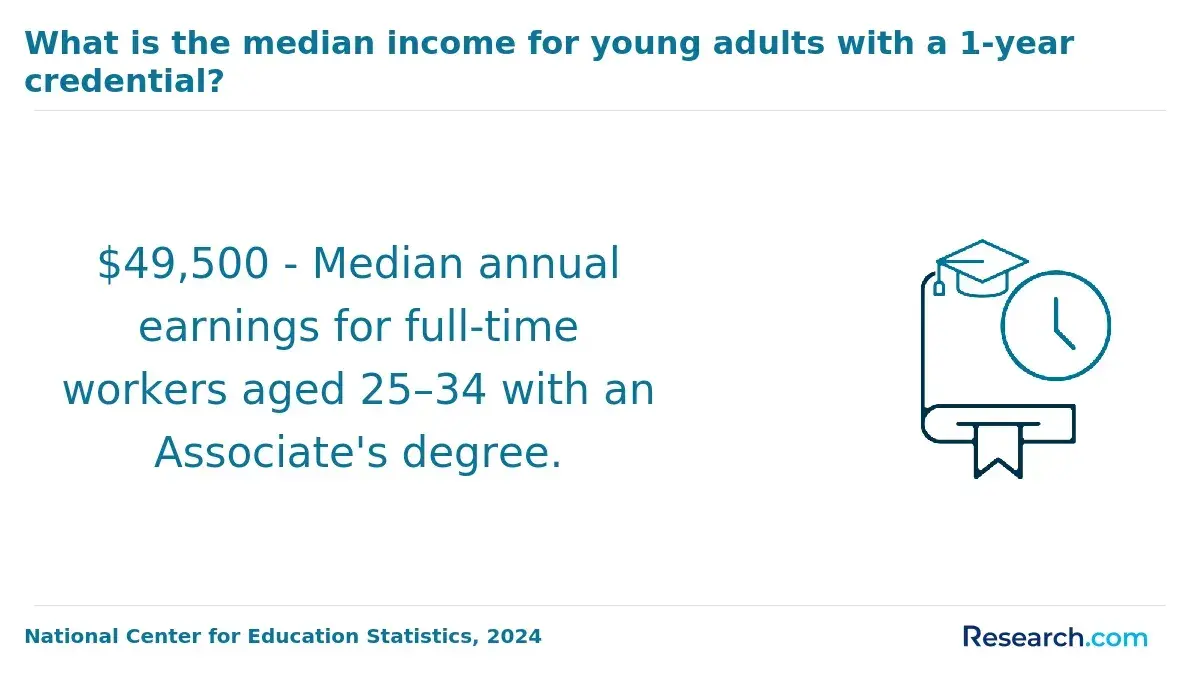
A waived application fee can make it easier to compare several schools without paying upfront, but it rarely determines whether the degree is affordable overall. The real savings come from tuition, transfer credits, employer tuition assistance, scholarships, and whether you can finish without repeating credits.
Application-fee savings are easiest to understand with a simple planning model. These examples are not school-specific rates; they show how a waived fee affects your search budget.
| Application strategy | If each non-waived application costs $50 | Potential upfront savings with no-fee applications | What to check next |
| Apply to 2 programs | $100 | $100 | Compare tuition per credit and transfer review speed |
| Apply to 4 programs | $200 | $200 | Compare total fees, books, and technology costs |
| Apply to 6 programs | $300 | $300 | Narrow choices before sending transcripts to every school |
The larger cost issue is tuition. The National Center for Education Statistics' 2024-published college cost reporting shows that tuition and required fees can differ sharply by institution type and residency status, which means a no-fee application should be treated as a convenience, not proof of low cost.
Students comparing bachelor's options should also look beyond the emergency management label and benchmark costs against broader affordable online bachelor's degree options. If one no-fee program costs substantially more per credit than another accredited program with a modest application fee, the waived fee may not be financially meaningful.
Common red flags include focusing only on the application fee, ignoring graduation fees, overlooking transcript fees, and assuming online programs have no additional course materials or technology costs. Ask for a written cost estimate that includes tuition, required fees, books, transfer credits accepted, and estimated remaining credits before you enroll.
What Are the Admission Requirements for No-Fee Online Emergency Management Degree Programs?
Admission requirements vary by degree level, but most online emergency management programs are designed for adult learners and do not require a public safety background. Still, "no application fee" does not mean "no admissions standards."
The table below outlines common requirements by credential level. Use it to estimate how much preparation you need before submitting an application.
| Program level | Common admission requirements | What may strengthen the application | What to verify |
| Associate degree | High school diploma or GED, online application, official transcripts | Prior work or volunteer experience in public safety, healthcare, logistics, or military service | Whether credits transfer into a bachelor's program |
| Bachelor's degree | High school or college transcripts, minimum GPA policy, transfer-credit evaluation | Incident response experience, FEMA coursework, leadership experience, strong academic history | Maximum transfer credits and whether technical or military credits apply |
| Master's degree | Accredited bachelor's degree, undergraduate transcripts, GPA review, resume or statement if required | Professional experience in emergency services, public administration, continuity planning, or risk management | Whether the program requires prerequisites, professional experience, or a capstone |
| Graduate certificate | Bachelor's degree or current graduate standing, transcripts, basic application materials | Clear career goal and related work experience | Whether credits can later apply to a master's degree |
Emergency management programs may cover disaster planning, hazard mitigation, incident command, crisis communication, recovery operations, public policy, risk assessment, homeland security, and business continuity. Some programs lean toward public administration, while others emphasize security, fire science, occupational safety, or disaster logistics.
Avoid assuming that rolling admissions guarantees admission. If your GPA is below the preferred threshold or your transcripts are incomplete, the school may request additional documentation, conditional admission, placement testing, or proof of readiness for college-level work.
When Should Students Apply to Online Emergency Management Degree Programs With Rolling Admissions?
The best time to apply is usually 8 to 12 weeks before your preferred start date, even if the school technically accepts applications later. That gives you enough time for transcript delivery, transfer-credit review, financial aid processing, employer tuition approval, and course registration.
Use the following sequence if you want to start without rushing. It is especially useful for working adults who need to coordinate enrollment around duty schedules, deployments, overtime seasons, or family obligations.
- Choose a target start date and ask the school for the last date to submit a complete application, not just the online form.
- Request official transcripts from every prior college, plus military or professional training records if applicable.
- Ask for a preliminary transfer-credit review before committing, because accepted credits can change both cost and time to completion.
- Submit the FAFSA and any institutional scholarship forms early, since financial aid deadlines may be separate from rolling admissions.
- Confirm course availability for the first term, including whether core emergency management courses are offered every start date.
- Review the enrollment agreement, tuition, fees, withdrawal policy, and technology requirements before registering.
Some students compare rolling admissions with faster degree formats in other fields, such as an accelerated finance degree, because both raise similar questions about pacing, workload, and whether shorter terms fit a working adult's schedule. The key is not speed alone; it is whether you can realistically complete assignments, simulations, projects, and discussion work while meeting professional obligations.
Waiting too long is the most common rolling-admission mistake. A school may still accept your application, but you could miss the financial aid packaging window, scholarship priority date, textbook deadline, or the course section you need.
How Can Students Strengthen an Online Emergency Management Degree Application?
A strong application shows that you can succeed online and that your experience connects to emergency management, even if your job title is not in the field. Admissions teams often look for academic readiness, professionalism, and a clear reason for choosing the program.
Focus on the materials that prove readiness and fit. The following steps can make your application cleaner and more persuasive.
- Write a concise goal statement explaining whether you are aiming for emergency management, disaster recovery, homeland security, public administration, healthcare preparedness, fire service leadership, or business continuity roles.
- List relevant experience from public safety, military service, healthcare, logistics, utilities, cybersecurity, nonprofit relief work, transportation, facilities management, or local government.
- Complete free FEMA Independent Study courses if the program values emergency management exposure, but confirm whether the school accepts them for credit before assuming they reduce tuition.
- Prepare a professional resume that emphasizes planning, communication, operations coordination, leadership, risk assessment, training, and incident documentation.
- Ask recommenders for specific examples of your reliability, judgment under pressure, teamwork, and ability to complete online or self-directed work.
- Fix transcript issues early, especially missing institutions, unpaid balances that block release, or credits from schools that may need special evaluation.
Do not submit a rushed application simply because admissions are rolling. Incomplete files can delay a decision longer than a complete application submitted a few days later, especially when transfer credits or graduate admission review is involved.
Are Online Emergency Management Degree Programs With No Application Fees Accredited and Legitimate?
Many legitimate online emergency management programs waive application fees, but the fee policy itself says nothing about academic quality. Accreditation, state authorization, transfer-credit acceptance, faculty expertise, student support, and transparent costs matter much more.
For U.S. students, institutional accreditation is the first checkpoint. It means the college or university has been reviewed by an accrediting agency recognized by the U.S. Department of Education or the Council for Higher Education Accreditation; this can affect federal financial aid eligibility, graduate school transferability, and employer recognition.
Use this verification checklist before applying or enrolling. It helps separate real flexibility from marketing language.
- Confirm institutional accreditation on the school's website and through federal or accreditor directories.
- Check whether the emergency management degree is the exact credential you want, not only a concentration, certificate, or related homeland security program.
- Ask whether the program is authorized to enroll students in your state.
- Review whether online courses are asynchronous, synchronous, hybrid, or require any campus visits.
- Ask whether any professional certifications, FEMA coursework, internships, or capstones are built into the curriculum.
- Verify transfer-credit rules in writing before assuming prior college, military, academy, or professional training will apply.
Accreditation does not guarantee a job or salary, and emergency management roles can depend on experience, location, agency type, civil service rules, and security clearance requirements. Still, choosing an accredited institution is one of the clearest ways to protect the value of your degree.
How Do Financial Aid and Total Costs Compare Among Online Emergency Management Degree Programs?
Financial aid can make two programs with similar tuition look very different after grants, scholarships, employer assistance, military benefits, and transfer credits are applied. Conversely, a school with no application fee can still be expensive if it accepts fewer transfer credits or charges higher per-credit tuition.
The table below shows the cost categories to compare before choosing a program. It is more useful than comparing application fees alone because it captures what students actually pay over time.
| Cost factor | Why it matters | Question to ask the school |
| Tuition per credit | Usually the largest direct cost | Is the rate different for online, out-of-state, military, or graduate students? |
| Required fees | Technology, graduation, course, or student service fees can add up | Which fees are mandatory for online students? |
| Transfer credits | Accepted credits can reduce both cost and completion time | How many credits will apply to the major, general education, and electives? |
| Books and materials | Some online courses require texts, software, or simulation tools | Are course materials included in tuition or billed separately? |
| Financial aid timing | Rolling admissions may not match aid deadlines | What is the priority deadline for aid before my start date? |
| Completion pace | Part-time study may be manageable but can extend total time enrolled | How long do students with my transfer credits usually take to finish? |
Recent federal financial aid changes have also made timing more important. The 2025-26 FAFSA cycle opened in late 2024 after a delayed prior cycle, reminding students that admissions flexibility and aid processing are separate timelines.
If you are considering graduate study, compare emergency management programs with other online master's cost models, such as online masters history programs, to understand how tuition, fees, and transfer policies vary across disciplines. The goal is not to choose the cheapest credential automatically, but to understand whether the price aligns with your career plan.
Before committing, ask for a degree plan that shows remaining credits, estimated terms, estimated total tuition and fees, and projected aid by term. A per-credit rate is helpful, but a personalized completion estimate is far better for decision-making.
Which Students Benefit Most From No-Fee, Rolling-Admission Online Emergency Management Degrees?
No-fee applications and rolling admissions are most valuable for students who need flexibility, want to compare multiple schools, or are trying to enter a program quickly without paying several application charges. These features are less valuable if the program is poorly aligned with your career goals or costs much more than alternatives.
The students who tend to benefit most share one thing: timing or cost uncertainty makes a low-risk application useful. The list below explains when these programs can be a practical fit.
- Working public safety professionals who cannot wait for one annual or semester-based deadline.
- Military-affiliated students who need flexible start dates around relocation, deployment, or benefits processing.
- Transfer students who want multiple schools to evaluate prior credits before deciding where to enroll.
- Career changers from logistics, healthcare, cybersecurity, construction, transportation, or local government who want to test eligibility without paying application fees.
- Adult learners who need asynchronous online courses and multiple start dates to balance work and family responsibilities.
- Students comparing bachelor's and master's pathways who want to avoid paying upfront before confirming admissions fit and transferability.
Students considering graduate school should also compare workload expectations, admissions difficulty, and career relevance across fields; resources on easy masters degrees can help frame that broader decision, though "easy" should never replace accreditation, outcomes, and fit.
Students should avoid choosing a program primarily because it is no-fee or rolling admission if the curriculum is too broad, the tuition is high, the school will not accept key transfer credits, the online format conflicts with work, or the credential does not match the roles they want.
How Should Students Choose Among No-Fee Online Emergency Management Degree Programs?
The best program is the one that combines verified accreditation, realistic total cost, useful transfer credit, flexible scheduling, strong student support, and a curriculum aligned with your target role. A no-fee application and rolling admissions should make comparison easier, not replace careful comparison.
Use this decision process to narrow your choices. It moves from eligibility to value, which is the order most students should follow.
- Define your target outcome, such as emergency management director, disaster recovery coordinator, continuity planner, public safety administrator, homeland security analyst, or nonprofit disaster relief manager.
- Confirm the credential level you need: certificate, associate, bachelor's, master's, or graduate certificate.
- Verify institutional accreditation and state authorization before spending time on the application.
- Ask whether the application fee is waived automatically or only through a promotion, code, employer partnership, or military benefit.
- Confirm whether admissions are truly rolling and identify the next three available start dates.
- Request a transfer-credit review and written degree plan before comparing final costs.
- Compare total estimated tuition and fees, not just per-credit tuition or application cost.
- Review curriculum fit, including incident command, hazard mitigation, crisis communication, risk analysis, recovery planning, and leadership coursework.
- Ask about online format, required login times, capstones, internships, simulations, and course rotation.
- Choose the program that best balances affordability, flexibility, credibility, and career relevance.
One practical rule: if a no-fee program saves you $50 but costs thousands more in tuition or delays graduation because fewer credits transfer, it is not the better financial choice. If the program is accredited, affordable, flexible, and aligned with your career path, the waived fee and rolling admissions become useful advantages.
Students should also remember that emergency management hiring often values experience, leadership, communication, and operational judgment alongside education. The strongest degree choice is usually the one that helps you build both the credential and the applied skills employers can recognize.
Other Things You Should Know About Emergency Management
No. The fields overlap, but emergency management focuses broadly on preparedness, response, recovery, mitigation, and continuity planning for hazards such as storms, fires, pandemics, infrastructure failures, and human-caused incidents. Homeland security programs may place more emphasis on terrorism, intelligence, border security, cybersecurity, and national security policy.
Usually, no. FEMA Independent Study courses can strengthen your background and may support entry-level knowledge, but employers that require a degree typically still expect an accredited college credential. Some schools may evaluate FEMA coursework for credit, but policies vary.
Most emergency management roles do not require a universal state license, but some positions may require certifications, civil service eligibility, security clearance, incident command training, or specialized experience. Requirements vary by employer, agency, and role.
Important skills include planning, risk assessment, communication, leadership, interagency coordination, data interpretation, logistics, public information, and decision-making under pressure. Technical knowledge helps, but employers also value calm judgment and the ability to coordinate people during complex events.
References
- Emergency Management Degree Program Graduate Job Outcomes: A Potential Theoretical Framework for Future Research https://jsire.org/emergency-management-degree-program-graduate-job-outcomes-a-potential-theoretical-framework-for-future-research/
- Exploring the job placement of recent emergency management graduates https://wmpllc.org/ojs/index.php/jem/article/view/2779
- World's Largest platform as University Common Application https://www.planstudyabroad.uniagents.com/course-details.php
- Earn Your Emergency Management Degree Online https://waldorf.edu/lp/online-emergency-management-degree/
- Rolling Admissions Explained: How It Works and When You Should Apply https://riseglobaleducation.com/blogs/rolling-admissions-explained-how-it-works-and-when-you-should-apply
- What Does Rolling Admission Mean? + Top Universities | College Essay Guy https://www.collegeessayguy.com/blog/rolling-admission
- WU (Vienna University of Economics and Business) https://www.wu.ac.at/en/programs/application-and-admission/deadlines-rolling-admission
- Rolling Admissions Guide: What, When, Why? https://www.ivywise.com/blog/what-does-rolling-admissions-mean/
- Emergency Student Aid (ESA) - UNCF https://uncf.org/pages/cesa