2027 How to Become a Psychologist: Guide to Educational Requirements and Job Outlook

Co-Founder and Chief Data Scientist
How to become a psychologist in the U.S.: a practical guide for choosing the right path
If you are considering psychology as a career, you are probably trying to answer a few big questions at once: What does a psychologist actually do, how much education is required, what kind of license is needed, and whether the investment is worth it. Those are the right questions to ask. Psychology can lead to meaningful work in mental health, schools, hospitals, research, business, and the legal system—but the pathway is not one-size-fits-all.
This guide breaks down the psychologist career path in plain language. You will learn the main job duties, education and licensure requirements, common specializations, salary ranges, internship options, ongoing certification rules, and the factors that matter most when deciding whether this career fits your goals. It also explains where online and accelerated graduate programs may help, and where they may not.
Quick answer: what does it take to become a psychologist?
In the United States, becoming a licensed psychologist usually means earning a doctoral degree, completing supervised training and an internship, and meeting state licensing requirements. A bachelor’s degree is the first step, but it does not qualify you to practice as a psychologist. Some roles related to mental health, counseling, and applied behavior analysis have different requirements, so it is important to choose the right path early.
- Most psychologist roles require a PhD or PsyD.
- Licensure rules vary by state or jurisdiction.
- Supervised internship and postdoctoral experience are commonly required.
- Specialization affects salary, job duties, and work settings.
- Online and accelerated graduate options can help some students, but accreditation and licensure alignment matter more than speed.
At a glance: key facts about psychology careers
- Employment of psychologists is projected to grow 6% from 2024 to 2034, faster than the average for all occupations, with about 12,900 openings projected each year on average and a median annual wage of $94,310.
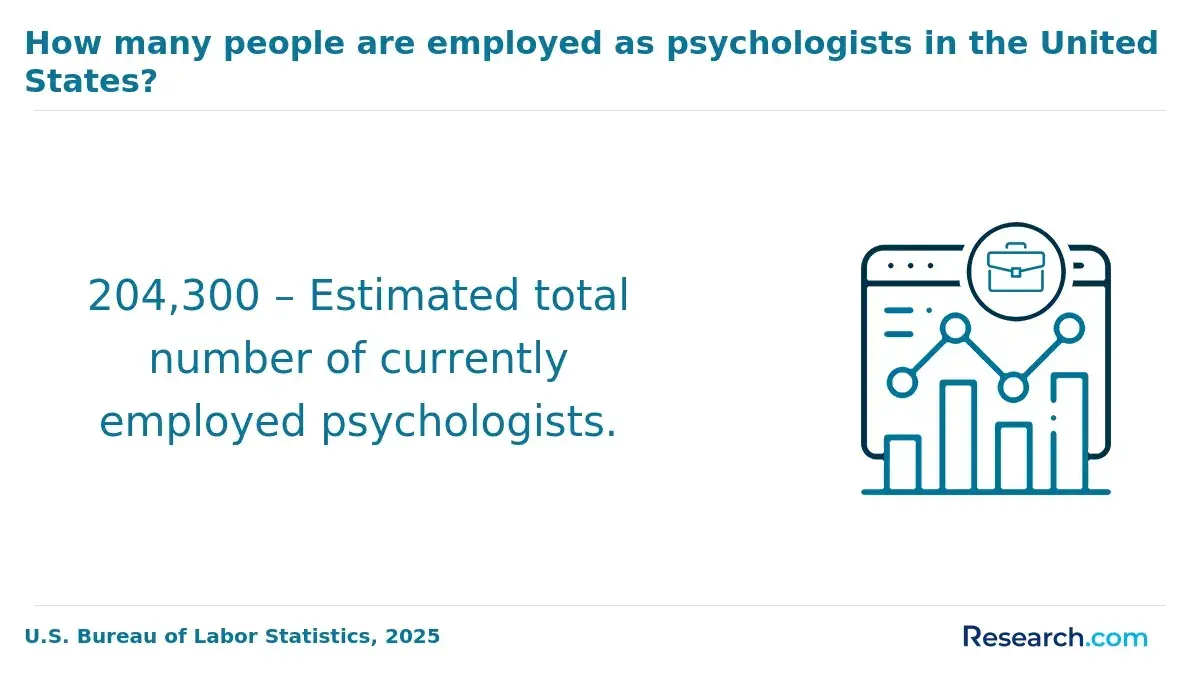
- Psychologists are employed nationwide, with over 204,300 working in the field and about 12,900 openings projected each year from 2024 to 2034.
- Psychology master’s degree holders typically earn $69,458-$106,088 annually.
- Clinical psychologists command higher salaries ($139,422-$214,884), while entry-level positions start around $105,320.
- Specialization matters: counseling psychologists ($71,640-$106,088) and industrial-organizational psychologists ($94,814) have different averages.
- What is a psychologist, and what do they do?
- What are the requirements to become a psychologist?
- What types of psychology certifications are available?
- What career options and specializations are available?
- How do you maintain a psychology license and certifications?
- What skills do successful psychologists need?
- What internship opportunities are available?
- What ethical codes must psychologists follow?
- What trends will affect psychologist jobs in the coming years?
- What are the average salaries for psychologists in the U.S.?
- What financial factors should aspiring psychologists weigh?
- How can psychologists use technology to improve practice?
- Where can you find affordable online psychology master’s programs?
- Can an accelerated master’s program help your psychology career?
- What challenges come with becoming a psychologist?
- Why do continuing education and certification matter?
- How do you choose an accredited, accelerated graduate psychology program?
- How can online master’s programs support your psychology career?
- What factors influence psychology salaries?
- How do you choose between psychologist and psychiatrist?
- Can you become a therapist without a psychology degree?
- How can networking and mentorship accelerate your psychology career?
What is a psychologist, and what do they do?
A psychologist is a mental health professional trained in the science of behavior, emotion, cognition, and human development. Psychologists assess, diagnose, study, and treat psychological and behavioral concerns, depending on their specialization and licensure.
Unlike some related helping professions, psychologists usually complete doctoral-level training and state licensure before practicing independently. Their work may include therapy, psychological testing, research, consultation, and collaboration with medical, educational, or legal professionals.
- Assessment and diagnosis: Psychologists use interviews, observations, and testing to understand symptoms and behavior patterns.
- Therapy and intervention: Many provide talk therapy, treatment planning, and evidence-based interventions.
- Research: Some psychologists study cognition, behavior, mental health conditions, or treatment outcomes.
- Collaboration: Psychologists often work with physicians, teachers, social workers, counselors, and other professionals.
Some students are drawn to doctoral programs because they want direct client care, leadership opportunities, or research-based practice. If you are comparing doctoral options, it may help to review the cheapest online PsyD programs alongside fully funded or research-oriented routes. The best choice depends on your goal, budget, and preferred career setting.
What are the requirements to become a psychologist?
The exact path depends on the state and the type of psychologist you want to become, but the standard route includes undergraduate study, graduate education, supervised experience, and licensure. If you want to practice independently as a psychologist, you should expect a long training timeline.
| Stage | Typical purpose | What to check |
| Bachelor’s degree | Build a foundation in psychology, statistics, and research methods | Prerequisites for graduate school, GPA, research experience |
| Graduate study | Gain advanced knowledge and specialization | Program accreditation, faculty fit, clinical or research focus |
| Doctoral degree | Prepare for licensure and advanced practice | PhD vs. PsyD, practicum opportunities, internship support |
| Internship | Apply skills in supervised settings | Approved placement, supervision quality, licensure alignment |
| Licensure | Qualify for independent practice | State board rules, exam requirements, supervised hours |
| Continuing education | Maintain competency and keep license active | Renewal cycle, CE hours, ethics requirements |
Typical path to licensure
- Earn a bachelor’s degree, usually in psychology or a related field.
- Complete a graduate degree that aligns with your career goal.
- Finish a doctoral program if you want to become a licensed psychologist.
- Complete supervised internship and any postdoctoral training required by your state.
- Pass your state licensing exam and submit your application.
- Renew your license and finish continuing education requirements on schedule.
Some students start with a master’s degree first, especially if they are not sure about doctoral study or want a related role before committing to licensure. If cost is a concern, it can also make sense to compare affordable online degrees before choosing a program.
What types of psychology certifications are available?
Certifications are not the same as licensure. Licensure is what allows you to practice as a psychologist where permitted by law. Certifications, meanwhile, can signal focused expertise in a specialty area or professional skill set.
Some certifications are broad, while others are very specific. Not every psychologist needs one, but they can help you stand out if they fit your career path.
| Certification type | Common focus | Best for |
| ABA Certification | Behavior principles and behavior change | Professionals working with behavior intervention |
| AASECT Certification (Sexuality) | Sexuality education and counseling | Educators and counselors in sexuality-related work |
| BCSSP Certification | Children and adolescents in schools | School-based professionals |
| Clinical Child and Adolescent Psych Certification | Mental health in children and teens | Practitioners serving younger clients |
| Clinical Psychology Certification | Diagnosis and treatment of mental and behavioral conditions | Clinicians in adult or general practice |
| Counseling Psychology Certification | Career, grief, and adjustment concerns | Counselors and therapy-focused professionals |
| Couple and Family Psych Certification | Relationship and family systems | Clinicians working with couples and families |
| Forensic Psychology Certification | Legal and criminal justice applications | Professionals working in courts or corrections |
| Geropsychology Certification | Mental health in older adults | Providers serving aging populations |
| Organizational and Business Psych Certification | Workplace behavior and performance | Applied workplace psychologists |
If your interests are highly specialized, a certification may help you build credibility in a narrower field. For example, students interested in legal settings often compare pathways such as cheap online master’s programs in forensic psychology before deciding whether certification, a master’s, or a doctoral route makes the most sense.
What career options and specializations are available?
Psychology is broad. Your specialization affects your day-to-day responsibilities, licensure route, salary potential, and work environment. Some psychologists focus on therapy, some on testing or research, and others on workplace or legal applications.
| Specialization | Typical work | Common setting |
| Addiction psychology | Treats substance use and behavioral addiction concerns | Rehab centers, hospitals, treatment programs |
| Biopsychology (Behavioral Neuroscience) | Studies the link between brain function and behavior | Research and academic settings |
| Cognitive psychology | Examines memory, thinking, perception, and language | Research, universities, applied labs |
| Developmental psychology | Studies change across the lifespan | Research, schools, health organizations |
| Forensic psychology | Applies psychology to legal questions | Courts, corrections, evaluations |
| Health psychology | Explores how behavior affects health outcomes | Hospitals, clinics, wellness programs |
| Industrial-organizational psychology | Improves workplaces, hiring, training, and performance | Businesses, consulting firms, HR |
| Neuropsychology | Evaluates brain-related cognitive problems | Hospitals, rehabilitation centers, specialty clinics |
| School psychology | Supports learning, behavior, and child development | Schools and educational systems |
| Sports psychology | Helps athletes improve performance and mental resilience | Teams, training centers, private practice |
Some psychology-trained professionals also move into adjacent careers such as HR, counseling, social work, teaching, nursing, or law. That does not mean those careers are identical to psychology, but the skills often transfer well.
If you are interested in workplace behavior, salary expectations can be attractive in certain settings. You may want to compare career goals with the industrial organizational psychology salary before choosing a path. If you prefer education-focused work, consider how school settings differ from clinical settings before pursuing a program.
Demand for psychologists remains strong overall, but growth and hiring vary by specialization. The most practical approach is to choose your concentration based on the kind of work you want to do every day, not only on salary headlines.
How do you maintain a psychology license and certifications?
After you are licensed, the responsibility does not end. Most states require ongoing renewals and continuing education so that psychologists stay current with ethics, law, and evidence-based practice.
The specific rules depend on your state board and any specialty boards tied to your credentials. Still, the maintenance process usually looks like this:
- Renew your license every 2-3 years, depending on your jurisdiction.
- Complete continuing education credits within each renewal cycle.
- Finish ethics, supervision, or practice-specific coursework if your board requires it.
- Keep records of completed CE activities for several years.
- Renew specialty certifications separately if they have their own rules.
Many psychologists treat licensure maintenance as a professional habit rather than a last-minute task. That approach lowers the risk of missed deadlines or incomplete documentation.
What skills do successful psychologists need?
Good psychologists rely on both technical knowledge and people skills. Graduate school teaches the science, but strong practice also depends on judgment, communication, and self-management.
| Skill | Why it matters | How it shows up in practice |
| Communication | Builds trust and clarifies treatment goals | Explaining diagnoses, listening carefully, writing notes |
| Critical thinking | Supports accurate assessment and intervention | Interpreting patterns, revising treatment plans |
| Cultural competency | Improves care across backgrounds and identities | Using respectful, context-aware approaches |
| Empathy | Helps clients feel understood | Responding with sensitivity and warmth |
| Ethical decision-making | Protects clients and preserves trust | Maintaining boundaries, confidentiality, and informed consent |
| Observation | Supports accurate assessment | Noticing behavior, affect, and changes over time |
| Research literacy | Helps psychologists use evidence-based practice | Evaluating studies and applying current findings |
| Self-awareness | Reduces bias and burnout risk | Monitoring personal limits and reactions |
These skills are especially important because psychologists often work in emotionally demanding settings. The ability to stay calm, reflective, and professional can matter as much as academic performance.
What internship opportunities are available?
Internships are a key part of training because they connect classroom learning to supervised practice. They also strengthen graduate school applications and help you test whether a specialty is the right fit.
Psychology students commonly find internships in:
- Hospitals and medical centers
- Schools and school districts
- Community mental health agencies
- Research labs
- Private practices
- Human resources departments for industrial-organizational work
When evaluating an internship, focus on supervision, relevance, and learning value. A good placement should help you build assessment, communication, and documentation skills—not just fill hours.
Questions to ask before accepting an internship
- Who will supervise me, and what is their license or credential?
- Will I get exposure to assessment, therapy, research, or case management?
- Is the role aligned with the specialization I want?
- Are there training seminars, workshops, or professional development opportunities?
- Is the placement paid, partially funded, or unpaid?
- How will this internship help me meet licensure or graduate-school goals?
If cost is a concern, remember that some internships are paid while others are not. Students often need to plan ahead for transportation, childcare, and unpaid hours.
What ethical codes must psychologists follow?
Ethics are central to psychology because the work involves trust, confidentiality, power differences, and vulnerable clients. Psychologists are expected to follow professional standards and applicable laws, especially in situations involving privacy, consent, dual relationships, or risk of harm.
The APA Ethical Principles of Psychologists and Code of Conduct outlines five general principles:
- Beneficence and nonmaleficence: Psychologists should help clients and avoid harm.
- Fidelity and responsibility: They should act responsibly, manage conflicts of interest, and remain trustworthy.
- Integrity: Honesty and accuracy matter in research, teaching, and practice.
- Justice: Psychologists should strive for fair treatment and access.
- Respect for people’s rights and dignity: Privacy, confidentiality, and autonomy must be protected.
The ethics code is a framework, not a checklist for every possible situation. When cases are unclear, psychologists are expected to consult supervision, state law, and professional guidance.
What trends will affect psychology careers in the coming years?
Psychology is changing quickly. The biggest shifts involve technology, service delivery, employer expectations, and growing awareness of mental health needs.
| Trend | Why it matters | Career impact |
| Telepsychology | More care is delivered remotely | Psychologists need comfort with secure digital platforms and remote engagement |
| Integrated care | Psychologists increasingly work with medical teams | Collaboration skills are becoming more valuable |
| Data-informed practice | Organizations want measurable outcomes | Psychologists may need stronger assessment and analytics literacy |
| DEI and cultural responsiveness | Clients expect care that reflects lived experience | Cultural competence is no longer optional |
| AI-assisted tools | Administrative and screening tools are evolving | Psychologists will need to understand the limits of AI and maintain clinical judgment |
| Workplace mental health | Employers are investing in employee well-being | Industrial-organizational and counseling roles may expand in some sectors |
AI will not replace licensed psychologists, but it may change how they document, schedule, screen, and analyze information. The professionals most likely to thrive will be those who use technology carefully without letting it replace clinical reasoning or ethical oversight.
What are the average salaries for psychologists in the U.S.?
Salary data for psychologists varies across sources because different databases use different samples, job titles, and methodologies. For that reason, salary figures should be treated as estimates rather than guarantees.
| Role | Salary source | Reported salary |
| Psychologist, M.A. | Salary.com | $98,651 |
| Psychologist, M.A. | Indeed.com | $106,088 |
| Psychologist, M.A. | Payscale.com | $89,084 |
| Psychologist, M.A. | DataUSA.io | $69,458 |
| Psychologist, M.A. | BLS.gov | $92,740 |
| Clinical Psychologist | Salary.com | $139,422 |
| Clinical Psychologist | Indeed.com | $214,884 |
| Entry Level Psychologist | Salary.com | $105,320 |
| Counseling Psychologist | Indeed.com | $106,088 |
| Counseling Psychologist | Payscale.com | $71,640 |
| Counseling Psychologist | DataUSA.io | $76,954 |
| Industrial-Organizational Psychologist | Payscale.com | $94,814 |
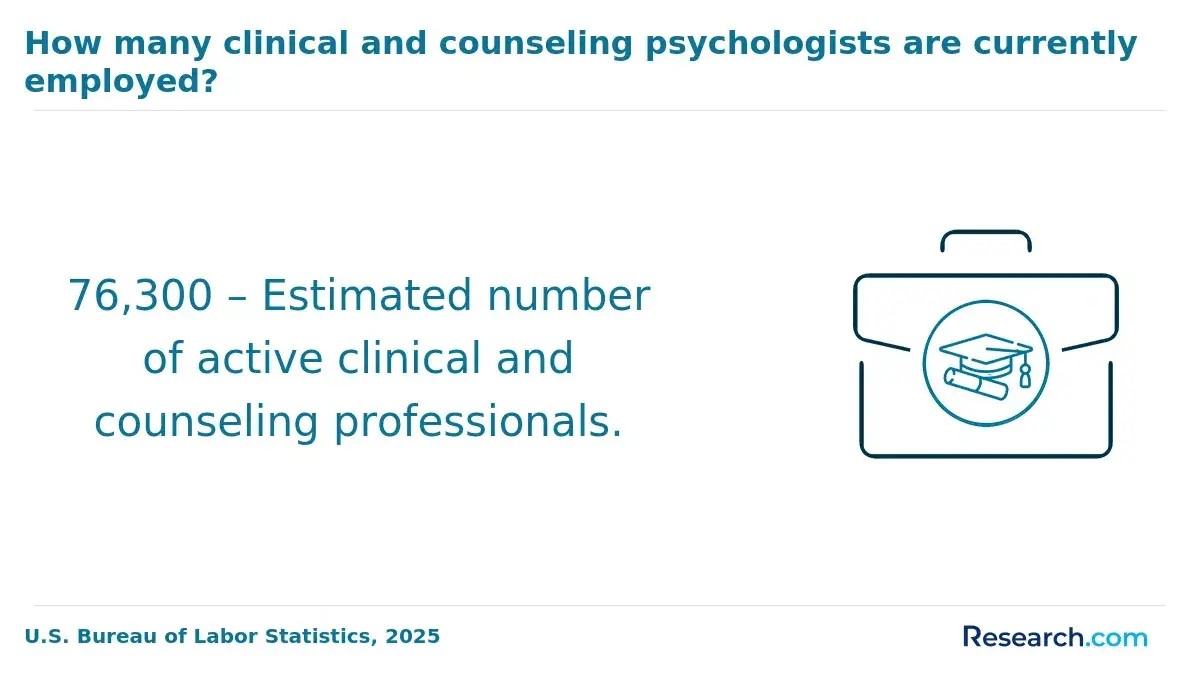
| Clinical and Counseling Psychologists | DataUSA.io | $83,754 |
What stands out is the range. Pay depends heavily on specialization, setting, geography, and experience. For example, clinical psychology tends to pay more than general master’s-level work, while some applied workplace roles can be competitive because employers value measurable business outcomes.
What financial factors should aspiring psychologists consider?
The cost of becoming a psychologist is one of the biggest decision points. Graduate school, supervised training, exam fees, licensure renewal, and optional certifications can all add up.
Before choosing a program or specialization, ask yourself these questions:
- What will the total cost be, not just the sticker tuition?
- Will I need to relocate for internship or licensure?
- Can I work while enrolled, or will the program limit employment?
- Does this school have strong placement or licensure outcomes?
- How much debt am I willing to take on for this earning potential?
It can also help to compare affordable options such as the most affordable online psychology degree before committing to a more expensive route. Lower tuition is helpful, but only if the program still meets accreditation and licensure expectations.
How can psychologists use technology to improve practice?
Technology is now part of everyday psychology practice. Used well, it can improve access, organization, and outcome tracking. Used poorly, it can create privacy, quality, or ethical risks.
- Teletherapy: Allows psychologists to serve clients remotely through secure video sessions.
- Virtual reality exposure therapy: Can support treatment for certain anxiety-related concerns.
- Mental health apps: Help clients track mood, sleep, stress, or behavior patterns.
- Digital CBT tools: Can extend therapy work between sessions.
- Wearables: May provide information about sleep, heart rate, or activity.
- AI tools: Can help with scheduling, documentation support, and pattern detection, but should never replace clinical judgment.
- Client management software: Streamlines billing, reminders, and records.
- Security tools: Protect confidential records and support compliance expectations.
The main caution is simple: any tool that handles client data must be evaluated carefully for privacy, security, and fit with professional responsibilities.
Where can you find affordable online psychology master’s programs?
If you are looking for a master’s degree in psychology, affordability should be weighed alongside accreditation, curriculum quality, and career alignment. A low tuition price does not help if the degree does not support your next step.
Before enrolling, compare:
- Accreditation status
- Faculty expertise
- Clinical, research, or practicum options
- Licensure alignment in your state
- Student support and career services
- Total cost after fees, books, and technology expenses
For a starting point, review cheap psychology masters programs and compare them against your state requirements and long-term goals.
Can an accelerated master’s program help your psychology career?
An accelerated program can be useful if your goal is to finish sooner, reduce time away from work, or move into a specialized role faster. However, speed should never come before accreditation, clinical training, or state approval.
Accelerated programs may work best for students who:
- Already have a clear career direction
- Can handle a fast-paced workload
- Need a flexible format to balance work or family
- Are pursuing a role that does not require a lengthy doctoral route
If you want a faster route, compare the structure and outcomes of the 1 year masters in psychology online options with traditional formats. The right choice depends on whether the program still gives you the supervision, coursework, and outcome support you need.
What challenges come with becoming a psychologist?
The psychology path can be rewarding, but it also asks for patience, persistence, and financial planning. Students often underestimate the length of training and the emotional load of the work itself.
| Common challenge | Why it matters | Practical way to respond |
| Long training timeline | Doctoral education and supervised experience take time | Plan early and choose a program aligned with your goal |
| Program cost | Tuition and living expenses can be significant | Compare aid, assistantships, and affordable formats |
| Licensure complexity | Rules differ by state and specialization | Read state board requirements before enrolling |
| Competitive admissions | Top programs can be selective | Build research, volunteer, and internship experience early |
| Burnout risk | Helping work can be emotionally demanding | Use supervision, boundaries, and self-care routines |
If you want more flexibility while gaining specialization, programs such as forensic psychology masters programs may be worth comparing. Just make sure they fit your state and career objectives.
Why do continuing education and certification matter?
Psychology changes as new research, tools, and ethical expectations emerge. Continuing education helps psychologists stay current and keep their license active. Certifications can also deepen expertise in a niche area and make your background more attractive to employers or clients.
For many professionals, continuing education serves three purposes:
- It helps maintain licensure.
- It supports better, more current practice.
- It shows commitment to professionalism and ethical standards.
Specialty credentials may also support career growth in focused areas such as neuropsychology, sports psychology, or geriatric psychology. If you are still early in your journey and wondering about specialty timing, resources like How long does it take to become a child psychologist? can help you map out the path more realistically.
How do you choose an accredited, accelerated graduate psychology program?
Choosing an accelerated program is not just about finding the shortest timeline. You need a program that is credible, usable for your goals, and accepted where you want to work.
Checklist for evaluating a program
- Is the program accredited by a recognized body?
- Does it meet state licensure requirements for your target role?
- Are faculty active in the area you want to study?
- Does the curriculum include the kind of supervised learning you need?
- Are internship, practicum, or field placement options available?
- What do graduates do after completing the program?
- What will the total cost be, including fees and materials?
If you are trying to move quickly, a fast track masters in psychology may be appealing. Just verify that the shorter format still supports clinical depth, licensure fit, and employer recognition.
How can online master’s programs support your psychology career?
Online master’s programs can be a strong option for working adults, career changers, and students who need geographic flexibility. They are especially useful when the degree is meant to build specialization, support advancement, or prepare for a related role.
The most useful online programs usually offer:
- Clear academic structure
- Accessible faculty support
- Realistic practicum or internship guidance
- Strong technology platforms
- Career support and licensure advising
For example, the fastest masters in clinical mental health counseling online program may appeal to students who want a quicker route into counseling-related work. The key is making sure the program still matches your intended credential and job setting.
What affects psychology salaries?
Psychology salaries are influenced by more than degree level. The biggest salary drivers are specialization, location, setting, experience, and demand.
Main salary factors to consider
- Specialization: Clinical, counseling, forensic, school, and industrial-organizational roles can pay differently.
- Location: Urban and high-demand regions often pay more than areas with lower demand.
- Industry: Private practice, healthcare, education, and corporate settings often have different pay structures.
- Experience and credentials: More years in the field, advanced training, and specialty credentials can improve earning potential.
For instance, if you are comparing workplace-focused roles, reviewing the industrial organizational psychology salary can help you judge whether that path fits your financial goals as well as your interests.
How do you choose between a psychologist and a psychiatrist?
Psychologists and psychiatrists both support mental health, but their training and clinical authority differ. Psychiatrists are medical doctors who can prescribe medication. Psychologists are mental health specialists trained in assessment, therapy, and behavioral treatment, with prescribing authority limited to a few jurisdictions and additional qualifications where permitted.
| Career | Core training | Main focus | Prescriptive authority |
| Psychologist | Psychology doctorate and licensure | Therapy, assessment, research, behavior change | Usually no |
| Psychiatrist | Medical school and psychiatry residency | Diagnosis, medication management, medical treatment | Yes |
If you enjoy testing, therapy, behavior analysis, and research, psychology may be the better fit. If you want a medical career centered on prescriptions and biological treatment, psychiatry may be the better path. A deeper comparison is available in our psychologist vs psychiatrist guide.
Can you become a therapist without a psychology degree?
Yes, in some cases. Therapy careers can be accessible through different educational paths, depending on the license you want and the state where you plan to practice. Psychology is one route, but it is not the only one.
People interested in therapy often also pursue counseling, social work, marriage and family therapy, or other mental health credentials. The right choice depends on:
- Your state’s licensing rules
- The population you want to serve
- Whether you prefer assessment-heavy work or counseling-centered work
- How much education you are willing to complete
If you are exploring alternatives, see how do you become a therapist for a broader view of your options.
How do networking and mentorship help your psychology career?
Strong mentors and professional connections can make a real difference in psychology, especially when you are trying to navigate graduate admissions, internship selection, licensure, or specialization decisions. A mentor can help you avoid mistakes, refine your goals, and build confidence in a competitive field.
Networking can help you:
- Learn about openings before they are widely posted
- Find internship or practicum contacts
- Understand how different specialties work in real settings
- Build references for graduate school or jobs
- Stay current with professional standards and trends
Professional associations, campus events, conferences, and local practice groups are all useful starting points. If your broader interests include behavior analysis or related applied work, low cost BCBA degree programs online may also be worth reviewing as part of a broader plan.
Common mistakes to avoid when planning a psychology career
- Choosing a program without checking accreditation: This can create licensure problems later.
- Assuming every online program leads to licensure: Some are academic only, while others are designed for professional practice.
- Focusing only on tuition: Cheap programs are not helpful if they do not meet your career requirements.
- Ignoring state rules: Licensure standards differ, so confirm them before enrolling.
- Underestimating the emotional demands of the work: Burnout is a real risk in helping professions.
- Assuming salary outcomes are guaranteed: Pay varies widely by role, setting, and location.
Questions to ask before choosing a psychology program
- Will this degree support licensure in the state where I want to work?
- Is the program accredited by a recognized agency?
- What supervised training, practicum, or internship support is included?
- How long does the program realistically take if I attend part-time?
- What are total costs after tuition, fees, books, and clinical requirements?
- What do graduates typically do after finishing the program?
- Does the faculty expertise match my specialization interest?
- How flexible is the online or hybrid schedule?
References
- Bureau of Labor Statistics. (2024). Occupational Employment and Wage Statistics: Psychologists, All Other. Bureau of Labor Statistics.
- DataUSA (n.d.). Psychologists. DataUSA.
- Franklin University. (n.d.). How Much Do Psychologists Make? | Annual & Hourly Salary. Franklin University.
- Indeed. (2026). Psychologist Salaries in the United States. Indeed.
- Payscale. (2026). Average Psychologist Salary. Payscale.
- Salary.com. (2026). Psychologist - M.A. Salary in the United States. Salary.com.
- U.S. Bureau of Labor Statistics. (2025). Occupational Outlook Handbook: Psychologists. U.S. Bureau of Labor Statistics.
Key insights
- Becoming a licensed psychologist usually requires a doctoral degree, supervised training, and state licensure.
- Psychology is a broad field, so specialization should be based on the kind of work you want to do, not salary alone.
- Accreditation matters more than speed or low tuition when choosing a graduate program.
- Salary varies widely by specialization, location, and setting; no single number describes all psychologist careers.
- Online and accelerated programs can be useful, but only if they match licensure rules and training expectations.
- Continuing education, ethics, and mentorship are not extras—they are part of long-term career success.
Other Things You Need to Know on How to Become a Psychologist
Most states require a predoctoral internship of 1,500 to 2,000 supervised hours before licensure, completed as part of an APA-accredited doctoral program or an equivalent approved training site. After the degree, many states also require postdoctoral supervised experience, often 1,500 to 2,000 additional hours.
In 2027, psychologists can specialize in areas like clinical psychology, forensic psychology, neuropsychology, and child psychology. Each specialization requires targeted education and training, often involving focused coursework and specific internships or supervised experiences, depending on the field and location.
To become a licensed psychologist in 2027, you'll need to pass the Examination for Professional Practice in Psychology (EPPP). This standardized exam is essential for licensing across most states and assesses knowledge in various psychological domains crucial for professional practice.