2027 Online MS in Psychology - Forensic Psychology: Choosing a Degree for Disability Access Research in Courts
Audited and Verified:
Our Editorial and Data Verification Process
Research.com uses government datasets, official education statistics and primary institutional information to support its career and degree guides. Our review process checks factual accuracy, occupational definitions, source dates and the requirements associated with the credentials discussed.
How This Article Was Fact-Checked
Our editorial team verifies salary estimates, employment projections, education requirements and program information against original data providers and official organizations. Salary figures are checked against the relevant occupational definitions and reporting periods. Information about licensure, accreditation and required in-person training is reviewed separately.
Fact-checked and verified on:

Co-Founder and Chief Data Scientist
Studying disability access in courts requires more than an interest in forensic psychology. Researchers may need to understand accommodation processes, measure barriers without exposing sensitive information, and work within court data rules. For prospective master's students and justice-system professionals, the decision is whether an online forensic psychology MS provides those skills—or whether another route is more direct.
This guide shows what to look for in a program, where the degree's professional limits lie, and how to compare its cost with the research opportunities it actually offers.
Key Things You Should Know
- Choose an online forensic psychology MS for this goal only if it offers substantial research-methods training and a feasible project on court access; the degree title alone is not enough.
- Disability access research can examine barriers under the Americans with Disabilities Act's Title II, but a nonclinical MS does not confer psychologist licensure or authority to perform forensic evaluations.
- Before enrolling, confirm institutional accreditation, research supervision, court-data access requirements, total program cost, and any live or in-person obligations.
What is an online MS in forensic psychology for disability access research?
An online MS in forensic psychology is graduate study of psychological science in legal and justice settings. For disability access research, its value is not training to determine whether someone has a disability. It is training to investigate questions such as whether court notices are understandable, how accommodation requests move through a court system, or whether remote-hearing procedures create avoidable participation barriers.
"Access" can mean different things: receiving information in an accessible format, communicating during a hearing, navigating a courthouse, or obtaining a reasonable modification to a process. State and local courts generally have obligations under Title II of the Americans with Disabilities Act; a student should still distinguish those legal duties from the psychological question being studied. Legal interpretation belongs with qualified legal professionals.
A prior bachelor's degree may supply useful preparation without being a perfect match. For example, bachelor's study in addiction psychology online may build knowledge of behavioral health and stigma, but court-access research also requires legal-systems literacy, measurement, and methods training.
Can an online forensic psychology master's degree prepare you for court research?
Yes—if the program lets you practice research, not merely read about forensic cases. Look for statistics, qualitative or mixed-methods training, accessible research design, faculty feedback, and a thesis or capstone that can address a court-related question. Online delivery does not itself prevent research, but it may limit access to local courts, restricted records, or an available supervisor.
A feasible student project might analyze publicly available court forms for accessibility features or propose an evaluation of an accommodation-request process. Interviewing court users, examining case files, or using accommodation records requires separate consideration of court permission, privacy, consent, data security, and institutional review requirements. Public availability does not automatically make information ethical to collect or republish.
If the prospective program is light on methods, compare its curriculum with broader options for comparing online psychology degree curricula. A general or applied research-focused psychology master's could be a better fit than a forensic label with limited project supervision.
Does an online MS in forensic psychology lead to psychologist licensure?
Generally, a nonclinical forensic psychology MS is not a path to independent psychologist licensure. State licensing boards determine eligibility, and psychologist licensure typically involves qualifying doctoral education and supervised experience, among other requirements. A course in assessment or psychopathology does not authorize a graduate to diagnose, administer restricted assessments independently, conduct forensic evaluations, or offer expert testimony as a licensed psychologist.
That distinction matters when setting a research goal. Evaluating whether a court process is accessible is different from clinically assessing an individual litigant. If the intended job is psychotherapy rather than court-systems research, investigate a qualifying professional degree and the applicable state rules; clinical mental health master's programs by study pace address a different credential pathway, not a shortcut from a forensic MS.
First, confirm that the university holds institutional accreditation recognized by the US Department of Education. Then check the precise degree and any claims about professional accreditation. APA accreditation applies to specified professional psychology doctoral programs and training sites; it should not be assumed to cover a nonclinical forensic psychology MS.
Accreditation establishes an important institutional baseline, not proof that a particular master's offers disability research mentorship or satisfies a state licensing board. Ask which unit awards the degree, whether the concentration appears on the transcript, and which requirements apply to your entry term. When comparing accredited forensic psychology degree programs, verify those details with each school rather than relying on the concentration name.
The strongest curriculum for this purpose combines research design and statistics with forensic psychology, disability studies or accessibility, and the administration of legal systems. Qualitative methods can help investigate how people experience a process; measurement coursework can help distinguish an observed barrier from an unsupported assumption about its cause. Coursework in mental health can provide context without making students clinicians.
Check whether disability and access are actually covered in required courses, available electives, or a supervised project. A syllabus that concentrates on criminal behavior and competency evaluations may have little to say about accessible notices, hearing participation, or court administration. Where substance-use-related barriers are part of the intended work, online colleges offering addiction counseling study provide a useful curriculum comparison—but counseling preparation and court-access research serve different purposes.
Requirements vary by school. Expect to verify the accepted bachelor's degrees, the GPA policy, any psychology, statistics, or research method prerequisites, and whether the application calls for recommendations, a statement of purpose, or relevant work. Criminal justice, public administration, education, health, and other backgrounds may be useful; an unrelated major does not automatically rule out admission.
For this research interest, an application is stronger when it identifies a manageable access question and demonstrates analytical preparation—not when it claims access to confidential court records. Applicants who still need to complete an undergraduate degree should resolve that step first; psychology program transfer policies may affect the time and cost of finishing a bachelor's, but only the receiving school can determine which credits meet its requirements.
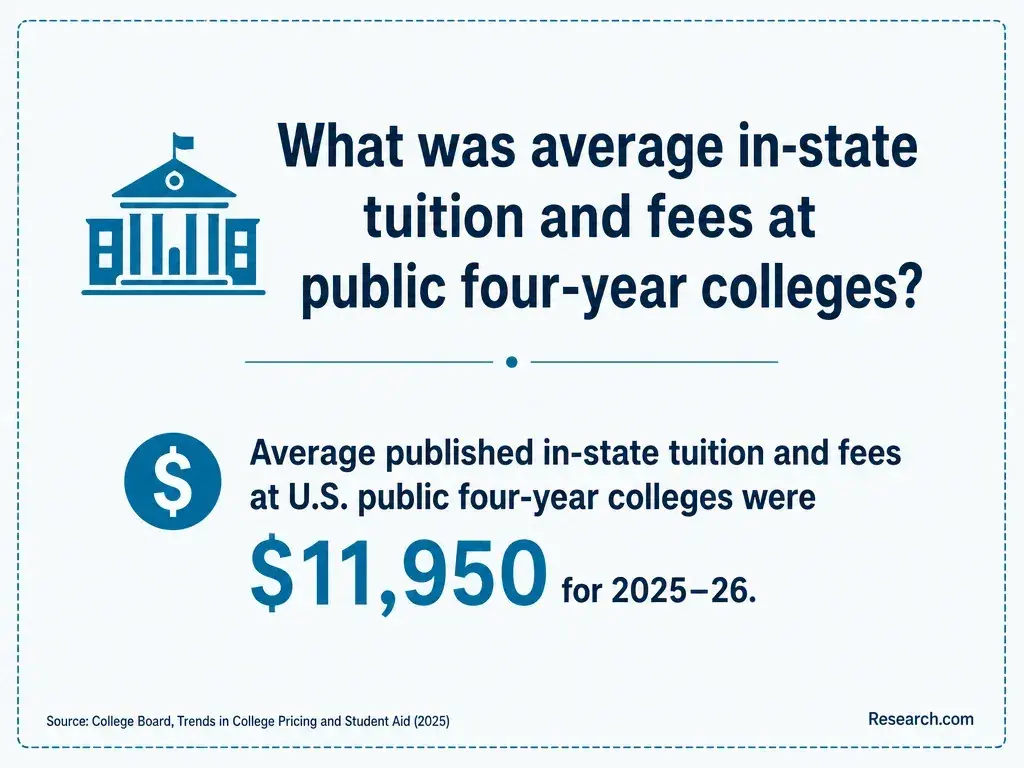
Time and cost depend on required credits, course availability, enrollment pace, and whether a thesis or project extends beyond coursework. Obtain a term-by-term plan and calculate tuition from the school's published rate and required credits. Add mandatory fees, materials, travel for any residency, and possible project or continuation charges. Confirm whether a slower pace changes aid eligibility or total fees.
Accelerated study can reduce elapsed time but may leave less room to secure a research mentor or negotiate an approved court partnership. Use one-year forensic psychology graduate tuition comparisons as a starting point, then request a school-specific cost estimate and ask whether the proposed research project fits the accelerated schedule.
There is no single reliable salary for graduates of a forensic psychology MS. Pay depends on the occupation, employer, location, experience, and whether a position requires a separate professional credential. The US Bureau of Labor Statistics reports wages by occupation—not by forensic psychology degree—so its figures for roles such as social and human service assistant or psychologist should not be presented as this program's graduate earnings.
For a useful comparison, identify actual vacancies in the court, government, or research setting you want; record their stated pay ranges and minimum qualifications; and compare them with your current compensation and the full cost of study. Lists of higher-paying career paths after forensic psychology graduate study require particular care: a listed occupation may demand experience, doctoral training, or licensure beyond the MS.
How do you choose a reputable online forensic psychology program?
Choose the program that can support a credible, affordable access-research project—not simply the one with the most forensic electives. Ask admissions staff and a potential project supervisor to confirm the following points in writing before committing:
- Which faculty member can supervise disability-access or court-process research, and how are online students matched with supervisors?
- Can the thesis or capstone use public materials if court data or a partner site is unavailable?
- What live meetings, campus visits, approved placements, or fixed course sequences are required?
- What is the complete estimated cost at your intended pace, and which fees continue if a project takes longer?
Compare the answers with published degree requirements and ask for examples of permissible project formats, not promises of court access. If the skills gap is mainly statistical or methodological, targeted coursework or supervised research experience may offer better value than another full degree. Psychology graduate study on a budget is worth considering only alongside evidence that the program can support the work you want to do.
Other Things You Should Know About Psychology
Possibly. Confirm the court's access and reuse rules, your school's review requirements, and whether the materials contain sensitive information before collecting or publishing them.
No. Lived experience may inform your questions, but participation in a research program should not depend on disclosing personal medical information unless a specific, lawful process requires it.
Possibly, with appropriate employer and academic approvals. Employment does not itself grant permission to use internal records, recruit court users, or publish findings.
Ask your supervisor whether you can share a redacted research proposal, methods plan, evidence review, or synthetic example that reveals no confidential records or identifying details.
- Guide to Disability Rights Laws | ADA.gov https://www.ada.gov/resources/disability-rights-guide/
- Protecting Participants of Social Science Research | Illinois Criminal Justice Information Authority https://icjia.illinois.gov/researchhub/articles/protecting-participants-of-social-science-research/
- DAPIP | Homepage - Office of Postsecondary Education (OPE) https://ope.ed.gov/dapip/
- Access for People with Disabilities | Administrative Office of the Illinois Courts https://www.illinoiscourts.gov/public/public-access-for-people-with-disabilities/
- Conducting User Research with People with Disabilities | Section508.gov https://www.section508.gov/develop/usability-testing-with-people-with-disabilities/
- Informed Consent FAQs | hhs.gov https://www.hhs.gov/ohrp/regulations-and-policy/guidance/faq/informed-consent/index.html
- A Career in Forensic and Public Service Psychology | apa.org https://www.apa.org/education-career/guide/subfields/forensic/education-training
- Why APA Accreditation Matters https://accreditation.apa.org/why-accreditation-matters
- Program Requirements | John Jay College of Criminal Justice https://www.jjay.cuny.edu/academics/graduate-programs/ma-forensic-psychology/program-requirements
- MS in Forensic Psychology | Neumann University https://www.neumann.edu/academics/grad/masters-degree-in-forensic-psychology