2027 Online BA in Psychology - Mental Health After an Unfinished Business Degree: Compare Transfer Credit and Remaining Coursework
Audited and Verified:
Our Editorial and Data Verification Process
Research.com uses government datasets, official education statistics and primary institutional information to support its career and degree guides. Our review process checks factual accuracy, occupational definitions, source dates and the requirements associated with the credentials discussed.
How This Article Was Fact-Checked
Our editorial team verifies salary estimates, employment projections, education requirements and program information against original data providers and official organizations. Salary figures are checked against the relevant occupational definitions and reporting periods. Information about licensure, accreditation and required in-person training is reviewed separately.
Fact-checked and verified on:

Co-Founder and Chief Data Scientist
An unfinished business degree can be a useful starting point for an online BA in psychology with a mental-health focus - but the number of credits a school accepts may differ from the number that actually shorten your degree. If you are returning to college, the decision is whether your business coursework will cover general education, electives, or even a minor while you complete psychology requirements.
This guide shows you how to compare degree audits, calculate remaining coursework, and weigh the cost against your career goal before you enroll.
Key Things You Should Know
- Request a program-specific degree audit: accepted business credits reduce your remaining coursework only when they satisfy a requirement or count toward the degree's allowed electives.
- In an illustrative 120-credit BA, 90 previously earned credits might leave 45 credits - not 30 - if only 75 apply to the new degree; residency and major rules can still affect the schedule.
- A mental-health focus teaches relevant subject matter but does not, by itself, qualify you to diagnose conditions or provide psychotherapy.
How Can You Finish an Online Psychology Bachelor's Degree After Stopping College?
Start with your existing record rather than starting over. Your prior business courses may cover writing, mathematics, economics, communication, and free electives. Psychology courses and any formal mental-health concentration requirements will usually need a separate review.
The most useful comparison is between degree audits for the exact online programs you would enter, not advertised transfer-credit maximums. If you want to compare how institutions handle prior study, use guidance on psychology major credit portability to develop questions for each school.
Ask each institution for a written evaluation identifying credits accepted, requirements satisfied, remaining courses, and credits that must be earned there. Confirm whether "mental health" is an official concentration shown on your academic record or simply a set of electives. Admission to the university, admission to the major, and clearance to graduate are separate decisions.
How Do Transfer Credits Reduce the Coursework Needed for an Online Psychology Degree?
A transferred course can serve one of several purposes: fulfill general education, replace a specific major course, satisfy a prerequisite, count as an elective, or add no usable credit because a category is already full. The distinction matters especially when you have substantial business coursework but few psychology courses.
The table shows how common business-degree courses might be evaluated. These are possibilities, not equivalencies; the receiving school makes the final determination.
| Prior coursework | Possible application to a psychology BA | Key uncertainty |
| Business writing or communication | General education or elective | Whether it meets the institution's writing requirement |
| Business statistics | Quantitative requirement or, sometimes, psychology statistics | Whether content and prerequisites match the major course |
| Marketing or management | Elective or business minor | Elective limits and minor requirements |
| Prior psychology elective | Major, concentration, or elective credit | Level, grade, recency, and course-content rules |
For a disputed equivalency, submit the syllabus and ask the psychology department about a written substitution or transfer appeal.
A business statistics course is particularly worth checking: its title alone does not establish that it replaces statistics for psychological research. If addiction services are your specific goal, compare the BA's available courses with planning a degree focused on addiction counseling; neither course overlap nor a degree title establishes eligibility for a state credential.
How Many Credits Remain for an Online Psychology Bachelor's Degree?
Calculate the balance from the credits applied to the degree, then check whether major, upper-division, concentration, and residency requirements create additional constraints. For example, in a hypothetical 120-credit program, a student with 90 earned credits might receive 90 transfer credits but have only 75 applied because of elective limits or unmet requirements. The apparent balance is then 45 credits, subject to the completed audit - not 30.
Ask the registrar or transfer office to identify credits accepted, and ask a psychology adviser to confirm their application to the major. Compare these items before treating a credit estimate as a graduation plan:
- Major gaps: Required psychology courses may remain even when you have enough total credits.
- Residency and upper-division rules: The school may require particular credits, including major credits, to be completed there.
- Course sequence: Statistics or introductory psychology may precede research methods or a capstone.
- Credit conversion: Quarter-system work may produce a different semester-credit total than expected.
Do not let a distant graduate-school goal distort this undergraduate calculation. Twelve-month forensic psychology graduate study pathways, for example, are separate options to evaluate only after checking whether your BA meets their admissions preparation requirements.
Verify that the institution holds accreditation recognized by the U.S. Department of Education or the Council for Higher Education Accreditation, and confirm that it applies to the institution awarding the online BA. Then check the current catalog for the exact degree name, online availability, and any stated concentration.
Do not interpret institutional accreditation as approval for clinical practice. The American Psychological Association does not accredit general psychology bachelor's programs, and its accreditation of covered professional psychology programs is not an endorsement of every degree at the same university. This distinction matters when comparing a BA with online forensic psychology tuition, admissions, and outcomes: verify the level and scope of any accreditation claim before relying on it.
Most psychology majors combine foundational psychology with statistics, research methods, and advanced coursework. A mental-health focus may add classes on psychopathology, development, health, addiction, or community services, but the official catalog - not the focus's name - determines what is required. Coursework about disorders or treatment approaches is academic preparation, not authorization to treat clients.
For a former business student, the important question is which psychology courses must be taken in sequence. If research methods requires psychology statistics, and a capstone follows research methods, taking electives first can delay graduation despite a manageable credit balance. Ask for a term-by-term plan showing when each required online course is offered, whether live attendance is required, and whether an internship or campus visit is mandatory.
If you may later pursue graduate study, preserve syllabi and choose methods coursework that meets prospective programs' stated prerequisites. Planning a faster psychology master's degree is most useful after you know whether your BA will supply the required academic foundation.
Expect a school to request transcripts from every college attended, including the institution where you studied business. Transfer admission rules may address prior credits, grades, good standing, and application deadlines; entry to the psychology major may have additional rules. An unfinished business major does not automatically disqualify you.
Before applying, gather unofficial transcripts for preliminary reviews and official transcripts when required. Keep syllabi for courses you want evaluated as psychology statistics or other specific requirements. If an adviser suggests a course substitution, ask who must approve it and when the decision will appear in your degree audit.
Separate undergraduate transfer admission from future graduate admission. For instance, faster online forensic psychology master's completion may be appealing later, but its prerequisites and application standards do not determine whether your business credits enter a psychology BA.
Time depends on applicable credits, required course availability, and how many credits you can take each term. In the illustrative 45-credit balance above, taking about six credits in a regular term would require roughly eight terms if every needed course is available in sequence. That is a scheduling illustration, not a completion promise.
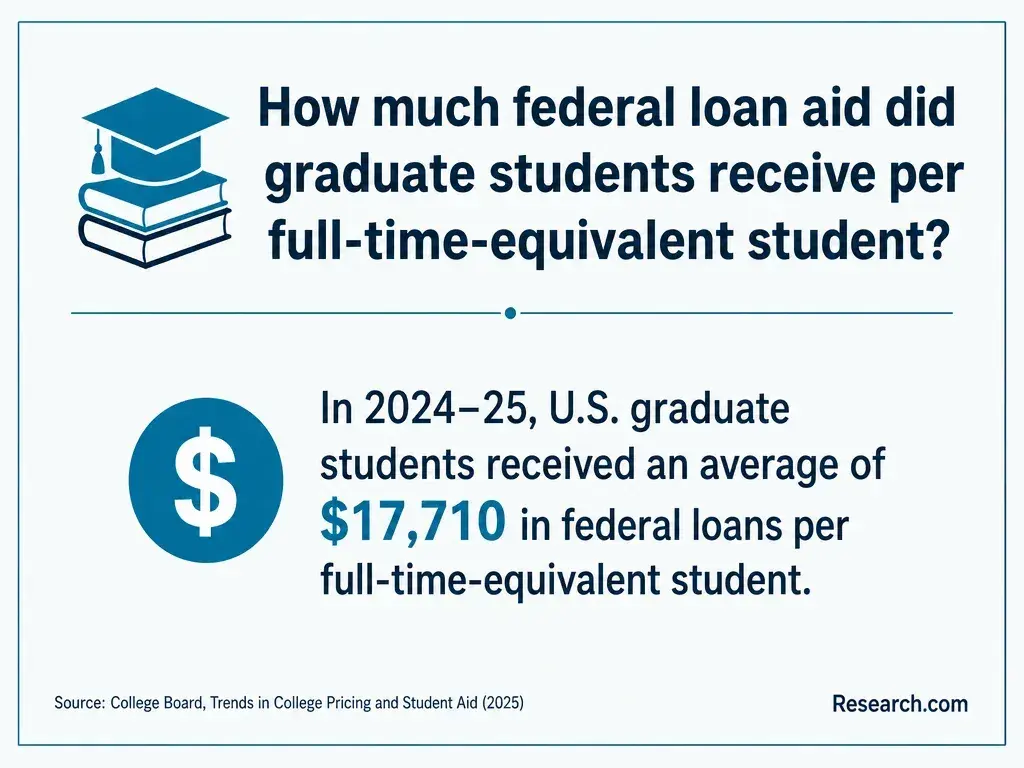
For cost, compare the same items at each school: remaining billable credits multiplied by its applicable tuition rate, plus mandatory fees, materials, and any travel or placement expense. Ask whether your enrollment pace affects financial-aid eligibility and whether transfer credits change satisfactory academic progress calculations. A lower per-credit rate can still cost more overall if the program applies fewer of your old credits.
Set a budget for the BA before pricing a possible next degree. Lower-tuition psychology master's options may inform long-term planning, but their prices should not be folded into the BA comparison unless graduate study is actually necessary for your goal.
Your business background may be an advantage in operations, reporting, scheduling, customer communication, or program administration. Paired with a psychology BA, it may support applications for nonclinical roles such as human-services assistant, behavioral-health program coordinator, intake or referral support worker, or research-support staff. Employers may also require relevant experience, training, background checks, or specific credentials.
Compare actual job descriptions with your skills before committing to another degree. For a substantial move into community mental-health services, supervised nonclinical experience can help demonstrate documentation, respectful communication, confidentiality, and referral skills. If your goal is licensed counseling or clinical assessment, this BA is a foundation rather than a qualifying endpoint.
Be equally careful with specialized career claims. Discussions of forensic psychology graduate career value and qualifications concern a different degree level and should not be read as jobs available simply because a BA includes mental-health electives.
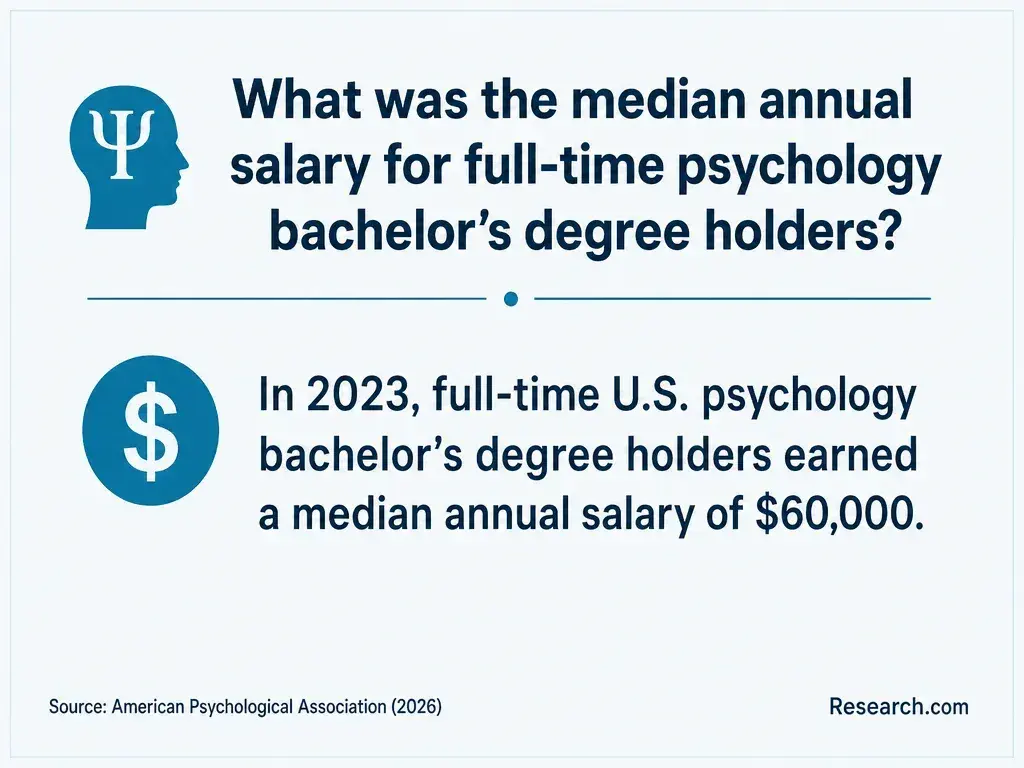
There is no single reliable salary for "a psychology BA graduate." Pay attaches to a specific occupation, employer, location, and level of responsibility - not to the degree title alone. Your earlier business experience may also affect which positions you can pursue, making a generic graduate-salary figure especially unhelpful.
For a realistic comparison, identify several local jobs you would seek, check their posted pay and qualifications, and compare that evidence with the remaining cost and time of each BA option. U.S. Bureau of Labor Statistics occupational wage data can provide broader context, but an occupation-wide median includes workers with different degrees and experience; it is not an offer or a program outcome.
If the target job requires a qualifying graduate credential, compare that additional investment separately. Financial planning for accredited counseling degrees addresses a different cost decision from finishing an undergraduate psychology major.
Does a Psychology Bachelor's Degree Qualify You for Licensure or Certification?
A psychology BA with a mental-health focus does not, by itself, qualify you to practice independently as a psychologist, diagnose mental disorders, or provide psychotherapy. Those activities require the applicable professional education and state authorization. Some support or recovery roles have separate state or employer certification rules, so check the requirements for the exact job and jurisdiction.
If your aim is to become a licensed mental-health counselor, compare the BA's remaining cost with the requirements of qualifying graduate programs and your state board. Shorter routes through mental health counseling graduate study still need scrutiny for required coursework, supervised training, and state eligibility; speed alone is not evidence of licensure fit.
Before enrolling, choose the least wasteful path for your actual goal: finish the psychology BA if it supplies a needed bachelor's credential or preparation; consider finishing the business degree first if it is substantially closer to completion and meets your intended graduate program's degree requirement; or pursue targeted training if the role you want does not require another bachelor's degree.
Other Things You Should Know About Psychology
Possibly. Ask whether the school offers a business minor, how many of its requirements your courses meet, and whether the same credits may also count toward the psychology BA under its overlap rules.
Find out which state agency, successor institution, or records custodian holds its transcripts. Your new school will explain what documentation it accepts for transfer evaluation.
Diploma and transcript wording varies by institution. Ask the registrar for the exact wording rather than assuming the online and campus records look identical.
Compare written degree audits for both routes. Finishing business first may make sense if few requirements remain and your next goal accepts any bachelor's degree; switching may make sense if you specifically need psychology coursework and it does not add excessive time or cost.
- Transfer Students | New York State Education Department https://www.nysed.gov/standards-instruction/transfer-students
- Cost of Attendance (Budget) | 2025-2026 Federal Student Aid Handbook https://fsapartners.ed.gov/knowledge-center/fsa-handbook/2025-2026/vol3/ch2-cost-attendance-budget
- Requirements Related to the Practice of Counseling - NCBI https://www.ncbi.nlm.nih.gov/books/NBK259170/
- Basic costs include tuition, food and housing. - The Ohio State University https://undergrad.osu.edu/cost-and-aid/basic-costs
- Transfer Credit Evaluation | Office of Admissions https://admissions.tc.umn.edu/admissions/transfer-admission/transfer-credit-evaluation
- Bachelor of Arts in Psychology - Online Program | CSULB CPaCE https://www.cpace.csulb.edu/courses/bachelor-of-arts-in-psychology
- 4.1.18 Credit Earned through Transfer, Examination, and Prior Learning | Illinois State https://policy.illinoisstate.edu/academic/4-1-18/
- Psychology Program FAQs | University of La Verne https://health.laverne.edu/psychology/faq/
- General Requirements - Bachelor's Degree | Cal Poly Academic Catalog https://catalog.calpoly.edu/academic-standards-policies/general-requirements-bachelors-degree/
- How Do Transfer Credits Work When You Go Back to School? | Whitworth Online https://online.whitworth.edu/news-articles/how-do-transfer-credits-work-when-you-go-back-to-school/