2027 Paying for an Online BA in Psychology - Addictions: A Tuition Benefit with an Annual Dollar Cap

Co-Founder and Chief Data Scientist
An employer tuition benefit can make an online psychology degree affordable - but an annual cap can also change how many courses you can take and when you should take them. This guide is for working adults considering a BA in psychology with an addictions focus. It explains how to calculate your likely out-of-pocket cost, coordinate the benefit with financial aid, and check whether the degree advances your career goal. The most useful decision may be to pace the BA around the cap, choose a less expensive program, or pursue a more direct addiction-services credential.
Key Things You Should Know
- An employer's annual tuition cap is not a cap on the degree's price: compare the benefit with tuition, required fees, and the number of credits you can complete in each benefit year.
- Under federal educational-assistance rules, up to $5,250 of qualifying employer benefits can generally be excluded from an employee's income annually; your employer may set a different payment limit and eligibility rules.
- A psychology BA with an addictions focus teaches relevant subject matter but does not, by itself, qualify you to provide addiction counseling; check your state's credential rules before paying for the degree.
What Is an Online BA in Psychology With an Addictions Focus?
It is a bachelor of arts degree in psychology that combines broad study of behavior and psychological science with coursework on substance use, prevention, and recovery. "Addictions focus" may mean an official concentration, a set of electives, or simply the school's description of its curriculum. Ask which designation will appear on your transcript.
This route can suit someone seeking a broad bachelor's degree for community-service or research-support work while exploring addiction-related interests. It is less direct if your sole goal is a state addiction-counselor credential. Compare the actual required courses - not just program titles - when reviewing addiction-focused undergraduate psychology degrees.
How Much Does an Online Psychology Degree Cost With an Annual Tuition Cap?
There is no single price implied by an annual tuition cap: the cap usually limits what a benefit pays, not what the school charges. Obtain a written degree audit and the school's current charge schedule, then estimate costs for each employer benefit year. The table separates amounts that are easy to mistakenly combine.
| Cost or funding item | What to verify | Why it changes your estimate |
| Tuition | Charge per credit or term; remaining credits after evaluation | Determines the main cost and how many courses fit under the cap |
| Required fees and materials | Technology, course, textbook, and other required charges | Some employer plans cover tuition but exclude these costs |
| Employer benefit | Annual limit, eligible expenses, and benefit-year dates | Unused funds may expire; excess charges remain your responsibility |
| Other aid and time costs | Grants, loan eligibility, travel, unpaid fieldwork, and reduced work hours | These affect what you actually pay or forgo |
For each benefit year, subtract the approved employer payment and any applicable grants from that year's eligible school charges, then add expenses neither source covers. Do not subtract the employer's full advertised cap if your course load, employment status, or the plan's rules prevent you from using it. Compare the resulting multi-year cost - not just one term's tuition - against cost-focused comparisons of psychology degrees.
Can Employer Tuition Benefits Pay for an Online Psychology Degree?
Yes, if your employer's written policy includes the school, degree, and expenses you plan to claim. Some plans pay the school directly; others reimburse you after a course ends and you submit a qualifying grade. Reimbursement can create a cash-flow problem even when the eventual benefit covers tuition.
Ask human resources whether approval is required before enrollment, how the annual cap resets, whether the program must relate to your job, and whether part-time employees qualify. Also confirm grade thresholds, fees covered, coordination with grants, and any repayment agreement if you leave the employer. The federal $5,250 income exclusion is a tax rule, not a promise that your employer will contribute that amount; ask a tax professional about your circumstances.
If your employer will fund either psychology or a more occupation-specific bachelor's, compare paying for a substance abuse counseling bachelor's degree before deciding which use of the benefit better serves your target job.
Accreditation must be checked for the institution offering the degree; it cannot be inferred from an addictions label or online format. Confirm the institution's current recognized accreditation and that the specific online BA is offered by that institution. The U.S. Department of Education's accreditation database and the accreditor's directory can help you check institutional status.
Do not look for APA accreditation as proof that a general psychology BA qualifies you for clinical practice: APA accreditation applies to specified professional psychology training programs, not ordinary psychology bachelor's degrees. Likewise, institutional accreditation does not establish eligibility for a state addiction-counselor credential. This distinction also matters when comparing other specialties, such as forensic psychology degree formats and academic requirements.
Expect to evaluate the balance between psychology foundations - such as development, social behavior, statistics, and research methods - and focused study of substance use, prevention, recovery systems, and ethical service delivery. Requirements vary: a course about addiction counseling techniques is not evidence that graduates may counsel independently.
If you need a particular state credential, compare the BA's syllabus and any supervised-experience opportunities with the education and training specified by that state. Distance learning degrees in addiction counseling may provide a more targeted curriculum, but their titles alone do not establish credential eligibility either.
Schools typically distinguish first-year admission from transfer admission and may ask for prior transcripts. The more consequential question for a returning student is how accepted credits apply to general education, psychology prerequisites, major requirements, and the school's own minimum-credit requirements. Accepted credit does not necessarily replace a required statistics or research-methods course.
Request an official evaluation and degree audit before committing your tuition benefit. If you are comparing distance learning psychology degree options, ask each school how many required credits remain and which of those courses are offered when you can attend.
A conventional bachelor's program commonly requires about 120 semester credits, but your remaining credits, course sequencing, and pace determine your actual timeline. Spreading courses across more employer benefit years may reduce out-of-pocket tuition while delaying graduation. Taking extra courses sooner may be worthwhile if an earlier degree improves a concrete job opportunity - but it can mean paying above the annual cap.
Map required courses onto the employer's benefit-year calendar and ask whether classes are asynchronous, whether group meetings or placements have fixed hours, and whether a break affects aid or reentry. When comparing a psychology BA with a targeted counseling route, include both duration and total expense; comparing undergraduate substance use counseling costs and outcomes can help frame that trade-off.
Depending on the employer and your experience, plausible nonclinical roles include recovery-program support, community outreach, intake coordination, case-support assistance, and research or program support. Work may involve scheduling, documentation, referrals, or evaluating services - not diagnosing substance use disorders or providing psychotherapy. Some positions require additional training, background checks, or a state-recognized credential.
If you already work in a community organization, ask whether the BA fills a stated promotion requirement or whether supervised experience and targeted training would do more. Avoid treating earnings associated with a different specialization or degree level - such as those discussed when comparing forensic psychology master's career earnings - as evidence of what this BA will pay.
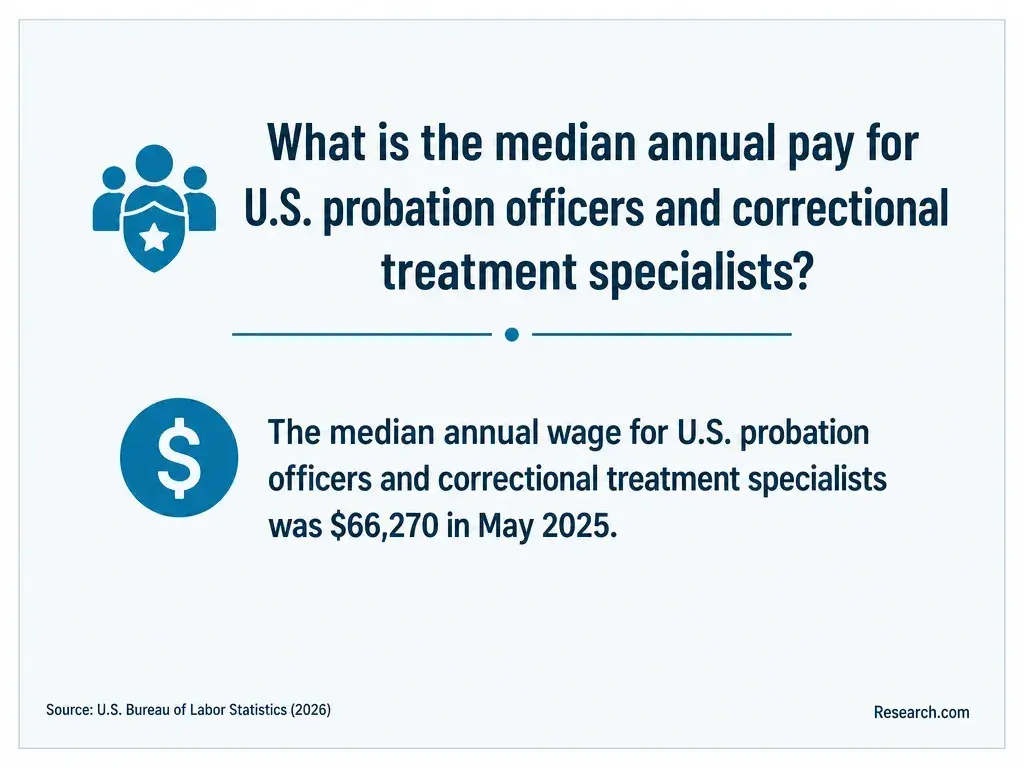
There is no reliable single salary or job-growth figure for graduates of this particular BA. U.S. Bureau of Labor Statistics figures describe occupations, not degree concentrations, and the occupational category covering substance abuse, behavioral disorder, and mental health counselors includes workers with different credentials and education levels. Its published median wage should not be presented as a new psychology BA graduate's expected pay.
For a useful comparison, find local postings for the specific role you could qualify for, note required credentials and experience, and compare offered pay with your remaining degree cost and time. If the goal is licensed counseling, account for subsequent training rather than treating the BA as the final expense. Comparisons of mental health counseling program costs are relevant only if that distinct professional pathway matches your goal.
What Certifications or Graduate Degrees Are Needed for Addiction Counseling?
Requirements depend on the state and the counseling role. A state addiction-counselor credential may specify particular coursework, supervised hours, an examination, and renewal obligations; other independently licensed counseling roles generally require a qualifying graduate degree and supervised practice. A psychology BA with addictions coursework should be treated as possible preparation, not automatic satisfaction of either pathway.
Before using several years of capped tuition benefits, identify the job title you want and check the responsible state board's education and supervision rules. Then ask the BA program for course descriptions you can compare with those rules. If graduate clinical counseling is the intended next step, budget separately for clinical counseling master's fees and graduation timelines; do not assume undergraduate employer coverage will continue into graduate study.
Other Things You Should Know About Psychology
Not unless your employer's policy explicitly says it does. Confirm the benefit-year end date before scheduling courses around unused funds.
Coverage depends on the employer's plan and applicable tax rules. Request a written list of eligible expenses rather than assuming every school-related purchase qualifies.
Some employers allow it; others restrict benefits by degree level or previous education. Get approval for the specific program before enrolling.
You generally cannot use the same education expense for both tax-free employer assistance and an education tax credit. Keep itemized school and employer records and seek tax advice for your situation.
- Behavioral Health Career Descriptions | samhsa.gov https://www.samhsa.gov/about/careers/behavioral-health-workforce/careers-by-state/descriptions
- Frequently asked questions about educational assistance programs | Internal Revenue Service https://www.irs.gov/newsroom/frequently-asked-questions-about-educational-assistance-programs
- Academic Years, Academic Calendars, Payment Periods, and Disbursements | 2025-2026 Federal Student Aid Handbook https://fsapartners.ed.gov/knowledge-center/fsa-handbook/2025-2026/vol3/ch1-academic-years-academic-calendars-payment-periods-and-disbursements
- Eligibility Requirements | Federal Student Aid https://studentaid.gov/understand-aid/eligibility/requirements
- Online Substance Abuse and Addictions Degree | ASU Online https://asuonline.asu.edu/online-degree-programs/undergraduate/counseling-psychological-sciences/
- Substance Abuse and Addictions Concentration, Counseling and Applied Psychological Science Degree, BS | ASU https://degrees.asu.edu/bachelors/major/ASU00/LSCAPSAABS/counseling-and-applied-psychological-science-substance-abuse-and-addictions
- Employer Tuition Reimbursement: How It Works and How to Pay for College | Winston-Salem State University https://ramsonline.wssu.edu/blog/employer-education-benefits/
- How to Use Your Employer's Tuition Benefit Before It Expires This Year | calmu.edu https://www.calmu.edu/how-to-use-your-employers-tuition-benefit-before-it-expires-this-year
- B.S. Human Services/Substance Abuse and Addiction | Columbia Southern University https://www.columbiasouthern.edu/online-degree/view-all-programs/bachelors/bs-human-services-substance-abuse-and-addiction
- and Ask For - Employer Tuition Reimbursement Benefits | Harvard Extension School https://extension.harvard.edu/blog/how-to-use-and-ask-for-employer-tuition-reimbursement-benefits/