2027 Online BA in Psychology - Addictions: How to Evaluate a Written Graduation Audit Before Enrollment
Audited and Verified:
Our Editorial and Data Verification Process
Research.com uses government datasets, official education statistics and primary institutional information to support its career and degree guides. Our review process checks factual accuracy, occupational definitions, source dates and the requirements associated with the credentials discussed.
How This Article Was Fact-Checked
Our editorial team verifies salary estimates, employment projections, education requirements and program information against original data providers and official organizations. Salary figures are checked against the relevant occupational definitions and reporting periods. Information about licensure, accreditation and required in-person training is reviewed separately.
Fact-checked and verified on:

Co-Founder and Chief Data Scientist
An online BA in psychology with an addictions focus may look like a manageable way to finish college, especially if you have prior credits or work in community services. But an admission offer and an estimated transfer total do not show which requirements you still must complete.
A written graduation audit can reveal missing courses, scheduling conflicts, and costs before you commit. This guide explains what the audit should document, who can approve changes, and how to use it to decide whether the program fits your timeline and career goal.
Key Things You Should Know
- Request an audit for your intended entry term that shows where each accepted credit applies, not just a total of transferable credits, and identifies every remaining graduation requirement.
- Check course availability, prerequisites, residency rules, and any placement separately; an online course schedule does not establish when you can graduate. Confirm addiction-counselor eligibility with the relevant state authority.
- For context, the federal occupation-wide median wage for substance abuse, behavioral disorder, and mental health counselors was $59,190 in May 2024, not a salary forecast for BA graduates.
What Is an Online Psychology Bachelor's Degree in Addictions?
It is generally a psychology bachelor's degree that includes coursework on substance use, addiction, prevention, or recovery. The school may call the focus a concentration, emphasis, track, or set of electives. Those labels are not interchangeable: ask whether "Addictions" appears on the transcript and whether its courses are required for the degree you would receive.
For a returning student, the distinction matters because changing from a general psychology major to a formal concentration can add requirements even when both use the same degree title. The audit should identify the exact BA, catalog, and concentration - not merely say "psychology." If your interest is actually in a different specialty, compare the stated curriculum and remaining-credit requirements rather than assuming timelines advertised for online forensic psychology bachelor's programs in three years or less apply to an addictions plan.
How Can a Written Graduation Audit Verify an Online Psychology Degree Plan?
A graduation audit, sometimes called a degree evaluation, matches your record against the requirements of a specified degree and catalog. Its value is the requirement-by-requirement accounting: accepted transfer credits can count as electives while leaving a statistics course, psychology prerequisite, or residency requirement unmet.
Audit labels vary by school, but these are the entries that most often change a transfer student's completion estimate.
| Audit entry | What it records | Discrepancy to investigate |
| General education | Requirements satisfied through prior or planned study | An accepted course appears only as a free elective |
| Major and addictions requirements | Required psychology courses, concentration courses, and prerequisites | A similar course has not received an approved equivalency |
| Upper-level and residency credits | Advanced coursework and credits that must be earned at the institution | Enough total credits are projected, but too few meet these rules |
| Remaining courses | Requirements still open under the selected catalog | A course is unavailable when the proposed schedule needs it |
Before paying an enrollment deposit, follow a documentation sequence. It turns an optimistic estimate into a plan you can check against the catalog and course schedule.
- Submit official transcripts from every prior institution, plus syllabi for disputed psychology, statistics, or research-methods courses; include documentation for military, competency-based, or other nontraditional learning when applicable.
- Ask the transfer-credit office which credits are accepted, then ask the academic department or authorized evaluator which specific major requirements they satisfy.
- Request a dated audit for the intended entry term showing the catalog year, exact degree and concentration, completed requirements, remaining courses, upper-level and residency rules, and any pending decisions.
- Have an adviser map remaining courses by term, checking prerequisites, actual offerings, enrollment limits, and any required in-person activity; obtain written approval for substitutions or appeals.
- Confirm with the registrar or designated graduation authority whether the document is an official evaluation or a preliminary planning estimate, and retain revised copies after any change.
An audit can still change if final transcripts differ, you change catalogs, or planned courses are not passed. Resolve those conditions before relying on a quoted completion date. This is especially important if you intend to begin graduate study immediately afterward: advertised shorter online psychology master's timelines cannot compensate for an unverified bachelor's graduation date.
Is an Online Addictions Psychology Program Properly Accredited?
Check the degree-granting institution's institutional accreditation with its recognized accreditor and the U.S. Department of Education's accreditation records. Confirm that the accredited institution - not an unaffiliated marketing partner - will award the BA, and ask whether online students enroll under the same catalog and degree requirements shown in the audit.
Do not expect APA accreditation for a general undergraduate psychology BA; APA accreditation applies to specified professional psychology programs and training, not every psychology degree. Nor does institutional accreditation establish that addictions coursework meets a state's counselor requirements. Professional recognition must be relevant to the particular credential you want. For example, a student considering a later counseling degree should investigate accredited counseling study with accelerated schedules separately from the BA's accreditation.
Look for psychology foundations, statistics, research methods, and coursework that critically examines substance use and recovery. Developmental, biological, social, and abnormal psychology can help students interpret addiction research and understand varied service contexts. Ethics, cultural responsiveness, and the limits of screening or assessment are particularly relevant to support work.
The audit should distinguish required courses from available electives and show prerequisites and transfer equivalencies. A course titled "Addiction Counseling" may teach concepts without qualifying students to counsel clients. If graduate study is a possibility, compare the planned statistics and methods courses with the specific program's admission requirements; an affordable online psychology master's program is not necessarily a suitable next step if its prerequisites or professional purpose differ from yours.
Some programs require an internship, capstone, or applied course; others do not. The written audit should mark any such requirement and its prerequisites, while the program's current placement policy should establish approved sites, hours, supervision, deadlines, and whether attendance must be in person. Ask who finds the site and whether your existing job can qualify before building a completion schedule around it.
For someone working in a community organization, an approved placement might involve outreach, referrals, documentation, or program support. Existing employment or volunteering does not automatically satisfy academic supervision rules, and access to client information requires the organization's authorization and privacy safeguards. An undergraduate experience is not a license-supervised clinical practicum. Students planning to train as therapists later should evaluate the separate placement commitments behind online mental health counseling master's timelines, rather than treating the BA placement as equivalent.
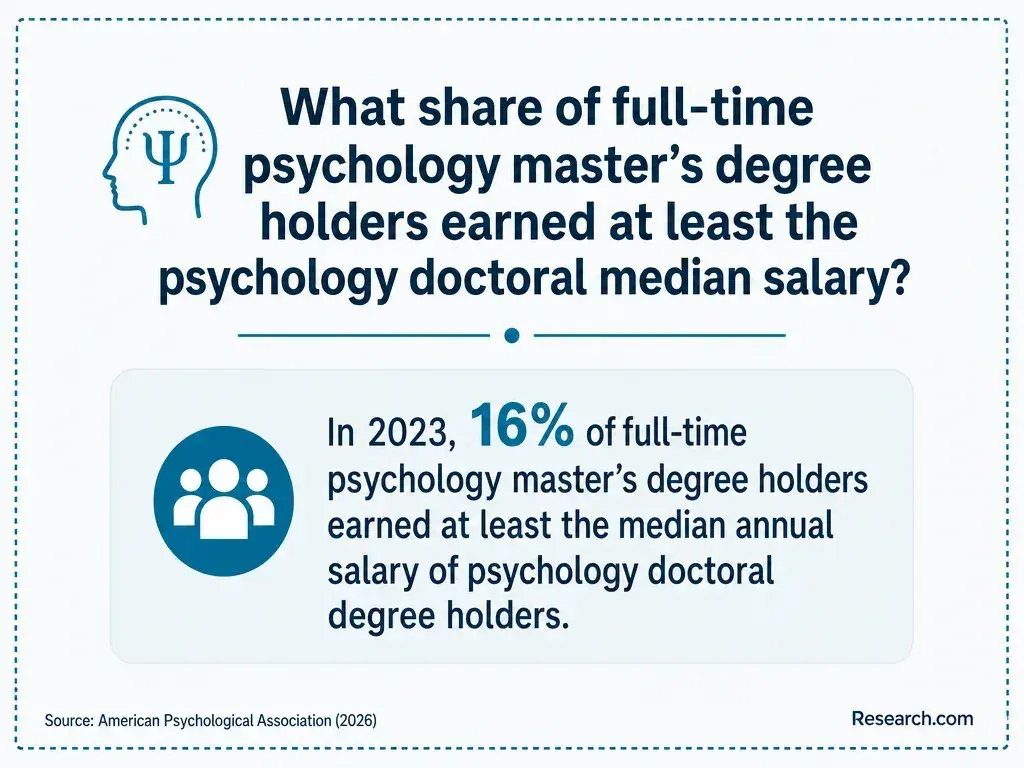
Schools set their own first-year and transfer admission rules, including transcript, prior-credit, and academic-standing requirements. Admission to the university may precede admission to the psychology major or approval of the addictions concentration. Ask when each decision becomes final and whether a minimum grade is required for a transferred statistics or psychology course to satisfy the major.
If you already hold an associate degree or have coursework in health, education, criminal justice, or another field, do not assume either that those credits will be lost or that they will fill psychology requirements. The institution must evaluate them. A student weighing direct graduate routes, including one-year online forensic psychology master's options, should first establish whether they already hold the bachelor's degree those programs require; a transfer evaluation for a new BA answers a different question.
Your remaining requirements - not the program's advertised pace - determine the likely timeline. A student may have enough accepted credits in total but still need sequential psychology courses, upper-level work, or institution-residency credits. Ask for a term-by-term plan based on courses the school actually expects to offer, and check whether part-time enrollment changes access to required courses or financial aid.
For cost, multiply the remaining billable credits under the approved plan by the applicable tuition rate, then account for required fees, materials, and any placement-related travel. Compare the resulting estimate with available grants, scholarships, employer assistance, and borrowing - not with tuition alone. If aid is central to affordability, review reducing undergraduate substance abuse counseling tuition through aid while confirming your own school's eligibility rules and award terms. Request a revised cost estimate whenever the audit changes.
Depending on employer and state requirements, the BA may support applications for nonclinical roles in recovery organizations, prevention programs, community outreach, intake, referrals, or service coordination. Relevant prior work and supervised experience can matter as much as the concentration label. Compare job postings with your audited courses and practical experience to identify gaps in documentation, data handling, communication, or client-service skills.
Do not read "counselor," "therapist," or "psychologist" in a job title as proof that the BA qualifies you for it. Check the actual duties and required credential. If your goal is research or justice-system work rather than addiction services, comparing jobs associated with forensic psychology graduate education may clarify that separate pathway; it should not drive your BA choice unless those roles match your goal.
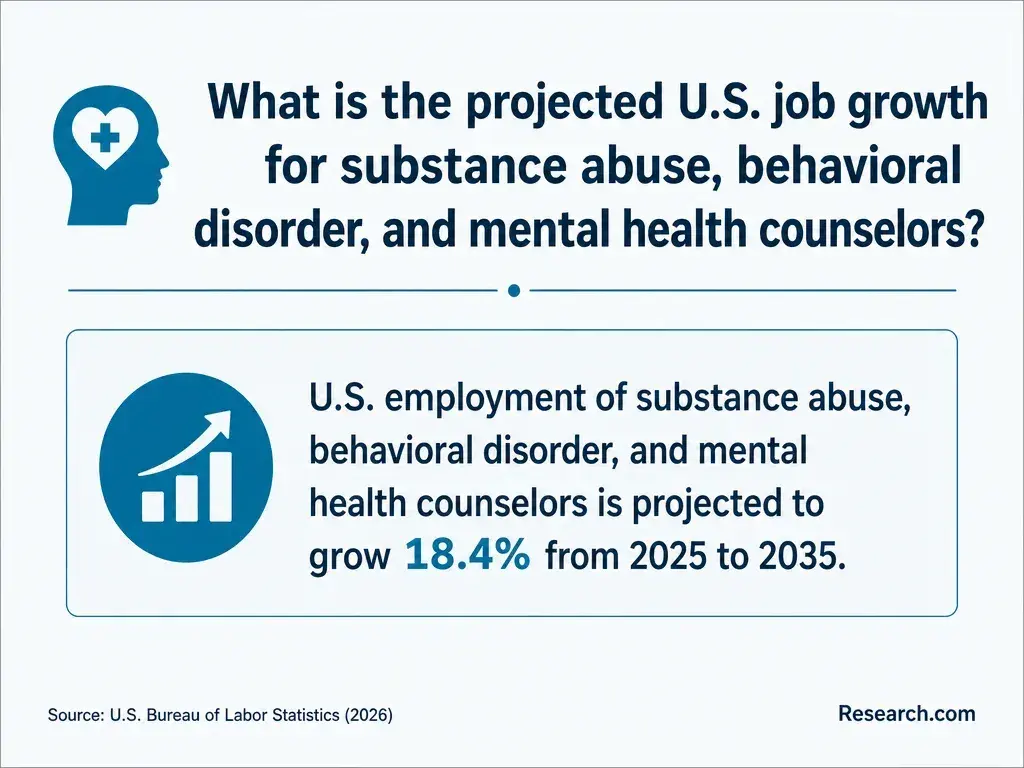
The U.S. Bureau of Labor Statistics reported a $59,190 median annual wage in May 2024 for the combined occupation of substance abuse, behavioral disorder, and mental health counselors. That figure covers workers with different qualifications and duties; it is not the expected pay for an entry-level worker with this BA. BLS projects employment growth for the combined occupation, but the projection likewise does not establish demand for graduates of a particular program.
For a useful financial comparison, identify local vacancies you could qualify for without a counselor license and compare their pay and requirements with the remaining cost shown by your audit. Consider whether the degree advances you in an existing organization or whether targeted training would meet the same goal at lower cost. Broader advice on comparing the financial value of addiction counseling bachelor's study is most useful after you know your own remaining credits and realistic target roles.
Does This Degree Meet Addiction Counselor Certification or Licensing Requirements?
Not automatically. Addiction-counselor credentials vary by state and credential level. Requirements may address specified coursework, approved education, supervised experience, examinations, and permitted duties. A psychology BA with an addictions concentration might satisfy some educational components in one jurisdiction and not another. The school's graduation audit establishes progress toward its degree; it is not a licensing-board eligibility determination.
Before enrollment, obtain the current requirements from the state licensing board or designated certifying authority for your intended job and location. Ask the school for course descriptions and written information about any credential alignment it claims, then compare those documents with the regulator's rules. If your goal is licensed therapy, investigate a qualifying professional degree instead of assuming that an accelerated nonclinical option - such as evaluating faster-paced forensic psychology master's degrees, would meet clinical licensing standards. Enroll when both the degree-completion plan and the separate credential pathway fit your goal.
Other Things You Should Know About Psychology
Ask the school. Some institutions provide preliminary evaluations before enrollment but reserve official decisions until they receive final transcripts. Request the most detailed written evaluation available and identify what remains provisional.
Submit the syllabus and transcript through the school's equivalency or appeal process. Ask for the decision in writing and for an updated audit if a substitution is approved.
It may leave the requirement accounting intact while changing your course sequence, aid eligibility, or completion date. Ask an adviser to revise the term plan before you change pace.
Yes. Save the dated audit, catalog, approved substitutions, and subsequent revisions so you can identify discrepancies early and document decisions if advisers or policies change.
- Certified Addiction Counselor (CAC) clinical training program | colorado.gov https://bha.colorado.gov/for-service-providers/learning-and-development/certified-addiction-counselor-cac-clinical-training
- Treatment and Recovery | National Institute on Drug Abuse - NIH https://nida.nih.gov/publications/drugs-brains-behavior-science-addiction/treatment-recovery
- School-Determined Requirements | 2024-2025 Federal Student Aid Handbook https://fsapartners.ed.gov/knowledge-center/fsa-handbook/2024-2025/vol1/ch1-school-determined-requirements
- Career and College Promise (CCP) Program | NC DPI https://www.dpi.nc.gov/students-families/enhanced-opportunities/advanced-learning-and-gifted-education/career-and-college-promise
- Psychology, BA - General Catalog - The University of Iowa https://catalog.registrar.uiowa.edu/liberal-arts-sciences/psychological-brain-sciences/psychology-ba/
- Psychology, BA | Syracuse University Academic Catalog https://coursecatalog.syracuse.edu/undergraduate/arts-sciences/psychology-ba/
- NC State Transfer Planner - Transfer Student Resources https://transfer.ncsu.edu/resources/nc-state-transfer-planner/
- Major Requirements - Psychology - UC Berkeley https://psychology.berkeley.edu/undergraduate/major-requirements
- Program Completion vs Graduation | csueastbay.edu https://www.csueastbay.edu/cie/f-1-students/maintaining-status/program-completion.html
- Understanding Transfer Credit Guidelines and Limitations | American Public University https://www.apu.apus.edu/transfer-credit/graduate/transfer-credit-guidelines/