2027 Online BA in Psychology - Mental Health: Understanding the Difference Between a Track and a Transcripted Concentration
Audited and Verified:
Our Editorial and Data Verification Process
Research.com uses government datasets, official education statistics and primary institutional information to support its career and degree guides. Our review process checks factual accuracy, occupational definitions, source dates and the requirements associated with the credentials discussed.
How This Article Was Fact-Checked
Our editorial team verifies salary estimates, employment projections, education requirements and program information against original data providers and official organizations. Salary figures are checked against the relevant occupational definitions and reporting periods. Information about licensure, accreditation and required in-person training is reviewed separately.
Fact-checked and verified on:

Co-Founder and Chief Data Scientist
A mental health track and a transcripted concentration can cover similar classes but leave different evidence on your academic record. That distinction matters when you apply for jobs, transfer schools, or seek graduate admission. If you are considering an online BA in psychology, this guide explains what each label may mean, how to confirm what your transcript will show, and whether the coursework fits your goal. You will also learn which questions to settle before paying for a specialization that may not provide the credential or career preparation you expect.
Key Things You Should Know
- A mental health track may be a recommended set of courses; a transcripted concentration is an officially recorded academic designation. Schools define these terms differently, so verify the policy for your entry term.
- Ask the registrar for the exact transcript notation and a degree audit showing which courses satisfy it. A catalog description or advising plan alone does not establish that the designation will appear.
- Neither designation qualifies a psychology BA graduate to diagnose conditions or provide psychotherapy. Compare courses, supervised opportunities, cost, and next-degree requirements—not just the label.
What Is the Difference Between a Psychology Track and Transcripted Concentration?
A track is often a suggested route through a psychology major, such as selecting electives on mental health and service systems. A transcripted concentration is a formally approved specialization that the institution records on the academic transcript when its requirements are met. These are useful working definitions, not universal rules: a school may use "track," "concentration," or "emphasis" differently.
The comparison below separates the label from the evidence an employer or graduate admissions office could actually review:
| Feature | Mental health track | Transcripted concentration |
| Typical structure | Advised course pathway; requirements depend on the school | Published, approved requirements within the degree |
| Transcript evidence | Courses and grades may appear without a track label | Concentration designation appears if the student qualifies and the school records it |
| What it demonstrates | Relevant coursework that can be explained through a course list | Relevant coursework plus completion of an officially recorded specialization |
| Professional authority | None by itself | None by itself |
A concentration is most useful when an application asks for documented specialization. A track may be just as useful for learning if it offers stronger research methods, an approved nonclinical placement, or electives that match your target role. Other psychology specializations also require scrutiny: a comparison of online forensic psychology tuition admissions and outcomes should not treat a specialization label as proof of particular career authority.
Does a Mental Health Concentration Appear on Your Psychology Transcript?
Only if the institution's policy says it does and you complete the applicable requirements. The transcript might name the concentration alongside the major, use a separate notation, or list only the BA in psychology and individual courses. A diploma may use different wording from the transcript.
Before enrolling, request the current catalog requirements and ask the registrar or degree-audit office for an example of the exact notation issued to qualifying graduates. Ask an academic advisor when you must declare the concentration, whether transferred electives count, and whether required courses are offered online often enough for your planned graduation term. Get any course substitution approved in writing; acceptance as transfer credit does not necessarily mean it satisfies the concentration.
Apply the same check to adjacent specialties. If you are comparing a bachelor's study in addiction psychology online, confirm whether "addiction" names the degree, a recorded concentration, or simply a group of electives.
Is an Online BA in Psychology Enough for a Mental Health Career?
It can prepare you for some nonclinical support and service roles, but its value depends on the job's duties, your experience, and local hiring rules. A community agency may value knowledge of psychological science, careful documentation, cultural responsiveness, and appropriate referrals. It may also require relevant work experience, a background check, employer training, or a separate credential.
Start with the work you want to do. For outreach or service coordination, compare the BA's applied opportunities with human services training and supervised experience. For research support, statistics, methods, and work with a research team may matter more than a concentration label. For therapy, plan around a qualifying professional education pathway rather than assuming the BA is sufficient.
An additional psychology degree is not automatically the next step. Compare the cost and purpose of graduate psychology tuition and program value with the requirements of the specific job or professional program you intend to pursue. A nonclinical psychology master's may deepen research or applied knowledge without meeting counseling licensure requirements.
A psychology BA generally combines broad disciplinary study with research methods and statistics. A mental health focus may add coursework on psychopathology, development, health psychology, substance use, community services, or the social context of care. Course titles and required credits vary; "counseling" or "assessment" in a course title does not authorize a student to practice either.
Read the degree plan in two layers. First, check whether the core builds the statistics, research, writing, and ethics skills expected of psychology graduates. Then check which mental health courses are required, which are optional, and whether a placement or capstone has faculty approval and defined nonclinical duties. This distinguishes a coherent specialization from a short elective menu.
If substance-use services are your particular interest, compare psychology coursework with an undergraduate substance use counseling study on a budget. The less expensive or more specialized option is only a better fit if its actual courses and any applicable credential requirements match your goal.
Delivery format alone does not determine academic rigor or flexibility. Online courses may be asynchronous, require live meetings, or combine both; campus courses may offer easier access to local research teams and agencies. Either format can include group work, scheduled exams, or an approved placement that must be completed at a physical site.
For a working student or parent, compare the weekly commitments, not just the advertised modality. Ask when required mental health electives run, whether research meetings are live, and who identifies and approves local placements. If your longer-term plan is counseling, investigate its separate training obligations as well: short counseling master's formats and career planning involve different fieldwork and scheduling decisions from an online psychology BA.
Check that the institution holds accreditation from an agency recognized by the U.S. Department of Education or the Council for Higher Education Accreditation, and confirm that the approval applies to the school awarding the degree. Institutional accreditation is relevant to academic quality review and may affect federal aid and credit evaluation. It does not prove that a mental health concentration is transcripted or that graduates qualify for licensure.
Do not expect APA accreditation for a general psychology BA: APA's professional accreditation does not cover such undergraduate majors. If your ultimate goal is counseling, evaluate the prospective graduate program and your state board's rules separately; accredited clinical counseling timelines for working students concern a different degree level and professional pathway. Verify the school's accreditation status and transcript policy directly rather than treating either as a substitute for the other.
Requirements depend on whether you are applying as a first-year or transfer student. Schools commonly request prior academic records and may have separate rules for admission to the institution, declaration of the psychology major, and entry into a concentration. A student can be admitted to the BA without yet meeting every specialization requirement.
If you have prior college credit, request an official evaluation that identifies which courses satisfy general education, psychology core, statistics or methods prerequisites, and mental health requirements. Ask about residency rules and the sequence of remaining courses before accepting a projected finish date. For financing, complete the school's aid process on its deadlines; guidance on FAFSA for online substance use counseling undergraduates covers related undergraduate aid questions, but eligibility and the actual award must be confirmed for your school and enrollment.
Completion time depends on the credits you still need, course availability, enrollment pace, and whether the concentration adds requirements beyond the major. An online schedule does not remove prerequisite sequences or guarantee that every elective is offered each term. Transfer students should base their timeline on an approved degree audit, not the number of credits a school initially accepts.
Compare a school's published per-credit or per-term charges with required fees, materials, technology, and any travel or unpaid placement costs. Then price the remaining courses in your own degree plan. No single tuition figure accurately represents every student's total cost, and aid can change the amount paid without changing the academic requirements.
If the BA is preparation for licensed counseling, include the later qualifying degree in your financial decision. Reviewing mental health counseling education costs after aid can help frame that separate expense; it should not be mistaken for the price of the psychology BA itself.
Possible nonclinical targets include behavioral health program assistant, intake or referral coordinator, community outreach worker, victim services assistant, and research assistant. Actual eligibility depends on the posting. Duties may include explaining available services, scheduling, documentation, data collection, or connecting people with qualified professionals—not independent diagnosis or treatment.
Match your evidence to the role: methods coursework and a supervised project for research support; accurate records, confidentiality training, and service experience for coordination; or relevant community work for outreach. Some recovery-support positions require a state-recognized credential or lived-experience qualification. Use recovery support career planning to investigate that pathway, then verify the requirements for the specific employer and state.
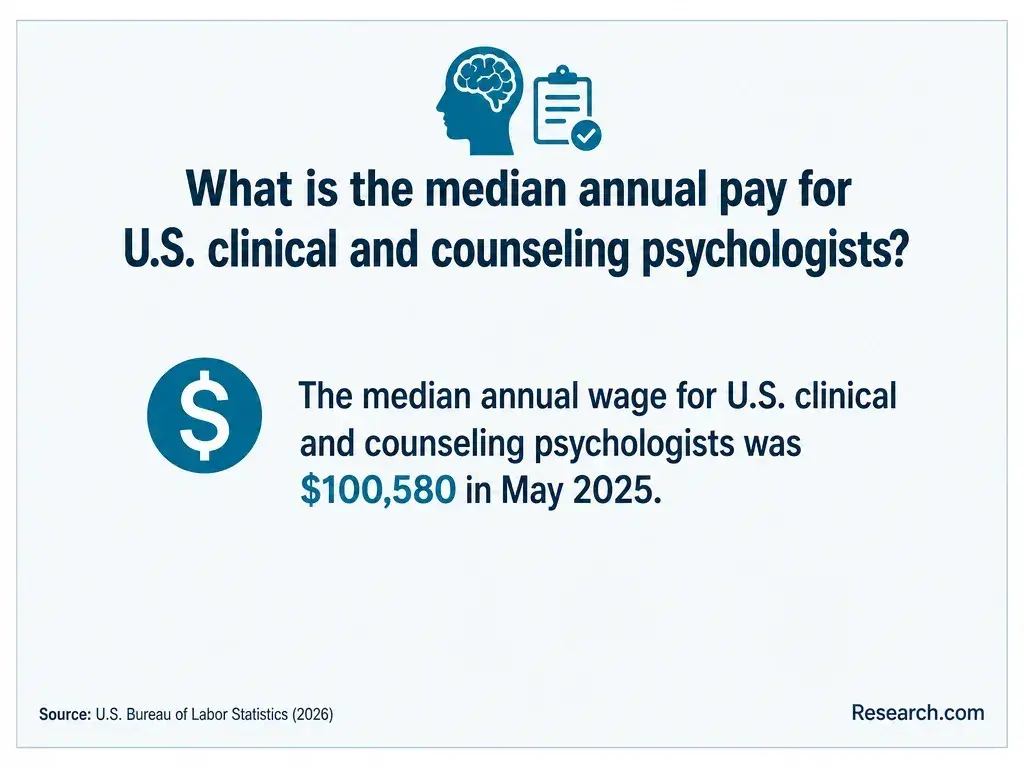
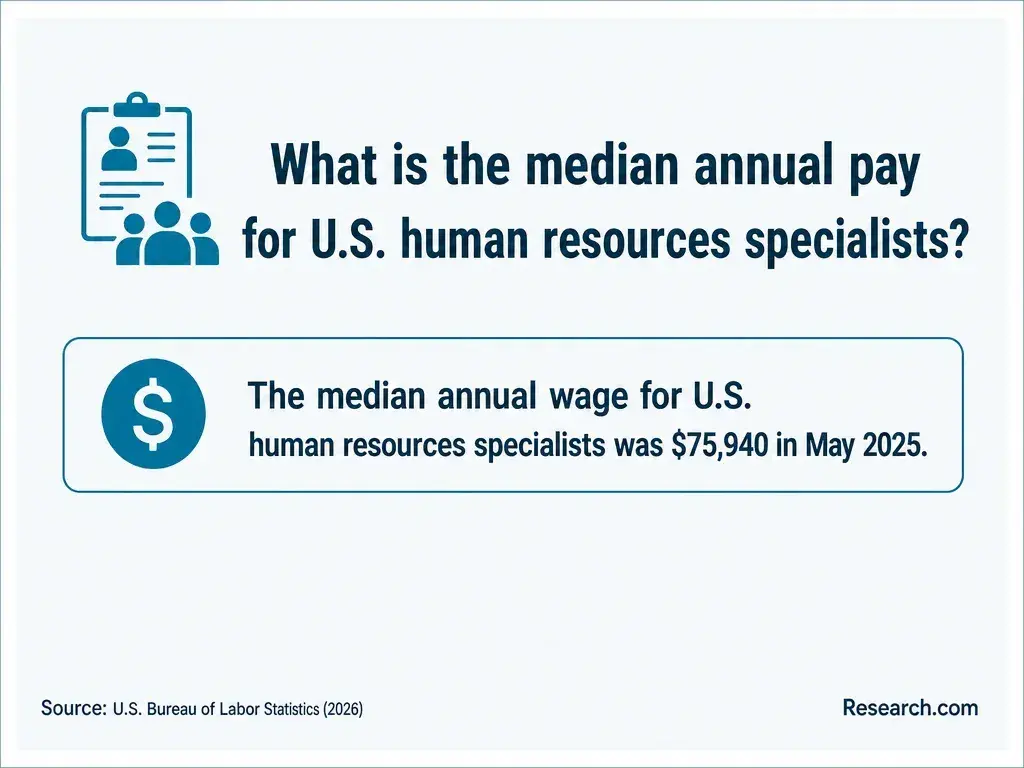
Do not treat an occupation-wide wage figure as the expected pay for graduates of a particular concentration. Local job postings, required credentials, and your prior experience provide a more useful comparison when deciding whether the specialization is worth its cost.
Does a Psychology BA Qualify You for Counseling or Psychology Licensure?
No. A BA in psychology, whether it includes a track or a transcripted mental health concentration, does not by itself qualify someone for independent counseling or psychologist licensure. Those professions have distinct graduate education, supervised experience, examination, and jurisdiction-specific requirements. Addiction counseling and other regulated roles may follow different state rules.
If counseling is your goal, identify the state where you expect to practice and check its licensing board's educational criteria before choosing a graduate program. A clinical mental health counseling master's pacing guide can inform scheduling questions, but a shorter advertised timeline does not replace verification of accreditation where relevant, required fieldwork, and state eligibility. If becoming a psychologist is the goal, investigate the applicable doctoral and supervised-practice route instead. The BA's best contribution is academic preparation, not clinical authority.
Other Things You Should Know About Psychology
Possibly. Ask an advisor about declaration deadlines, required course sequences, and whether the change would delay graduation. Request an updated degree audit before switching.
Some schools permit overlapping requirements; others limit them. The catalog and your approved degree audit determine whether a particular course can satisfy both.
Use the school's official terminology and list relevant courses or projects. Do not describe an unrecorded track as a transcripted concentration or a professional certification.
Not universally. Review each program's prerequisites and application instructions. Admissions reviewers may consider specific courses, grades, methods preparation, and experience even when no concentration label appears.
- Professional Counselor Licensure Requirements (LCPC) | Maryland.gov Enterprise Agency Template https://health.maryland.gov/bopc/pages/profcounselor.aspx
- Professional Counselors - Applying for a license FAQ's | Texas Behavioral Health Executive Council https://bhec.texas.gov/texas-state-board-of-examiners-of-professional-counselors/faqs-lpc/professional-counselors-applying-for-a-license/
- Clinical Counseling Psychology - Licensed Mental Health Counselor | Assumption University https://www.assumption.edu/graduate/clinical-counseling-psychology
- Declaring a Major or Minor - Undergraduate Advising https://advising.ucsc.edu/plan-your-academics/declaring-a-major-or-minor/
- Mental Health Counseling Concentration, M.A. | Westfield State University https://www.westfield.ma.edu/academics/degrees/mental-health-counseling-masters-degree-ma
- Curriculum for the MA in Clinical Mental Health Counseling (Online) | Online Counselor Education Department | TCNJ https://onlinecounselored.tcnj.edu/academics/
- Declaring or changing a major or curriculum | Illinois https://las.illinois.edu/academics/programs/declaring
- Degree Audit FAQ | regiscollege.edu https://www.regiscollege.edu/academics/registrar-and-academic-records/degree-audit-faq
- Request a Transcript | franklincummings.edu https://franklincummings.edu/academics/registrar/request-a-transcript/
- Program: Clinical Mental Health Counseling, M.S. | merrimack.edu https://catalog.merrimack.edu/preview_program.php