2027 Online BA in Psychology - Mental Health for Recruiting Coordinators: Choosing a Program Without Leaving Your Job
Audited and Verified:
Our Editorial and Data Verification Process
Research.com uses government datasets, official education statistics and primary institutional information to support its career and degree guides. Our review process checks factual accuracy, occupational definitions, source dates and the requirements associated with the credentials discussed.
How This Article Was Fact-Checked
Our editorial team verifies salary estimates, employment projections, education requirements and program information against original data providers and official organizations. Salary figures are checked against the relevant occupational definitions and reporting periods. Information about licensure, accreditation and required in-person training is reviewed separately.
Fact-checked and verified on:

Co-Founder and Chief Data Scientist
A recruiting coordinator at a mental health organization already understands hiring workflows, but may want a stronger foundation in psychology without leaving work. An online BA can build that foundation and support some nonclinical career moves; it is not necessarily the quickest route to advancement or clinical practice.
This guide shows how to test a program's schedule against a working week, compare its remaining cost and coursework, and decide whether the degree - or a narrower training option - fits your next role.
Key Things You Should Know
- An online psychology BA can complement mental health recruiting experience, but a bachelor's degree alone does not qualify you to diagnose or provide therapy.
- A bachelor's program commonly requires about 120 semester credits in total; your remaining time and cost depend on how accepted credits apply to the degree.
- Before enrolling, confirm live-session and placement obligations, obtain a degree audit, and compare the remaining cost with the qualifications for jobs you actually want.
What Is an Online BA in Psychology for Mental Health Recruiting Coordinators?
It is a bachelor of arts degree in psychological science delivered partly or entirely online - not a separate professional credential for recruiters. A mental health focus, if offered, may be a formal concentration or simply a selection of electives. Check the transcript designation and required courses rather than relying on the program's description.
For a recruiting coordinator, the value lies in understanding behavior, research evidence, development, and mental health service settings while continuing to build hiring experience. That knowledge may improve conversations with clinical hiring managers, but it does not replace training in employment law, compensation, sourcing, or applicant-tracking systems. Compare distance learning psychology degree options by their actual curriculum and scheduling rules, not by the word "online" alone.
Decision point: If your goal is a senior talent acquisition role, ask whether your employer values a bachelor's degree, recruiting results, or a human resources qualification most. If you want to move into services or research, look for relevant coursework and supervised nonclinical experience.
Can an Online Psychology Bachelor's Degree Lead to Mental Health Careers?
Yes, it can help you compete for some nonclinical roles, particularly when paired with your experience in a behavioral-health organization. Potential directions include staffing operations, program administration, service intake, outreach, and research support. Employers decide which degrees and experience meet their requirements; coursework alone does not establish job eligibility.
A larger move into recovery services, for example, may require supervised experience or a state-specific credential. Explore the skills and education for recovery services work before choosing electives for that goal. A coordinator's experience communicating with candidates and protecting sensitive information transfers well, while client support, referrals, and documentation require additional training and clear supervision.
If you want to provide counseling rather than support the organization around it, plan for a distinct qualifying education and licensure pathway instead of treating the BA as clinical training.
Is Accreditation Important for an Online Psychology Bachelor's Program?
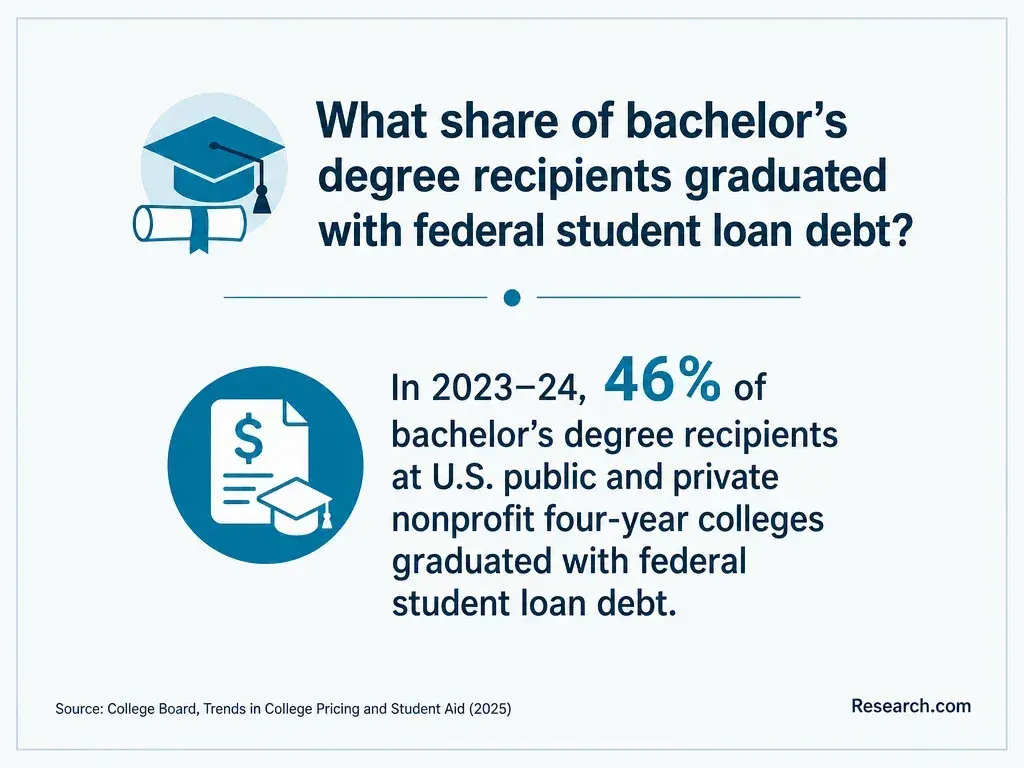
Yes. Confirm that the institution holds recognized accreditation and that its status covers the campus or online operation offering your degree. Institutional accreditation matters for questions such as federal aid eligibility and credit or graduate-school review, although another institution still decides whether to accept particular coursework.
Do not look for American Psychological Association accreditation as a test of a general psychology BA: APA accreditation applies to specified professional psychology training programs, not ordinary bachelor's majors. Similarly, an advertised addiction or mental health focus is not proof of professional credential eligibility. When reviewing accredited online addiction psychology bachelor's programs, check what is accredited, what the curriculum actually includes, and what your state requires for any intended addiction-services position.
Ask admissions for the institution's accreditor, the exact degree and concentration names, and written confirmation of any claimed professional outcome. Verify credential claims with the responsible state agency before paying a deposit.
Expect a psychology core alongside general education: introductory psychology, statistics, research methods, development, social or cognitive psychology, and biological or behavioral foundations are common. Mental health-related options may cover psychopathology, health psychology, substance use, or community services. Course titles and requirements differ by school, and studying disorders is not training to diagnose them.
For recruiting work, prioritize research methods and statistics for evaluating workforce claims, social and organizational psychology for understanding workplace behavior, and ethics for handling sensitive information. Ask whether projects can use approved, nonconfidential organizational questions - for example, evaluating a candidate communication process - without assuming access to applicant or patient records.
If a catalog combines mental health, criminal justice, and forensic electives, check whether the pathway matches your goal. Resources on forensic psychology degree formats and academic requirements can help distinguish that different academic focus; forensic coursework is not a substitute for behavioral-health recruiting or clinical preparation.
Online delivery removes a routine commute, not necessarily fixed-time obligations. An asynchronous lecture may coexist with live discussions, group meetings, scheduled exams, or an in-person internship. Campus study can make it easier to attend on-site research meetings, while an online program may better protect your work hours if its required activities are genuinely flexible.
Compare schedules using a real workweek: request sample syllabi for required courses, ask when live activities occur, and find out whether a placement is optional, required, or available through your current employer. An existing recruiting job counts toward an academic placement only if the program approves its learning tasks and supervision. Ask about part-time enrollment, course rotation, and leave policies before assuming you can slow down during a busy hiring season.
Even if you may pursue graduate study later, first establish whether this BA is workable. Information on evaluating shorter graduate psychology degree options is useful only after you know what the later degree is meant to accomplish; an accelerated master's cannot fix missing undergraduate preparation or make a nonclinical program licensure-qualifying.
First-year applicants commonly submit secondary-school records; transfer applicants generally submit transcripts from every college attended. Schools may set separate standards for admission to the institution and entry to the psychology major. Ask whether statistics or other courses must be completed before upper-level work rather than assuming an unrelated previous major is a barrier.
If you have college credits, the crucial document is an official degree audit - not just an estimate of credits accepted. It should show which courses satisfy general education, psychology requirements, electives, and any credits that must be earned at the new institution. The guide to psychology degree completion with transfer coursework can help frame that discussion, but only the receiving school can approve your equivalencies.
Send transcripts early and request written decisions on statistics, research methods, and any disputed substitutions. Then check when your remaining required courses are offered; admission does not mean the courses needed to graduate will fit every term of your work schedule.
A bachelor's degree commonly totals about 120 semester credits, but that is not your personal completion estimate. The useful figure is the number of credits still required after an approved audit, including major, general education, and institutional residency requirements. Part-time enrollment can preserve your income while extending the time you pay recurring fees.
Calculate the remaining price from required credits multiplied by the applicable per-credit tuition, then add mandatory fees, books or technology, and any travel or unpaid placement expense. Confirm whether your enrollment pace affects aid eligibility and whether employer tuition assistance has reimbursement caps, grade rules, or repayment conditions. Do not compare advertised annual tuition when the programs leave you with different numbers of credits to complete.
Keep later degrees in a separate budget. For example, forensic psychology master's completion time comparisons address a different academic path; their timelines should not be added to your BA plan unless you have a specific reason to pursue that field.
The most direct next step may be within talent acquisition: recruiter, recruiting operations specialist, or a broader human resources role, depending on your hiring experience and the employer's requirements. In a mental health organization, program coordinator, intake coordinator, or outreach positions may be possible transitions, but they involve different service workflows and may require direct experience with clients or referrals.
Use job postings to separate degree requirements from task requirements. Your strongest evidence for a recruiting promotion may be completed searches, accessible candidate communication, and reliable handling of applicant information. For a services role, seek supervised exposure to referral processes and documentation while respecting confidentiality and the limits of a nonclinical position.
Specialized forensic roles are another career decision, not an automatic outcome of psychology electives. If that field interests you, review graduate-level forensic psychology career research against actual job qualifications before changing your undergraduate plan.
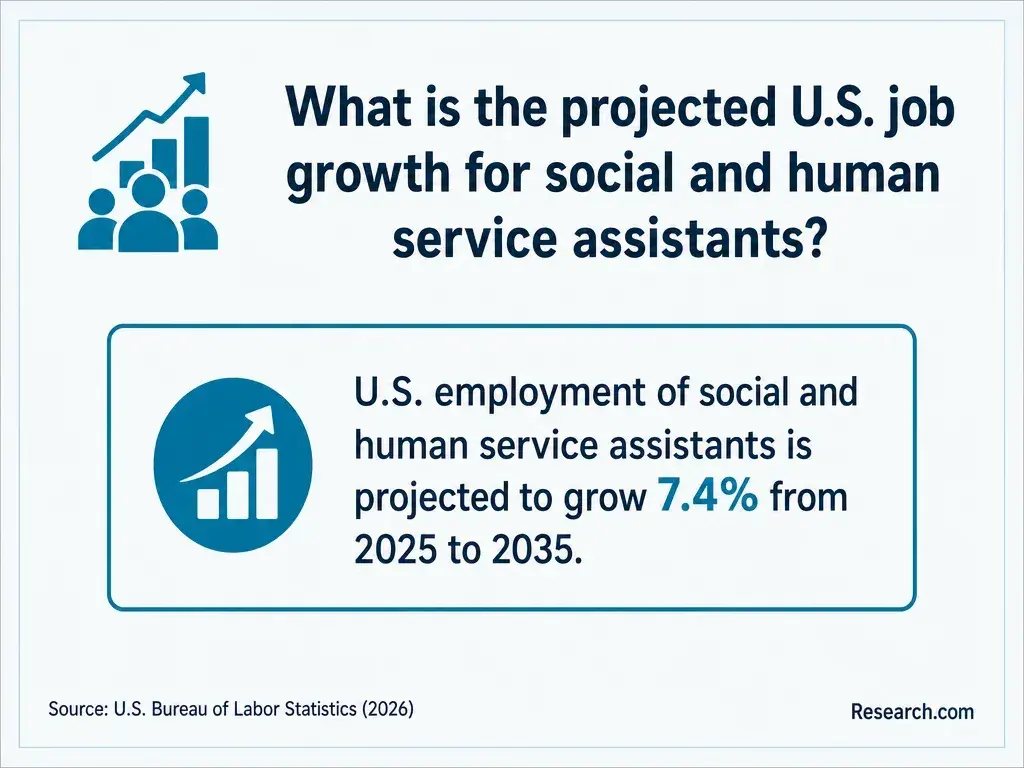
There is no single salary or employment forecast for "psychology graduates." Pay depends on the occupation, location, employer, experience, and whether a role requires a credential beyond the BA. For a recruiting coordinator, a human resources specialist occupational figure may be a more relevant comparison than a psychologist figure - but neither predicts your offer or the return on this degree.
For a useful comparison, identify the specific jobs you could reasonably seek now and after graduation. Check the latest U.S. Bureau of Labor Statistics Occupational Outlook Handbook wage and projection entries for those occupations, then compare local postings' requirements and pay ranges. An occupation-wide median includes workers with varied education and seniority; projected growth describes an occupation, not guaranteed openings at your employer.
If graduate school is part of your plan, include its separate expense before estimating a financial payoff. Comparing prices for online psychology master's degrees can inform that later budget, but a lower-priced degree is valuable only if it serves the job or qualification you need.
Does a Psychology Bachelor's Degree Qualify You for Mental Health Licensure?
An online or campus-based psychology BA does not, by itself, qualify you to practice as a licensed psychologist or counselor, provide psychotherapy, diagnose conditions, or independently conduct restricted psychological assessments. A mental health concentration does not change that boundary.
If clinical counseling is the goal, investigate programs designed to meet the educational criteria for the license you want, then check your state board's rules for supervised practice and examinations. Reviewing the cost and length of shorter counseling master's programs can help with planning, but a short program is not automatically eligible in every state or workable alongside full-time employment.
If your goal remains recruiting leadership, that additional clinical pathway may be unnecessary. Choose the BA for demonstrable knowledge or degree requirements - not because mental health appears in its name.
Other Things You Should Know About Psychology
Possibly. Ask human resources whether tuition assistance covers this degree, whether approval is required before each course, and whether reimbursement depends on grades or continued employment.
Compare the actual requirements. A BS may include more science or quantitative coursework, but degree labels vary. Choose the curriculum that fits your next role and any later study you intend to pursue.
Ask the instructor and your employer first. A project using applicant records, employee responses, or hiring outcomes may require organizational permission and privacy safeguards; a hypothetical or public-data project may be more feasible.
Not necessarily. Recruiting experience, knowledge of clinical job requirements, and hiring-system skills may matter more. Check target postings before committing to a degree for that purpose alone.
- Understanding College Costs | studentaid.gov https://studentaid.gov/resources/prepare-for-college/students/choosing-schools/consider-costs
- Cost of Attendance (Budget) | 2025-2026 Federal Student Aid Handbook https://fsapartners.ed.gov/knowledge-center/fsa-handbook/2025-2026/vol3/ch2-cost-attendance-budget
- Behavioral Health Career Descriptions | samhsa.gov https://www.samhsa.gov/about/careers/behavioral-health-workforce/careers-by-state/descriptions
- Organizational Best Practices Supporting Mental Health in the Workplace - PMC https://pmc.ncbi.nlm.nih.gov/articles/PMC8631150/
- Mental health at work | who.int https://www.who.int/news-room/fact-sheets/detail/mental-health-at-work
- Online Bachelor's Degree: Psychology | University of Maryland Global Campus https://www.umgc.edu/online-degrees/bachelors/psychology
- Can I Become a Counselor With a Bachelor's Degree? | George Fox University https://www.georgefox.edu/counseling-programs/articles/without-bachelors.html
- Psychology and Behavioral Health Associate Degree Online | The Pennsylvania Institute of Technology https://www.pit.edu/programs/psychology-and-behavioral-health/
- 9 Mental Health Careers You Can Pursue with a BA | New England College https://www.nec.edu/news/9-mental-health-careers-you-can-pursue-with-a-ba
- Maximize Your College Transfer Credits | Explore 4 Ways | UMass Global https://www.umassglobal.edu/blog-news/4-ways-transfer-students-can-maximize-college-credits-prior-experience