
2027 Is Forensic Accounting a Hard Major? What Students Should Know

Co-Founder and Chief Data Scientist
Choosing forensic accounting means choosing a major that sits between accounting, fraud investigation, law, data analysis, and professional ethics. It is not the hardest college major for every student, but it can feel demanding because accuracy matters, assignments are often case-based, and students must learn to explain financial evidence clearly enough for legal or investigative settings.
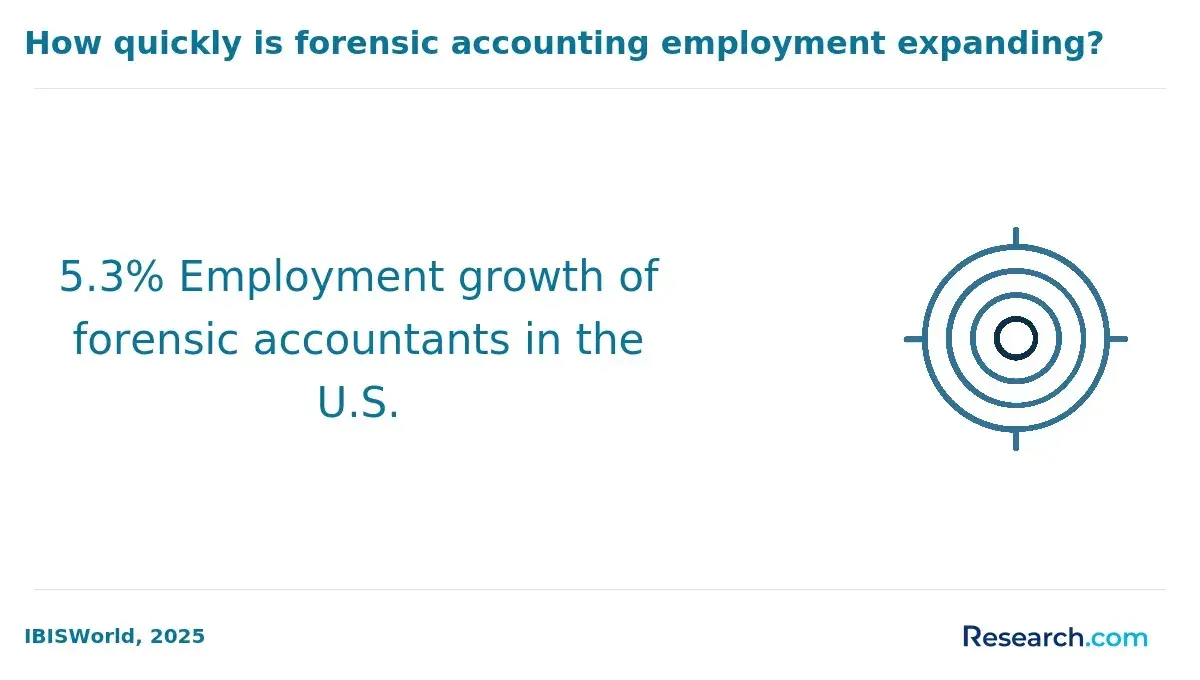
Interest in the field has grown as organizations face more complex financial crime, digital records, and compliance risks. In the U.S., forensic accounting programs have seen a 15% enrollment growth over recent years, reflecting rising interest in this specialized field that merges finance, law, and technology.
This guide explains how hard forensic accounting is compared with other majors, what makes the coursework challenging, who tends to do well, and how online, accelerated, and part-time study options affect the workload. It also connects the major to admissions, career paths, and salary expectations so you can decide whether forensic accounting fits your strengths and goals.
Key Benefits of Forensic Accounting as a Major
- Forensic accounting develops critical analytical skills, benefiting career changers by enhancing their ability to interpret complex financial data in legal contexts.
- It offers flexible learning options, supporting full-time workers returning to school by balancing practical applications with academic rigor.
- Traditional undergraduates gain confidence through specialized coursework, preparing them for professional certifications with a 15% above-average job growth rate in forensic accounting.
Where Does Forensic Accounting Rank Among the Hardest College Majors?
Forensic accounting is usually not ranked as its own major in broad “hardest college majors” lists. Most schools treat it as an accounting concentration, a forensic accounting track within a business degree, or a graduate specialization. That makes direct comparisons difficult, but the workload is generally more demanding than many general business majors and less technically intense than fields such as engineering or chemistry.
The reason is that forensic accounting adds investigative and legal reasoning to traditional accounting. Students do not only learn how to prepare or analyze financial records; they learn how to identify suspicious activity, document findings, understand legal standards, and communicate results in a way that can support an investigation or dispute.
Compared with marketing or general business administration, forensic accounting usually requires more quantitative work, more technical precision, and more rule-based analysis. Compared with engineering or chemistry, it typically involves less advanced math and fewer laboratory requirements. Its difficulty is often closer to finance or information systems because students must combine technical knowledge, analytical judgment, and problem-solving under structured professional standards.
The major also becomes more challenging in the final two years of a typical four-year program, when students move from introductory business and accounting courses into fraud examination, auditing, business law, data analytics, and investigative methods. Students with strong attention to detail, comfort with numbers, and patience for complex documents often find the major manageable. Students who dislike rules, documentation, or multi-step analysis may find it harder than expected.
What Factors Make Forensic Accounting a Hard Major?
Forensic accounting is hard because it combines the precision of accounting with the judgment required in investigations. The hardest part is not usually one single course. It is the need to connect financial data, legal concepts, technology tools, and ethical obligations in the same assignment or case analysis.
- Interdisciplinary coursework: Students may study auditing, federal income tax, fraud investigation, business law, forensic psychology, accounting information systems, and data analytics. These subjects require different ways of thinking, so success depends on being able to move between rules, numbers, evidence, and written explanations.
- Technical accounting demands: Forensic accounting still rests on core accounting skills. Students must understand financial statements, internal controls, transactions, documentation, and audit procedures before they can evaluate whether something looks suspicious.
- Analytical and investigative complexity: Assignments may ask students to identify patterns, trace transactions, compare records, interpret incomplete data, or explain why a financial activity appears irregular. This requires both quantitative reasoning and careful professional judgment.
- Technology expectations: Many programs include accounting software, data analytics, accounting information systems, and elements of machine learning. Students who are uncomfortable with spreadsheets, databases, or digital records may need extra practice early.
- Heavy upper-division workload: Completing at least 120 undergraduate credit hours is typical. Students targeting CPA licensure may need up to 150 credit hours, which can extend the academic plan and increase the need for careful course sequencing.
- Legal and ethical responsibility: Forensic accounting work may support litigation, fraud investigations, insurance claims, or compliance reviews. Students must learn to write clearly, document conclusions, and avoid overstating findings.
Cost and pacing can also affect difficulty. Students comparing formats should review tuition, transfer credit policies, and course loads carefully; those focused on affordability may want to compare the cheapest accounting degree online options before committing to a forensic accounting pathway. Students who need a lower-cost or faster foundation can also research an accelerated associate's degree online before moving into more specialized accounting coursework.
Who Is a Good Fit for a Forensic Accounting Major?
A good forensic accounting student is not just “good at math.” The best fit is someone who can work carefully, question inconsistencies, follow rules, use technology, and explain findings clearly. The major rewards patience and precision as much as speed.
- Analytical thinkers: Students who enjoy solving layered problems often do well. Forensic accounting requires looking beyond totals and formulas to ask what the data means, whether records agree, and where a discrepancy may have started.
- Detail-oriented learners: Small errors can change the meaning of financial evidence. Students who naturally check their work, organize documents, and notice inconsistencies are better prepared for the major’s expectations.
- Ethically grounded students: Forensic accountants may handle sensitive financial information and work on matters involving misconduct or legal disputes. Strong ethical judgment is essential, not optional.
- Students interested in both accounting and law: The major is a strong fit for learners who like financial analysis but also want to understand investigations, disputes, compliance, and evidence.
- Technology-comfortable problem solvers: Modern forensic accounting often involves digital records, spreadsheets, accounting systems, and analytics tools. Students do not need to be programmers, but they should be willing to learn technical tools.
- Clear communicators: Finding an issue is only part of the work. Students must also explain what they found, how they found it, and what the limits of their conclusion are.
This major may be a poor fit for students who want broad business coursework with minimal quantitative analysis, dislike documentation, or prefer assignments with open-ended creative answers. Students still exploring college options may compare what is the easiest associates degree to get online, but forensic accounting itself should be chosen because the student is motivated by investigation, accuracy, and financial problem-solving.
How Can You Make a Forensic Accounting Major Easier?
You can make forensic accounting easier by treating it as a skills-building major rather than a memorization major. The students who struggle most often wait too long to master accounting basics, underestimate writing requirements, or try to learn software only when an assignment is due.
- Master core accounting early: Financial accounting, managerial accounting, auditing, and taxation create the base for forensic work. If these courses feel weak, review them before entering fraud examination or advanced analysis courses.
- Practice with real-style records: Work through sample invoices, bank statements, ledgers, financial statements, and audit documents. The more familiar the documents become, the easier case-based assignments will feel.
- Use active recall instead of rereading: After studying, close the book and explain the concept in your own words. For example, describe how an internal control weakness could create an opportunity for fraud.
- Build a weekly casework routine: Forensic accounting assignments often take longer than they appear because they require reading, calculation, interpretation, and written explanation. Break projects into evidence review, analysis, drafting, and proofreading.
- Get comfortable with software early: Practice spreadsheets, accounting platforms, and data tools before high-stakes projects. Technical confidence reduces stress during exams and simulations.
- Ask for feedback on writing: A correct calculation is less useful if the explanation is unclear. Use professors, tutoring centers, writing centers, and peer review to improve clarity.
- Study legal and ethical concepts consistently: Do not leave business law or ethics readings until the end of the week. These topics often shape how financial findings should be interpreted and reported.
A recent graduate described the first semester as overwhelming because the technical material came quickly and the assignments required more explanation than expected. Breaking study sessions into focused blocks helped her stay steady. “I found that creating my own summary sheets and reviewing them before sleep made a huge difference,” she said. She also credited regular practice with accounting software for improving her confidence in case simulations: “It wasn't just about memorizing; it was about understanding how to use the tools practically.”
Are Admissions to Forensic Accounting Programs Competitive?
Admissions competitiveness depends heavily on the degree level, school reputation, and program format. Undergraduate forensic accounting tracks within accounting or business programs may be moderately selective, while specialized graduate programs at well-known universities can be more competitive because they may have limited seats, specialized faculty, and stricter prerequisites.
Applicants are commonly evaluated on academic readiness for accounting, statistics, business law, and sometimes computer science or analytics. Some programs expect a GPA often above 3.0, especially at the graduate level. Programs may also review recommendation letters, personal statements, professional experience, prerequisite grades, and, in some cases, interviews.
Online and hybrid programs may offer more access, but that does not mean they lack standards. A reputable online forensic accounting program should still make admissions expectations clear, identify prerequisite coursework, and explain whether the curriculum supports goals such as CPA preparation, fraud examination, auditing, or litigation support.
To strengthen an application, prospective students should focus on the evidence that shows readiness for the work:
- strong grades in accounting, auditing, statistics, finance, business law, or information systems;
- relevant work, internship, bookkeeping, compliance, audit, banking, or investigative experience;
- a focused personal statement that explains why forensic accounting fits the applicant’s goals;
- recommendations from instructors or supervisors who can speak to accuracy, ethics, and analytical ability;
- clear completion of all prerequisites before the application deadline.
A forensic accounting graduate described the process as “intense but rewarding.” He said every part of the application mattered, from transcripts to work experience, personal essays, and recommendation letters. The process also helped him identify weak areas before the program began, which made the transition into advanced coursework smoother.
Is an Online Forensic Accounting Major Harder Than an On-Campus Program?
An online forensic accounting major is not automatically harder than an on-campus program. The academic content can be comparable, but the difficulty feels different. Online students need more self-direction, while on-campus students usually have more built-in structure and immediate face-to-face access to classmates and instructors.
- Academic expectations: Both formats can cover fraud examination, auditing, financial statement analysis, investigative methods, business law, and data tools. A strong program should not reduce rigor simply because it is online.
- Time management: Online learning offers flexibility, which helps working adults and students with family responsibilities. The trade-off is that students must create their own schedule and keep up without daily campus routines.
- Instructor and peer interaction: On-campus students may get faster informal help before or after class. Online students rely more on email, discussion boards, video meetings, recorded lectures, and scheduled office hours.
- Technology dependence: Online students need reliable internet access and comfort with learning platforms, accounting software, spreadsheets, and digital submissions. Technical problems can become academic problems if students do not plan ahead.
- Networking and collaboration: Campus programs may make spontaneous networking easier. Online students should be more intentional about joining virtual study groups, attending live sessions, and contacting faculty.
- Learning style fit: Students who like structure, in-person reminders, and immediate discussion may prefer campus. Students who learn well independently and appreciate replaying lectures may prefer online study.
The better question is not whether online or on-campus is harder, but which format matches your habits. If you procrastinate without external structure, online learning can feel more difficult. If commuting, fixed class times, or campus attendance would interfere with work and family obligations, online learning may make the major more manageable. Students considering advanced study can also compare an accelerated master's program online if they already have the discipline for a faster graduate pathway.
Are Accelerated Forensic Accounting Programs Harder Than Traditional Formats?
Accelerated forensic accounting programs are usually harder in pace, not necessarily in content. Students often study the same core topics, but with less time to absorb material, recover from weak test performance, or balance major assignments with work and personal responsibilities.
- Compressed timelines: Accelerated programs may compress the curriculum into 12 to 18 months, while traditional formats spread coursework across multiple years. That compression increases weekly reading, problem sets, case analysis, and writing.
- Less time for reinforcement: Forensic accounting builds on accounting fundamentals. In an accelerated format, students who miss a concept may have to catch up while new material continues immediately.
- Higher stress during case-based courses: Fraud examination, audit analysis, and litigation support assignments can be time-consuming. Accelerated schedules leave fewer open weeks for deep review.
- Better fit for experienced students: Students with prior accounting coursework, professional experience, strong study habits, or employer support may handle accelerated formats more successfully.
- Greater risk for overloaded students: Working full time, managing family obligations, or taking several difficult courses at once can make an accelerated program feel unsustainable.
Traditional programs are often more forgiving because they allow more time to practice, reflect, and revise. Accelerated programs can be useful for motivated learners who already know the field and can protect substantial study time each week. Before choosing a faster route, students should compare total workload, term length, internship expectations, CPA-related credit needs, and support services. Those comparing speed and return on investment may also review a quick degree for high pay job to understand how accelerated study fits broader career planning.
Can You Manage a Part-Time Job While Majoring in Forensic Accounting?
Yes, many students can manage a part-time job while majoring in forensic accounting, but the safest workload depends on course intensity, credit load, work flexibility, and the student’s academic foundation. A flexible job is much easier to balance than one with unpredictable shifts or late hours during exam weeks.
The major includes weekly assignments that can require financial analysis, reading, writing, software practice, and legal research. Workload may rise sharply during case projects, audits, simulations, midterms, and finals. Students who plan only for average weekly study time may get caught off guard when several deadlines overlap.
A part-time job is more realistic when students:
- choose a manageable credit load instead of stacking multiple difficult accounting courses in one term;
- use a calendar to map exams, case projects, work shifts, and financial aid deadlines;
- tell employers early about peak academic weeks when possible;
- choose campus jobs, tutoring, bookkeeping, administrative work, or other roles with predictable hours;
- use tutoring, office hours, and study groups before falling behind;
- avoid relying on weekend-only study time for technical courses.
Working can even help if the job builds relevant skills in bookkeeping, banking, compliance, tax preparation, data entry, or administrative documentation. However, students enrolled full time in a demanding term should be cautious about taking on too many hours. Protecting academic performance is especially important for students who plan to apply to graduate programs, internships, or CPA-oriented pathways.
What Jobs Do Forensic Accounting Majors Get, and Are They as Hard as the Degree Itself?
Forensic accounting graduates can work in public accounting firms, corporations, insurance, government agencies, consulting, litigation support, compliance, and internal audit. Some jobs feel as hard as the degree because they involve tight deadlines, high-stakes investigations, and detailed documentation. Others are challenging in different ways, such as client communication, regulatory pressure, or workplace judgment.
- Forensic Accountant: Forensic accountants investigate financial records, trace assets, analyze suspicious transactions, and prepare findings that may support legal or regulatory matters. This role often feels similar to the major because it requires technical accounting skill, careful documentation, and strong analytical judgment.
- Fraud Examiner: Fraud examiners review records, conduct interviews, examine evidence, and help determine whether fraud may have occurred. The work may be less calculation-heavy than advanced coursework but can be demanding because it involves people, evidence, and sensitive allegations.
- Internal Auditor: Internal auditors evaluate controls, compliance, risk, and operational processes. The work may be less investigative than forensic accounting but still requires precision, independence, and clear reporting.
- Litigation Support Specialist: Litigation support specialists organize financial evidence, prepare analyses for disputes, assist attorneys, and may help with expert testimony preparation. The difficulty often lies in explaining technical findings clearly and defensibly.
- Risk Management Specialist: Risk management roles focus on identifying, reducing, and monitoring financial or operational risks. These positions can be broader and more strategic than forensic investigation, though they still require strong judgment and attention to detail.
Whether a forensic accounting job is harder than the degree depends on the role, employer, deadlines, and level of responsibility. Coursework has predictable grading and academic timelines; professional work may involve incomplete records, client pressure, confidentiality, and real financial consequences. Most forensic accounting jobs require 1-3 years of experience, so internships, accounting work, audit exposure, or compliance experience can make the transition easier. Students comparing flexible pathways should review reputable online universities with national accreditation as part of their preparation.
Do Forensic Accounting Graduates Earn Higher Salaries Because the Major Is Harder?
Forensic accounting graduates do not earn more simply because the major is harder. Employers pay for specialized, useful skills: fraud detection, financial investigation, audit knowledge, data analysis, litigation support, and the ability to explain findings clearly. The difficulty of the degree may help build those skills, but salary is driven more by market demand, role, experience, location, credentials, and industry.
Forensic accountants in the U.S. typically earn between $81,344 and $85,177 annually, roughly $20,000 more than general accountants. Entry-level positions start around $59,376, while seasoned professionals can earn over $124,000. These figures show that the field can pay well, but they should not be read as guaranteed outcomes for every graduate.
Several factors can influence earnings:
- Experience level: Entry-level analysts and associates usually earn less than professionals who can lead investigations, manage clients, or testify as experts.
- Location: Salaries tend to be higher in states like California, but cost of living and employer type also matter.
- Industry: Litigation support, insurance, and government investigations can offer higher pay because the work requires specialized judgment and strong documentation.
- Credentials: Certifications and licensure-related preparation can improve competitiveness, depending on the role and jurisdiction.
- Technical skill: Professionals who can work with large data sets, accounting systems, and investigative tools may have an advantage.
The practical takeaway is that students should not choose forensic accounting only because it is perceived as difficult. They should choose it if they want the type of work the major prepares them for: investigating financial questions, documenting evidence, and applying accounting knowledge in high-accountability settings.
What Graduates Say About Forensic Accounting as Their Major
- Joey: "Pursuing forensic accounting was definitely challenging, but incredibly rewarding. The major pushed me to develop sharp analytical skills and taught me how to think critically about financial data, which I now use daily in my investigations. Considering the average cost of attendance is quite high, I felt the investment was worth it due to the career opportunities that opened up for me."
- Morgan: "Forensic accounting was tougher than I expected, especially balancing complex coursework with practical case studies. It made me appreciate the depth required to uncover financial fraud, and it has greatly impacted my confidence in professional settings. While the tuition fees felt steep, I believe the knowledge and skills acquired justify the cost in the long run."
- Hudson: "From a professional standpoint, forensic accounting demanded a lot of time and effort, making it a hard major to master. The learning experience was intense but has equipped me to excel in high-stakes environments, which is priceless. Although the cost of pursuing this path can be significant, I consider it an essential step toward a fulfilling and stable career."
Other Things You Should Know About Forensic Accounting Degrees
Students pursuing a forensic accounting major in 2027 typically take courses like Fraud Examination, Financial Auditing, Legal Elements of Fraud, and Forensic Data Analysis. These courses help build analytical and investigative skills essential for working in forensic accounting roles after graduation.
Students pursuing a forensic accounting major in 2027 often face challenges such as mastering complex investigative techniques, understanding legal standards, and developing proficiency in data analysis software. Building strong analytical reasoning and attention to detail is crucial to succeed in this demanding field.
In 2027, students need strong analytical, critical thinking, and communication skills to succeed in forensic accounting. These skills help navigate complex financial investigations and effectively present findings, making them essential for academic and professional success.
In 2027, students must typically hold a high school diploma with a strong background in mathematics to enroll in a forensic accounting major. Some programs may also require prior coursework in accounting or finance. Standardized test scores like the SAT or ACT might be needed for admission.
References
- Top Master's in Forensic Accounting Online | Accounting.com https://www.accounting.com/degrees/forensic-accounting/masters/best-online-programs/
- The Top Forensic Accounting Degree Programs https://big4accountingfirms.org/forensic/
- Forensic Accounting Careers With a Master's Degree in Accounting https://blog.utc.edu/business/2024/01/11/forensic-accounting-careers-masters-degree-accounting/
- Your guide to starting out in Forensic Accounting | Kaplan UK https://kaplan.co.uk/blog/careers/your-guide-to-starting-out-in-forensic-accounting
- Mastering Forensic Accounting: Key Insights and Skills https://becky.works/en/blog/mastering-forensic-accounting/
- How to Start a Career in Forensic Accounting https://www.learnsignal.com/blog/forensic-accounting-career/
- Is Forensic Accounting a Good Career? How to Join This Lucrative Field https://learn.neumann.edu/neuperspectives/is-forensic-accounting-a-good-career-how-to-join-this-lucrative-field
- Forensic Accountant https://www.acfe.com/career/career-paths/career-path-accounting/career-path-detail-forensic-accountant
- How to Become a Forensic Accountant https://www.snhu.edu/about-us/newsroom/business/how-to-become-a-forensic-accountant





