2027 Licensing Exams Required After Completing a Forensic Accounting Degree Program

Co-Founder and Chief Data Scientist
A forensic accounting degree can qualify you for entry-level investigation, audit, compliance, and litigation-support roles, but the degree alone is not always enough to compete for the strongest opportunities. Many employers look for proof that you can apply accounting rules, investigate fraud, document evidence, and communicate findings in legal or regulatory settings. That proof often comes through professional licensure or certification.
The key point for graduates is that “forensic accounting license” is not one single universal credential. Depending on the role, employer, and state, you may need a CPA license, a fraud-focused certification such as the CFE, or an advanced financial forensics credential such as the CFF. Industry data indicates that nearly 60% of forensic accountants hold certifications like the Certified Fraud Examiner (CFE) or Certified Public Accountant (CPA), which can improve credibility and job prospects.
This guide explains which exams matter after a forensic accounting degree, what they cover, who is eligible, whether online degrees can qualify, how much exams may cost, and how licensing can affect hiring, salary, and interstate practice.
Key Things to Know About Licensing Exams Required After Completing a Forensic Accounting Degree Program
- Licensing exams like the Certified Fraud Examiner (CFE) require candidates to hold a relevant degree and meet professional experience prerequisites, ensuring qualified entry into the forensic accounting field.
- The CFE exam covers four major sections: fraud prevention, financial transactions, investigation techniques, and legal elements, requiring comprehensive knowledge and analytical skills.
- Preparation often involves several months, with many candidates dedicating 120+ study hours, as licensure significantly enhances employment prospects and salary potential in forensic accounting.
What Licensing Exams Are Required After Completing a Forensic Accounting Degree?
There is no single licensing exam required for every forensic accounting graduate. The exam you need depends on the work you want to do. If you plan to perform public accounting services, sign audit reports, or meet state-regulated accounting requirements, the CPA path is usually the most important. If you want to focus on fraud investigation, internal investigations, or anti-fraud compliance, the CFE is often more directly relevant. For CPAs who want a deeper litigation and financial forensics credential, the CFF may be useful.
Licensing and certification matter because employers use them as signals of technical ability, ethics, and readiness for sensitive financial investigations. Nearly 70% of employers prefer candidates who hold relevant certifications, and nearly 60% of forensic accountants hold certifications like the Certified Fraud Examiner (CFE) or Certified Public Accountant (CPA).
- CPA Exam: The CPA Exam is required for licensure as a public accountant. It is especially valuable for forensic accountants who work in audit, litigation support, regulatory matters, or roles where accounting authority and public trust are central. Candidates must meet education and experience requirements before licensure. The exam covers auditing, financial reporting, regulation, and business environment topics that help professionals analyze complex financial records in legal and investigative contexts.
- CFE Certification: The Certified Fraud Examiner credential is offered by the Association of Certified Fraud Examiners. It focuses on fraud prevention, detection, investigation, and deterrence. It is not always legally required, but it is widely respected for fraud-related forensic accounting roles and can help graduates demonstrate specialized investigative knowledge.
- CFF Credential: The Certified in Financial Forensics credential is available only to CPAs. It is designed for professionals who apply accounting expertise to litigation, investigations, damages analysis, dispute resolution, and related financial forensics work.
Graduates should avoid treating all professional credentials as interchangeable. Unrelated education paths, such as BCBA master's programs online, do not satisfy forensic accounting licensing or certification expectations unless they are part of a separate career plan.
What Topics Are Covered on the Forensic Accounting Licensing Exam?
The topics you must study depend on the credential. A CPA candidate needs broad accounting, auditing, reporting, and regulatory knowledge. A CFE candidate studies fraud schemes, investigative methods, legal issues, and fraud prevention. A CFF candidate, because the credential is available only to CPAs, focuses on applying accounting expertise to financial disputes, investigations, and litigation.
Candidate surveys indicate that fraud detection and investigation topics often present the greatest challenges, with pass rates averaging around 60%. That makes targeted preparation important. Rather than studying forensic accounting as one broad subject, candidates should match their review plan to the exam they are actually taking.
- Fraud examination: Candidates may be tested on how fraudulent activity is identified, how evidence is gathered, how interviews are conducted, and how findings are documented. Scenario-based questions often evaluate whether the candidate can apply concepts to realistic investigation settings.
- Financial transactions and reporting: This area focuses on reading financial statements, tracing transactions, recognizing irregularities, and applying accounting principles. Forensic accountants must be able to explain not only what happened in the records but also why it matters.
- Legal elements of forensic accounting: Candidates should understand fraud-related laws, regulations, evidence handling, courtroom procedures, and the professional responsibilities involved in expert testimony.
- Interviewing and communication techniques: Exams may assess how candidates gather information, question witnesses or suspects, prepare reports, and present findings to attorneys, executives, regulators, or other non-accounting audiences.
- Investigation techniques: This includes collecting and preserving evidence, using analytical tools, documenting investigative steps, and maintaining professional objectivity throughout the process.
Forensic accounting exam preparation should stay focused on accounting, fraud, law, evidence, and investigation. Programs in unrelated fields, such as the cheapest online counseling degree, may support different career goals but do not prepare candidates for forensic accounting licensure or certification.
What Requirements Must Be Met to Take the Forensic Accounting Licensing Exam?
Eligibility requirements vary by credential and jurisdiction, so graduates should verify rules before paying application or exam fees. In general, candidates need the right education, relevant work experience, and, for some advanced credentials, an existing professional designation.
- Educational background: Candidates generally must hold a bachelor's degree, usually in accounting, finance, or a related field. Some jurisdictions or credentialing bodies may expect coursework in auditing, ethics, accounting law, financial reporting, or related areas that support forensic accounting practice.
- Relevant work experience: Practical accounting or forensic accounting experience, typically ranging from one to three years, is often required. Experience helps candidates connect exam concepts to real financial records, internal controls, fraud risks, and evidence analysis.
- Professional designations: Some credentials require or strongly favor existing designations. For example, the CFF credential is available only to CPAs, while the CFE is designed for professionals working in or preparing for fraud examination roles.
- Jurisdictional variations: CPA requirements are state-specific, and rules can differ in education, experience, ethics, and application procedures. Candidates who plan to relocate should check the rules in the state where they intend to practice.
A common mistake is assuming that graduation automatically creates exam eligibility. It may not. Before choosing an exam date, confirm whether your degree includes the required coursework, whether your work experience qualifies, and whether you need supervisor verification. Other education paths, including online marriage and family therapy programs, follow separate licensure rules and should not be confused with forensic accounting requirements.
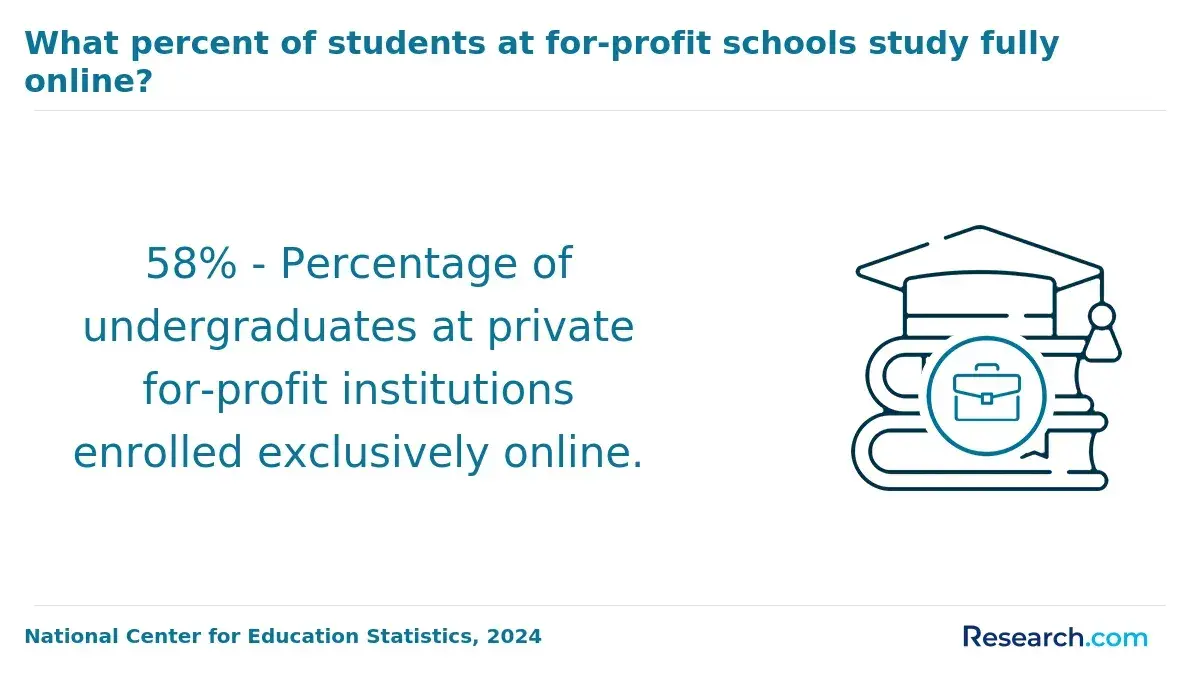
Breakdown of Private Fully Online For-profit Schools

Can You Get Licensed with an Online Forensic Accounting Degree?
Yes, an online forensic accounting degree can support licensure or certification if the program meets the relevant education requirements. The delivery format is usually less important than the program’s accreditation, accounting coursework, credit structure, and alignment with the credential you plan to pursue.
Before enrolling, confirm that the program includes the accounting, auditing, ethics, business, and legal coursework required for your target credential or state licensing board. This is especially important for students who want to become CPAs, because state boards may review coursework closely. If you are still comparing affordable online options, use factors such as accreditation, CPA-aligned coursework, faculty expertise, and student support when evaluating the best online accounting program for your goals.
- Check accreditation first: Employers and licensing boards are more likely to recognize degrees from properly accredited institutions.
- Match coursework to the exam: A fraud-focused curriculum may help with the CFE, while CPA preparation requires broader accounting and regulatory coverage.
- Ask about exam support: Look for programs that offer practice exams, faculty advising, career services, and guidance on certification pathways.
- Verify state rules: Online students should check the requirements in the state where they plan to seek licensure, not just the state where the school is located.
Do Forensic Accounting Programs Prepare Students for Licensing Exams?
Strong forensic accounting programs can help students prepare for licensing and certification exams, but they are not a substitute for dedicated exam review. Completing a forensic accounting program can significantly improve readiness, with studies showing up to a 20% higher pass rate among graduates who complete such programs. The benefit comes from structured exposure to accounting rules, fraud schemes, investigation methods, legal concepts, and professional ethics.
- Curriculum alignment: Well-designed programs connect accounting, auditing, fraud examination, evidence handling, and legal procedure to the competencies tested on professional exams.
- Exam-focused coursework: Courses in fraud detection, financial statement analysis, internal controls, regulatory compliance, and investigative reporting can reduce the amount of unfamiliar material candidates face during review.
- Practice exams: Simulated tests help students understand question formats, timing pressure, and the difference between knowing a concept and applying it under exam conditions.
- Internships: Practical experience helps students see how financial investigations work outside the classroom, which can make scenario-based exam questions easier to interpret.
- Faculty mentoring: Faculty with accounting, audit, litigation, or fraud investigation experience can help students identify weak areas and choose the right credential sequence.
Students should ask programs direct questions before enrolling: Which exams does the curriculum support? Are CPA requirements addressed? Is CFE preparation built into any courses? Are internships available? Does the program help students understand state-specific licensing rules? Clear answers can prevent costly delays after graduation.
How Much Does the Licensing Exam Cost After a Forensic Accounting Degree?
Licensing and certification costs vary by credential, but graduates should budget for more than the exam itself. Application fees, exam fees, retakes, preparation materials, and membership or training requirements can all affect the total cost.
- Application fees: These typically range from $50 to $100 and cover eligibility review or administrative processing before exam registration.
- Exam fees: The exam itself, such as the Certified Fraud Examiner (CFE) exam, usually costs around $450. This is often the largest single certification-related expense.
- Retake fees: If a candidate does not pass on the first attempt, retake fees often match the initial exam cost, so preparation can have a direct financial impact.
- Study materials: Books, review guides, question banks, or prep courses can add several hundred dollars to the total cost, but they may reduce the risk of paying for another attempt.
- Additional requirements: Some credentials may require professional membership, continuing education, or extra training, which can increase the overall investment.
The practical approach is to create a credential budget before graduation. Include the first exam attempt, preparation materials, possible retake costs, and any required membership fees. Students who are still finishing undergraduate education may also compare options for an affordable online bachelor's degree before moving into certification expenses.
How Often Is the Forensic Accounting Licensing Exam Offered?
Exam availability depends on the credentialing body, testing provider, and sometimes the candidate’s jurisdiction. Many certifications use quarterly or biannual testing windows, while some allow year-round access. Candidates should not assume they can test immediately after graduation or immediately after a failed attempt.
- Testing windows: Some exams are offered on fixed dates several times a year, while others provide more flexible scheduling through approved testing centers or online platforms.
- Online availability: Online testing can make scheduling easier for candidates who live far from testing centers, work full time, or need more flexible exam dates.
- Retake policies: Candidates typically must wait between 30 and 90 days before retaking an exam. This waiting period can affect job timelines, promotion plans, and credential deadlines.
- Jurisdictional factors: State rules or board procedures may influence when CPA candidates can sit for exams, submit documentation, or complete licensing steps.
- Planning risk: Missing a testing window can delay certification by months, so candidates should work backward from application deadlines, graduation dates, and employer expectations.
The safest strategy is to choose a target exam date early, then build a study schedule around it. Leave time for transcript review, application approval, test center availability, and possible retakes. Candidates who wait until after graduation to investigate scheduling may discover that the next available window does not match their hiring or career timeline.
Do You Need a License to Get a Job With a Forensic Accounting Degree?
You can get some forensic accounting-related jobs without a license, especially entry-level roles in compliance, internal audit support, fraud analysis, insurance claims review, or investigative support. However, licensure and certification can substantially improve competitiveness. Recent data shows that about 65% of positions in forensic accounting either prefer or require at least one professional certification.
- CPA-focused roles: Jobs involving auditing, attest work, tax, public accounting, or regulated financial reporting may require a CPA license or place CPA candidates ahead of other applicants.
- Fraud investigation roles: Positions centered on fraud detection, internal investigations, anti-fraud controls, and investigative interviewing often value the CFE credential.
- Litigation support roles: Employers supporting attorneys, courts, or dispute resolution teams may prefer candidates with CPA experience, CFF credentials, or documented forensic accounting expertise.
- Government and regulatory roles: Some agencies may hire graduates without certification but reward candidates who can demonstrate accounting, investigation, and evidence-handling competence.
- Employer-specific requirements: Consulting firms, public accounting firms, corporations, insurers, and law enforcement agencies may each define credential requirements differently.
For new graduates, the best approach is to read job postings carefully. If the roles you want repeatedly mention CPA, CFE, or CFF, treat that credential as part of your career plan rather than an optional add-on.
Do Licensed Forensic Accounting Professionals Earn More Than Unlicensed Graduates?
Licensed and certified forensic accounting professionals often have stronger earning potential because they qualify for roles with greater responsibility, client trust, and regulatory significance. Licensed individuals often earn between $70,000 and $120,000 annually, compared to $50,000 to $70,000 for unlicensed graduates. These differences reflect both credential value and the types of roles credentialed professionals can pursue.
- Regulatory requirements: Some accounting and audit-related positions require licensure, which can limit access for unlicensed candidates.
- Access to higher-paying roles: Licensed professionals may qualify for senior forensic accountant, litigation support, consulting, expert analysis, and leadership roles that are less accessible to entry-level graduates.
- Employer preferences: Employers often use credentials to reduce hiring risk, especially when the work involves fraud allegations, legal disputes, or sensitive financial evidence.
- Career advancement opportunities: Licensure can support movement into consulting, management, specialized investigations, or expert witness-related work.
- Geographic licensing variations: State rules and local employer expectations can affect which credentials matter most in a specific job market.
Students should not choose a degree only because it appears fast or easy. A program promoted as the easiest bachelor degree to get online may not include the accounting depth, audit coursework, or licensing alignment needed for forensic accounting credentials.
Can I Use My Forensic Accounting License in Another State?
License portability depends on the credential. The CPA license is state-regulated, so using it in another state may require mobility privileges, reciprocity, endorsement, additional documentation, ethics requirements, or continuing education. By contrast, certifications such as the CFE are professional credentials rather than state licenses, so their recognition is typically tied to employer expectations and credentialing-body rules rather than state CPA boards.
Licensing for accounting professionals is governed primarily by individual states, which creates differences in criteria and practice authority. A 2022 report by the National Association of State Boards of Accountancy found that nearly 35% of U.S. states offer pathways for license reciprocity or endorsement related to accounting credentials, including forensic accounting specialties.
If you plan to move or work across state lines, check the state board rules before accepting work that requires licensed authority. Common requirements may include applying for endorsement, documenting current licensure and experience, completing state-specific ethics requirements, meeting continuing education obligations, or confirming whether temporary practice rules apply.
What Graduates Say About The Licensing Exams After Completing a Forensic Accounting Degree
Graduate experiences vary, but many describe licensing exams as demanding investments that can improve credibility, confidence, and access to forensic accounting opportunities. The strongest outcomes usually come from planning early, budgeting for exam costs, and choosing a degree program that supports the intended credential.
- Joey: "Taking the licensing exam after completing my online forensic accounting degree was challenging but rewarding. The cost was quite reasonable compared to traditional programs, which made it easier to commit fully without financial stress. Holding a forensic accounting license has significantly boosted my credibility and opened doors in the fraud investigation field."
- Morgan: "Reflecting on my journey, the transition from studying online to sitting for the forensic accounting licensing exam felt seamless. The fees for licensure, while an additional investment, were manageable given the career growth it enabled. Now, with the license, I find myself equipped with both knowledge and recognized credentials that enhance my professional trajectory."
- Hudson: "As a professional who values precision, I approached the forensic accounting licensing exam with a clear plan, aided by the flexibility of online learning. The overall cost of licensure was a worthwhile investment, considering how it has elevated my standing in the financial forensics industry. Today, my license is a key asset that clients and employers respect and trust."
Other Things You Should Know About Forensic Accounting Degrees
Yes, licensed forensic accounting professionals must complete continuing professional education (CPE) annually or biennially to maintain their licenses. These requirements ensure that practitioners stay current with evolving laws, regulations, and industry techniques. CPE topics often include ethics, updated forensic methodologies, and regulatory changes.
In some jurisdictions, relevant work experience in forensic accounting can partially satisfy licensing requirements but cannot replace the actual licensing exam. Experience is often required to qualify to sit for the exam or for full licensure afterward. However, the exam remains a mandatory step to demonstrate competency officially.
References
- How to Become a Forensic Accountant | University of Phoenix https://www.phoenix.edu/articles/accounting/how-to-become-a-forensic-accountant.html
- Check out this job at Deloitte, Forensic Investigations Accountant https://apply.deloitte.com/en_US/careers/JobDetail/Forensic-Investigations-Accountant/315720
- Requirements and Eligibility https://forensicasia.org/requirements-and-eligibility/
- How to Become a Forensic Accountant | Accounting.com https://www.accounting.com/careers/forensic-accountant/how-to-become/
- Forensic Accountant Salary, Job Description & Career Outlook https://www.forensicscolleges.com/careers/forensic-accountant
- Forensics Careers | FBIJOBS https://fbijobs.gov/forensics
- Forensic Accounting and Fraud Examination https://www.coursera.org/learn/forensic-accounting
- Amazon.pl https://www.amazon.pl/Core-Forensic-Accounting-Knowledge-Certificate/dp/1119696461
- About the CFE Exam https://www.acfe.com/cfe-credential/about-the-cfe-exam
- Forensic Accounting Certificate Online https://www.snhu.edu/online-degrees/certificates/graduate-forensic-accounting-and-fraud-examination