2027 Online BA in Psychology - Mental Health vs. an Associate Degree in Behavioral Health: Compare Curriculum, Cost, and Career Fit
Audited and Verified:
Our Editorial and Data Verification Process
Research.com uses government datasets, official education statistics and primary institutional information to support its career and degree guides. Our review process checks factual accuracy, occupational definitions, source dates and the requirements associated with the credentials discussed.
How This Article Was Fact-Checked
Our editorial team verifies salary estimates, employment projections, education requirements and program information against original data providers and official organizations. Salary figures are checked against the relevant occupational definitions and reporting periods. Information about licensure, accreditation and required in-person training is reviewed separately.
Fact-checked and verified on:

Co-Founder and Chief Data Scientist
If you want to work in mental health, the faster degree is not always the better investment - and the longer one does not automatically qualify you to counsel clients. An associate degree in behavioral health may offer a quicker route to support work, while an online psychology BA with a mental-health focus can provide broader preparation for bachelor's-level jobs or further study.
For prospective students and career changers, this comparison explains the curriculum, scheduling, costs, and professional limits of each path so you can choose based on the work you actually want to do.
Key Things You Should Know
- A behavioral health associate degree commonly requires about 60 semester credits; a psychology bachelor's commonly requires about 120. Your remaining credits - not the degree label alone - determine your actual timeline and cost.
- Choose the associate route for a potentially quicker entry into supervised support roles; favor the BA when target jobs require a bachelor's degree or you need stronger psychology and research preparation.
- Neither degree independently qualifies you to diagnose conditions or provide psychotherapy. Check the exact job posting and state credential rules before paying for either program.
What is the difference between an online BA in psychology and an associate degree in behavioral health?
An online BA in psychology with a mental-health focus is a bachelor's degree in the scientific study of behavior and mental processes. The focus may be a formal concentration or simply a group of electives; the transcript and catalog should say which. An associate degree in behavioral health generally combines introductory behavioral-health knowledge with practical human-services preparation. Its exact award - such as an AA, AS, or AAS - matters, particularly if you may transfer later.
The comparison below describes common program designs, not requirements shared by every school.
| Decision factor | Psychology BA, mental-health focus | Behavioral health associate |
| Academic emphasis | Broader psychology theory, research, and mental-health coursework | Foundational coursework often oriented toward service settings and support tasks |
| Typical degree size | About 120 semester credits in total | About 60 semester credits in total |
| Experience to investigate | Research, capstone, or optional nonclinical internship | Possible agency observation or supervised field experience |
| Best initial fit | Bachelor's-required roles or preparation for additional education | Earlier entry into eligible support roles at a potentially lower total cost |
Start with the qualification listed in jobs you would apply for, then compare programs against it. If the BA fits, selecting an online psychology bachelor's program should involve checking its actual mental-health courses and applied opportunities, not just its title.
Which degree better prepares you for mental health and behavioral health careers?
For supervised, entry-level support work, an associate degree may be the more direct choice if local employers accept it and the program teaches documentation, referrals, client interaction, and professional boundaries. For jobs specifying a bachelor's degree, or for later graduate applications, the BA is usually the stronger starting point. It offers more room for statistics, research methods, and upper-level study alongside mental-health topics.
Neither route replaces job-specific preparation. A recovery-support employer, for example, may value lived experience, approved training, and a state-recognized peer credential more than additional psychology electives. Review career options in recovery services against local postings before deciding that another degree is necessary.
If your goal is licensed counseling, neither option is the endpoint. Compare the bachelor's prerequisite and the subsequent qualifying graduate degree, supervised experience, and licensing steps as one pathway.
What courses do online psychology bachelor's and behavioral health associate programs include?
A psychology BA commonly moves from introductory psychology into developmental, social, biological, and abnormal psychology, plus statistics and research methods. A mental-health focus might add psychopathology, health psychology, or substance-use coursework. Studying disorders develops understanding; it does not teach independent diagnosis or treatment.
A behavioral health associate program may emphasize introductory psychology, human services, substance use, community resources, communication, ethics, and recordkeeping. Some include supervised fieldwork; others are entirely classroom-based. Compare required courses rather than assuming the associate is more hands-on or the BA includes an internship.
If substance-use services are your target, compare the catalog with your state's credential rules. Addiction counseling programs and education requirements are a separate question from whether a general behavioral health course covers addiction.
Online delivery can reduce commuting, but it does not guarantee control over your schedule. A psychology BA may have asynchronous lectures yet require scheduled group projects, research meetings, or proctored assessments. A behavioral health associate program may deliver coursework online while requiring field hours at an approved local site.
Campus study can make it easier to meet faculty, use research facilities, and connect with nearby agencies. An online program can still offer meaningful mentorship and placement support, but you should ask how students actually access them. If you work or provide care at home, request a sample weekly timetable and ask whether site hours, live sessions, and required visits can fit your availability.
Those checks also matter when considering later professional study: intensive schedules in accredited mental health counseling study should not be mistaken for a fully self-paced route to licensure.
Associate programs commonly consider a high school diploma or equivalent and the college's placement or course-readiness rules. Bachelor's programs may admit first-time students and transfer applicants under different policies; admission to the institution does not necessarily establish admission to a concentration or eligibility for particular upper-level courses.
If you already have college credits, ask for a written degree audit showing which credits count toward general education, the major, electives, and any residency requirement. An accepted course can still fail to satisfy a required psychology or statistics course. This matters especially when an applied associate degree has fewer transferable general-education courses than an AA or AS.
Clarify your long-term field before adding unrelated prerequisites. For instance, forensic psychology admissions and education planning may call for different preparation than entry into community behavioral-health support work.
At a conventional full-time pace, an approximately 60-credit associate degree is often planned over two academic years, while an approximately 120-credit bachelor's is often planned over four. Part-time enrollment, transferred credits, course sequencing, and fieldwork can change either timeline substantially.
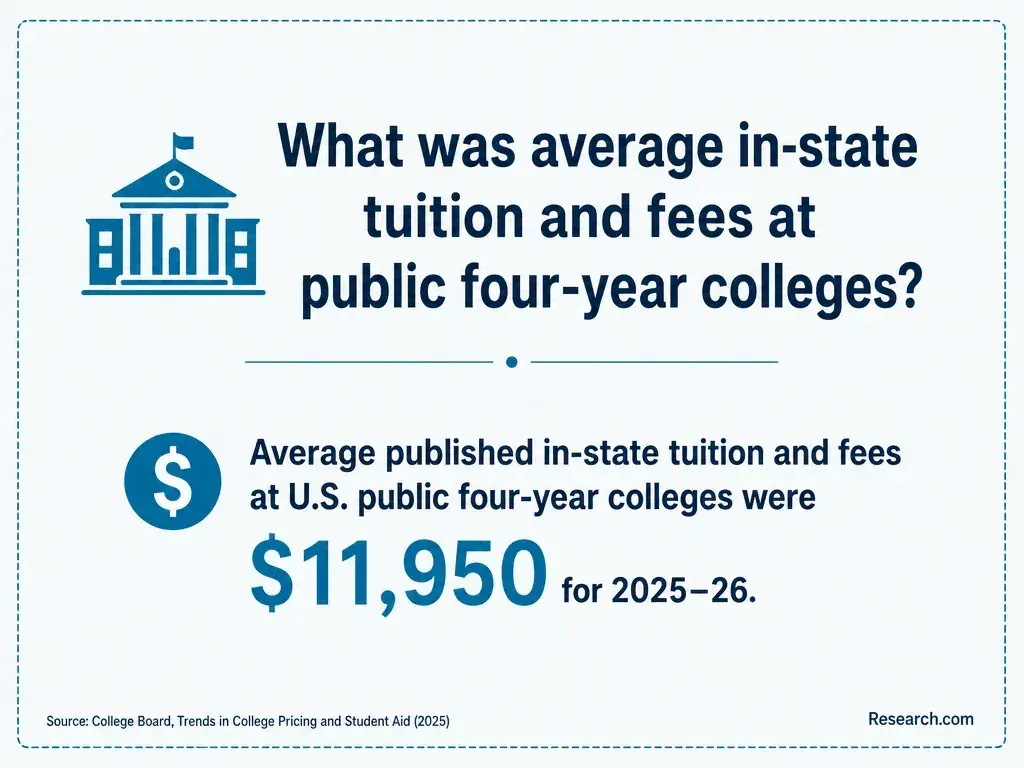
Compare the cost to finish, not the advertised price per credit. Multiply remaining required credits by the applicable tuition rate, then add mandatory fees, books, technology, travel, and any unpaid placement costs. Request a written estimate for your enrollment status; no single tuition figure reliably represents all online BA or associate programs. If an associate is a first step toward a BA, price the combined route and confirm how its credits will apply before enrolling.
For students whose end goal is counseling, the undergraduate bill is only part of the decision. Comparing mental health counseling tuition fees and financial aid can help reveal the additional education costs the initial degree choice must leave room for.
Use job descriptions, not degree names, to judge eligibility. The roles below illustrate plausible directions; employers may require experience, screening, a driver's license, specialized training, or a credential in addition to either degree.
| Potential direction | How the degrees may fit | Boundary to check |
| Human-services or behavioral-health support assistant | An associate may meet some entry requirements; a BA may qualify for postings requiring a bachelor's | Support and referrals are not independent counseling |
| Case coordination or community outreach | Either may be relevant, but some employers specify a bachelor's and prior service experience | Job title and permitted responsibilities vary by employer |
| Research or program-support work | The BA's methods training may be useful, especially with a supervised project | A degree alone does not establish data-management or research experience |
If you are drawn instead to justice-system research or victim services, evaluate those postings separately. Even forensic psychology master's intensive study options do not, by their duration or title, confer investigative authority or clinical licensure.
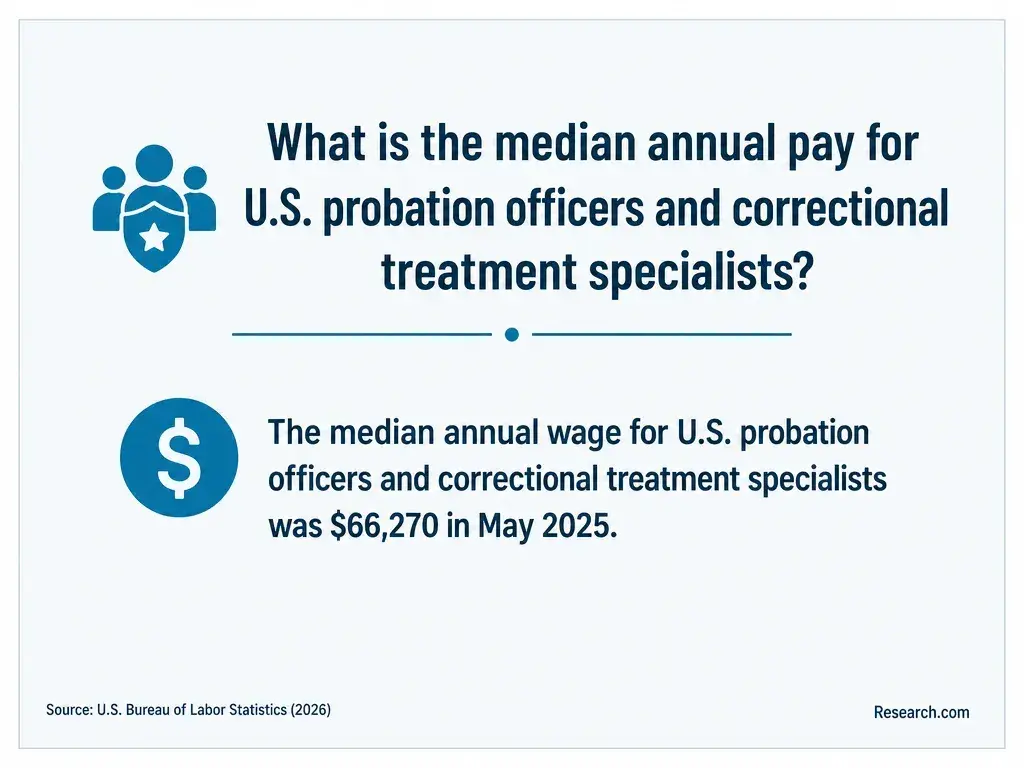
There is no dependable salary figure for everyone holding either degree. Pay depends on the occupation, location, employer, experience, and credentials - not merely whether the transcript says psychology or behavioral health.
For perspective, the U.S. Bureau of Labor Statistics reported a $59,190 median annual wage in May 2024 for substance abuse, behavioral disorder, and mental health counselors, with 17% projected employment growth from 2024 to 2034. That occupation generally requires more education and state-specific qualifications than either degree alone provides. Its figures signal demand for the occupation, not the pay or hiring outlook of new BA or associate graduates.
For a realistic estimate, identify a specific eligible job title, check its current BLS occupational profile, then compare local postings and their stated qualifications. If that target requires graduate education, include its tuition and time before treating a higher occupational wage as a return on your undergraduate degree; tuition-focused psychology master's program choices still need to be evaluated against the exact role, because a general psychology master's may not qualify you for counseling.
Requirements attach to the occupation and state, not to a mental-health concentration. Independent psychotherapy generally requires a qualifying professional degree, supervised practice, and other steps set by the relevant licensing board. Licensed psychologists typically follow a doctoral-level pathway; counselor and clinical social worker pathways have distinct qualifying degrees and rules. Neither the associate nor the psychology BA alone authorizes independent diagnosis or psychotherapy.
Some support jobs require no professional license but do require employer training. Peer-support, addiction, and other specialized roles may have state-specific certification, supervision, or permitted-duty rules. Check the state board or certifying body for the exact title you want before assuming a course or placement meets its standards.
If counseling is your goal, investigate qualifying programs rather than assuming any psychology graduate degree will work. A shorter clinical mental health counseling master's still needs to meet applicable educational and supervised-training requirements.
How can you choose an accredited and reputable behavioral health program?
First, verify the institution's recognized institutional accreditation and the exact credential it awards. Do not expect APA accreditation of a general undergraduate psychology degree, and do not treat institutional accreditation as proof that a program meets a particular state's licensing rules.
Then ask each school for the current catalog, a personalized credit evaluation if applicable, a remaining-cost estimate, and written answers about course scheduling and fieldwork. For placements, confirm who finds the site, who approves it, what supervision is provided, and whether your existing job can qualify. Ask what evidence supports any career-outcome claims and whether it describes graduates of the exact program you are considering.
Finally, work backward from your target job or next degree. If a school markets speed as its main advantage, compare the full sequence - including later study and required experience. Comparing forensic psychology master's programs by study length illustrates the broader caution: faster academic completion is useful only when the credential advances your actual career goal.
Other Things You Should Know About Psychology
Yes. Informational interviews, introductory coursework, or approved volunteer roles can help you test your interest. Ask what training and supervision the organization requires before working with clients.
Possibly, particularly if it offers an affordable starting point. Before enrolling, get the intended bachelor's institution to explain how the associate program's specific courses would apply to its degree requirements.
A second psychology degree may be unnecessary. Compare your existing skills with the posting and consider whether targeted coursework, relevant experience, or employer training would address the gap more directly.
Look for a supervised course project or an entry-level research-support opportunity. Keep a portfolio of work you are permitted to share, such as a literature review or methods proposal, without including confidential participant information.
- Estimate your college cost | usa.gov https://www.usa.gov/estimate-college-cost
- Requirements Related to the Practice of Counseling - NCBI https://www.ncbi.nlm.nih.gov/books/NBK259170/
- General Schedule Qualification Policies | U.S. Office of Personnel Management https://www.opm.gov/policy-data-oversight/classification-qualifications/general-schedule-qualification-policies/
- Fast Facts: Tuition costs of colleges and universities (76) | ed.gov https://nces.ed.gov/fastfacts/display.asp
- Students and Recent Graduate Opportunities | dol.gov https://www.dol.gov/general/jobs/students-and-recent-grads
- Psychology and Behavioral Health Associate Degree Online | The Pennsylvania Institute of Technology https://www.pit.edu/programs/psychology-and-behavioral-health/
- How Many Credits Is a Bachelor's Degree After an Associate Degree? | Franklin University https://www.franklin.edu/blog/how-many-credits-is-a-bachelors-degree-after-an-associate-degree
- How to Go from an Associate's Degree to a Bachelor's Degree | George Fox University https://www.georgefox.edu/adult-degree/articles/associate-to-bachelor-degree.html
- Bachelor of Arts in Psychology - Texas State's online programs https://online.txst.edu/degrees/undergraduate/ba-psychology/
- Online Psychology Pathway, A.S. | Perimeter College https://online.gsu.edu/program/psychology-as/