2027 How to Become a Business Intelligence Analyst

Co-Founder and Chief Data Scientist
Becoming a business intelligence analyst is a practical career goal if you enjoy working with data, business problems, and technology. Companies need professionals who can turn disconnected information from sales, finance, marketing, operations, and customer systems into reports and dashboards that leaders can actually use. A Deloitte survey found that organizations where CEOs rely on data when making decisions are 77% more successful, which helps explain why BI skills remain valuable across industries.
This guide explains what business intelligence analysts do, how the role differs from data analyst work, what education and certifications can help, which entry-level jobs are worth targeting, and how to build a career path from junior analyst to BI leadership. It is designed for students, career changers, and working professionals who want a clear, decision-focused roadmap rather than a vague list of skills.
Key Insights
- Business intelligence analysts translate business questions into data-backed reports, dashboards, and recommendations. The best candidates understand both data tools and business decision-making.
- A bachelor’s degree remains the common entry point: 68% of BI analysts agree it is essential, while 23% believe a master’s degree is needed for advanced analysis.
- Certifications can strengthen your profile, especially for Power BI, Tableau, SQL, and business analysis skills. However, they are most valuable when combined with projects, internships, or related work experience.
- Entry-level titles such as data analyst, reporting analyst, business analyst, data reporting specialist, and operations analyst can all lead to BI roles if they involve real data and stakeholder-facing reporting.
- The strongest BI portfolios do more than display charts. They define a business problem, prepare and analyze data, explain assumptions, and recommend action.
- Career growth in BI can lead from junior reporting work to senior analytics, BI development, BI management, data architecture, analytics leadership, and executive data strategy roles.
- AI, cloud data platforms, self-service BI, cybersecurity, and data governance are changing the field. BI analysts who keep learning and communicate clearly will be better positioned as tools evolve.
Quick Answer: How Do You Become a Business Intelligence Analyst?
Most people become business intelligence analysts by earning a bachelor’s degree in a data, business, technology, finance, mathematics, or information systems field; learning SQL, Excel, dashboarding, data visualization, and basic statistics; building a portfolio of BI projects; and gaining experience through internships or entry-level roles such as data analyst, reporting analyst, business analyst, or operations analyst. Certifications in tools such as Power BI, Tableau, Google Data Analytics, or broader business analysis credentials can strengthen your profile, especially if your degree is not directly related to analytics.
Key Things You Should Know Before Choosing This Career
- A bachelor’s degree is the most common academic starting point for BI analyst roles, especially in business analytics, data science, computer science, finance, mathematics, statistics, or information systems. Some advanced or leadership roles may favor a master’s degree in analytics or an MBA with a data concentration.
- Core technical skills usually include SQL, Excel, Python or R, data visualization, database concepts, and reporting tools. Knowledge of ETL workflows, cloud platforms, and statistical analysis can make you more competitive.
- Certifications such as Microsoft Power BI Data Analyst, Tableau Certified Data Analyst, Google Data Analytics, and CBIP can help document your skills, but they are strongest when paired with real projects or job experience.
- BI analysts work in many sectors, including finance, healthcare, e-commerce, technology, manufacturing, and professional services. Career growth can lead to senior BI analyst, BI developer, BI manager, data scientist, analytics leader, or chief data officer roles.
- Employers look for proof that you can solve business problems with data. Internships, dashboard projects, case studies, and open-source or public-data projects can help you stand out for entry-level positions.
- What does a Business Intelligence Analyst do?
- BI Analyst vs. Data Analyst: what is the difference?
- What degree do you need to become a Business Intelligence Analyst for 2027?
- Are online certifications enough for BI jobs, or do you need a degree?
- Why do internships matter for future BI Analysts?
- Which entry-level jobs can lead to BI Analyst roles?
- What courses should aspiring BI Analysts take?
- Can you become a BI Analyst without a college degree?
- What does BI Analyst career progression look like?
- Which BI specializations can you pursue?
- What trends are changing business intelligence?
- How much do mentoring and networking matter in BI?
- Can a DBA degree support BI leadership goals?
- Can a 1 year online MBA help BI Analysts move into leadership?
- Which soft skills are most important for BI Analysts?
- Can project management skills improve BI project results?
- How should BI Analysts handle data privacy and ethics?
What is a Business Intelligence Analyst?
A business intelligence analyst collects, organizes, analyzes, and presents business data so organizations can make better decisions. The role sits between business teams and technical teams: BI analysts must understand the business question, know where the data lives, prepare the data correctly, and explain the findings in a format that nontechnical stakeholders can use.
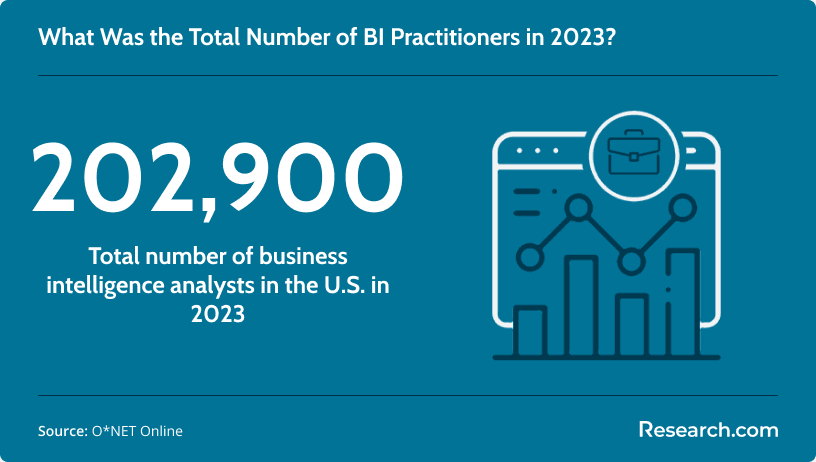
As of 2023, a total of 202,900 BI analysts were in the U.S. workforce, supporting organizations that use data to allocate resources, monitor performance, and improve operations. In practice, the job is not just “making charts.” BI analysts often define metrics, investigate performance changes, automate reports, and help leaders decide what action to take next.
| BI responsibility | What it means in practice | Why it matters to the business |
| Clarifying business questions | Meet with stakeholders to understand goals, pain points, definitions, timelines, and reporting needs. | Prevents teams from building dashboards that do not answer the real decision problem. |
| Preparing and analyzing data | Clean data, query databases, compare trends, check quality issues, and validate assumptions. | Improves confidence in the results before leaders rely on them. |
| Building dashboards and reports | Create visual reports in tools such as Power BI, Tableau, Excel, or other BI platforms. | Gives managers a consistent way to track performance and spot changes quickly. |
| Recommending improvements | Translate patterns into actions, such as reducing operational delays or improving marketing targeting. | Turns analysis into measurable business value. |
| Collaborating with IT and data teams | Work with data engineers, database administrators, and software teams on data access and reporting systems. | Keeps BI work aligned with reliable data infrastructure and governance standards. |
If you are more interested in customer behavior, campaigns, and market performance than broad business reporting, you may also want to explore how to become a marketing analyst. Marketing analysts and BI analysts use many similar data skills, but they usually apply them to different business questions.
How does a BI Analyst differ from a Data Analyst?
Business intelligence analysts and data analysts both work with data, so the job titles often overlap. The main difference is emphasis. Data analysts often focus on answering defined analytical questions from raw datasets, while BI analysts focus more heavily on recurring business reporting, dashboards, metrics, and decision support across the organization.
| Comparison area | Business Intelligence Analyst | Data Analyst |
| Primary goal | Help business leaders monitor performance, understand trends, and make operational or strategic decisions. | Analyze data to answer specific questions, test hypotheses, and identify patterns. |
| Typical outputs | Dashboards, recurring reports, KPI tracking, executive summaries, and business performance insights. | Ad hoc analyses, statistical summaries, visualizations, datasets, and analytical reports. |
| Business involvement | Usually high; BI analysts frequently work with managers, executives, operations teams, and department leaders. | Varies by role; some data analysts are business-facing, while others work more deeply with datasets and modeling. |
| Common tools | SQL, Excel, Tableau, Power BI, data warehouses, reporting platforms, and ETL concepts. | SQL, Excel, Python, R, statistics tools, visualization software, and data cleaning tools. |
| Best fit for you if... | You like connecting data to business priorities and communicating insights to stakeholders. | You enjoy exploring datasets, statistical analysis, and answering specific analytical questions. |
What a Data Analyst Usually Does
A data analyst spends much of the job collecting, cleaning, exploring, and interpreting data. The work may include writing SQL queries, preparing datasets, identifying trends, running statistical analyses, creating visualizations, and presenting findings to teams that need answers to defined questions.
Students who want deeper preparation for this type of work can compare data analytics online programs, especially if they want structured training in databases, statistics, programming, and visualization.
What a Business Intelligence Analyst Usually Does
A BI analyst typically takes a broader business-performance view. Instead of only analyzing one dataset or answering one question, the BI analyst may design dashboards that departments use every week, define how key metrics should be calculated, explain changes in revenue or operations, and help decision-makers understand where to focus next.
Strong BI analysts combine technical ability with business judgment. They need SQL and visualization skills, but they also need to know how a company makes money, how teams measure success, and how to communicate uncertainty without overwhelming the audience.
What degree is needed to become a Business Intelligence Analyst for 2027?
A bachelor’s degree is generally the standard entry credential for business intelligence analyst positions. The most direct degrees are usually data science, data analytics, business analytics, information systems, computer science, statistics, mathematics, finance, or business administration. The best choice depends on whether you want stronger technical preparation, stronger business preparation, or a balanced mix of both.
| Degree field | Why it helps for BI | Potential limitation to address |
| Data science or data analytics | Usually provides direct preparation in data analysis, visualization, statistics, and analytics tools. | May need added business coursework if the program is highly technical. |
| Computer science | Builds programming, database, systems, and technical problem-solving skills. | May not emphasize dashboard design, stakeholder communication, or business metrics unless you choose electives carefully. |
| Business administration | Develops understanding of strategy, operations, finance, management, and decision-making. | May require extra technical training in SQL, BI tools, and data modeling. |
| Mathematics or statistics | Strengthens quantitative reasoning, modeling, probability, and analytical rigor. | May need applied business projects and database experience to translate theory into BI work. |
| Information systems | Often blends business processes, databases, systems analysis, and technology management. | Program quality varies, so review course coverage in SQL, analytics, and visualization. |
Data-focused graduate programs can also be useful for professionals who want advanced analytics roles or stronger technical credibility. For example, demand for the cheapest online data science masters reflects the broader interest in affordable graduate pathways for analytics careers.
Among BI analysts, 68% agree that having a bachelor's degree is essential while 23% believe that a master's degree is necessary to perform advanced analysis. That does not mean every employer requires the same credential, but it does show that formal education remains an important signal in many BI hiring processes.
If you already have a degree in another area, you do not necessarily need to start over. Focus on filling gaps through SQL, database, statistics, visualization, and business analytics coursework. The top data analytics master's degree programs may be worth comparing if you want structured graduate-level training in analytics, predictive modeling, and BI concepts.
How to Choose the Right Degree Path
- Choose data science or analytics if you want the most direct path into data-heavy BI work.
- Choose information systems if you want a balance of business processes and technology.
- Choose business administration or finance if you want to work closely with executives, operations, accounting, or strategy teams.
- Choose computer science if you want stronger technical depth and possible movement toward data engineering or BI development.
- Choose mathematics or statistics if you enjoy quantitative methods and may later move into advanced analytics or data science.
Understanding salary movement across experience levels can help you plan your long-term path. The following chart shows average BI analyst earnings by employment level and illustrates how compensation can change as responsibilities expand.
How do online certifications compare to traditional degrees for business intelligence roles?
Online certifications and traditional degrees serve different purposes in BI hiring. A degree gives broader academic preparation and can help with long-term career mobility. A certification provides narrower proof that you can use a specific tool, method, or framework. For many candidates, the strongest strategy is not choosing one over the other, but combining a relevant degree, practical projects, and targeted certifications.
A traditional data analyst degree can help students build foundations in statistics, databases, programming, business reasoning, and research methods. Employers may value that depth when roles require analytical judgment, cross-functional communication, or advancement into senior positions.
Certifications are useful when you need to demonstrate job-ready skills quickly. Online programs from providers such as Coursera, Google, Microsoft, Tableau, and other platforms often focus on hands-on tasks: writing SQL, cleaning data, building dashboards, or using a BI tool in realistic scenarios. An overwhelming 95% of BI practitioners would recommend certification to their colleagues as a means to support career development.
| Option | Best for | Main advantage | Watch out for |
| Bachelor’s degree | New students and candidates seeking broad entry-level eligibility. | Provides a recognized credential and broad academic foundation. | May not include enough hands-on BI tool practice unless you choose projects and electives carefully. |
| Master’s degree | Professionals targeting advanced analytics, leadership, or specialized roles. | Can deepen analytical, technical, and strategic capabilities. | Cost and time commitment should be compared against career goals and employer expectations. |
| Online certification | Career changers, working professionals, and degree holders who need specific tool skills. | Can be faster and more focused than a full degree. | Weak if you complete it without a portfolio or real-world practice. |
| Portfolio projects | Anyone trying to prove practical ability. | Shows how you think, clean data, design dashboards, and explain insights. | Projects should solve business questions, not just display charts. |
If your interests lean toward designing the data systems that BI teams depend on, review data architect career requirements. Data architects focus more on data structures, databases, architecture, and modeling, while BI analysts focus more on reporting, insight delivery, and business decision support.
How can internships help in becoming a Business Intelligence Analyst?
Internships are one of the most effective ways to move from classroom knowledge to employable BI skills. They give you experience with messy business data, real stakeholders, changing priorities, and reporting deadlines—conditions that are difficult to reproduce in a course alone.
- They build applied technical skill. Interns practice SQL, Excel, data cleaning, visualization, dashboarding, and quality checks using real datasets rather than perfectly prepared examples.
- They show how businesses actually use data. You learn how finance, sales, marketing, operations, HR, or product teams define success and what they need from BI reports.
- They create portfolio evidence. Even if you cannot share confidential company data, you can describe the business problem, tools used, process followed, and impact of the work.
- They expand your professional network. Supervisors, analysts, managers, and other interns can become references, mentors, or future job leads.
- They help you test industry fit. A BI internship in healthcare can feel very different from one in retail, banking, logistics, or software.
How to Get More Value From a BI Internship
- Ask what business decision each report or dashboard supports.
- Document the tools, queries, metrics, and business rules you learn.
- Request feedback on both technical accuracy and presentation clarity.
- Keep a private work log so you can later translate the experience into resume bullet points.
- Volunteer for cross-functional meetings where analysts explain findings to nontechnical teams.
What entry-level positions are suitable for aspiring BI Analysts?
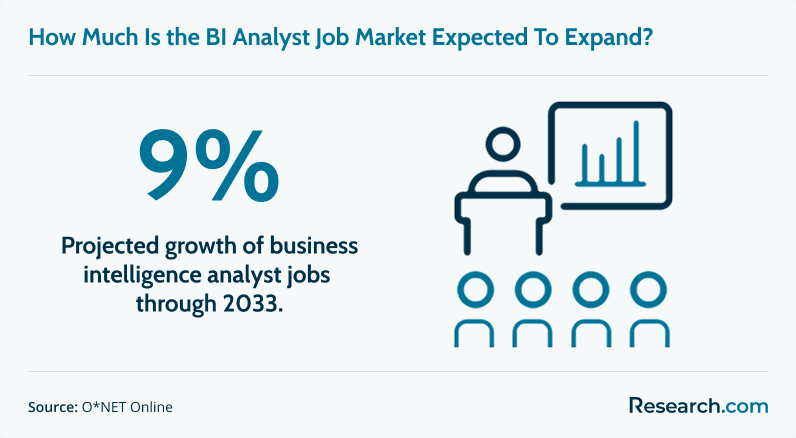
Aspiring BI analysts do not always start with the exact title “Business Intelligence Analyst.” Many build the right experience through related roles that involve reporting, data quality, SQL, dashboards, business processes, or performance analysis. Given the projected 9% growth in business analyst jobs through 2033, entry-level business analysis and reporting roles can be practical stepping stones.
Among the BI analysts surveyed, 83% saw the benefits of certification within the first year, while 32% saw benefits within a month. Certification alone is not a substitute for experience, but it can help when paired with entry-level work and a portfolio.
| Entry-level role | What you do | Skills to emphasize | Why it can lead to BI |
| Data Analyst | Clean, analyze, and interpret data to support business decisions. | SQL, Excel, Python or R, Tableau, Power BI, visualization. | Strong overlap with BI reporting, data preparation, and insight communication. |
| Business Analyst | Analyze business processes, requirements, workflows, and performance issues. | Excel, SQL, communication, process mapping, business modeling. | Develops stakeholder-facing skills that BI analysts use every day. |
| Reporting Analyst | Create, automate, and maintain recurring reports and dashboards. | SQL, Power BI, Tableau, Excel, dashboard design, automation. | Closely matches the reporting and KPI-monitoring side of BI. |
| Data Reporting Specialist | Prepare reports for departments such as finance, sales, HR, or operations. | Data extraction, Excel, SQL, Tableau, Power BI, data storytelling. | Builds practical experience with operational metrics and stakeholder requests. |
| Operations Analyst | Use data to improve workflows, staffing, costs, service levels, or production processes. | Excel, SQL, statistical analysis, ERP or CRM systems, process improvement. | Helps you understand the operational context behind BI metrics. |
Are there specific courses beneficial for aspiring BI Analysts?
The most useful courses for future BI analysts are the ones that connect technical data work to business decisions. Many top online data analytics master's programs include these areas, but you can also build them through undergraduate electives, certificate programs, bootcamps, or self-paced learning.
BI analysts identify that the top three roles of business intelligence include defining needs and recommending solutions (23%), collecting, synthesizing, and analyzing information (20%), and evaluating and improving business processes (19%). Your course choices should prepare you for all three.
| Course area | What to learn | How it applies to BI work |
| SQL for data analysis | Joins, subqueries, aggregations, filtering, window functions, and query logic. | Lets you retrieve and transform business data from relational databases. |
| Database management systems | Database design, normalization, data storage, administration basics, and data integrity. | Helps you understand where data comes from and why quality problems occur. |
| Power BI or Tableau | Data connections, measures, dashboard layout, visual design, and interactive reporting. | Prepares you to build dashboards that stakeholders can use without technical help. |
| Data visualization principles | Chart selection, layout, color use, accessibility, and visual storytelling. | Improves how clearly you communicate findings and reduce misinterpretation. |
| Statistics for data analysis | Descriptive statistics, hypothesis testing, regression, variation, and uncertainty. | Helps you avoid overclaiming and supports more accurate interpretation. |
| Python or R for data analysis | Data manipulation, cleaning, automation, and analytical libraries such as Pandas and NumPy. | Useful for repeatable workflows, larger datasets, and advanced analysis. |
| Business analytics | Predictive modeling, data mining, business metrics, and analytics strategy. | Connects analytical methods to business performance and planning. |
| Data warehousing and ETL | Extract, transform, load processes; data warehouse design; and data pipelines. | Explains how reporting data is prepared before it appears in BI tools. |
| Advanced Excel | Power Pivot, formulas, lookups, pivot tables, and data modeling features. | Still valuable because many organizations use Excel alongside BI platforms. |
Beyond individual courses, business analysis certifications can help professionals signal expertise. In 2023, 43% of practitioners were certified business analysis professionals, as shown in the next chart.
Can you become a BI Analyst without a formal degree?
Yes, it is possible to become a BI analyst without a formal degree, but the path is usually harder and requires strong proof of skill. Employers that relax degree requirements still want evidence that you can work with databases, build accurate reports, understand business questions, and communicate clearly. A portfolio becomes especially important if you do not have a traditional credential.
Degree-Free BI Roadmap
- Learn the core tools first. Start with SQL, Excel, one visualization tool such as Power BI or Tableau, and basic statistics. You can use resources that explain essential technical skills to identify gaps.
- Build business-focused projects. Use public datasets to answer realistic questions, such as which products are underperforming, which customer groups are most profitable, or where operational delays appear.
- Create a portfolio that explains your decisions. Include the business question, data source, cleaning steps, analysis method, dashboard screenshots, and recommendations.
- Earn targeted certifications. Tool-based credentials can help validate your skills. Microsoft Power BI and Tableau credentials are examples of certifications that pay well when aligned with in-demand roles.
- Get adjacent experience. Apply for reporting assistant, data coordinator, operations analyst, junior analyst, or business analyst roles where you can work with data regularly.
- Network with BI professionals. Use LinkedIn, analytics communities, local meetups, and alumni groups to learn what hiring managers expect and to find project ideas.
Certified business analysis professionals typically earn at least 19% more than non-certified practitioners. That figure does not guarantee a salary increase for every individual, but it supports the idea that professional development can have market value when it reflects real capability.
What is the typical career progression for a Business Intelligence Analyst?
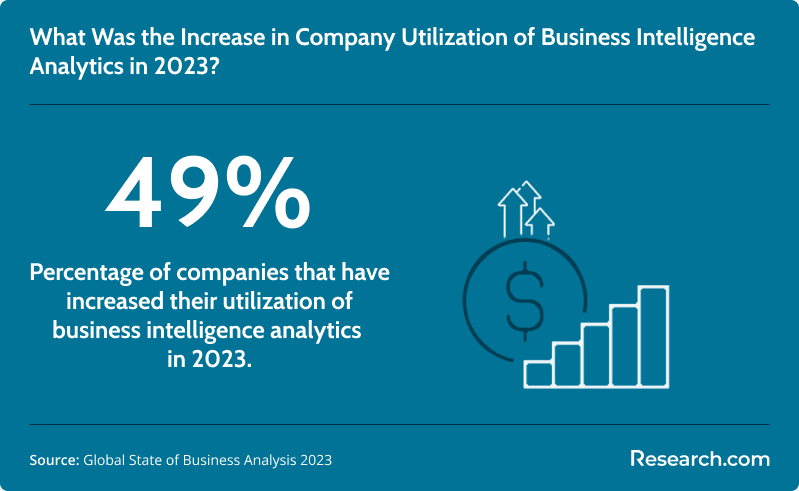
Career growth in business intelligence usually moves from reporting and data preparation to advanced analytics, BI architecture, team leadership, and enterprise data strategy. A survey conducted by an analytics platform provider found that 49% of companies have increased their utilization of business intelligence analytics compared to pre-pandemic levels, which supports continued interest in professionals who can turn data into decisions.
Because data skills can lead to strong career outcomes, data science is often discussed among the highest paying degrees. BI is related to that broader data field, although salaries and advancement vary by role, employer, industry, location, and experience.
| Career stage | Common titles | Primary responsibilities | Skills to build next |
| Entry level: 0–3 years | Junior Business Intelligence Analyst, Data Analyst, Reporting Analyst | Query data, clean datasets, build reports, update dashboards, and support business teams. | SQL depth, dashboard design, data quality checks, stakeholder communication, Python or R basics. |
| Mid level: 3–7 years | Senior BI Analyst, Business Data Analyst, BI Developer, Data Engineer with BI focus | Design metrics, automate reporting, improve ETL workflows, create advanced dashboards, and mentor junior staff. | Cloud platforms, data modeling, predictive analytics, documentation, and project ownership. |
| Senior level: 7–12 years | BI Manager, BI Architect, Analytics Manager, Data Science Manager | Lead analytics initiatives, define governance standards, align reporting infrastructure with business strategy, and manage teams or programs. | Leadership, budgeting, data governance, architecture decisions, executive communication. |
| Executive level: 12+ years | Director of Business Intelligence, VP of Analytics, Chief Data Officer, Chief Analytics Officer | Set enterprise data strategy, oversee BI and analytics teams, guide data governance, and report business impact to senior leadership. | Organizational leadership, risk management, data ethics, transformation strategy, and cross-functional influence. |
What are the opportunities for specialization in business intelligence?
Business intelligence is broad enough to support several specialization paths. The right specialty depends on whether you prefer visual communication, data systems, predictive analysis, industry expertise, cloud technology, or a specific business function.
| BI specialization | What the work emphasizes | Good fit if you... |
| Data visualization specialist | Dashboard design, visual storytelling, report usability, and executive-ready presentation. | Enjoy making complex information clear, persuasive, and easy to interpret. |
| Data warehousing specialist | ETL processes, data modeling, warehouse design, and database performance. | Like the technical infrastructure behind reliable reporting. |
| Business analytics specialist | Predictive modeling, statistical analysis, data mining, and decision modeling. | Want to move beyond descriptive reporting into forecasting and advanced analysis. |
| Industry-specific BI specialist | Metrics, regulations, and workflows in fields such as healthcare, finance, retail, or manufacturing. | Want to become valuable by understanding a sector’s business rules and performance drivers. |
| Cloud BI specialist | Cloud data storage, cloud analytics platforms, real-time processing, and scalable reporting. | Enjoy modern data platforms such as AWS, Azure, or Google Cloud. |
| E-commerce BI specialist | Customer lifetime value, conversion rates, shopping cart abandonment, traffic patterns, and sales performance. | Want to work with digital commerce, customer journeys, and online growth metrics. |
| Marketing analytics specialist | Campaign performance, customer segmentation, attribution, marketing ROI, and audience behavior. | Prefer connecting data insights to customer acquisition, retention, and brand strategy. |
Professionals who want stronger strategic business training may compare programs such as online MBA business analytics options, especially if they plan to manage analytics teams or advise executives.
Can a 1 year online MBA program enhance a BI Analyst's strategic and leadership skills?
A 1 year online MBA can help some BI analysts move from technical reporting into broader business leadership. The value depends on your career goal. If you want to manage teams, influence strategy, communicate with executives, or connect analytics to finance, operations, and marketing decisions, an accelerated MBA may provide useful business frameworks. If you still need core BI skills, however, SQL, data modeling, visualization, and analytics coursework should come first.
What essential soft skills are crucial for BI success?
Technical ability gets a BI analyst into the conversation; soft skills determine whether the analysis influences decisions. BI analysts must explain findings to people who may not understand databases, statistics, or dashboard logic. They also need to ask better questions when stakeholders request “a report” but have not clearly defined the decision they need to make.
- Communication: Translate technical analysis into business language without hiding uncertainty.
- Critical thinking: Question assumptions, spot weak metrics, and avoid misleading conclusions.
- Problem-solving: Break vague business issues into measurable questions and practical next steps.
- Stakeholder management: Balance competing requests from departments with different priorities.
- Data storytelling: Present trends, exceptions, and recommendations in a way that supports action.
- Leadership: Guide conversations about metrics, priorities, and trade-offs even without formal authority.
For analysts seeking business leadership development alongside analytics experience, affordable AACSB accredited online MBA programs no GMAT may be worth reviewing, especially when accreditation, cost, and scheduling flexibility matter.
Can project management skills enhance BI project outcomes?
Project management skills can make BI work more reliable because analytics projects often involve unclear requirements, multiple data sources, changing timelines, and stakeholders who interpret metrics differently. A BI analyst who can define scope, document assumptions, manage deliverables, and communicate risks is more likely to deliver dashboards and reports that remain useful after launch.
| Project management skill | How it improves BI work |
| Scope definition | Prevents dashboard projects from expanding endlessly without a clear decision purpose. |
| Requirement gathering | Clarifies which metrics, filters, users, and update schedules are actually needed. |
| Risk tracking | Identifies data quality, access, compliance, or timeline issues before they derail the project. |
| Stakeholder communication | Keeps business teams informed about trade-offs, limitations, and delivery status. |
| Documentation | Makes dashboards easier to maintain and helps future analysts understand business rules. |
If you want formal training in this area, compare options such as the fastest project management degree programs online, but choose only if the credential supports your career plan and budget.
How can BI Analysts ensure data privacy and ethical practices?
BI analysts often handle sensitive business, customer, employee, financial, or operational data. Ethical BI work means using data only for legitimate purposes, limiting access, documenting definitions, avoiding misleading visualizations, and respecting privacy obligations. Analysts should be familiar with organizational data governance policies and regulatory frameworks such as GDPR and CCPA when those rules apply.
- Use role-based access so users see only the data they are authorized to view.
- Remove or anonymize personally identifiable information when detailed identity is not needed.
- Document metric definitions so teams do not make decisions from inconsistent calculations.
- Flag data limitations instead of presenting uncertain results as definitive facts.
- Audit dashboards and reports regularly for outdated fields, broken logic, or exposed sensitive data.
- Work with legal, compliance, cybersecurity, and data governance teams when reporting involves regulated information.
Analysts moving into senior decision-making roles may also benefit from broader management education. Research.com’s guide to online MBA programs top solutions can help readers compare flexible business programs when leadership development is part of the plan.
What are the emerging trends in business intelligence?
Several trends are reshaping BI work. Artificial intelligence and machine learning are expanding predictive analytics and automated insight generation. Cloud-based data warehouses are making it easier for organizations to scale reporting and support near real-time analysis. Self-service BI tools are allowing more nontechnical users to explore data, which increases the need for governance, training, and consistent metric definitions.
Cybersecurity, privacy, and data governance are also becoming more central to BI. As more employees access dashboards and more data moves through cloud systems, organizations need clearer controls around who can view, change, export, and interpret data. Continuous learning is becoming part of the job, whether through tool training, analytics coursework, or broader business education. If cost is a major factor in your education planning, review How much does it cost to get a business degree online? before committing to a program.
How important are mentorship and networking opportunities for BI Analysts?
Mentorship and networking can meaningfully accelerate a BI career because many important skills are learned on the job: how to frame ambiguous requests, how to challenge weak metrics diplomatically, how to present to executives, and how to choose between competing stakeholder priorities. A mentor can help you avoid common mistakes and identify which skills matter most for your target industry.
- Join analytics, BI, data visualization, or business analysis communities.
- Ask experienced analysts to review your dashboard portfolio.
- Attend webinars, meetups, or conferences focused on BI tools and data governance.
- Use informational interviews to learn what different industries expect from BI analysts.
- Look for internal mentors if you already work in a data-adjacent role.
Networking can also help you discover affordable education routes. For example, professionals interested in financial analysis or finance-heavy BI roles may compare the cheapest online finance degree options as part of a broader upskilling plan.
Can an advanced DBA degree accelerate career progression in business intelligence?
A DBA can be useful for BI professionals aiming at executive, consulting, academic, or research-oriented leadership roles. It is not necessary for most analyst positions. The degree may make sense if you want to lead analytics strategy, study organizational decision-making, conduct applied business research, or advise senior leaders on enterprise data transformation.
Before enrolling, compare the degree’s cost, research expectations, faculty expertise, accreditation, and relevance to your target role. If the goal is senior data leadership, affordable DBA programs may be worth reviewing, but a DBA should be chosen for a clear career reason rather than as a general BI requirement.
Common Mistakes to Avoid When Preparing for a BI Career
| Mistake | Why it hurts your chances | Better approach |
| Learning tools without business context | A polished dashboard is weak if it does not answer a useful business question. | Build projects around decisions, metrics, and recommendations. |
| Ignoring SQL | Many BI roles require database querying even when dashboards are built in visual tools. | Practice SQL until you can join tables, aggregate data, and troubleshoot query results. |
| Assuming certifications guarantee a job | Credentials may help, but employers still need proof of applied ability. | Pair certifications with portfolio projects, internships, or entry-level experience. |
| Focusing only on charts | BI work includes data quality, metric definitions, stakeholder alignment, and governance. | Learn the full workflow from business question to data source to decision. |
| Choosing a program based only on tuition | A cheap program may not provide the skills, support, or credibility you need. | Compare accreditation, curriculum, faculty, career support, transfer policies, and tool coverage. |
| Overstating findings | Leaders may make poor decisions if you present uncertain patterns as confirmed conclusions. | Explain assumptions, limitations, and confidence levels clearly. |
Practical Steps to Start Your BI Analyst Career
- Pick a target role. Decide whether you want to start as a BI analyst, data analyst, reporting analyst, business analyst, or operations analyst.
- Build the technical base. Learn SQL, Excel, one BI platform, basic statistics, and data cleaning.
- Study business fundamentals. Understand revenue, costs, customer behavior, operations, finance, and KPIs.
- Create three portfolio projects. Include one dashboard, one SQL-heavy analysis, and one written business recommendation.
- Earn a relevant certification if it fills a gap. Choose credentials that match job descriptions in your target market.
- Apply for internships or entry-level roles. Prioritize roles that involve real data, reporting, stakeholder communication, and business metrics.
- Practice explaining your work. Be ready to discuss data sources, assumptions, cleaning choices, chart design, and recommended actions.
- Keep learning after your first role. Add cloud tools, ETL concepts, Python or R, governance, and advanced analytics as your responsibilities grow.
Questions to Ask Before Choosing a BI Degree, Certificate, or Training Program
- Does the curriculum include SQL, databases, visualization, statistics, and business analytics?
- Will I build portfolio projects using realistic datasets and BI tools?
- Does the program teach Power BI, Tableau, Excel, Python, R, or other tools listed in job postings I want?
- Is the school or provider recognized by employers in my target industry?
- What career services, internship support, or employer connections are available?
- Can I transfer credits or apply prior learning if I already have college experience?
- What is the total cost, including fees, software, books, and time away from work?
- Does the credential match my goal: entry-level analyst, career change, promotion, or leadership?
References:
- Bacancy Technology. (n.d.). Data science stats and facts.
- BARC. (n.d.). Business intelligence trends.
- EB Pearls. (n.d.). The state of data science.
- International Institute of Business Analysis (IIBA). (2023). The global state of business analysis 2023.
- U.S. Bureau of Labor Statistics. (2025). Operations research analysts. Occupational Outlook Handbook.
- U.S. Department of Labor, Employment and Training Administration. (2025). Operations research analysts. O*NET OnLine.
Other Things You Should Know About Becoming a Business Intelligence Analyst
Employers expect BI analysts to write SELECT queries, join tables, filter and aggregate data, and use GROUP BY and HAVING. Many job posts also ask for window functions, CTEs, and basic query optimization, because analysts must pull clean data from SQL databases for reporting and dashboards.
Certifications like Microsoft Certified: Data Analyst Associate or Certified Business Intelligence Professional (CBIP) can enhance a career in 2027. They validate expertise and differentiate candidates, boosting employability and potential salary in the competitive business intelligence field.