2027 Best Accredited Online Health Psychology Degree Programs: Compare Tuition, Admissions, and Career Outcomes

Co-Founder and Chief Data Scientist
Choosing an online health psychology degree is harder than comparing tuition alone, because many programs are psychology degrees with health psychology concentrations rather than standalone licensure tracks. The stakes are real: the U. S. Bureau of Labor Statistics reports that psychologists had a median annual wage of $94,310 in May 2024, but many health psychology roles require graduate training. This guide is for students comparing accredited online options, costs, admissions, flexibility, and career fit so they can avoid overpriced or poorly matched programs.
Key Things You Should Know
- Standalone online health psychology degrees are limited. The strongest options are usually accredited psychology programs with a health psychology concentration, behavioral health curriculum, research training, or preparation for later doctoral study.
- Published online graduate tuition commonly ranges from about $500 to more than $1,300 per credit, so total cost, transfer credit, fees, and aid can matter more than the sticker price per course.
- Health psychology is not automatically a licensure pathway. Clinical practice generally requires a state-approved doctoral or counseling route, while nonclinical graduates may pursue health education, research, wellness, public health, or behavioral health program roles.
Which Accredited Online Health Psychology Degree Programs Offer the Best Overall Value?
The best overall value usually comes from a program that balances regional accreditation, health psychology-specific coursework, reasonable total cost, flexible scheduling, and honest career alignment. Because health psychology sits between psychology, public health, behavioral medicine, and wellness, students should compare programs by intended outcome rather than name recognition alone.
The table below summarizes representative accredited online options and how they tend to fit different student goals. Tuition and curriculum can change, so use this as a decision framework and verify current catalog details before applying.
| Program type | Best value for | Typical strengths | Important limitation |
| Online master's in psychology with health psychology concentration | Students seeking nonclinical health behavior, wellness, research, or doctoral-preparation roles | Focused graduate coursework in behavior change, biopsychology, stress, chronic illness, and research methods | Usually does not by itself qualify graduates for psychologist licensure |
| Online bachelor's in psychology with health-related electives | First-time college students and transfer students who want a lower-cost foundation | Broad preparation for graduate school, public health roles, case management, and behavioral health support | Career options may be more limited without graduate education |
| Online health education or public health degree with behavioral science coursework | Students focused on prevention, community health, and program planning | Practical alignment with health promotion jobs and population health work | Less psychology depth than a psychology major or graduate psychology program |
| Hybrid doctoral psychology pathway with health psychology research or practicum opportunities | Students targeting licensed clinical practice or academic research | Stronger fit for licensure planning, supervised training, and advanced research | More expensive, selective, and time-intensive than master's programs |
For most working adults, the highest-value choice is not automatically the cheapest program. A lower-cost online master's can be a strong investment if it includes research methods, statistics, health behavior theory, and faculty expertise in behavioral medicine.
A more expensive program may be worth considering only if it offers stronger practicum access, doctoral preparation, research mentoring, or employer-recognized outcomes that match your goal.
A common mistake is assuming that "online" means the program is less rigorous or that a "health psychology" label means clinical licensure. Instead, ask whether the degree prepares you for the specific next step you want: graduate school, research, health coaching, community health, employee wellness, behavioral health administration, or a state-regulated clinical pathway.
What Accreditation Should Students Look for in an Online Health Psychology Degree Program?
Accreditation is the first filter. At minimum, choose an institution accredited by a recognized institutional accreditor because this affects federal financial aid eligibility, credit transfer, graduate school recognition, and employer trust. For online students, institutional accreditation matters more than whether the delivery format is online or campus-based.
Health psychology can create confusion because specialized accreditation works differently by degree level. The American Psychological Association accredits doctoral programs in clinical, counseling, and school psychology, as well as internships and postdoctoral residencies, but it does not generally accredit bachelor's or stand-alone master's health psychology programs.
That means a non-APA-accredited master's in health psychology is not automatically a red flag, but it does mean students must be clear about licensure limits.
Use this accreditation checklist before requesting information or applying:
- Confirm the institution's accreditation in the U.S. Department of Education or Council for Higher Education Accreditation databases.
- Ask whether the program is intended for licensure, doctoral preparation, nonclinical employment, or professional development.
- If you want to become a licensed psychologist, verify state board requirements before enrolling, especially doctoral accreditation, internship, residency, and supervised-hour rules.
- Check whether online students have equal access to faculty advising, library resources, research opportunities, and career services.
- Review transfer-credit policies in writing if you are bringing prior college credits or graduate coursework.
The biggest red flag is vague language such as "prepares you for counseling careers" without explaining whether the program meets state licensure requirements. If a school cannot clearly describe what the degree does and does not qualify you to do, treat that as a reason to slow down and ask more questions.
How Do Tuition Costs Compare Across Accredited Online Health Psychology Degree Programs?
Tuition varies widely because online health psychology programs may be housed in public universities, private nonprofit institutions, or private for-profit institutions. College Board's 2024 Trends in College Pricing reported average published tuition and fees of $11,610 for in-state students at public four-year institutions and $43,350 at private nonprofit four-year institutions for the 2024-25 academic year; that gap shows why institution type can affect affordability, but it does not determine value by itself.
The table below shows the main cost categories students should compare. This is more useful than looking only at tuition per credit because online programs often add technology fees, course materials, residency costs, or graduation fees.
| Cost factor | Why it matters | How to compare programs |
| Tuition per credit | Forms the base price of the degree | Multiply by required credits, not by an estimated course count |
| Program length | Longer programs may cost more even with lower per-credit tuition | Compare total required credits and expected time to completion |
| Online and technology fees | Can materially increase the real cost of attendance | Ask for a full fee schedule for online students |
| Books, software, and assessment tools | Psychology courses may require statistics software, testing materials, or digital platforms | Request estimated materials costs by term |
| Residency or campus requirements | Hybrid programs may require travel, lodging, and time away from work | Confirm whether any in-person sessions are mandatory |
| Transfer credit | Accepted credits can reduce both cost and completion time | Get an official transfer evaluation before committing |
A lower tuition rate is most valuable when the program also has strong retention support, relevant curriculum, and a realistic path to your next credential or job. Paying more may make sense for a student who needs doctoral-level research mentoring, a strong alumni network, or clinical placement infrastructure, but it is a poor trade-off if the program does not align with the student's licensing or employment goal.
To avoid overpaying, compare total cost of attendance for the full degree, not just per-credit tuition. Also ask whether tuition is locked while enrolled, whether military or employer discounts apply, and whether scholarships reduce tuition or only apply to a single term.
How Competitive Is Admission to Accredited Online Health Psychology Degree Programs?
Admissions competitiveness depends heavily on degree level. Online bachelor's programs are often transfer-friendly and may use open or broad-access admissions, while online master's programs usually require a completed bachelor's degree, minimum GPA, transcripts, and sometimes statistics or psychology prerequisites. Doctoral pathways are much more selective because they involve research fit, faculty supervision, clinical training capacity, or residency expectations.
The table below outlines how admissions requirements typically differ by program level. Use it to identify whether you are ready to apply now or need prerequisite coursework first.
| Degree level | Common admissions requirements | Best fit | Potential barrier |
| Bachelor's degree | High school diploma or GED, transcripts, transfer-credit review | First-time college students, transfer students, working adults | Limited upper-level psychology preparation if the program lacks health-focused electives |
| Master's degree | Bachelor's degree, minimum GPA, statement of purpose, transcripts, possible prerequisite coursework | Students seeking graduate-level behavioral health, wellness, research, or doctoral preparation | May require statistics, research methods, or prior psychology coursework |
| Doctoral degree | Graduate GPA, research interests, writing sample, recommendations, interview, possible master's degree | Students targeting advanced research, academic work, or eventual licensed practice | High cost, long timeline, and stricter fit with faculty or training model |
Admissions flexibility is not automatically a sign of weak quality. Many accredited online programs are designed for adults returning to school, military students, caregivers, and full-time workers. What matters is whether the program has enough academic support to help admitted students complete quantitative courses, research projects, and capstone requirements.
If your main goal is faster entry into direct patient care rather than psychology study, compare alternatives before applying. For example, students asking what is the fastest way to become an LPN may find that a nursing pathway fits their timeline better than a health psychology degree.
Which Learning Formats Offer the Greatest Flexibility in Online Health Psychology Degree Programs?
The most flexible online health psychology programs are usually asynchronous, part-time friendly, and designed around short terms or multiple start dates. However, flexibility should not come at the expense of faculty access, research feedback, or structured support, especially at the graduate level.
Online learning formats differ in ways that affect weekly schedule, interaction, and workload. The table below explains what each format means for students comparing programs.
| Format | How it works | Best for | Watch for |
| Asynchronous online | Students complete weekly modules without required live class meetings | Working adults, caregivers, students across time zones | Requires strong self-management and writing skills |
| Synchronous online | Students attend live virtual classes at scheduled times | Students who want real-time discussion and structure | Less flexible for shift workers or students with unpredictable schedules |
| Hybrid | Most coursework is online, but some meetings, labs, or residencies occur in person | Students who want online convenience plus supervised training or networking | Travel expenses and scheduling conflicts |
| Accelerated terms | Courses run in shorter sessions, often allowing faster progress | Motivated students with predictable weekly study time | Heavy workload and less recovery time between courses |
For health psychology, asynchronous coursework can work well for theory, research methods, and health behavior content. Live or hybrid components may be more useful when a program includes group projects, applied consultation, practicum preparation, or doctoral-level mentoring.
A common mistake is choosing the fastest format without calculating weekly workload. A graduate psychology course may require extensive reading, statistics assignments, discussion posts, and research writing, so a student working full time may be better served by part-time pacing than by an accelerated schedule that increases the risk of withdrawing.
What Student Support Services Improve Success in Online Health Psychology Degree Programs?
Student support can make a major difference in online psychology programs because students often complete research-heavy coursework without daily campus contact. Strong support is especially important for learners returning after a long academic break or entering graduate school without a psychology bachelor's degree.
Look for support services that directly match the demands of health psychology coursework. The most useful services are those that help students complete research, statistics, writing, and career-planning requirements.
- Dedicated academic advising that maps prerequisites, electives, transfer credits, and graduation timelines before enrollment.
- Online tutoring for statistics, research methods, scientific writing, and APA-style formatting.
- Faculty access through virtual office hours, feedback on research interests, and guidance on doctoral preparation.
- Career services that understand psychology-adjacent roles in public health, wellness, behavioral health, and nonprofit settings.
- Library access to psychology databases, peer-reviewed journals, citation tools, and research consultations.
- Mental health and disability support for online students, including accommodations for testing, deadlines, or synchronous participation when eligible.
Ask admissions counselors whether online students use the same services as campus students. If support is outsourced, limited to email, or available only during standard business hours, that may be a poor fit for students balancing work, family, and evening coursework.
Another red flag is a program that promotes flexibility but gives little detail about instructor response times, tutoring availability, or capstone support. In a research-oriented field, poor academic feedback can delay graduation and weaken preparation for graduate or doctoral study.
Which Financial Aid Options Are Available for Accredited Online Health Psychology Degree Students?
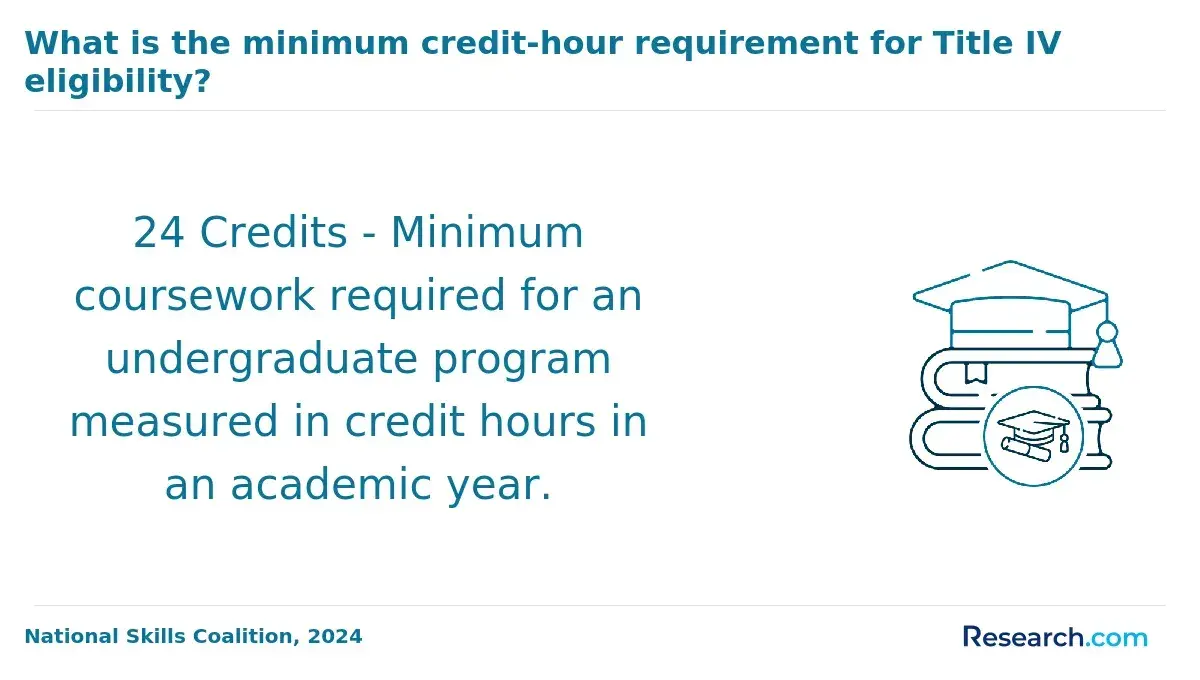
Students in accredited online health psychology programs may qualify for federal financial aid if the institution participates in Title IV aid programs and the student meets eligibility rules. Aid availability can differ by degree level, enrollment status, satisfactory academic progress, and whether the program is degree-granting rather than a standalone certificate.
Before comparing awards, make sure you understand which aid types reduce cost and which create repayment obligations. This sequence can help you evaluate offers more carefully:
- Complete the FAFSA and confirm that each school is eligible to receive federal aid.
- Compare grants and scholarships first because they usually do not need to be repaid.
- Review employer tuition assistance, military education benefits, or partnership discounts if they apply to you.
- Calculate net price after gift aid, not just the published tuition rate.
- Borrow only after estimating monthly repayment and comparing expected career paths.
- Ask whether dropping below half-time enrollment changes your aid eligibility or loan deferment status.
Federal aid rules are especially important for students who are still comparing healthcare career paths. If you are considering shorter allied health training instead of a psychology degree, it can also help to compare online medical assistant programs FAFSA approved before deciding which credential offers the best near-term return.
One common mistake is treating the largest aid package as the best offer. A package with more loans may look generous but cost more over time than a smaller package with institutional scholarships, lower tuition, and fewer fees. Always compare net cost, graduation timeline, and borrowing risk together.
Which Career Outcomes Are Associated With Accredited Online Health Psychology Degree Programs?
Health psychology focuses on how behavior, stress, cognition, social conditions, and biological factors affect health and illness. Graduates may work in nonclinical roles related to health promotion, wellness, behavioral health programs, patient education, research support, or community health, while licensed psychologist roles typically require doctoral education and state licensure.
BLS employment projections show psychologist jobs are expected to grow 7% from 2024 to 2034, faster than the average for all occupations. For students, this signals steady demand for psychological expertise, but it does not mean every health psychology graduate will qualify for psychologist roles without the required advanced education and licensure.
The table below connects degree level with realistic career directions. It is designed to help students avoid choosing a program that is either too broad or insufficient for their target role.
| Credential | Possible career directions | Typical focus | Licensure note |
| Bachelor's in psychology with health-related coursework | Behavioral health technician, wellness coordinator, case management assistant, research assistant | Entry-level support, client education, program coordination | Usually not sufficient for independent clinical practice |
| Master's in health psychology or psychology concentration | Health behavior specialist, research coordinator, wellness program manager, doctoral applicant | Behavior change, chronic illness, stress, health communication, research | May not meet counseling or psychologist licensure requirements |
| Doctoral psychology pathway with health psychology focus | Clinical health psychologist, researcher, faculty member, integrated care specialist | Assessment, intervention, research, consultation, behavioral medicine | Licensure depends on state rules, supervised training, and program accreditation |
| Public health or health education pathway | Health education specialist, community health program coordinator, prevention specialist | Population health, outreach, prevention, program evaluation | Certification may be optional or employer-specific |
Students with clinical healthcare backgrounds may use health psychology knowledge to strengthen patient education, chronic disease support, or behavioral health collaboration. Nurses who want a more clinical advanced-practice route may also compare psychology programs with affordable online FNP programs to decide whether their goal is behavioral science specialization or direct advanced nursing practice.
The best career outcome comes from matching the degree to the credential required in your target job posting. Before enrolling, review job ads in your state and note whether employers ask for a bachelor's degree, master's degree, public health credential, counseling license, doctoral psychology license, or healthcare license.
How Do Online and Campus-Based Health Psychology Degree Programs Compare?
Online and campus-based health psychology programs can cover similar academic content, but the student experience may differ significantly. Online programs often provide stronger schedule flexibility, while campus programs may offer easier access to labs, faculty research teams, clinical sites, and in-person networking.
The table below compares the practical differences that matter most for enrollment decisions.
| Factor | Online program | Campus-based program | Best choice when |
| Schedule | Often asynchronous or evening-friendly | Usually tied to class meeting times | Online fits students balancing work or family obligations |
| Research access | May be virtual, faculty-directed, or limited by program design | Often easier to join labs or in-person projects | Campus may be better for doctoral research preparation |
| Networking | Built through discussion boards, virtual events, and faculty advising | Built through campus events, labs, internships, and peer interaction | Campus may help students who need local professional connections |
| Cost | Can reduce relocation and commuting expenses | May involve housing, transportation, and campus fees | Online may be more affordable for students staying employed |
| Clinical preparation | Depends heavily on practicum arrangements and state rules | May offer more established local placement relationships | Campus or hybrid may be better for licensure-focused students |
For nonclinical health psychology goals, a well-supported online program can be a strong fit. For students seeking clinical licensure, in-person training access, supervised placements, and state board alignment deserve closer scrutiny.
Healthcare workers comparing online completion options should also consider whether a psychology degree or a nursing advancement route better supports their goals. For example, registered nurses who want a bachelor's credential with fewer placement concerns may want to review RN to BSN without clinicals options alongside psychology programs.
How Should Students Choose the Best Accredited Online Health Psychology Degree Program?
The best accredited online health psychology degree program is the one that fits your target career, budget, schedule, academic background, and next credential. A highly ranked program can still be the wrong choice if it is too expensive, lacks licensure alignment, or does not offer the health psychology coursework you need.
Use the following process to narrow your list before applying. It prioritizes fit and return on investment rather than relying on rankings alone.
- Define your target outcome first: nonclinical behavioral health work, public health, wellness, research, doctoral study, or licensed clinical practice.
- Eliminate any school that lacks recognized institutional accreditation.
- Check whether the curriculum includes health behavior, biopsychology, chronic illness, stress, research methods, and statistics.
- Request total program cost, including fees, books, required technology, and any in-person residency expenses.
- Ask for transfer-credit evaluation before enrolling if you have prior college credits.
- Compare student support, faculty access, online tutoring, career services, and research mentoring.
- Review job postings and graduate admissions requirements to confirm the degree matches your next step.
- Choose the lowest-cost program that still meets your academic, career, and credential requirements.
Students should also know when not to choose health psychology. If your primary goal is hands-on clinical patient care, a healthcare license may be more direct. Career changers who want a faster route into nursing should compare health psychology with online accelerated nursing programs for non nurses before committing to a psychology pathway.
The strongest decision comes from comparing three numbers and three fit factors: total cost, time to completion, and likely borrowing, along with accreditation, curriculum alignment, and career outcome relevance. If a program performs well across all six, it is more likely to be a sound investment than a program chosen only because it is cheap, selective, or well known.
Other Things You Should Know About Health Psychology
No. Health psychology studies how behavior, stress, emotions, and social factors affect physical health. Clinical psychology is broader and often focuses on assessment, diagnosis, and treatment of mental health conditions. Some licensed clinical psychologists specialize in health psychology, but the training path is more advanced than a standalone online degree.
Usually not by itself. The title "psychologist" is regulated by state law and commonly requires a doctoral degree, supervised experience, exams, and state licensure. An online master's may support nonclinical roles or doctoral preparation, depending on the program.
Many nonclinical online bachelor's and master's programs do not require internships, though some may include capstones, applied projects, or optional field experiences. Licensure-oriented doctoral programs generally involve supervised training, but requirements vary by state and program.
Useful skills include research literacy, statistics, behavior-change theory, health communication, cultural competence, program evaluation, motivational interviewing concepts, and ethical decision-making. Students interested in clinical work also need supervised practice and licensure-specific competencies.
References
- Top 5 Highest-Paying Psychology Careers - Rivier Academics https://www.rivier.edu/academics/online/resources/program-resources/top-5-highest-paying-psychology-careers-rivier-university/
- Psychology Accreditation: What you need to know https://www.onlinepsychologydegrees.com/articles/accreditation/
- Health Psychology Master’s Programs Online: Find a School https://www.onlinemastersdegrees.org/best-programs/psychology/health-psychology/
- How Employers View Online Degrees in Counseling & Psychology https://www.counselingpsychology.org/articles/how-employers-view-online-degrees-in-counseling-and-psychology/
- HSP Credentialing Requirements for Psychologists - National Register https://www.nationalregister.org/apply/credentialing-requirements/
- 2025 Most Affordable Online Colleges for Psychology Degrees https://www.onlineu.com/most-affordable-colleges/psychology-degrees
- Does it Matter if my Psychology Degree Program is Accredited? https://www.bestpsychologydegrees.com/faq/does-it-matter-if-my-psychology-degree-program-is-accredited/
- The Realities of an Online Clinical Psychology Master’s | Meridian University https://meridianuniversity.edu/content/the-realities-of-an-online-clinical-psychology-masters
- Best Online Master's & Doctoral Programs In Psychology 2025 https://www.psychology.org/rankings/best-online-graduate-degree-programs/
- Global Comparison of Online PA Training Programs - European Society of Medicine https://esmed.org/global-comparison-of-online-pa-training-programs/