2027 Fastest Accredited Online Health Psychology Degree Programs That Accept Transfer Credits

Co-Founder and Chief Data Scientist
If you already have college credits, the fastest path to an accredited online health psychology degree is rarely the program with the flashiest "accelerated" label; it is the one that applies the most of your credits toward graduation. NCES distance-education data published in 2024 show that more than half of U. S. undergraduates took at least one online course, making online degree completion a mainstream option. This guide is for transfer students, adult learners, and degree completers who want a legitimate, efficient route. You will learn how to compare programs, verify accreditation, estimate timelines, and avoid transfer-credit surprises.
Key Things You Should Know
- The fastest realistic path is usually a regionally accredited online bachelor's in psychology, applied psychology, or psychology with health-focused electives that accepts up to 90 transfer credits and requires about 30 credits in residence.
- Programs advertising high transfer limits are not automatically fastest; credits must satisfy general education, upper-division, major, and residency rules, so 90 accepted credits may still leave more than 30 credits if they do not match the degree plan.
- A transfer student entering with an associate degree or 60 to 90 applicable credits may finish in about 1 to 2 years, while students with fewer usable credits should expect closer to 2 to 4 years depending on course load and term structure.
What Are the Fastest Accredited Online Health Psychology Degree Programs That Accept Transfer Credits?
The fastest accredited online health psychology degree programs are usually not stand-alone "health psychology" bachelor's degrees. In the U.S., health psychology is more commonly offered as a concentration, elective cluster, graduate specialization, or career focus inside a psychology, applied psychology, behavioral health, or human services degree. For transfer students, the best options are regionally accredited online programs that combine generous transfer policies, short academic terms, health-related psychology coursework, and clear degree-audit rules.
The table below compares transfer-friendly online psychology-related programs that may fit students interested in health psychology, behavioral health, wellness, patient behavior, healthcare settings, or graduate study preparation. Policies can change, so confirm the current catalog, transfer guide, and official credit evaluation before enrolling.
| School and online program type | Accreditation type to verify | Typical transfer-friendly feature | Why it may be fast for health psychology-focused students | Best fit |
| Southern New Hampshire University, online BA in Psychology with relevant concentrations or electives | Institutional accreditation by NECHE | Often allows up to 90 transfer credits toward a 120-credit bachelor's degree | Eight-week terms and a 30-credit institutional minimum can work well for students with many applicable credits | Adult transfer students who want predictable pacing and broad psychology preparation |
| Purdue Global, online BS in Psychology or related behavioral science options | Institutional accreditation by HLC | Generally evaluates transfer, prior learning, military, and professional training within degree limits | Multiple start dates and career-focused psychology coursework may help working adults keep momentum | Students with mixed college, military, or workplace learning records |
| University of Massachusetts Global, online BA in Psychology or self-paced-compatible options where available | Institutional accreditation by WSCUC | Commonly transfer-oriented for adult degree completion, with official evaluation required | Flexible online formats can be efficient if the student has strong independent-study skills | Students who want a nonprofit university option with adult-learner support |
| Thomas Edison State University, online BA in Psychology | Institutional accreditation by MSCHE | Designed for degree completers and often accepts broad sources of evaluated transfer credit | Highly transfer-focused structure can be efficient when prior credits align with distribution and upper-level requirements | Experienced learners with substantial prior coursework and alternative-credit documentation |
| Arizona State University Online, online psychology degree options | Institutional accreditation by HLC | Uses structured transfer evaluation; community college and four-year credits are reviewed for applicability | Short sessions can accelerate progress, although transfer limits and major mapping may be less flexible than completion-focused schools | Students who value a large public research university brand and clear online course scheduling |
| CUNY School of Professional Studies, online BA in Psychology | Institutional accreditation by MSCHE | Transfer-friendly degree completion model, often attractive for students with prior college credit | Can be cost-effective for eligible students, though speed depends on course availability and residency rules | Students prioritizing public-university affordability and psychology degree completion |
How Fast Can You Complete an Online Health Psychology Degree With Transfer Credits?
A typical U.S. bachelor's degree requires about 120 semester credits. Transfer credits can shorten the path only when they apply to the degree plan, and accelerated terms help only if you can handle the workload. A full-time online student commonly takes 12 to 15 credits per traditional semester, while accelerated online learners may take one or two courses per short term across the year.
The table below gives realistic completion ranges based on the number of credits that actually apply toward a 120-credit online psychology or health psychology-focused bachelor's degree. These are planning estimates, not promises, because prerequisites, course sequencing, and major residency rules vary.
| Applicable transfer credits | Credits left toward a 120-credit degree | Realistic full-time accelerated timeline | Realistic part-time timeline | Main risk to check |
| 90 credits | About 30 credits | About 10 to 15 months | About 18 to 24 months | Upper-level major courses and capstone may still be required |
| 75 credits | About 45 credits | About 15 to 20 months | About 24 to 30 months | Some associate-degree credits may count only as electives |
| 60 credits | About 60 credits | About 20 to 30 months | About 30 to 42 months | General education may be complete, but psychology major depth may not be |
| 30 credits | About 90 credits | About 3 years | About 4 years or longer | Acceleration depends heavily on year-round course availability |
| 0 to 15 credits | About 105 to 120 credits | About 3 to 4 years | About 4 to 6 years | Program is accelerated in format, but not necessarily short in total length |
- Collect transcripts from every college you attended, including dual-enrollment and community college records.
- Ask each school whether it will evaluate credits before enrollment or only after admission.
- Request a degree map showing remaining courses by term, including prerequisites and capstone requirements.
- Confirm whether major courses are offered every term or only once or twice per year.
- Calculate weekly workload honestly; accelerated eight-week courses often compress the same academic expectations into a shorter period.
The best fast program is the one whose schedule matches your life. A student working full time, caregiving, or returning after a long break may graduate sooner by taking a steady part-time load than by attempting an overloaded schedule and stopping out.
How Many Transfer Credits Can You Apply Toward an Online Health Psychology Degree?
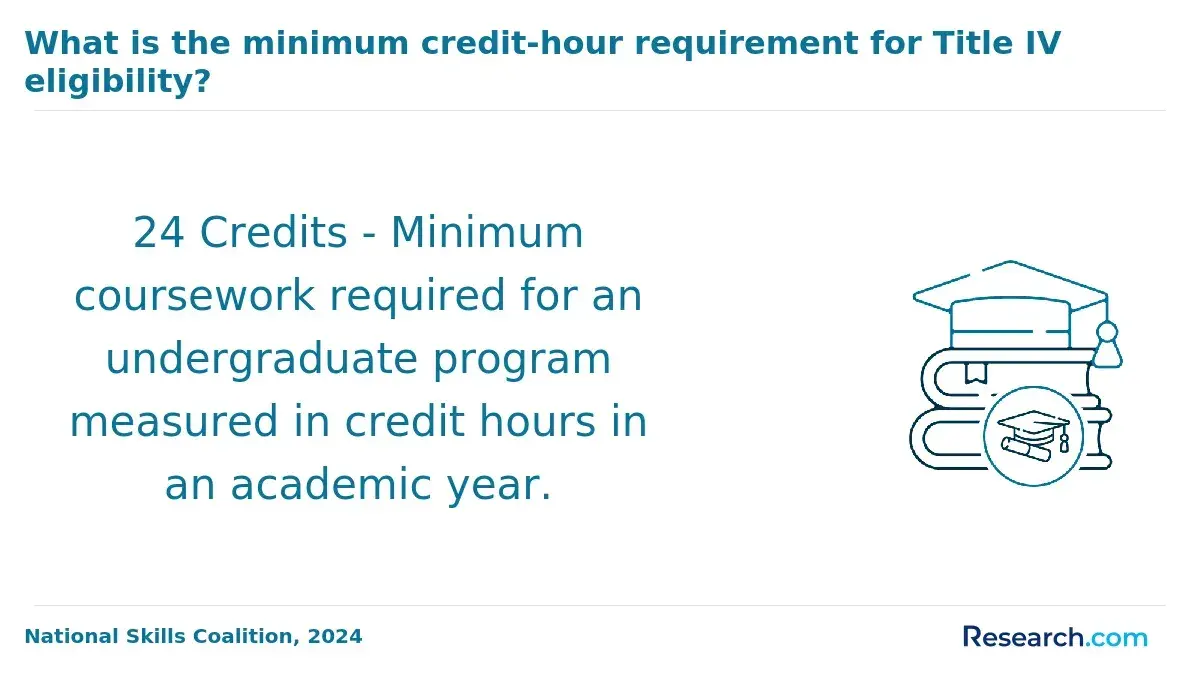
Many online bachelor's programs allow a maximum of 75% of the degree to come from transfer credit, which translates to about 90 credits in a 120-credit program. However, the more important number is the minimum number of credits you must complete at the school, often called the residency requirement. A program may accept many credits institutionally while applying fewer of them to the health psychology-related degree plan.
The table below explains the difference between transfer-credit maximums and the rules that can reduce how many credits actually count toward graduation.
| Transfer rule | What it means | Why it affects speed | What to ask |
| Maximum transfer credits | The largest number of credits the institution may accept | Sets the upper limit, but does not guarantee those credits meet degree requirements | What is the maximum for this specific online psychology or health-related psychology degree? |
| Residency requirement | The minimum number of credits you must complete through the awarding school | Often creates the true minimum remaining workload | How many credits must I complete with your university after transfer? |
| Major requirement | Specific psychology, statistics, research methods, biological psychology, health psychology, or capstone courses required for the major | Old or unrelated credits may not replace required major courses | Which of my previous courses satisfy the psychology major, not just electives? |
| Upper-division requirement | Credits at the junior or senior level | Community college credits are usually lower-division and may not satisfy upper-level requirements | How many upper-level psychology credits remain? |
| Grade and age limits | Minimum grades, recency rules, or department approval for older credits | Credits in statistics, science, or methods may need review if completed long ago | Do psychology, statistics, or science credits expire or require a minimum grade? |
Do not assume an associate degree automatically completes the first half of the program. It may satisfy general education at some schools, but health psychology-related majors often require specific statistics, research methods, lifespan development, abnormal psychology, biopsychology, or health behavior courses that an associate degree may not include.
How Can You Verify Accreditation for Fast Online Health Psychology Degree Programs?
Accreditation is the most important quality check for a fast online health psychology degree. For most transfer students, the baseline requirement is institutional accreditation from an accreditor recognized by the U.S. Department of Education or the Council for Higher Education Accreditation. This is what supports federal financial aid eligibility, transferability, employer recognition, and graduate-school review.
Psychology accreditation can be confusing because the American Psychological Association does not accredit stand-alone bachelor's programs and generally does not accredit terminal master's programs as a substitute for doctoral licensure preparation. APA accreditation is most relevant for doctoral, internship, and postdoctoral programs in professional psychology. That means an online bachelor's in psychology can be legitimate without APA accreditation, but it still must be institutionally accredited.
Use this checklist before enrolling, especially if the program promises unusually fast completion.
- Confirm institutional accreditation in the school's official catalog and through federal or recognized accreditation databases.
- Check that the online program is offered by the accredited institution, not by an unrelated third-party training provider.
- Verify that the degree name on the transcript will be a recognized academic degree, such as BA in Psychology, BS in Psychology, or BA in Applied Psychology.
- If you plan graduate school, ask whether the program includes research methods, statistics, and upper-level psychology coursework expected by master's or doctoral programs.
- If you plan clinical licensure later, check state psychology board rules early because a bachelor's degree alone does not qualify you to become a licensed psychologist.
- Be cautious of schools that pressure you to enroll before providing a written transfer evaluation or that describe accreditation in vague terms.
A fast accredited program should be transparent about catalog requirements, credit evaluation, tuition, faculty qualifications, student support, and academic policies. Speed is valuable only when the credential remains portable and credible.
Which Types of Transfer Credits Can Count Toward an Online Health Psychology Degree?
Transfer credit can come from several sources, but schools treat each source differently. Traditional college credits are usually the easiest to evaluate, while exams, military training, certifications, and portfolio credit often have caps or apply mainly to electives.
The table below summarizes common credit sources and how they may apply to an online health psychology-focused bachelor's degree.
| Credit source | How it may apply | Best use | Common limitation |
| Regionally accredited college courses | May satisfy general education, electives, prerequisites, or major courses | Fastest source when courses match the degree plan | Major and upper-level equivalency is not automatic |
| Associate degree credits | May complete general education blocks at transfer-friendly schools | Strong option for degree completers | Applied or technical courses may count as electives only |
| CLEP, DSST, or other standardized exams | Often applied to general education or lower-level electives | Filling missing non-major requirements quickly | Usually limited for upper-level psychology major requirements |
| Military training | May be evaluated through ACE recommendations and Joint Services Transcript records | Helping veterans and active-duty students reduce elective or lower-division requirements | School and program approval still required |
| Professional certifications | May be reviewed for prior learning or elective credit | Healthcare, behavioral health, or human services workers with documented training | Certification credit may not replace core psychology theory or research courses |
| Portfolio or prior learning assessment | May award credit for college-level learning demonstrated through documentation | Experienced adult learners with substantial work history | Requires time, fees, evidence, and faculty review |
Healthcare experience can help, but it does not automatically replace psychology coursework. For example, a medical assistant, nurse, health coach, or behavioral health technician may receive elective or prior learning credit, while still needing statistics, research methods, ethics, biological bases of behavior, and health psychology content.
How Do Residency and Major Requirements Affect Transfer Credits for an Online Health Psychology Degree?
Residency and major requirements are the two rules most likely to slow down a transfer student. Residency means the number of credits you must complete at the school that grants the degree. Major requirements are the specific courses required for the psychology or health psychology-related curriculum. A school can accept 90 credits and still require you to complete 36 or more credits if your previous courses do not match the major.
The most common mistake is focusing on "credits accepted" instead of "requirements completed." To avoid that, compare degree audits line by line and look for these bottlenecks.
- Upper-level psychology credits: Many programs require a minimum number of junior- or senior-level psychology courses, which community college credits may not satisfy.
- Statistics and research methods: These courses are often prerequisites for capstone or advanced psychology courses, so missing them can delay graduation.
- Capstone or senior seminar: This is commonly required in residence and may be offered only in certain terms.
- Minimum grade rules: A course with a low passing grade may transfer as elective credit but fail to meet major requirements.
- Concentration requirements: Health psychology, mental health, addiction, wellness, or behavioral health tracks may require specific courses that are not replaceable with electives.
Before enrolling, ask for two versions of your plan: the fastest possible full-time schedule and a realistic schedule based on your work and family obligations. The second plan is often the one that prevents burnout and leads to actual completion.
Can Prior Learning, CLEP, Military Training, or Certifications Help You Finish an Online Health Psychology Degree Faster?
Prior learning credit can shorten an online health psychology degree, but it works best as a targeted tool. It is most useful for filling electives or general education gaps, not for replacing advanced psychology theory, lab science, statistics, or research courses that graduate programs may expect to see on your transcript.
If you have military, healthcare, social service, or workplace training, take these steps before assuming it will count.
- Request official documentation, such as transcripts, ACE-recommended records, Joint Services Transcript records, certification records, or employer training outlines.
- Ask whether the school has a written policy for CLEP, DSST, ACE credit, military credit, portfolio assessment, and professional certifications.
- Confirm whether alternative credit counts toward residency, major requirements, electives, or only total credits.
- Compare the fee and time required for portfolio assessment with the cost and time of simply taking the course.
- Ask graduate schools in your target field whether they accept alternative-credit prerequisites, especially for statistics or research methods.
Prior learning is especially relevant for licensed or credentialed healthcare workers who want to move into behavioral health, wellness, patient education, or graduate study. Nurses who are comparing degree-completion models may also want to review RN to BSN without clinicals options, since nursing credit transfer and clinical requirements follow different rules than psychology programs.
How Much Does a Fast Online Health Psychology Degree Cost After Transfer Credits and Financial Aid?
The cost of a fast online health psychology degree depends on the number of remaining credits, tuition per credit, fees, books, transfer evaluation costs, prior learning assessment fees, and financial aid eligibility. Transfer credits can lower total cost because you pay only for the credits you still need, but an accelerated schedule can increase short-term cash flow pressure if you take more courses at once.
College Board's 2024 Trends in College Pricing data show how different tuition sectors can shape your cost comparison before financial aid. These figures are broad published tuition and fee averages, not online program quotes, so use them as a benchmark rather than a school-specific estimate.
- Public four-year in-state average published tuition and fees: $11,610 for 2024-25
- Public four-year out-of-state average published tuition and fees: $30,780 for 2024-25
- Private nonprofit four-year average published tuition and fees: $43,350 for 2024-25
To estimate your actual cost, multiply the number of remaining credits by the school's tuition rate, then add required fees and subtract grants, scholarships, employer tuition assistance, military benefits, or other aid. A school with higher per-credit tuition may still be cheaper if it applies more of your previous credits and leaves fewer courses to complete.
The table below shows the main cost variables transfer students should compare after receiving a degree audit.
| Cost factor | Why it matters | Decision tip |
| Remaining credits | Usually the largest driver of total tuition | Compare official remaining credits, not advertised tuition alone |
| Per-credit tuition | Determines the price of each remaining course | Check whether online students pay in-state, out-of-state, or flat online rates |
| Term fees and technology fees | Can add meaningful cost over multiple short terms | Ask for a full program cost estimate, not just tuition |
| Prior learning assessment fees | May be worthwhile if they replace several credits | Use portfolio credit only when the savings exceed the fee and time required |
| Financial aid eligibility | Accreditation and enrollment intensity affect aid options | Confirm FAFSA eligibility and satisfactory academic progress rules |
Students exploring shorter healthcare credentials before committing to a bachelor's degree should compare total cost, aid eligibility, and career fit. For example, online medical assistant programs FAFSA approved may suit someone seeking a faster entry-level healthcare route, while health psychology is usually better for students interested in behavior, wellness, research, human services, or graduate study.
How Do Accelerated, Competency-Based, and Self-Paced Online Health Psychology Degree Programs Compare?
Accelerated, competency-based, and self-paced programs can all be fast, but they are fast in different ways. The right model depends on how many credits you transfer, how independently you learn, how predictable your schedule is, and whether you need faculty interaction or strict deadlines.
The table below compares the main online formats transfer students are likely to encounter when searching for the fastest accredited health psychology-related degree.
| Format | How it works | Potential speed advantage | Best fit | Main trade-off |
| Accelerated term-based | Courses run in shorter sessions, often seven to ten weeks | Year-round starts and compressed terms can help students finish remaining credits faster | Students who want structure but can handle faster deadlines | Heavy reading and writing workload in a short period |
| Competency-based | Students progress by demonstrating mastery of defined competencies | Experienced learners may move faster through familiar material | Self-directed adults with strong writing, research, and time-management skills | Not every psychology or health psychology requirement may be available in this format |
| Self-paced online | Students complete coursework within flexible time windows | Motivated students can move quickly when life and work schedules allow | Independent learners with reliable study routines | Less external structure can slow students who need weekly accountability |
| Traditional online semester | Courses follow standard academic calendars | May be slower, but predictable and widely accepted | Students balancing work, caregiving, or gradual re-entry into college | Fewer start dates and longer time between course sequences |
A current trend in online education is the expansion of flexible delivery, digital advising, and skills-based learning. These tools can help transfer students move efficiently, but they do not remove academic requirements. You still need enough time for research papers, exams, discussions, statistics assignments, and capstone projects.
If your main goal is direct healthcare practice rather than behavioral science, compare degree formats carefully. Students with a prior non-nursing bachelor's degree sometimes consider online accelerated nursing programs for non nurses, but those programs have clinical requirements and licensure goals that differ significantly from online health psychology pathways.
Are Fast Accredited Online Health Psychology Degrees Respected by Employers and Graduate Schools?
Fast accredited online health psychology degrees can be respected when they come from a properly accredited institution and include the coursework expected for the student's goal. Employers and graduate schools usually care more about institutional accreditation, degree relevance, grades, skills, experience, and prerequisites than whether courses were completed online.
However, outcomes depend on the career target. A bachelor's degree in psychology or health psychology-related coursework can support roles in human services, behavioral health support, case management, wellness programming, patient education, research assistance, healthcare administration support, and preparation for graduate study. It does not qualify someone to practice independently as a psychologist. BLS May 2024 wage data place the median annual pay for psychologists at $94,310, but those roles typically require graduate education and, for clinical practice, state licensure.
Graduate schools may review whether your transcript includes statistics, research methods, abnormal psychology, developmental psychology, biological bases of behavior, and upper-level psychology coursework. If you plan to pursue clinical psychology, counseling, public health, occupational therapy, social work, or health behavior research, choose electives and capstone topics that support that direction.
Employers are also paying closer attention to applied skills: data interpretation, culturally responsive communication, ethical judgment, documentation, behavioral health literacy, and comfort with digital health tools. A fast program should help you demonstrate those skills through projects, writing samples, internships where available, research exposure, or relevant work experience.
Students who already hold nursing credentials and want an advanced clinical healthcare role may find that psychology is not the shortest route to their goal. In that case, comparing affordable online FNP programs may be more relevant than completing a health psychology-focused bachelor's degree.
Other Things You Should Know About Health Psychology
No. A bachelor's degree can prepare you for entry-level behavioral health, human services, wellness, research support, or graduate study, but licensed psychologist roles generally require a doctoral degree, supervised experience, exams, and state licensure.
Many accredited universities issue the same diploma for online and campus students, but policies vary. Ask the school directly what appears on the diploma and transcript before enrolling.
Often, yes, especially for general education and elective credits. Some programs may review older statistics, science, technology, or major courses more carefully, so request a course-by-course evaluation.
For many students, a broad accredited psychology bachelor's degree with health-focused electives is the most flexible undergraduate option. Health psychology becomes more specialized at the master's or doctoral level, especially for research, clinical, or public health careers.
References
- Welcome https://www.ahpgs.de/en
- Master’s in Social Work vs. Master’s in Psychology https://socialworklicensemap.com/social-work-resources/comparing-social-service-degrees/social-work-vs-psychology/
- From Community College to a Master’s Degree in Behavioral Health: Transfer Credits & Launch Your Career in 3 Years https://paloaltou.edu/resources/blog/community-college-masters-degree-behavioral-health-transfer-credits-launch-your-career-3-years2
- Undergrad Application & Transfer Guide | Psychology.org https://www.psychology.org/resources/undergraduate-application-and-transfer-guide/
- Hybrid PsyD Program: Accelerated, Comprehensive, and Blended Psychology Doctorate https://www.scuhs.edu/psyd-article/hybrid-psyd-program-accelerated-comprehensive-and-blended-psychology-doctorate/
- Pursue a Bachelor’s in Psychology Online | University of Bridgeport https://www.bridgeport.edu/news/pursuing-a-bachelors-in-psychology-online/
- Accreditation standards, evidence guide and rules - APAC https://apac.au/education-providers/standards/
- Top 10 Online Master in Psychology Degrees - GradLime https://gradlime.com/online-master-psychology-degrees/
- Transfer of Credits - WSPP | PsyD Transfer Credit Policy | Wisconsin School of Professional Psychology https://www.wspp.edu/admissions/transfer-of-credits
- Online Psychology Degrees | Accredited Programs - Start Your Career https://www.psychologist-license.com/online-degrees/